
DIGESTIVE SYSTEM WHAT IS DIGESTION Food contains complex
- Slides: 15
DIGESTIVE SYSTEM
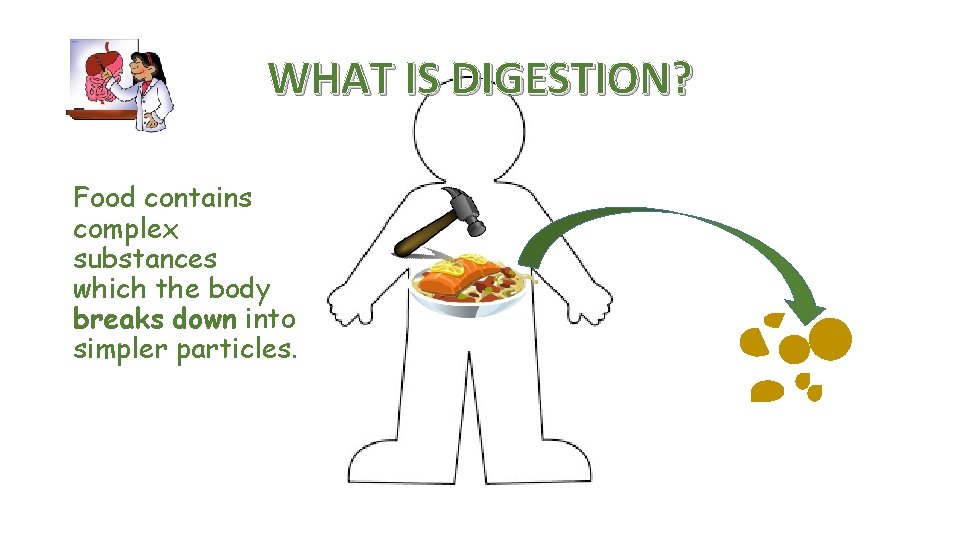
WHAT IS DIGESTION? Food contains complex substances which the body breaks down into simpler particles.
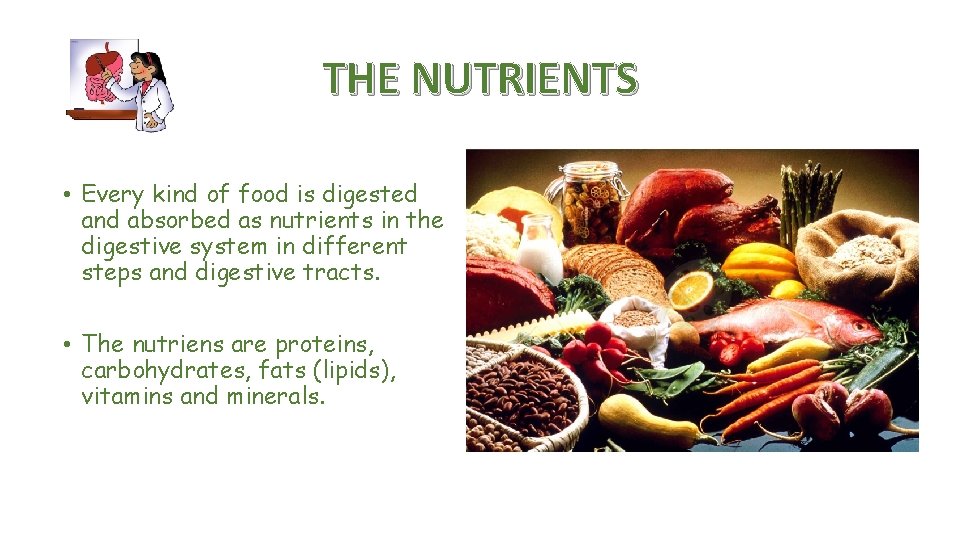
THE NUTRIENTS • Every kind of food is digested and absorbed as nutrients in the digestive system in different steps and digestive tracts. • The nutriens are proteins, carbohydrates, fats (lipids), vitamins and minerals.
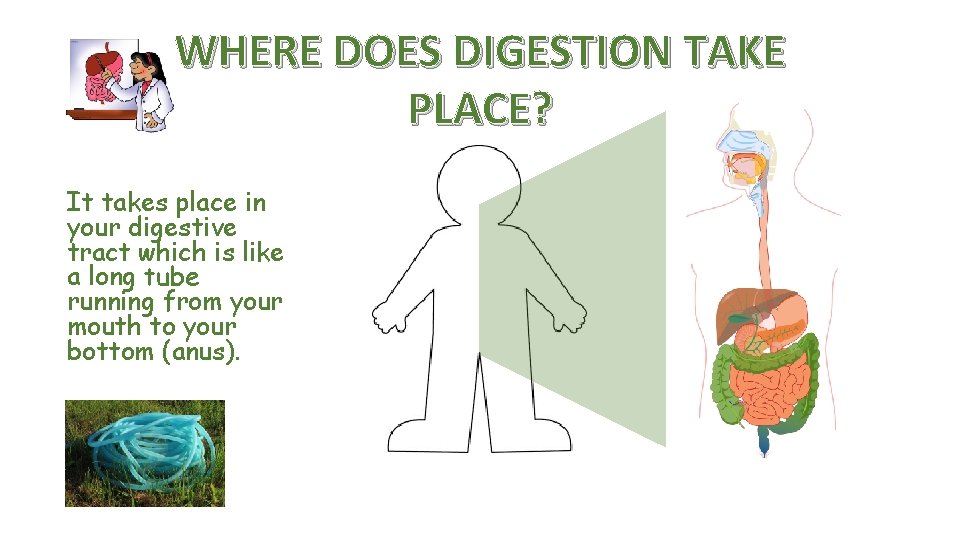
WHERE DOES DIGESTION TAKE PLACE? It takes place in your digestive tract which is like a long tube running from your mouth to your bottom (anus).
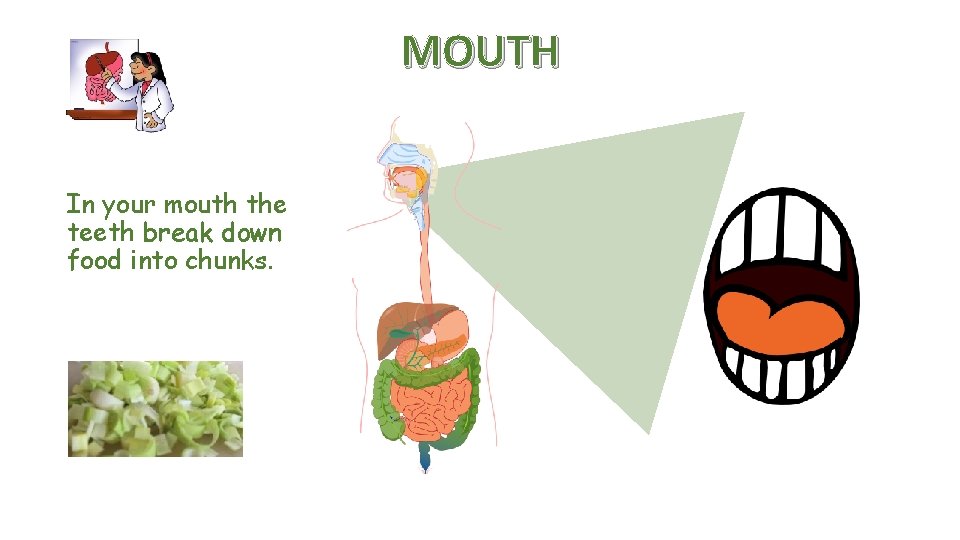
MOUTH In your mouth the teeth break down food into chunks.
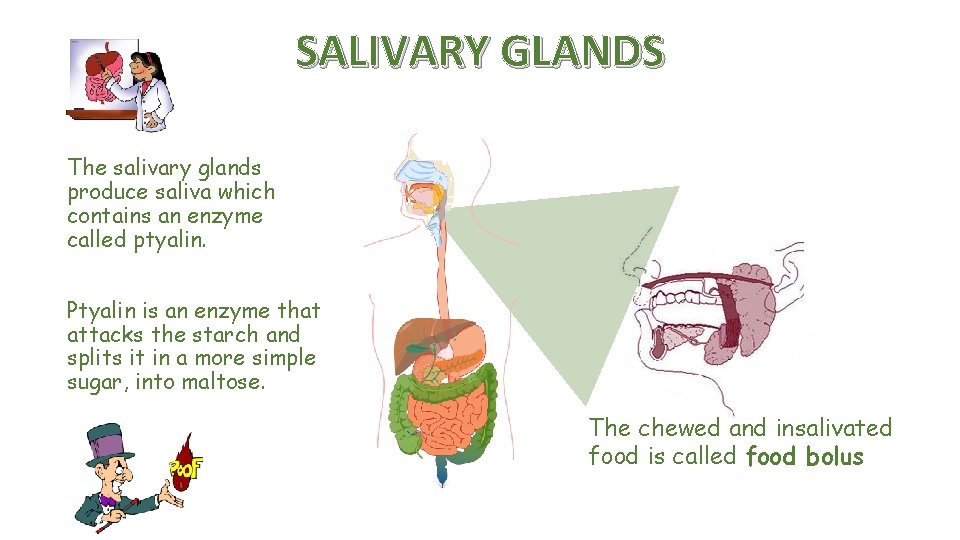
SALIVARY GLANDS The salivary glands produce saliva which contains an enzyme called ptyalin. Ptyalin is an enzyme that attacks the starch and splits it in a more simple sugar, into maltose. . The chewed and insalivated food is called food bolus
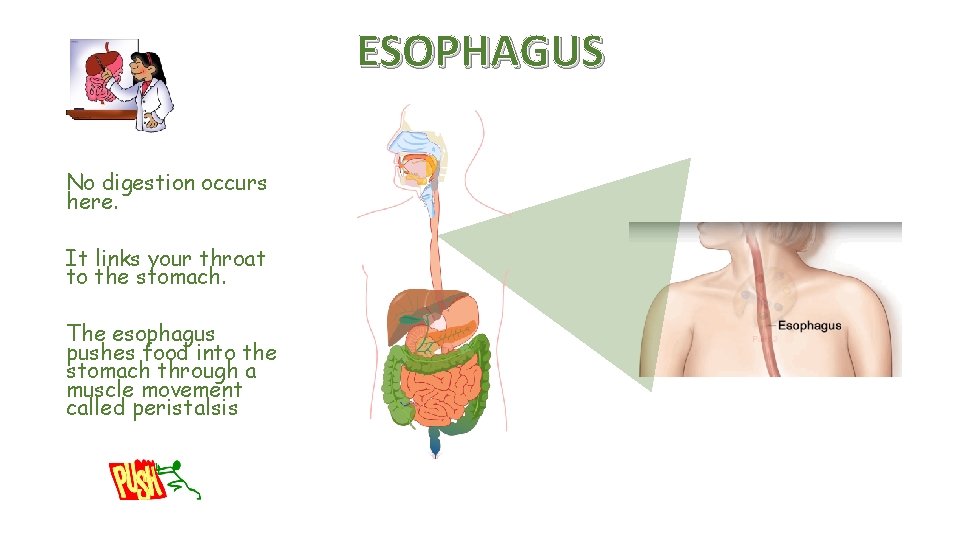
ESOPHAGUS No digestion occurs here. It links your throat to the stomach. The esophagus pushes food into the stomach through a muscle movement called peristalsis
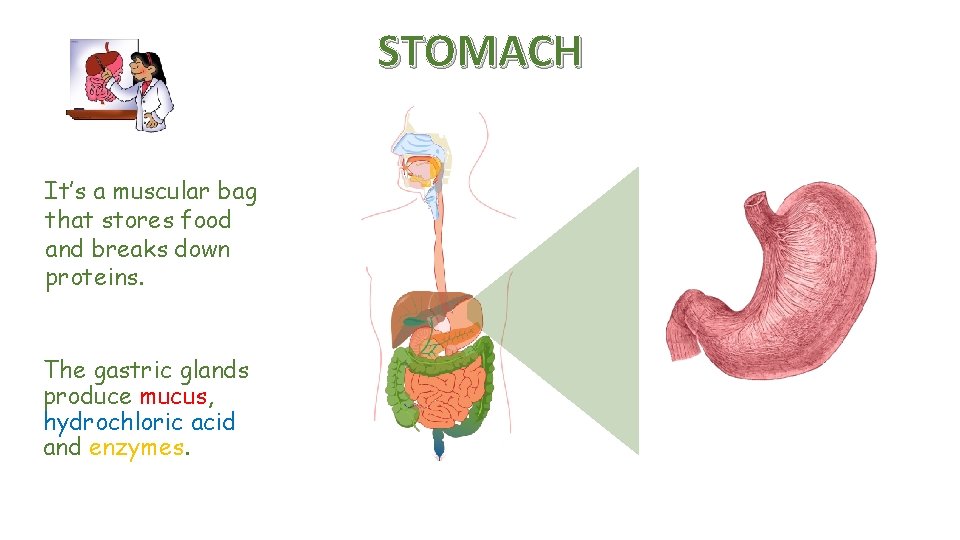
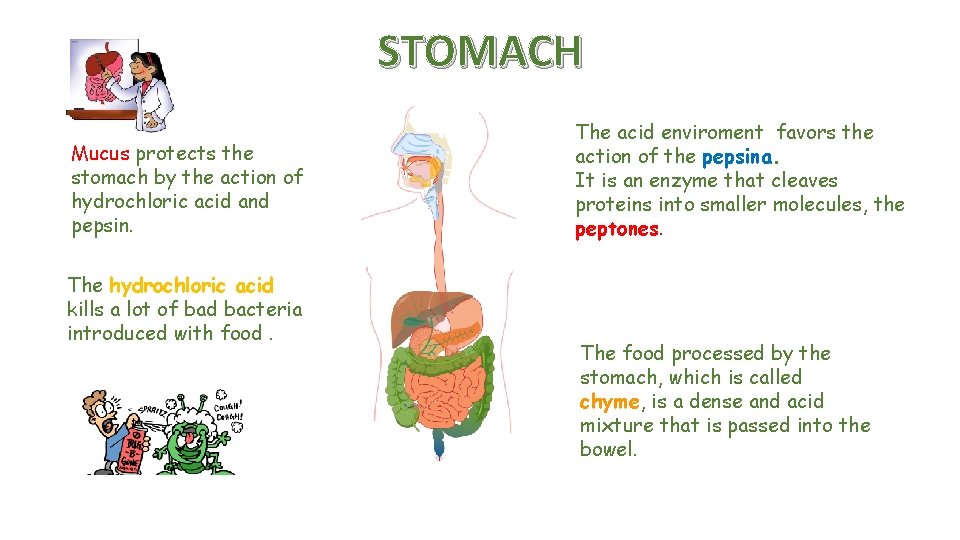
STOMACH It’s a muscular bag that stores food and breaks down proteins. The gastric glands produce mucus, hydrochloric acid and enzymes.
STOMACH Mucus protects the stomach by the action of hydrochloric acid and pepsin. The hydrochloric acid kills a lot of bad bacteria introduced with food. The acid enviroment favors the action of the pepsina. It is an enzyme that cleaves proteins into smaller molecules, the peptones. The food processed by the stomach, which is called chyme, is a dense and acid mixture that is passed into the bowel.
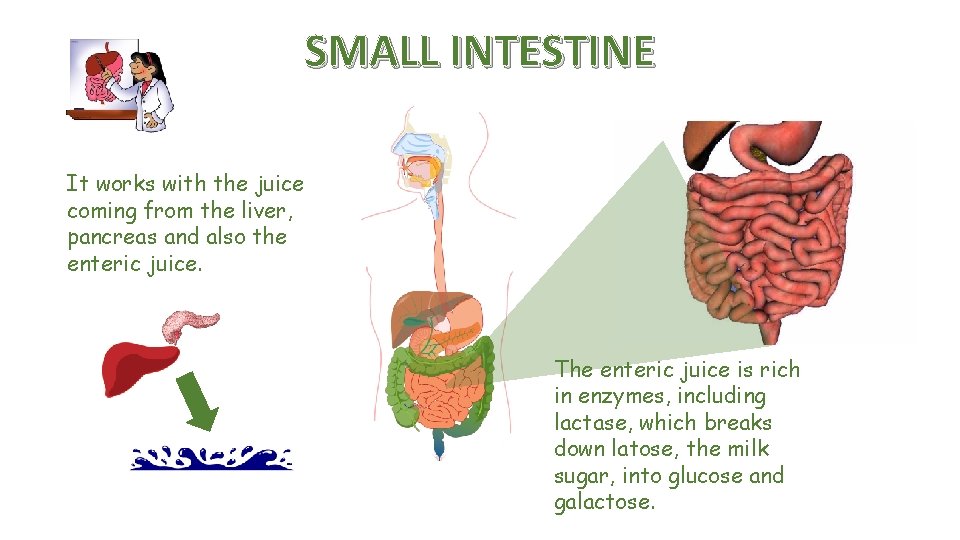
SMALL INTESTINE It works with the juice coming from the liver, pancreas and also the enteric juice. The enteric juice is rich in enzymes, including lactase, which breaks down latose, the milk sugar, into glucose and galactose.
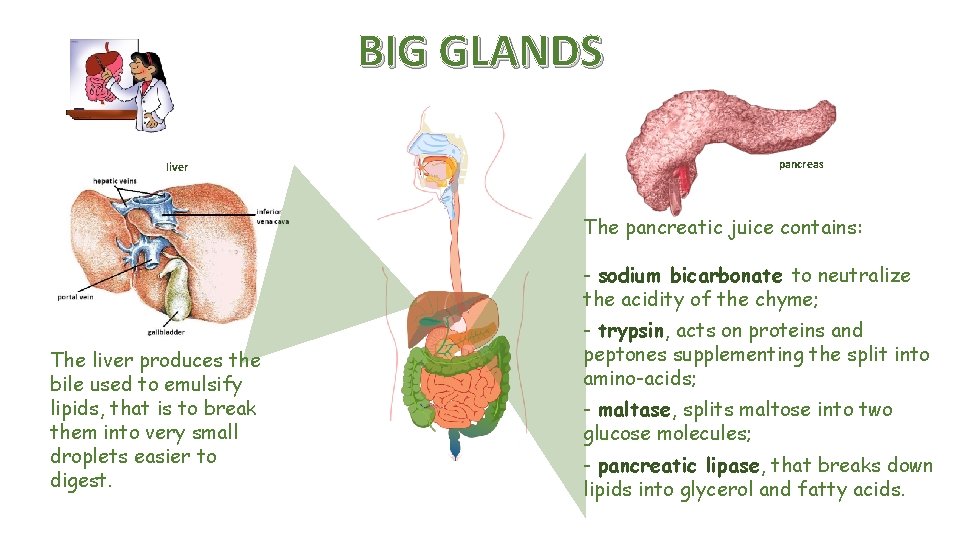
BIG GLANDS liver pancreas The pancreatic juice contains: - sodium bicarbonate to neutralize the acidity of the chyme; The liver produces the bile used to emulsify lipids, that is to break them into very small droplets easier to digest. - trypsin, acts on proteins and peptones supplementing the split into amino-acids; - maltase, splits maltose into two glucose molecules; - pancreatic lipase, that breaks down lipids into glycerol and fatty acids.
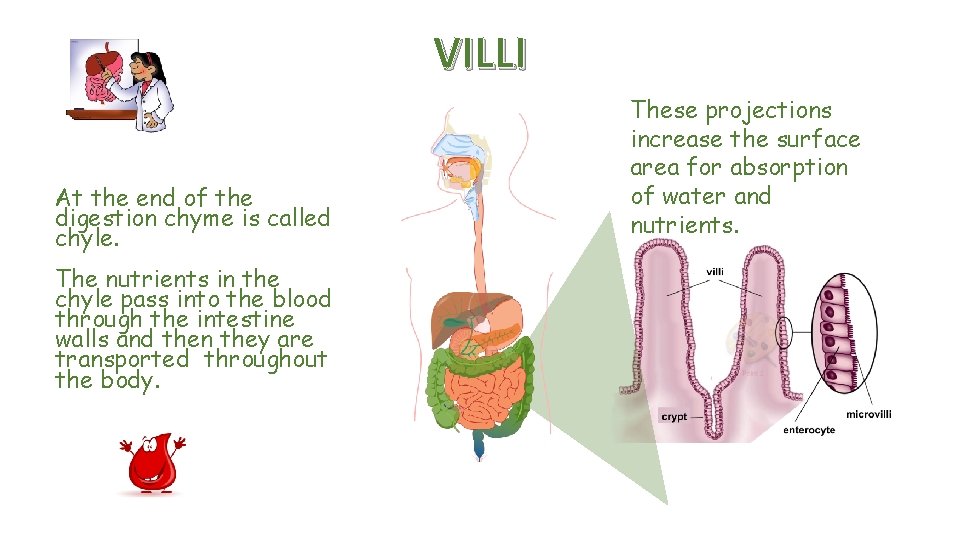
VILLI At the end of the digestion chyme is called chyle. The nutrients in the chyle pass into the blood through the intestine walls and then they are transported throughout the body. These projections increase the surface area for absorption of water and nutrients.
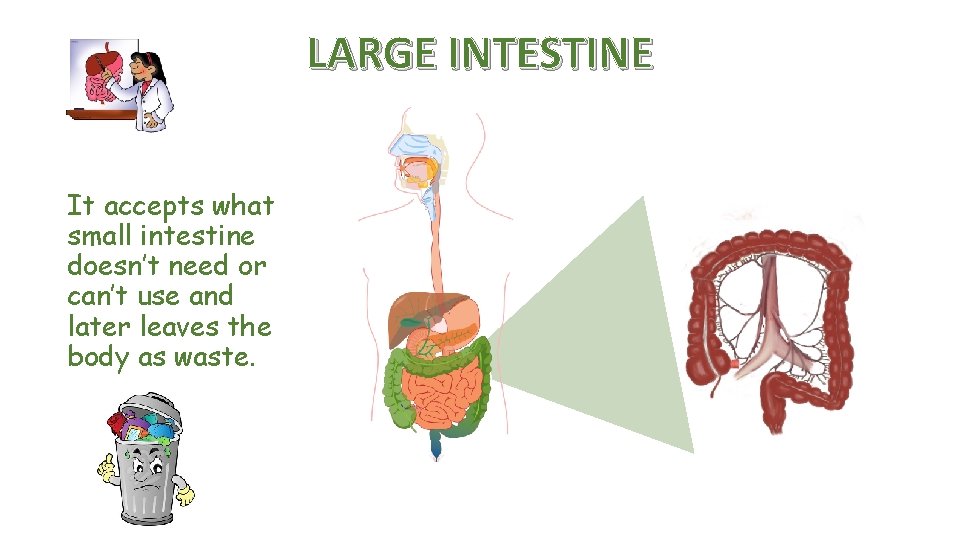
LARGE INTESTINE It accepts what small intestine doesn’t need or can’t use and later leaves the body as waste.
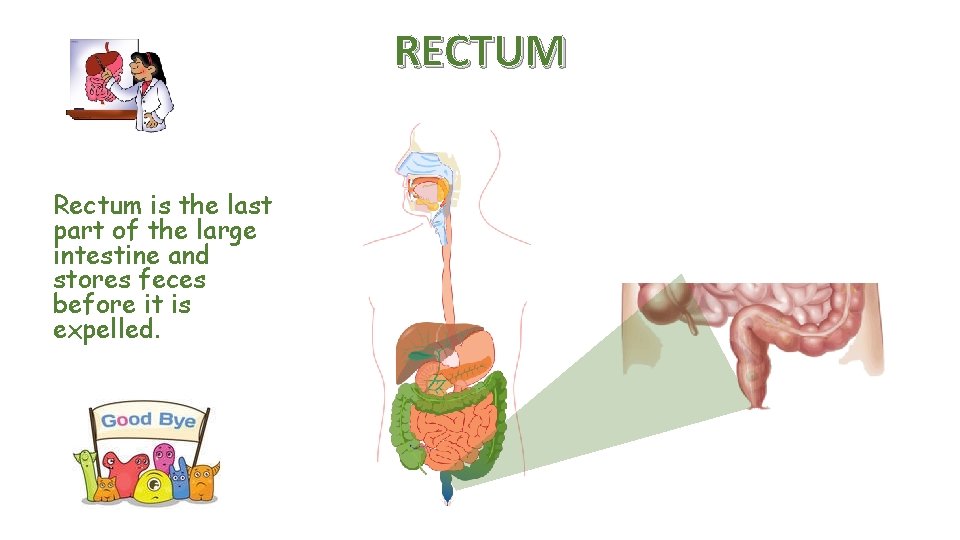
RECTUM Rectum is the last part of the large intestine and stores feces before it is expelled.
Image credit: • free clip Art by Phillip Martin • Clker. com • Wikipedia • Wikimedia • free images on Pixabay • http: //www. picgifs. com/clip-art/entertainment/magic-tricks/clip-art-magic-tricks-138804. jpg • http: //bit. ly/nutritionfactsupdates • http: //worldartsme. com/clip-art-push-and-pull-clipart. html# • http: //www. clipartpanda. com • http: //cliparts. co • http: //it. 123 rf. com • http: //www. shutterstock. com • Joaquin Moreno - https: //www. flickr. com/photos/100902849@N 05/11286341055 • http: //www. deviantart. com/browse/all/resources/clipart/? q=cauldron