
Digestive System The function of the digestive system
- Slides: 8
Digestive System
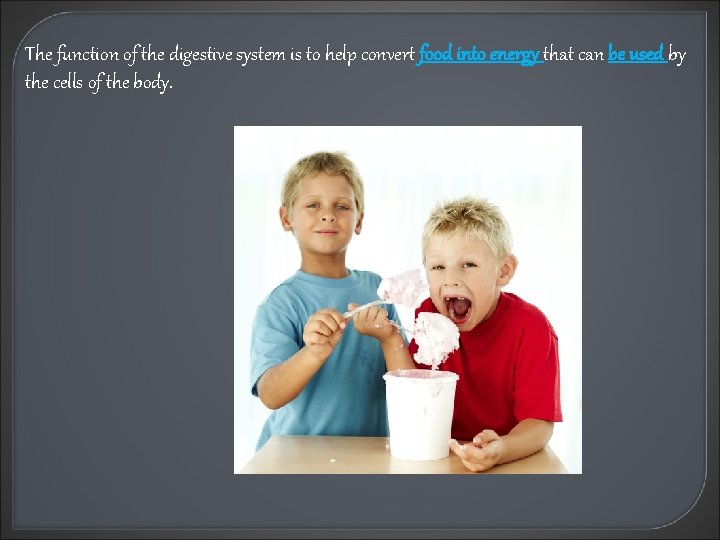
The function of the digestive system is to help convert food into energy that can be used by the cells of the body.
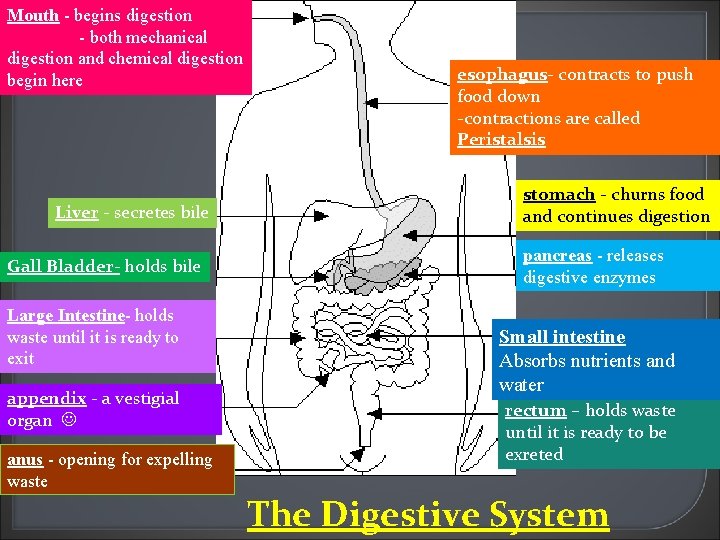
Mouth - begins digestion - both mechanical digestion and chemical digestion begin here Liver - secretes bile Gall Bladder- holds bile Large Intestine- holds waste until it is ready to exit appendix - a vestigial organ anus - opening for expelling waste esophagus- contracts to push food down -contractions are called Peristalsis stomach - churns food and continues digestion pancreas - releases digestive enzymes Small intestine Absorbs nutrients and water rectum – holds waste until it is ready to be exreted The Digestive System
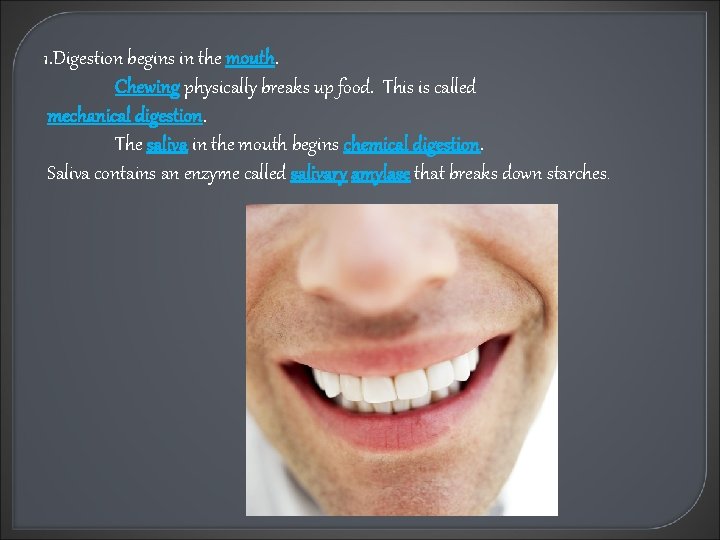
1. Digestion begins in the mouth. Chewing physically breaks up food. This is called mechanical digestion. The saliva in the mouth begins chemical digestion. Saliva contains an enzyme called salivary amylase that breaks down starches.
2. Chewed food is called bolus. The bolus slides down the esophagus. The esophagus contracts to squeeze the food and sends it into the stomach. These contractions are called peristalsis. Throwing up is called reverse peristalsis.
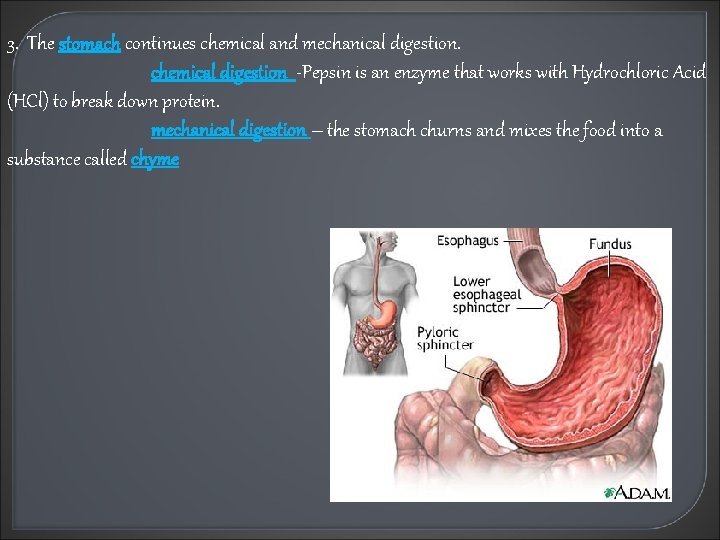
3. The stomach continues chemical and mechanical digestion. chemical digestion -Pepsin is an enzyme that works with Hydrochloric Acid (HCl) to break down protein. mechanical digestion – the stomach churns and mixes the food into a substance called chyme
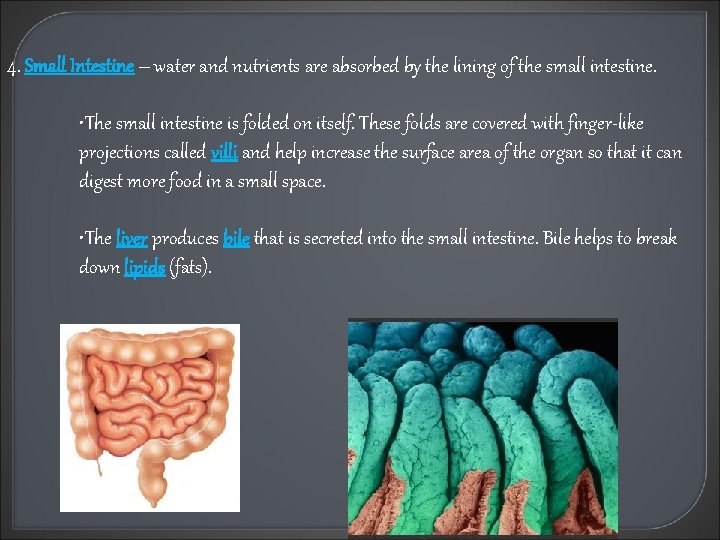
4. Small Intestine – water and nutrients are absorbed by the lining of the small intestine. • The small intestine is folded on itself. These folds are covered with finger-like projections called villi and help increase the surface area of the organ so that it can digest more food in a small space. • The liver produces bile that is secreted into the small intestine. Bile helps to break down lipids (fats).
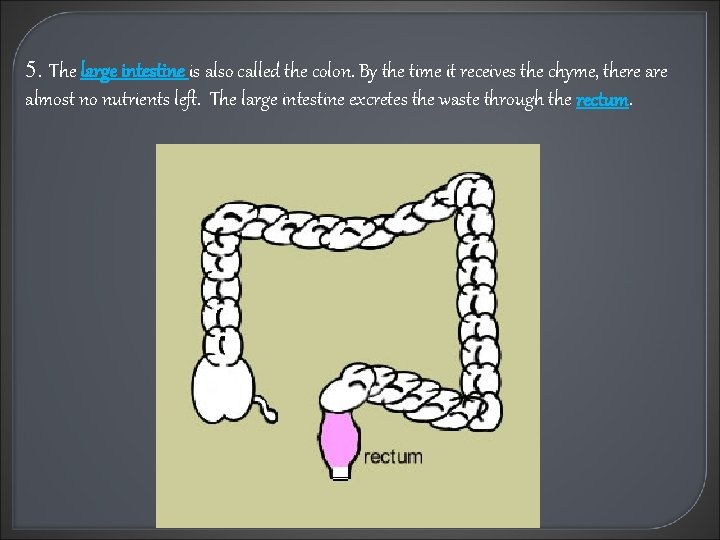
5. The large intestine is also called the colon. By the time it receives the chyme, there almost no nutrients left. The large intestine excretes the waste through the rectum.