
Digestive System pp 183 to 190 Digestive System
- Slides: 13
Digestive System pp. 183 to 190
Digestive System
Digestive tract is one, long, thin, muscular tube All parts of the “tube” are lined with muscle! Why might this be important? (Think about how muscle tissue behaves. . . ) So it can stretch to accommodate food moving around. All parts of the digestive tract are lined with mucus (some more than others) Why might this be important? So food slides down easily; and muscle is protected by mucus from stomach acid and enzymes. The stomach is protected by the lower part of the ribcage? Why might this be important? To protect it from being punctured and stomach acid leaking into abdomen.
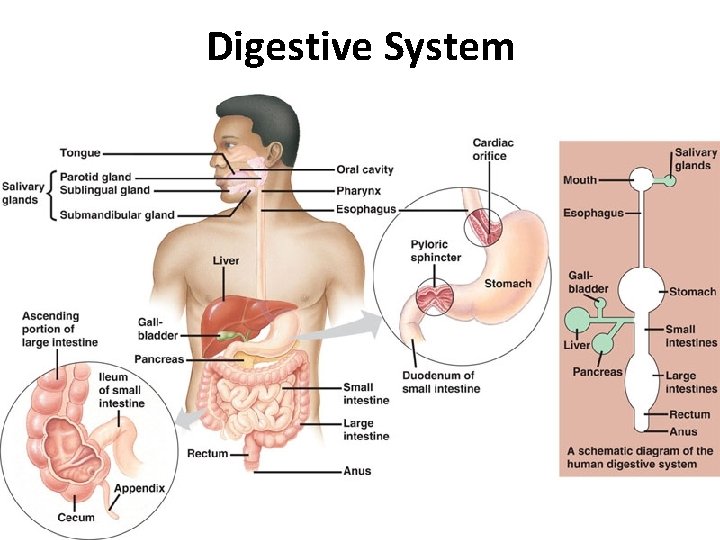
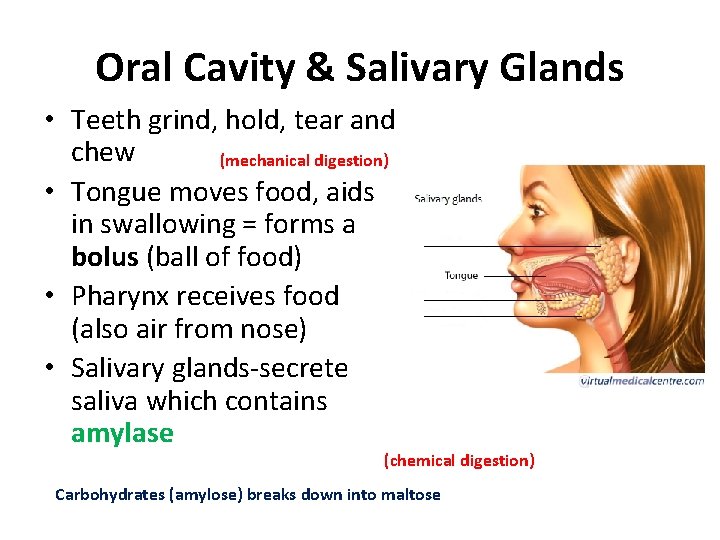
Oral Cavity & Salivary Glands • Teeth grind, hold, tear and chew (mechanical digestion) • Tongue moves food, aids in swallowing = forms a bolus (ball of food) • Pharynx receives food (also air from nose) • Salivary glands-secrete saliva which contains amylase (chemical digestion) Carbohydrates (amylose) breaks down into maltose
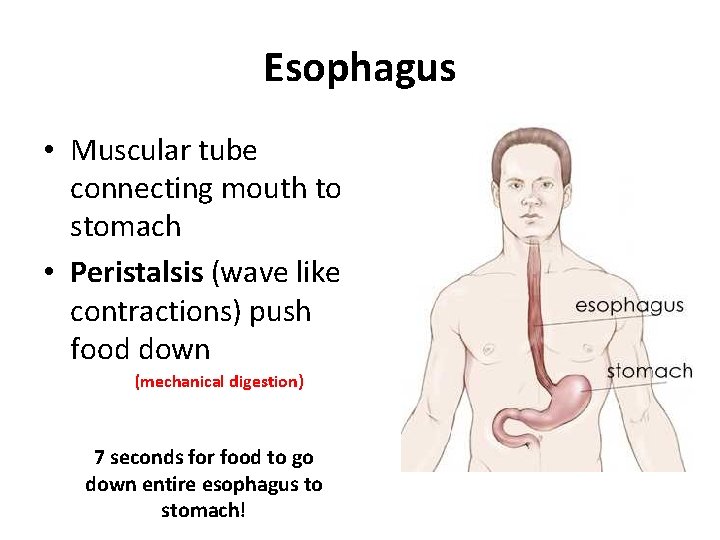
Esophagus • Muscular tube connecting mouth to stomach • Peristalsis (wave like contractions) push food down (mechanical digestion) 7 seconds for food to go down entire esophagus to stomach!
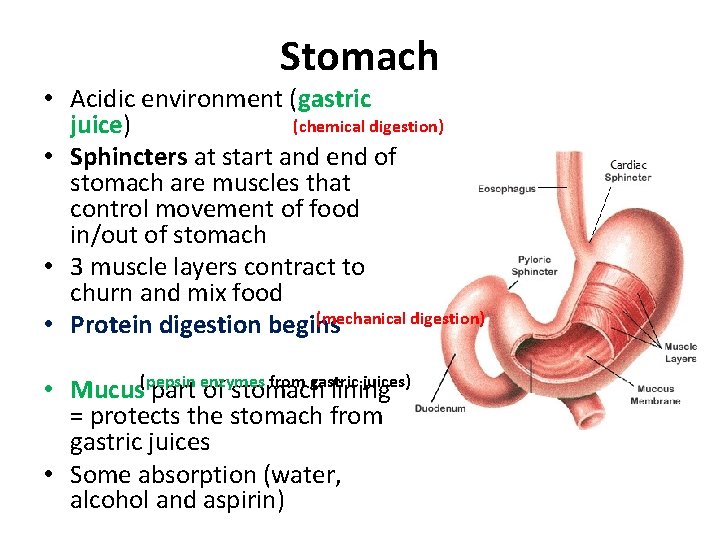
Stomach • Acidic environment (gastric (chemical digestion) juice) • Sphincters at start and end of stomach are muscles that control movement of food in/out of stomach • 3 muscle layers contract to churn and mix food (mechanical digestion) • Protein digestion begins from gastric juices) • Mucus(pepsin part enzymes of stomach lining = protects the stomach from gastric juices • Some absorption (water, alcohol and aspirin)
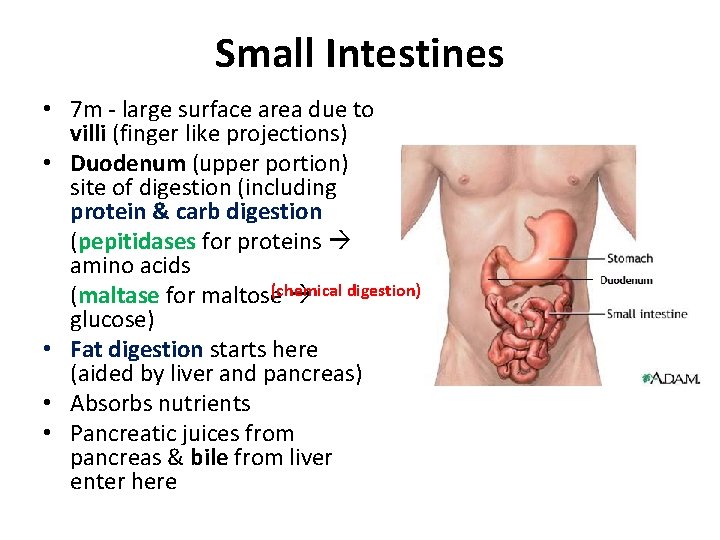
Small Intestines • 7 m - large surface area due to villi (finger like projections) • Duodenum (upper portion) site of digestion (including protein & carb digestion (pepitidases for proteins amino acids (maltase for maltose(chemical digestion) glucose) • Fat digestion starts here (aided by liver and pancreas) • Absorbs nutrients • Pancreatic juices from pancreas & bile from liver enter here
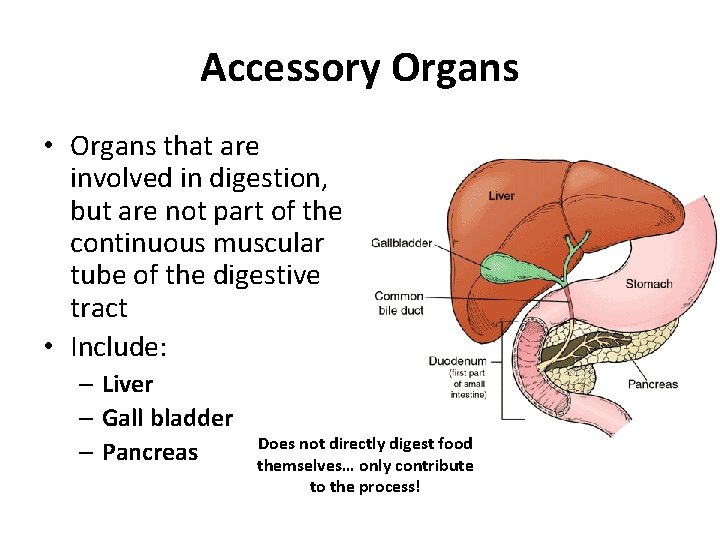
Accessory Organs • Organs that are involved in digestion, but are not part of the continuous muscular tube of the digestive tract • Include: – Liver – Gall bladder – Pancreas Does not directly digest food themselves… only contribute to the process!
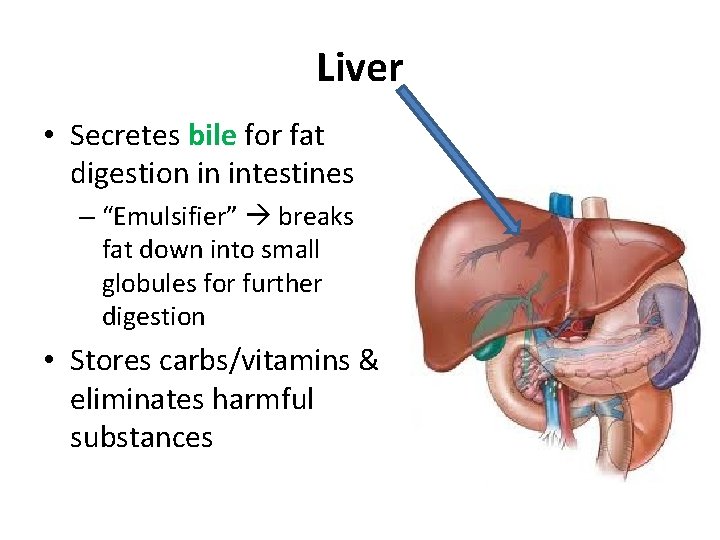
Liver • Secretes bile for fat digestion in intestines – “Emulsifier” breaks fat down into small globules for further digestion • Stores carbs/vitamins & eliminates harmful substances
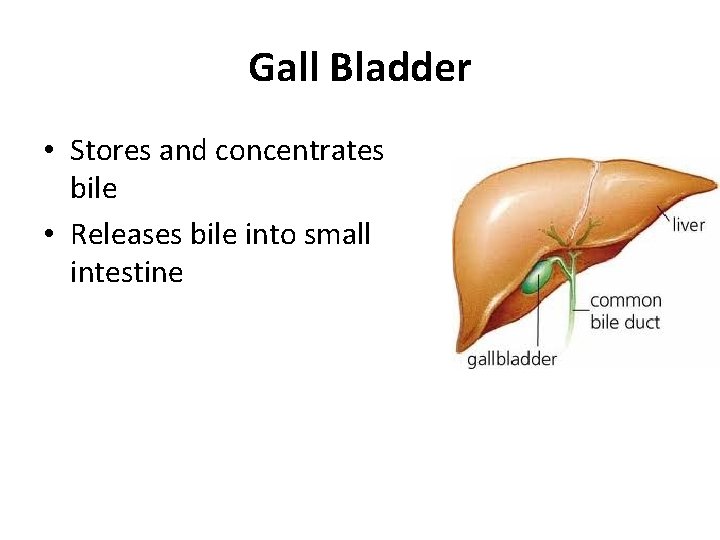
Gall Bladder • Stores and concentrates bile • Releases bile into small intestine
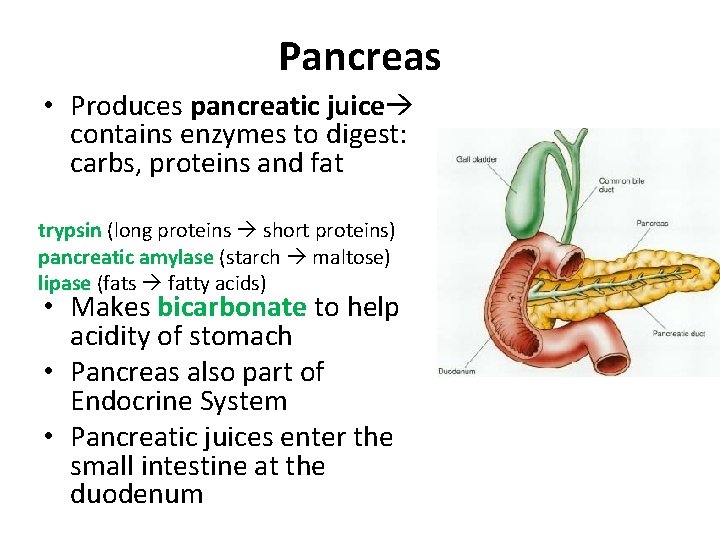
Pancreas • Produces pancreatic juice contains enzymes to digest: carbs, proteins and fat trypsin (long proteins short proteins) pancreatic amylase (starch maltose) lipase (fats fatty acids) • Makes bicarbonate to help acidity of stomach • Pancreas also part of Endocrine System • Pancreatic juices enter the small intestine at the duodenum
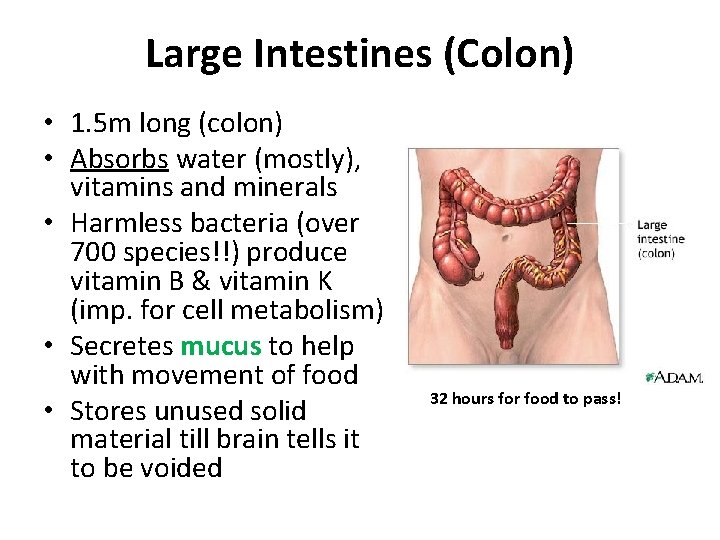
Large Intestines (Colon) • 1. 5 m long (colon) • Absorbs water (mostly), vitamins and minerals • Harmless bacteria (over 700 species!!) produce vitamin B & vitamin K (imp. for cell metabolism) • Secretes mucus to help with movement of food • Stores unused solid material till brain tells it to be voided 32 hours for food to pass!
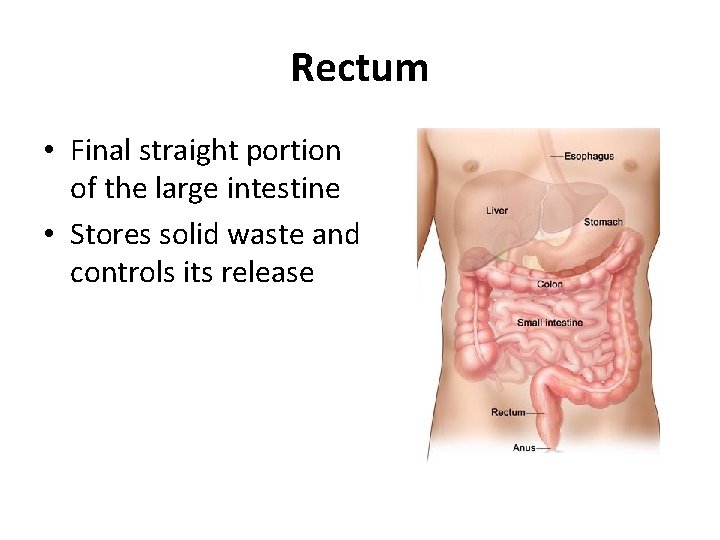
Rectum • Final straight portion of the large intestine • Stores solid waste and controls its release