
Digestive system Overview The Need to Feed Every
- Slides: 33
Digestive system
• Overview: The Need to Feed • Every mealtime is a reminder that we are heterotrophs –Dependent on a regular supply
• General, animals fall into one of three dietary categories –Herbivores eat mainly autotrophs (plants and algae) –Carnivores eat other animals –Omnivores regularly consume animals as well as plants or algal matter
Why Nutrition Is Necessary?
• Regardless of what an animal eats, an adequate diet must satisfy three nutritional needs –Fuel for all cellular work –The organic raw materials for biosynthesis –Essential nutrients, substances such as vitamins that the animal cannot produce
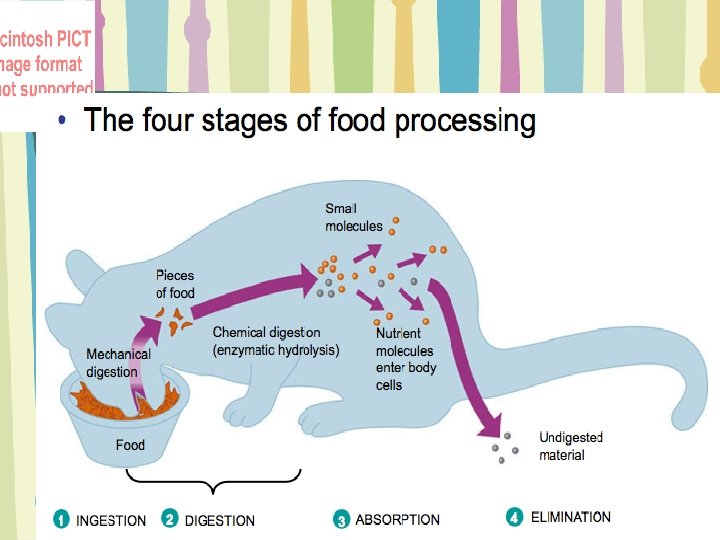
The main stages of food processing are : -ingestion -digestion -absorption -elimination
Ingestion, the act of eating Digestion, Is the process of breaking food down into molecules small enough to be absorb Involves enzymatic hydrolysis of polymers into their monomers
Absorption, Is the uptake of nutrients by body cells Elimination, Occurs as undigested material passes out of the digestive compartment
Intracellular digestion Food particles are engulfed by endocytosis and digested within food vacuoles Extracellular digestion Is the breakdown of food particles outside cells
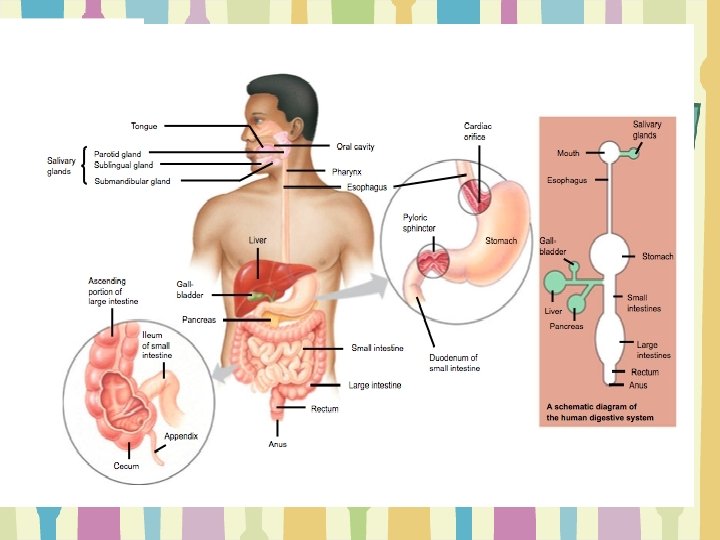
The mammalian digestive system consists of the alimentary canal And various accessory glands that secrete digestive juices through ducts
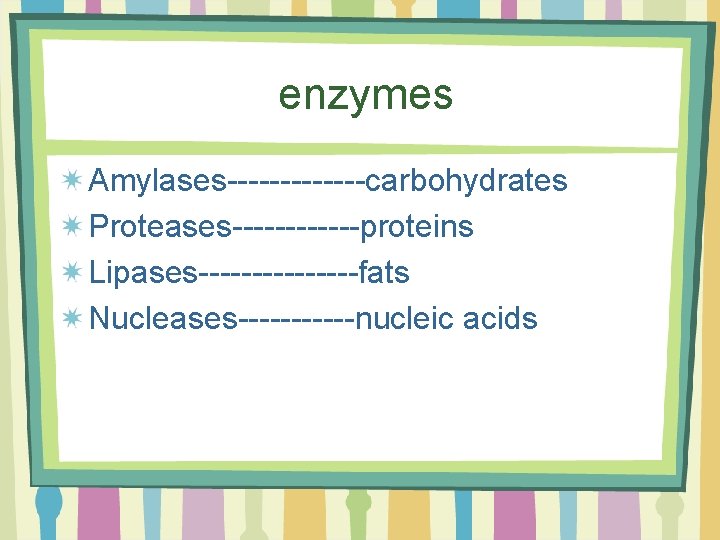
enzymes Amylases-------carbohydrates Proteases------proteins Lipases--------fats Nucleases------nucleic acids
Food is pushed along the digestive tract by peristalsis Rhythmic waves of contraction of smooth muscles in the wall of the canal
In the oral cavity, food is lubricated and digestion begins And teeth chew food into smaller particles that are exposed to salivary amylase, initiating the breakdown of glucose polymers (starch)
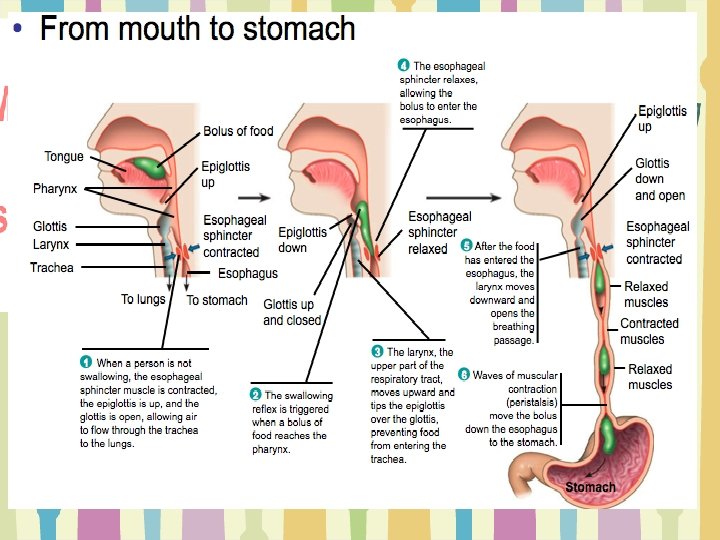
The region we call our throat is the pharynx A junction that opens to both the esophagus and the windpipe (trachea) The esophagus Conducts food from the pharynx down to the stomach by peristalsis
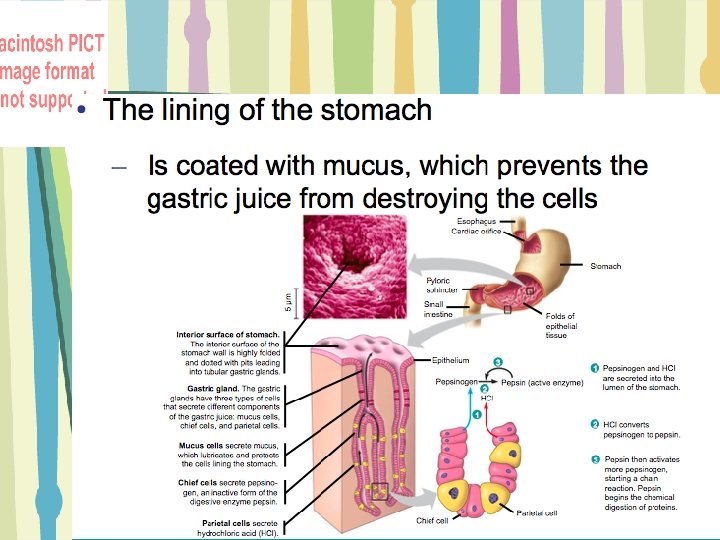
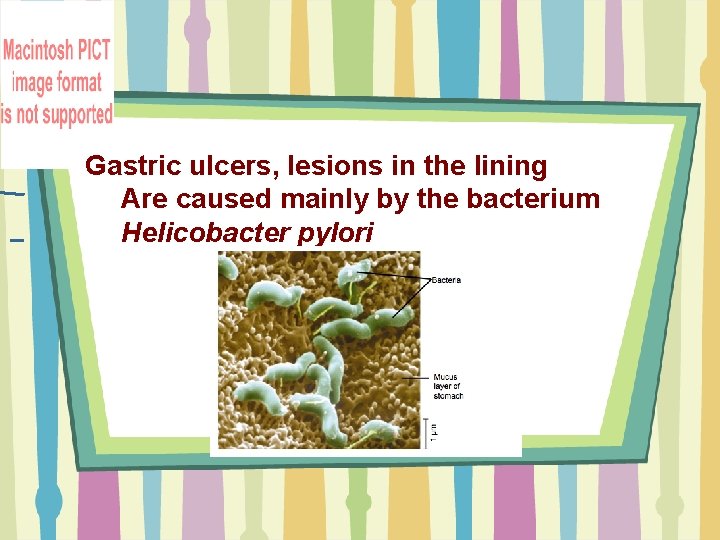
Gastric ulcers, lesions in the lining Are caused mainly by the bacterium Helicobacter pylori
The Small Intestine The small intestine Is the longest section of the alimentary canal Is the major organ of digestion and absorption
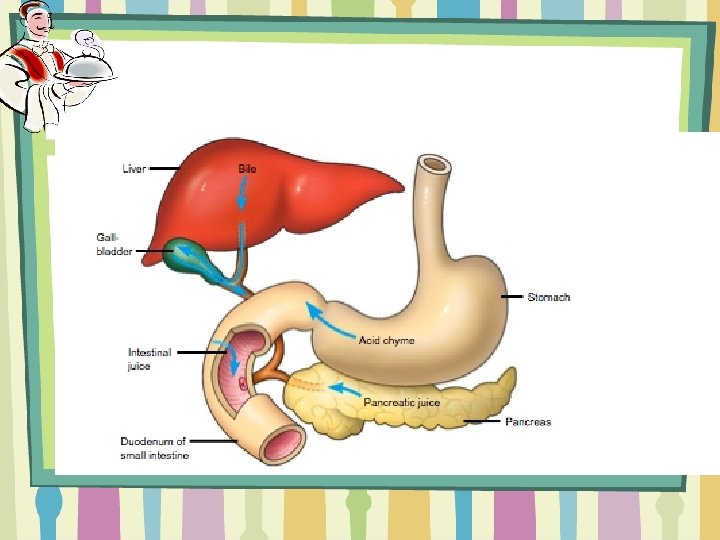
Enzymatic Action in the Small Intestine The first portion of the small intestine is the duodenum Where acid chyme from the stomach mixes with digestive juices from the pancreas, liver, gallbladder, and intestine itself
The pancreasexocrine gland produces proteases, proteindigesting enzymes That are activated once they enter the duodenum
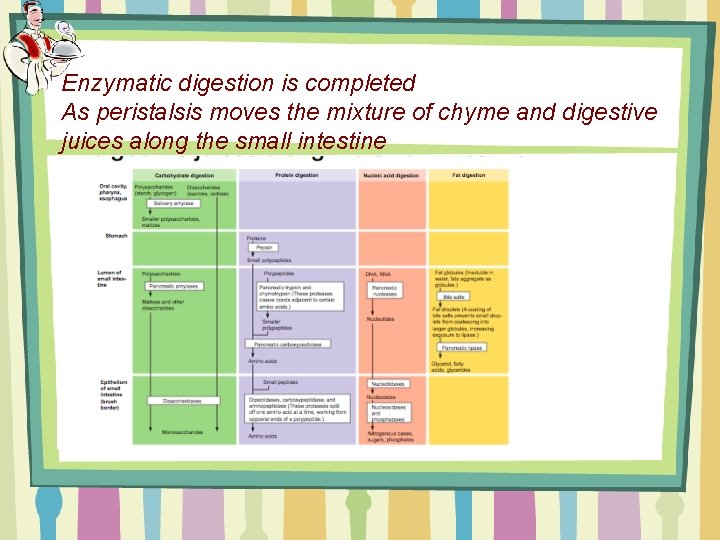
Enzymatic digestion is completed As peristalsis moves the mixture of chyme and digestive juices along the small intestine
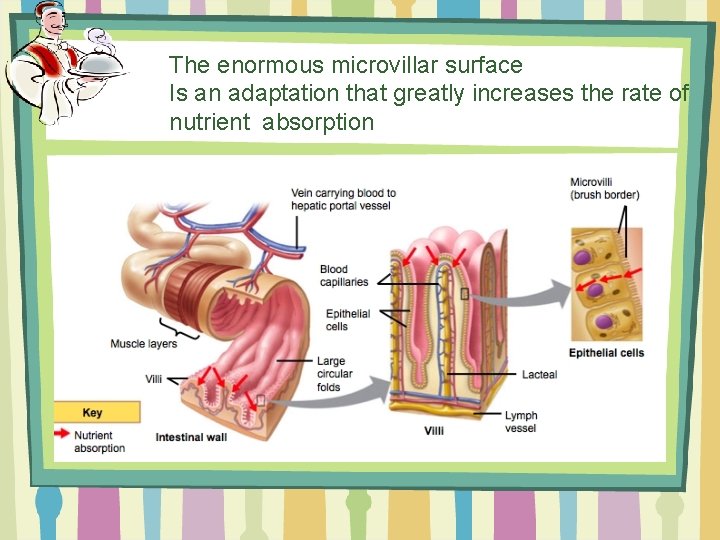
Absorption of Nutrients The small intestine has a huge surface area – Due to the presence of villi and microvilli that are exposed to the intestinal lumen
The enormous microvillar surface Is an adaptation that greatly increases the rate of nutrient absorption
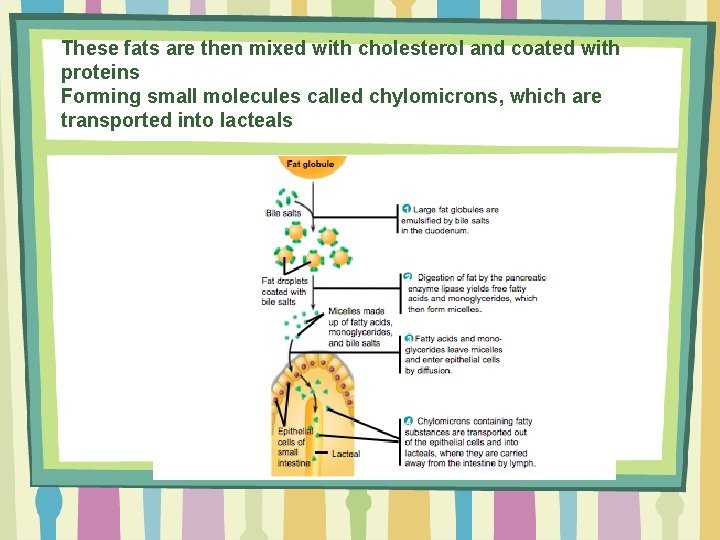
These fats are then mixed with cholesterol and coated with proteins Forming small molecules called chylomicrons, which are transported into lacteals
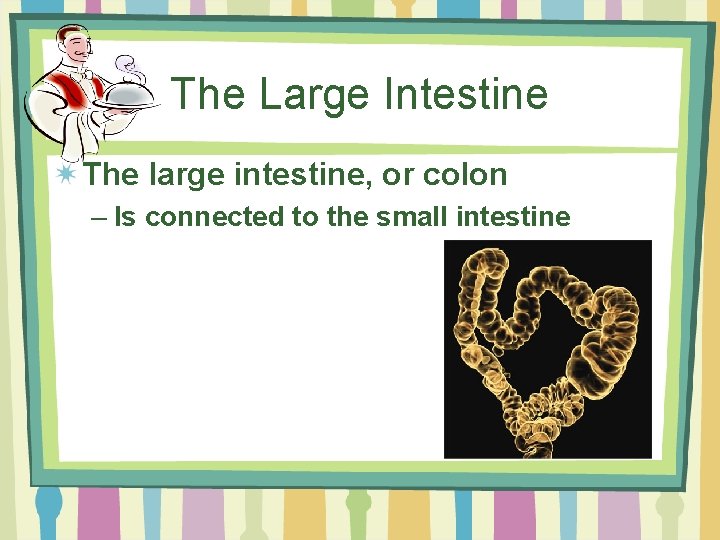
The Large Intestine The large intestine, or colon – Is connected to the small intestine
A major function of the colon – Is to recover water that has entered the alimentary canal The wastes of the digestive tract, the feces – Become more solid as they move through the colon – Pass through the rectum and exit via the anus
The colon houses various strains of the bacterium Escherichia coli – Some of which produce various vitamins
Any Questions? ? ?