
Digestive System Original Power Point Created by Casey
Digestive System Original Power Point Created by Casey Osksa Modified by Georgia Agricultural Education Curriculum Office June 2002
Digestive System n n Large complex molecules broken down into simpler molecules Long tube beginning with mouth and ending with the anus
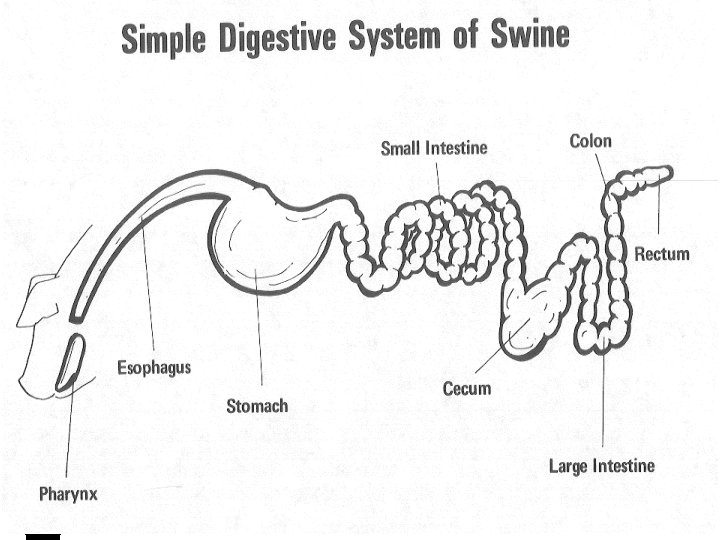
Digestive Systems n n n Man & Pig have a simple stomach with an extensive intestinal system Ruminants have a complex stomach with a simpler intestinal system Horses & Rabbits have a simple stomach with an extensive intestinal system and an enlarged cecum
Digestive System n n n Mouth: “Prehension” tool (grasps food) Salivary Glands secrete juices containing enzymes (digest food) Chewing food breaks down also Esophagus: muscular tube that connects mouth to stomach Peristaltic Movement: sequential contraction of ring like muscles Reverse Peristalsis = blowing chunks
Simple Stomach n n Muscular contractions break down food Enzymes break down food: – Gastric: proteins – Liver & Pancreatic: fats
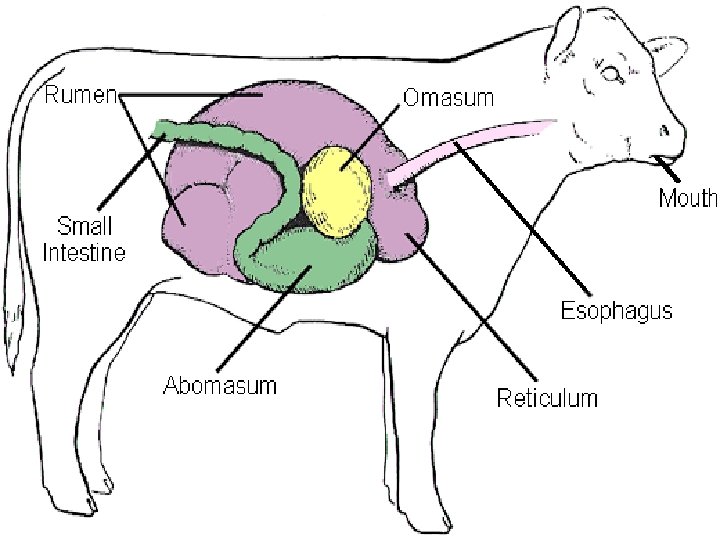
Ruminant Stomach n n Stomach occupies 3/4 of abdominal cavity, mostly on the left side Rumen (paunch): 80% of stomach, lighter food collects here – microbes digest cellulose – lots of water n Reticulum (hardware stomach): 5% of stomach, heavy foreign items are trapped here
Ruminant Stomach n n n Omasum (many plies): 8% of stomach, absorbs water Abomasum (true stomach): 8% of stomach, typical enzyme activity Rumination: regurgitation, rechewing of food
Digestive System n Small Intestine: long coiled tube connecting stomach to large intestine – rest of the digestion and absorbtion takes place here – surface covered with villi (surface area) n Large Intestine: Cecum, colon, rectum – absorbs water (makes feces more solid) – some vitamins & minerals absorbed here – Cecal Fermenters (Horse): similar to rumen
Digestive System n n n Accessory organs: Pancreas secretes enzymes to break down fat Liver (largest internal organ) secretes bile, which digests fats – also stores iron
- Slides: 11