
Digestive system of Farm Animals Location Mouth Dental
- Slides: 38
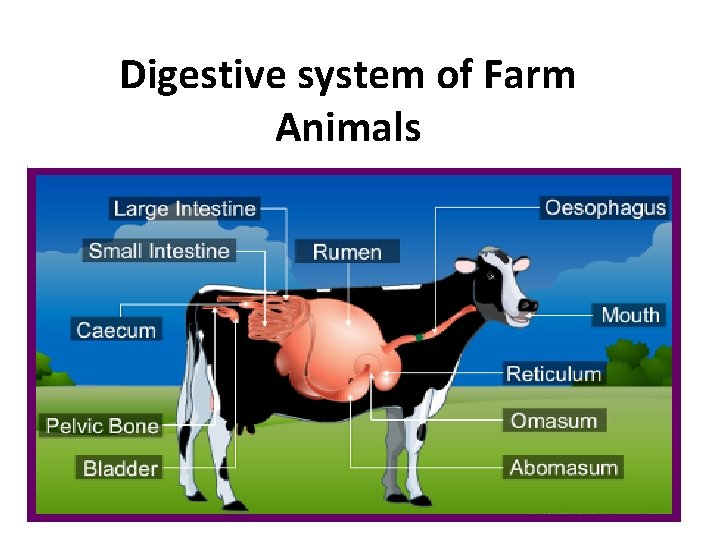
Digestive system of Farm Animals
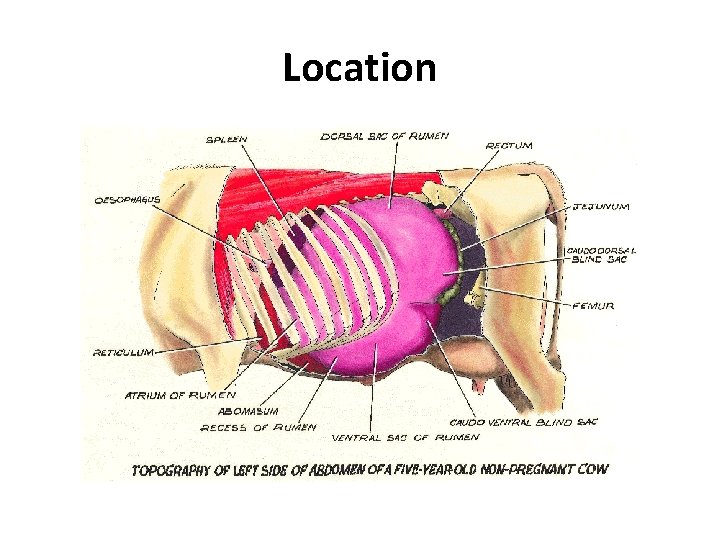
Location
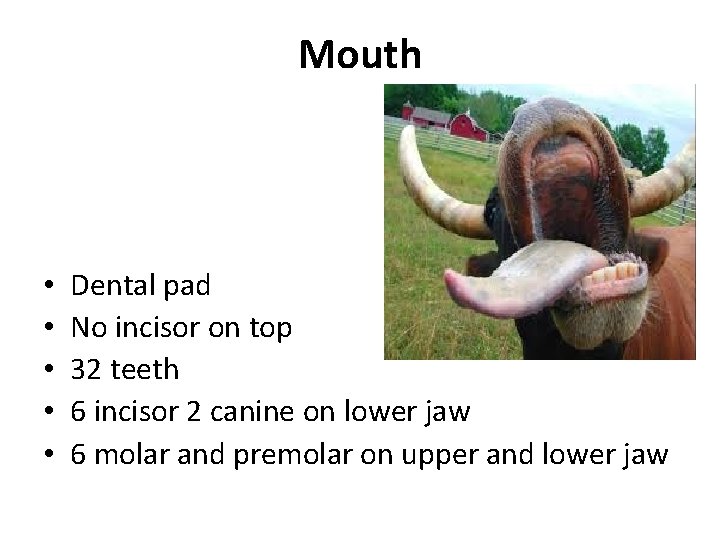
Mouth • • • Dental pad No incisor on top 32 teeth 6 incisor 2 canine on lower jaw 6 molar and premolar on upper and lower jaw
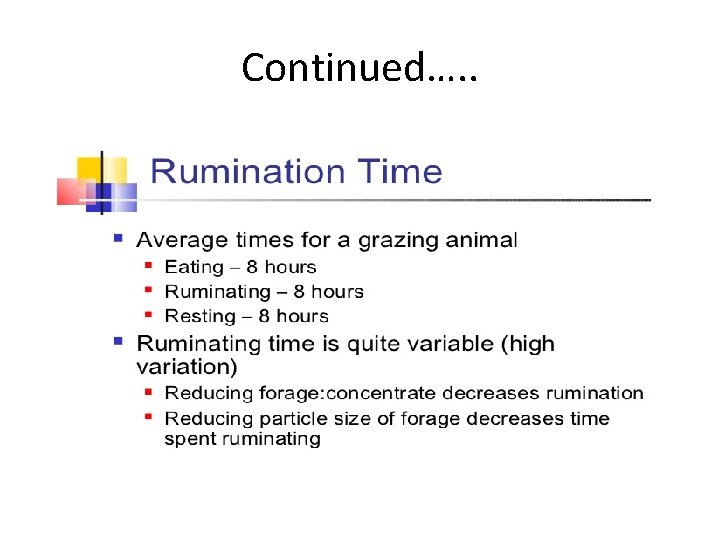
Digestive System Common misconception 1 stomach with 4 compartment. What is rumination? The cow chews feed almost without any sorting, which makes her different from other animals such as pigs. After a short period of mastication, when saliva is added, the feed is swallowed in the shape of a bolus. When the cow ruminates, feed returns back to the mouth and is masticated again. Most of the reduction of feed particles occurs during the rumination process. • 4 steps-regurgitation-reverse peristalsis, remastication, reinsalivation, redeglutition, • •
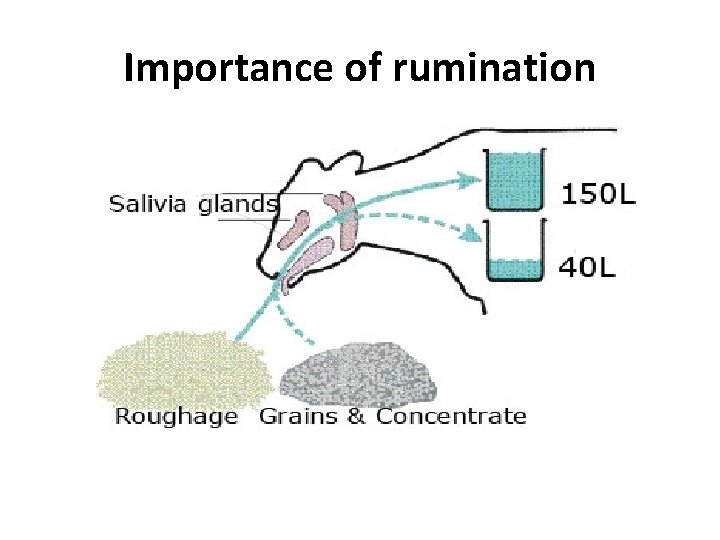
Importance of rumination
Continued……. • Mastication. The process of grinding enlarges the surface area of the feedstuff. This greater surface area helps the ruminal microorganisms and digestive juices to break the feedstuff down. • Saliva is added. During mastication, large amounts of saliva are added. • A cow produces between 40 and 150 liters (10 -45 gallons) of saliva per day, depending on the feed she receives. Roughage has the effect of increasing rumination activity, where as concentrates reduce it.
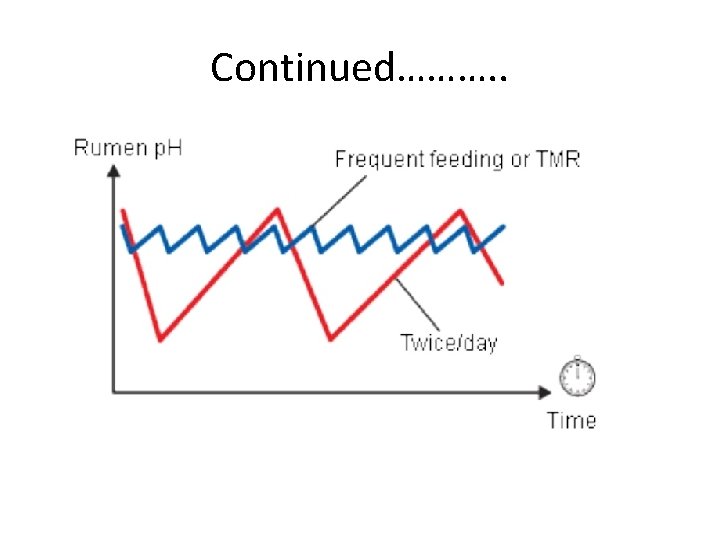
Continued……… • Saliva has two functions: • A. Buffering. Saliva, with a p. H value of approximately 8. 2 and a high sodium bicarbonate level, has a buffering effect in the rumen. This means that the saliva helps to counteract the effects of acid-producing feedstuffs, such as cereals, molasses, potatoes and fodder beets, on the ruminal p. H. • B. Suppressing foam. Saliva can reduce the risk of bloat as it also has a foam suppressing effect in the rumen
Continued…. .
Fermentation
Rumen
Continued……….
Continued…. .
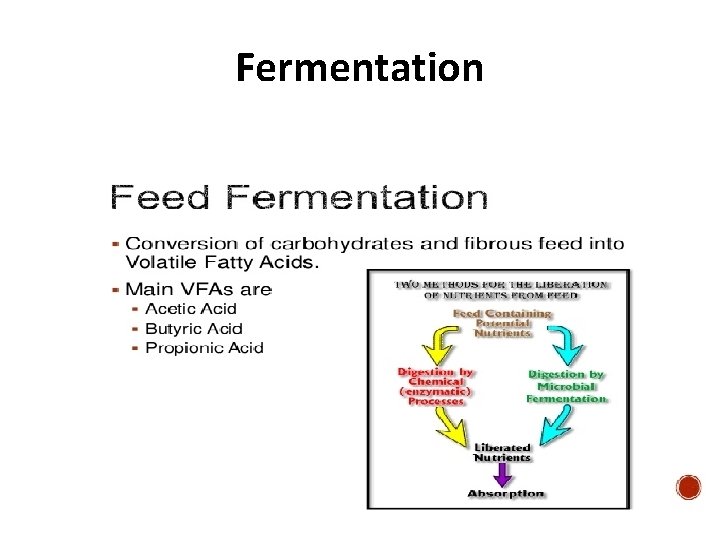
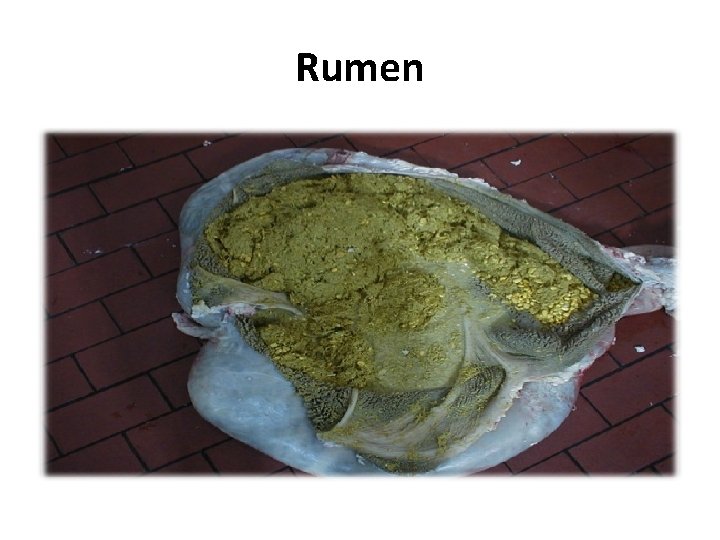
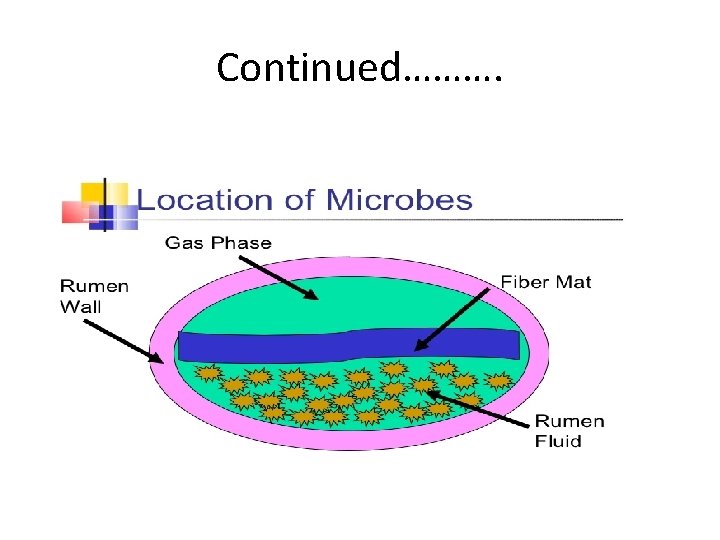
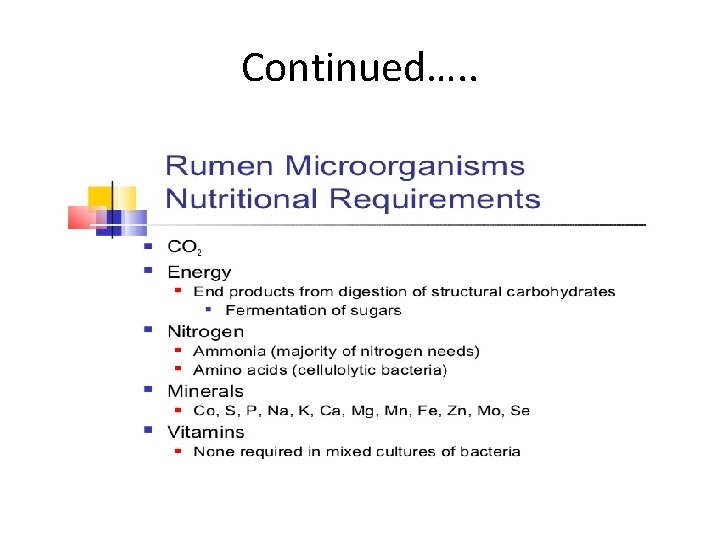
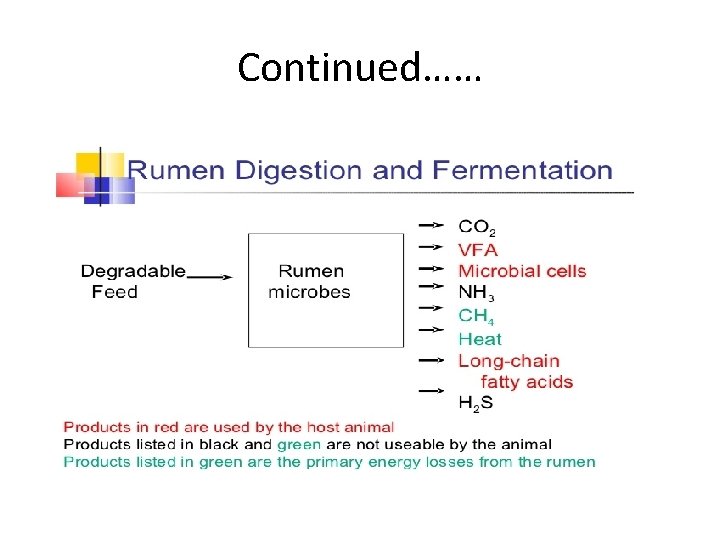
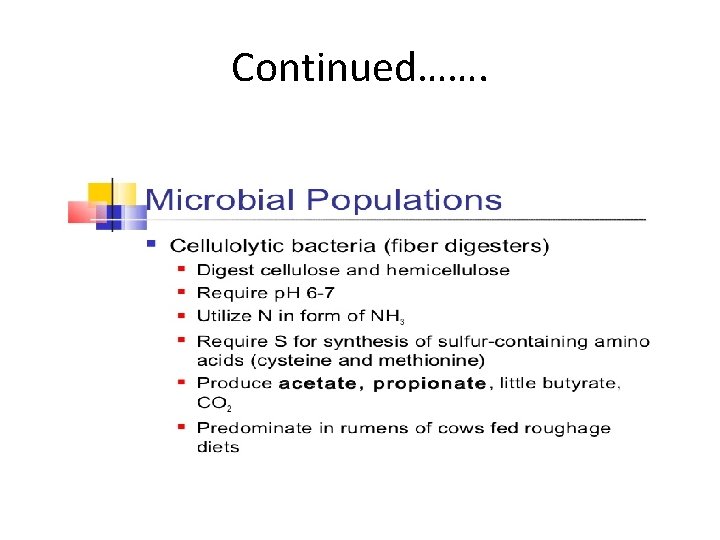
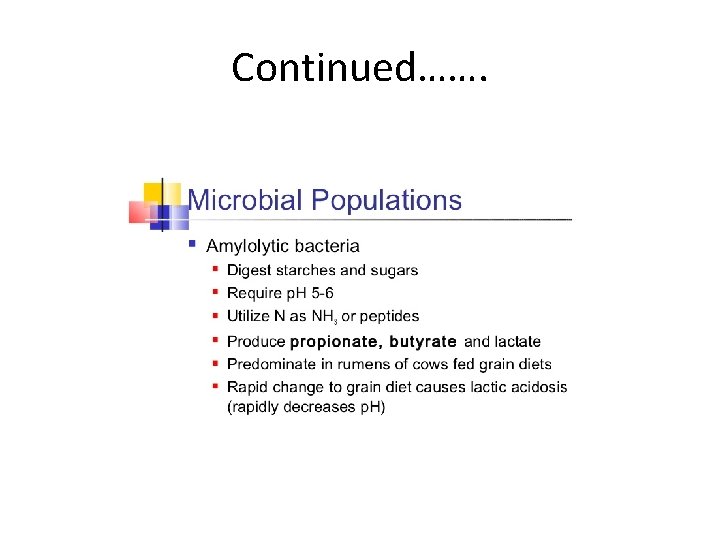
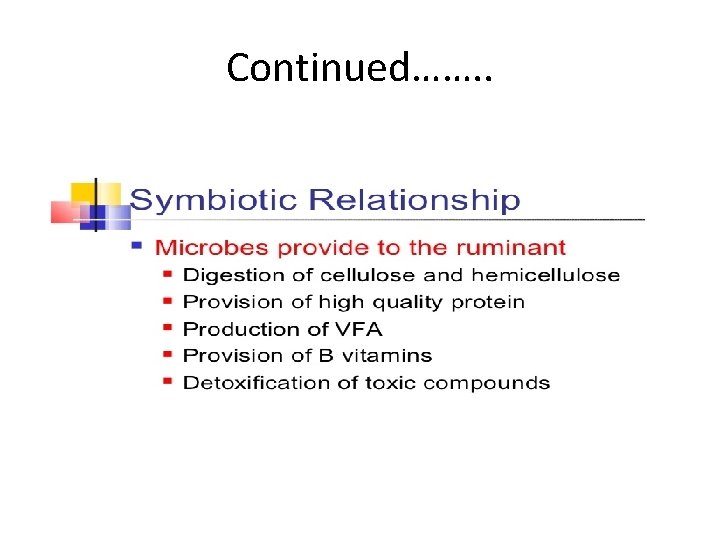
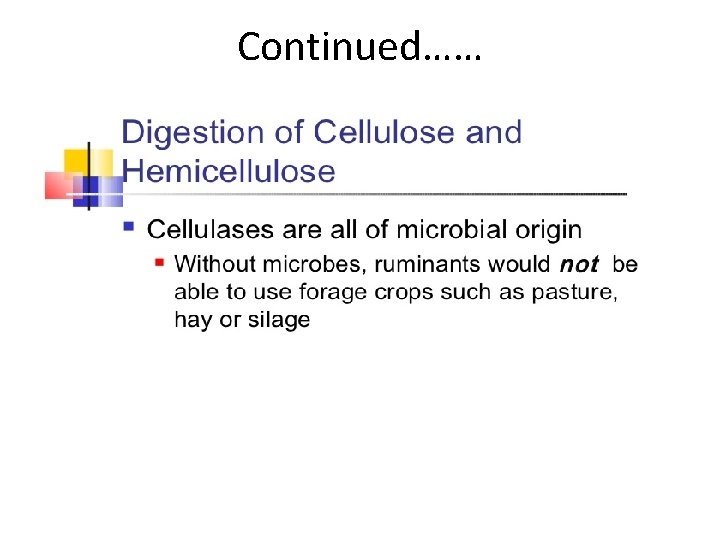
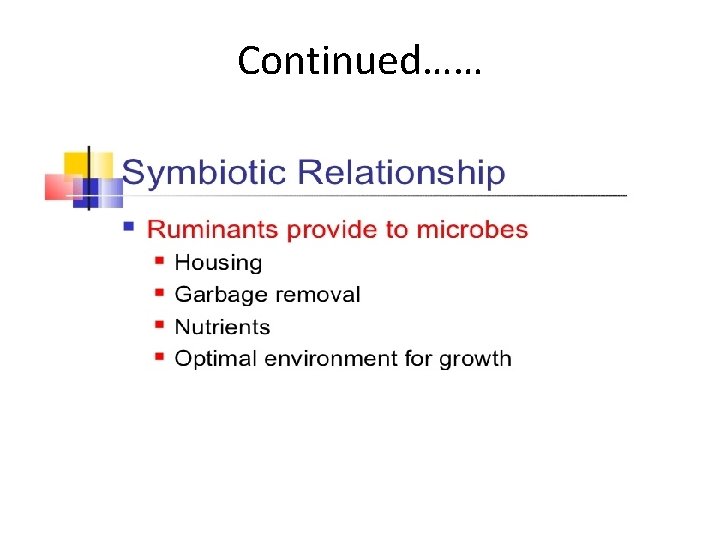
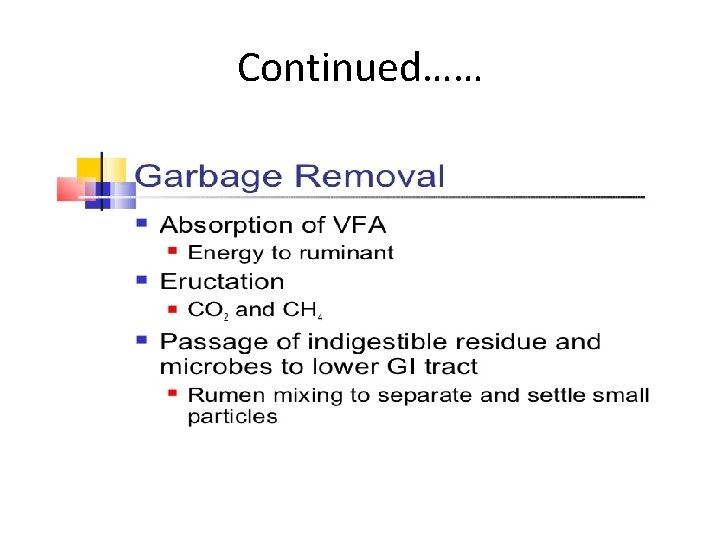
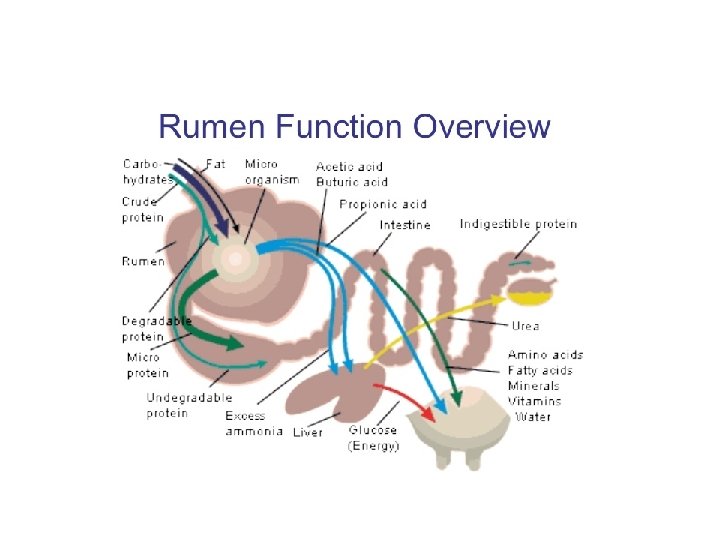
Continued…… • Largest compartment, 40 to 50 gallons of digested feed. • 1 ml of rumen fluid contains 10 to 50 billion microbes, over 1 million protozoa. • Its not the cow which digest feed • Bacteria attach to feed particles • Surface area of feed increased • Digest cellulose and hemicellulose- fibre • Carbohydrate→ volatile fatty acids VFA-Buytric acid, acetic acid, propoinic acid , gases and energy
• Produce high quality protein • Main by product of fermentation – VFA, • These compounds are absorbed through rumen wall and used as energy • Digested Protein supports for microbial growth and function • Fats→ glycerol , fatty acids, absorbed through small intestine. • Unsaturated fatty acids toxic to bacteria and can be converted to CLA-conjugated linoleic acid • Too much fats are not recommended, affect digestibility
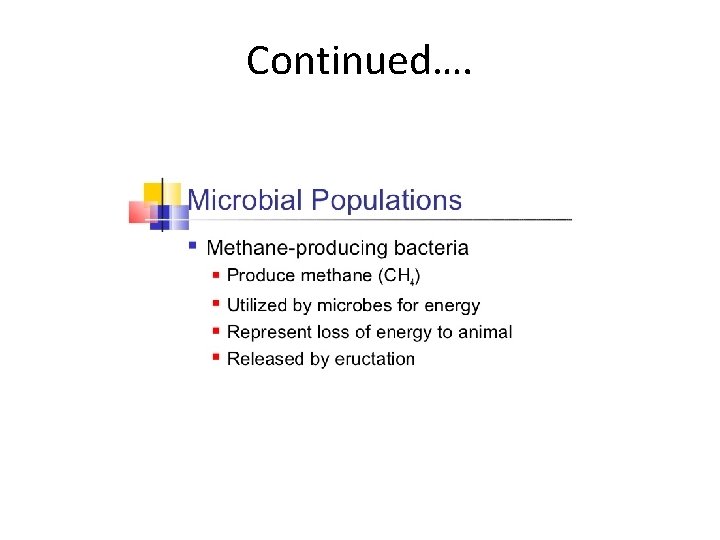
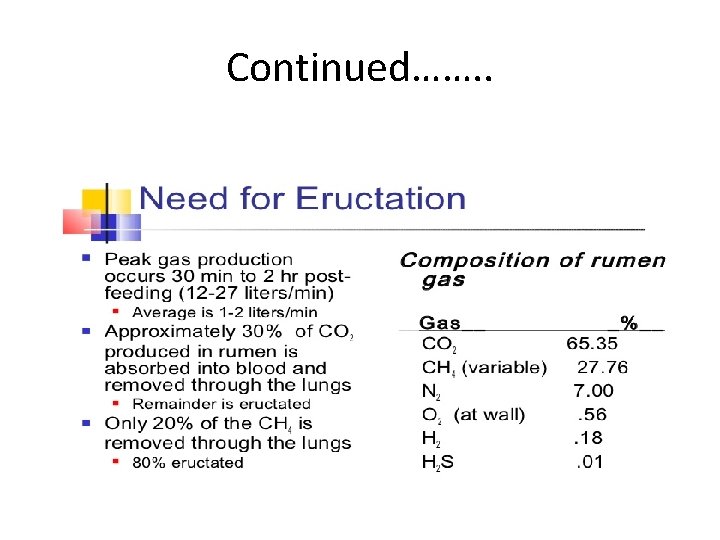
• Of gases produced within the rumen during fermentation (500– 1500 litres per day) (150400 gallons), 20– 40% consist of methane and carbon dioxide. • Production of fermentation gases represents a considerable energy loss. • Certain fermentation modifiers, such as ionophores, improve energy efficiency of ruminants by reducing those gas energy losses. • The fermentation gases are expelled by belching. When belching is impossible or ineffective, cows can suffer from bloat.
Continued……
Continued…….
Continued…….
Continued….
Continued……. .
Continued……. .
Continued……
Continued……
Continued……
Continued……
Continued………. .
Reticulum
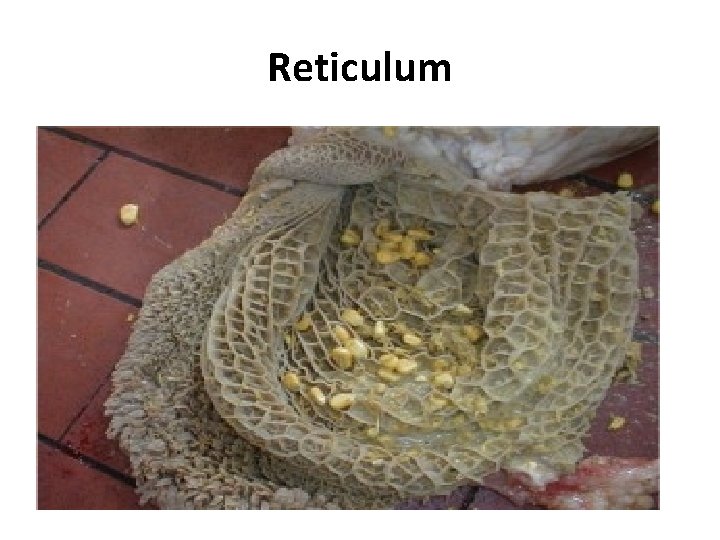
Continued…… • Attached to rumen, honeycomb structure. • Trap large feed particles • Make sure- don’t enter next section and further rumination • These particles are then regurgitated, re-chewed, salvia added and then re-swallowed (otherwise known as chewing their cud). • Saliva is important to the rumen as it functions as a buffer. • Cow produce 25 -40 gallons of saliva per day. • This system has allowed cattle to eat forage rapidly and then store later for digestion
Omasum
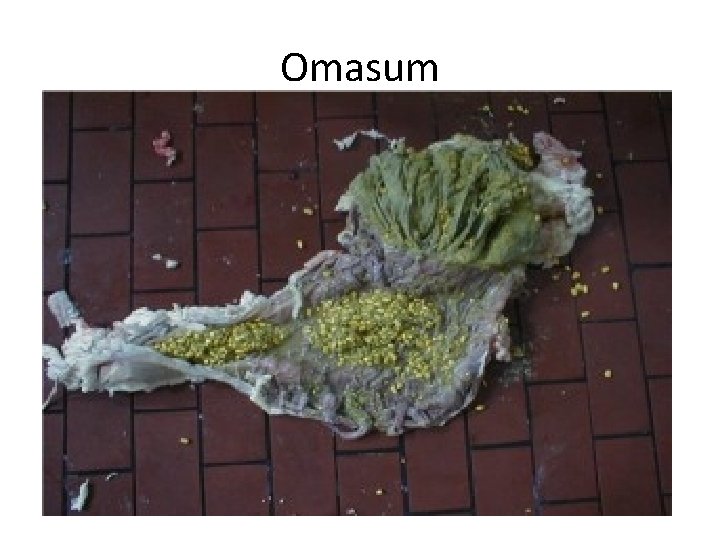
Omasum • Act like filter • The rumen is 80% water and cattle are required to drink 35 -40 gallons of water a day, mainly to maintain the rumen environment. • The many folds of the omasum serve to squeeze out the water from the feed, so that the majority of the water doesn’t ‘escape’ into the rest of the digestive tract and remains in the rumen.
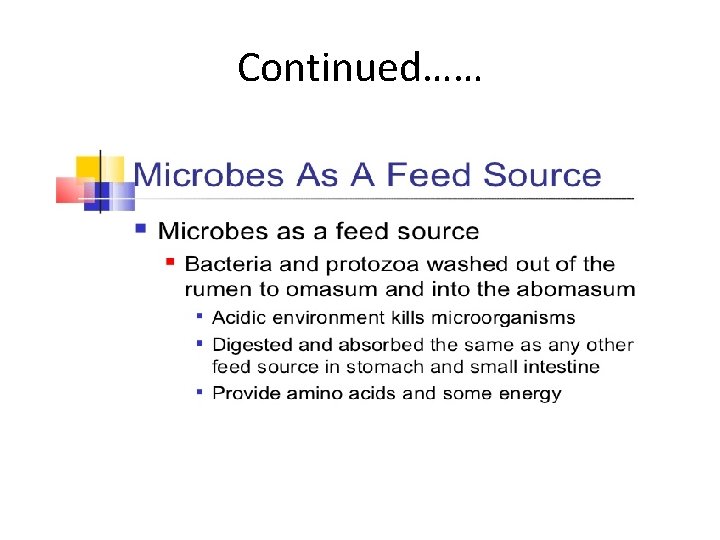
Abomasum • The final compartment of the stomach is the abomasum. • This compartment is similar to our stomachs and has a low p. H and enzymes to digest the proteins in the feed. • Microbial protein plus undigestible intake protein (e. g. by-pass protein) from the feed is broken down and these amino acids absorbed by the animal in the small intestine. • The nutrients presented to the cow at this point are very different than the feed which entered the rumen.
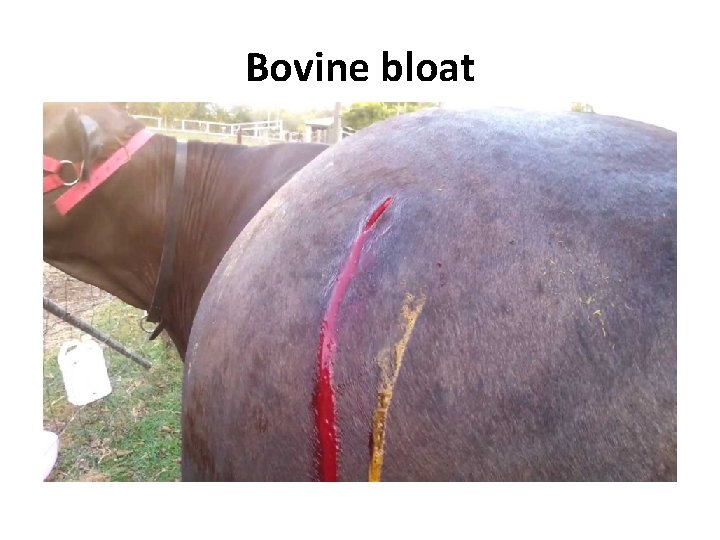
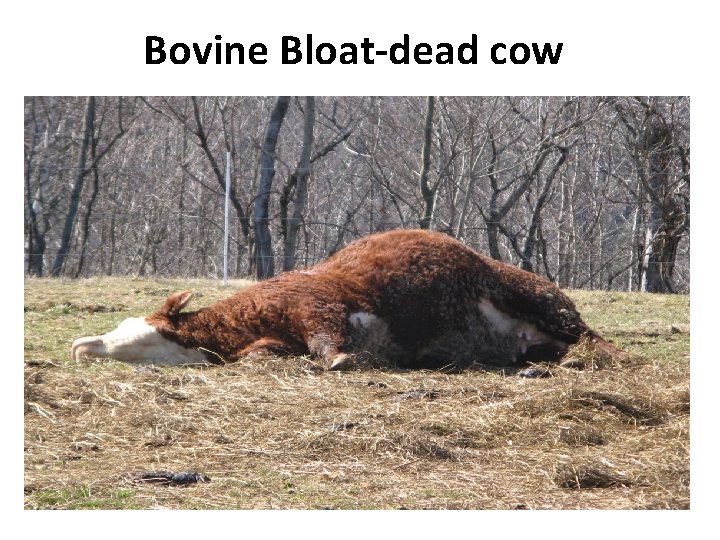
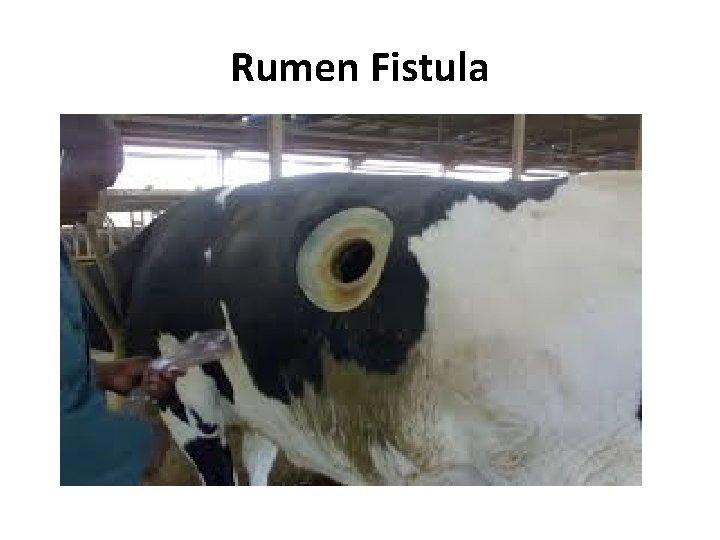
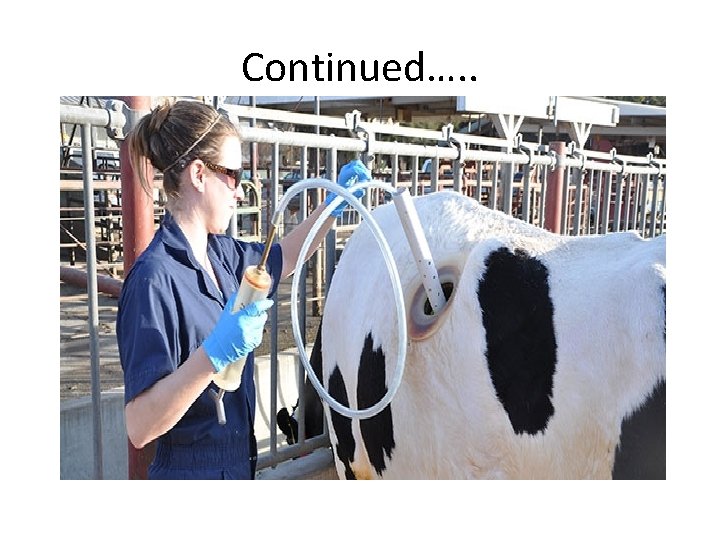
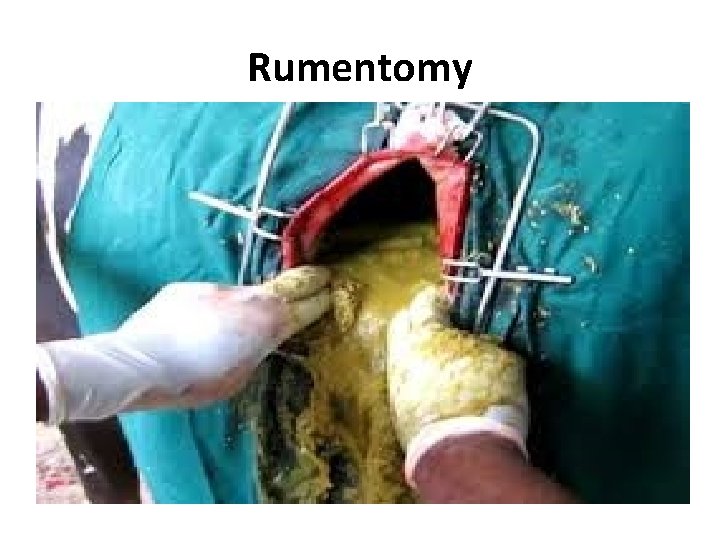
• Bloat-over eating, rapid change in feed • Rumen fistula-rumen transfaunation • Rumentomy
Bovine bloat
Bovine Bloat-dead cow
Rumen Fistula
Continued…. .
Rumentomy