
Digestive System Notes Biochemistry and Digestion Food processing
Digestive System Notes Biochemistry and Digestion
Food processing 1. Ingestion 2. Digestion (Mechanical vs. Chemical) 3. Absorption 4. Elimination
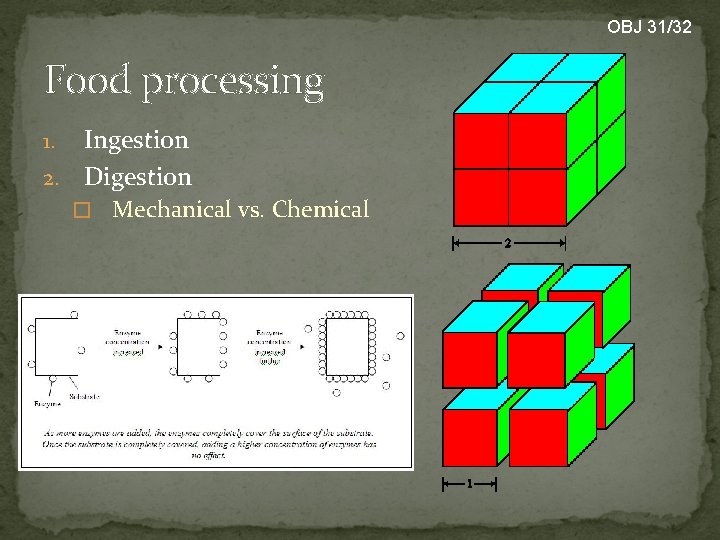
OBJ 31/32 Food processing Ingestion 2. Digestion 1. � Mechanical vs. Chemical
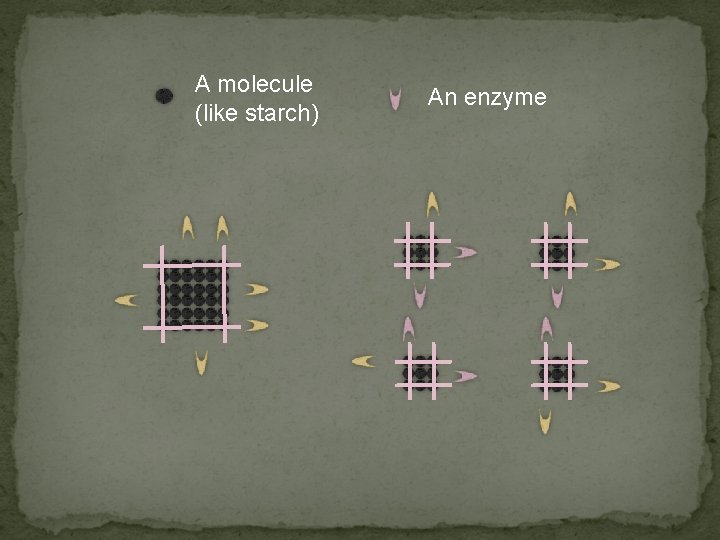
A molecule (like starch) An enzyme
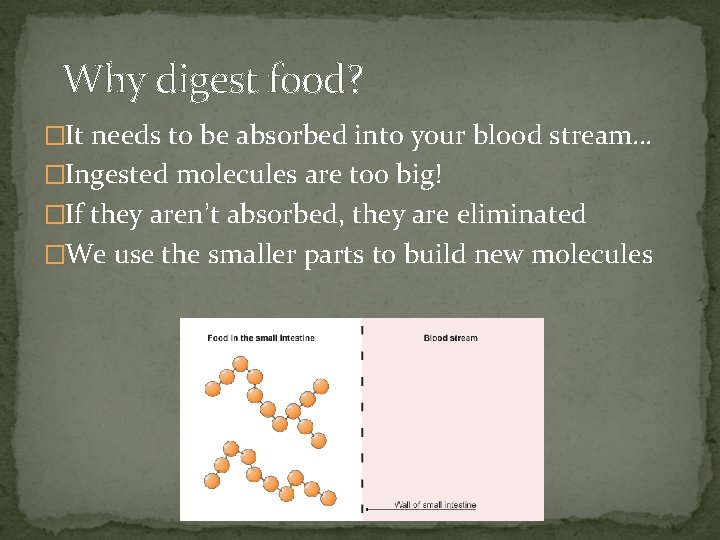
Why digest food? �It needs to be absorbed into your blood stream… �Ingested molecules are too big! �If they aren’t absorbed, they are eliminated �We use the smaller parts to build new molecules
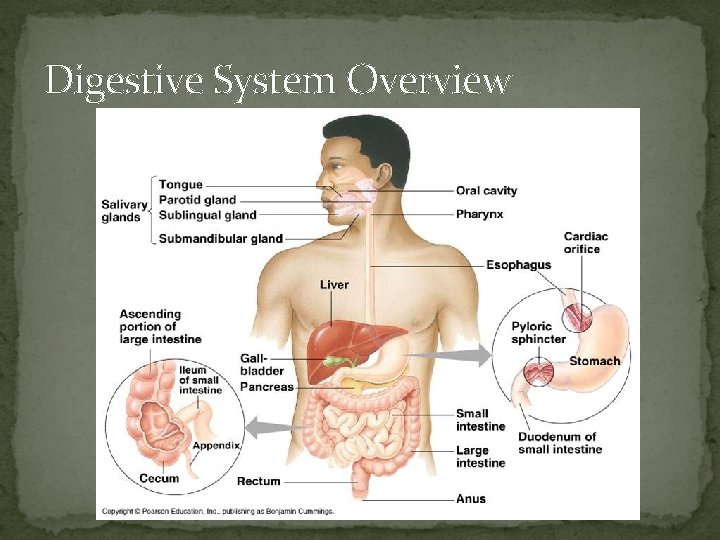
Digestive System Overview
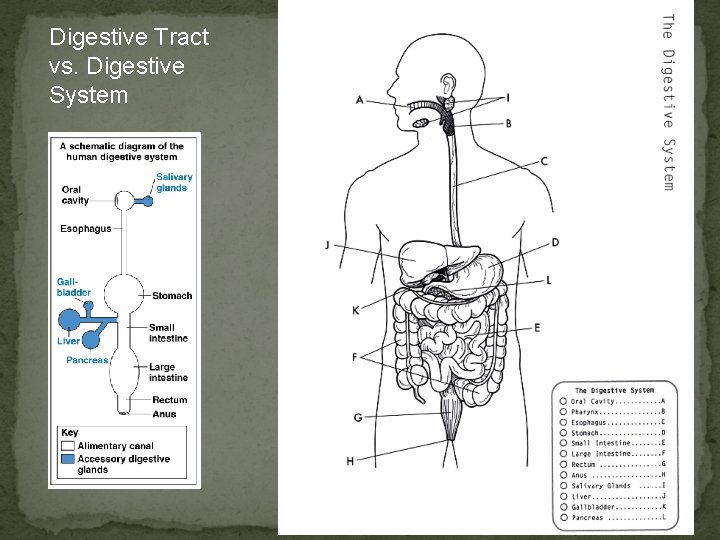
Digestive Tract vs. Digestive System
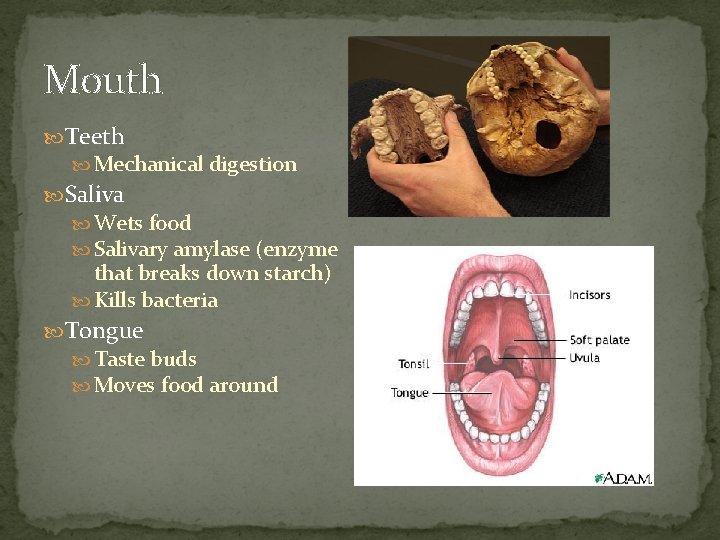
Mouth Teeth Mechanical digestion Saliva Wets food Salivary amylase (enzyme that breaks down starch) Kills bacteria Tongue Taste buds Moves food around

Esophagus Muscular tube Moves food through peristalsis (wave-like muscle contractions) Demo Epiglottis prevents food from entering the trachea (to the lungs)
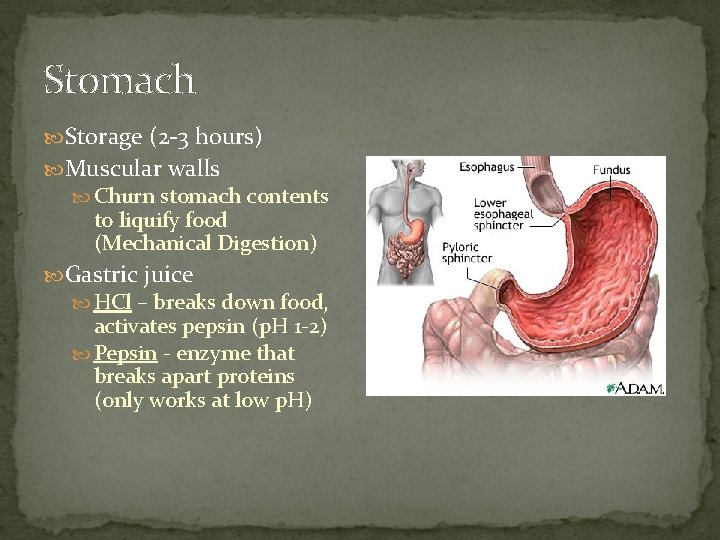
Stomach Storage (2 -3 hours) Muscular walls Churn stomach contents to liquify food (Mechanical Digestion) Gastric juice HCl – breaks down food, activates pepsin (p. H 1 -2) Pepsin - enzyme that breaks apart proteins (only works at low p. H)
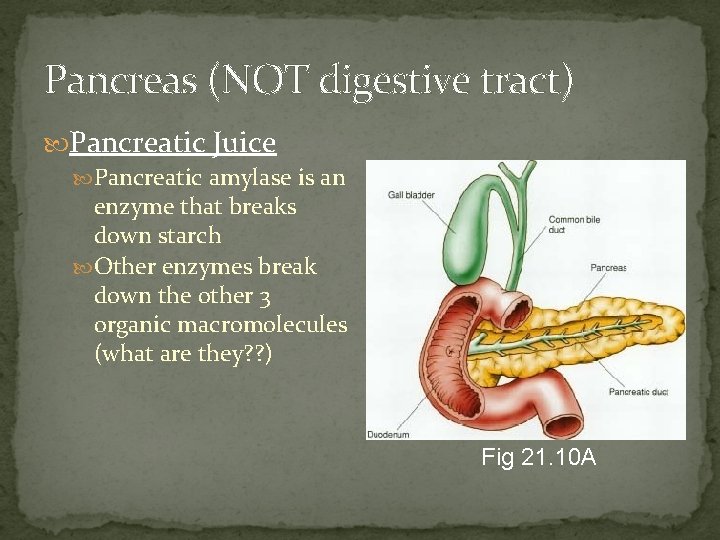
Pancreas (NOT digestive tract) Pancreatic Juice Pancreatic amylase is an enzyme that breaks down starch Other enzymes break down the other 3 organic macromolecules (what are they? ? ) Fig 21. 10 A
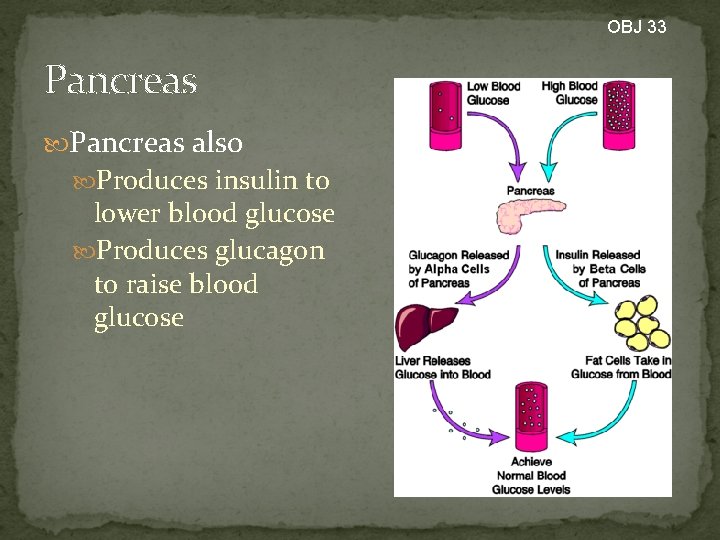
OBJ 33 Pancreas also Produces insulin to lower blood glucose Produces glucagon to raise blood glucose
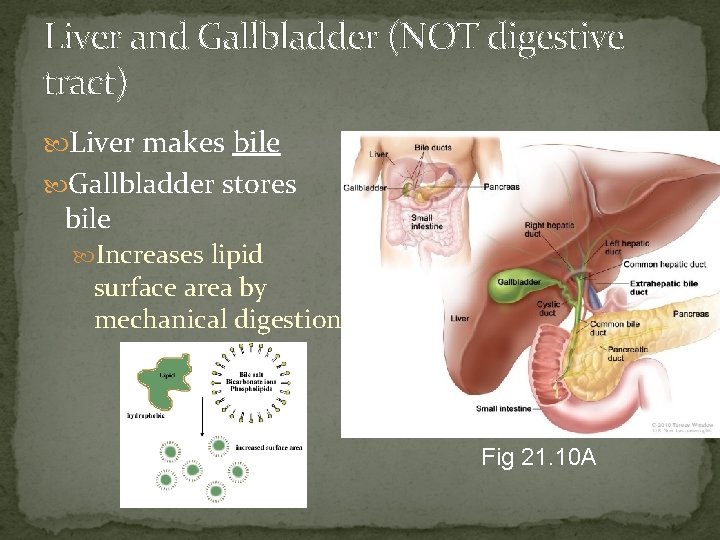
Liver and Gallbladder (NOT digestive tract) Liver makes bile Gallbladder stores bile Increases lipid surface area by mechanical digestion Fig 21. 10 A
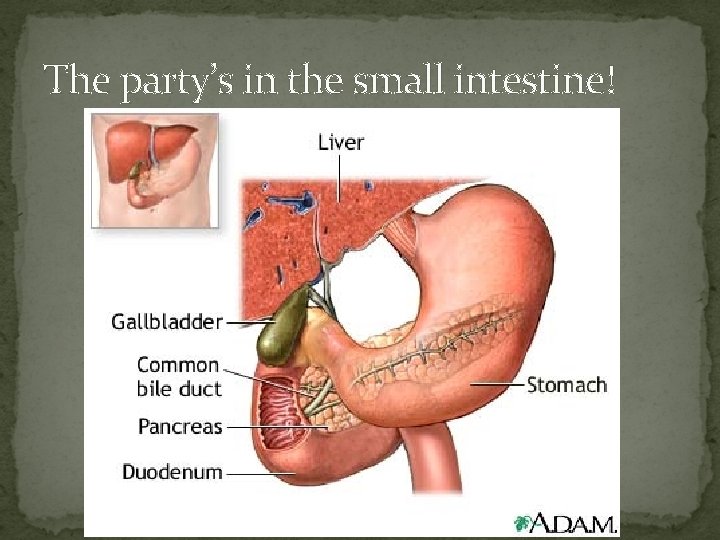
The party’s in the small intestine!
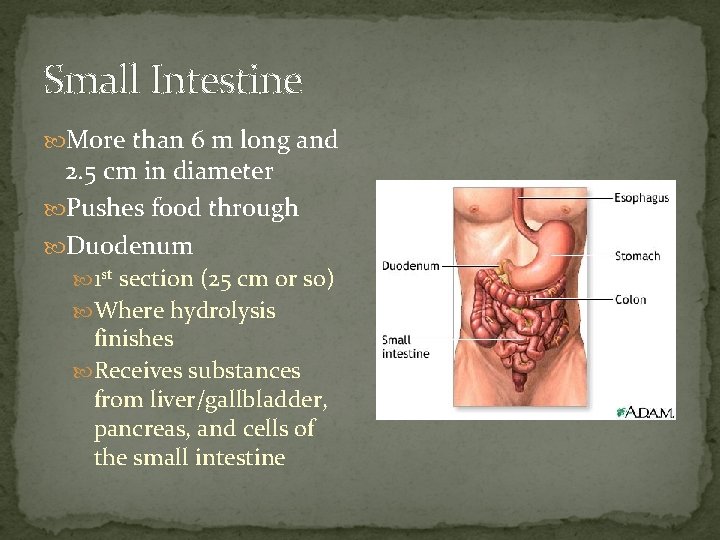
Small Intestine More than 6 m long and 2. 5 cm in diameter Pushes food through Duodenum 1 st section (25 cm or so) Where hydrolysis finishes Receives substances from liver/gallbladder, pancreas, and cells of the small intestine
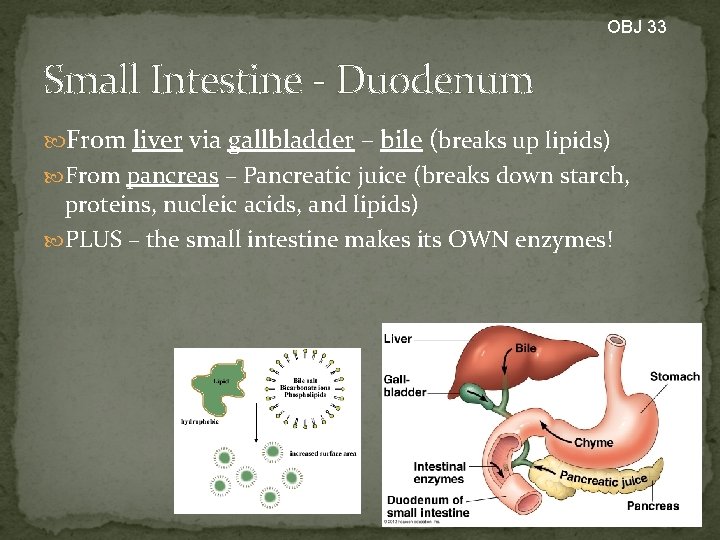
OBJ 33 Small Intestine - Duodenum From liver via gallbladder – bile (breaks up lipids) From pancreas – Pancreatic juice (breaks down starch, proteins, nucleic acids, and lipids) PLUS – the small intestine makes its OWN enzymes! Fig 21. 10 A
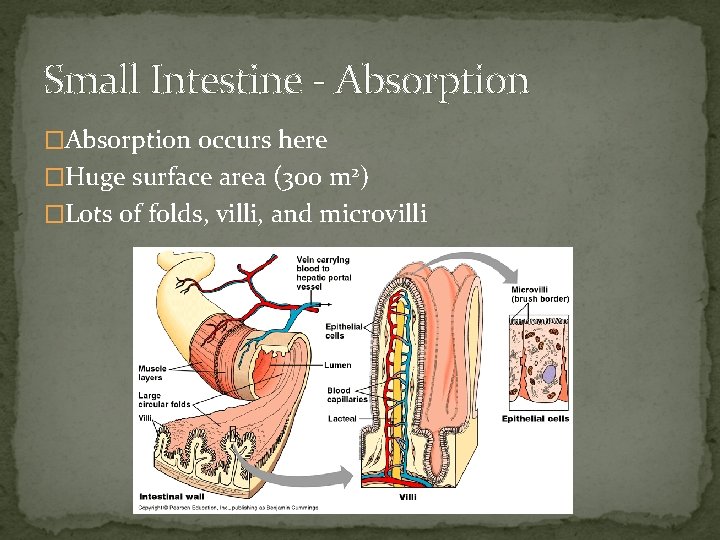
Small Intestine - Absorption �Absorption occurs here �Huge surface area (300 m 2) �Lots of folds, villi, and microvilli
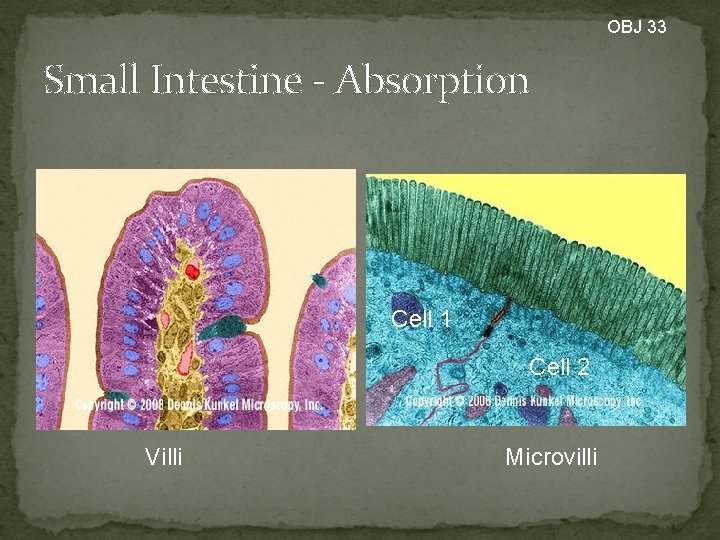
OBJ 33 Small Intestine - Absorption Cell 1 Cell 2 Villi Microvilli
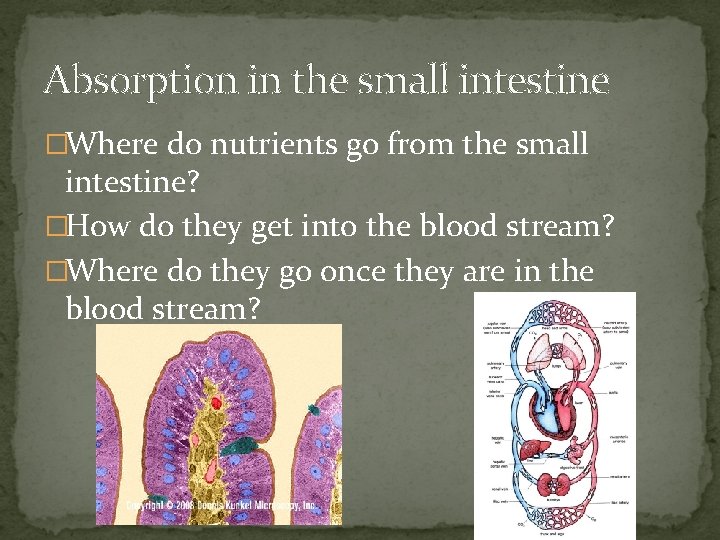
Absorption in the small intestine �Where do nutrients go from the small intestine? �How do they get into the blood stream? �Where do they go once they are in the blood stream?
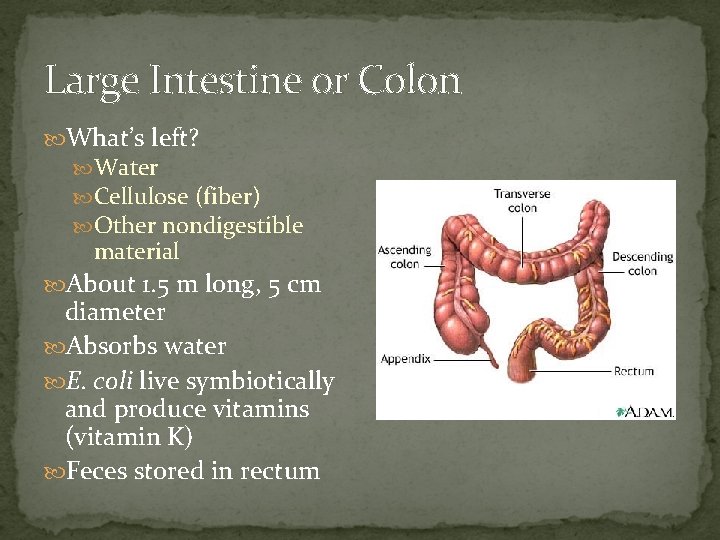
Large Intestine or Colon What’s left? Water Cellulose (fiber) Other nondigestible material About 1. 5 m long, 5 cm diameter Absorbs water E. coli live symbiotically and produce vitamins (vitamin K) Feces stored in rectum
Where different types of chemicals are broken down chemically: MOLECULES: Carbohydrates WHERE DIGESTED: Mouth, small intestine Proteins Stomach, small intestine Lipids Small intestine
Gross Facts Bacteria love the stuff we can’t break down…and gas & flatulence are caused by bacteria metabolizing these nutrients 99% of these gases are odorless People actually study these gases to find out the 1% of these gases that cause the odors (great job!) Feces is 1/2 bacteria by weight Newborns don’t pass gas because they have no bacteria in their intestines yet Beano breaks down some molecules the bacteria like Lactaid breaks down lactose Gas-X reduces the surface tension of gas bubbles, which makes you feel better…. but the gas is still there Passing gas in public in ancient Rome was against the law
The End
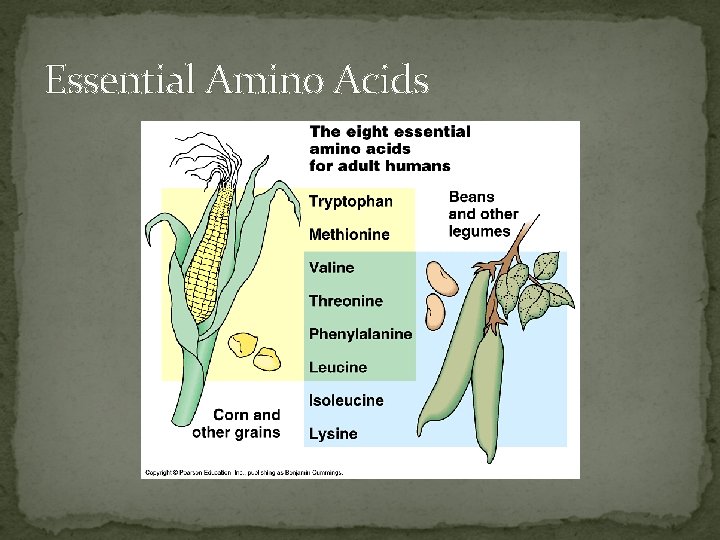
Essential Amino Acids
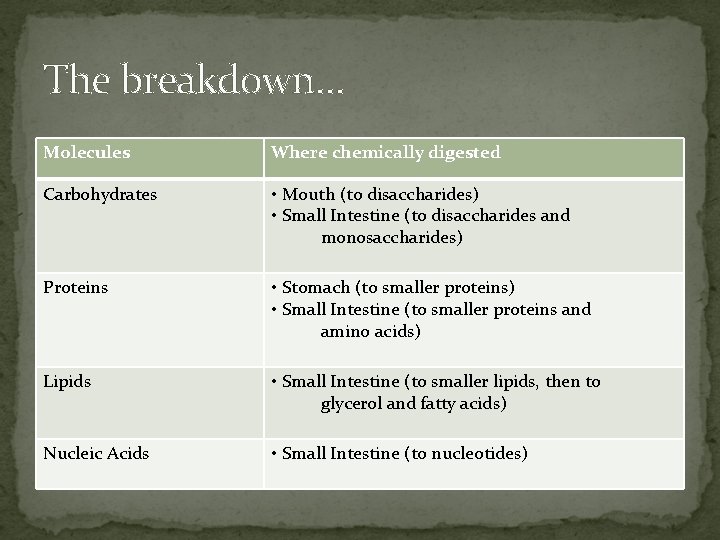
The breakdown… Molecules Where chemically digested Carbohydrates • Mouth (to disaccharides) • Small Intestine (to disaccharides and monosaccharides) Proteins • Stomach (to smaller proteins) • Small Intestine (to smaller proteins and amino acids) Lipids • Small Intestine (to smaller lipids, then to glycerol and fatty acids) Nucleic Acids • Small Intestine (to nucleotides)
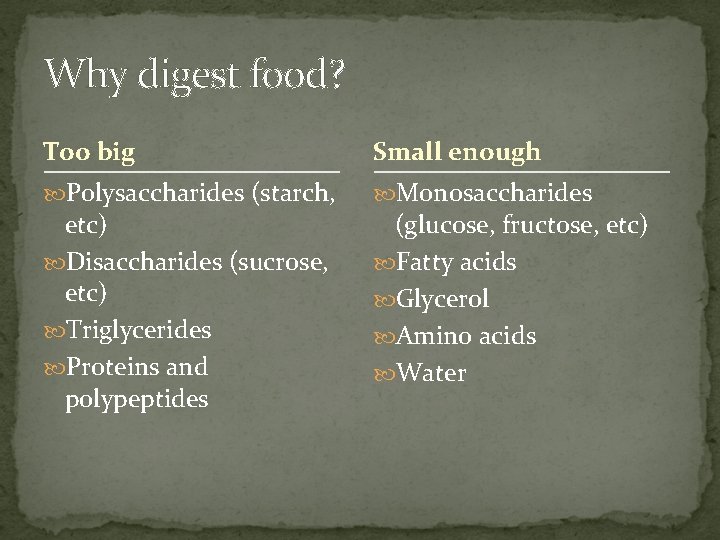
Why digest food? Too big Small enough Polysaccharides (starch, Monosaccharides etc) Disaccharides (sucrose, etc) Triglycerides Proteins and polypeptides (glucose, fructose, etc) Fatty acids Glycerol Amino acids Water
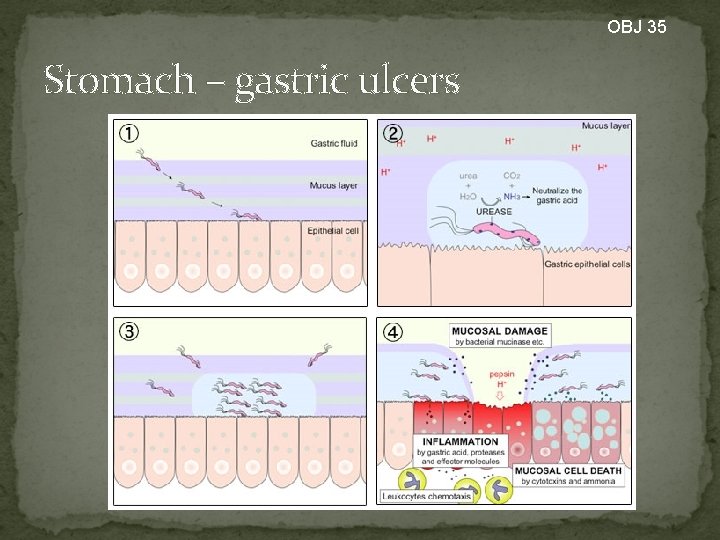
OBJ 35 Stomach – gastric ulcers
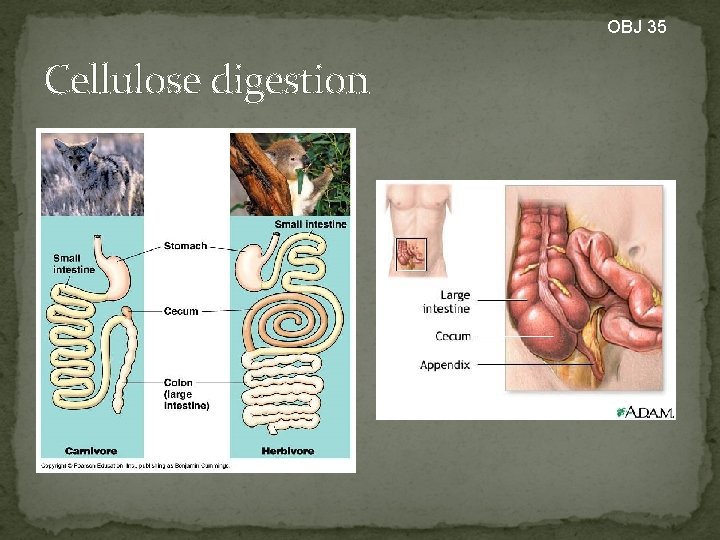
OBJ 35 Cellulose digestion
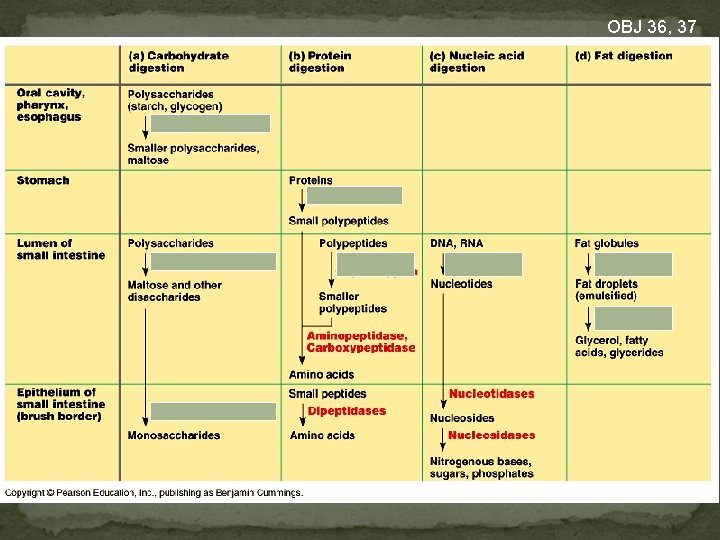
OBJ 36, 37 Where foods are broken down with enzymes
Questions to consider… �What is heartburn and why does it hurt? �What causes diarrhea? Constipation? �What prevents the stomach from being overly acidic? In your house or apartment, what keeps the furnace from overheating the building? Here, what characteristic of life pertains?
Think about the function of each food… �What would happen if you didn’t eat enough carbs? �Carbs are primarily used for what? �You would feel tired… �You would lose weight because your body is using stored reserves of energy… �Slow down digestion because of lack of fiber… �What would happen if you didn’t eat enough fat? �Some vitamins are fats. . . �Blood clotting, vision, bone growth would be affected… �Nervous system function would be impaired…
Think about the function of each food… �What would happen if you didn’t each enough protein? �Every body function would be affected… (No enzymes!!) �You might feel tired because you can’t produce enough hemoglobin…
OBJ 38 Structure and Function in Digestion �Mouth � Teeth – canines vs. molars �Esophagus � Tough, elastic connective tissue to stretch � Layers of smooth muscle for peristalsis �Stomach � Muscular walls for churning � Mucus lining to protect from acid and protease �Small Intestine � Long and folded, with villi for lots of absorption �Large Intestine � Size of cecum depends on diet
- Slides: 33