
Digestive System Health Science I Fun Facts Digestive


- Slides: 65
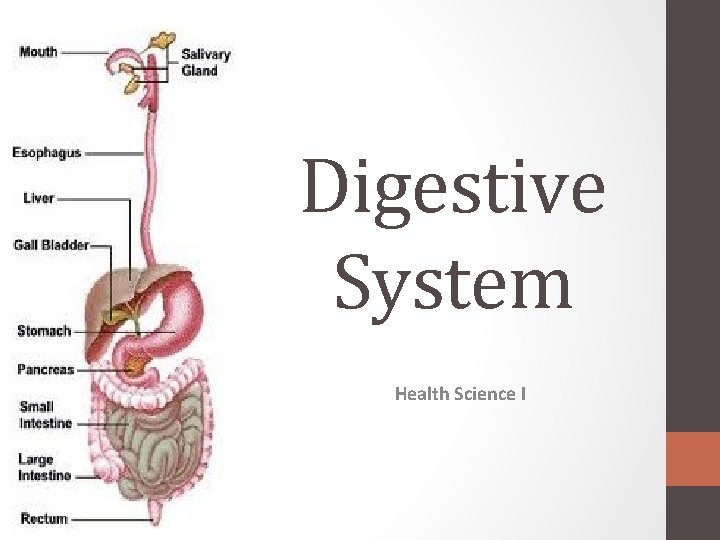
Digestive System Health Science I
Fun Facts • Digestive system • Also known as: • Alimentary Canal • Digestive Tract • Gastrointestinal Tract • Upper GI • Lower GI • Approximately 30’ (feet) in length from mouth to anus
Structures of Upper Digestive System • Mouth • • • Tongue Teeth Salivary glands Palate Uvula • Esophagus • Stomach • • • Fundus Body Pylorus Cardiac Sphincter Pyloric Sphincter
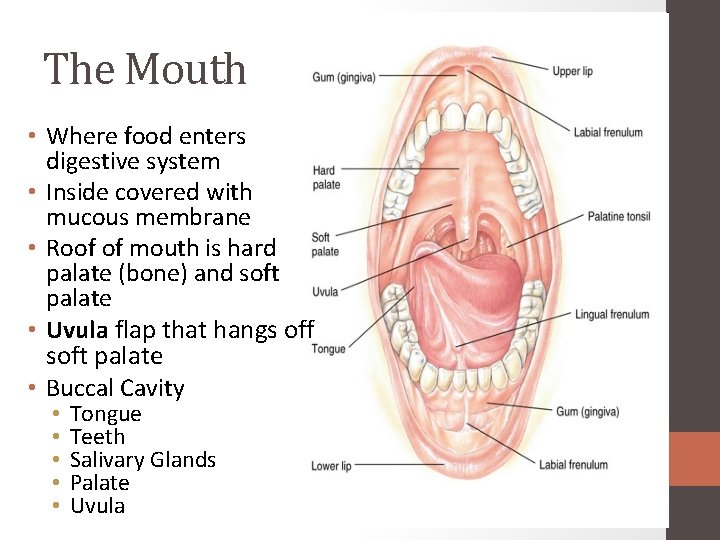
The Mouth • Where food enters digestive system • Inside covered with mucous membrane • Roof of mouth is hard palate (bone) and soft palate • Uvula flap that hangs off soft palate • Buccal Cavity • • • Tongue Teeth Salivary Glands Palate Uvula
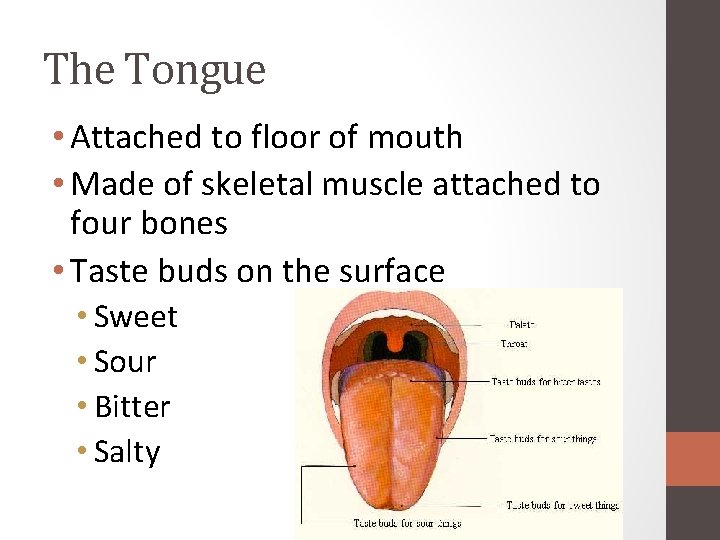
The Tongue • Attached to floor of mouth • Made of skeletal muscle attached to four bones • Taste buds on the surface • Sweet • Sour • Bitter • Salty
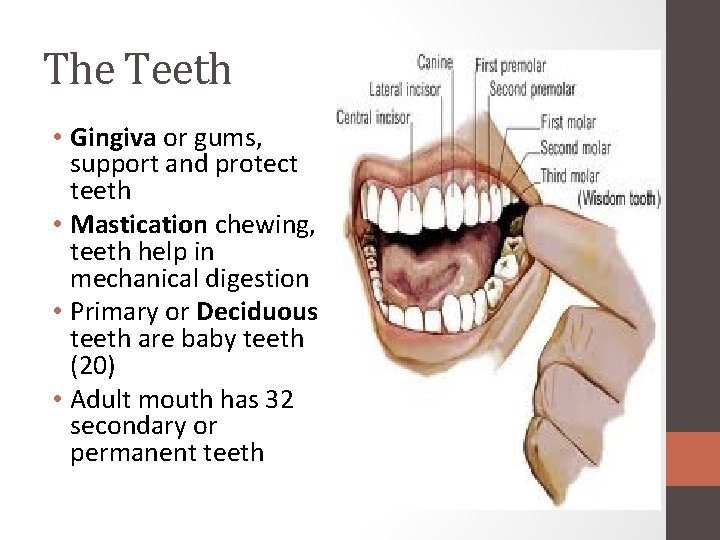
The Teeth • Gingiva or gums, support and protect teeth • Mastication chewing, teeth help in mechanical digestion • Primary or Deciduous teeth are baby teeth (20) • Adult mouth has 32 secondary or permanent teeth
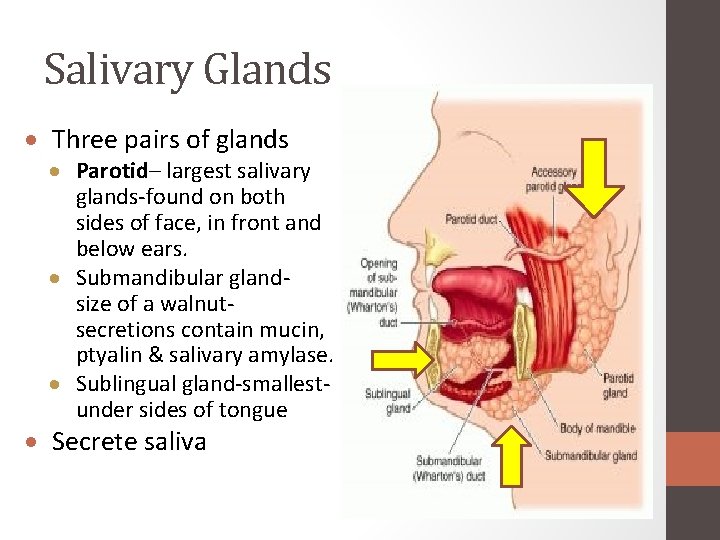
Salivary Glands Three pairs of glands Parotid– largest salivary glands-found on both sides of face, in front and below ears. Submandibular glandsize of a walnutsecretions contain mucin, ptyalin & salivary amylase. Sublingual gland-smallestunder sides of tongue Secrete saliva
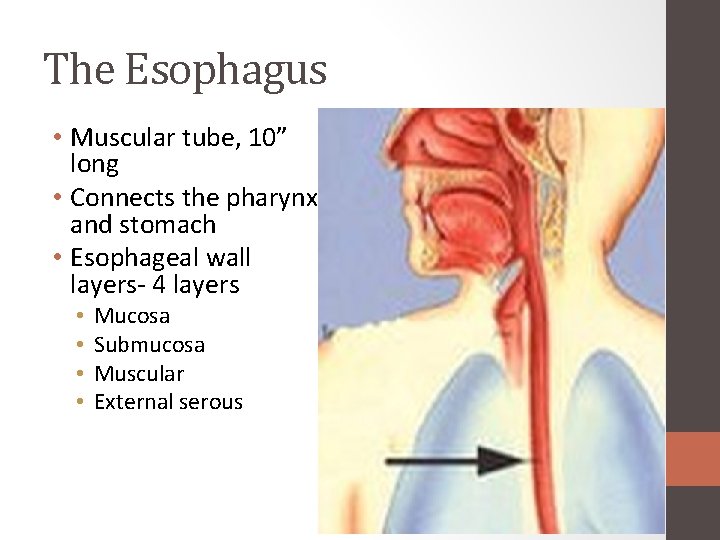
The Esophagus • Muscular tube, 10” long • Connects the pharynx and stomach • Esophageal wall layers- 4 layers • • Mucosa Submucosa Muscular External serous
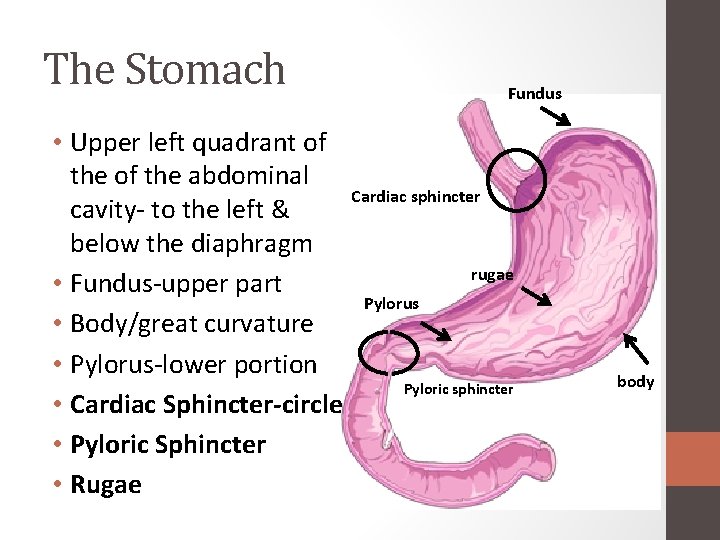
The Stomach • Upper left quadrant of the abdominal cavity- to the left & below the diaphragm • Fundus-upper part • Body/great curvature • Pylorus-lower portion • Cardiac Sphincter-circle • Pyloric Sphincter • Rugae Fundus Cardiac sphincter rugae Pylorus Pyloric sphincter body
• http: //www. youtube. com/watch? v=O-k. K 6 Ov. Dy. Wc • http: //www. youtube. com/watch? v=rti 4 y. FFj 6 FM
Structures of Lower Digestive System • Small intestine • Duodenum • Jejunum • Ileum • Pancreas • Liver • Gallbladder • Large intestine • • Cecum Vermiform appendix Ascending colon Transverse colon Descending colon Sigmoid Rectum anus
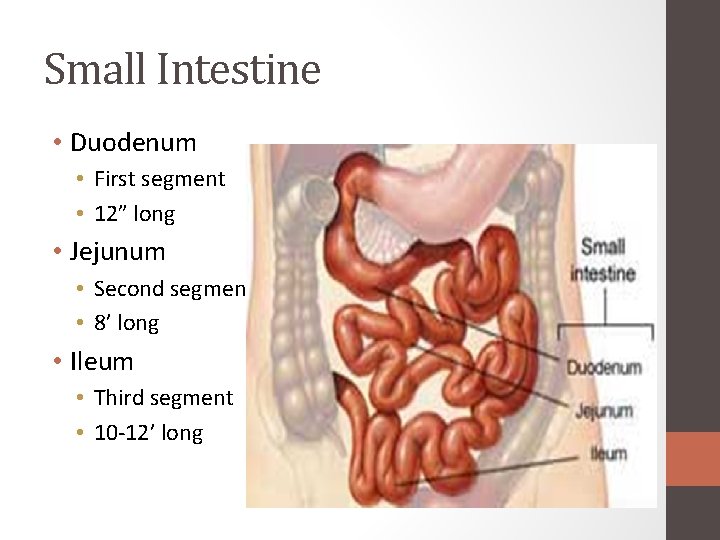
Small Intestine • Duodenum • First segment • 12” long • Jejunum • Second segment • 8’ long • Ileum • Third segment • 10 -12’ long
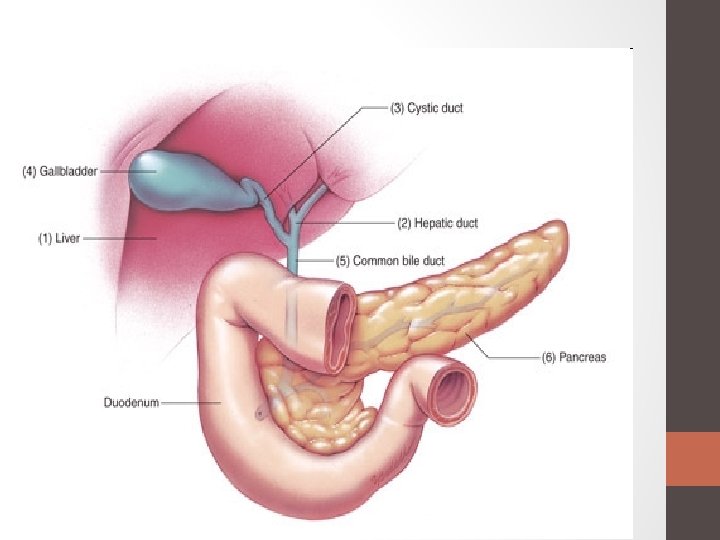
Accessory Organs of Digestion • Pancreas • Located behind stomach • secretes digestive enzymes • Liver • Largest organ in the body • Located below diaphragm, • Connected to gallbladder and small intestine by ducts • Gallbladder • Small green organ, inferior surface of the liver • Stores and concentrates bile until needed by the body • When fatty foods digested, bile released by gallbladder
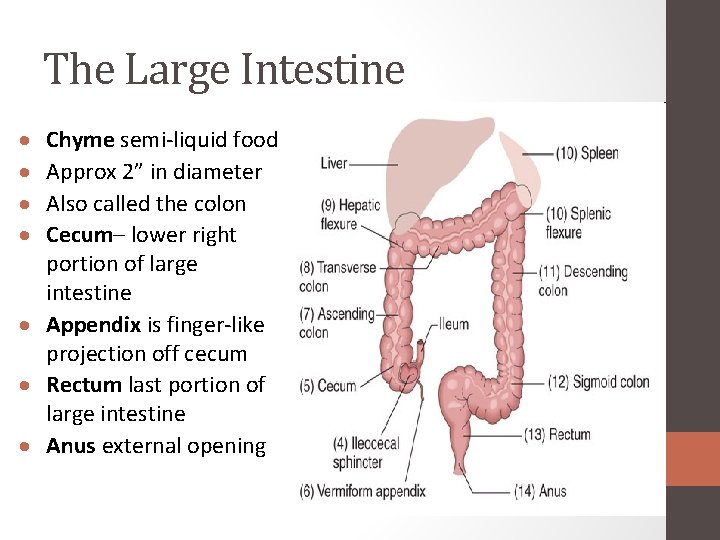
The Large Intestine Chyme semi-liquid food Approx 2” in diameter Also called the colon Cecum– lower right portion of large intestine Appendix is finger-like projection off cecum Rectum last portion of large intestine Anus external opening
• http: //www. youtube. com/watch? v=ZEf 08 Q 3 d. Z 3 M • http: //www. youtube. com/watch? v=rl 4 s 1 D 4 MGH 8
Digestion • BOLUS – soft, pliable ball – creating from chewing and addition of saliva – it slides down esophagus • PERISTALSIS – wavelike motions, moves food along esophagus, stomach and intestines • In the mouth… saliva softens food to make it easier to swallow PTYALIN in saliva converts starches into simple sugar under nervous control – just thinking of food can cause your mouth to water
Digestion • In the stomach… • gastric (digestive) juices are released • stomach walls churn and mix (This mixture is chyme) • small amount of chyme enters duodenum at a time controlled by pyloric sphincter • takes 2 -4 hours for stomach to empty • In the small intestine… • where digestion is completed and absorption occurs • addition of enzymes from pancreas and bile from liver/gallbladder
Digestion • In the large intestine… • regulation of H 2 O balance by absorbing large quantities back into bloodstream • bacterial action on undigested food – decomposed products excreted through colon – bacteria form moderate amounts of B complex and Vitamin K • gas formation – 1 -3 pints/day, pass it through rectum (FLATULENCE) 14 times a day, bacteria produce the gas • FECES – undigested semi-solid consisting of bacteria, waste products, mucous and cellulose • DEFECATION – when lg intestine fills, defecation reflex triggered – colon and rectal muscles contract while internal sphincter relaxes – external anal sphincter under conscious control
Functions of the Digestive System • Mouth • Food is digested by cutting, ripping and grinding action of the teeth when chewing, mastication • Incisors are for biting • Canines are for tearing • Molars are for crushing and grinding • Ptyalin in saliva converts starches to simple sugar • Uvula prevents food from entering nasal cavity
Functions of the Digestive System • Pharynx- food enters and is moved to esophagus, voluntary process • Esophagus • Peristalsis– wavelike motions, moves food along esophagus, stomach and intestines • Non-voluntary movement of food • Diaphragm puts pressure on the esophagus and prevents heartburn
Functions of the Digestive System • Stomach Food enters through the cardiac sphincter gastric (digestive) juices are released stomach walls churn and mix making chyme small amount of chyme enters duodenum at a time - controlled by pyloric sphincter • takes 2 -4 hours for stomach to empty • •
Summarize! • What are the functions of the upper digestive system?
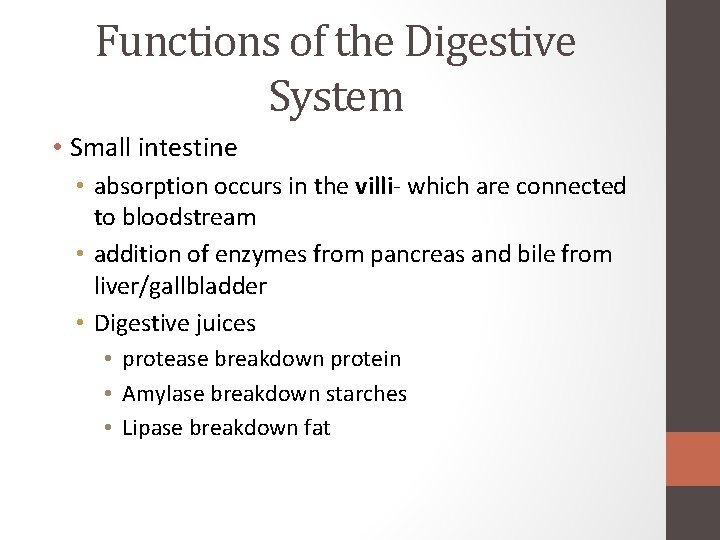
Functions of the Digestive System • Small intestine • absorption occurs in the villi- which are connected to bloodstream • addition of enzymes from pancreas and bile from liver/gallbladder • Digestive juices • protease breakdown protein • Amylase breakdown starches • Lipase breakdown fat
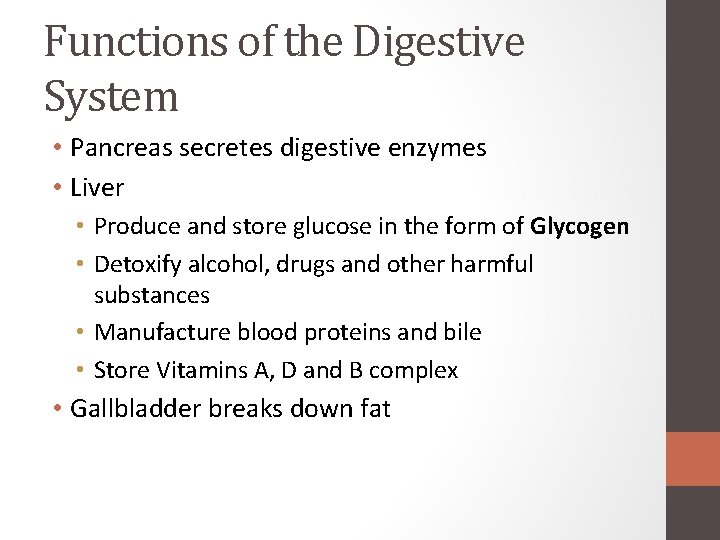
Functions of the Digestive System • Pancreas secretes digestive enzymes • Liver • Produce and store glucose in the form of Glycogen • Detoxify alcohol, drugs and other harmful substances • Manufacture blood proteins and bile • Store Vitamins A, D and B complex • Gallbladder breaks down fat
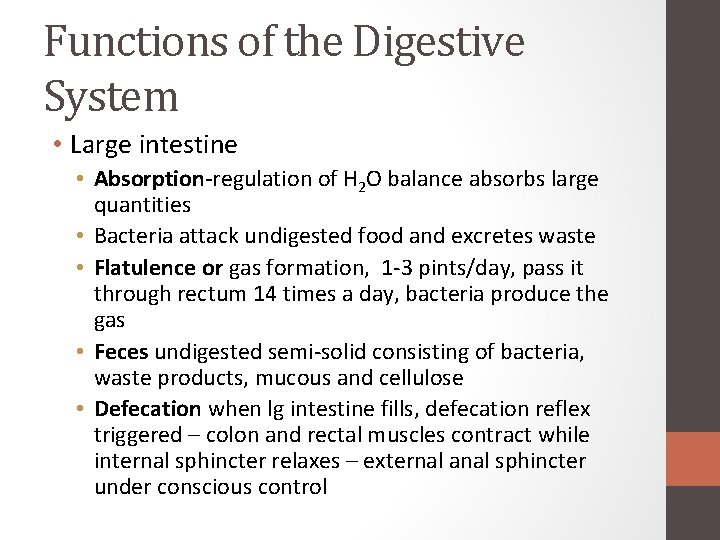
Functions of the Digestive System • Large intestine • Absorption-regulation of H 2 O balance absorbs large quantities • Bacteria attack undigested food and excretes waste • Flatulence or gas formation, 1 -3 pints/day, pass it through rectum 14 times a day, bacteria produce the gas • Feces undigested semi-solid consisting of bacteria, waste products, mucous and cellulose • Defecation when lg intestine fills, defecation reflex triggered – colon and rectal muscles contract while internal sphincter relaxes – external anal sphincter under conscious control
Summarize! • What are the functions of the lower digestive system?
Processes of Digestion • Chemical • Ptyalin and saliva breaking down food • Physical • Mastication breaking down food • Absorption • digested food passes into bloodstream and on to body cell • Elimination
Disorders of Digestive System
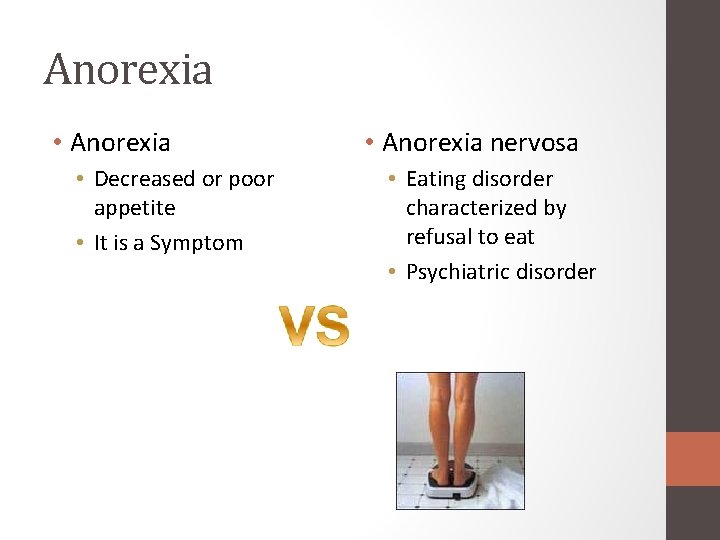
Anorexia • Decreased or poor appetite • It is a Symptom • Anorexia nervosa • Eating disorder characterized by refusal to eat • Psychiatric disorder
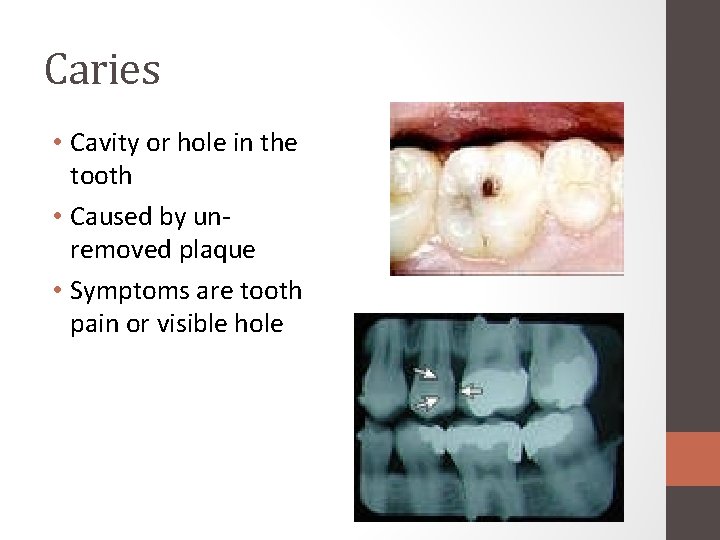
Caries • Cavity or hole in the tooth • Caused by unremoved plaque • Symptoms are tooth pain or visible hole
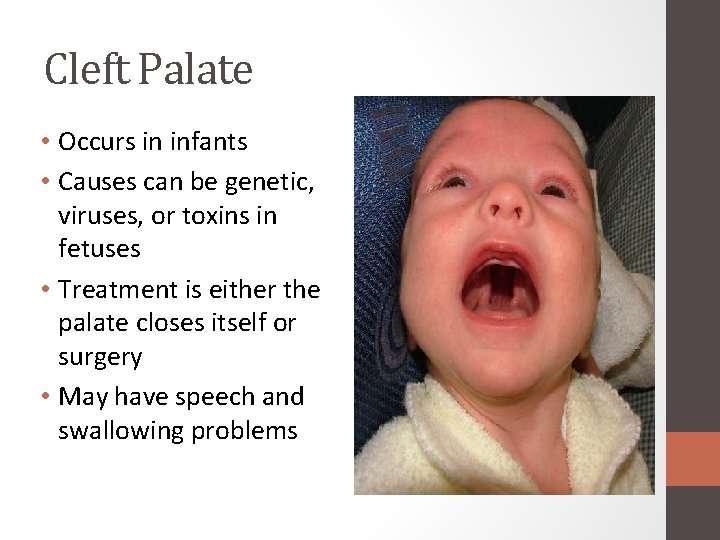
Cleft Palate • Occurs in infants • Causes can be genetic, viruses, or toxins in fetuses • Treatment is either the palate closes itself or surgery • May have speech and swallowing problems
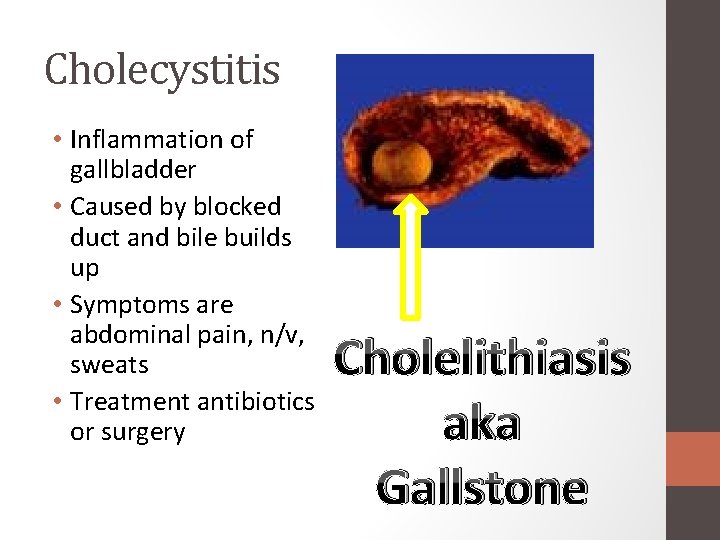
Cholecystitis • Inflammation of gallbladder • Caused by blocked duct and bile builds up • Symptoms are abdominal pain, n/v, sweats • Treatment antibiotics or surgery Cholelithiasis aka Gallstone
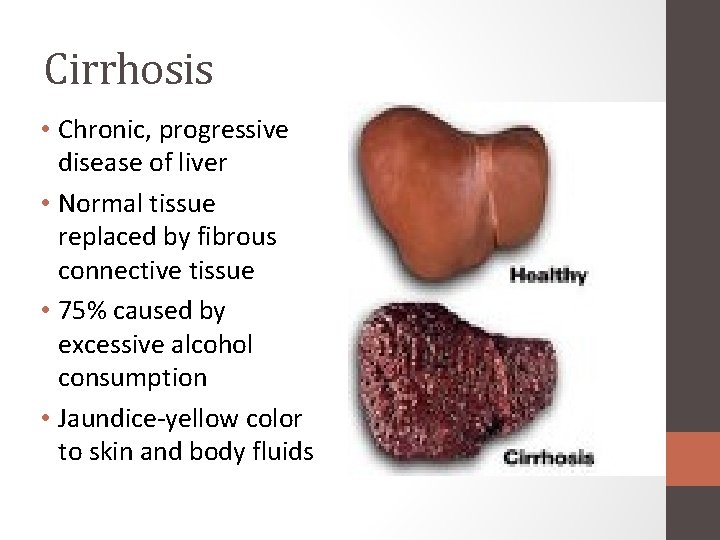
Cirrhosis • Chronic, progressive disease of liver • Normal tissue replaced by fibrous connective tissue • 75% caused by excessive alcohol consumption • Jaundice-yellow color to skin and body fluids
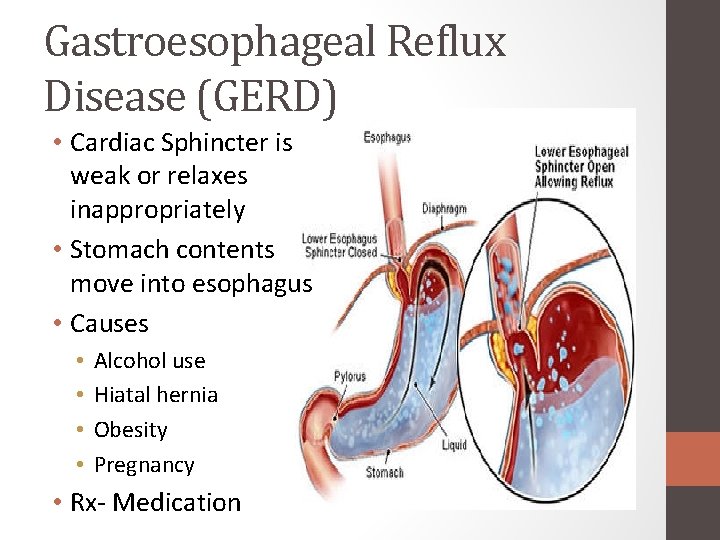
Gastroesophageal Reflux Disease (GERD) • Cardiac Sphincter is weak or relaxes inappropriately • Stomach contents move into esophagus • Causes • • Alcohol use Hiatal hernia Obesity Pregnancy • Rx- Medication
Hepatitis • Symptoms • Abdominal pain • Dark-colored urine • Fatigue • Jaundice • Joint pain • Loss of appetite • Nausea • Vomiting • Hepatitis A • Infectious hepatitis • Cause – virus • Spread through contaminated food or H 2 O
Hepatitis cont. • Hepatitis B • Caused by virus found in blood • Transmitted by blood transfusion or being stuck with contaminated needles • Health care workers at risk and should be vaccinated • Use standard precautions for prevention • Hepatitis C • Caused by viral infection • IV drug use biggest risk factor • Medications treat symptoms chronic disease
Hepatitis cont. • Hepatitis D • Found in carriers of Hepatitis B • Makes Hepatitis B symptoms worse • Hepatitis E • Caused by contaminated drinking water • Symptoms develop 1560 days after exposure • Can be spread through feces up to 14 days after symptoms start
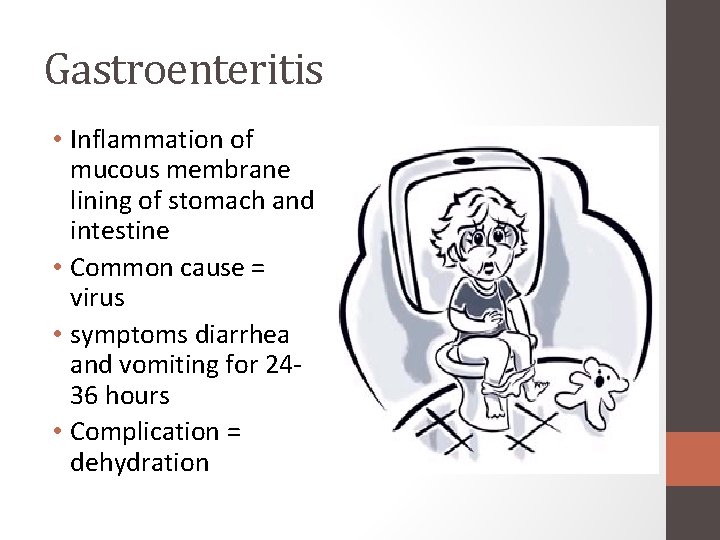
Gastroenteritis • Inflammation of mucous membrane lining of stomach and intestine • Common cause = virus • symptoms diarrhea and vomiting for 2436 hours • Complication = dehydration
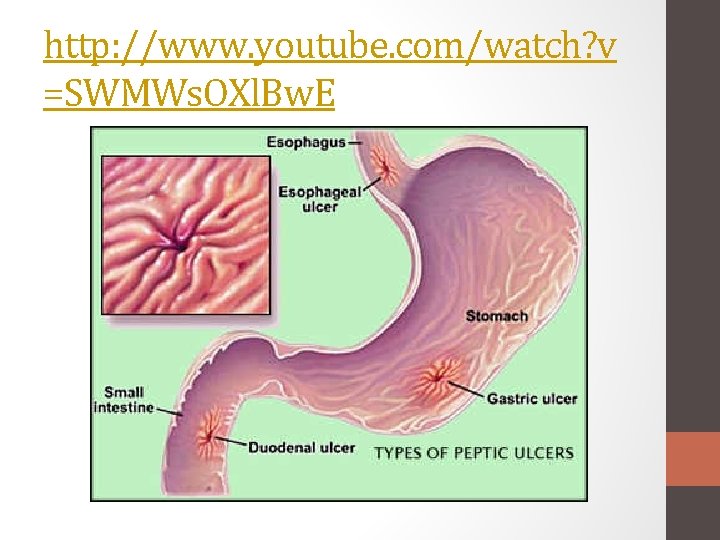
Peptic Ulcer Disease (PUD) • Sore or lesion that forms in the mucosal lining of the stomach • Name by location i. e. gastric ulcers in stomach • H. pylori (bacteria) is primary cause • Lifestyle risk factors: cigarette smoking, alcohol, stress, certain drugs • S/S burning pain in abdomen, btwn meals and early morning, may be helped by eating or antacid • Dx– x-ray, presence of bacteria • Rx – H 2 blockers (medication) that block release of histamine
http: //www. youtube. com/watch? v =SWMWs. OXl. Bw. E
• What are the disorders of the upper digestive system? • How are they treated?
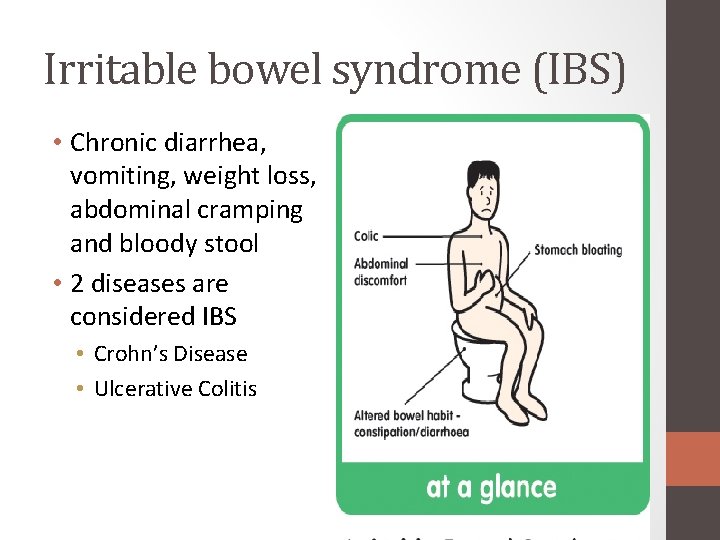
Irritable bowel syndrome (IBS) • Chronic diarrhea, vomiting, weight loss, abdominal cramping and bloody stool • 2 diseases are considered IBS • Crohn’s Disease • Ulcerative Colitis
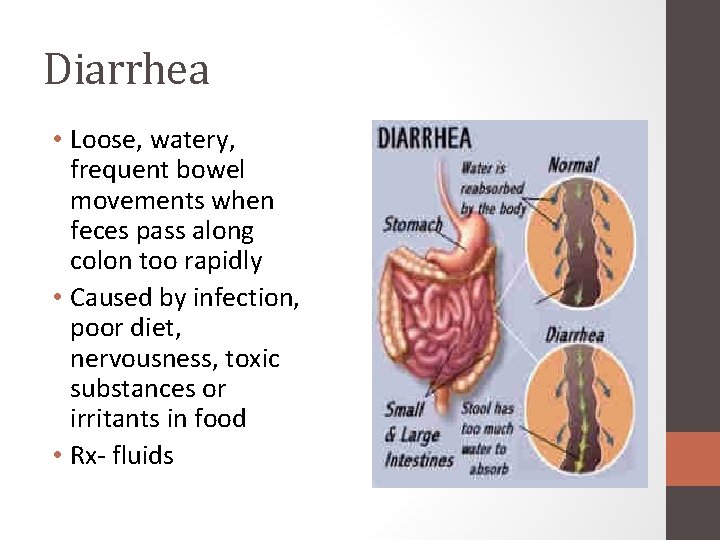
Diarrhea • Loose, watery, frequent bowel movements when feces pass along colon too rapidly • Caused by infection, poor diet, nervousness, toxic substances or irritants in food • Rx- fluids
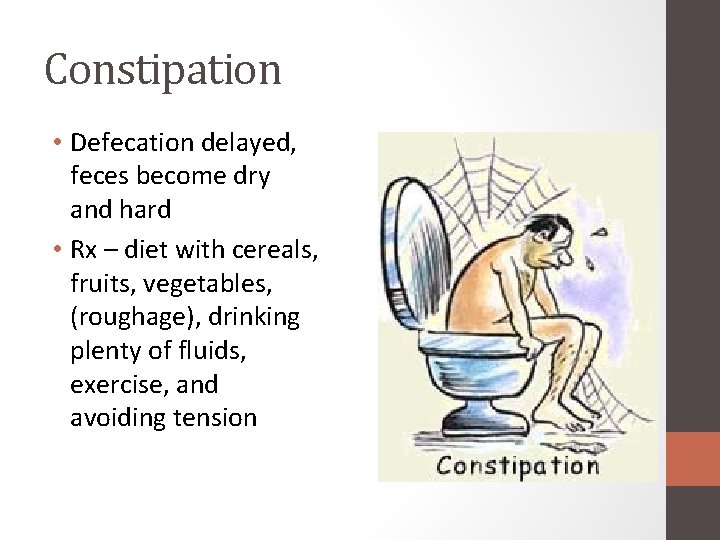
Constipation • Defecation delayed, feces become dry and hard • Rx – diet with cereals, fruits, vegetables, (roughage), drinking plenty of fluids, exercise, and avoiding tension
• What are the disorders of the lower digestive system? • How are they treated?
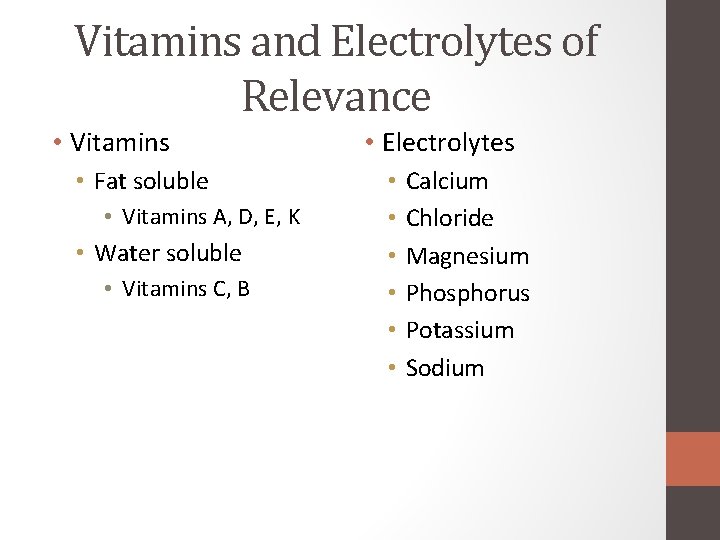
Vitamins and Electrolytes of Relevance • Vitamins • Fat soluble • Vitamins A, D, E, K • Water soluble • Vitamins C, B • Electrolytes • • • Calcium Chloride Magnesium Phosphorus Potassium Sodium
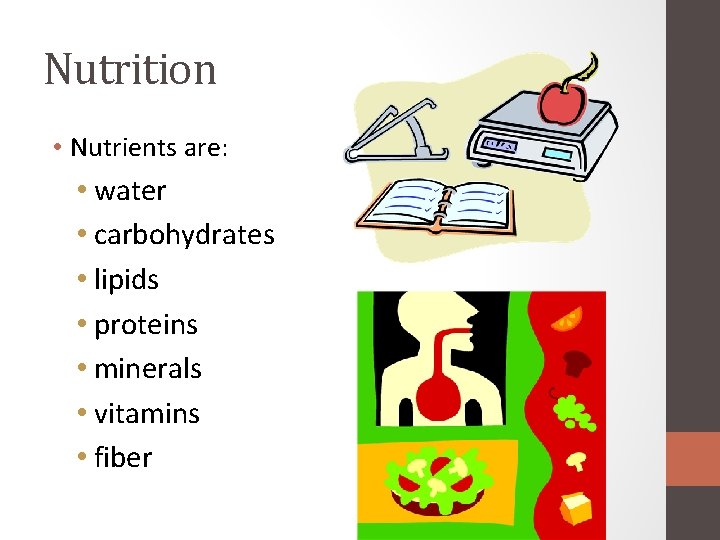
Nutrition • Nutrients are: • water • carbohydrates • lipids • proteins • minerals • vitamins • fiber
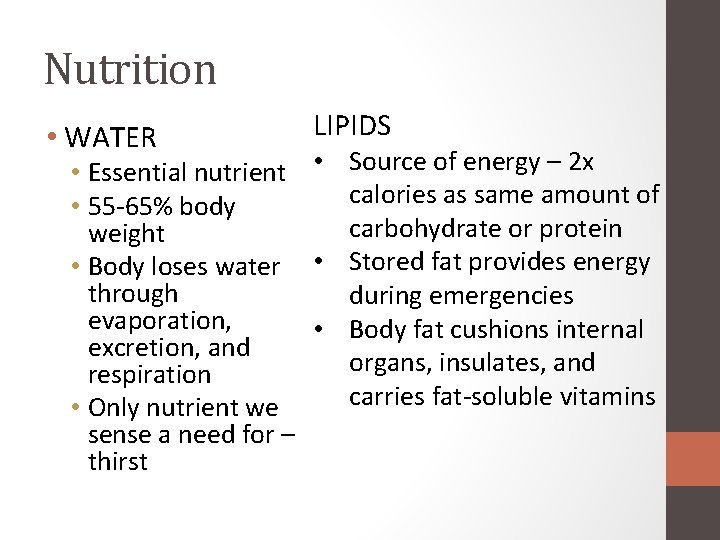
Nutrition • WATER LIPIDS • Essential nutrient • Source of energy – 2 x calories as same amount of • 55 -65% body carbohydrate or protein weight • Body loses water • Stored fat provides energy through during emergencies evaporation, • Body fat cushions internal excretion, and organs, insulates, and respiration carries fat-soluble vitamins • Only nutrient we sense a need for – thirst
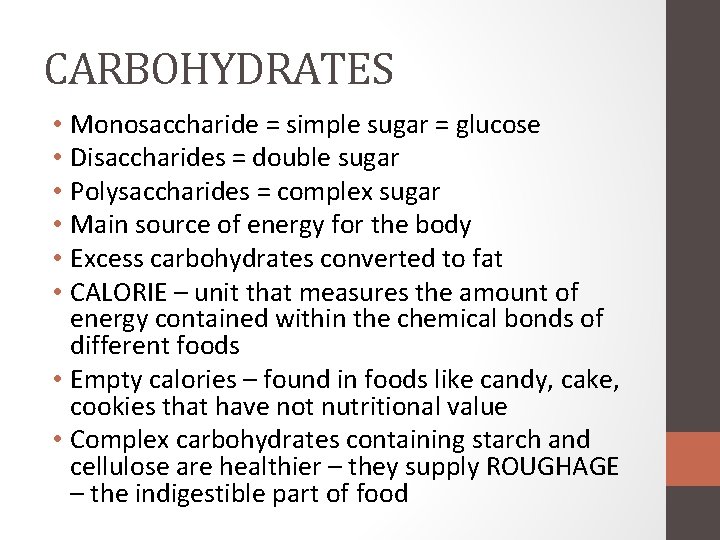
CARBOHYDRATES • Monosaccharide = simple sugar = glucose • Disaccharides = double sugar • Polysaccharides = complex sugar • Main source of energy for the body • Excess carbohydrates converted to fat • CALORIE – unit that measures the amount of energy contained within the chemical bonds of different foods • Empty calories – found in foods like candy, cake, cookies that have not nutritional value • Complex carbohydrates containing starch and cellulose are healthier – they supply ROUGHAGE – the indigestible part of food
CHOLESTEROL Fat in animal products like meat, cheese, eggs Excess cholesterol in the body will start to build up inside the artery walls causing atherosclerosis Recommended blood level under 200 mg/dl HDL – High Density Lipoprotein – “good”, removes excess cholesterol from cells and carries it back to liver to be broken down/eliminated • LDL – Low Density Lipoprotein – carry fat to cells
PROTEINS Many functions: Enzymes, Source of energy, Muscles, hormones, clotting, antibodies all depend on proteins AMINO ACIDS – building blocks of proteins Proteins that contain all amino acids are COMPLETE PROTEINS – milk, eggs, meat Proteins that do not contain all amino acids are INCOMPLETE PROTEINS – vegetables, beans, wheat Can’t store excess amino acids – excreted as urea Adults in US eat too much protein – puts extra burden on liver and kidney which must eliminate urea from body
Minerals MINERAL – from inorganic compounds in food, many necessary for human growth and maintenance Most important are: sodium, potassium, calcium, iron TRACE ELEMENTS – present in very small amounts, toxic levels are close to healthy levels Most minerals present in average adult diet FLUORINE – in drinking water, needed for bones and teeth IODINE – in shellfish and iodized salt, needed to make thyroid hormone IRON – in liver, lean meats, needed to make hemoglobin
Nutrition • VITAMIN – biologically active organic compound • Function as coenzyme for normal health and growth, some behave like hormones • A, D, E, K – fat soluble vitamins – can be stored by the body • B vitamins, pantothenic acid, folic acid, biotin and Vitamin C – water soluble – can’t be stored, excess excreted by body • FIBER • Found in plant foods like whole-grain breads, cereals, beans and peas, other vegetables and fruit • Eating a variety of plant food important for proper bowel function, may lower the risk of heart disease and some cancers
Summarize! • What are the nutrients we need to live? • Where can they be found?
Nutrition • (RDA) RECOMMENDED DIETARY ALLOWANCES • Chart that lists recommended intake of vitamins and minerals • BASAL METABOLIC RATE – amount of energy needed to maintain life when the body is at rest. • METABOLISM - use of food nutrients by the body to produce energy.
Guidelines for a healthy diet 1. Eat a variety of foods 2. Maintain desirable weight 3. Avoid too much fat, saturated fat (animal fat) and cholesterol 4. Eat foods with adequate starch and fiber (roughage) 5. Avoid too much sugar 6. Avoid too much sodium 7. Don’t drink alcohol
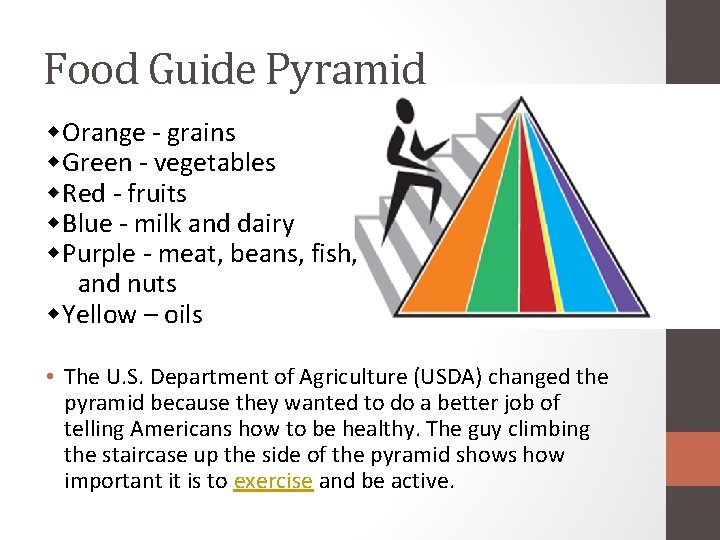
Food Guide Pyramid Orange - grains Green - vegetables Red - fruits Blue - milk and dairy Purple - meat, beans, fish, and nuts Yellow – oils • The U. S. Department of Agriculture (USDA) changed the pyramid because they wanted to do a better job of telling Americans how to be healthy. The guy climbing the staircase up the side of the pyramid shows how important it is to exercise and be active.
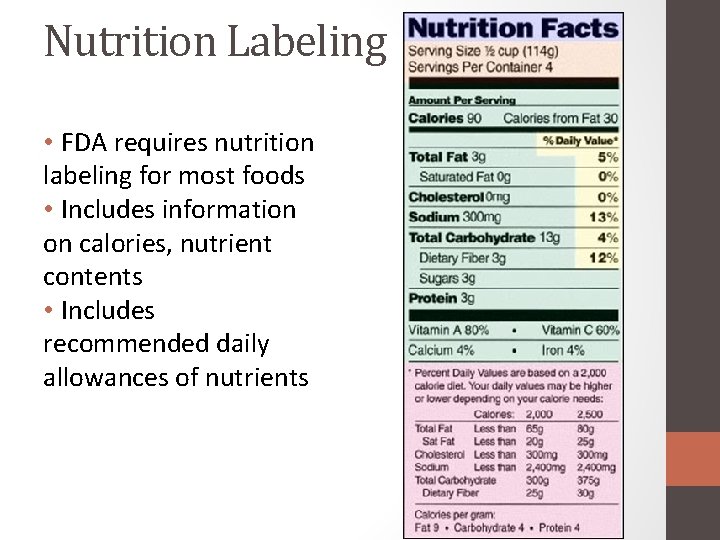
Nutrition Labeling • FDA requires nutrition labeling for most foods • Includes information on calories, nutrient contents • Includes recommended daily allowances of nutrients
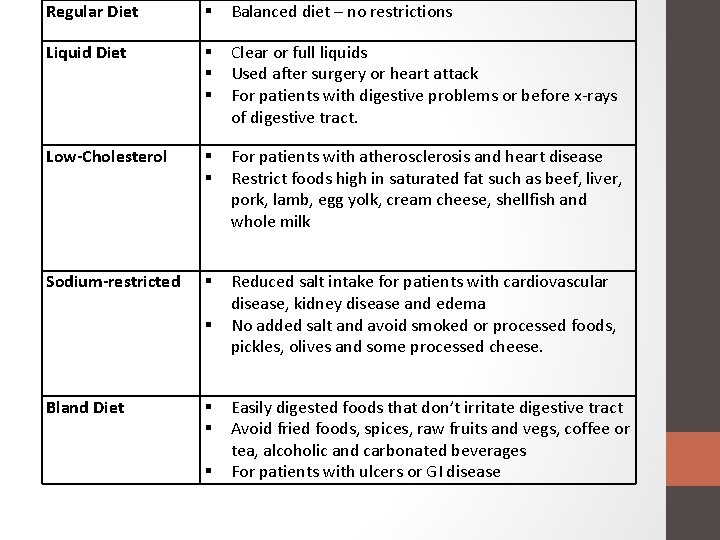
Regular Diet Balanced diet – no restrictions Liquid Diet Clear or full liquids Used after surgery or heart attack For patients with digestive problems or before x-rays of digestive tract. Low-Cholesterol For patients with atherosclerosis and heart disease Restrict foods high in saturated fat such as beef, liver, pork, lamb, egg yolk, cream cheese, shellfish and whole milk Sodium-restricted Reduced salt intake for patients with cardiovascular disease, kidney disease and edema No added salt and avoid smoked or processed foods, pickles, olives and some processed cheese. Bland Diet Easily digested foods that don’t irritate digestive tract Avoid fried foods, spices, raw fruits and vegs, coffee or tea, alcoholic and carbonated beverages For patients with ulcers or GI disease
Summarize • Explain the food pyramid, RDA’s, food labels, etc. relevance to our health
Eating Disorders • OBESITY Most common nutritional disease Weighs 15% more than optimal body weight for gender, height, and bone structure Obesity affects physical and mental health Causes – taking in more calories than are burned • BULIMIA • Episodic binge eating followed by PURGING (vomiting and laxative abuse) • Usually women, older than teens
Eating Disorders • ANOREXIA NERVOSA • Serious mental disorder, mostly in teenage females • Criteria for diagnosis: • Intense fear of becoming obese that does not go away with weight loss • Distorted body image (feels fat even when emaciated) • Weight loss of at least 25% of original body weight • Refusal to maintain minimal normal weight • No known physical illness • Amenorrhea
Eating Disorders • ANOREXIA – loss of appetite • MALNUTRITION – state of poor nutrition due to diet or illness • FLOURINE DEFICIENCY = tooth decay • IODINE DEFICIENCY = goiter (enlarged thyroid) • IRON DEFICIENCY = anemia
Summarize! • What are eating disorders and how are they treated?