
Digestive System Function to breakdown food for energy
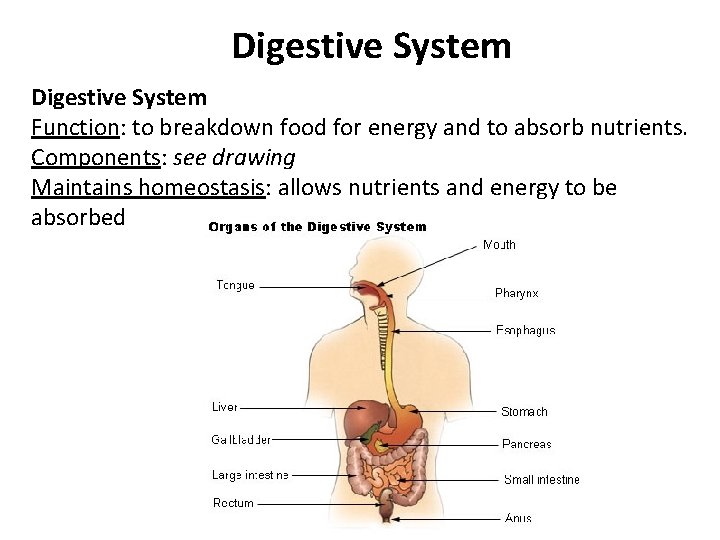
Digestive System Function: to breakdown food for energy and to absorb nutrients. Components: see drawing Maintains homeostasis: allows nutrients and energy to be absorbed
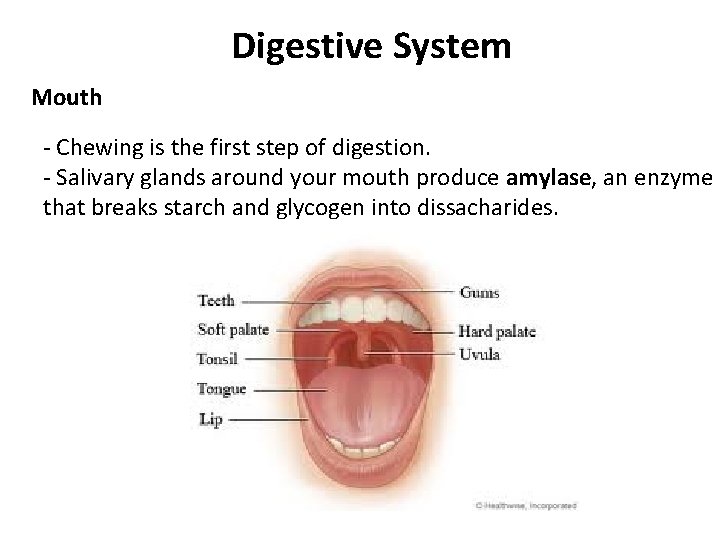
Digestive System Mouth - Chewing is the first step of digestion. - Salivary glands around your mouth produce amylase, an enzyme that breaks starch and glycogen into dissacharides.
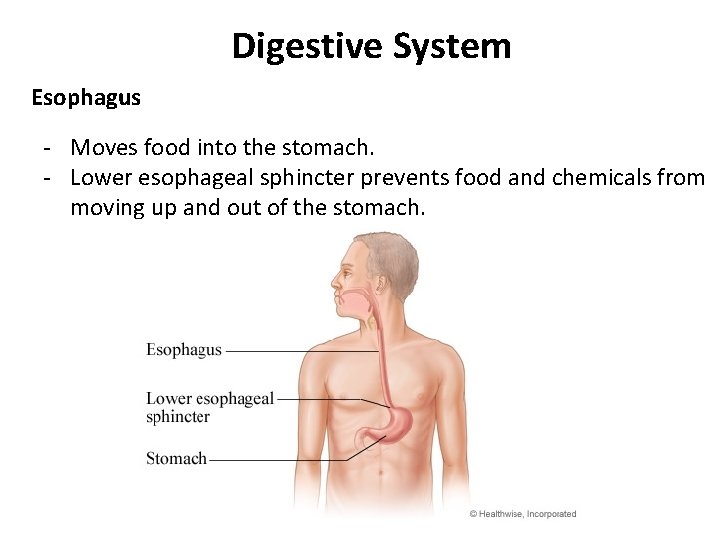
Digestive System Esophagus - Moves food into the stomach. - Lower esophageal sphincter prevents food and chemicals from moving up and out of the stomach.
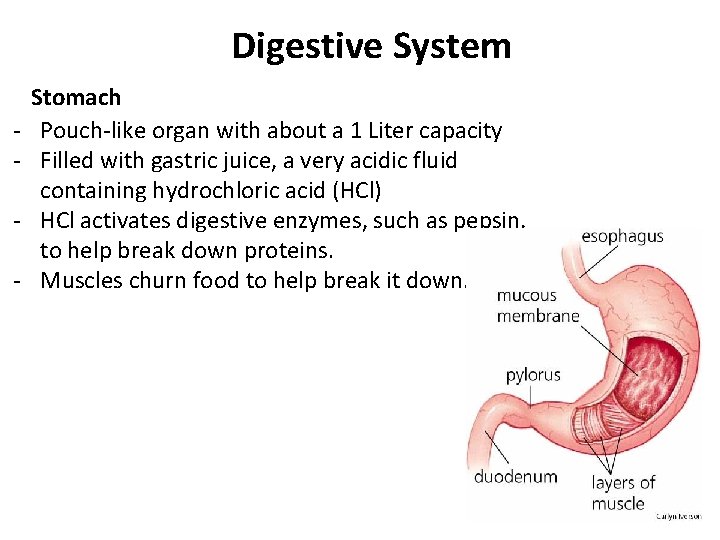
Digestive System - Stomach Pouch-like organ with about a 1 Liter capacity Filled with gastric juice, a very acidic fluid containing hydrochloric acid (HCl) HCl activates digestive enzymes, such as pepsin, to help break down proteins. Muscles churn food to help break it down.
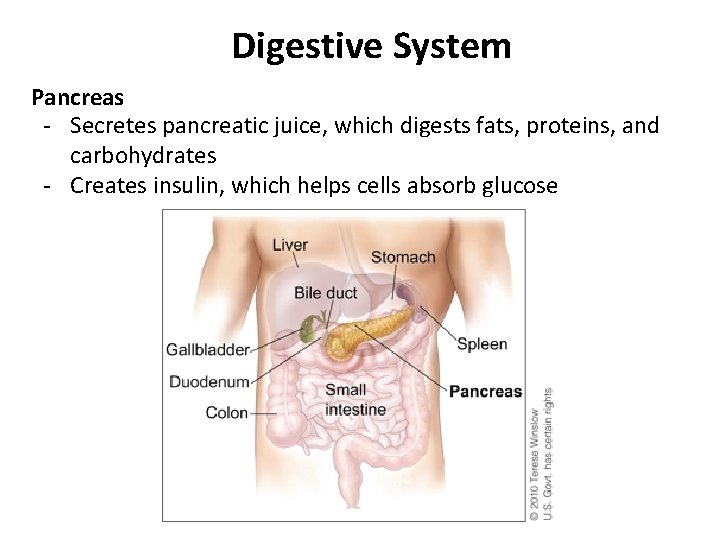
Digestive System Pancreas - Secretes pancreatic juice, which digests fats, proteins, and carbohydrates - Creates insulin, which helps cells absorb glucose
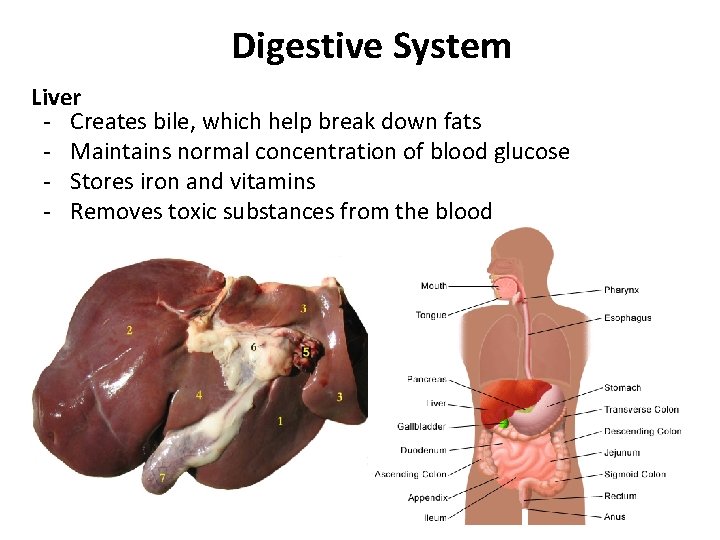
Digestive System Liver - Creates bile, which help break down fats - Maintains normal concentration of blood glucose - Stores iron and vitamins - Removes toxic substances from the blood
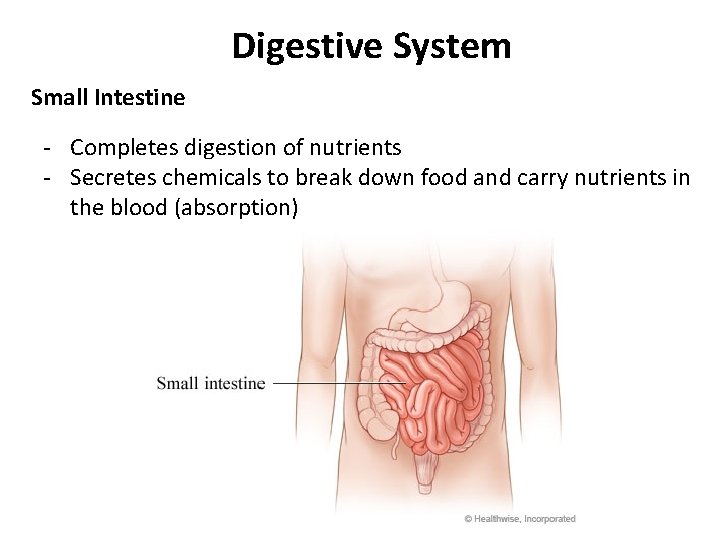
Digestive System Small Intestine - Completes digestion of nutrients - Secretes chemicals to break down food and carry nutrients in the blood (absorption)
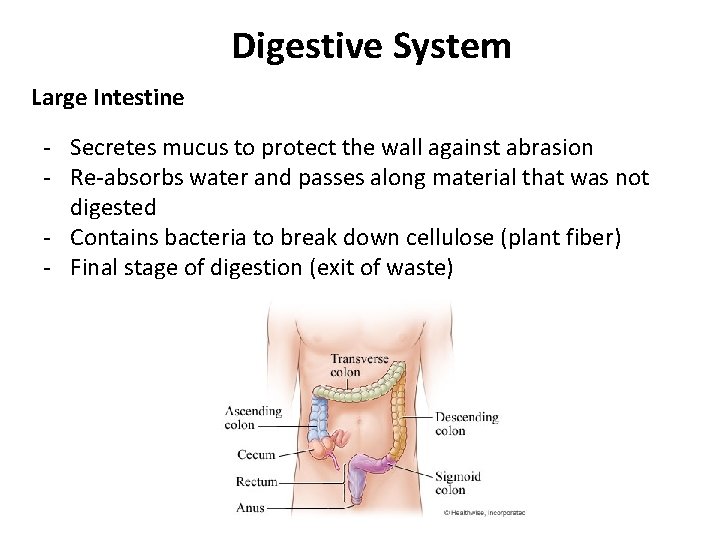
Digestive System Large Intestine - Secretes mucus to protect the wall against abrasion - Re-absorbs water and passes along material that was not digested - Contains bacteria to break down cellulose (plant fiber) - Final stage of digestion (exit of waste)
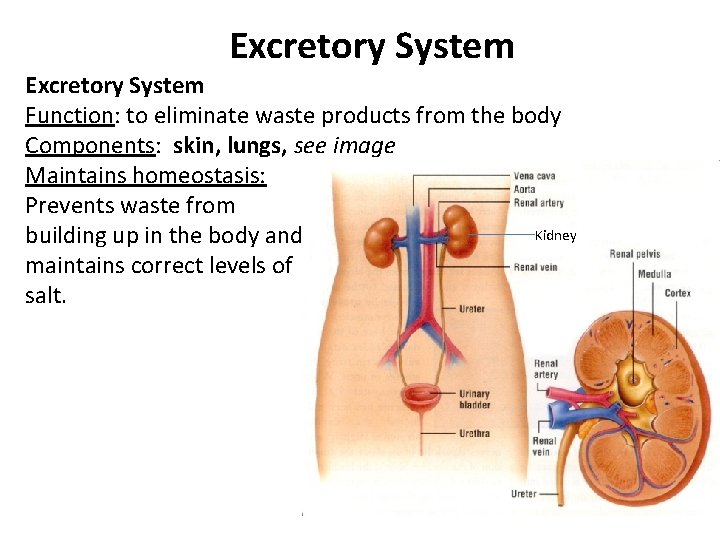
Excretory System Function: to eliminate waste products from the body Components: skin, lungs, see image Maintains homeostasis: Prevents waste from Kidney building up in the body and maintains correct levels of salt.
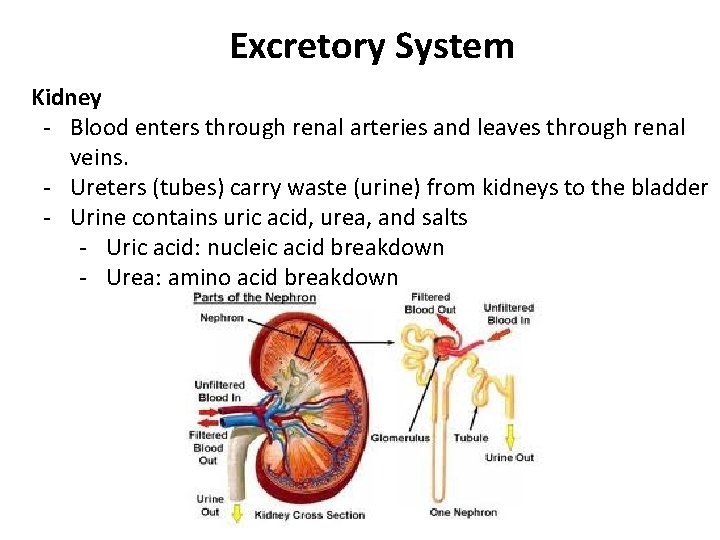
Excretory System Kidney - Blood enters through renal arteries and leaves through renal veins. - Ureters (tubes) carry waste (urine) from kidneys to the bladder - Urine contains uric acid, urea, and salts - Uric acid: nucleic acid breakdown - Urea: amino acid breakdown
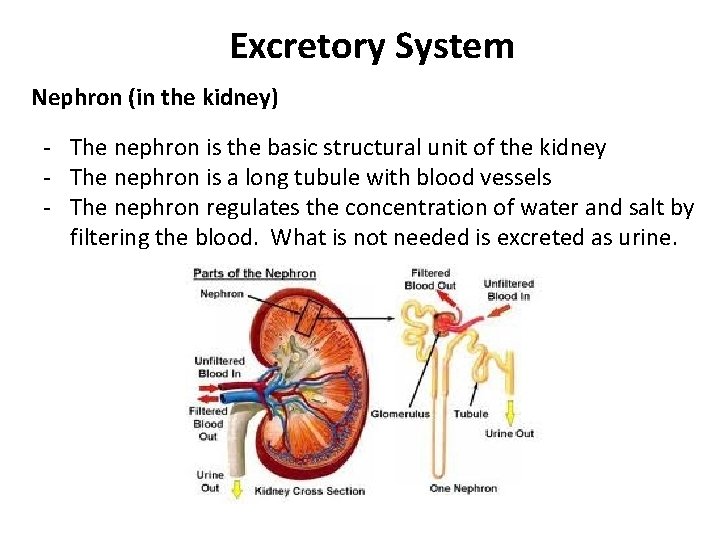
Excretory System Nephron (in the kidney) - The nephron is the basic structural unit of the kidney - The nephron is a long tubule with blood vessels - The nephron regulates the concentration of water and salt by filtering the blood. What is not needed is excreted as urine.
Excretory System Variables that Affect Kidney Function - Diet: if you eat large amounts of protein, more urea will be produced. - Weather: on a hot day, a body will retain water for sweating and cooling, so the amount of urine is reduced. - Hormones: Humans produce a hormone called antidiuretic hormone (ADH). It regulates the amount of urine by controlling the rate of water absorption in the nephron tubules.
- Slides: 12