
Digestive System DIGESTION ABSORPTION AND TRANSPORTATION OF NUTRIENTS
Digestive System DIGESTION, ABSORPTION, AND TRANSPORTATION OF NUTRIENTS
The Body’s Cells • Body composed of trillions of cells • Body needs nutrients • Cells: self-contained, living entities – Depend on one another – Basic needs • Essential nutrients – – Energy Oxygen Nutrients (essential) Water • Cells die at varying rates
Cells, Tissues, Organs, and Systems • Cells are organized into tissues that perform specialized tasks • For example, individual muscle cells are joined together to form muscle tissue, which can contract • Tissues are grouped together to form organs • In heart, muscle tissues, nerve tissues, connective tissues, and others all work together to pump blood • Organs work together as part of a body system • For example, the heart, lungs, and blood vessels cooperate as parts of the cardiorespiratory system to deliver oxygen to all the body’s cells Sizer and Whitney, Nutrition: Concepts and Controversies, 15 th Edition. © 2020 Cengage. All Rights Reserved. May not be scanned, copied or duplicated, or posted to a publicly accessible website, in whole or in part.
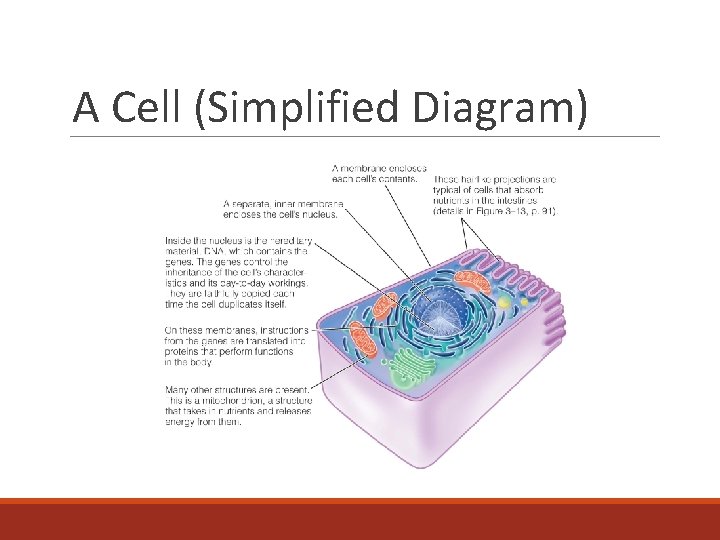
A Cell (Simplified Diagram)
Genes Control Functions Direct protein production Provide instruction for structural components of cells Affect how body handles nutrients Complete set of genes in each cell Gene variations ◦ Inborn error of metabolism ◦ Influence of nutrients
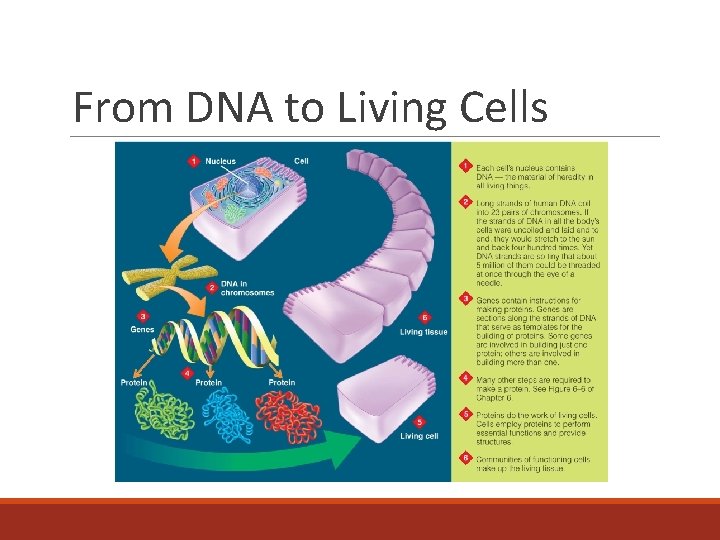
From DNA to Living Cells
Cells, Tissues, Organs, and Systems Cells organized into tissues ◦ Perform specialized tasks Tissues grouped together to form organs Organs work together as part of body systems
The Body Fluids and the Cardiovascular System • Body fluids – Supply energy, oxygen, nutrients, and water – Deliver fresh supplies and pick up wastes • Circulating fluids – Blood • Travels in arteries, veins, and capillaries • Plasma – Lymph • Travels in its own vessels
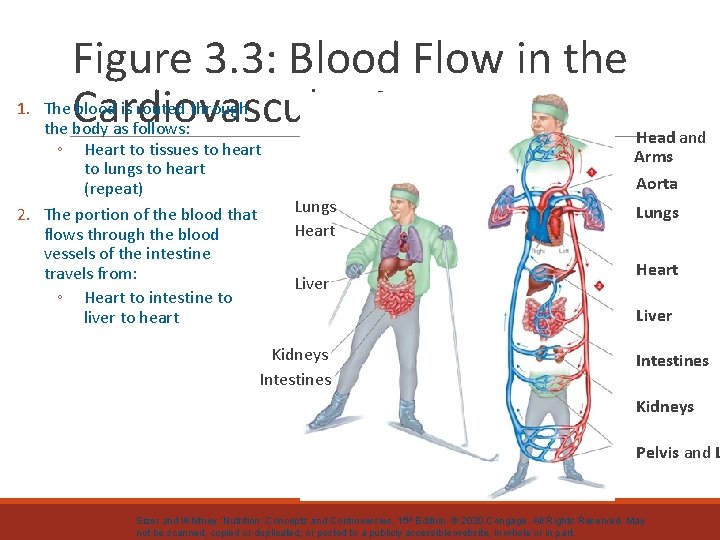
Figure 3. 3: Blood Flow in the Cardiovascular System 1. The blood is routed through the body as follows: ◦ Heart to tissues to heart to lungs to heart (repeat) 2. The portion of the blood that flows through the blood vessels of the intestine travels from: ◦ Heart to intestine to liver to heart Lungs Heart Liver Kidneys Intestines Head and Arms Aorta Lungs Heart Liver Intestines Kidneys Pelvis and L Sizer and Whitney, Nutrition: Concepts and Controversies, 15 th Edition. © 2020 Cengage. All Rights Reserved. May not be scanned, copied or duplicated, or posted to a publicly accessible website, in whole or in part.
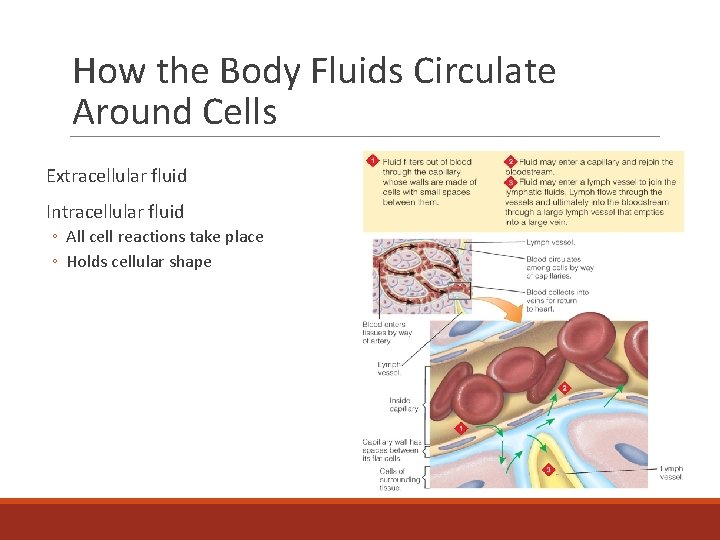
How the Body Fluids Circulate Around Cells Extracellular fluid Intracellular fluid ◦ All cell reactions take place ◦ Holds cellular shape
Blood Circulation Blood circulates to the lungs ◦ Picks up oxygen ◦ Releases carbon dioxide Blood returns to heart ◦ Pumped to rest of body Blood passes through digestive system ◦ Picks up nutrients ◦ Fats travel via lymph ◦ Routed directly to liver ◦ Cleansed of wastes in the kidneys
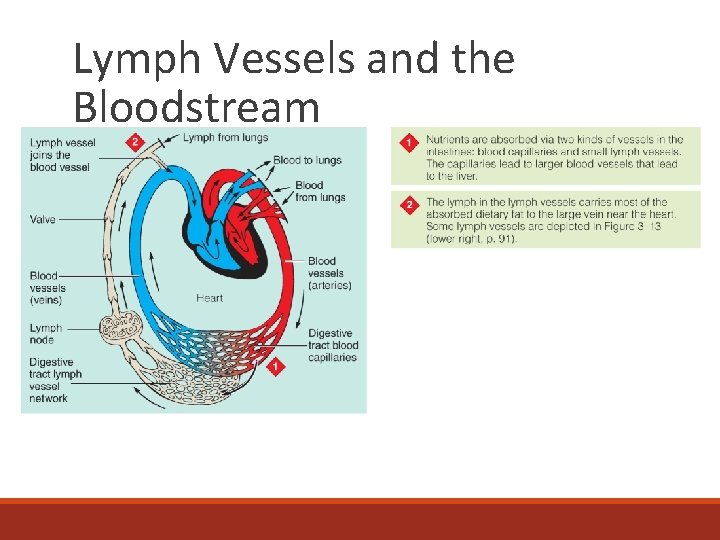
Lymph Vessels and the Bloodstream
The Hormonal and Nervous Systems Hormones ◦ Chemical messengers ◦ Secreted and released directly into blood by glands ◦ Stimulate organs to take action Glands monitor conditions in the body ◦ Pancreas ◦ Insulin and glucagon
The Hormonal System Affects Nutrition Some functions of hormones ◦ ◦ Regulate the digestive system in response to meals or fasting Inform the brain about the degree of body fatness Help regulate hunger and appetite Influence appetite changes during a woman’s menstrual cycle and in pregnancy ◦ Regulate the body’s reaction to stress, suppressing hunger and digestion Copyright © 2017 Cengage Learning. All
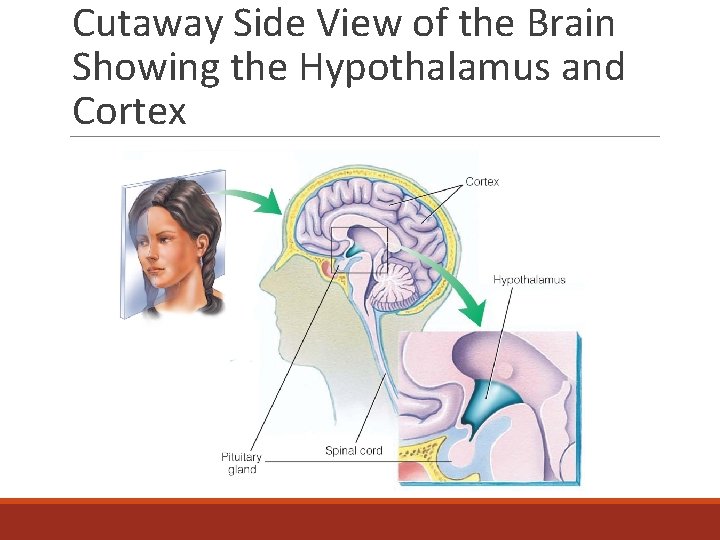
Cutaway Side View of the Brain Showing the Hypothalamus and Cortex
How Does the Nervous System Interact with Nutrition? Fight-or-flight reaction (stress response) ◦ Neurotransmitters ◦ Epinephrine and norepinephrine ◦ Metabolism speeds up ◦ Organ response ◦ Eyes, heart, liver, and stomach ◦ Heart disease
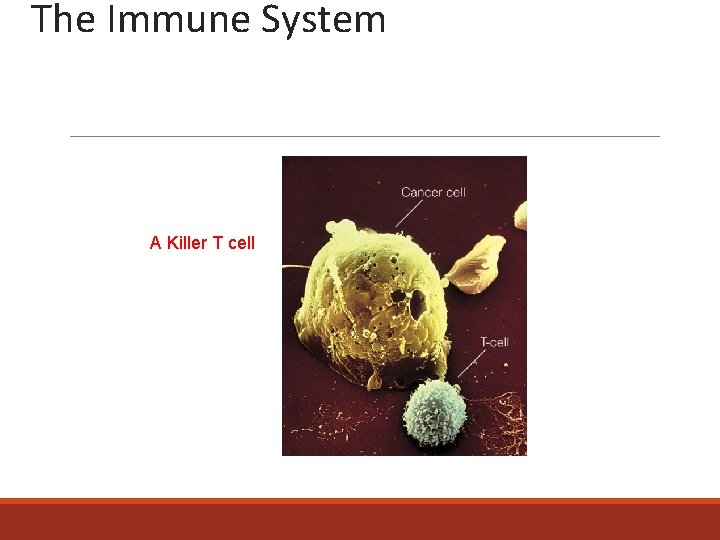
The Immune System A Killer T cell
The Immune System Tissues cooperate with each other to maintain defenses ◦ Physical barriers Antigen Immune defenses ◦ White blood cells ◦ Phagocytes ◦ Lymphocytes (T-cells and B-cells)
Inflammation Response to cell injury or irritation ◦ Increased white blood cells, redness, heat, pain, and swelling Normal, healthy response Problem with chronic inflammation ◦ Dietary factors
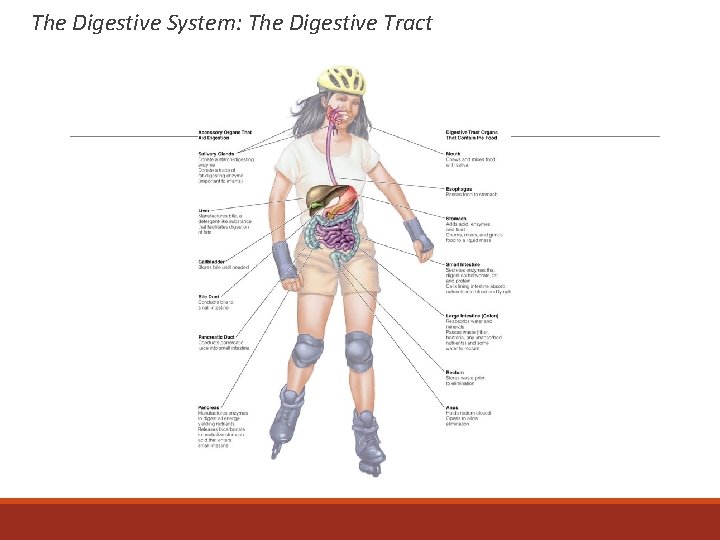
The Digestive System: The Digestive Tract
Nutrition Process by which organisms obtain and utilize their food. There are two parts to Nutrition: 1. Ingestion- process of taking food into the digestive system so that it may be hydrolized or digested. 2. Digestion- the breakdown of food (either chemically or mechanically) in order to utilize nutrients
The Digestive System Five basic chemical tastes ◦ Sweet, sour, bitter, salty, and umami Other factors affect our experience of food flavor as well Sweet, salty, and fatty foods ◦ Almost universally desired ◦ Can lead to drastic overeating of these substances Copyright © 2017 Cengage Learning. All
The Digestive System Taste buds guide you in judging whether foods are acceptable ◦ ◦ ◦ Sweet Sour Bitter Salty Savory or umami
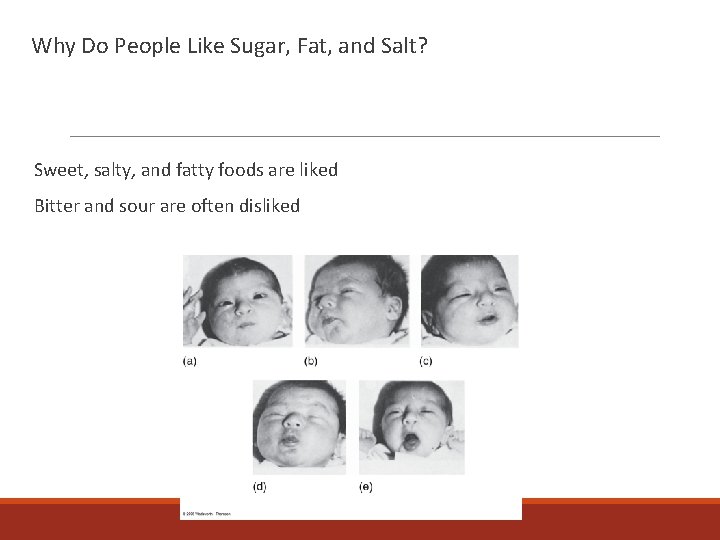
Why Do People Like Sugar, Fat, and Salt? Sweet, salty, and fatty foods are liked Bitter and sour are often disliked
The Digestive Tract Flexible, muscular tube ◦ Extends from mouth to anus ◦ Total length: about 26 feet Human body surrounds digestive canal Function of the digestive tract ◦ Breaks down food to its components; absorbs and excretes Works mechanically and chemically Copyright © 2017 Cengage Learning. All
The Mechanical Aspect of Digestion (Slide 1 of 2) • Begins in the mouth • Chewing • Saliva to soften food • Stomach and small intestine • Liquefy foods through various mashing and squeezing actions • Peristalsis: Wavelike muscular squeezing of the esophagus, stomach, and small intestine that pushes their contents along • Chyme travels through pyloric valve • Chyme: Fluid resulting from the actions of the stomach upon a meal Sizer and Whitney, Nutrition: Concepts and Controversies, 15 th Edition. © 2020 Cengage. All Rights Reserved. May not be scanned, copied or duplicated, or posted to a publicly accessible website, in whole or in part.
The Mechanical Aspect of Digestion (Slide 2 of 2) • Large intestine • Portion of the intestine that completes the absorption process • Digestion is virtually continuous • Slows during sleep and exercise Sizer and Whitney, Nutrition: Concepts and Controversies, 15 th Edition. © 2020 Cengage. All Rights Reserved. May not be scanned, copied or duplicated, or posted to a publicly accessible website, in whole or in part.
The Chemical Aspect of Digestion (Slide 1 of 2) • Digestive juices • Released by salivary glands, stomach, pancreas, liver, and small intestine • Saliva functions in the mouth • Enzymes break down starches and fat • Maintains teeth health • Stomach • Gastric juice initiates protein digestion • Includes water, enzymes, and hydrochloric acid • Intestine • Gallbladder releases bile Sizer and Whitney, Nutrition: Concepts and Controversies, 15 th Edition. © 2020 Cengage. All Rights Reserved. May not be scanned, copied or duplicated, or posted to a publicly accessible website, in whole or in part.
The Chemical Aspect of Digestion (Slide 2 of 2) • Bicarbonate in the pancreatic juice neutralizes stomach acid • Digestive enzymes in intestinal wall further break down chemical bonds for absorption • Water, fiber, and some minerals remain • Microbes in the digestive tract • Ferment many indigestible fibers • Break down undigested protein or amino acids • Break down and help recycle bile components • Chemically alter certain drugs • Communicate with muscle, adipose tissue, the brain, and the immune system Sizer and Whitney, Nutrition: Concepts and Controversies, 15 th Edition. © 2020 Cengage. All Rights Reserved. May not be scanned, copied or duplicated, or posted to a publicly accessible website, in whole or in part.
Absorption and Transportation of Nutrients Lymphatic vessels - fats and a few vitamins - to blood Blood vessels - carbohydrate and protein, most vitamins and the minerals - to liver
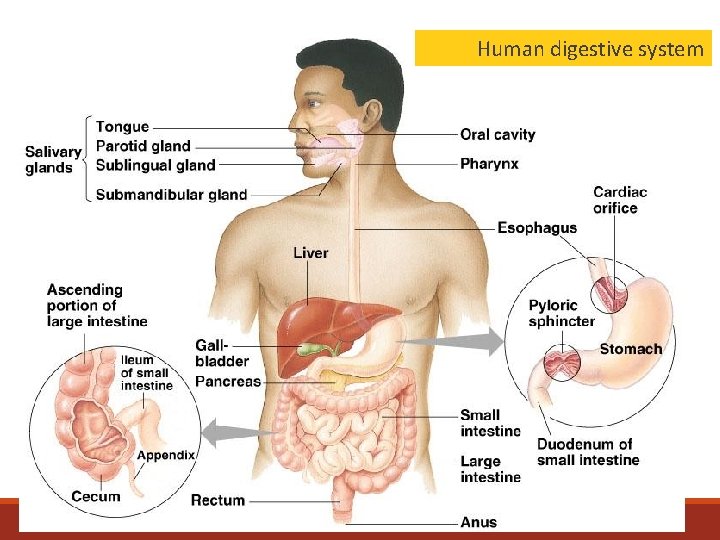
Human digestive system
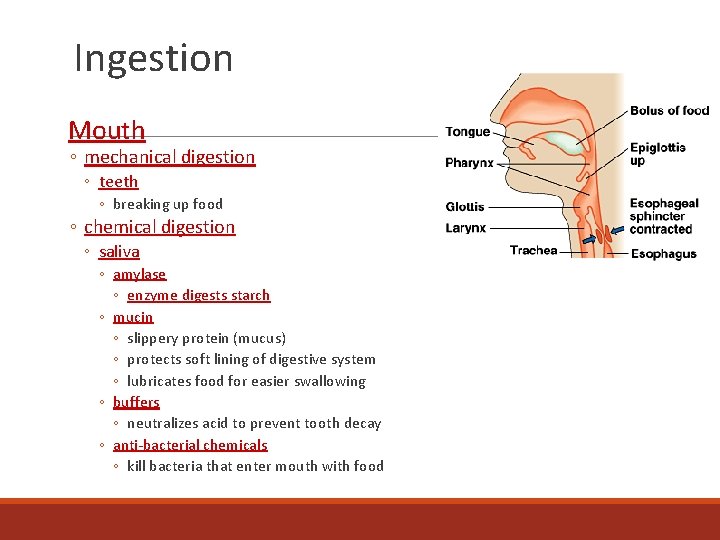
Ingestion Mouth ◦ mechanical digestion ◦ teeth ◦ breaking up food ◦ chemical digestion ◦ saliva ◦ amylase ◦ enzyme digests starch ◦ mucin ◦ slippery protein (mucus) ◦ protects soft lining of digestive system ◦ lubricates food for easier swallowing ◦ buffers ◦ neutralizes acid to prevent tooth decay ◦ anti-bacterial chemicals ◦ kill bacteria that enter mouth with food
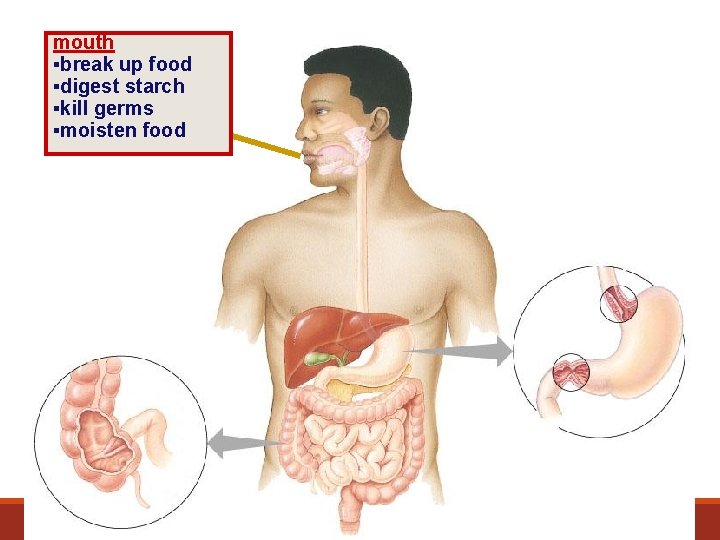
mouth ▪break up food ▪digest starch ▪kill germs ▪moisten food
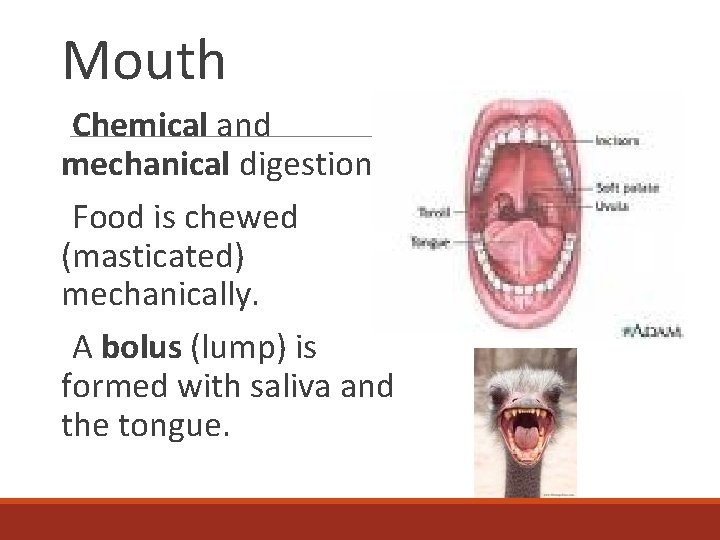
Mouth Chemical and mechanical digestion. Food is chewed (masticated) mechanically. A bolus (lump) is formed with saliva and the tongue.
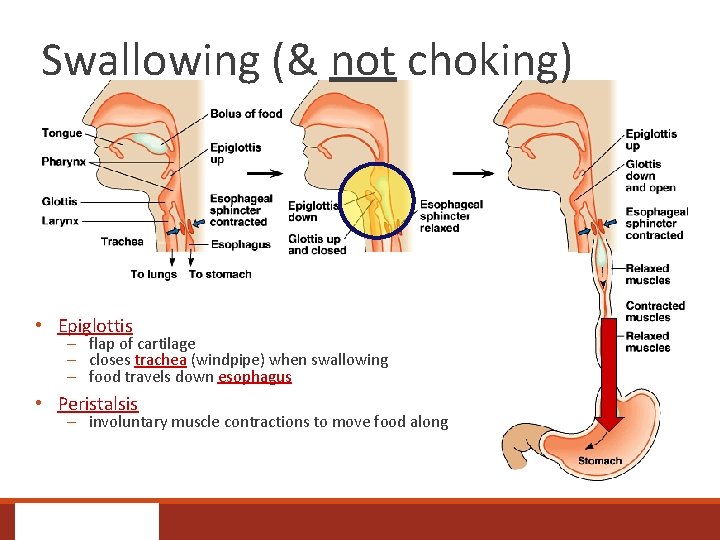
Swallowing (& not choking) • Epiglottis – flap of cartilage – closes trachea (windpipe) when swallowing – food travels down esophagus • Peristalsis – involuntary muscle contractions to move food along
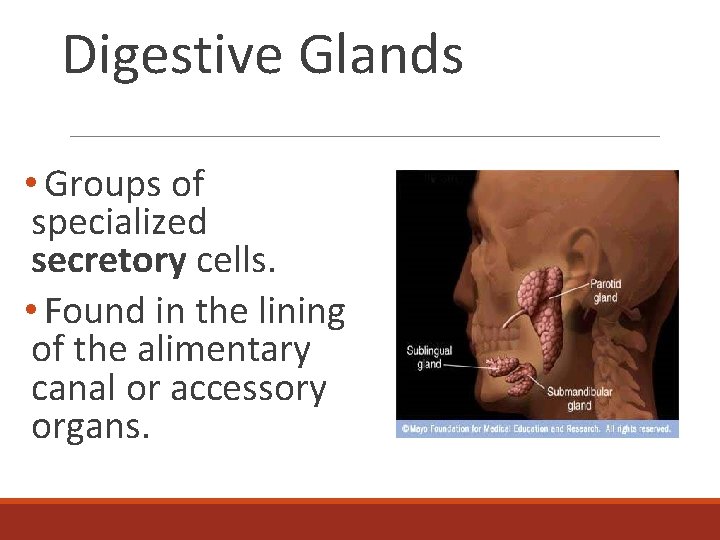
Digestive Glands • Groups of specialized secretory cells. • Found in the lining of the alimentary canal or accessory organs.
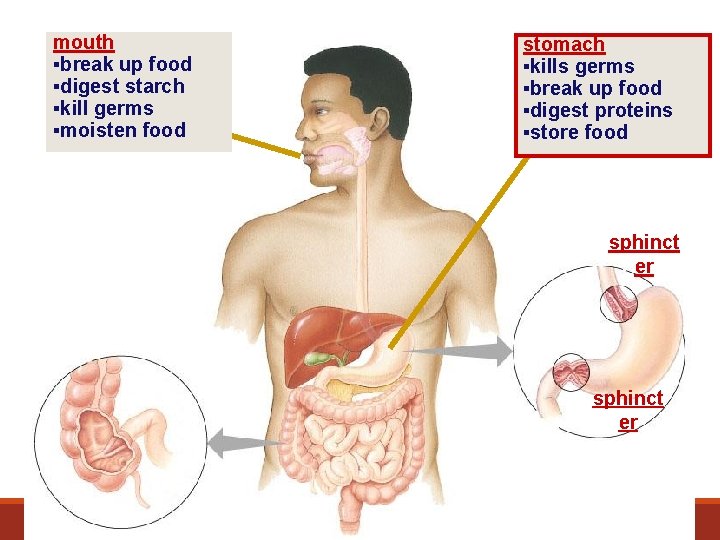
mouth ▪break up food ▪digest starch ▪kill germs ▪moisten food stomach ▪kills germs ▪break up food ▪digest proteins ▪store food sphinct er
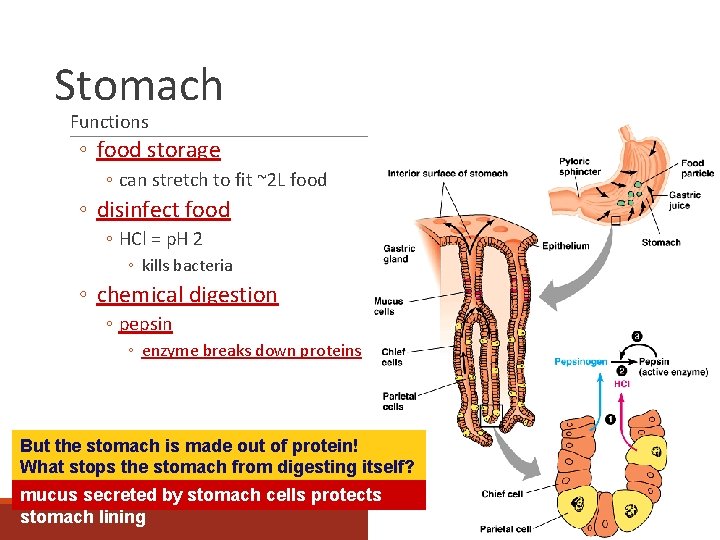
Stomach Functions ◦ food storage ◦ can stretch to fit ~2 L food ◦ disinfect food ◦ HCl = p. H 2 ◦ kills bacteria ◦ chemical digestion ◦ pepsin ◦ enzyme breaks down proteins But the stomach is made out of protein! What stops the stomach from digesting itself? mucus secreted by stomach cells protects stomach lining
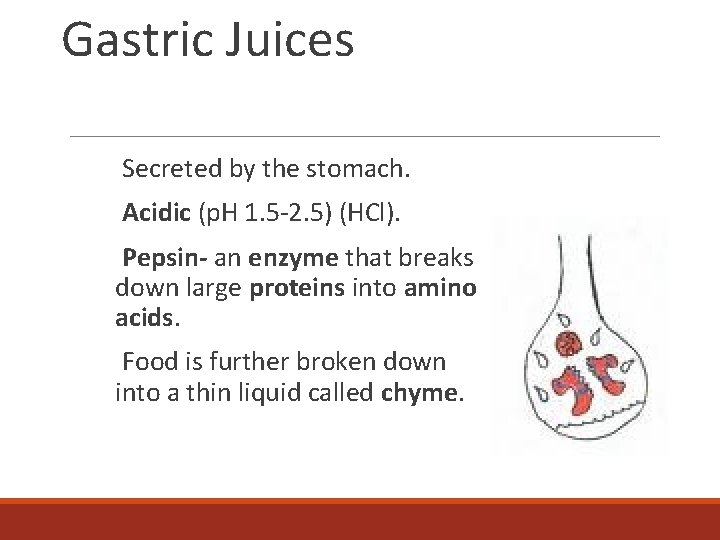
Gastric Juices Secreted by the stomach. Acidic (p. H 1. 5 -2. 5) (HCl). Pepsin- an enzyme that breaks down large proteins into amino acids. Food is further broken down into a thin liquid called chyme.
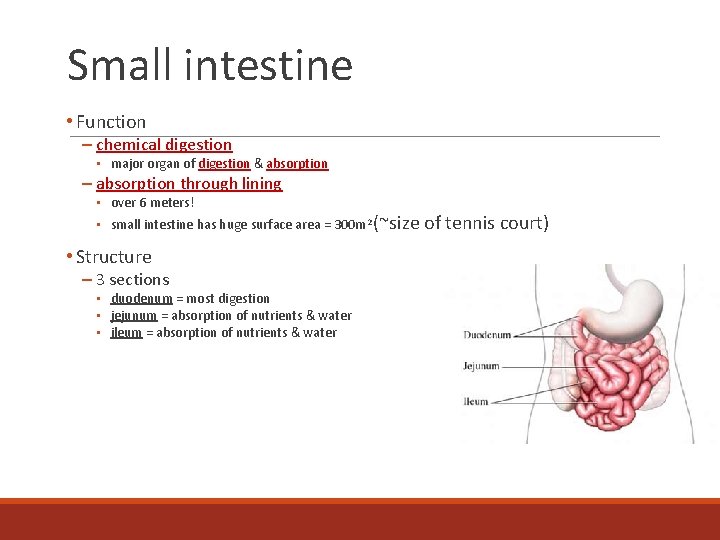
Small intestine • Function – chemical digestion • major organ of digestion & absorption – absorption through lining • over 6 meters! • small intestine has huge surface area = 300 m 2 (~size • Structure – 3 sections • duodenum = most digestion • jejunum = absorption of nutrients & water • ileum = absorption of nutrients & water of tennis court)
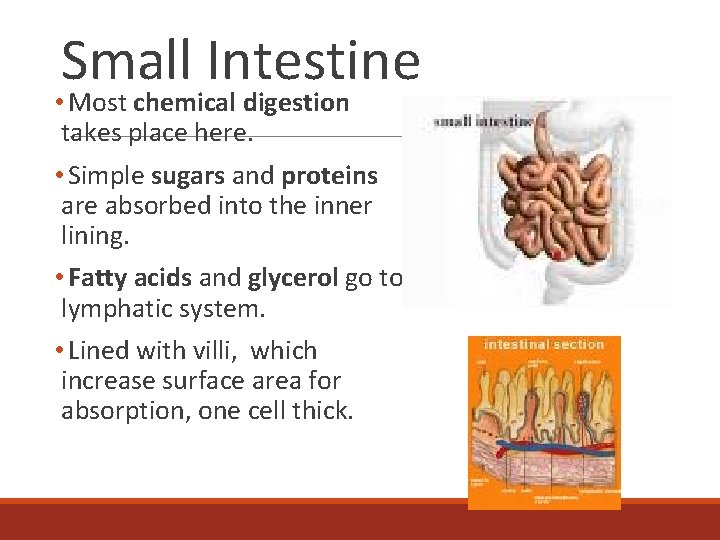
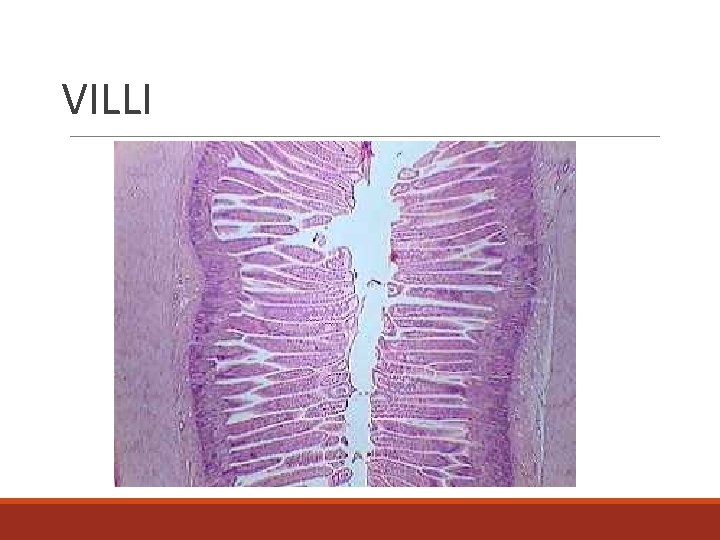
Small Intestine • Most chemical digestion takes place here. • Simple sugars and proteins are absorbed into the inner lining. • Fatty acids and glycerol go to lymphatic system. • Lined with villi, which increase surface area for absorption, one cell thick.
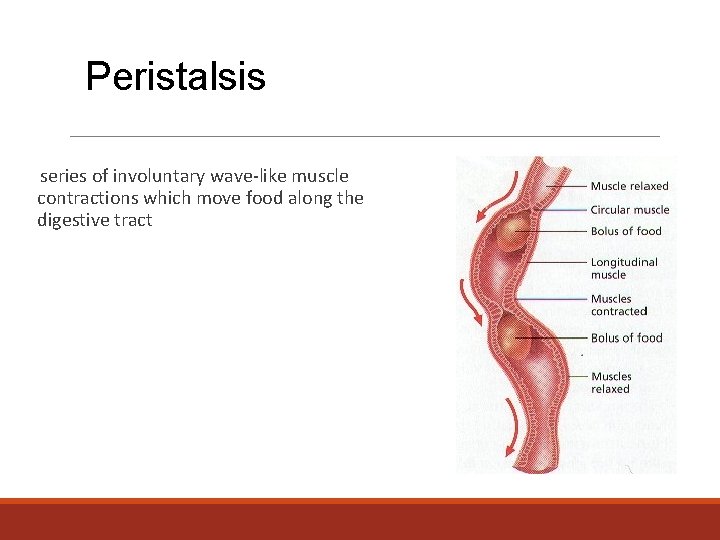
Peristalsis series of involuntary wave-like muscle contractions which move food along the digestive tract
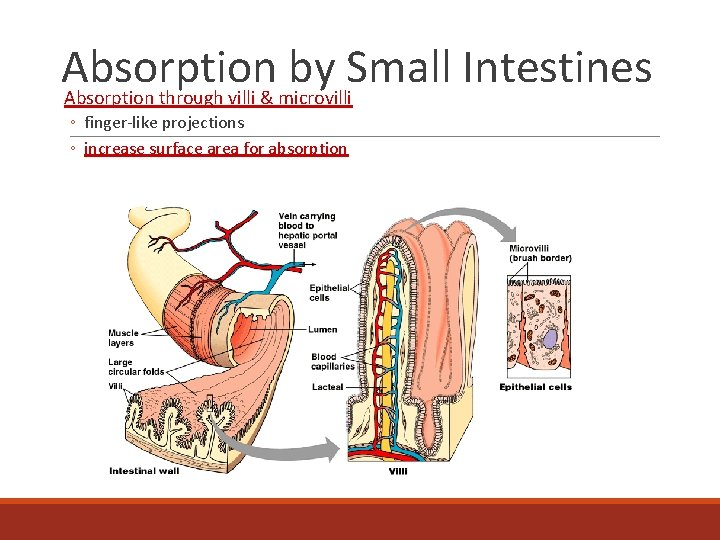
Absorption by Small Intestines Absorption through villi & microvilli ◦ finger-like projections ◦ increase surface area for absorption
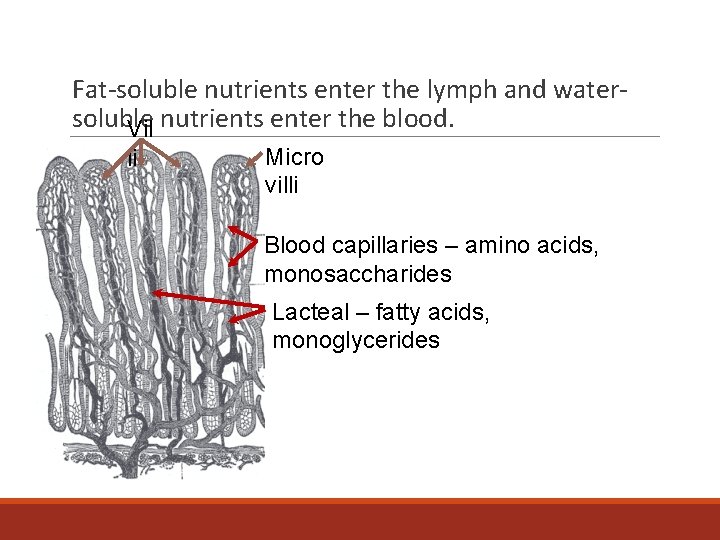
Fat-soluble nutrients enter the lymph and watersoluble Vil nutrients enter the blood. li Micro villi Blood capillaries – amino acids, monosaccharides Lacteal – fatty acids, monoglycerides
VILLI
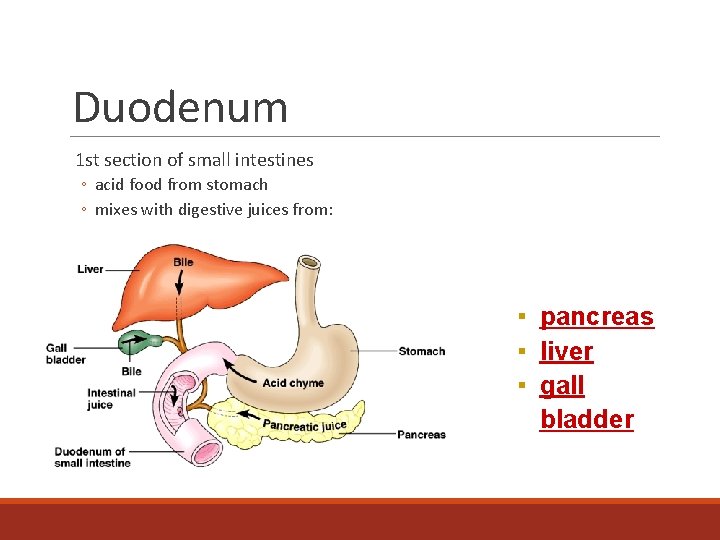
Duodenum 1 st section of small intestines ◦ acid food from stomach ◦ mixes with digestive juices from: ▪ pancreas ▪ liver ▪ gall bladder
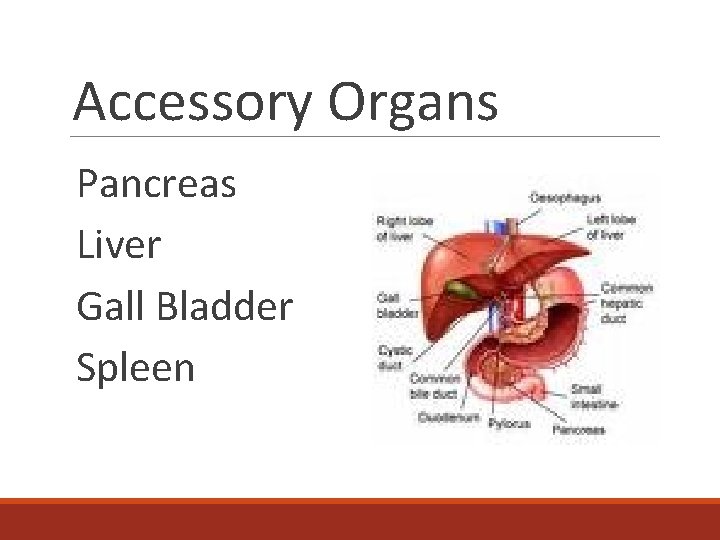
Accessory Organs Pancreas Liver Gall Bladder Spleen
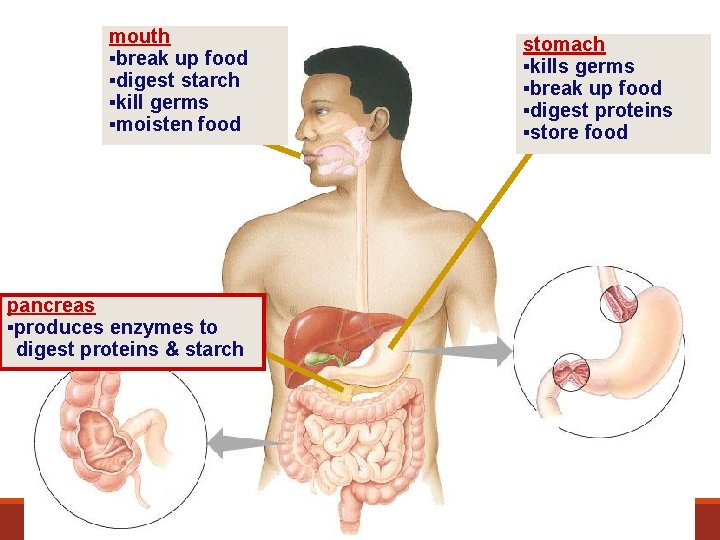
mouth ▪break up food ▪digest starch ▪kill germs ▪moisten food pancreas ▪produces enzymes to digest proteins & starch stomach ▪kills germs ▪break up food ▪digest proteins ▪store food
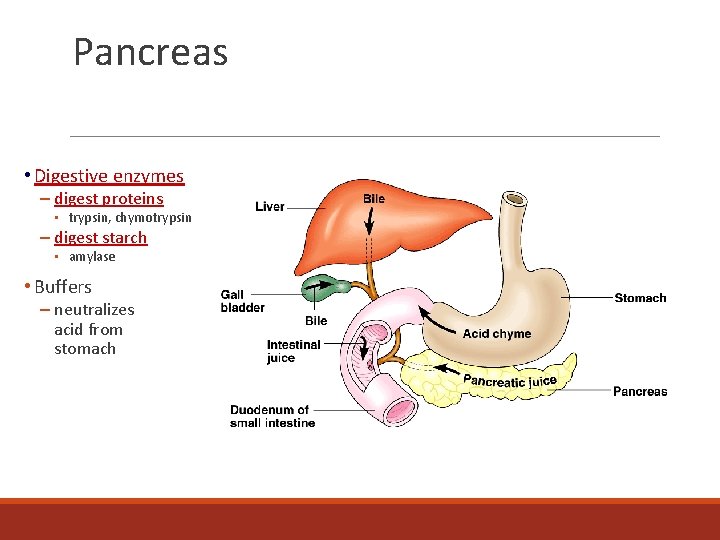
Pancreas • Digestive enzymes – digest proteins • trypsin, chymotrypsin – digest starch • amylase • Buffers – neutralizes acid from stomach
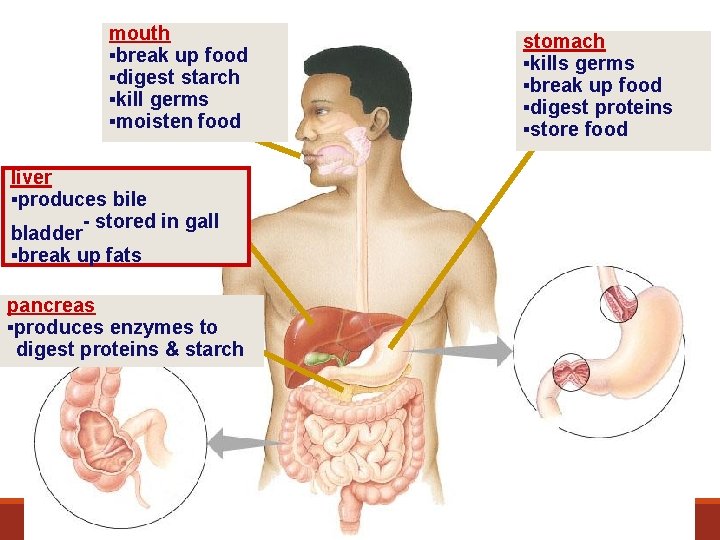
mouth ▪break up food ▪digest starch ▪kill germs ▪moisten food liver ▪produces bile - stored in gall bladder ▪break up fats pancreas ▪produces enzymes to digest proteins & starch stomach ▪kills germs ▪break up food ▪digest proteins ▪store food
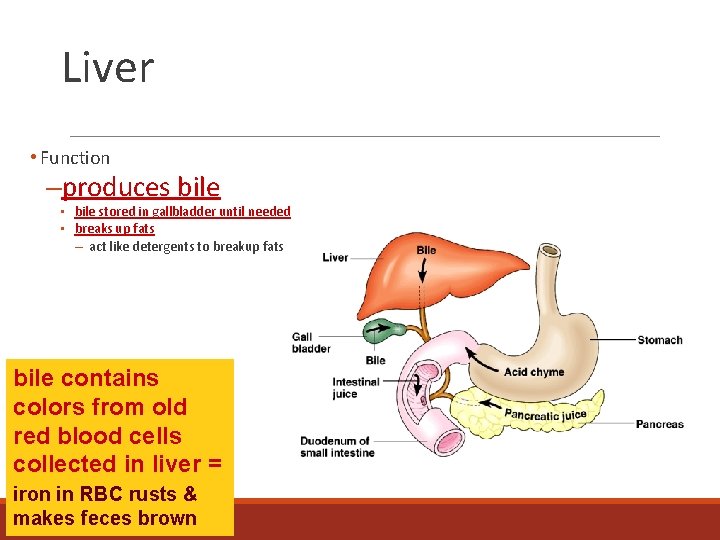
Liver • Function –produces bile • bile stored in gallbladder until needed • breaks up fats – act like detergents to breakup fats bile contains colors from old red blood cells collected in liver = iron in RBC rusts & makes feces brown
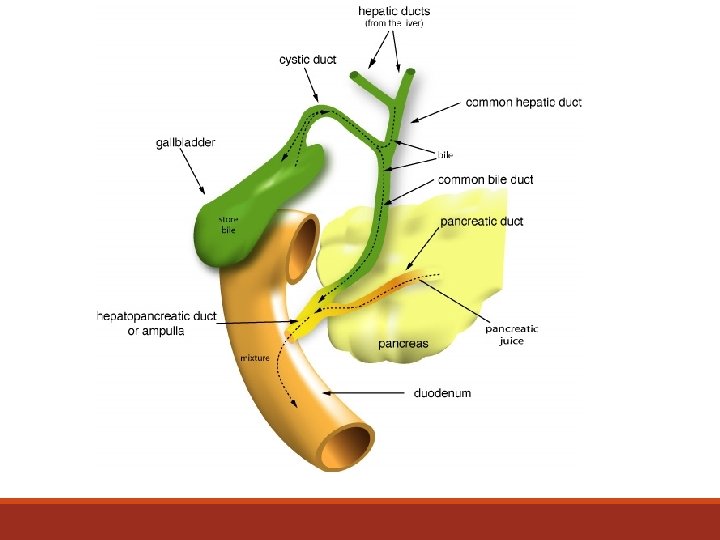
Gall bladder Pouch structure located near the liver which concentrates and stores bile Bile duct – a long tube that carries BILE. The top half of the common bile duct is associated with the liver, while the bottom half of the common bile duct is associated with the pancreas, through which it passes on its way to the intestine.
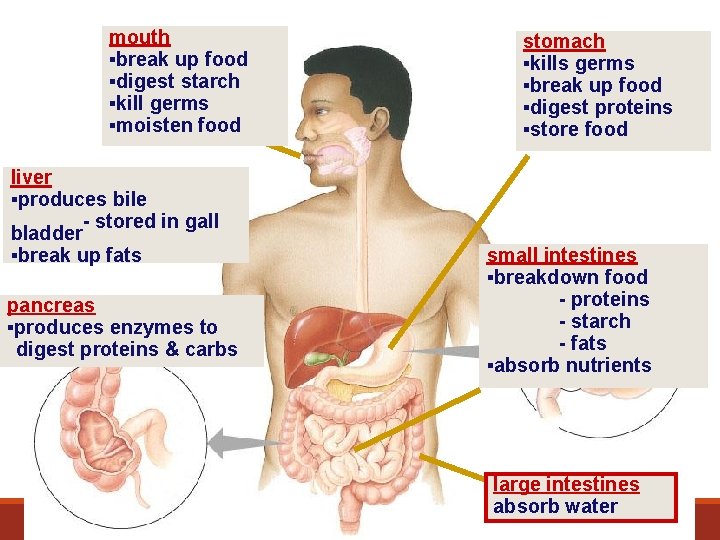
mouth ▪break up food ▪digest starch ▪kill germs ▪moisten food liver ▪produces bile - stored in gall bladder ▪break up fats pancreas ▪produces enzymes to digest proteins & carbs stomach ▪kills germs ▪break up food ▪digest proteins ▪store food small intestines ▪breakdown food - proteins - starch - fats ▪absorb nutrients large intestines absorb water
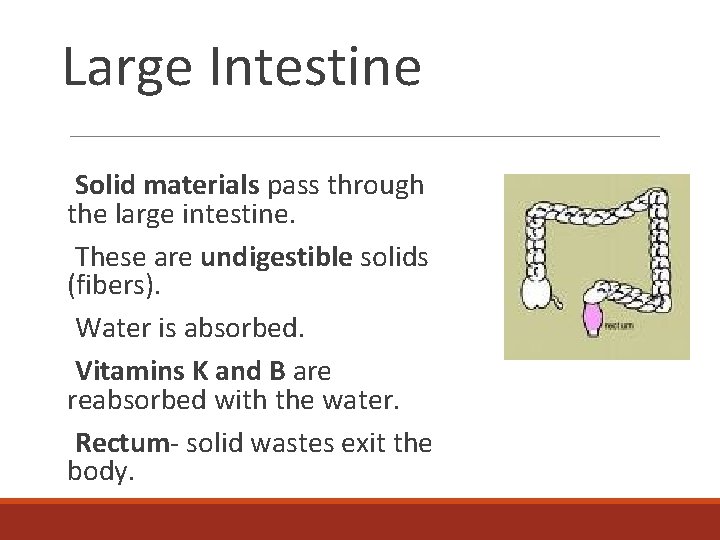
Large Intestine Solid materials pass through the large intestine. These are undigestible solids (fibers). Water is absorbed. Vitamins K and B are reabsorbed with the water. Rectum- solid wastes exit the body.
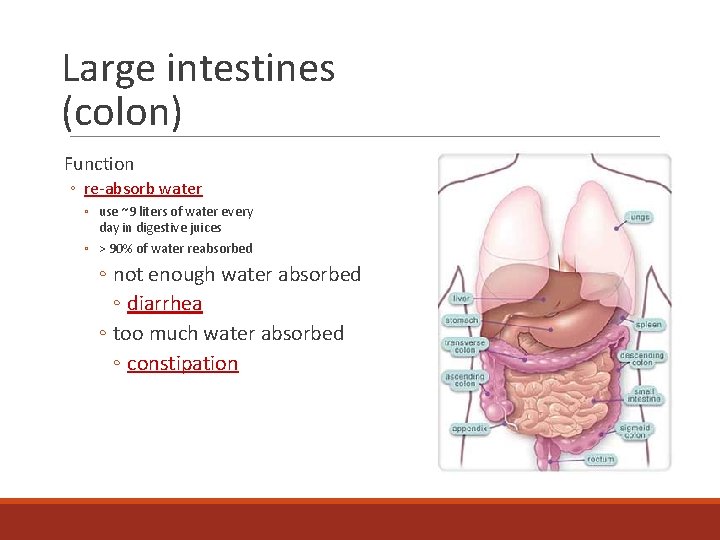
Large intestines (colon) Function ◦ re-absorb water ◦ use ~9 liters of water every day in digestive juices ◦ > 90% of water reabsorbed ◦ not enough water absorbed ◦ diarrhea ◦ too much water absorbed ◦ constipation
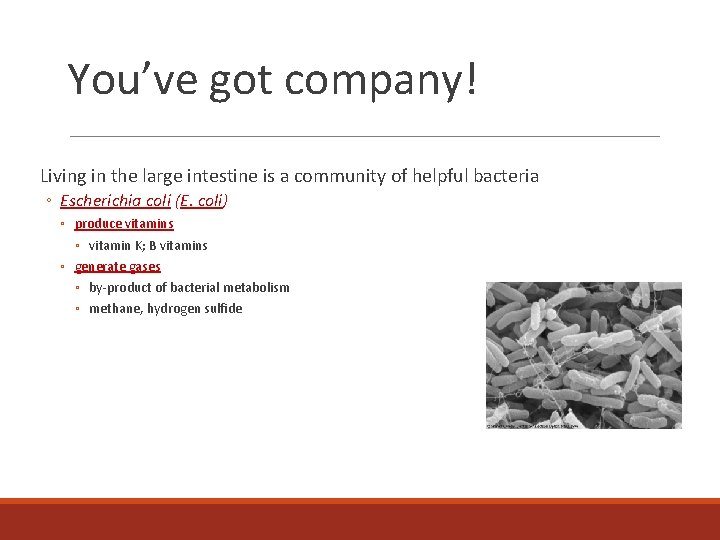
You’ve got company! Living in the large intestine is a community of helpful bacteria ◦ Escherichia coli (E. coli) ◦ produce vitamins ◦ vitamin K; B vitamins ◦ generate gases ◦ by-product of bacterial metabolism ◦ methane, hydrogen sulfide
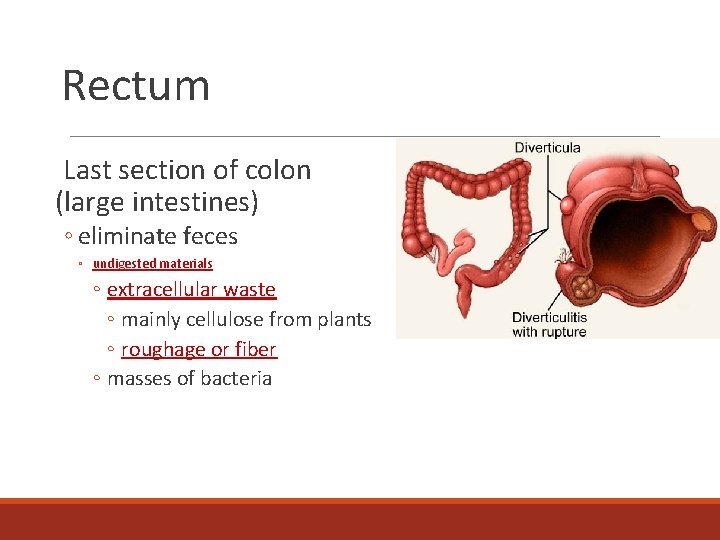
Rectum Last section of colon (large intestines) ◦ eliminate feces ◦ undigested materials ◦ extracellular waste ◦ mainly cellulose from plants ◦ roughage or fiber ◦ masses of bacteria
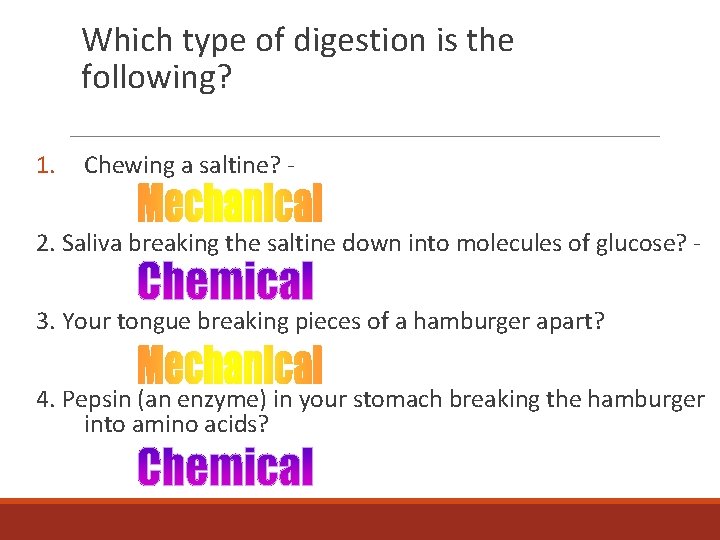
Which type of digestion is the following? 1. Chewing a saltine? - 2. Saliva breaking the saltine down into molecules of glucose? 3. Your tongue breaking pieces of a hamburger apart? 4. Pepsin (an enzyme) in your stomach breaking the hamburger into amino acids?
If “I Am What I Eat”, Then How Does A Peanut Butter Sandwich Become “Me”? Within 24 to 48 hours ◦ Body digests and absorbs 90% of carbohydrate, fat, and protein in a meal Mouth ◦ Food is crushed, mashed, and mixed with saliva ◦ Carbohydrate digestion begins ◦ Swallowing ◦ Peristaltic waves Copyright © 2017 Cengage Learning. All
Digestion of a Peanut Butter Sandwich (cont’d. ) • Stomach – Gastric juice mixes with food • Acid unwinds proteins – Chyme • Small intestine – Bile from the liver – Enzymes from pancreas • Large intestine – Fiber fragments, fluid, and some minerals absorbed Copyright © 2017 Cengage Learning. All

Typical Digestive System Transit Times Copyright © 2017 Cengage Learning. All Rights Reserved.
When I Eat More Than My Body Needs, What Happens to the Extra Nutrients? Nutrients from the digestive system arrive at the liver Liver processes nutrients Excess nutrients are converted to: ◦ Glycogen (a carbohydrate) ◦ Fat

Let’s go to the Video!
Storage Systems Eating intervals: four to six hours Major storage sites ◦ Liver – carbohydrates ◦ Glycogen ◦ Muscles – carbohydrates ◦ Glycogen ◦ Fat cells – fat and fat-related substances Body stores exist for many other nutrients Copyright © 2017 Cengage Learning. All
Variations in Nutrient Stores Quantities vary ◦ Some vitamins stored in the liver and fat ◦ Calcium and other minerals in bones ◦ Fat tissue
The Excretory System Organs involved in waste removal ◦ Lungs, liver, and kidneys Kidneys ◦ Waste materials are dissolved in water ◦ Working units – nephrons ◦ Urine stored in bladder Sodium helps regulate blood pressure ◦ Excreted or retained by kidneys Importance of water supply Copyright © 2017 Cengage Learning. All
The Excretory System Elimination of cells’ wastes ◦ Carbon dioxide �� leaves via the lungs ◦ Other wastes �� processed by the liver �� leave with feces OR ◦ Other wastes �� processed by kidneys �� leave with urine
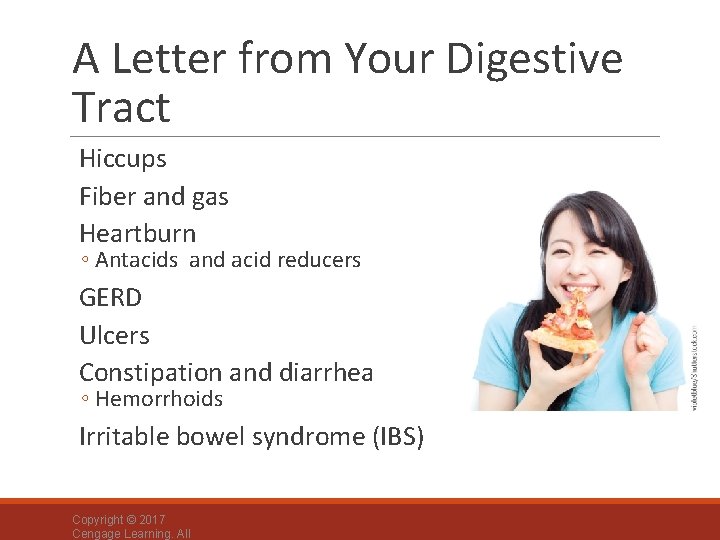
A Letter from Your Digestive Tract Hiccups Fiber and gas Heartburn ◦ Antacids and acid reducers GERD Ulcers Constipation and diarrhea ◦ Hemorrhoids Irritable bowel syndrome (IBS) Copyright © 2017 Cengage Learning. All
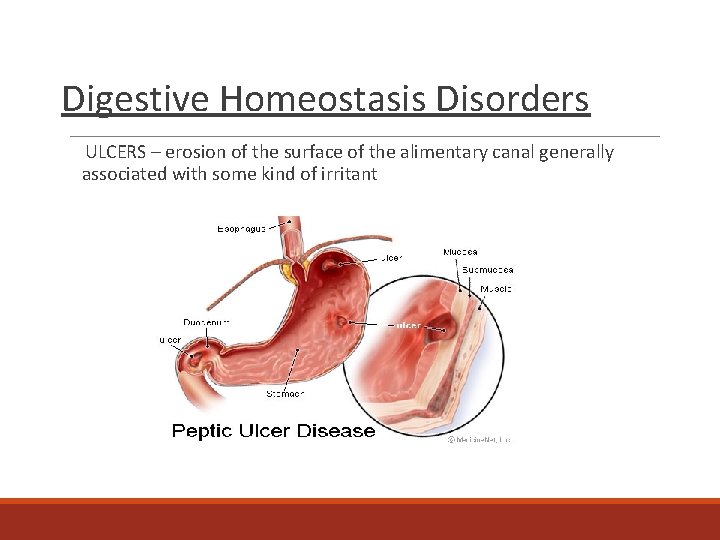
Digestive Homeostasis Disorders ULCERS – erosion of the surface of the alimentary canal generally associated with some kind of irritant
Digestive Homeostasis Disorders CONSTIPATION – a condition in which the large intestine is emptied with difficulty. Too much water is reabsorbed and the solid waste hardens
Digestive Homeostasis Disorders DIARRHEA – a gastrointestinal disturbance characterized by decreased water absorption and increased peristaltic activity of the large intestine. This results in increased, multiple, watery feces. This condition may result in severe dehydration, especially in infants
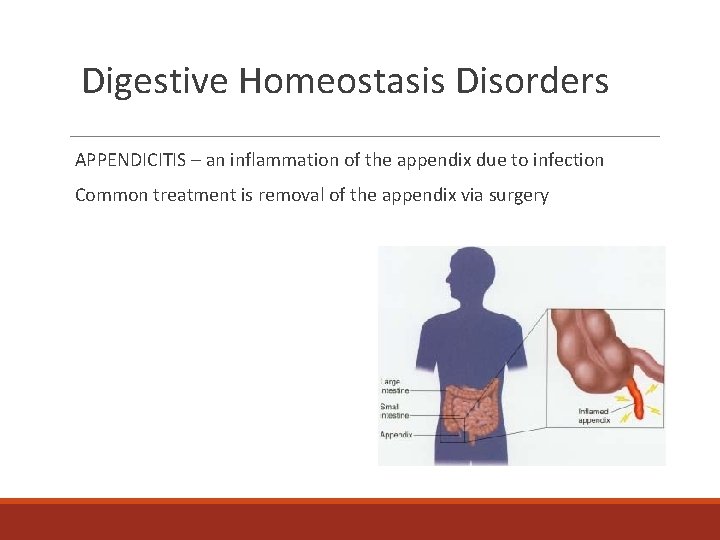
Digestive Homeostasis Disorders APPENDICITIS – an inflammation of the appendix due to infection Common treatment is removal of the appendix via surgery
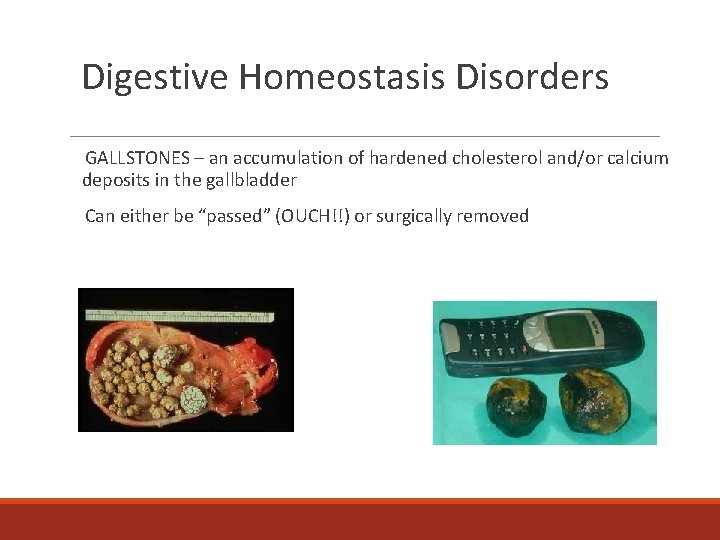
Digestive Homeostasis Disorders GALLSTONES – an accumulation of hardened cholesterol and/or calcium deposits in the gallbladder Can either be “passed” (OUCH!!) or surgically removed
Digestive Homeostasis Disorders ANOREXIA NERVOSA - a psychological condition where an individual thinks they appear overweight and refuses to eat. Weighs 85% or less than what is developmentally expected for age and height Young girls do not begin to menstruate at the appropriate age.
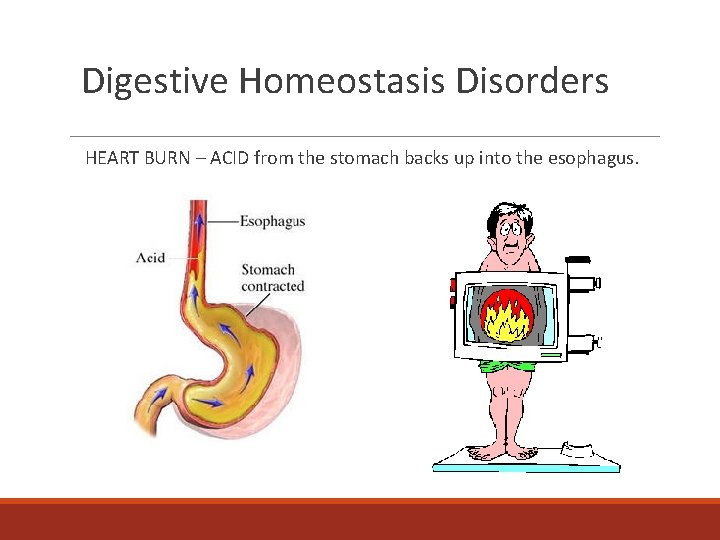
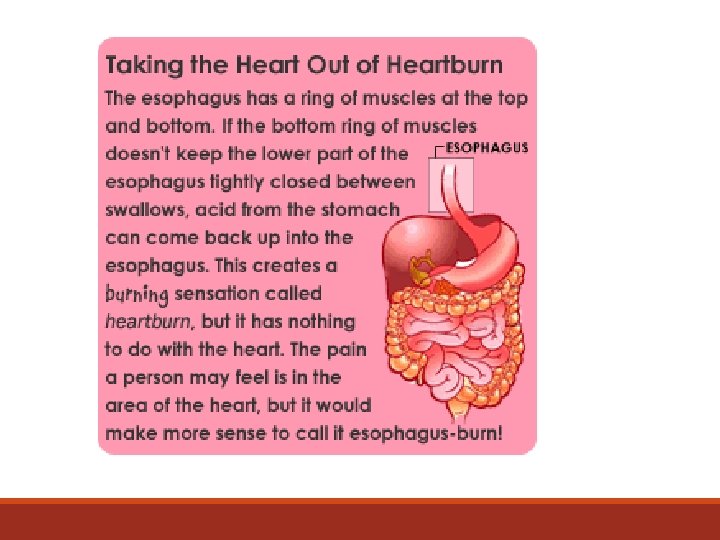
Digestive Homeostasis Disorders HEART BURN – ACID from the stomach backs up into the esophagus.
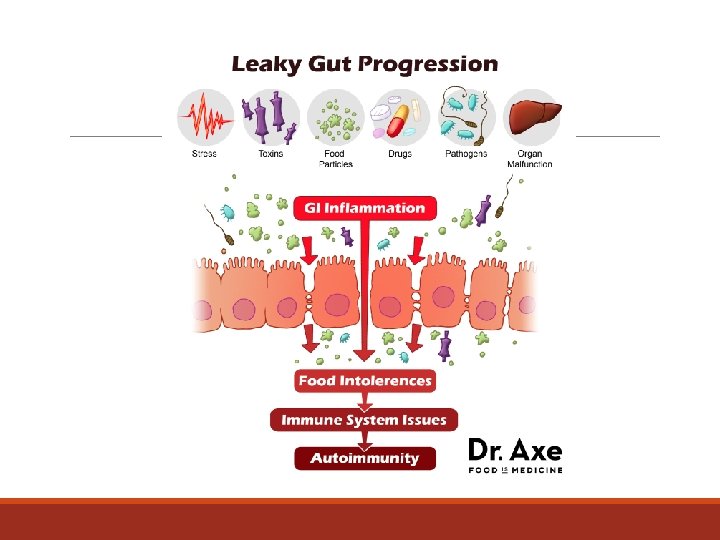
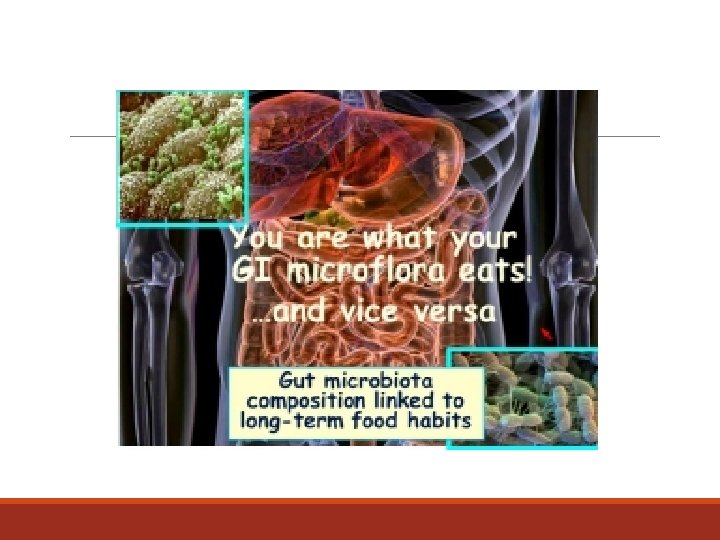
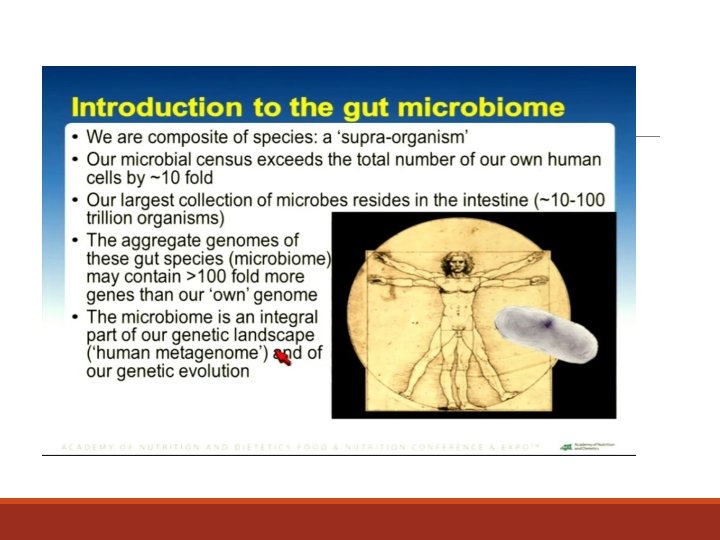
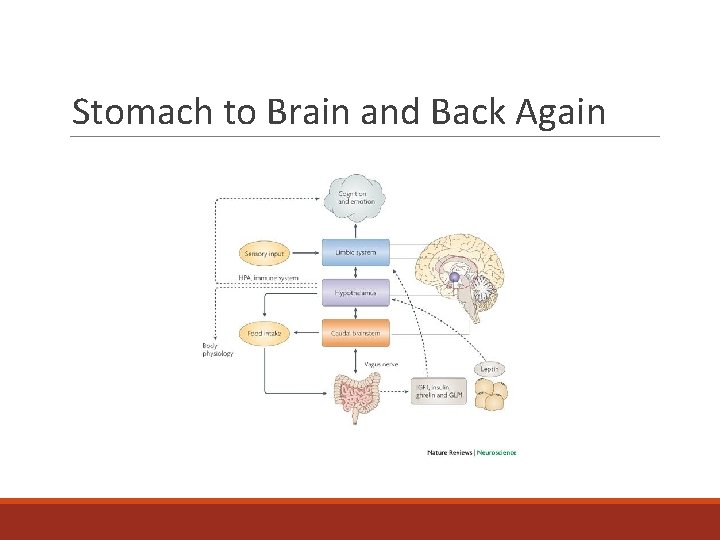
Stomach to Brain and Back Again
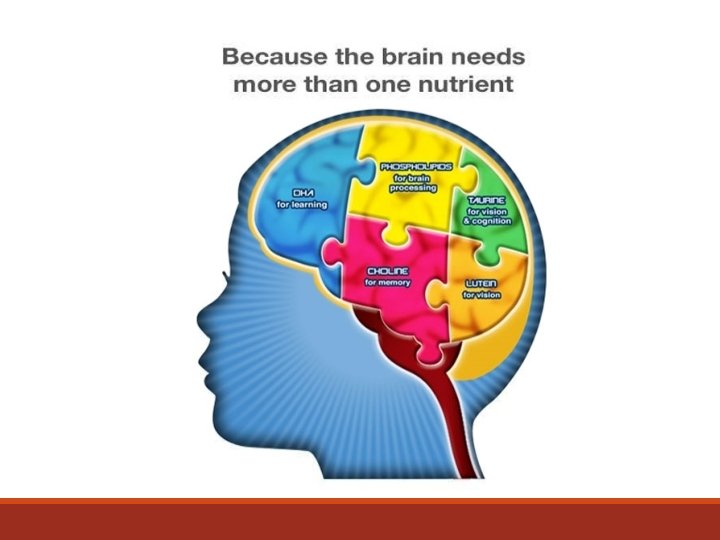
Mood Food “The foods you eat often affect how your neurons behave and, subsequently, how you think and feel. ” Gary L. Wenk, Ph. D, OSU Department of Psychology and Neuroscience
- Slides: 90