
Digestive System Continued The Digestive Tract Remember Our
Digestive System Continued. . . The Digestive Tract
Remember Our Goals. . . • Analyse how the structures of the digestive system work together • Describe the components, p. H, and digestive actions of salivary, gastric, pancreatic, and intestinal juices
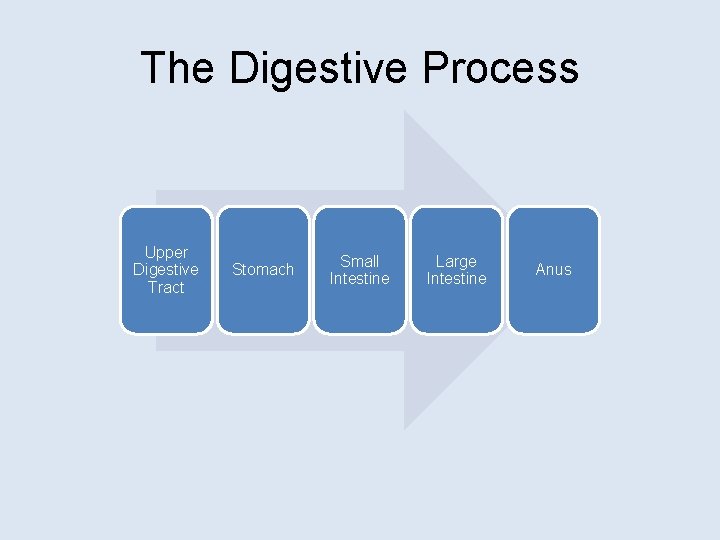
The Digestive Process Upper Digestive Tract Stomach Small Intestine Large Intestine Anus
Upper Digestive Tract • • Physical Digestion: chewing by teeth Chemical Digestion: enzymes Salivary glands release saliva Saliva contains water and an enzyme – Water = lubricant and reactant in hydrolysis reactions of digestion – Enzyme is _________which breaks down starch into maltose
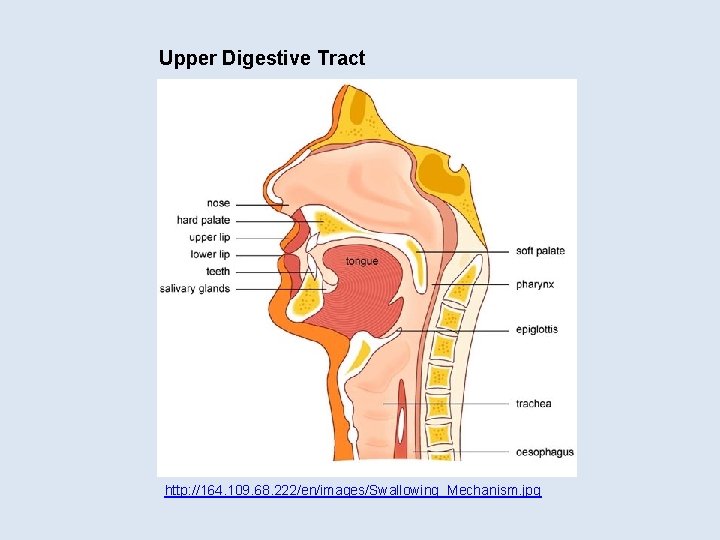
Upper Digestive Tract http: //164. 109. 68. 222/en/images/Swallowing_Mechanism. jpg
Swallowing • Tongue forms a bolus for swallowing • ______ is food that has been rolled into swallowable round portions • Swallowing is a reflexive action in the muscles of the pharynx and esophagus
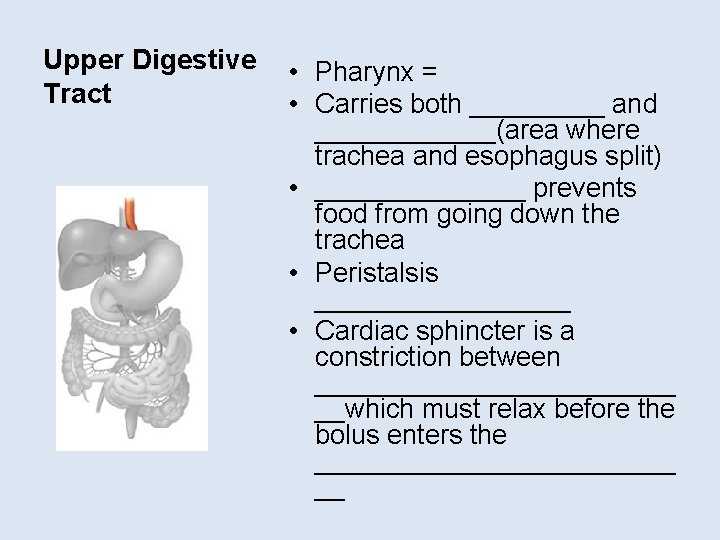
Upper Digestive Tract • Pharynx = • Carries both _____ and ______(area where trachea and esophagus split) • _______ prevents food from going down the trachea • Peristalsis _________ • Cardiac sphincter is a constriction between ____________ __which must relax before the bolus enters the ____________ __
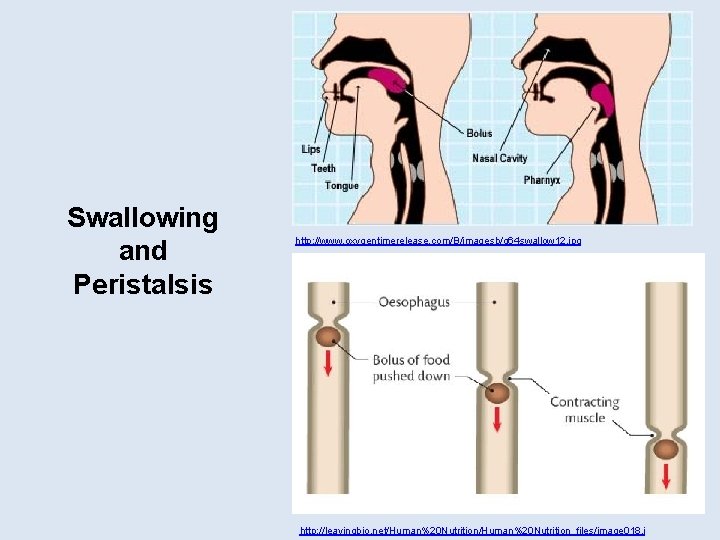
Swallowing and Peristalsis http: //www. oxygentimerelease. com/B/imagesb/q 64 swallow 12. jpg http: //leavingbio. net/Human%20 Nutrition_files/image 018. j
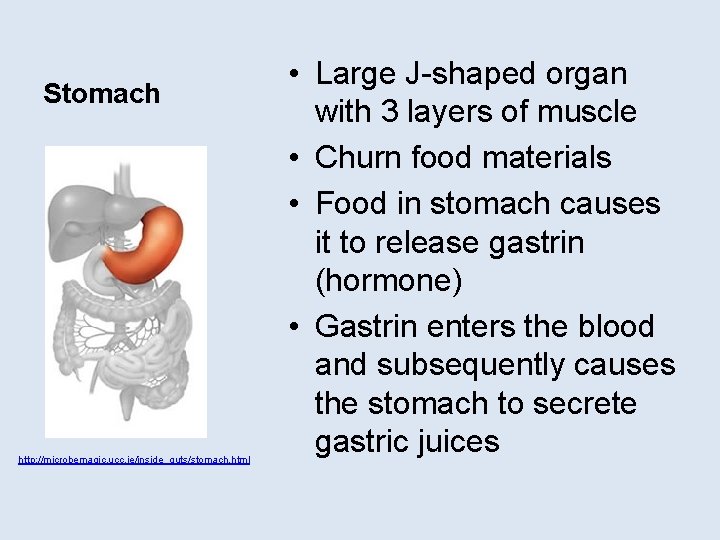
Stomach http: //microbemagic. ucc. ie/inside_guts/stomach. html • Large J-shaped organ with 3 layers of muscle • Churn food materials • Food in stomach causes it to release gastrin (hormone) • Gastrin enters the blood and subsequently causes the stomach to secrete gastric juices
Stomach – Gastric Juices • Contains ______________ • Bolus becomes ________ once exposed to gastric juice • _____ makes the p. H of the stomach low (2. 5) to kill any bacteria on the food • HCl also reacts with ________ to form pepsin (a protease) • Stomach walls produce _______ to protect the stomach from pepsin and the acid
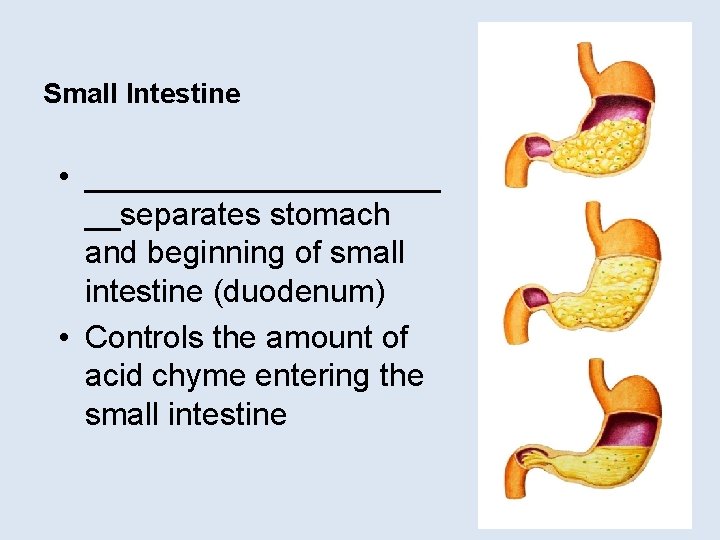
Small Intestine • __________ __separates stomach and beginning of small intestine (duodenum) • Controls the amount of acid chyme entering the small intestine
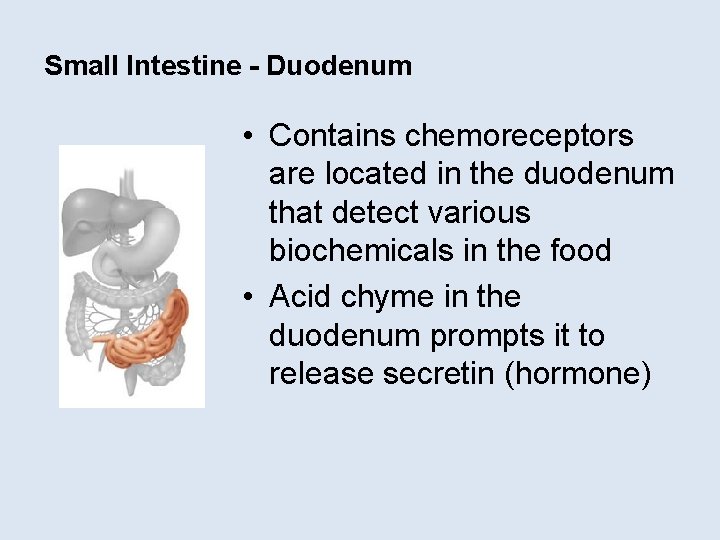
Small Intestine - Duodenum • Contains chemoreceptors are located in the duodenum that detect various biochemicals in the food • Acid chyme in the duodenum prompts it to release secretin (hormone)
Small Intestine • ________ enters the blood stream where it causes the pancreas to release pancreatic juice • Pancreatic juice contains _______ • Bicarbonate ions (HCO 3 ) change the p. H of the acid chyme from around 2. 5 to about 8. 5 (alkaline) • Enzymes are active at a p. H of _____
Small Intestine CCK (Cholecystokinin) Enzymes in Pancreatic Juice
Small Intestine – Intestinal Enzymes • Small intestine also produces its own enzymes • Maltase and other disaccharidases. . . • Peptidases _____________ • The digested food then moves into the last part of the small intestine called the _______.
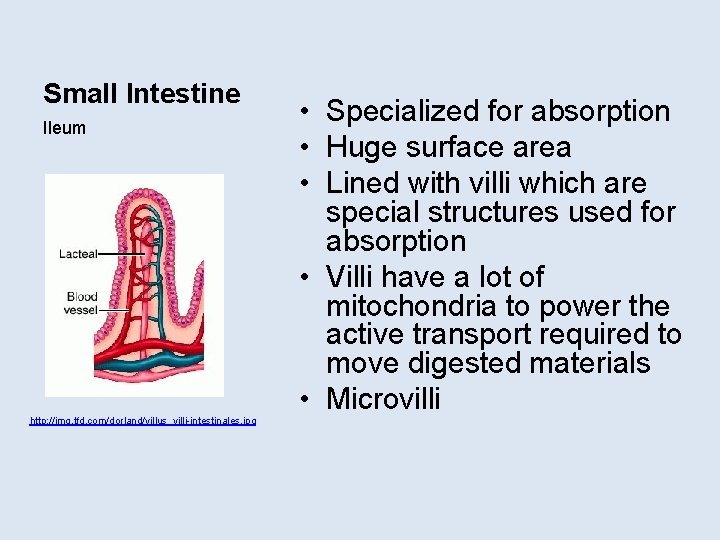
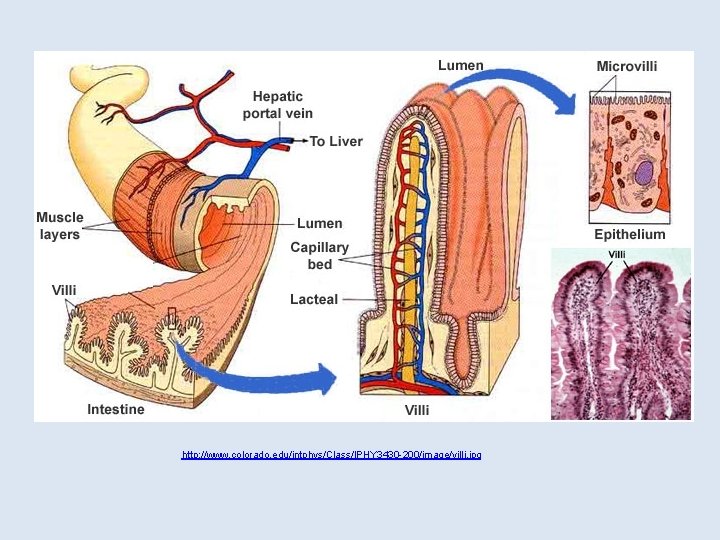
Small Intestine Ileum http: //img. tfd. com/dorland/villus_villi-intestinales. jpg • Specialized for absorption • Huge surface area • Lined with villi which are special structures used for absorption • Villi have a lot of mitochondria to power the active transport required to move digested materials • Microvilli
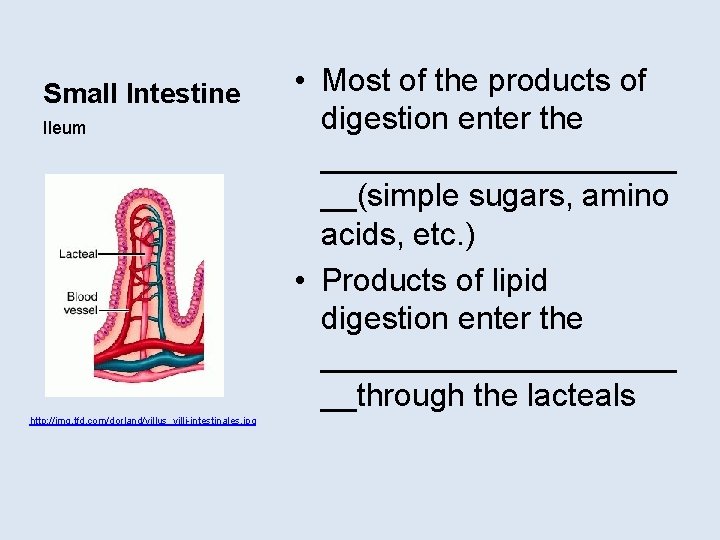
Small Intestine Ileum http: //img. tfd. com/dorland/villus_villi-intestinales. jpg • Most of the products of digestion enter the __________ __(simple sugars, amino acids, etc. ) • Products of lipid digestion enter the __________ __through the lacteals
http: //www. colorado. edu/intphys/Class/IPHY 3430 -200/image/villi. jpg
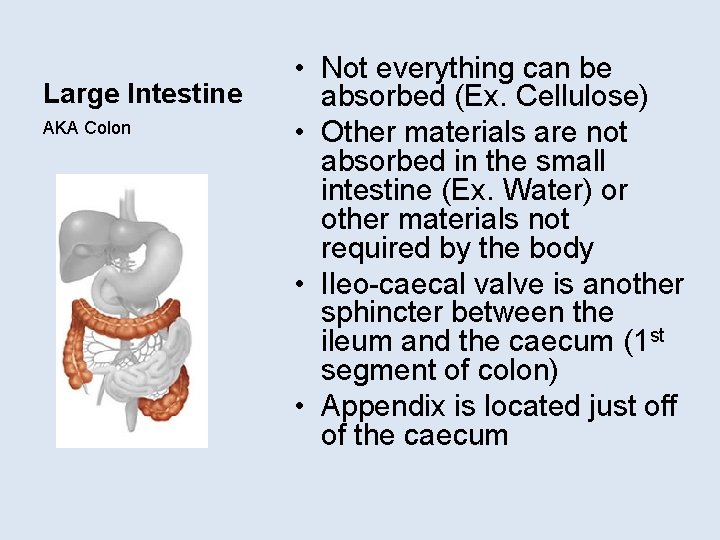
Large Intestine AKA Colon • Not everything can be absorbed (Ex. Cellulose) • Other materials are not absorbed in the small intestine (Ex. Water) or other materials not required by the body • Ileo-caecal valve is another sphincter between the ileum and the caecum (1 st segment of colon) • Appendix is located just off of the caecum
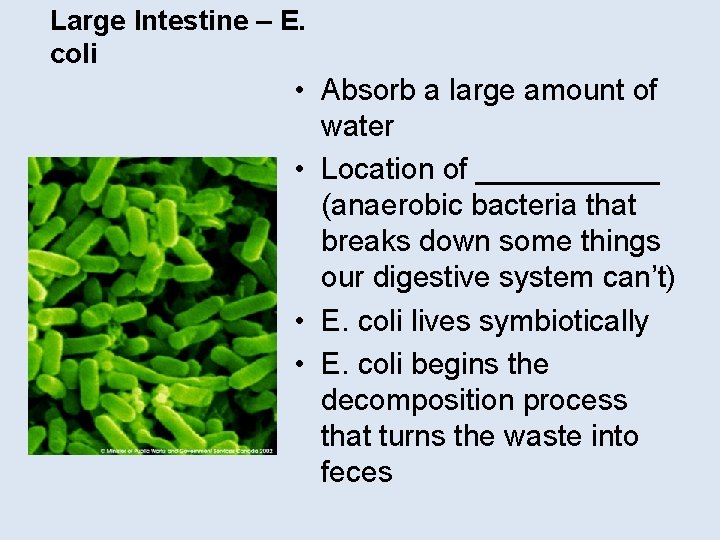
Large Intestine – E. coli • Absorb a large amount of water • Location of ______ (anaerobic bacteria that breaks down some things our digestive system can’t) • E. coli lives symbiotically • E. coli begins the decomposition process that turns the waste into feces
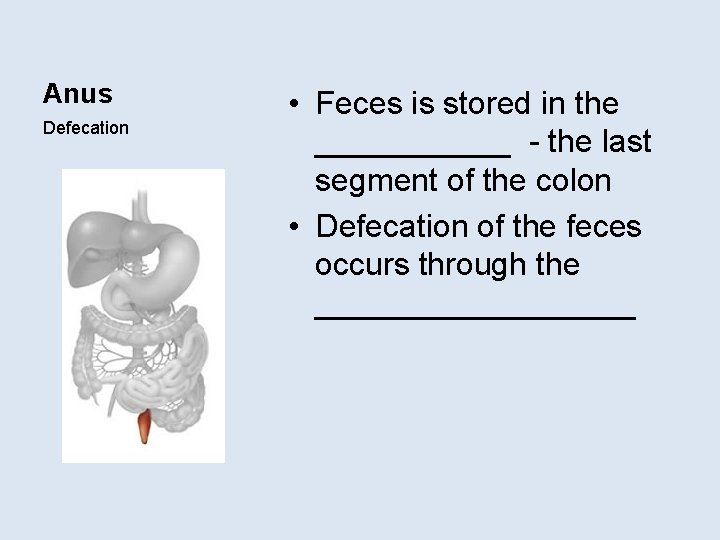
Anus Defecation • Feces is stored in the ______ - the last segment of the colon • Defecation of the feces occurs through the _________
In Summary Various enzymes work to metabolize food parts at specific p. H and in specific regions of the digestive tract. The digestive tract begins with the mouth and is a continuous tube ending in the anus (including accessory organs: liver and pancreas). Food: the easiest thing you’ll “pass” in school!!!
Remember Our Goals. . . • Analyse how the structures of the digestive system work together • Describe the components, p. H, and digestive actions of salivary, gastric, pancreatic, and intestinal juices
- Slides: 23