
Digestive System Chapter 12 Digestion The human body

Digestive System Chapter 12
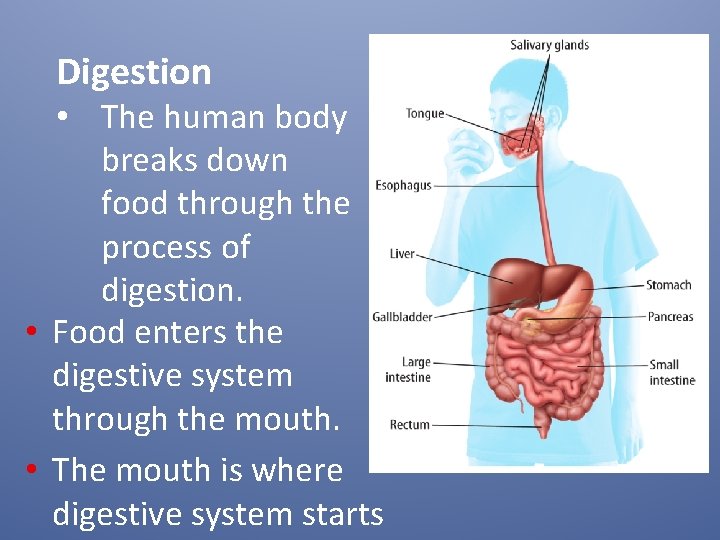
Digestion • The human body breaks down food through the process of digestion. • Food enters the digestive system through the mouth. • The mouth is where digestive system starts
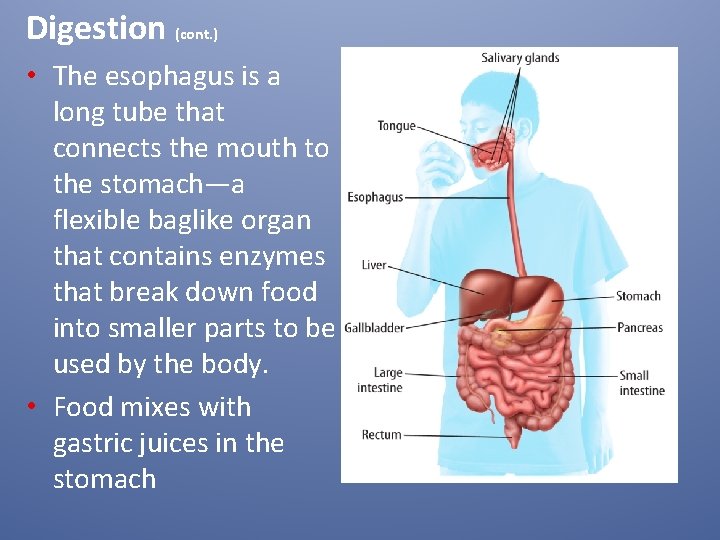
Digestion (cont. ) • The esophagus is a long tube that connects the mouth to the stomach—a flexible baglike organ that contains enzymes that break down food into smaller parts to be used by the body. • Food mixes with gastric juices in the stomach
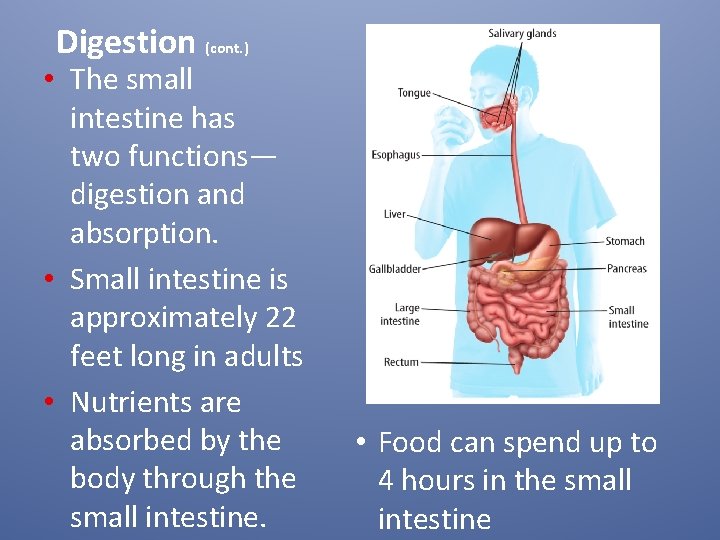
Digestion (cont. ) • The small intestine has two functions— digestion and absorption. • Small intestine is approximately 22 feet long in adults • Nutrients are absorbed by the body through the small intestine. • Food can spend up to 4 hours in the small intestine
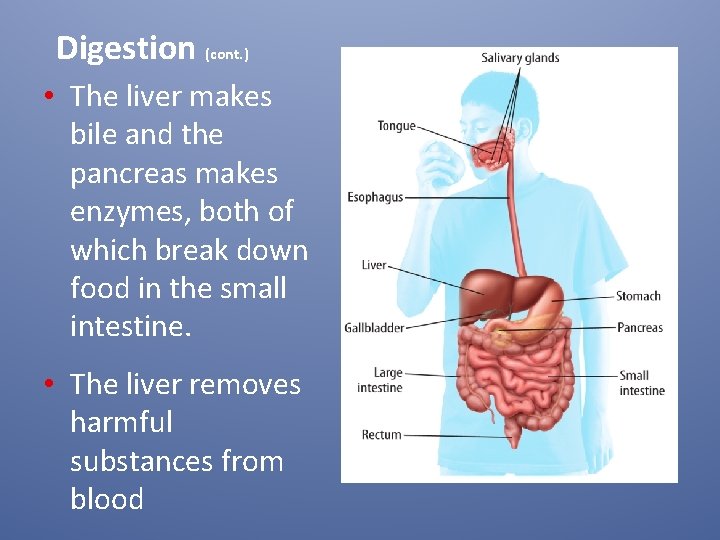
Digestion (cont. ) • The liver makes bile and the pancreas makes enzymes, both of which break down food in the small intestine. • The liver removes harmful substances from blood
Digestion (cont. ) • The large intestine receives solid waste from the small intestine. • The large intestine absorbs excess water from the waste material. • The large intestine is about 5 feet long. • The rectum of the large intestine stores the solid waste until the waste is expelled from the body.
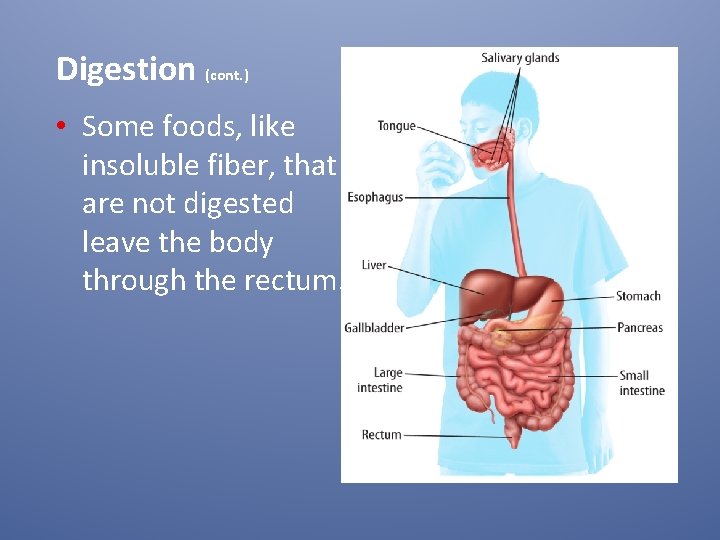
Digestion (cont. ) • Some foods, like insoluble fiber, that are not digested leave the body through the rectum.
Digestion (cont. ) • Nutrients are the parts of food used by the body to grow and survive. • The organs that help with absorption of nutrients is the pancreas, the liver, and the gallbladder. • Proteins, fats, carbohydrates, vitamins, and minerals are all nutrients. • Calories are a measure of the amount of energy in food.
- Slides: 8