
Digestive Physiology of Farm Animals Dr Richard Coffey

- Slides: 27
Digestive Physiology of Farm Animals Dr. Richard Coffey Introduction to Animal and Food Sciences Agent In-Service
Introduction n Digestive system = portal for nutrients to gain access to circulatory system. ► Foodstuffs broken down to very simple molecules. ► Resulting sugars, amino acids, fatty acids, etc. then transported across GI tract lining into blood. n Specific foodstuffs animals can utilize is dependent on: n Their type of digestive system
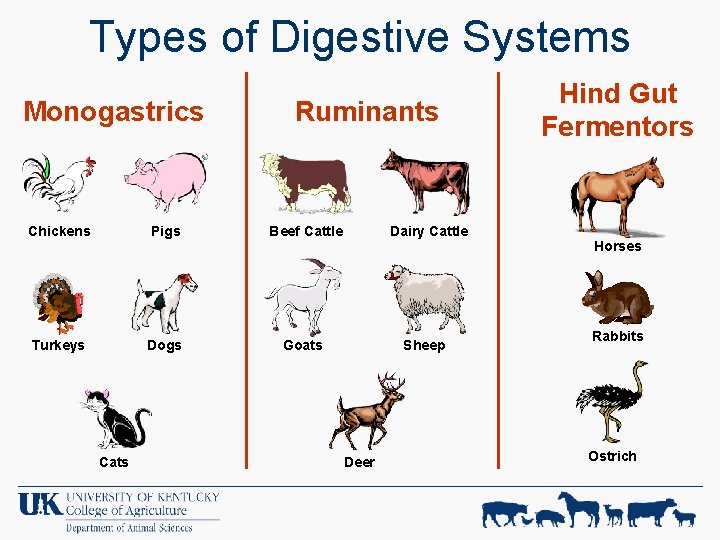
Introduction n Three (3) basic types of digestive systems: ► Monogastric – ► simple stomach. ► Ruminant (cranial fermentor) – ► multi-compartmented stomach. ► Hind gut (caudal) fermentor – ► simple stomach, but large and complex large intestine ► cecum
Types of Digestive Systems Monogastrics Ruminants Chickens Pigs Beef Cattle Turkeys Dogs Goats Cats Dairy Cattle Sheep Deer Hind Gut Fermentors Horses Rabbits Ostrich
Basic Functional Anatomy of the Ruminant Digestive System Mouth, esophagus, liver, pancreas, gall bladder, small intestine, and large intestine have functions similar to monogastrics.
Organs of the Digestive System n Mouth ► Mastication - Mechanical breakdown of feed by chewing (reduced particle size, increases surface for enzyme action). ► Saliva added as lubricant, in some species, contains amylase (salivary amylase) to begin starch digestion. n Esophagus ► Tube connecting the mouth to the stomach. Peristalsis
Organs of the Digestive System n Stomach ► Enzymatic digestion of proteins begins. ► Foodstuffs reduced to liquid form. ► Chyme passes to small intestine. n Liver ► Center of metabolic activity in the body. ► Major role provide bile salts to small intestine (needed for digestion and absorption of fats).
Organs of the Digestive System n Pancreas ► Provides potent mix of digestive enzymes to small intestine - helps in digestion of fats, carbohydrates, and proteins. n Small Intestine ► 3 sections – duodenum, jejunum, ileum ► Site of final stages of chemical enzymatic digestion. ► Where most nutrients are absorbed.
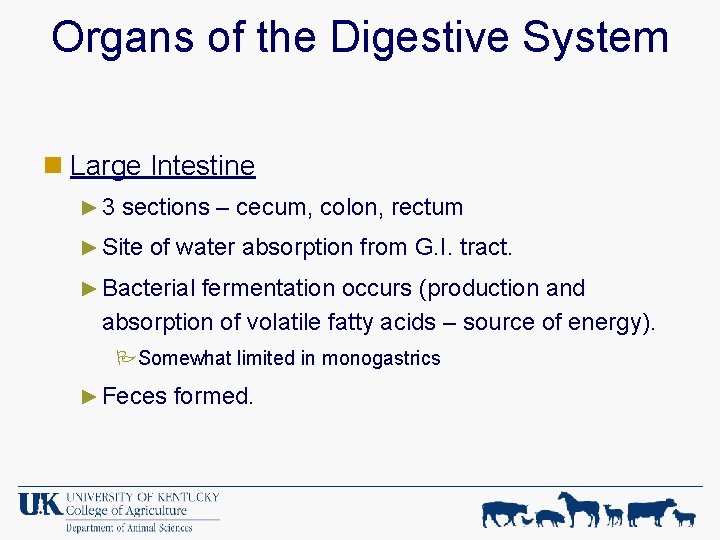
Organs of the Digestive System n Large Intestine ► 3 sections – cecum, colon, rectum ► Site of water absorption from G. I. tract. ► Bacterial fermentation occurs (production and absorption of volatile fatty acids – source of energy). PSomewhat limited in monogastrics ► Feces formed.
Basic Functional Anatomy of the Digestive System – Ruminants –
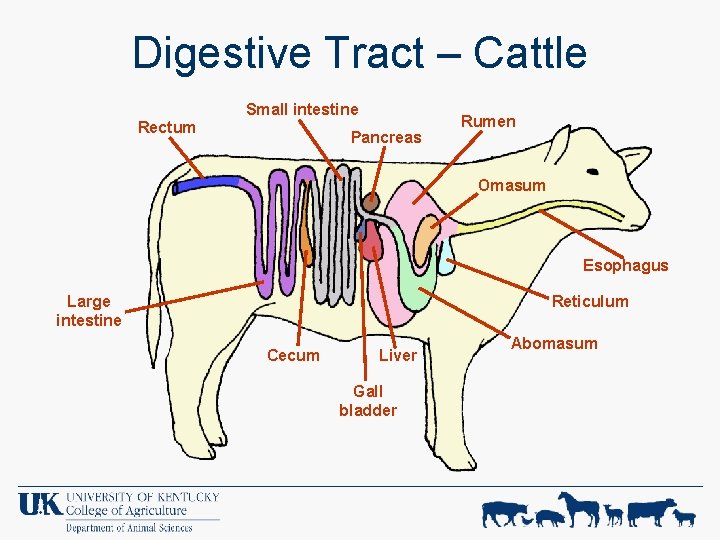
Digestive Tract – Cattle Small intestine Rectum Pancreas Rumen Omasum Esophagus Reticulum Large intestine Cecum Liver Gall bladder Abomasum
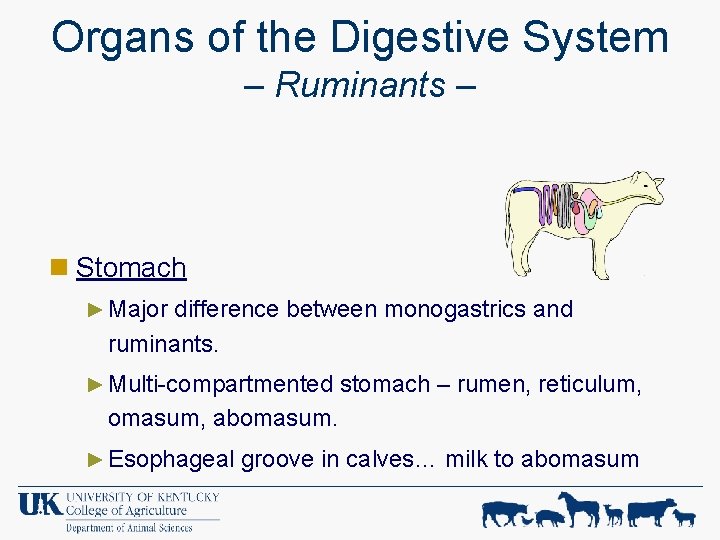
Organs of the Digestive System – Ruminants – n Stomach ► Major difference between monogastrics and ruminants. ► Multi-compartmented stomach – rumen, reticulum, omasum, abomasum. ► Esophageal groove in calves… milk to abomasum
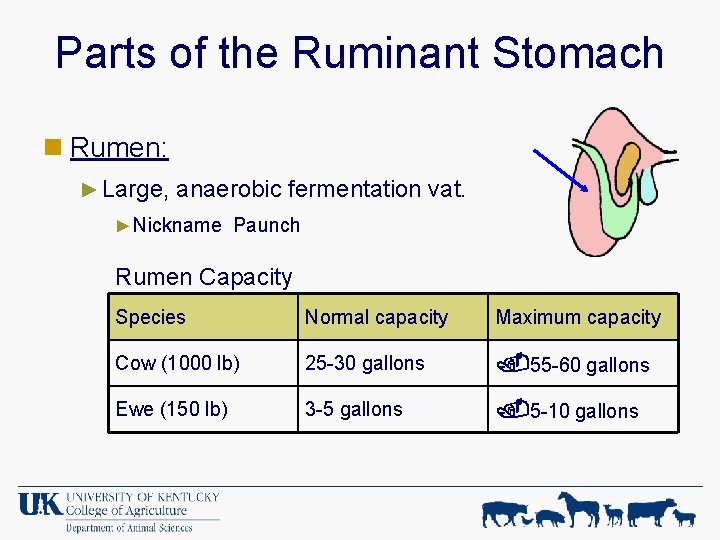
Parts of the Ruminant Stomach n Rumen: ► Large, anaerobic fermentation vat. ► Nickname Paunch Rumen Capacity Species Normal capacity Maximum capacity Cow (1000 lb) 25 -30 gallons 55 -60 gallons Ewe (150 lb) 3 -5 gallons 5 -10 gallons
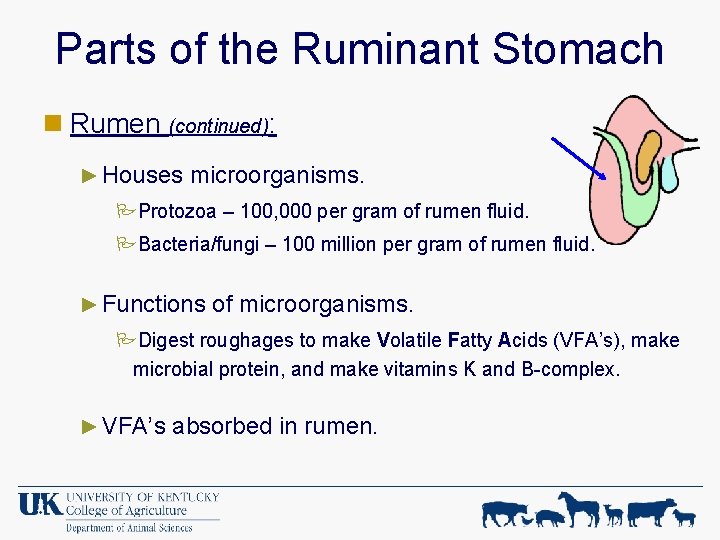
Parts of the Ruminant Stomach n Rumen (continued): ► Houses microorganisms. PProtozoa – 100, 000 per gram of rumen fluid. PBacteria/fungi – 100 million per gram of rumen fluid. ► Functions of microorganisms. PDigest roughages to make Volatile Fatty Acids (VFA’s), make microbial protein, and make vitamins K and B-complex. ► VFA’s absorbed in rumen.
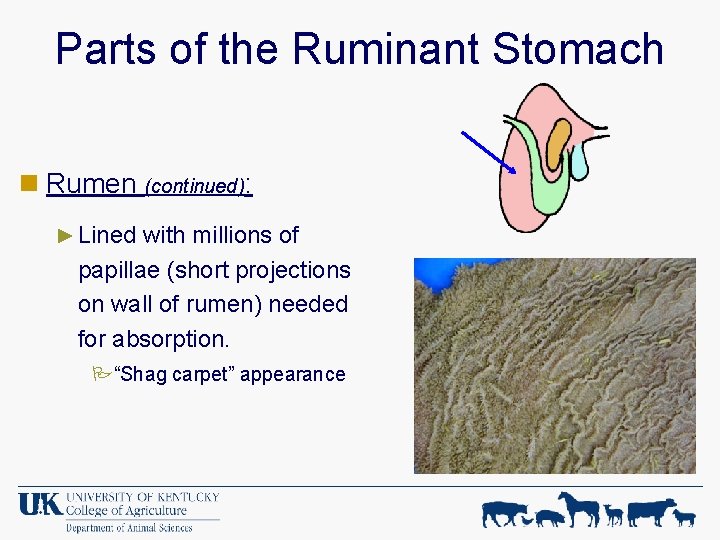
Parts of the Ruminant Stomach n Rumen (continued): ► Lined with millions of papillae (short projections on wall of rumen) needed for absorption. P“Shag carpet” appearance
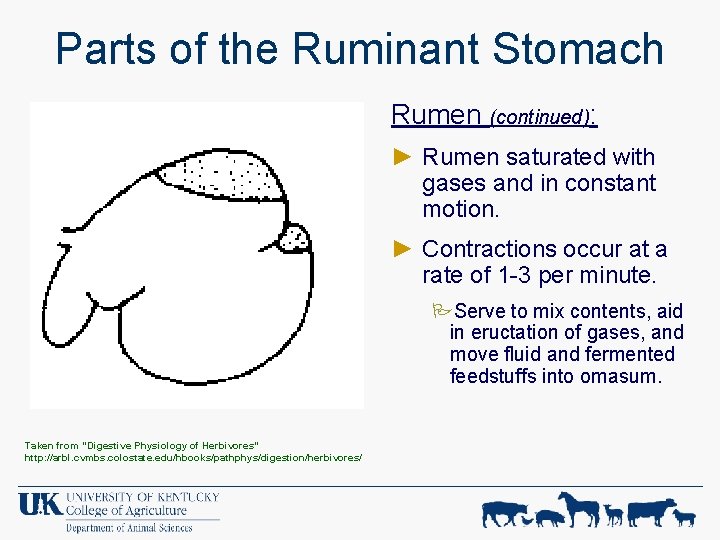
Parts of the Ruminant Stomach Rumen (continued): ► Rumen saturated with gases and in constant motion. ► Contractions occur at a rate of 1 -3 per minute. PServe to mix contents, aid in eructation of gases, and move fluid and fermented feedstuffs into omasum. Taken from “Digestive Physiology of Herbivores” http: //arbl. cvmbs. colostate. edu/hbooks/pathphys/digestion/herbivores/
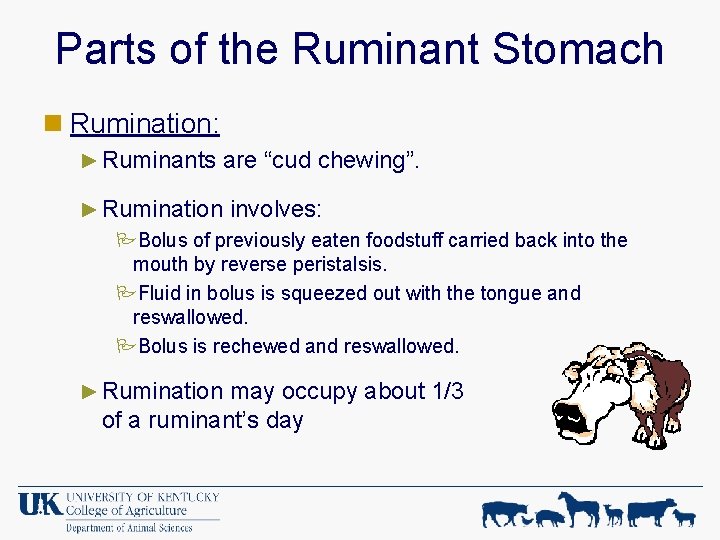
Parts of the Ruminant Stomach n Rumination: ► Ruminants are “cud chewing”. ► Rumination involves: PBolus of previously eaten foodstuff carried back into the mouth by reverse peristalsis. PFluid in bolus is squeezed out with the tongue and reswallowed. PBolus is rechewed and reswallowed. ► Rumination may occupy about 1/3 of a ruminant’s day
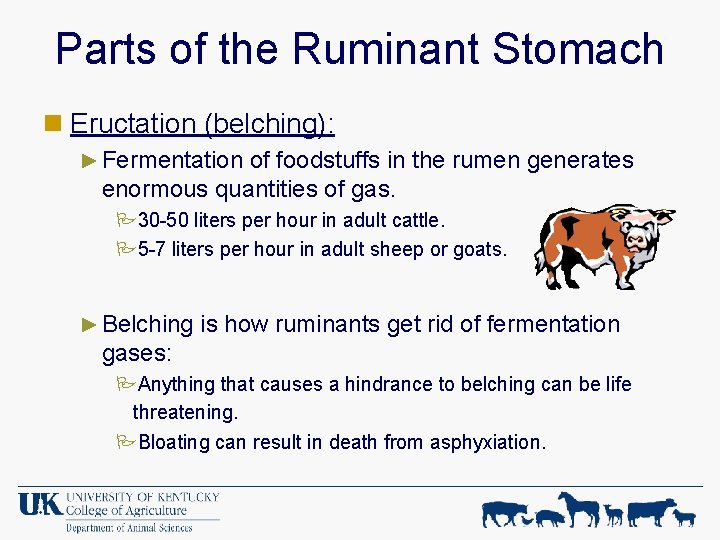
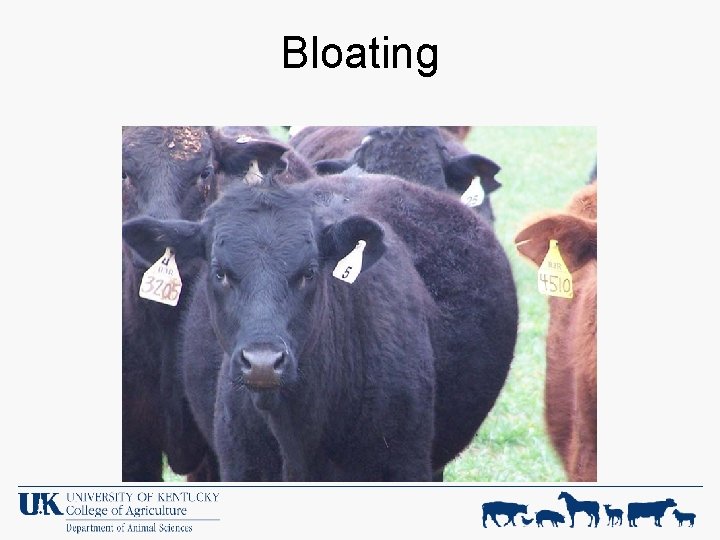
Parts of the Ruminant Stomach n Eructation (belching): ► Fermentation of foodstuffs in the rumen generates enormous quantities of gas. P 30 -50 liters per hour in adult cattle. P 5 -7 liters per hour in adult sheep or goats. ► Belching is how ruminants get rid of fermentation gases: PAnything that causes a hindrance to belching can be life threatening. PBloating can result in death from asphyxiation.
Bloating
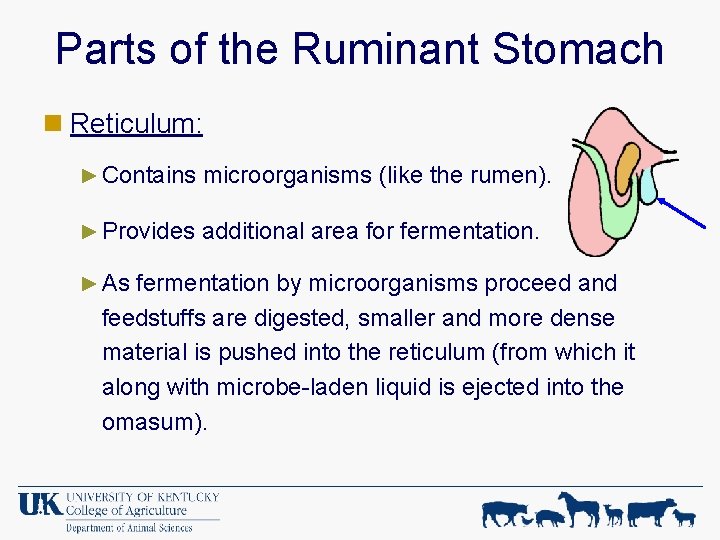
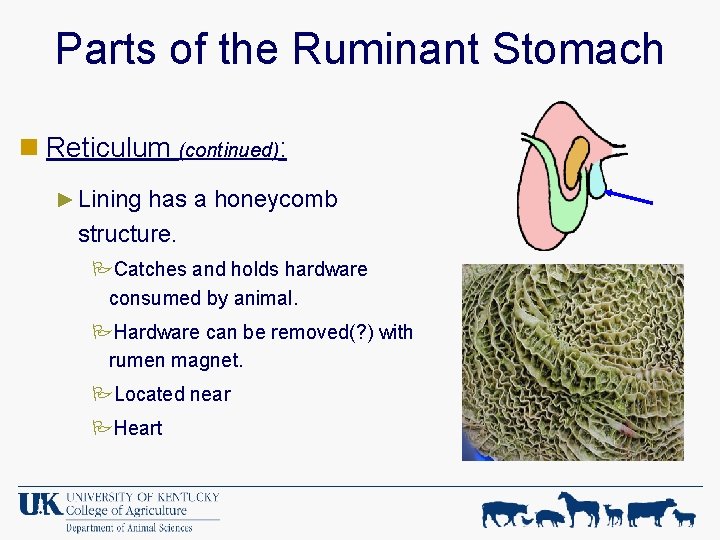
Parts of the Ruminant Stomach n Reticulum: ► Contains microorganisms (like the rumen). ► Provides additional area for fermentation. ► As fermentation by microorganisms proceed and feedstuffs are digested, smaller and more dense material is pushed into the reticulum (from which it along with microbe-laden liquid is ejected into the omasum).
Parts of the Ruminant Stomach n Reticulum (continued): ► Lining has a honeycomb structure. PCatches and holds hardware consumed by animal. PHardware can be removed(? ) with rumen magnet. PLocated near PHeart
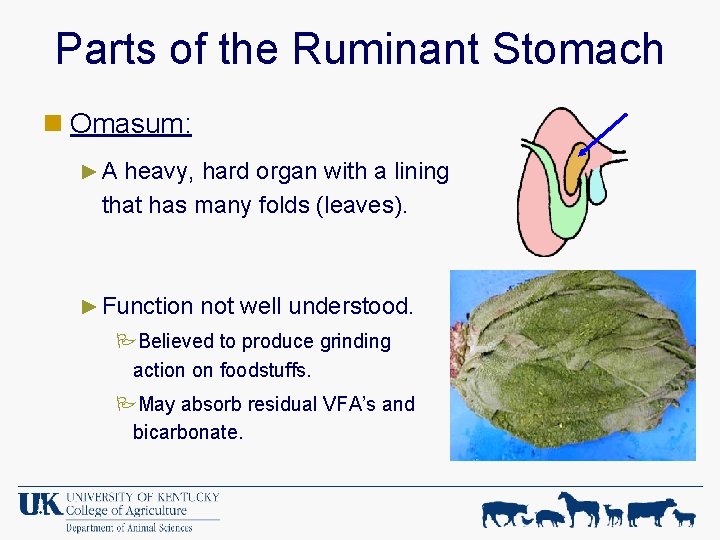
Parts of the Ruminant Stomach n Omasum: ► A heavy, hard organ with a lining that has many folds (leaves). ► Function not well understood. PBelieved to produce grinding action on foodstuffs. PMay absorb residual VFA’s and bicarbonate.
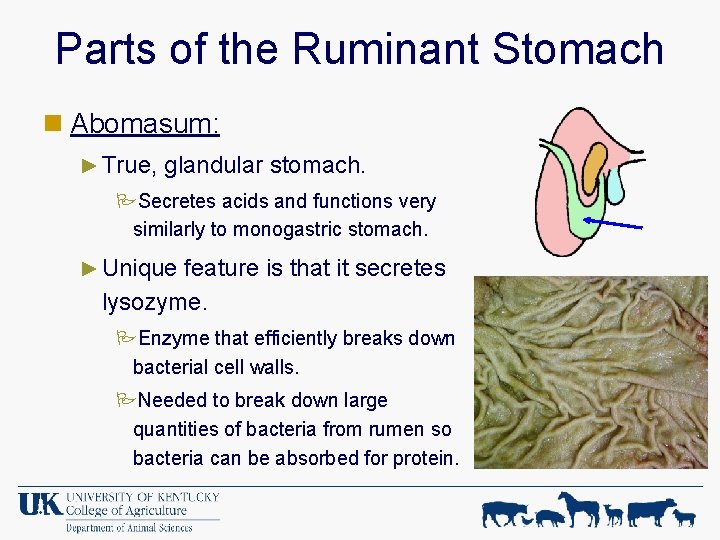
Parts of the Ruminant Stomach n Abomasum: ► True, glandular stomach. PSecretes acids and functions very similarly to monogastric stomach. ► Unique feature is that it secretes lysozyme. PEnzyme that efficiently breaks down bacterial cell walls. PNeeded to break down large quantities of bacteria from rumen so bacteria can be absorbed for protein.
Summary n There are three (3) basic types of digestive systems in farm animal species. ► Monogastric ► Ruminant (cranial fermentor) ► Hind gut (caudal fermentor) n The type of digestive system influences the dietary foodstuffs the animal can effectively utilize.
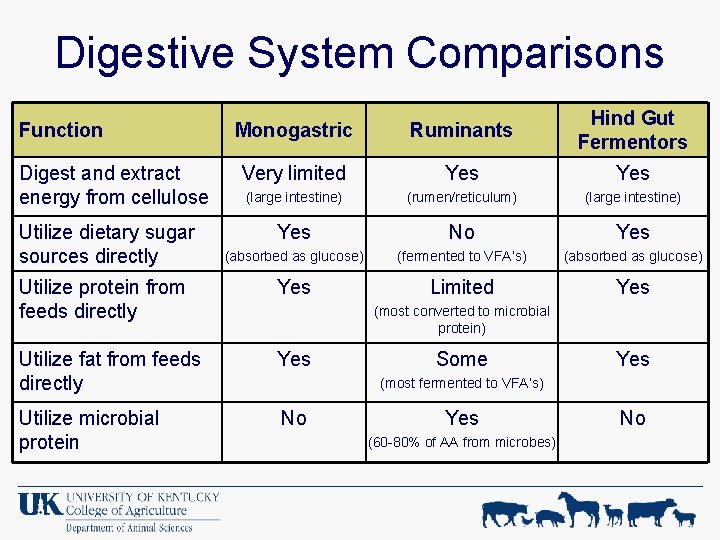
Digestive System Comparisons Monogastric Ruminants Hind Gut Fermentors Very limited Yes (large intestine) (rumen/reticulum) (large intestine) Yes No Yes (absorbed as glucose) (fermented to VFA’s) (absorbed as glucose) Utilize protein from feeds directly Yes Limited Yes Utilize fat from feeds directly Yes Utilize microbial protein No Function Digest and extract energy from cellulose Utilize dietary sugar sources directly (most converted to microbial protein) Some Yes (most fermented to VFA’s) Yes (60 -80% of AA from microbes) No
Digestive Tract Capacities Sheep/Goats Cattle Swine Horses 5 -10 gal 55 -60 gal ---- Reticulum 1. 5 qt 3 -4 gal ---- Omasum 1 pt 1 -2 gal ---- 1. 5 qt 3 -4 gal ---- 2 gal 2 -3 gal 2. 5 gal 17 -18 gal 2. 5 gal 12 -15 gal 85 -90 ft 130 ft 60 ft 70 ft 1. 5 gal 10 gal 30 -35 gal Rumen Abomasum Stomach Small intestine length Large intestine