
Digestion Tour map Tour guide Mouth l Teeth
- Slides: 39
Digestion
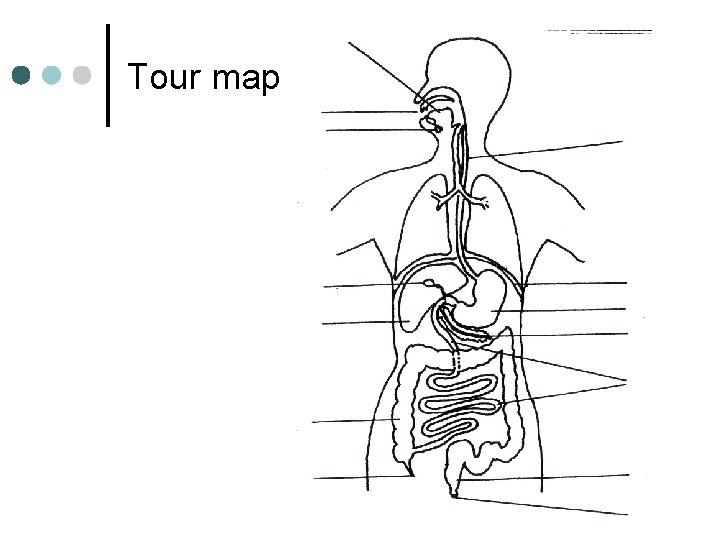
Tour map
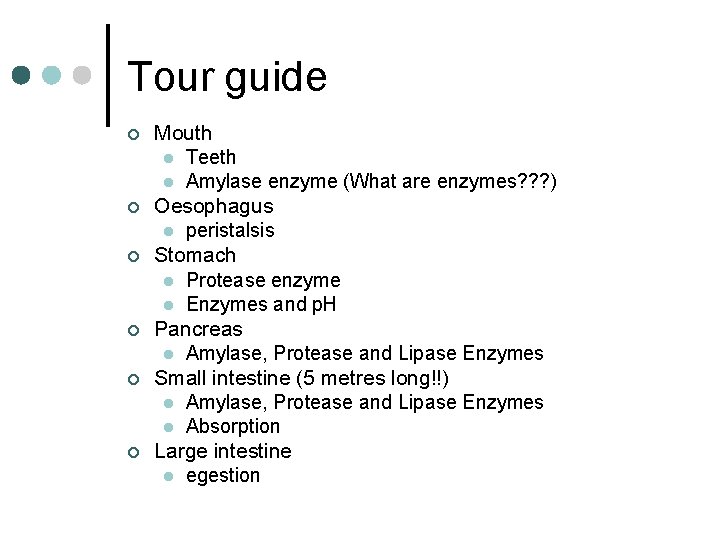
Tour guide ¢ ¢ ¢ Mouth l Teeth l Amylase enzyme (What are enzymes? ? ? ) Oesophagus l peristalsis Stomach l Protease enzyme l Enzymes and p. H Pancreas l Amylase, Protease and Lipase Enzymes Small intestine (5 metres long!!) l Amylase, Protease and Lipase Enzymes l Absorption Large intestine l egestion
Tour guide ¢ ¢ ¢ Mouth l Teeth l Amylase enzyme (What are enzymes? ? ? ) Oesophagus l peristalsis Stomach l Protease enzyme l Enzymes and p. H Pancreas l Amylase, Protease and Lipase Enzymes Small intestine l Amylase, Protease and Lipase Enzymes l Absorption Large intestine l egestion
Teeth are needed to tear, rip and chew food to physically break it into smaller pieces. ¢ Let’s look at the internal structure of teeth. You will need to cut up a copy of Worksheet 1 now. ¢
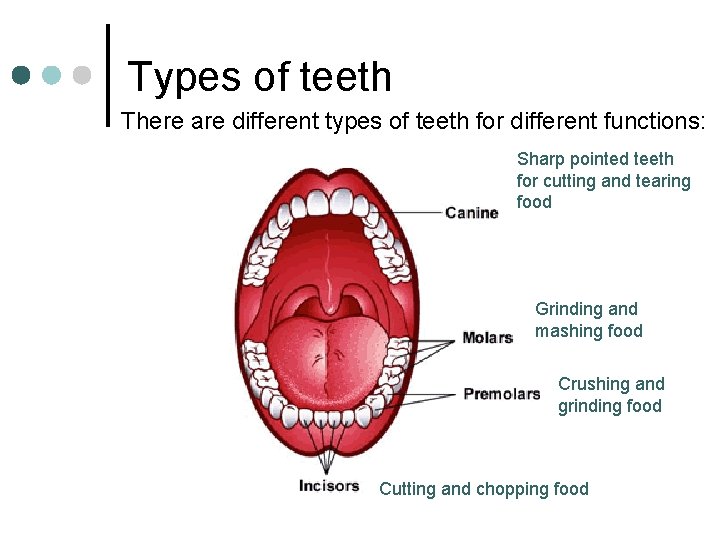
Types of teeth There are different types of teeth for different functions: Sharp pointed teeth for cutting and tearing food Grinding and mashing food Crushing and grinding food Cutting and chopping food
Tooth decay What do you think causes tooth decay? ¢ Saliva is normally slightly alkaline. When we eat, bacteria in our mouth feed on sugar and turn it into acid. The sugar starts to attack the enamel and wear it away. ¢
Tour guide ¢ ¢ ¢ Mouth l Teeth √ l Amylase enzyme (What are enzymes? ? ? ) Oesophagus l peristalsis Stomach l Protease enzyme l Enzymes and p. H Pancreas l Amylase, Protease and Lipase Enzymes Small intestine l Amylase, Protease and Lipase Enzymes l Absorption Large intestine l egestion
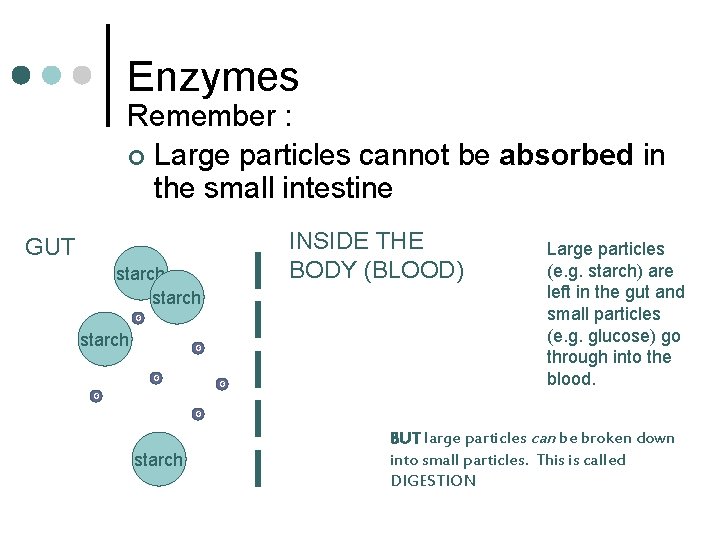
Enzymes Remember : ¢ Large particles cannot be absorbed in the small intestine INSIDE THE BODY (BLOOD) GUT starch G G G Large particles (e. g. starch) are left in the gut and small particles (e. g. glucose) go through into the blood. G G starch BUT large particles can be broken down into small particles. This is called DIGESTION
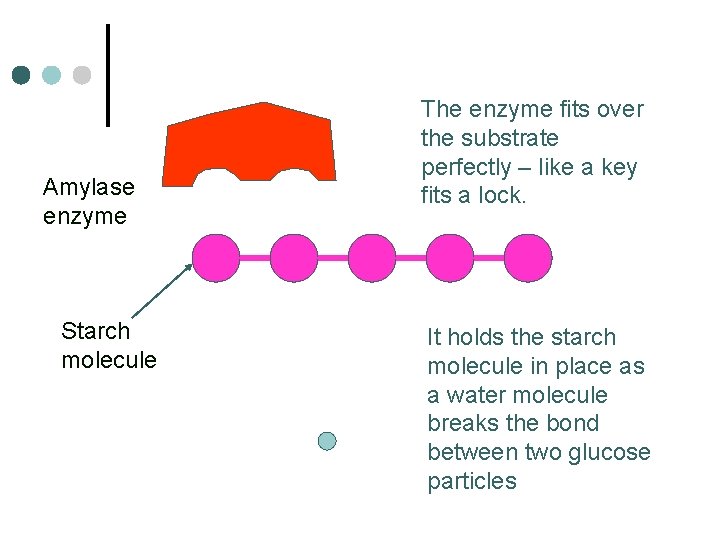
Enzymes They need to be broken down chemically by ENZYMES. ¢ Enzymes are biological catalysts. They speed up chemical reactions in the body. ¢ Digestive enzymes speed up the breaking down process by holding the substrate (the large particle to be broken down) in place ¢
Amylase enzyme Starch molecule The enzyme fits over the substrate perfectly – like a key fits a lock. It holds the starch molecule in place as a water molecule breaks the bond between two glucose particles
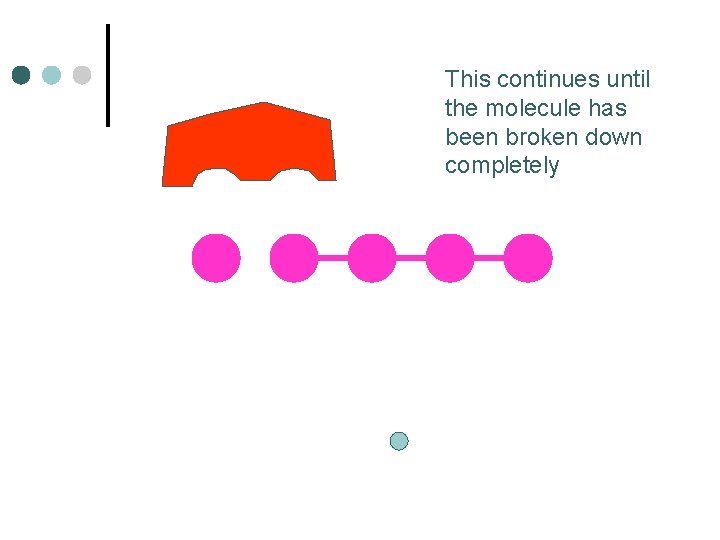
This continues until the molecule has been broken down completely
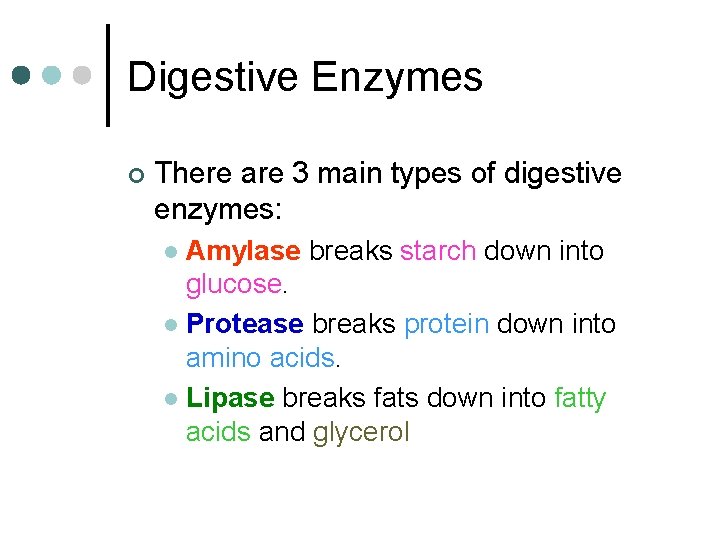
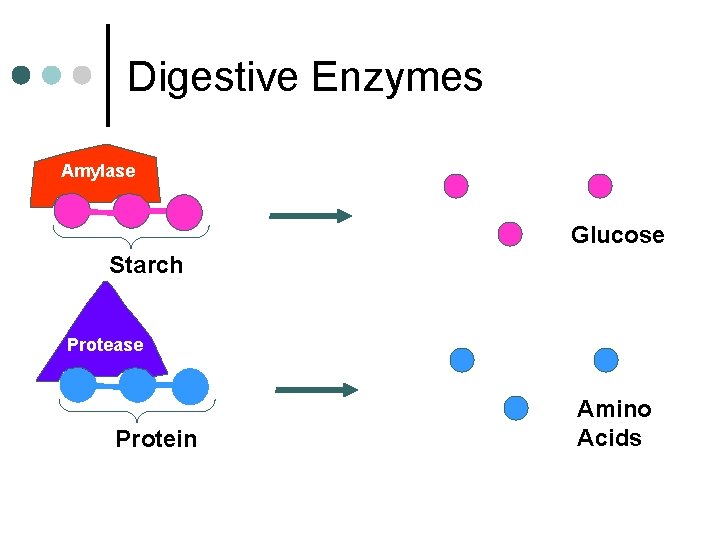
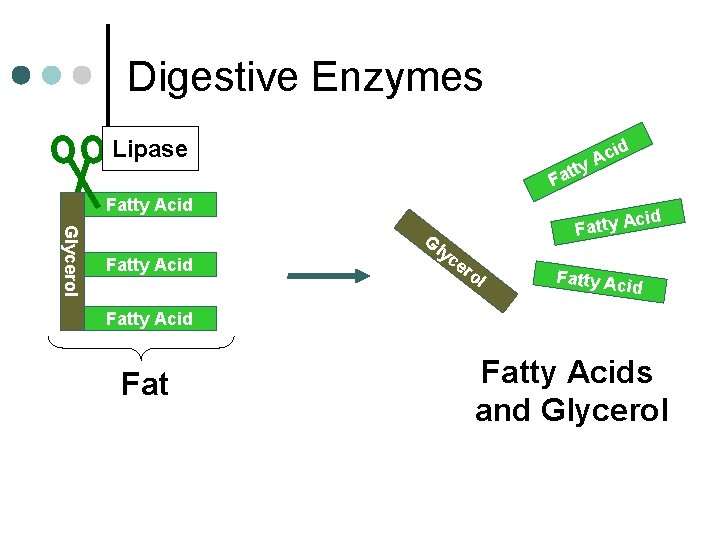
Digestive Enzymes ¢ There are 3 main types of digestive enzymes: Amylase breaks starch down into glucose. l Protease breaks protein down into amino acids. l Lipase breaks fats down into fatty acids and glycerol l
Digestive Enzymes Amylase Glucose Starch Protease Protein Amino Acids
Digestive Enzymes Lipase cid A y tt Fa Fatty Acid Glycerol Fatty Acid Gl yc cid A y t t a F er ol Fatty Ac id Fatty Acids and Glycerol
Tour guide ¢ ¢ ¢ Mouth l Teeth √ l Amylase enzyme (What are enzymes? ? ? ) Oesophagus l peristalsis Stomach l Protease enzyme l Enzymes and p. H Pancreas l Amylase, Protease and Lipase Enzymes Small intestine l Amylase, Protease and Lipase Enzymes l Absorption Large intestine l egestion
Mouth: What happens Food is crushed and ground up by teeth ¢ The salivary glands make saliva which makes the food moist and easy for swallowing ¢ Amylase enzyme (in saliva) breaks the carbohydrate starch down into glucose. ¢
Tour guide ¢ ¢ ¢ Mouth l Teeth √ l Amylase enzyme (What are enzymes? ? ? ) √ Oesophagus l peristalsis Stomach l Protease enzyme l Enzymes and p. H Pancreas l Amylase, Protease and Lipase Enzymes Small intestine l Amylase, Protease and Lipase Enzymes l Absorption Large intestine l egestion
Swallowing and Peristalsis
Tour guide ¢ ¢ ¢ Mouth l Teeth √ l Amylase enzyme (What are enzymes? ? ? ) √ Oesophagus l Peristalsis √ Stomach l Protease enzyme l Enzymes and p. H Pancreas l Amylase, Protease and Lipase Enzymes Small intestine l Amylase, Protease and Lipase Enzymes l Absorption Large intestine l egestion
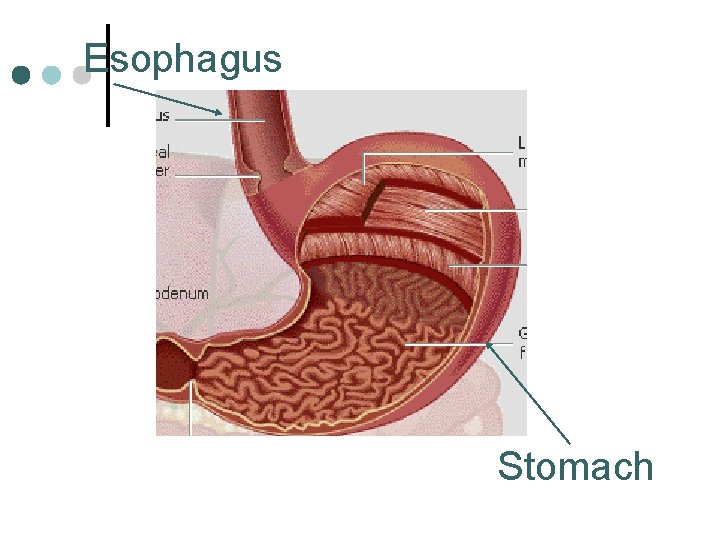
Esophagus Stomach
Stomach muscles contract and relax to mechanically break down the food ¢ They also mix the food up with gastric juice and hydrochloric acid ¢ The acid kills germs in the food l The gastric juice contains the protease enzyme PEPSIN to digest protein into amino acids l ¢ Food spends about 3 -4 hours in here.
Tour guide ¢ ¢ ¢ Mouth l Teeth √ l Amylase enzyme (What are enzymes? ? ? ) √ Oesophagus l Peristalsis √ Stomach l Protease enzyme l Enzymes and p. H √ Pancreas l Amylase, Protease and Lipase Enzymes Small intestine l Amylase, Protease and Lipase Enzymes l Absorption Large intestine l egestion
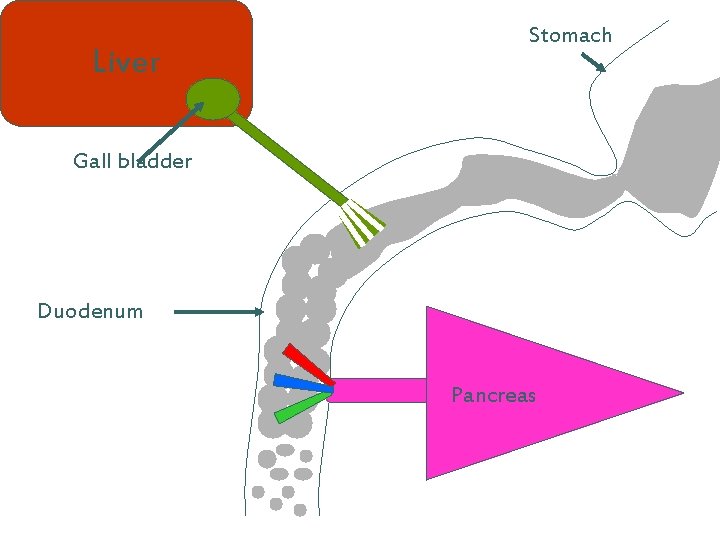
The duodenum The first part of the small intestine is called the duodenum. ¢ Food, still mixed with gastric juice is squirted into it from the stomach. ¢ The food is now a semi liquid, highly acidic mush. ¢ It needs to be neutralised and digestion needs to be continued… ¢
Liver Stomach Gall bladder Duodenum Pancreas
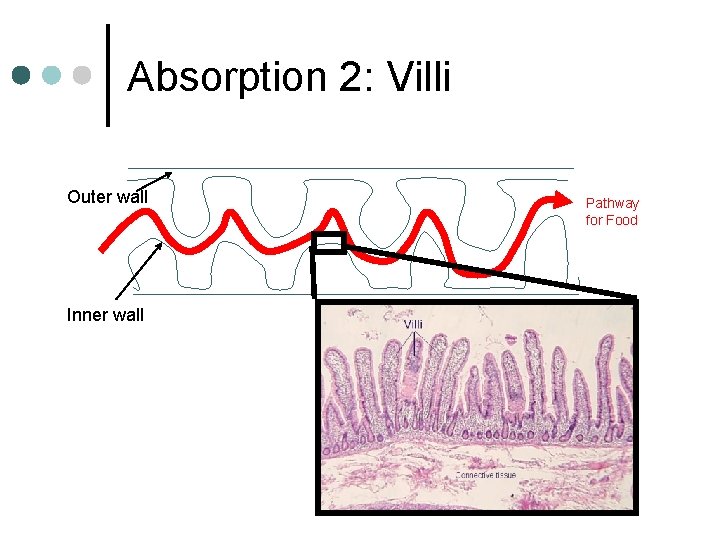
Absorption The food is then ABSORBED through the wall of the small intestine into the blood stream. ¢ To do this effectively, the small intestine needs to have a large surface area. ¢ This is achieved in the following ways: ¢
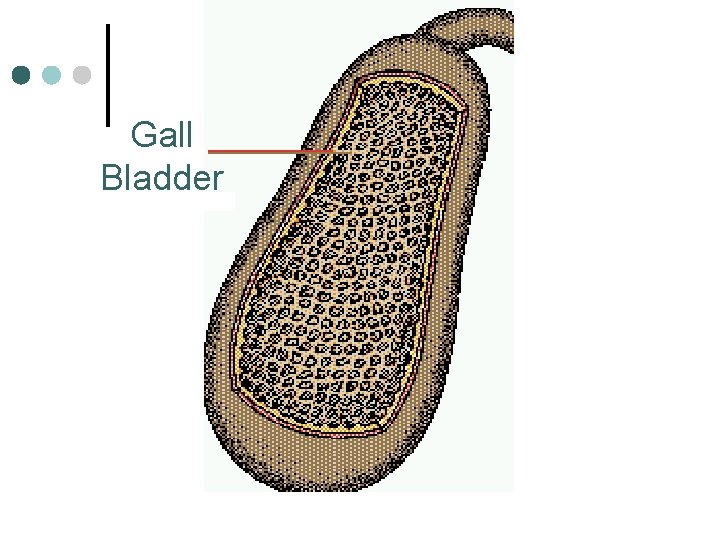
Gall Bladder ¢ Storage tank for bile (a greenishyellow liquid) that helps your body break down and use fats ¢ Located under your liver ¢ Shaped like a pear
Gall Bladder
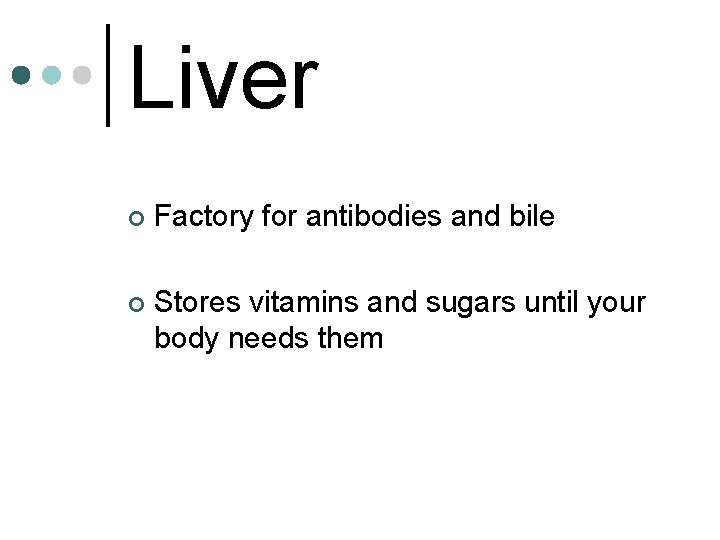
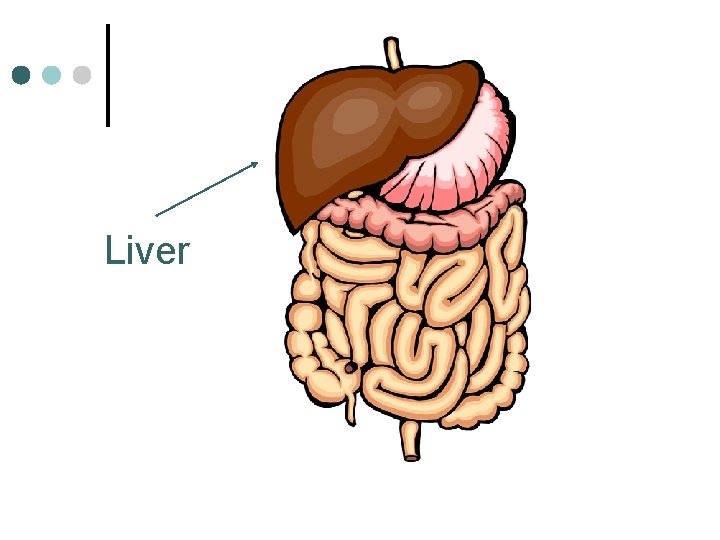
Liver ¢ Factory for antibodies and bile ¢ Stores vitamins and sugars until your body needs them
Liver
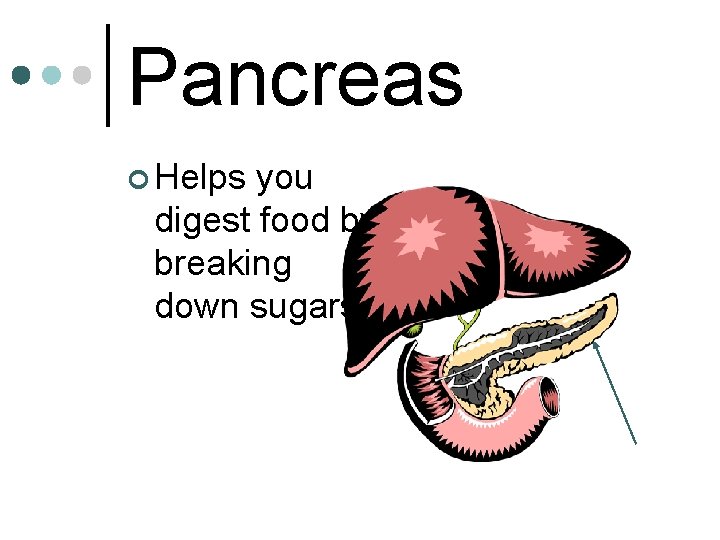
Pancreas ¢ Helps you digest food by breaking down sugars
Functions ¢ Digest ¢ Take the food we eat the nutrients out of your food so your body can use it
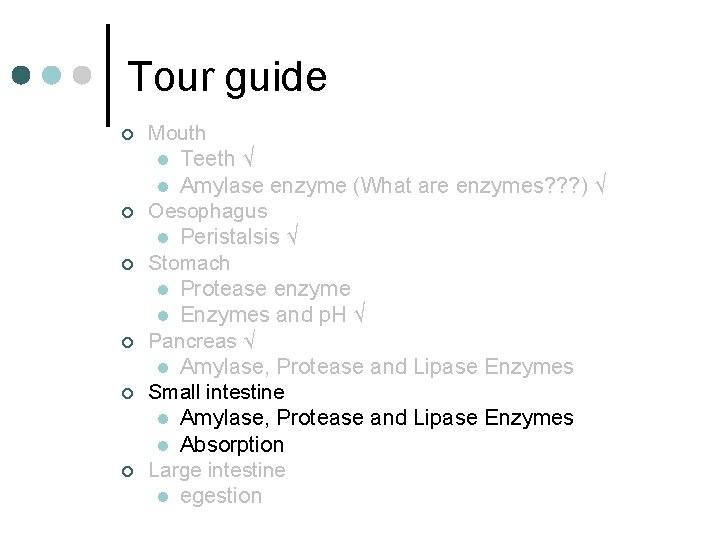
Tour guide ¢ ¢ ¢ Mouth l Teeth √ l Amylase enzyme (What are enzymes? ? ? ) √ Oesophagus l Peristalsis √ Stomach l Protease enzyme l Enzymes and p. H √ Pancreas √ l Amylase, Protease and Lipase Enzymes Small intestine l Amylase, Protease and Lipase Enzymes l Absorption Large intestine l egestion
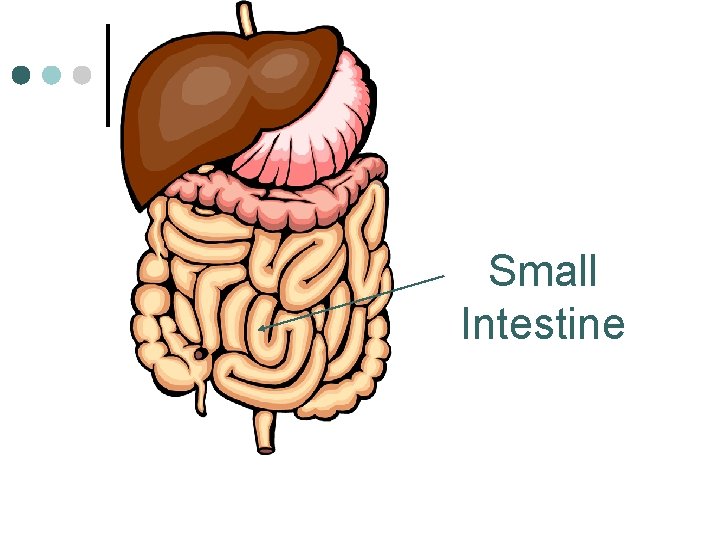
Small Intestine
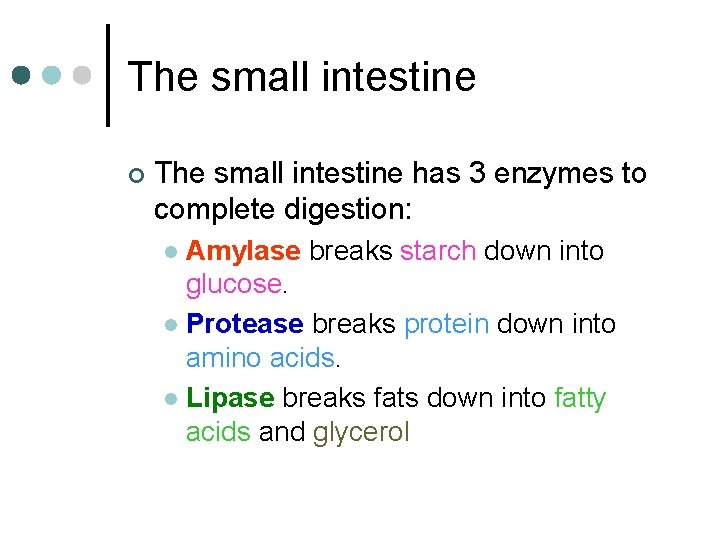
The small intestine ¢ The small intestine has 3 enzymes to complete digestion: Amylase breaks starch down into glucose. l Protease breaks protein down into amino acids. l Lipase breaks fats down into fatty acids and glycerol l
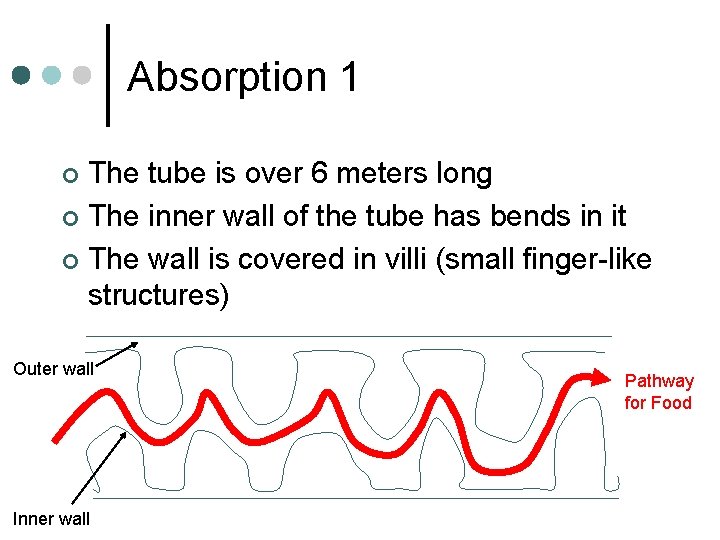
Absorption 1 The tube is over 6 meters long ¢ The inner wall of the tube has bends in it ¢ The wall is covered in villi (small finger-like structures) ¢ Outer wall Inner wall Pathway for Food
Absorption 2: Villi Outer wall Inner wall Pathway for Food
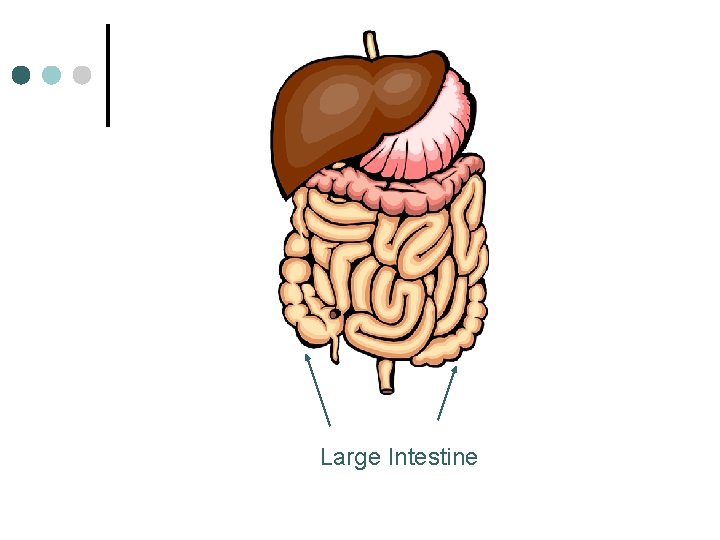
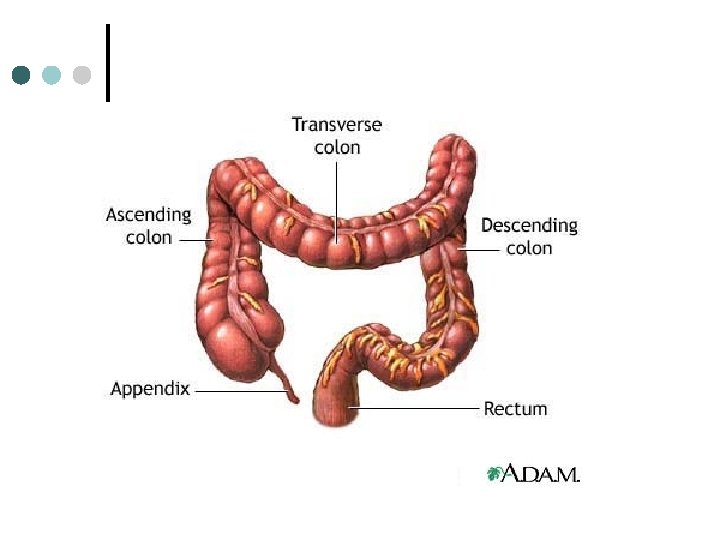
Large Intestine