
Digestion The Science of Food Activity 6 Photo
- Slides: 8
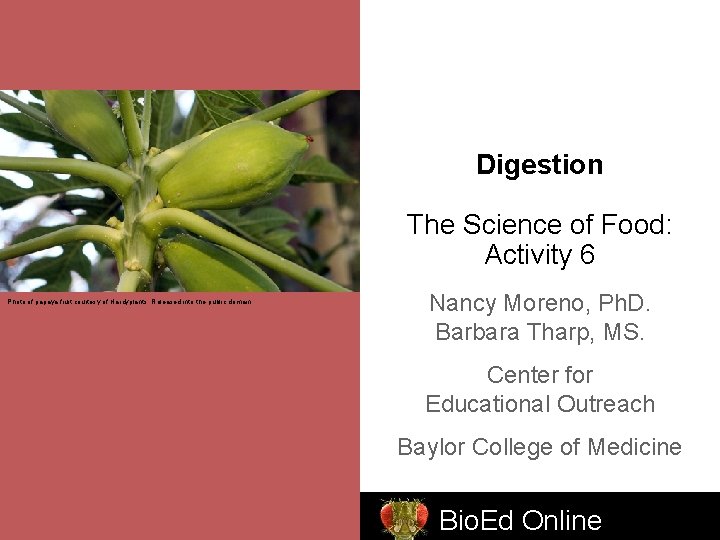
Digestion The Science of Food: Activity 6 Photo of papaya fruit courtesy of Hardyplants. Released into the public domain. Nancy Moreno, Ph. D. Barbara Tharp, MS. Center for Educational Outreach Baylor College of Medicine Bio. Ed Online
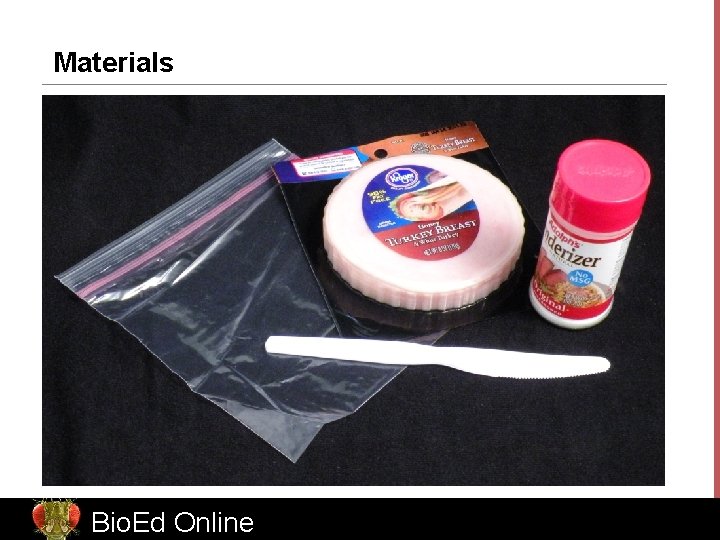
Materials Bio. Ed Online www. Bio. Ed. Online. org
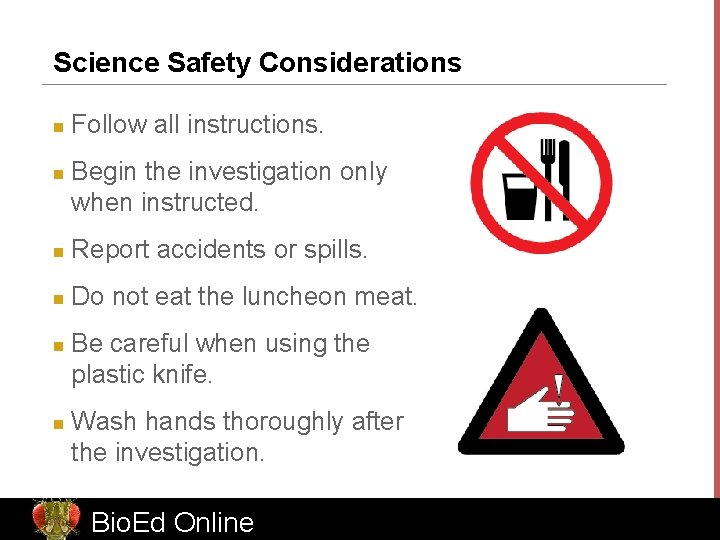
Science Safety Considerations n n Follow all instructions. Begin the investigation only when instructed. n Report accidents or spills. n Do not eat the luncheon meat. n n Be careful when using the plastic knife. Wash hands thoroughly after the investigation. Bio. Ed Online www. Bio. Ed. Online. org
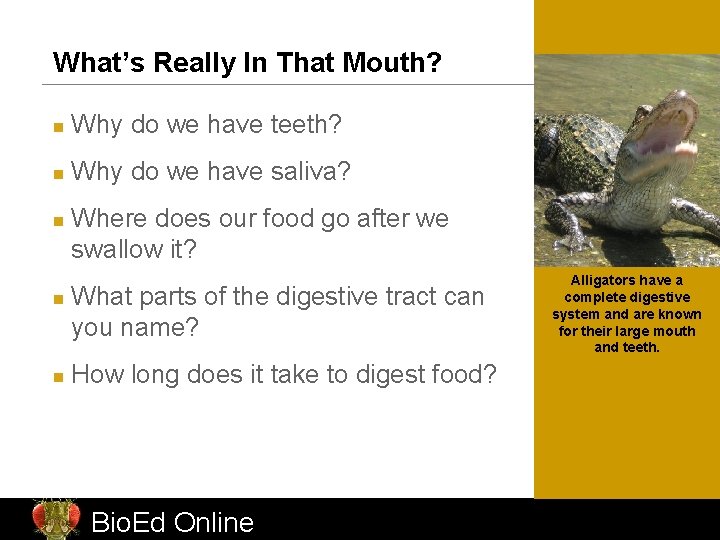
What’s Really In That Mouth? n Why do we have teeth? n Why do we have saliva? n n n Where does our food go after we swallow it? What parts of the digestive tract can you name? Alligators have a complete digestive system and are known for their large mouth and teeth. How long does it take to digest food? Bio. Ed Online www. Bio. Ed. Online. org
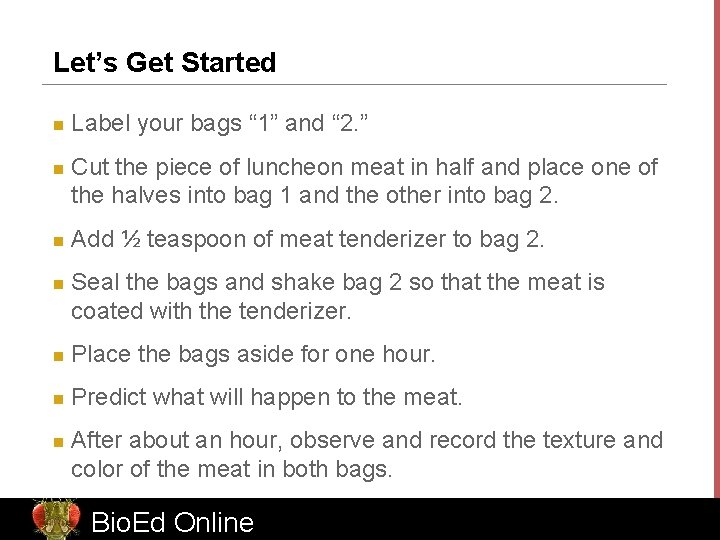
Let’s Get Started n n Label your bags “ 1” and “ 2. ” Cut the piece of luncheon meat in half and place one of the halves into bag 1 and the other into bag 2. Add ½ teaspoon of meat tenderizer to bag 2. Seal the bags and shake bag 2 so that the meat is coated with the tenderizer. n Place the bags aside for one hour. n Predict what will happen to the meat. n After about an hour, observe and record the texture and color of the meat in both bags. Bio. Ed Online www. Bio. Ed. Online. org
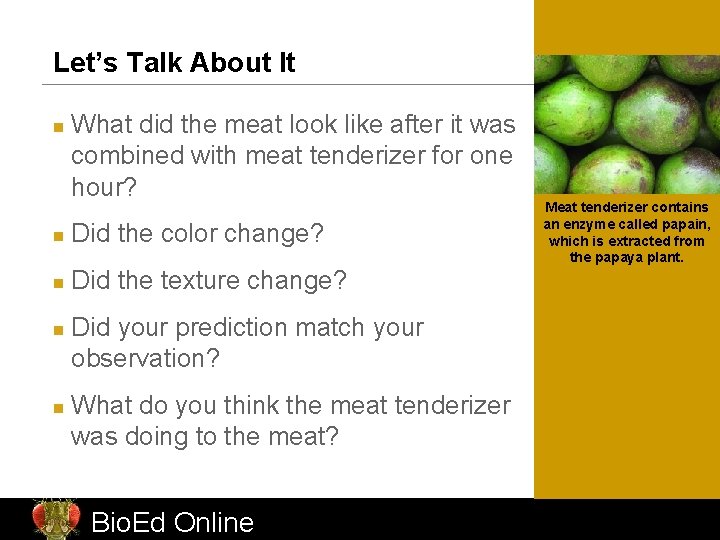
Let’s Talk About It n What did the meat look like after it was combined with meat tenderizer for one hour? n Did the color change? n Did the texture change? n n Meat tenderizer contains an enzyme called papain, which is extracted from the papaya plant. Did your prediction match your observation? What do you think the meat tenderizer was doing to the meat? Bio. Ed Online www. Bio. Ed. Online. org
The Science of Digestion n Food must be broken down physically and chemically before it can be used by the body. These special chemicals break down food molecules in the body. n Saliva n Stomach enzymes n Bile n Pancreatic fluid During digestion, proteins are broken down into amino acids, from which our bodies build new proteins. Bio. Ed Online www. Bio. Ed. Online. org
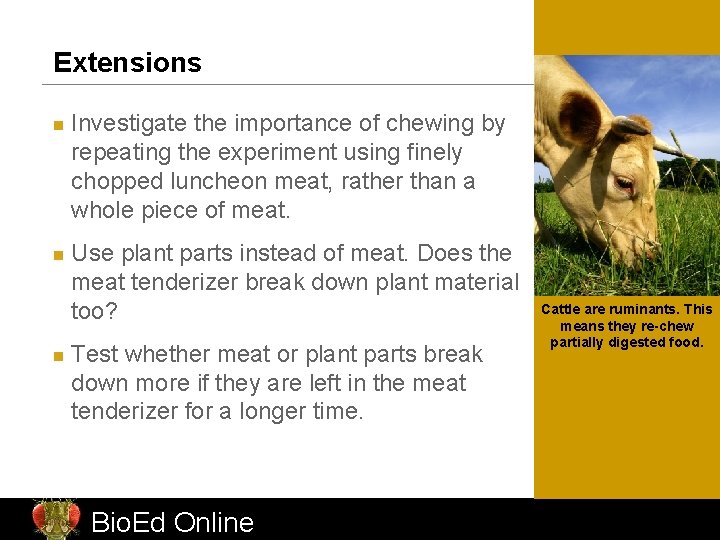
Extensions n n n Investigate the importance of chewing by repeating the experiment using finely chopped luncheon meat, rather than a whole piece of meat. Use plant parts instead of meat. Does the meat tenderizer break down plant material too? Test whether meat or plant parts break down more if they are left in the meat tenderizer for a longer time. Bio. Ed Online Cattle are ruminants. This means they re-chew partially digested food. www. Bio. Ed. Online. org