
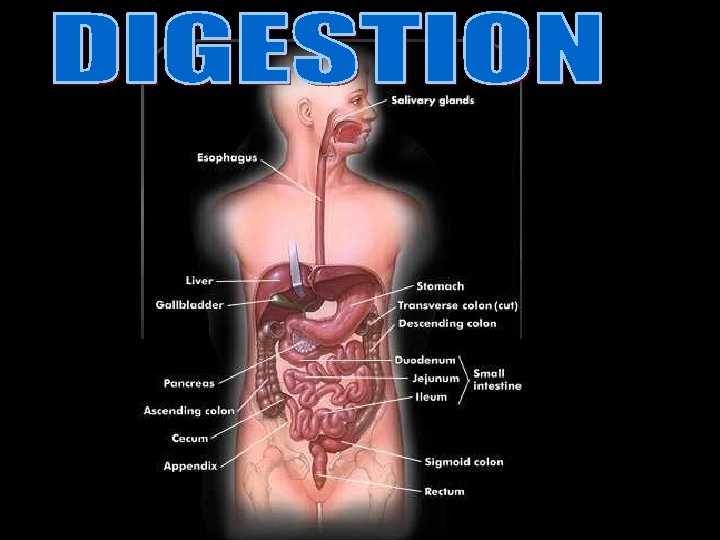
DIGESTION process that breaks down large molecules into
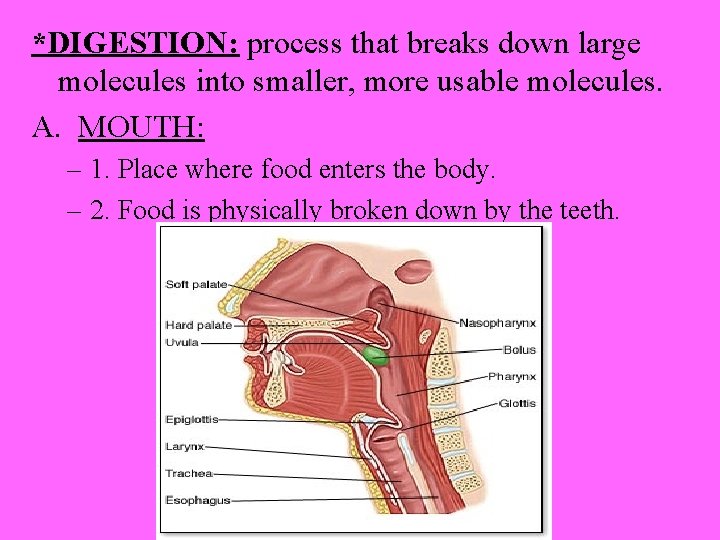
*DIGESTION: process that breaks down large molecules into smaller, more usable molecules. A. MOUTH: – 1. Place where food enters the body. – 2. Food is physically broken down by the teeth.
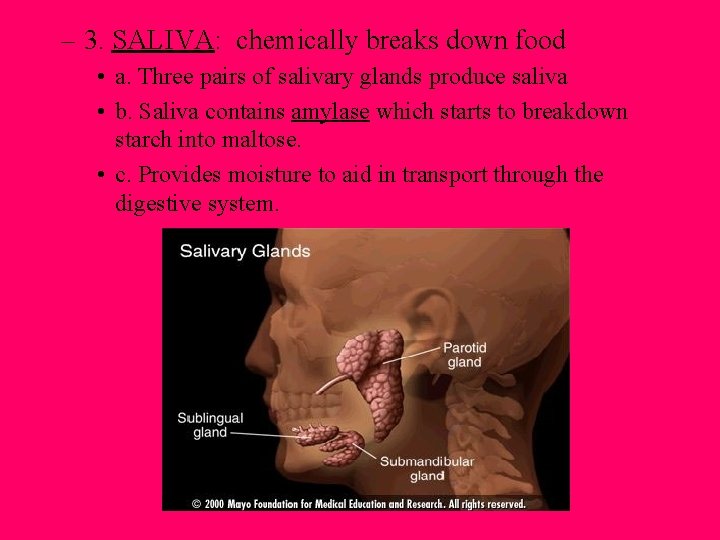
– 3. SALIVA: chemically breaks down food • a. Three pairs of salivary glands produce saliva • b. Saliva contains amylase which starts to breakdown starch into maltose. • c. Provides moisture to aid in transport through the digestive system.
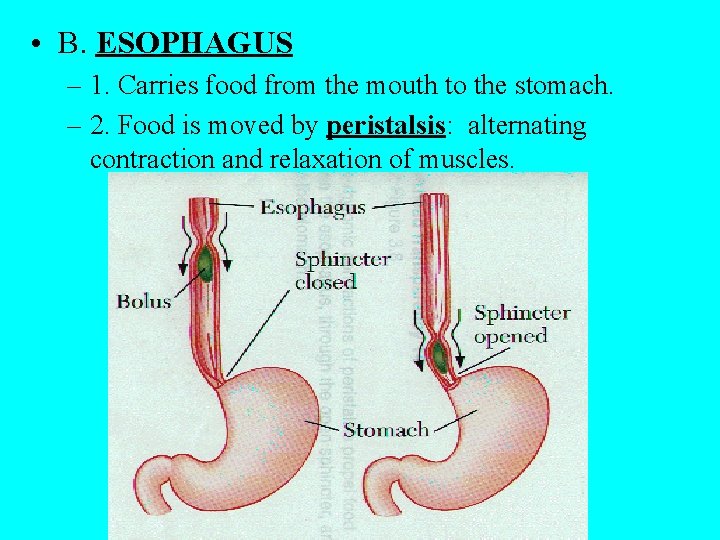
• B. ESOPHAGUS – 1. Carries food from the mouth to the stomach. – 2. Food is moved by peristalsis: alternating contraction and relaxation of muscles.
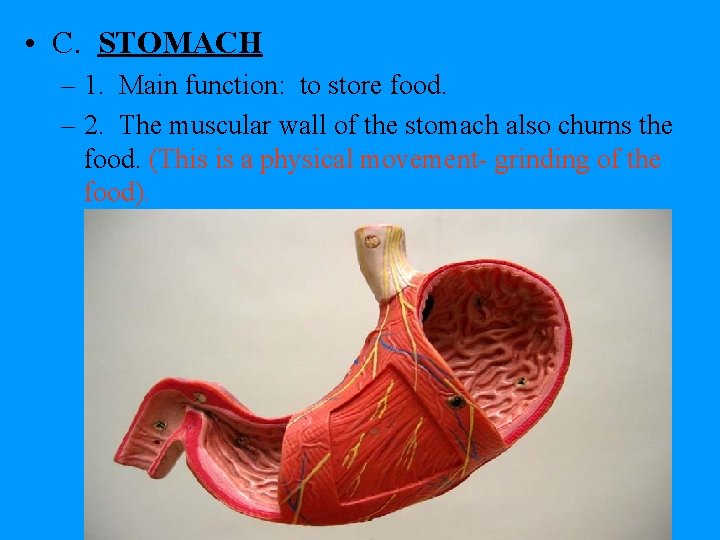
• C. STOMACH – 1. Main function: to store food. – 2. The muscular wall of the stomach also churns the food. (This is a physical movement- grinding of the food).
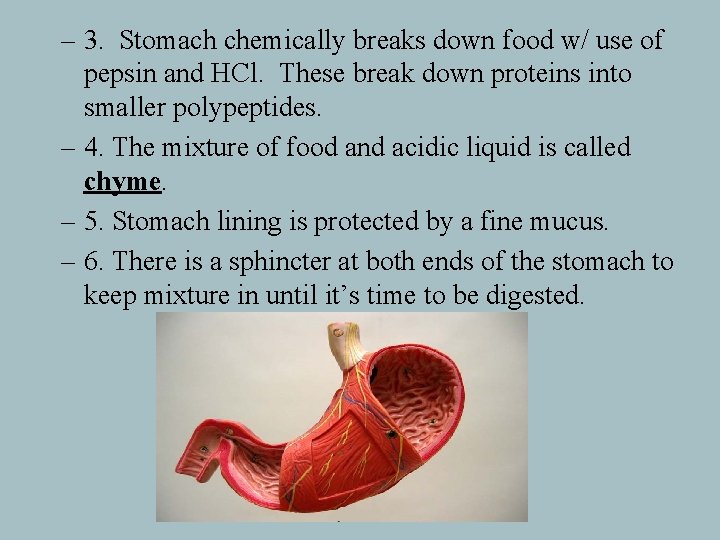
– 3. Stomach chemically breaks down food w/ use of pepsin and HCl. These break down proteins into smaller polypeptides. – 4. The mixture of food and acidic liquid is called chyme. – 5. Stomach lining is protected by a fine mucus. – 6. There is a sphincter at both ends of the stomach to keep mixture in until it’s time to be digested.
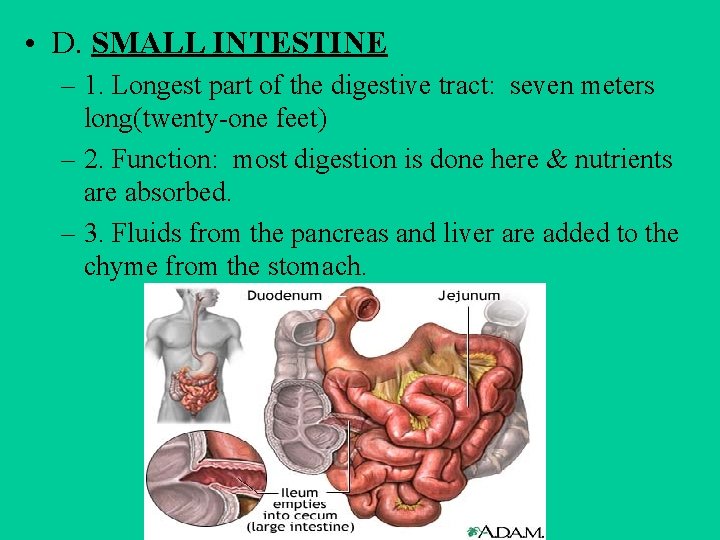
• D. SMALL INTESTINE – 1. Longest part of the digestive tract: seven meters long(twenty-one feet) – 2. Function: most digestion is done here & nutrients are absorbed. – 3. Fluids from the pancreas and liver are added to the chyme from the stomach.
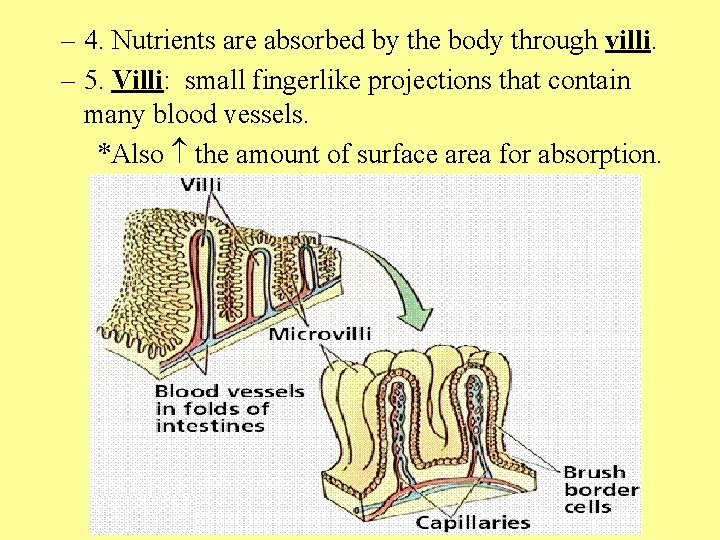
– 4. Nutrients are absorbed by the body through villi. – 5. Villi: small fingerlike projections that contain many blood vessels. *Also the amount of surface area for absorption.
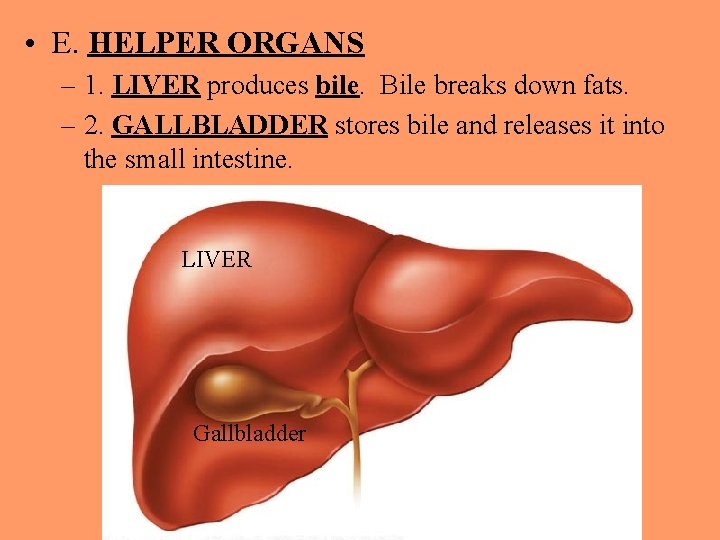
• E. HELPER ORGANS – 1. LIVER produces bile. Bile breaks down fats. – 2. GALLBLADDER stores bile and releases it into the small intestine. LIVER Gallbladder
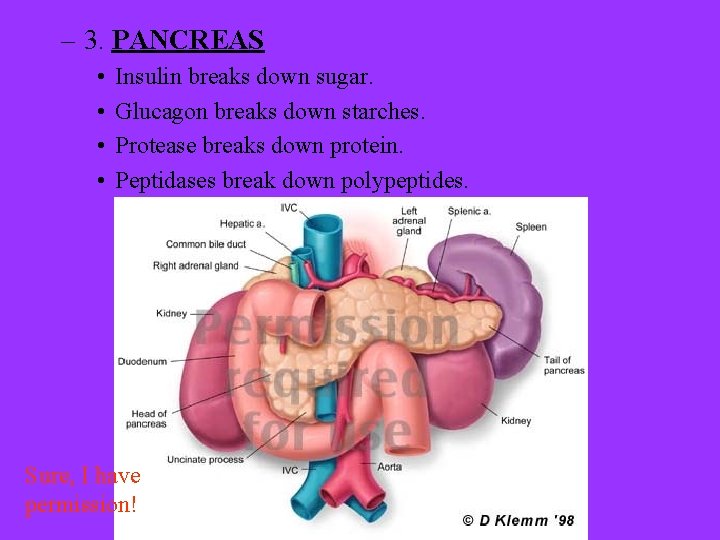
– 3. PANCREAS • • Insulin breaks down sugar. Glucagon breaks down starches. Protease breaks down protein. Peptidases break down polypeptides. Sure, I have permission!
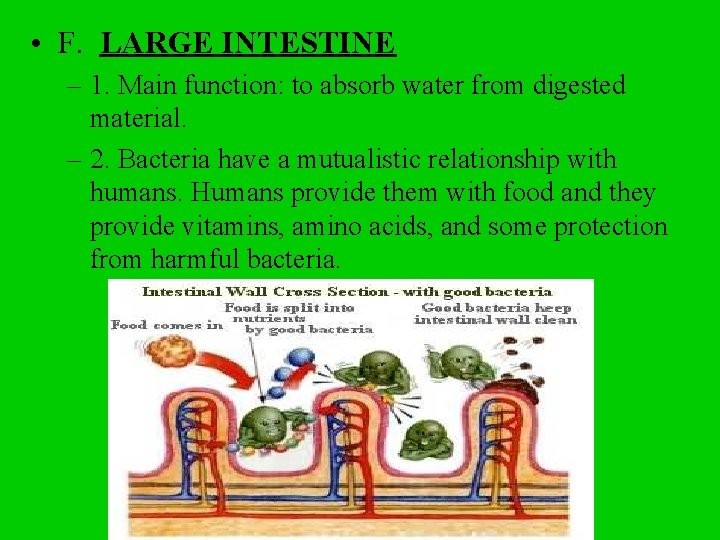
• F. LARGE INTESTINE – 1. Main function: to absorb water from digested material. – 2. Bacteria have a mutualistic relationship with humans. Humans provide them with food and they provide vitamins, amino acids, and some protection from harmful bacteria.
• G. RECTUM & ANUS – 1. Undigested food is stored in rectum – 2. Eliminated through the anus THE END
- Slides: 12