
Digestion General Physiology Tony Serino Ph D Biology
Digestion General Physiology Tony Serino, Ph. D. Biology 346 Misericordia University
Digestion • The reduction through mechanical and chemical means (hydrolysis) of complex food substances into simple monomers and their absorption into the internal environment.
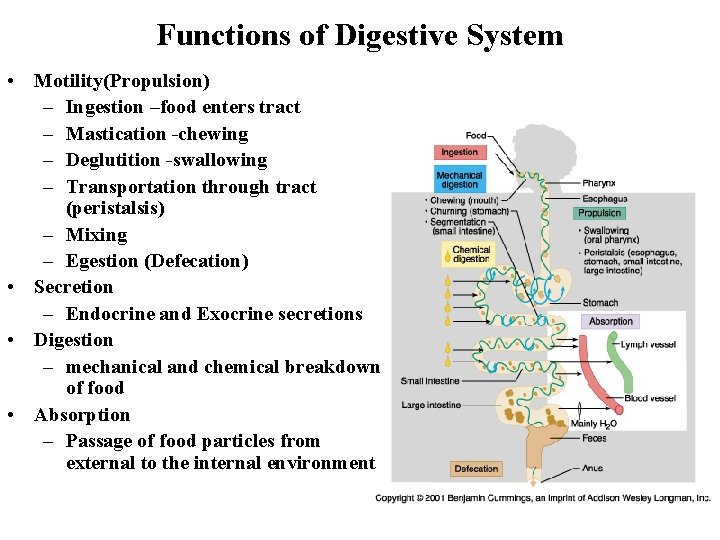
Functions of Digestive System • Motility(Propulsion) – Ingestion –food enters tract – Mastication -chewing – Deglutition -swallowing – Transportation through tract (peristalsis) – Mixing – Egestion (Defecation) • Secretion – Endocrine and Exocrine secretions • Digestion – mechanical and chemical breakdown of food • Absorption – Passage of food particles from external to the internal environment
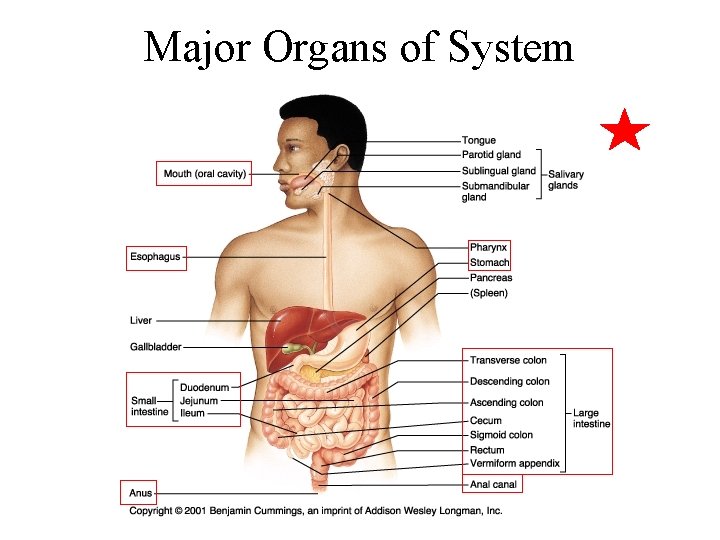
Major Organs of System
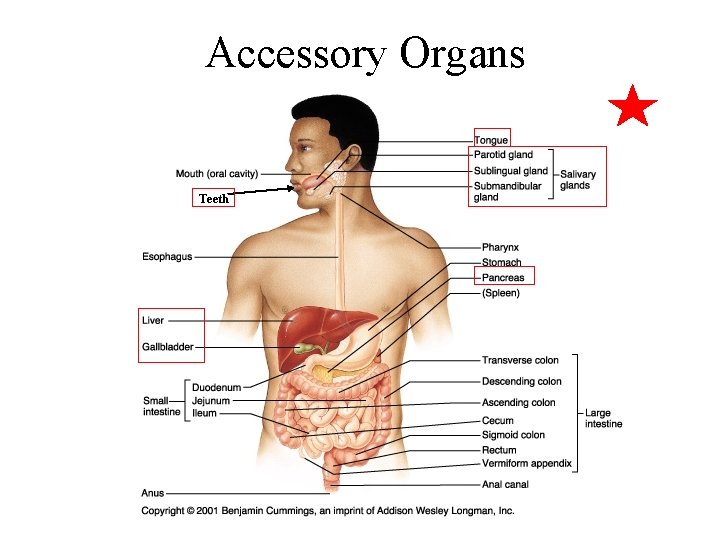
Accessory Organs Teeth
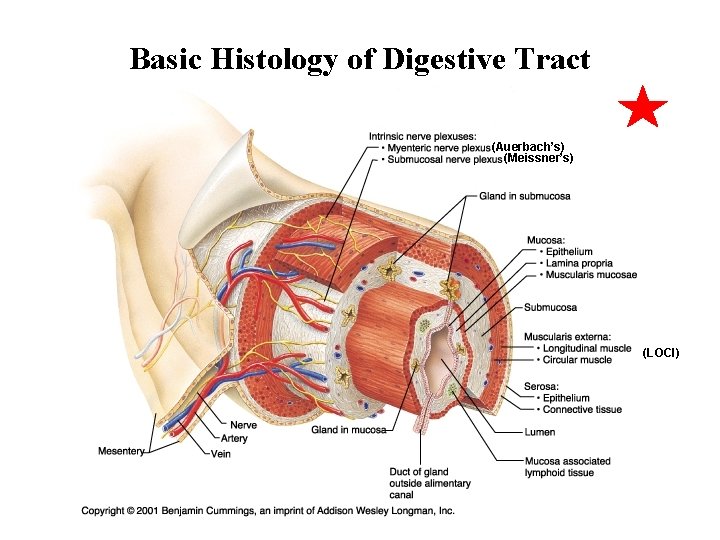
Basic Histology of Digestive Tract (Auerbach’s) (Meissner’s) (LOCI)
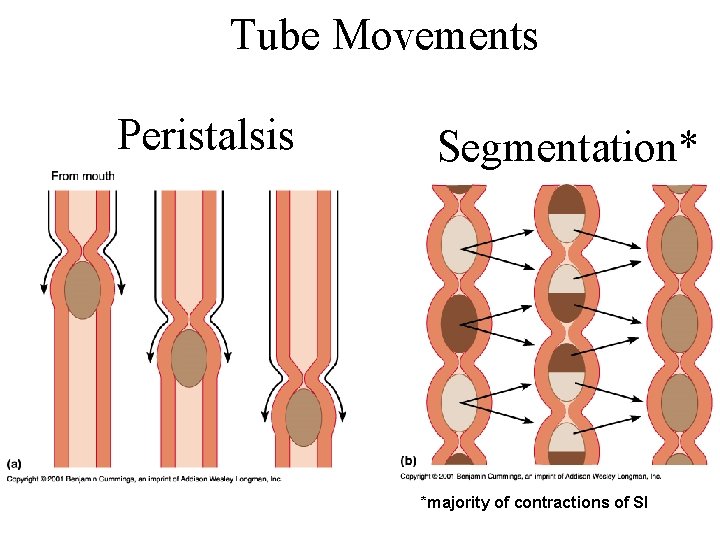
Tube Movements Peristalsis Segmentation* *majority of contractions of SI
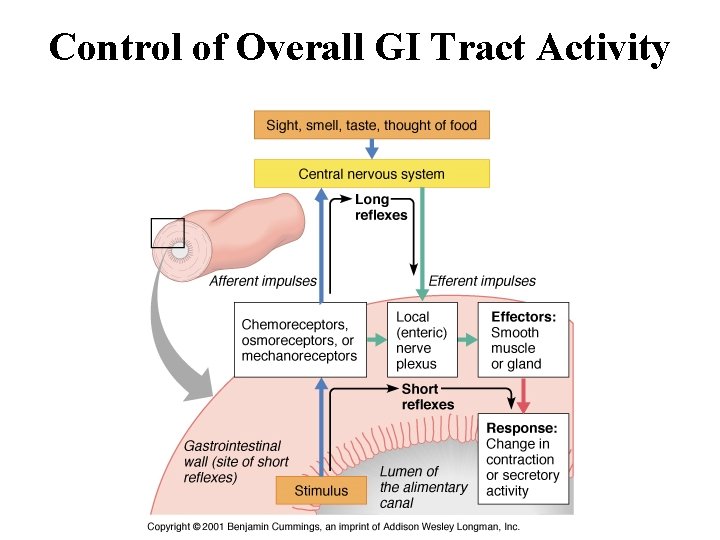
Control of Overall GI Tract Activity
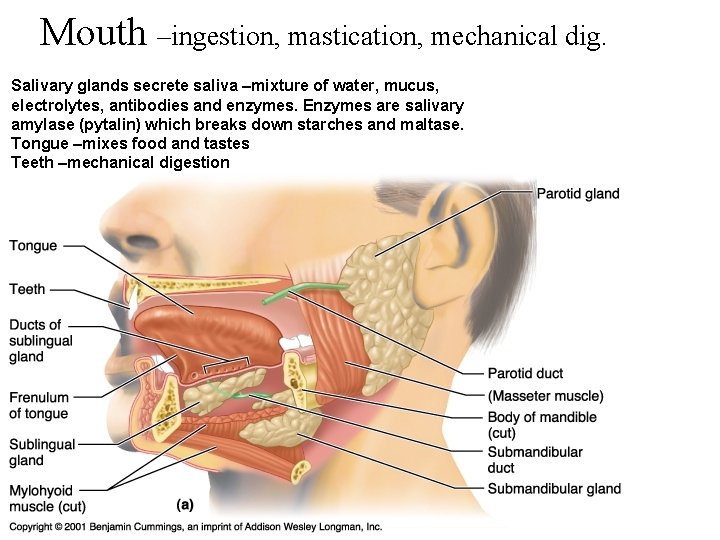
Mouth –ingestion, mastication, mechanical dig. Salivary glands secrete saliva –mixture of water, mucus, electrolytes, antibodies and enzymes. Enzymes are salivary amylase (pytalin) which breaks down starches and maltase. Tongue –mixes food and tastes Teeth –mechanical digestion
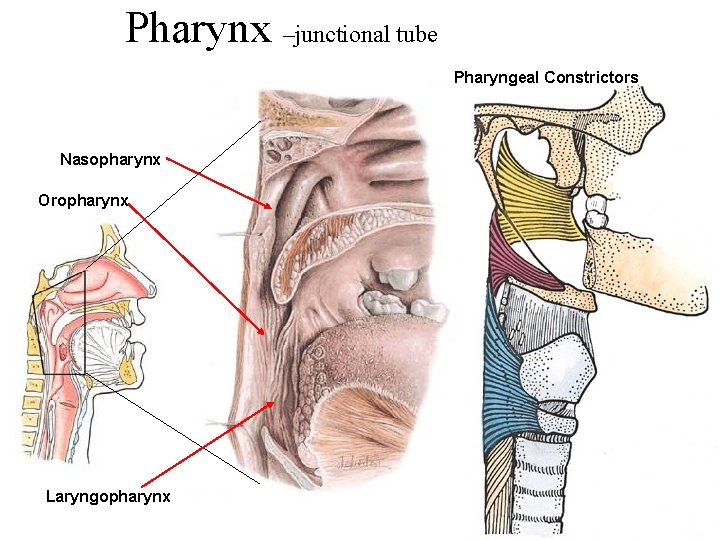
Pharynx –junctional tube Pharyngeal Constrictors Nasopharynx Oropharynx Laryngopharynx
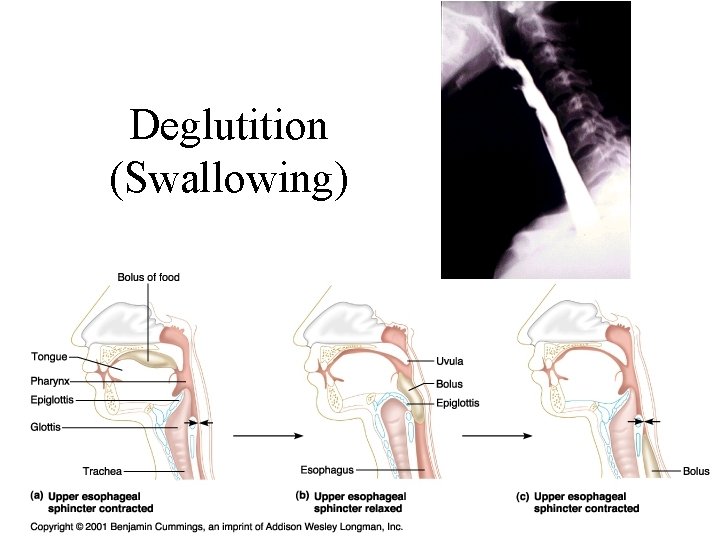
Deglutition (Swallowing)
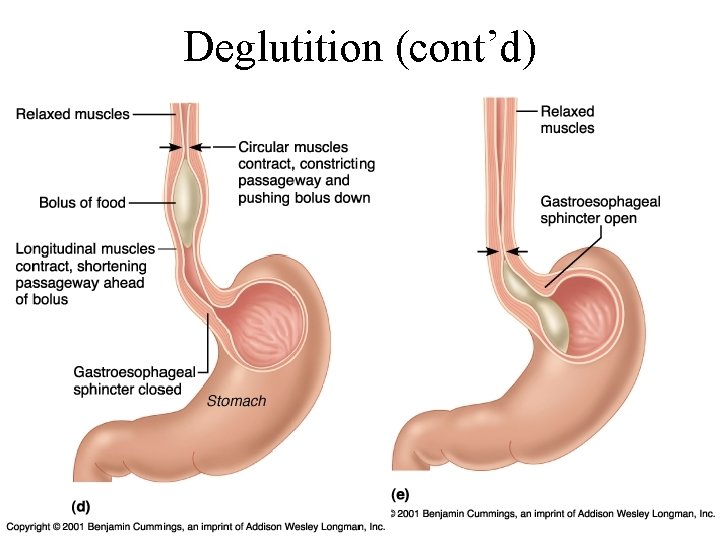
Deglutition (cont’d)
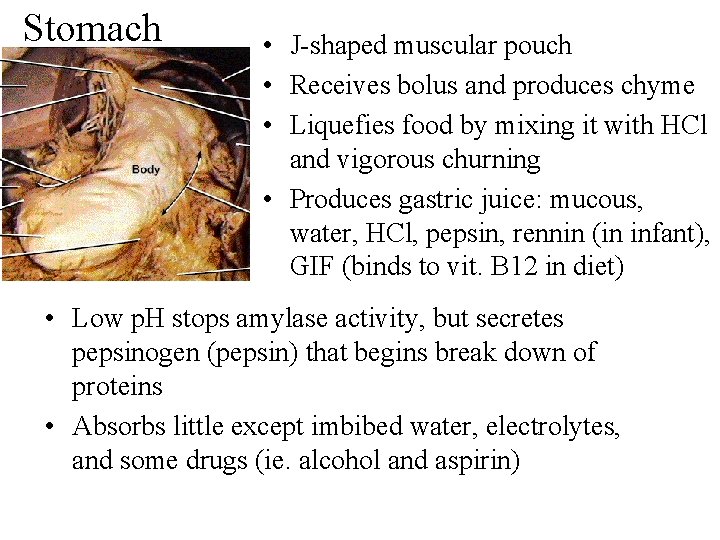
Stomach • J-shaped muscular pouch • Receives bolus and produces chyme • Liquefies food by mixing it with HCl and vigorous churning • Produces gastric juice: mucous, water, HCl, pepsin, rennin (in infant), GIF (binds to vit. B 12 in diet) • Low p. H stops amylase activity, but secretes pepsinogen (pepsin) that begins break down of proteins • Absorbs little except imbibed water, electrolytes, and some drugs (ie. alcohol and aspirin)
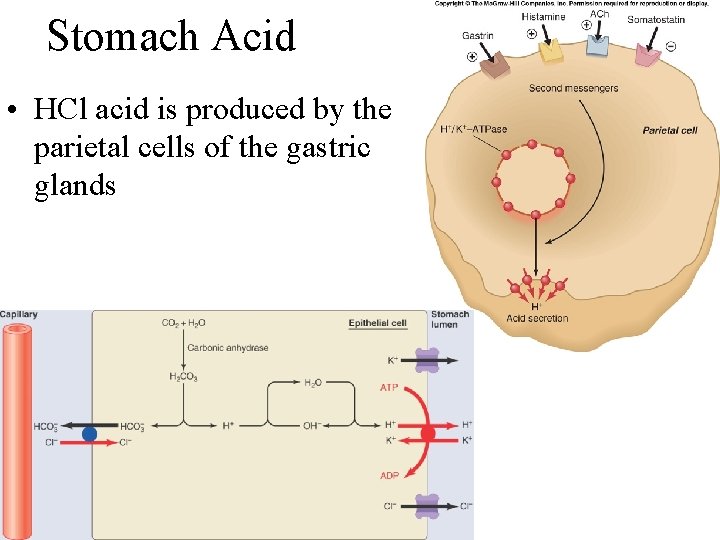
Stomach Acid • HCl acid is produced by the parietal cells of the gastric glands
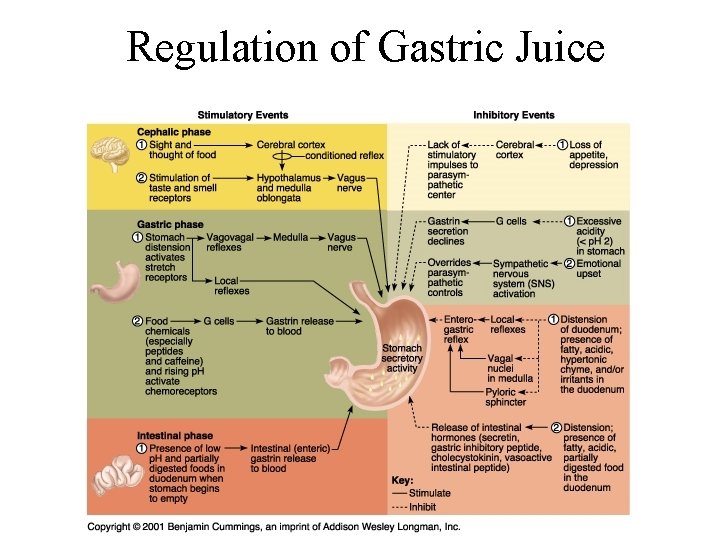
Regulation of Gastric Juice
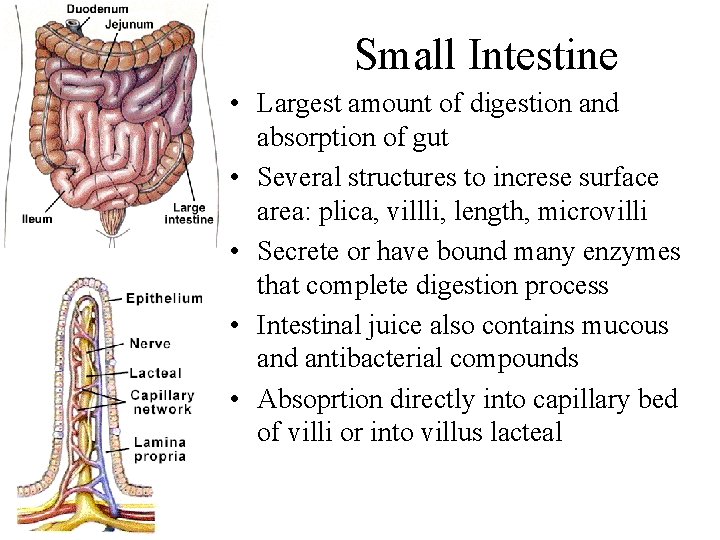
Small Intestine • Largest amount of digestion and absorption of gut • Several structures to increse surface area: plica, villli, length, microvilli • Secrete or have bound many enzymes that complete digestion process • Intestinal juice also contains mucous and antibacterial compounds • Absoprtion directly into capillary bed of villi or into villus lacteal
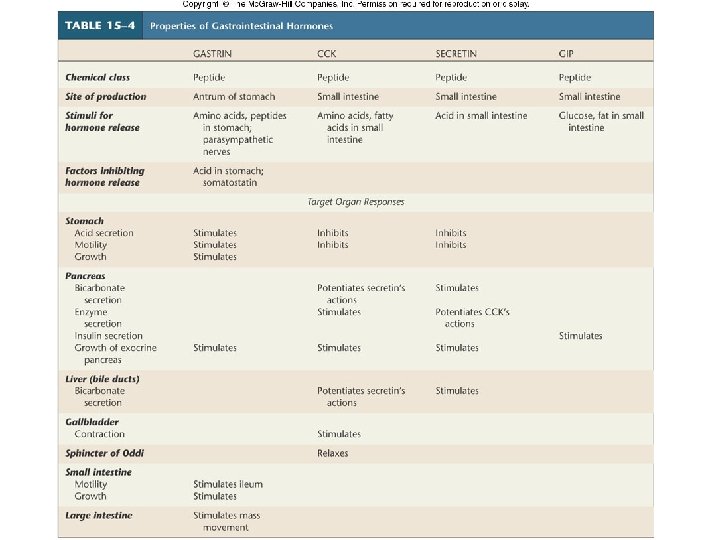
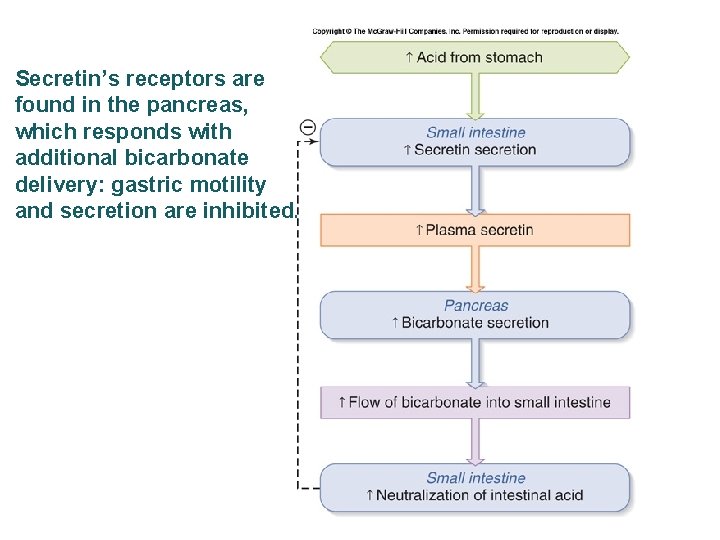
Secretin’s receptors are found in the pancreas, which responds with additional bicarbonate delivery: gastric motility and secretion are inhibited.
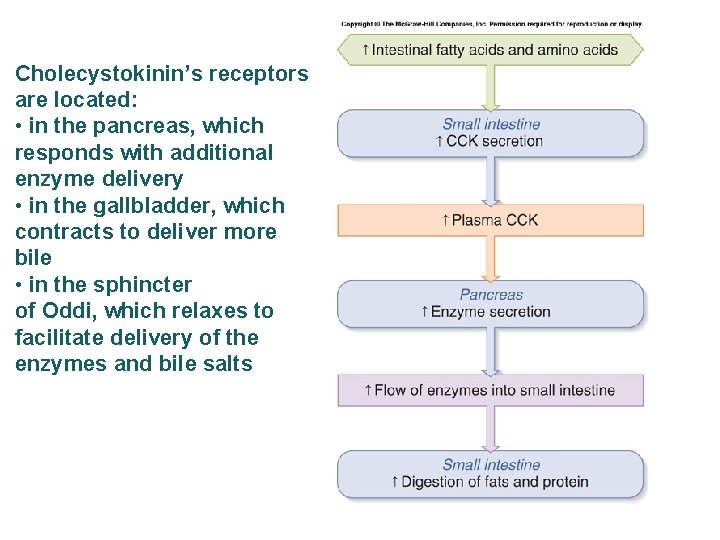
Cholecystokinin’s receptors are located: • in the pancreas, which responds with additional enzyme delivery • in the gallbladder, which contracts to deliver more bile • in the sphincter of Oddi, which relaxes to facilitate delivery of the enzymes and bile salts
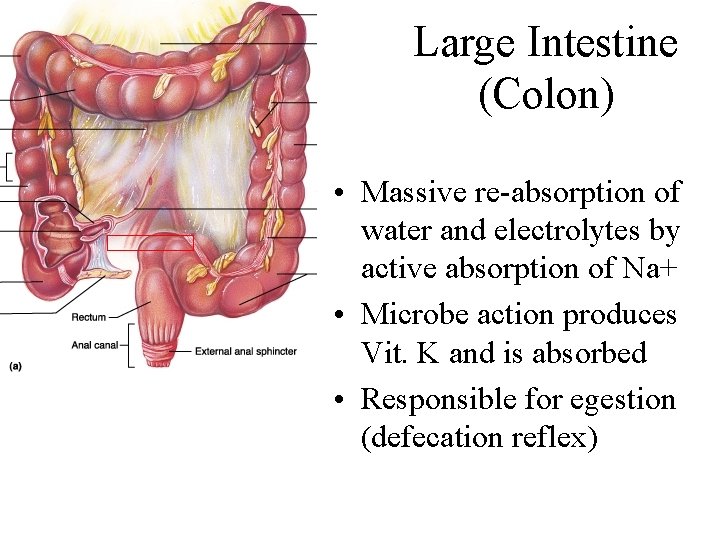
Large Intestine (Colon) • Massive re-absorption of water and electrolytes by active absorption of Na+ • Microbe action produces Vit. K and is absorbed • Responsible for egestion (defecation reflex)
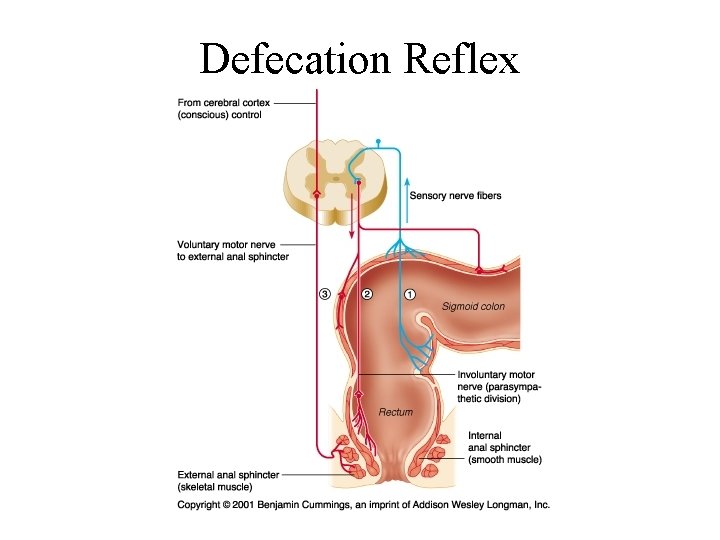
Defecation Reflex
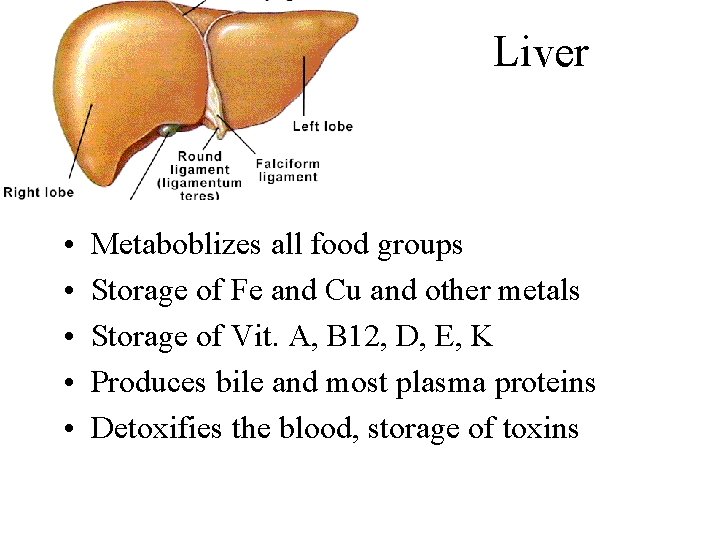
Liver • • • Metaboblizes all food groups Storage of Fe and Cu and other metals Storage of Vit. A, B 12, D, E, K Produces bile and most plasma proteins Detoxifies the blood, storage of toxins
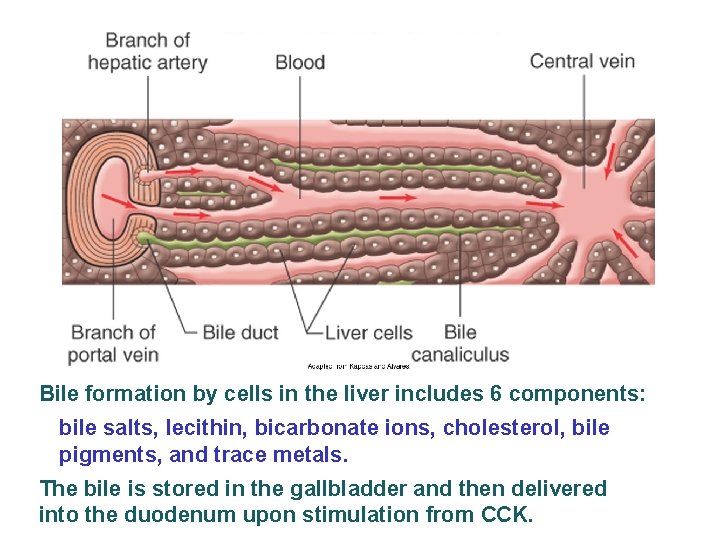
Bile formation by cells in the liver includes 6 components: bile salts, lecithin, bicarbonate ions, cholesterol, bile pigments, and trace metals. The bile is stored in the gallbladder and then delivered into the duodenum upon stimulation from CCK.
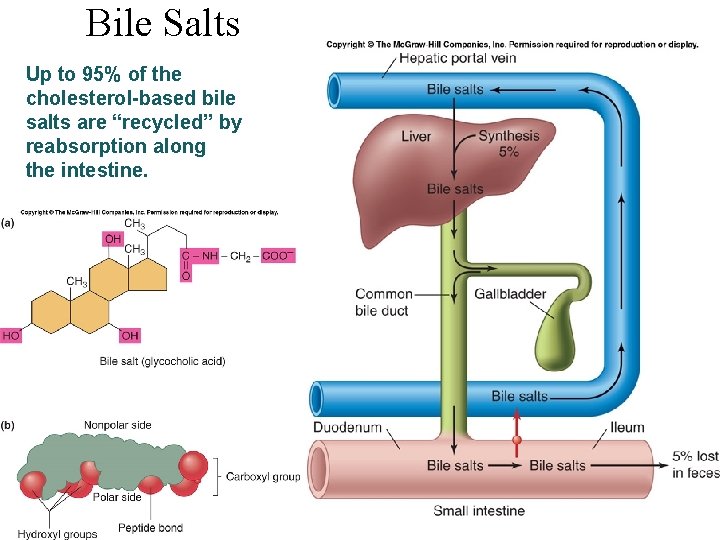
Bile Salts Up to 95% of the cholesterol-based bile salts are “recycled” by reabsorption along the intestine.
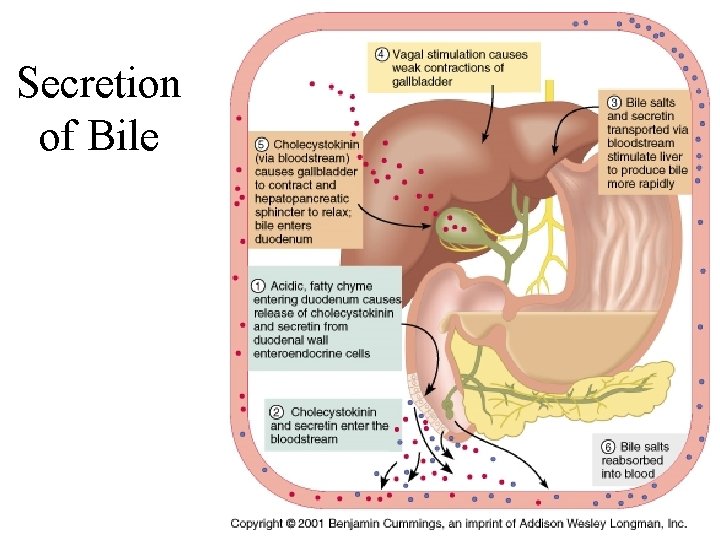
Secretion of Bile
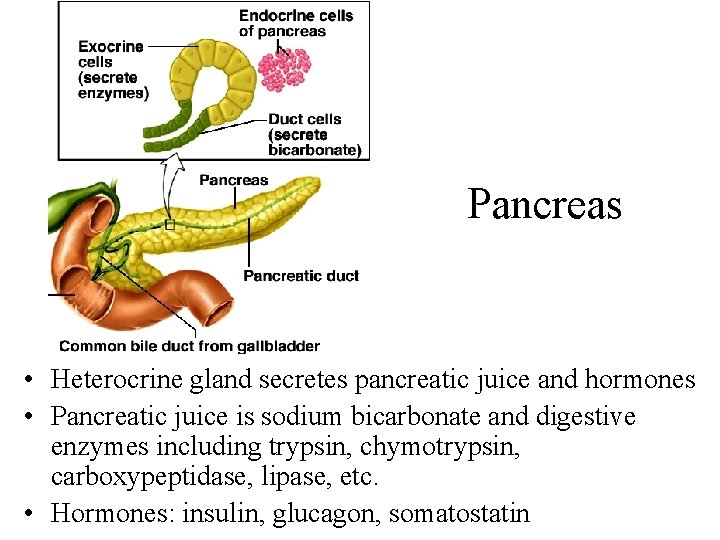
Pancreas • Heterocrine gland secretes pancreatic juice and hormones • Pancreatic juice is sodium bicarbonate and digestive enzymes including trypsin, chymotrypsin, carboxypeptidase, lipase, etc. • Hormones: insulin, glucagon, somatostatin
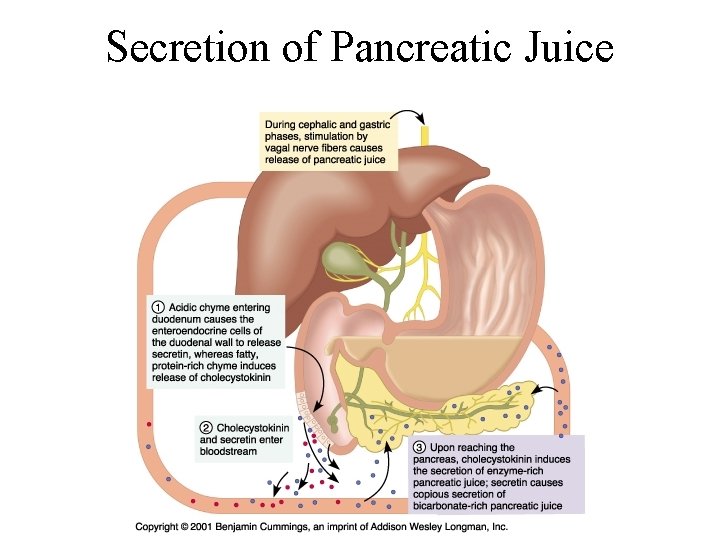
Secretion of Pancreatic Juice
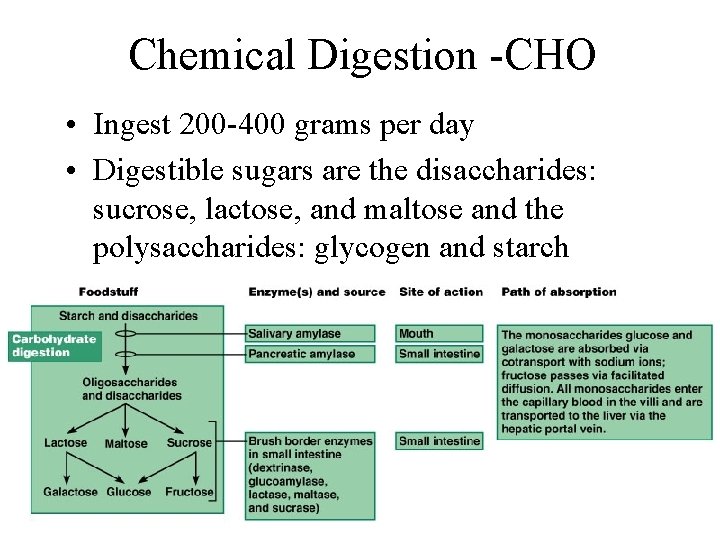
Chemical Digestion -CHO • Ingest 200 -400 grams per day • Digestible sugars are the disaccharides: sucrose, lactose, and maltose and the polysaccharides: glycogen and starch
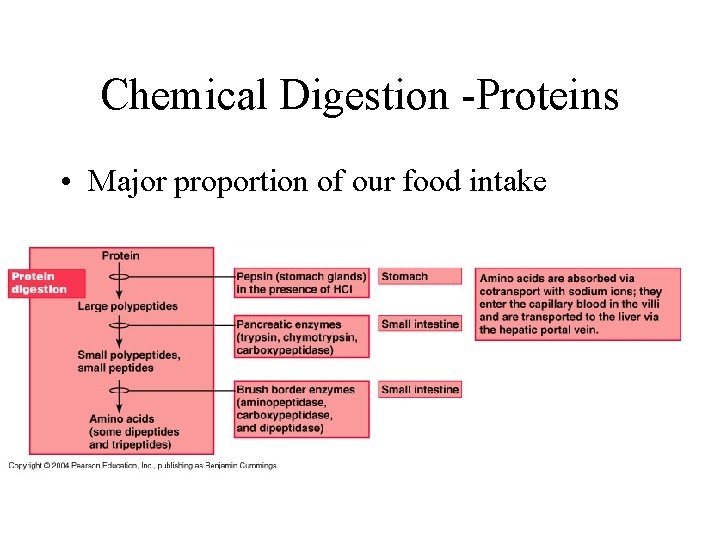
Chemical Digestion -Proteins • Major proportion of our food intake
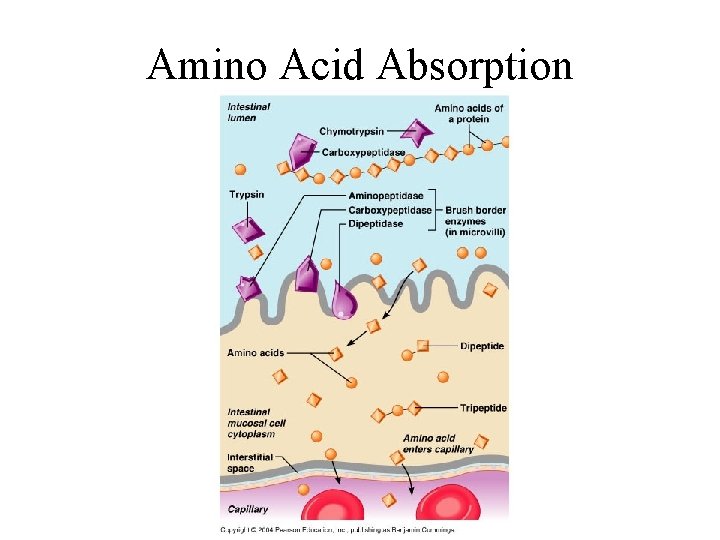
Amino Acid Absorption
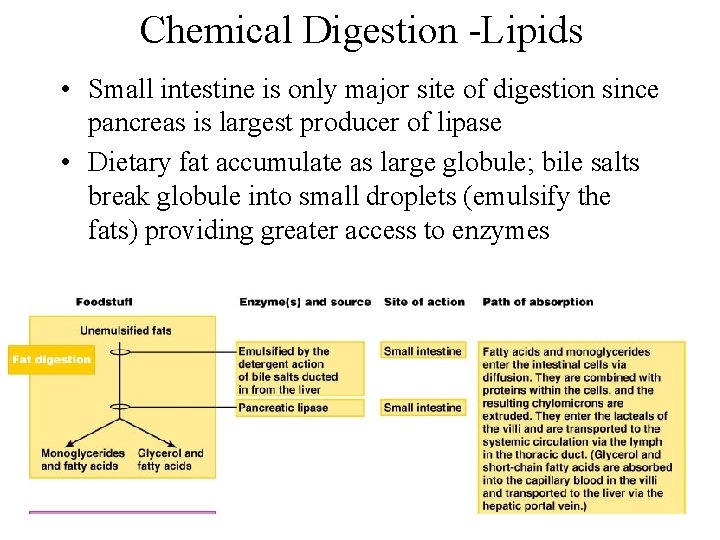
Chemical Digestion -Lipids • Small intestine is only major site of digestion since pancreas is largest producer of lipase • Dietary fat accumulate as large globule; bile salts break globule into small droplets (emulsify the fats) providing greater access to enzymes
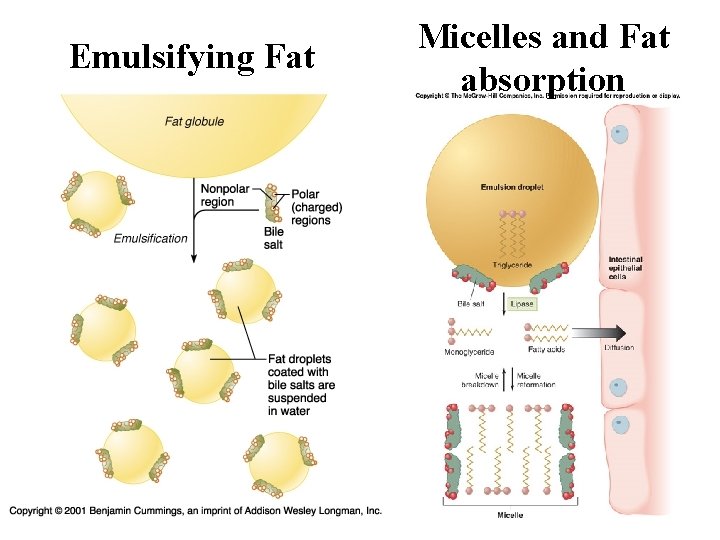
Emulsifying Fat Micelles and Fat absorption
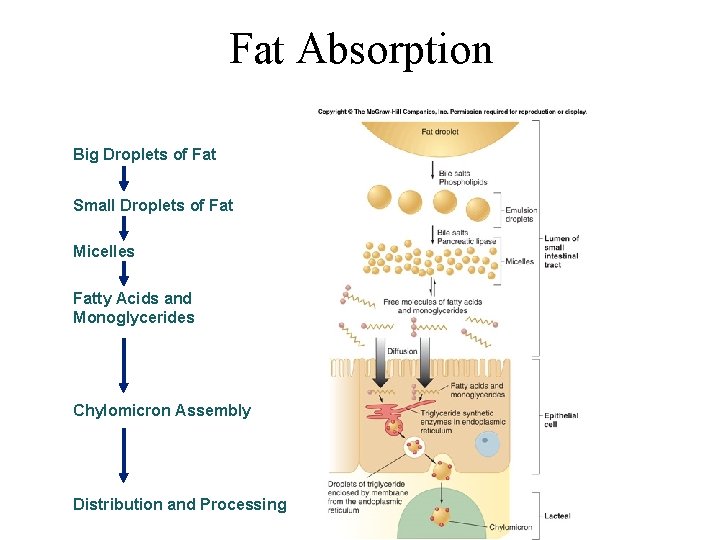
Fat Absorption Big Droplets of Fat Small Droplets of Fat Micelles Fatty Acids and Monoglycerides Chylomicron Assembly Distribution and Processing
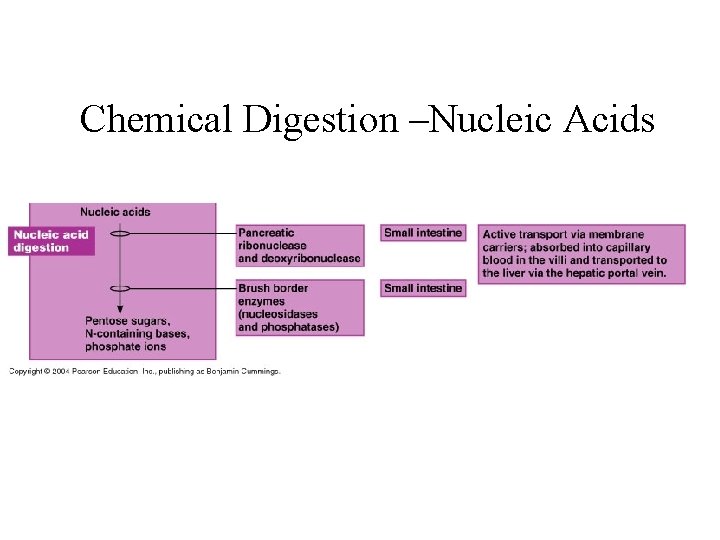
Chemical Digestion –Nucleic Acids
- Slides: 34