
Digestion Everyone poops Major components of the alimentary
- Slides: 17
Digestion (Everyone poops)
Major components of the alimentary canal (1) • (AKA the Digestive tract) • Mouth • Pharynx • Esophagus • Stomach • Small intestine • Large intestine
Accessory digestive organs (2) • • • Teeth Tongue Gall bladder Salivary glands Liver Pancreas
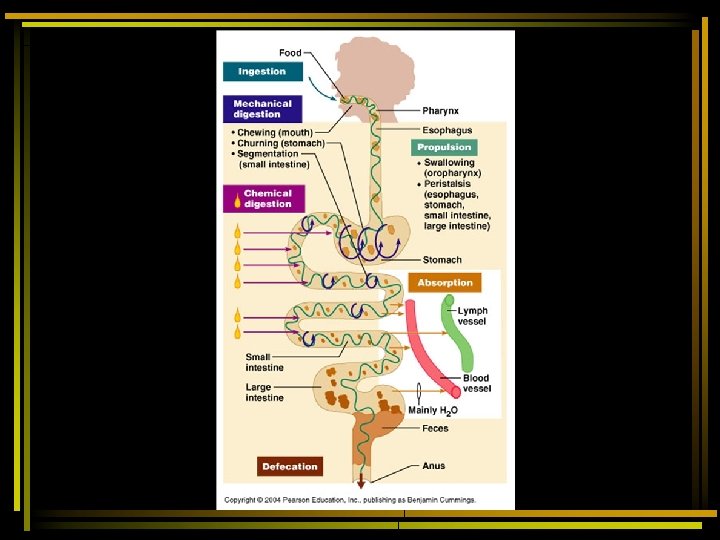
Six essential activities of the digestive process (3) • • • Ingestion Propulsion Mechanical digestion Chemical digestion Absorption defecation
Functions of the 6 essentials (3) 1. • 2. • Ingestion Taking food into the digestive tract Propulsion Swallowing & peristalsis (waves of contraction & relaxation of muscles in the organ walls) 3. Mechanical digestion • Chewing, mixing and churning food
Functions of the 6 essentials (3) 4. Chemical digestion • Catabolic breakdown of food (pancreas involvement) 5. Absorption • Movement of nutrients from GI tract to blood or lymph 6. Defecation • Elimination of indigestible solid wastes (nitrogenous wastes)
Hepatic portal vein (4) • Carries venous blood with nutrients from the digestive viscera to the liver • Most of the blood coming from the digestive system drains into a special venous circulation called the portal circulation. • It contains all the nutrients and toxins that have been absorbed along the digestive tract from ingested food. • Before these absorbed substances can go into the systemic circulation (the main blood circulation in the body), it must be filtered first to remove or detoxify toxic substances first. • This filtering and detoxification is one of the functions of the liver.
Mucosa and its 3 functions (5) 1. Secretion of mucus • Protects digestive organs from digesting themselves • Eases food along the digestive tract 2. Absorption of the end products of digestion 3. Protection against infectious disease
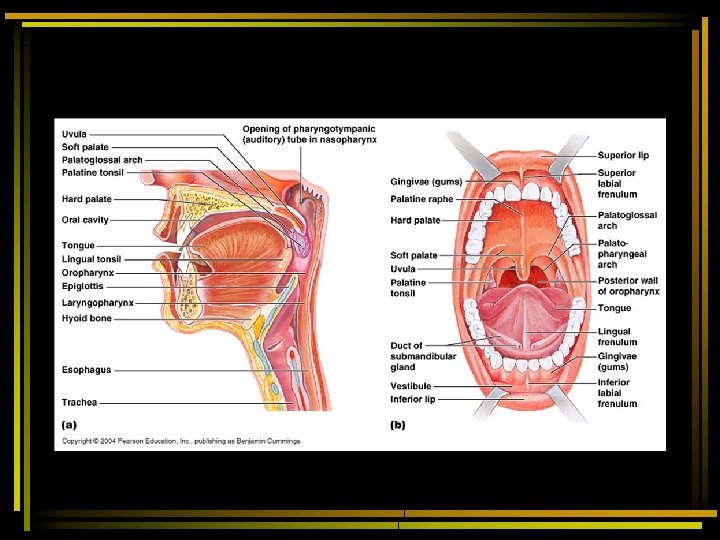
Oral cavity (6) • Comprised of a boundary of lips and cheeks, palate and tongue • Protected by a lining of stratified squamous epithelium; • The gums, hard palate and dorsum of the tongue are slightly keratinized
Palates and their functions (7) 1. Hard palate • Underlain by palatine bones and palatine processes of the maxillae • Function: to assist the tongue in chewing
Palates and their functions (7) cont’d 2. Soft palate • A mobile fold formed mostly of skeletal muscle • Uvula projects downward from its free edge • Function: closes off the nasal pharynx during swallowing
Tongue and its function (8) • Gripping and repositioning of the food during chewing • Mixing food with saliva to form the bolus • Initiation of swallowing and speech
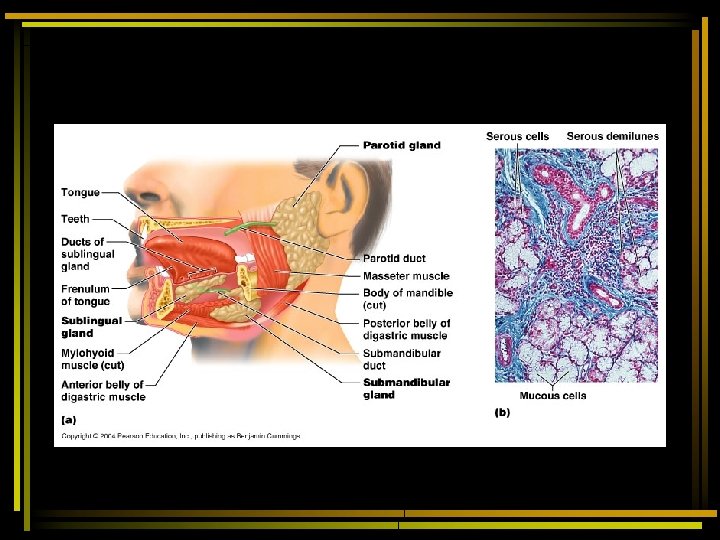
Salivary glands occur in pairs: Names & collective function (9)(10) 1. 2. 3. • • Parotid Submandibular Sublingual Functions Cleanses the mouth Moistens & dissolves food chemicals Contains enzymes that break down starch
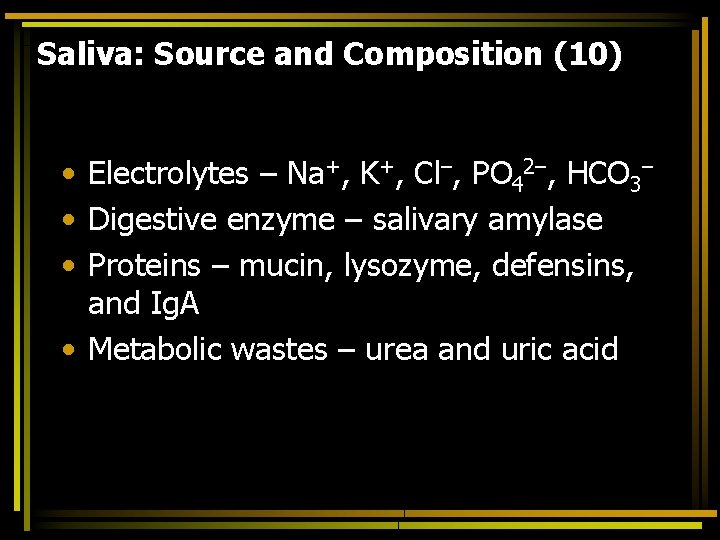
Saliva: Source and Composition (10) • Electrolytes – Na+, K+, Cl–, PO 42–, HCO 3– • Digestive enzyme – salivary amylase • Proteins – mucin, lysozyme, defensins, and Ig. A • Metabolic wastes – urea and uric acid