
Digestion Enzymes The Digestive System The Digestive System
- Slides: 56
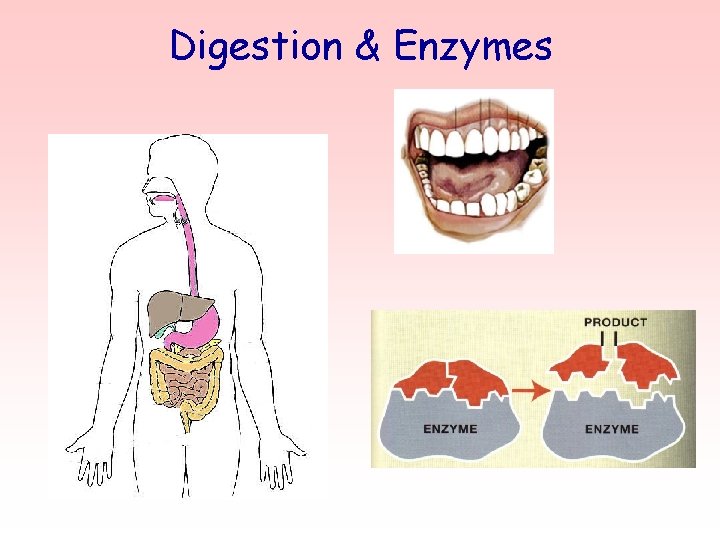
Digestion & Enzymes
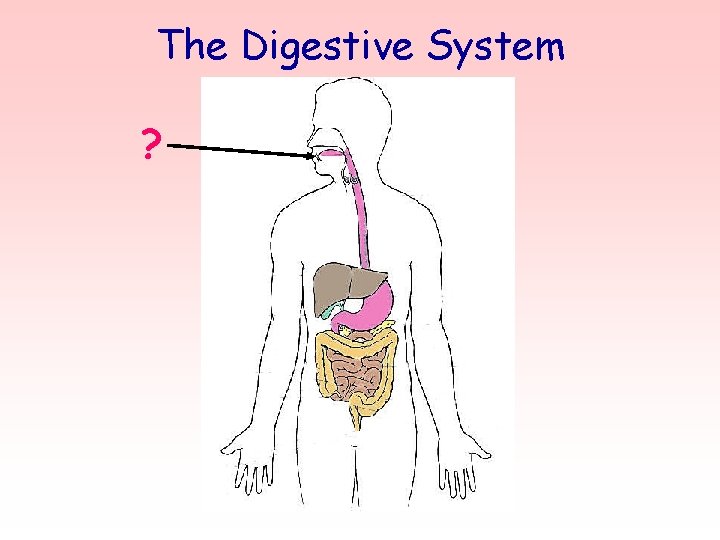
The Digestive System ?
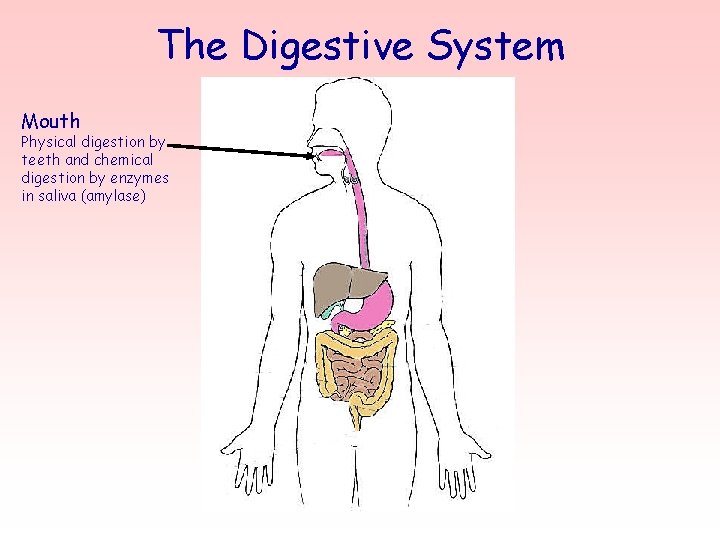
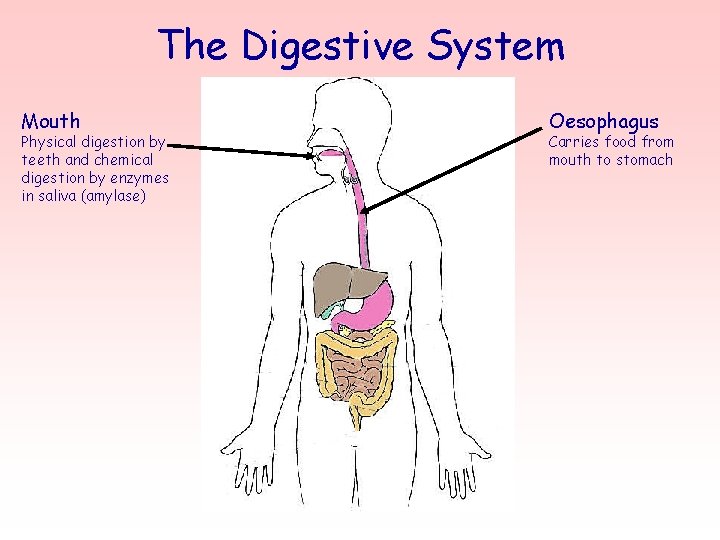
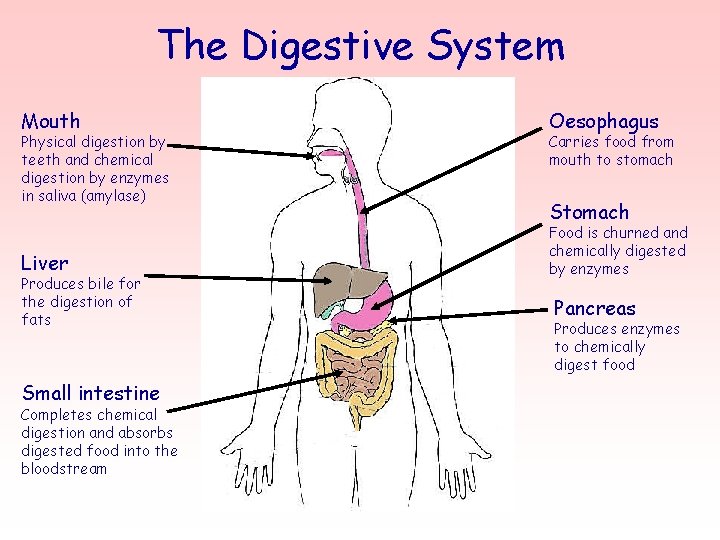
The Digestive System Mouth Physical digestion by teeth and chemical digestion by enzymes in saliva (amylase)
The Digestive System Mouth Physical digestion by teeth and chemical digestion by enzymes in saliva (amylase) ?
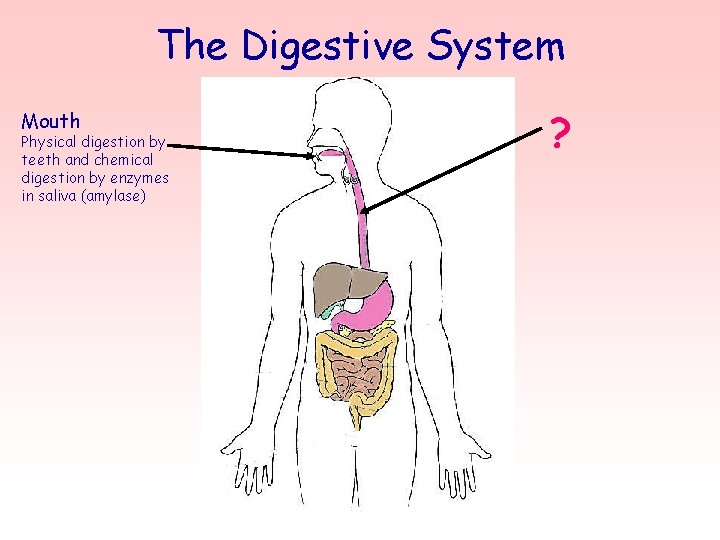
The Digestive System Mouth Physical digestion by teeth and chemical digestion by enzymes in saliva (amylase) Oesophagus Carries food from mouth to stomach
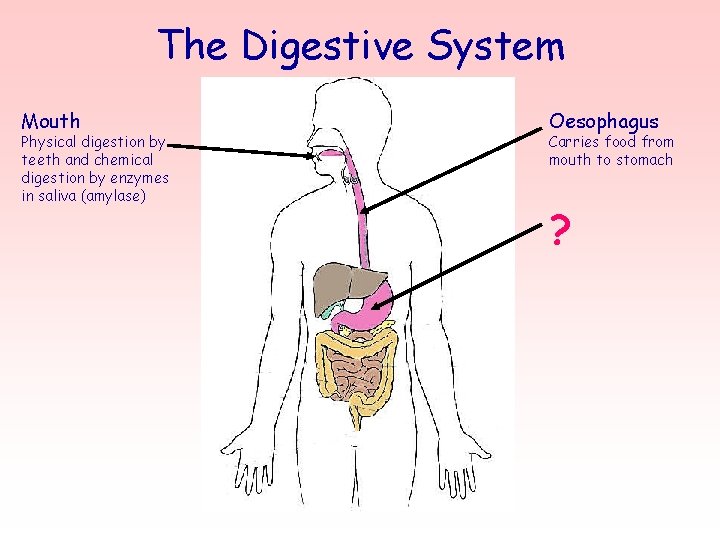
The Digestive System Mouth Physical digestion by teeth and chemical digestion by enzymes in saliva (amylase) Oesophagus Carries food from mouth to stomach ?
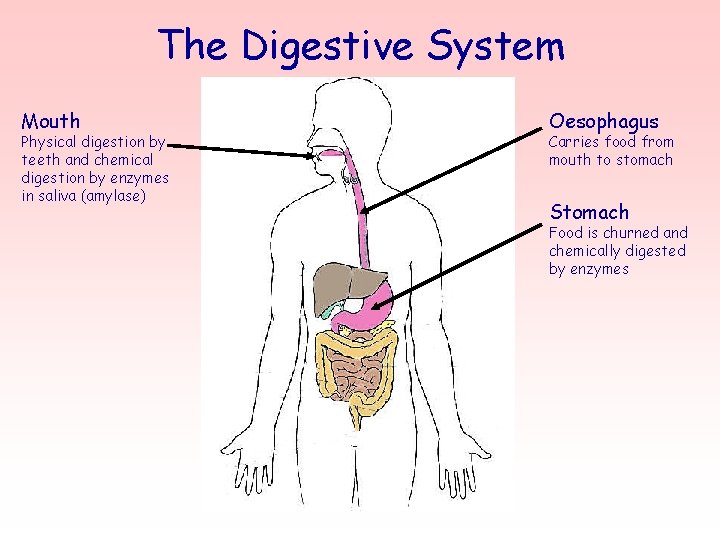
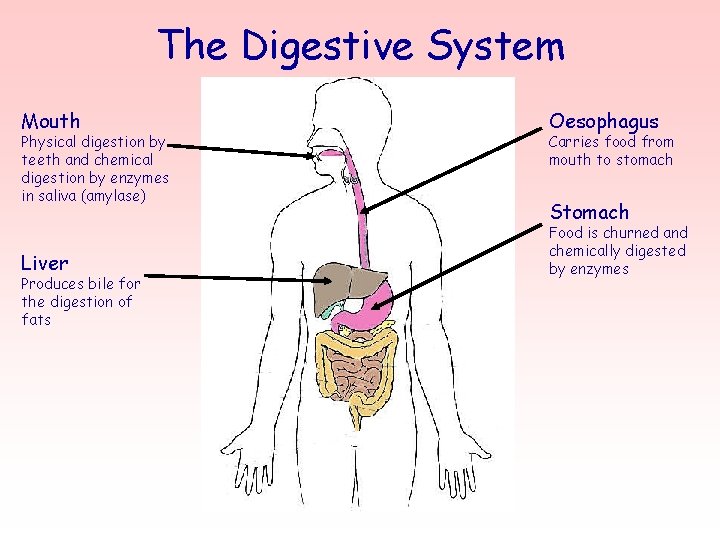
The Digestive System Mouth Physical digestion by teeth and chemical digestion by enzymes in saliva (amylase) Oesophagus Carries food from mouth to stomach Stomach Food is churned and chemically digested by enzymes
The Digestive System Mouth Physical digestion by teeth and chemical digestion by enzymes in saliva (amylase) ? Oesophagus Carries food from mouth to stomach Stomach Food is churned and chemically digested by enzymes
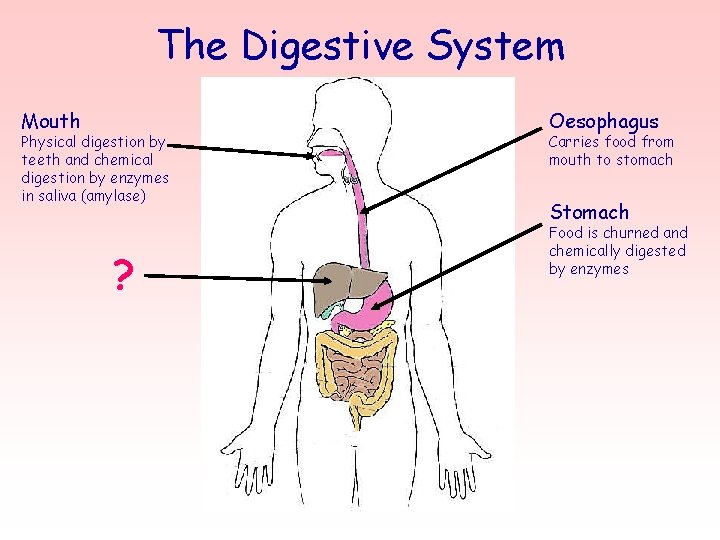
The Digestive System Mouth Physical digestion by teeth and chemical digestion by enzymes in saliva (amylase) Liver Produces bile for the digestion of fats Oesophagus Carries food from mouth to stomach Stomach Food is churned and chemically digested by enzymes
The Digestive System Mouth Physical digestion by teeth and chemical digestion by enzymes in saliva (amylase) Liver Produces bile for the digestion of fats Oesophagus Carries food from mouth to stomach Stomach Food is churned and chemically digested by enzymes ?
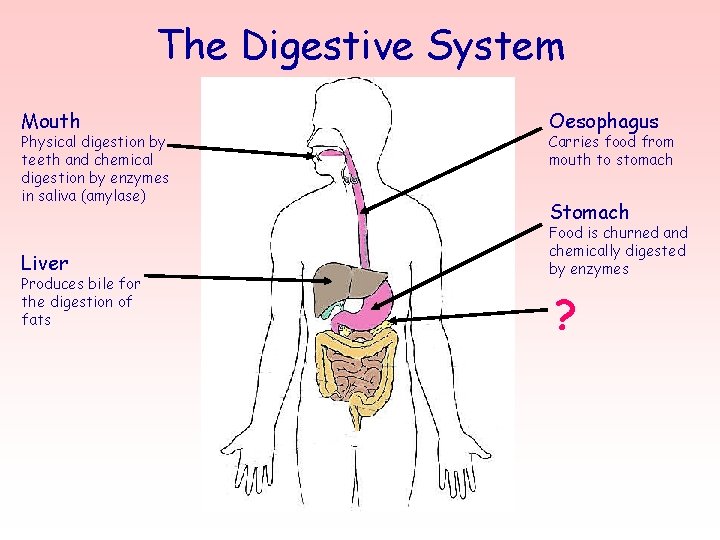
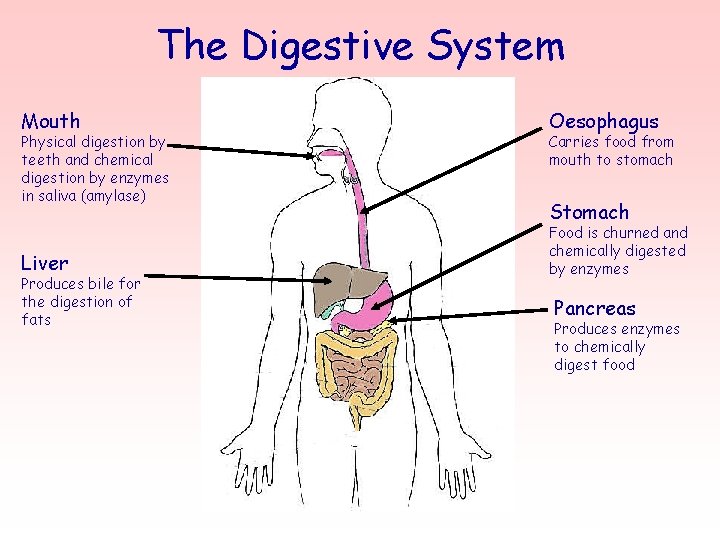
The Digestive System Mouth Physical digestion by teeth and chemical digestion by enzymes in saliva (amylase) Liver Produces bile for the digestion of fats Oesophagus Carries food from mouth to stomach Stomach Food is churned and chemically digested by enzymes Pancreas Produces enzymes to chemically digest food
The Digestive System Mouth Physical digestion by teeth and chemical digestion by enzymes in saliva (amylase) Liver Produces bile for the digestion of fats ? Oesophagus Carries food from mouth to stomach Stomach Food is churned and chemically digested by enzymes Pancreas Produces enzymes to chemically digest food
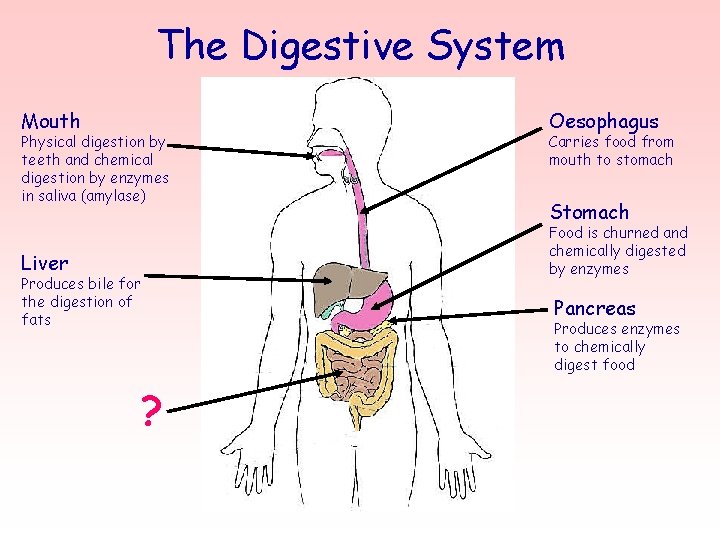
The Digestive System Mouth Physical digestion by teeth and chemical digestion by enzymes in saliva (amylase) Liver Produces bile for the digestion of fats Small intestine Completes chemical digestion and absorbs digested food into the bloodstream Oesophagus Carries food from mouth to stomach Stomach Food is churned and chemically digested by enzymes Pancreas Produces enzymes to chemically digest food
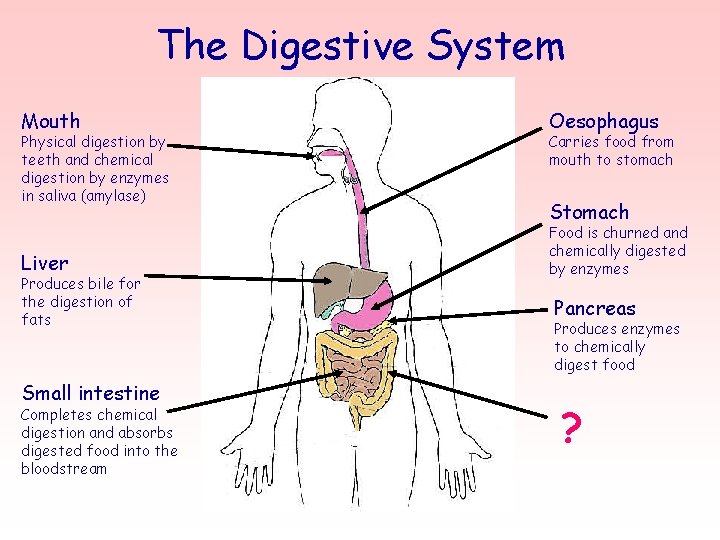
The Digestive System Mouth Physical digestion by teeth and chemical digestion by enzymes in saliva (amylase) Liver Produces bile for the digestion of fats Small intestine Completes chemical digestion and absorbs digested food into the bloodstream Oesophagus Carries food from mouth to stomach Stomach Food is churned and chemically digested by enzymes Pancreas Produces enzymes to chemically digest food ?
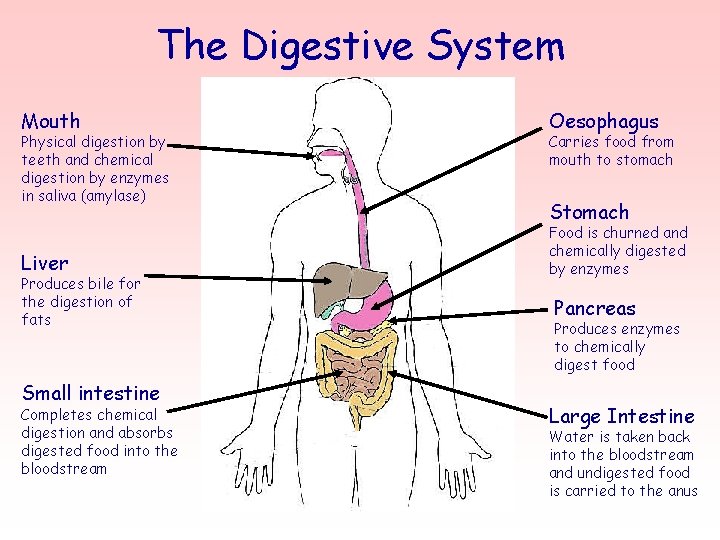
The Digestive System Mouth Physical digestion by teeth and chemical digestion by enzymes in saliva (amylase) Liver Produces bile for the digestion of fats Small intestine Completes chemical digestion and absorbs digested food into the bloodstream Oesophagus Carries food from mouth to stomach Stomach Food is churned and chemically digested by enzymes Pancreas Produces enzymes to chemically digest food Large Intestine Water is taken back into the bloodstream and undigested food is carried to the anus
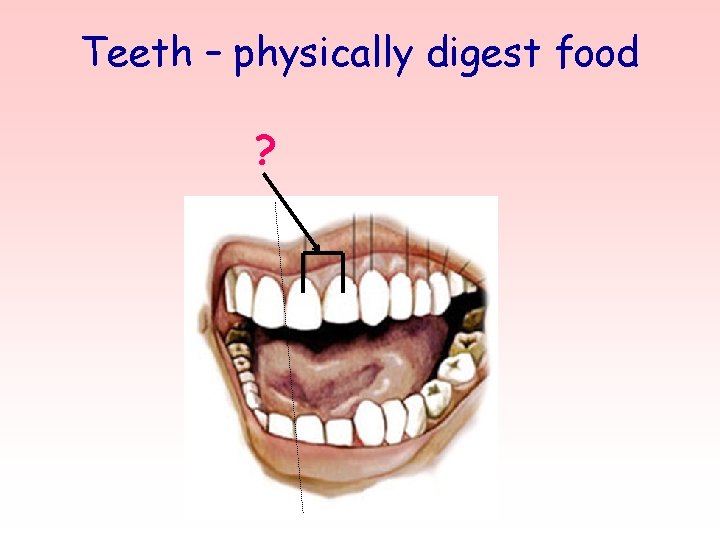
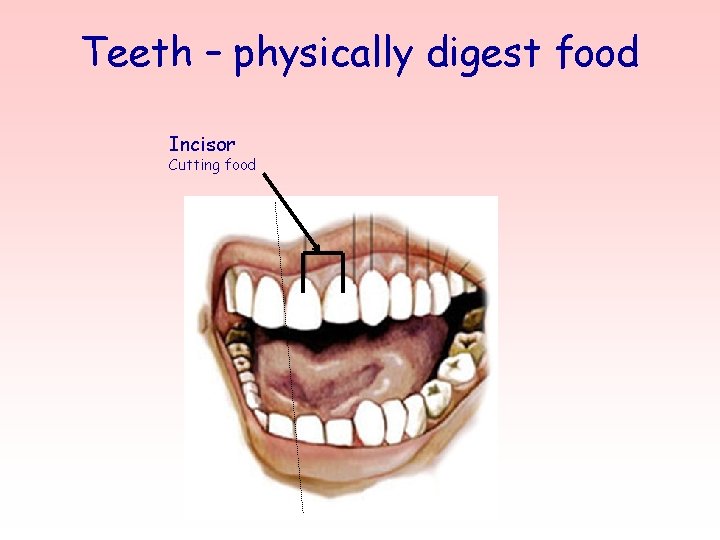
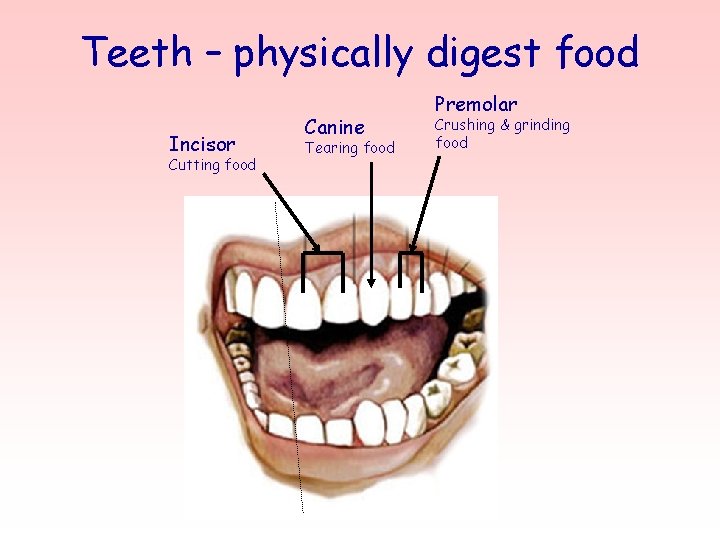
Teeth – physically digest food ?
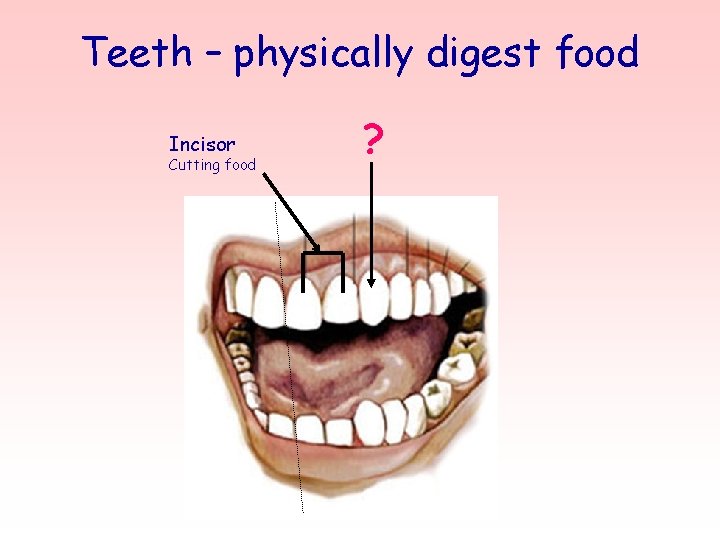
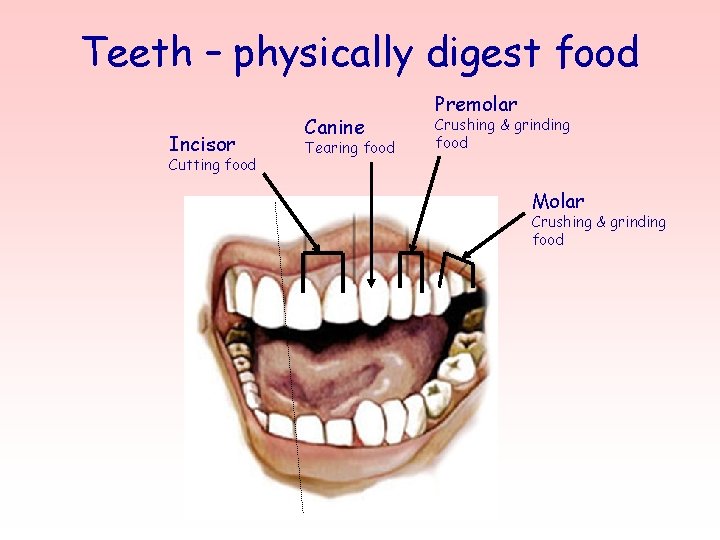
Teeth – physically digest food Incisor Cutting food
Teeth – physically digest food Incisor Cutting food ?
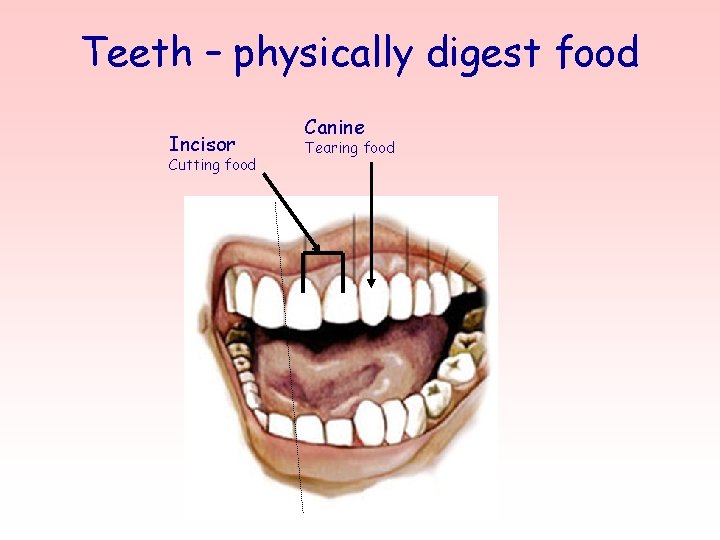
Teeth – physically digest food Incisor Cutting food Canine Tearing food
Teeth – physically digest food Incisor Cutting food Canine Tearing food ?
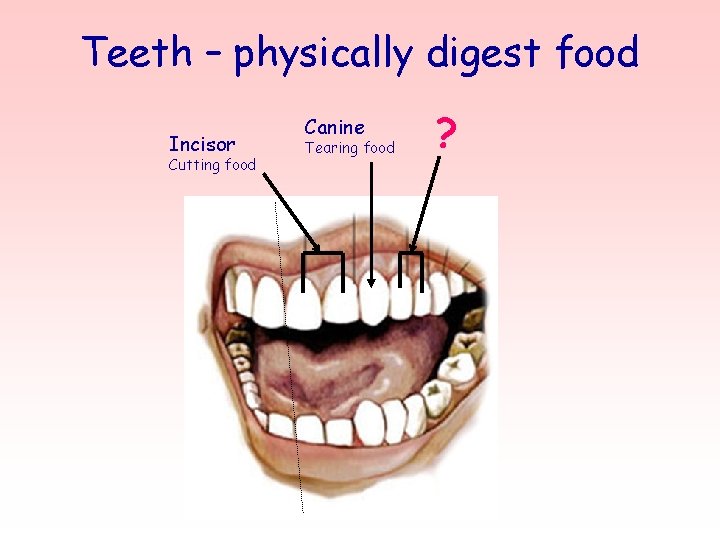
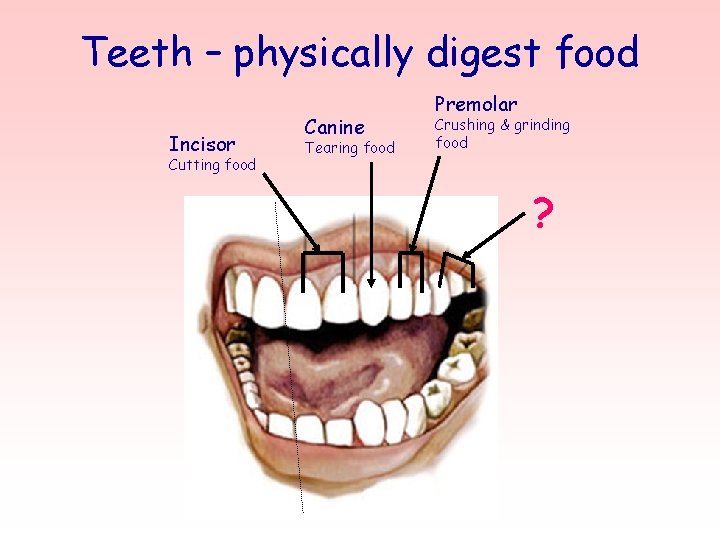
Teeth – physically digest food Incisor Cutting food Canine Tearing food Premolar Crushing & grinding food
Teeth – physically digest food Incisor Cutting food Canine Tearing food Premolar Crushing & grinding food ?
Teeth – physically digest food Incisor Cutting food Canine Tearing food Premolar Crushing & grinding food Molar Crushing & grinding food
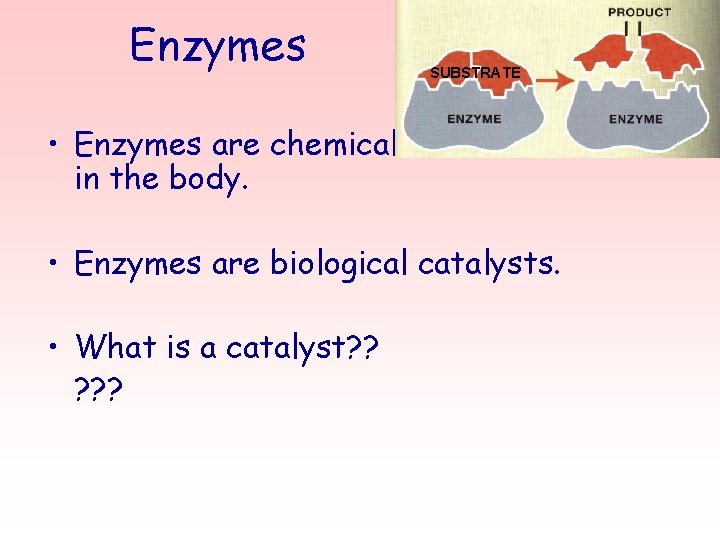
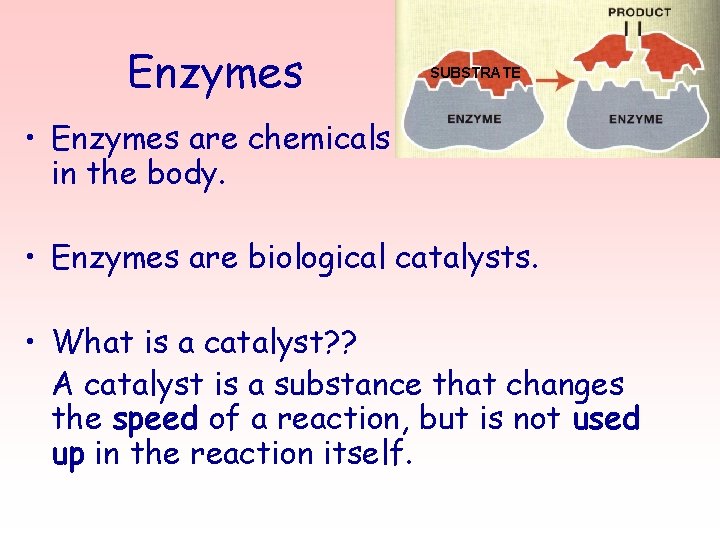
Enzymes SUBSTRATE • Enzymes are chemicals found in all cells in the body. • Enzymes are biological catalysts. • What is a catalyst? ? ?
Enzymes SUBSTRATE • Enzymes are chemicals found in all cells in the body. • Enzymes are biological catalysts. • What is a catalyst? ? A catalyst is a substance that changes the speed of a reaction, but is not used up in the reaction itself.
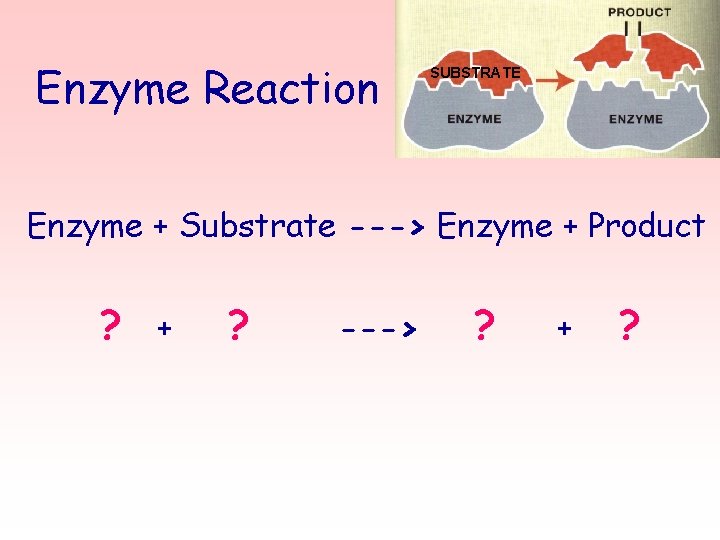
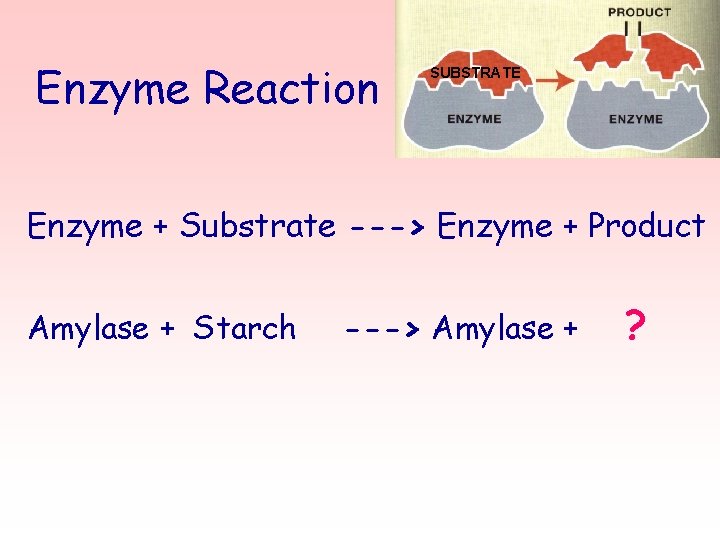
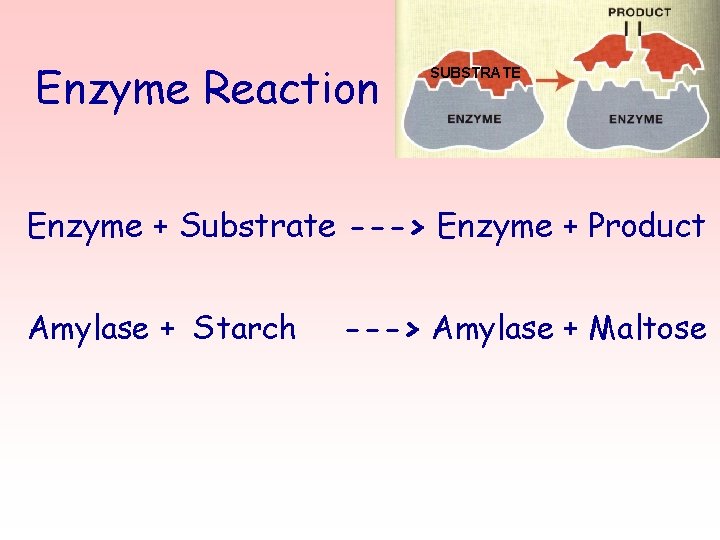
Enzyme Reaction SUBSTRATE Enzyme + Substrate ---> Enzyme + Product ? + ? ---> ? + ?
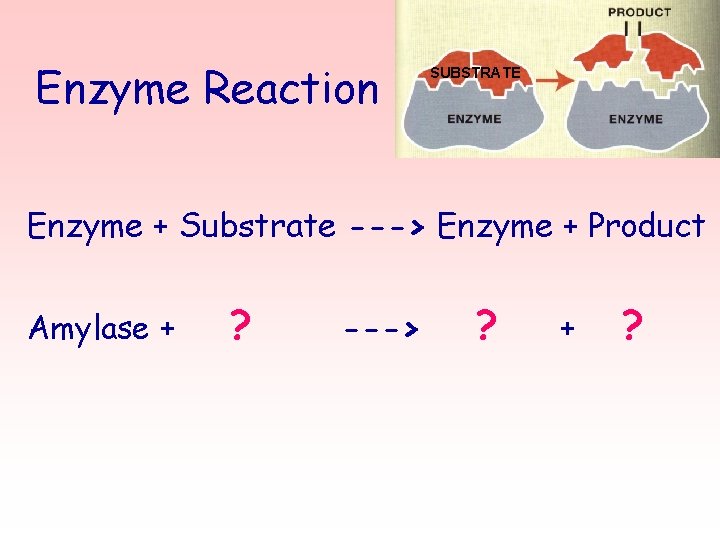
Enzyme Reaction SUBSTRATE Enzyme + Substrate ---> Enzyme + Product Amylase + ? ---> ? + ?
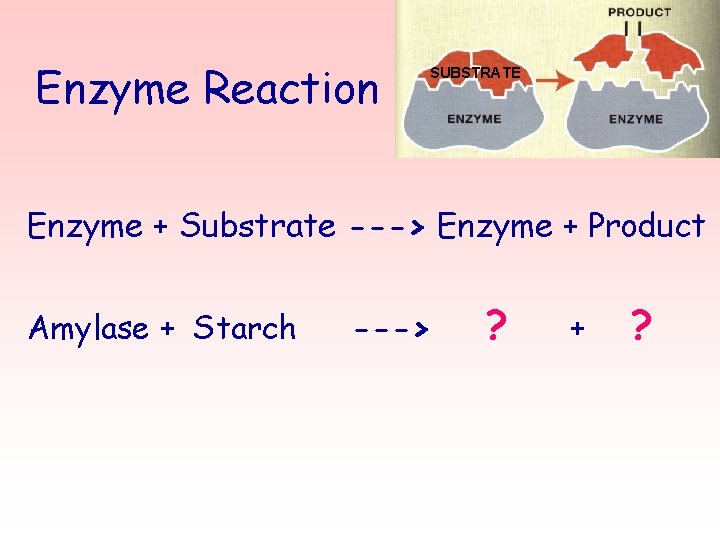
Enzyme Reaction SUBSTRATE Enzyme + Substrate ---> Enzyme + Product Amylase + Starch ---> ? + ?
Enzyme Reaction SUBSTRATE Enzyme + Substrate ---> Enzyme + Product Amylase + Starch ---> Amylase + ?
Enzyme Reaction SUBSTRATE Enzyme + Substrate ---> Enzyme + Product Amylase + Starch ---> Amylase + Maltose
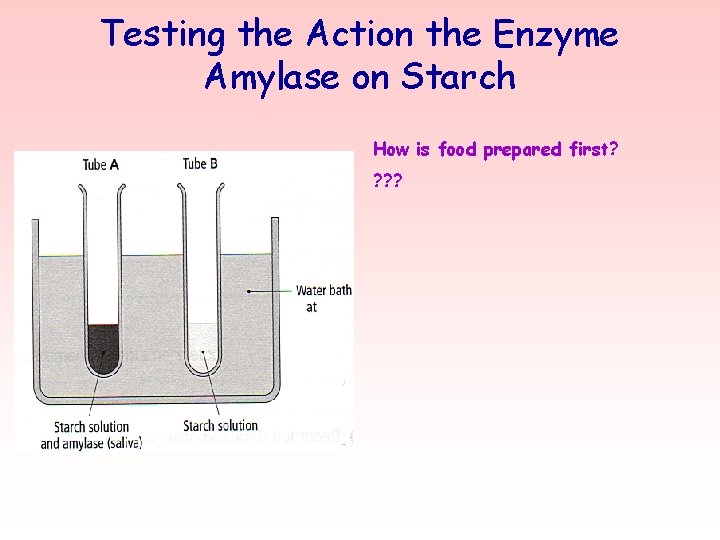
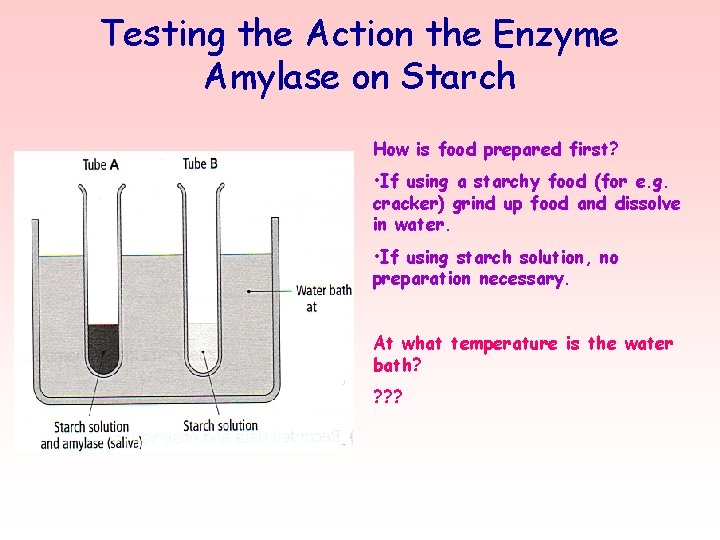
Testing the Action the Enzyme Amylase on Starch How is food prepared first? ?
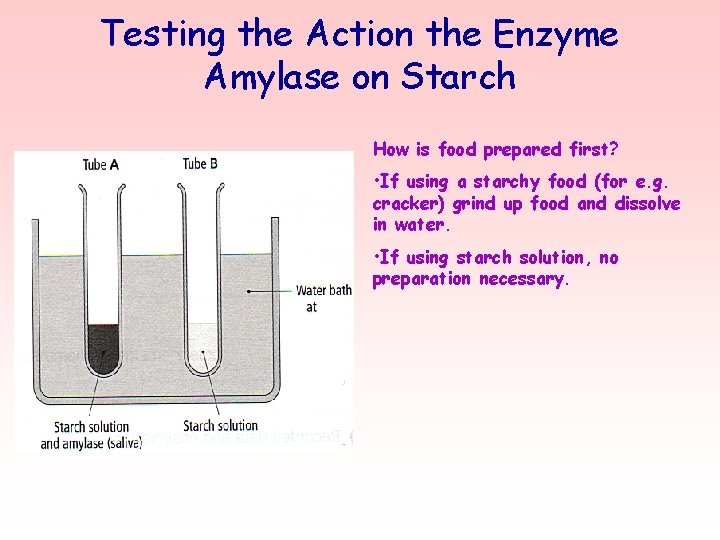
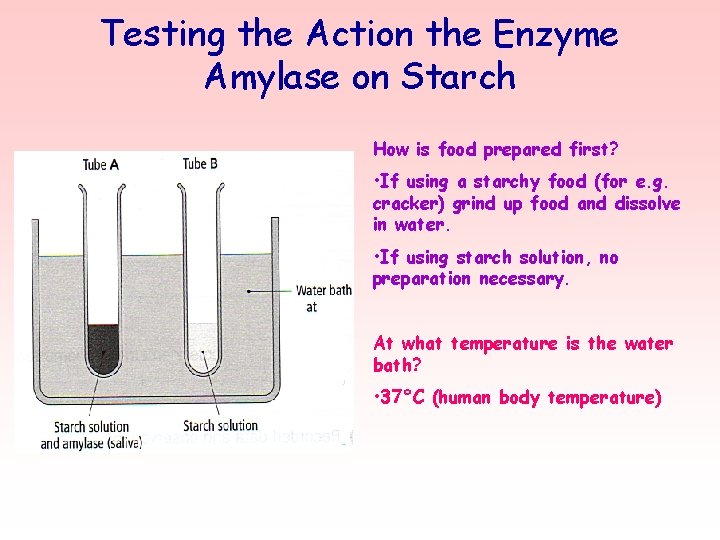
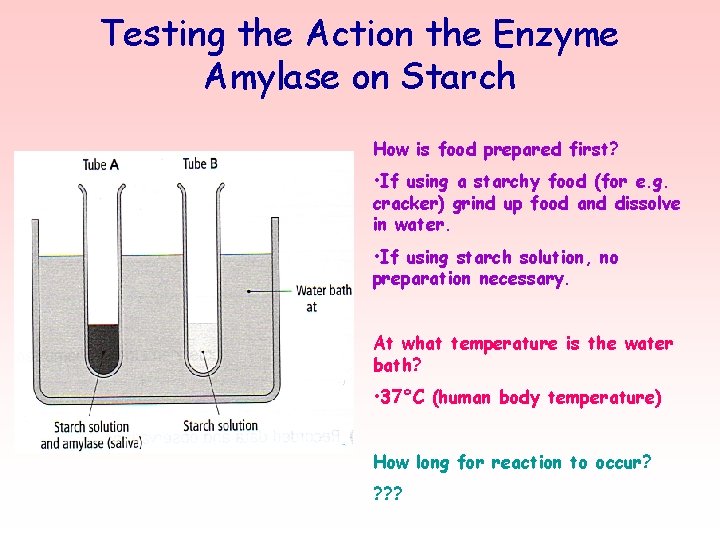
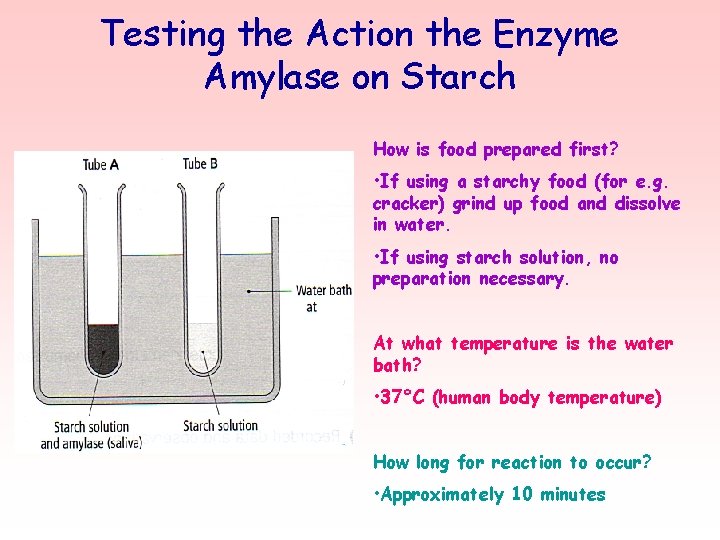
Testing the Action the Enzyme Amylase on Starch How is food prepared first? • If using a starchy food (for e. g. cracker) grind up food and dissolve in water. • If using starch solution, no preparation necessary.
Testing the Action the Enzyme Amylase on Starch How is food prepared first? • If using a starchy food (for e. g. cracker) grind up food and dissolve in water. • If using starch solution, no preparation necessary. At what temperature is the water bath? ?
Testing the Action the Enzyme Amylase on Starch How is food prepared first? • If using a starchy food (for e. g. cracker) grind up food and dissolve in water. • If using starch solution, no preparation necessary. At what temperature is the water bath? • 37°C (human body temperature)
Testing the Action the Enzyme Amylase on Starch How is food prepared first? • If using a starchy food (for e. g. cracker) grind up food and dissolve in water. • If using starch solution, no preparation necessary. At what temperature is the water bath? • 37°C (human body temperature) How long for reaction to occur? ?
Testing the Action the Enzyme Amylase on Starch How is food prepared first? • If using a starchy food (for e. g. cracker) grind up food and dissolve in water. • If using starch solution, no preparation necessary. At what temperature is the water bath? • 37°C (human body temperature) How long for reaction to occur? • Approximately 10 minutes
• Testing for the Substrate: Starch What chemical is used? ?
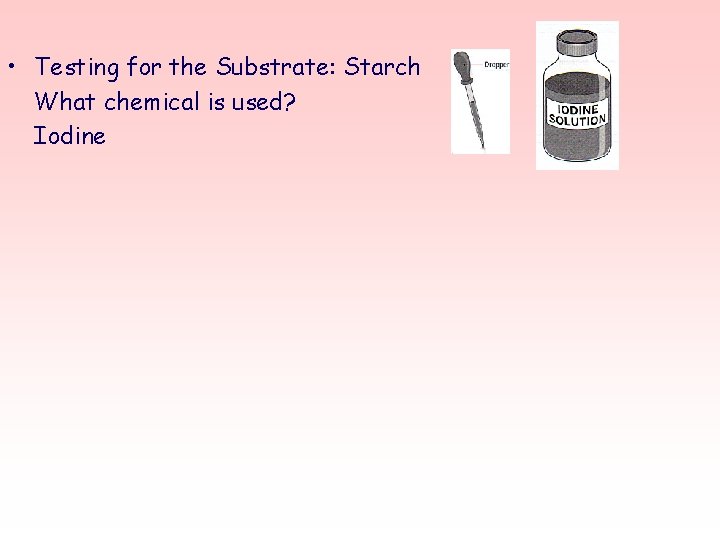
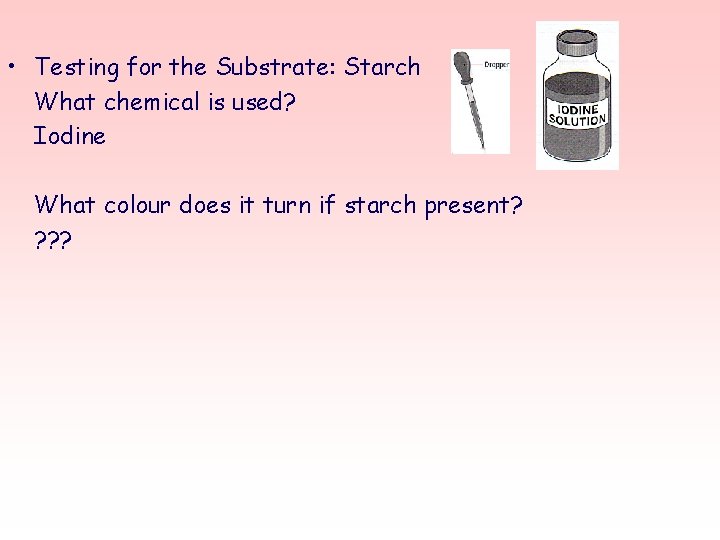
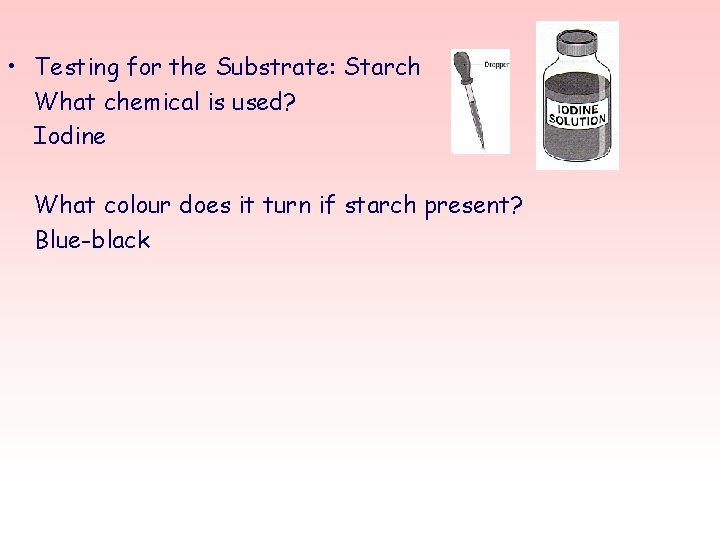
• Testing for the Substrate: Starch What chemical is used? Iodine
• Testing for the Substrate: Starch What chemical is used? Iodine What colour does it turn if starch present? ?
• Testing for the Substrate: Starch What chemical is used? Iodine What colour does it turn if starch present? Blue-black
• Testing for the Substrate: Starch What chemical is used? Iodine What colour does it turn if starch present? Blue-black • Testing for the Product: Maltose (reducing sugar) How do you test for a reducing sugar? ?
• Testing for the Substrate: Starch What chemical is used? Iodine What colour does it turn if starch present? Blue-black • Testing for the Product: Maltose (reducing sugar) How do you test for a reducing sugar? Heat with Benedict's solution
• Testing for the Substrate: Starch What chemical is used? Iodine What colour does it turn if starch present? Blue-black • Testing for the Product: Maltose (reducing sugar) How do you test for a reducing sugar? Heat with Benedict’s solutions What colour does Benedict’s turn if reducing sugar present? ?
• Testing for the Substrate: Starch What chemical is used? Iodine What colour does it turn if starch present? Blue-black • Testing for the Product: Maltose (reducing sugar) How do you test for a reducing sugar? Heat with Benedict’s solution What colour does Benedict’s turn if reducing sugar present? Brick Red
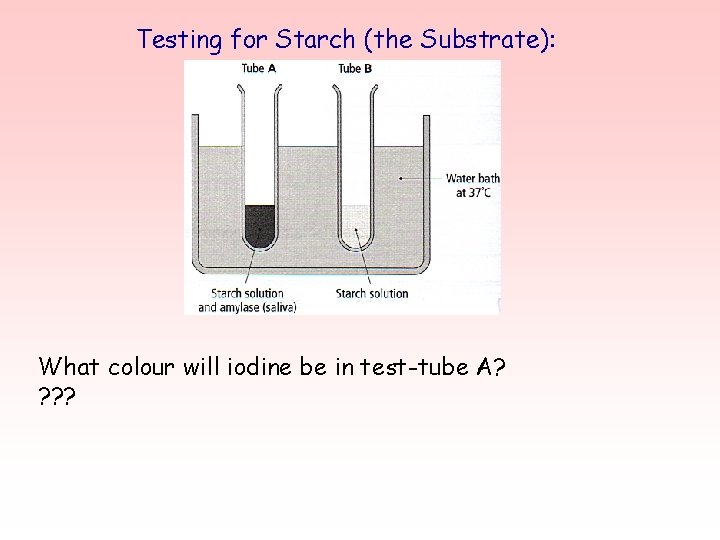
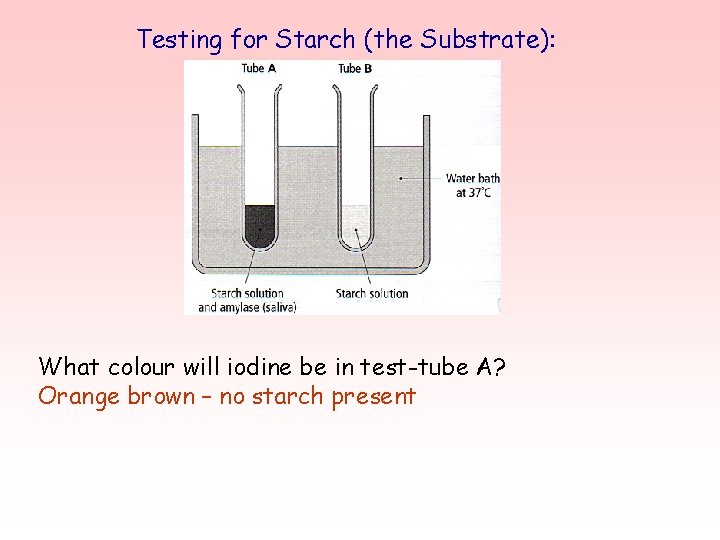
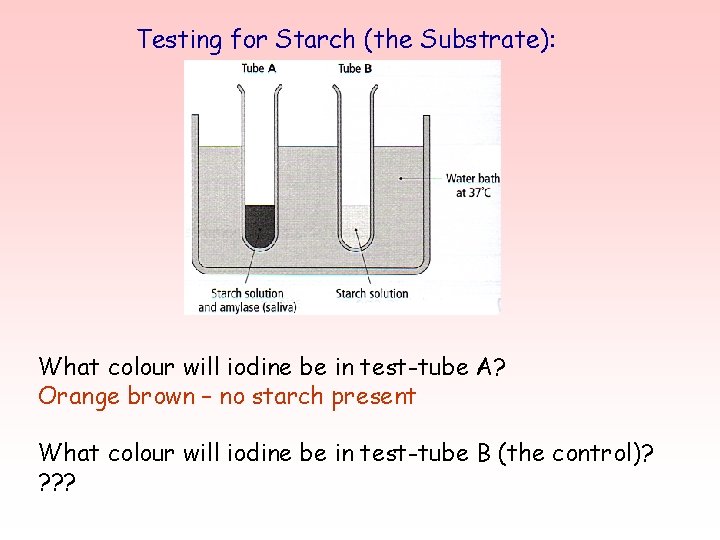
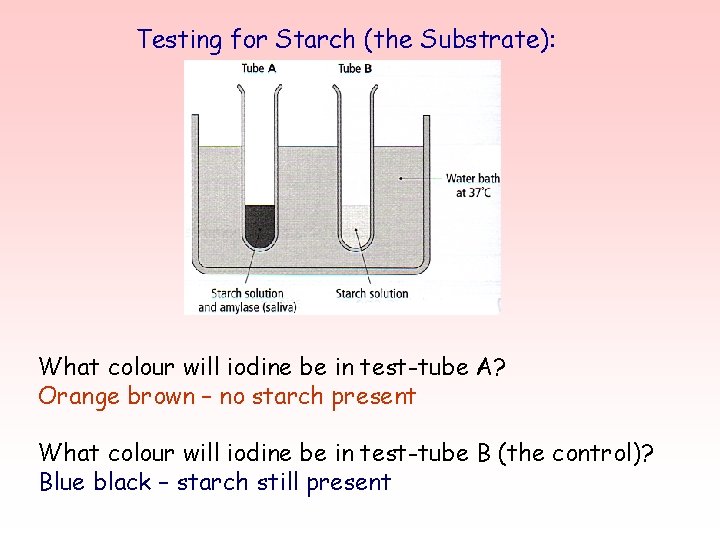
Testing for Starch (the Substrate): What colour will iodine be in test-tube A? ?
Testing for Starch (the Substrate): What colour will iodine be in test-tube A? Orange brown – no starch present
Testing for Starch (the Substrate): What colour will iodine be in test-tube A? Orange brown – no starch present What colour will iodine be in test-tube B (the control)? ?
Testing for Starch (the Substrate): What colour will iodine be in test-tube A? Orange brown – no starch present What colour will iodine be in test-tube B (the control)? Blue black – starch still present
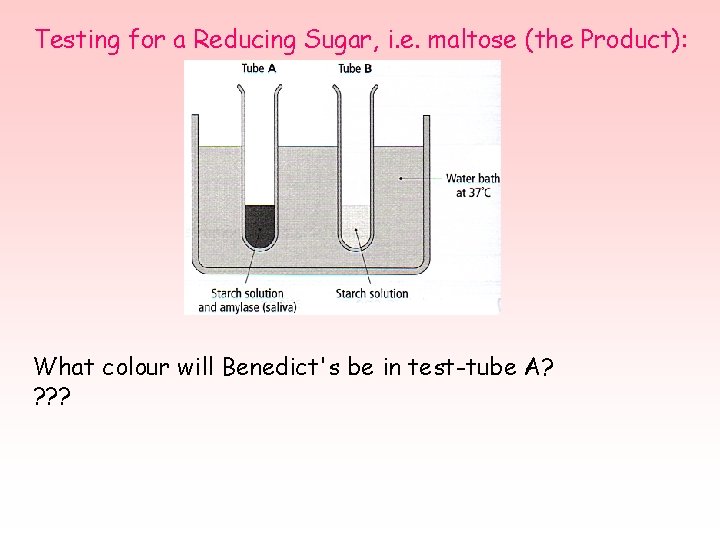
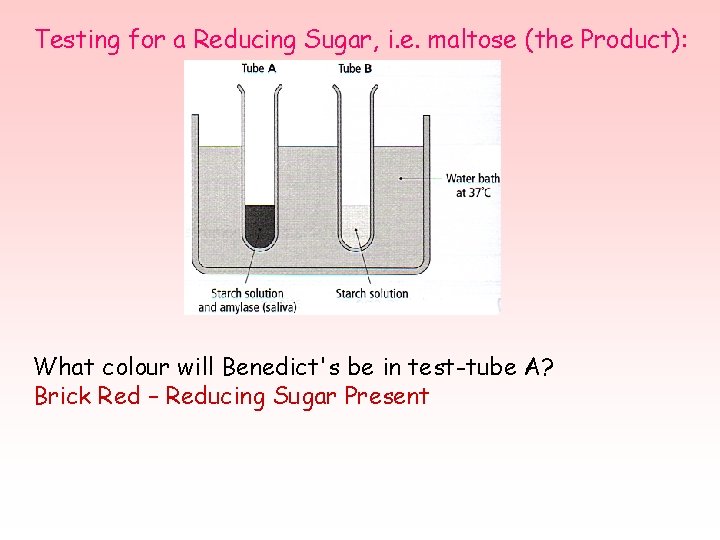
Testing for a Reducing Sugar, i. e. maltose (the Product): What colour will Benedict's be in test-tube A? ?
Testing for a Reducing Sugar, i. e. maltose (the Product): What colour will Benedict's be in test-tube A? Brick Red – Reducing Sugar Present
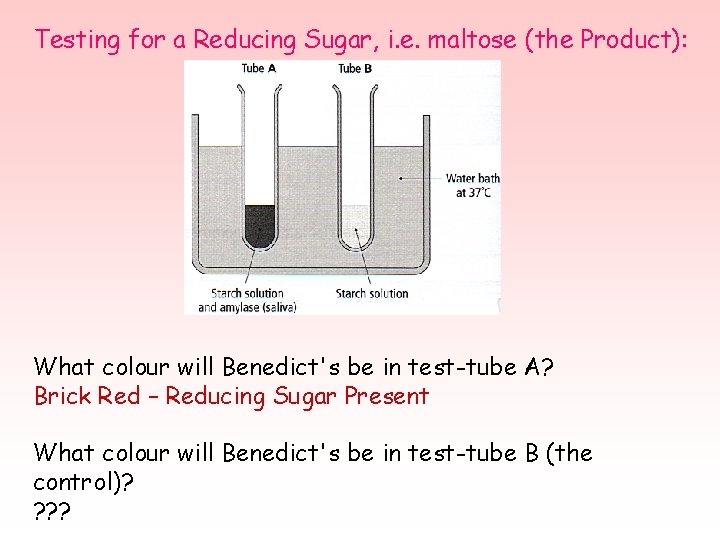
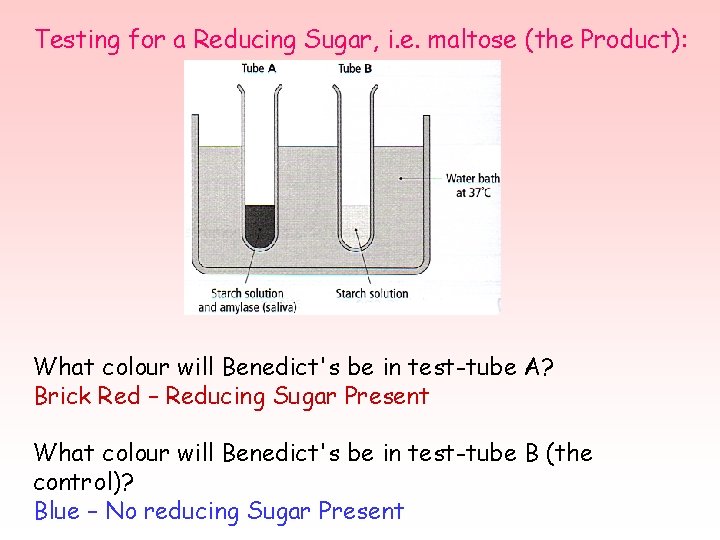
Testing for a Reducing Sugar, i. e. maltose (the Product): What colour will Benedict's be in test-tube A? Brick Red – Reducing Sugar Present What colour will Benedict's be in test-tube B (the control)? ?
Testing for a Reducing Sugar, i. e. maltose (the Product): What colour will Benedict's be in test-tube A? Brick Red – Reducing Sugar Present What colour will Benedict's be in test-tube B (the control)? Blue – No reducing Sugar Present
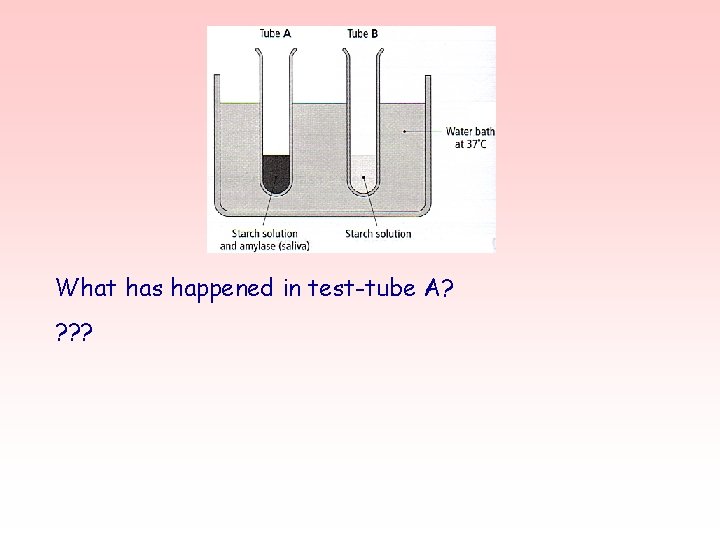
What has happened in test-tube A? ?
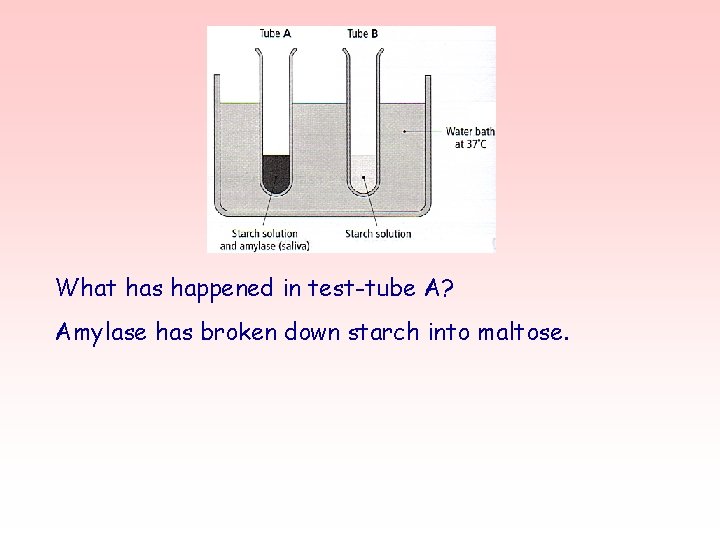
What has happened in test-tube A? Amylase has broken down starch into maltose.
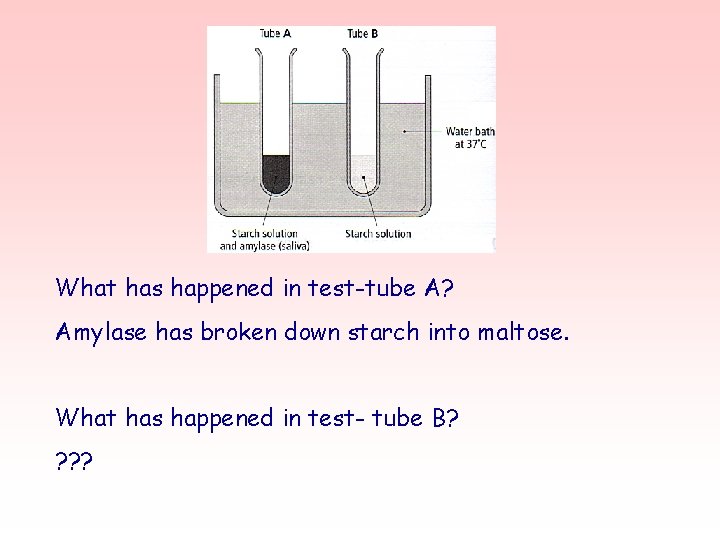
What has happened in test-tube A? Amylase has broken down starch into maltose. What has happened in test- tube B? ?
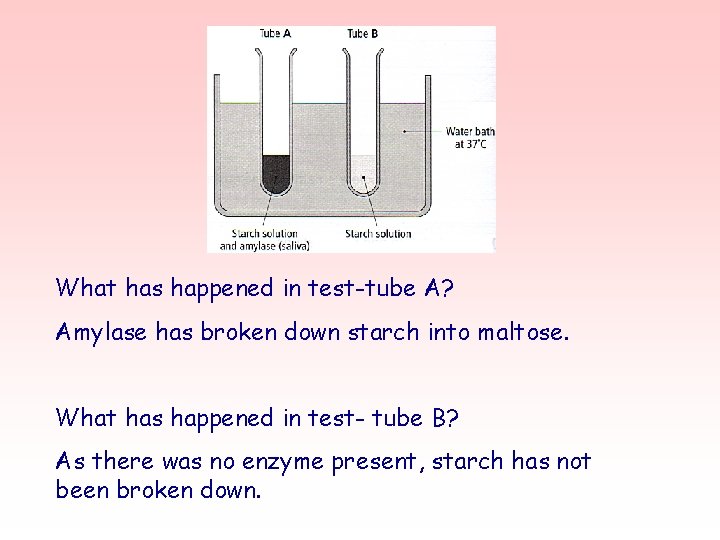
What has happened in test-tube A? Amylase has broken down starch into maltose. What has happened in test- tube B? As there was no enzyme present, starch has not been broken down.