
DIGESTION AND ABSORPTION UNITI A DIGESTION AND ABSORPTION
DIGESTION AND ABSORPTION UNIT-I A DIGESTION AND ABSORPTION
DIGESTION AND ABSORPTION
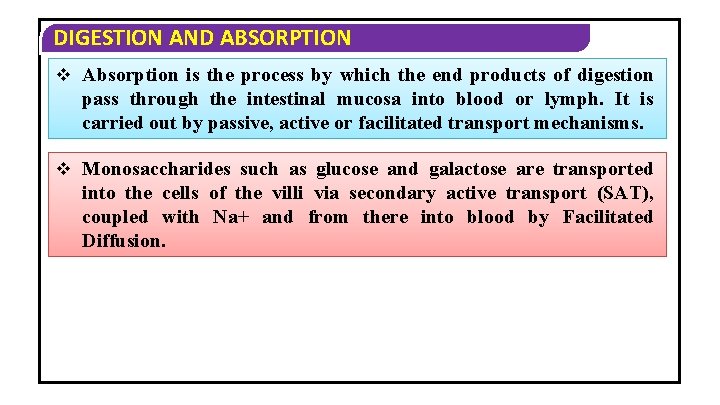
DIGESTION AND ABSORPTION v Absorption is the process by which the end products of digestion pass through the intestinal mucosa into blood or lymph. It is carried out by passive, active or facilitated transport mechanisms. v Monosaccharides such as glucose and galactose are transported into the cells of the villi via secondary active transport (SAT), coupled with Na+ and from there into blood by Facilitated Diffusion.
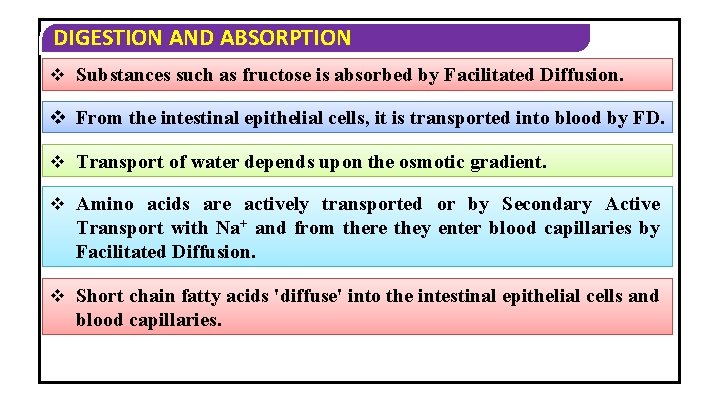
DIGESTION AND ABSORPTION v Substances such as fructose is absorbed by Facilitated Diffusion. v From the intestinal epithelial cells, it is transported into blood by FD. v Transport of water depends upon the osmotic gradient. v Amino acids are actively transported or by Secondary Active Transport with Na+ and from there they enter blood capillaries by Facilitated Diffusion. v Short chain fatty acids 'diffuse' into the intestinal epithelial cells and blood capillaries.
DIGESTION AND ABSORPTION Ø Long chain fatty acids and glycerol, being insoluble in water cannot be absorbed into the blood directly. Ø They are first modified into small droplets called micelles, which enter the intestinal mucosal cells by diffusion. Ø In the intestinal epithelial cells they are formed into very small protein coated fat globules called chylomicrons. Ø These chylomicrons are transported into the lacteals (lymph capillaries) in the villi by exocytosis (they cannot enter the blood capillaries due to their large size).
DIGESTION AND ABSORPTION Ø Lymph vessels ultimately release the absorbed substances into the blood stream through the left subclavial vein via thoracic duct. Ø These chylomicrons (triglycerides) are broken down to fatty acids and glycerol by the action of the enzyme lipoprotein lipase present in the endothelial walls and they diffuse into adipocytes of the adipose tissue, and liver for storage (as neutral fat/ tissue fat). Ø Vitamins are generally absorbed by simple diffusion. Vitamin B 12 is actively reabsorbed in combination with castle’s intrinsic factor.
DIGESTION AND ABSORPTION Ø Absorption of substances takes place in different parts of the gut, like mouth, stomach, small intestine, large intestine. Ø However, maximum absorption of the end products of digestion occurs in the small intestine.
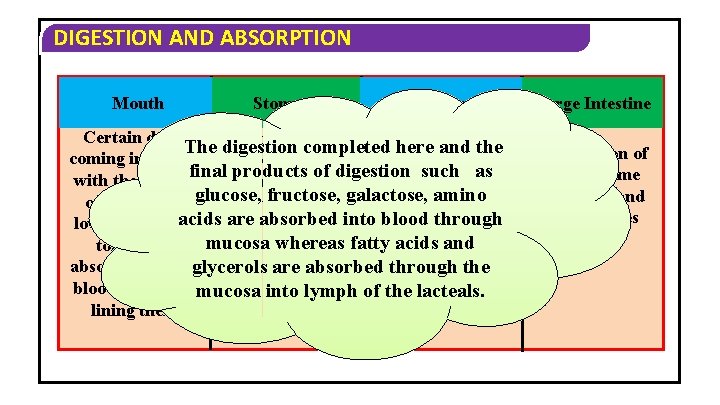
DIGESTION AND ABSORPTION Mouth Stomach Small Intestine Certain drugs Absorption of Principal organ The digestion completed here and the coming in contact simple sugars, for absorption final products of digestion such as of with the mucosa alcohol and nutrients. fructose, galactose, amino of mouth and glucose, drugs etc. acids are absorbed lower side of the takes place. into blood through mucosa whereas fatty acids and tongue are absorbed into the glycerols are absorbed through the blood capillariesmucosa into lymph of the lacteals. lining them. Large Intestine Absorption of water, some minerals and drugs takes place.
DIGESTION AND ABSORPTION Assimilation v The absorbed substances finally reach the tissues where food materials become integral components of the living protoplasm are used for the production of energy, growth and repair. This process is called assimilation. Defaecation v The undigested, unabsorbed substances are passed on to the large intestine. No significant digestive activity occurs in the large intestine.
DIGESTION AND ABSORPTION The functions of large intestine are…. v Absorption of some water, minerals and certain drugs. v Secretion of mucus which helps in holding the undigested particles together and lubricating it for easy passage. v The undigested and unabsorbed substances which mostly include fiber of plant material generally called roughage enters the large intestine.
DIGESTION AND ABSORPTION Ø Water and some useful substances are reabsorbed in it. It is temporarily stored in the rectum till it is expelled out through the anus (defaecation). Ø The undigested wastes, solidified into faeces in the rectum, initiate a neural reflex causing an urge for its removal. Ø The egestion of faeces to the outside through the anal opening is voluntary process and it is carried out by a mass peristaltic movement’.
DIGESTION AND ABSORPTION 1. Large intestine helps in the absorption of …. . 1) Vitamins 2) Proteins 3) Carbohydrates 4) Fats MCQS
DIGESTION AND ABSORPTION
DIGESTION AND ABSORPTION GASTRO INTESTINAL HORMONES v Activities of the gastro intestinal tract are under neural and hormonal control for proper coordination of different parts. v The sight, smell and the presence of the food in the oral cavity can stimulate the secretion of saliva. v Gastric and intestinal secretions are also similarly stimulated by neural signals.
DIGESTION AND ABSORPTION v The muscular activities of different parts of the alimentary canal are also moderated by neural mechanisms. v Hormonal control of the secretions of digestive juices is carried out by the local hormones by gastric and intestinal mucosa as given below.
DIGESTION AND ABSORPTION Gastrin is secreted from the epithelium of the stomach, it stimulates the secretion of HCl and pepsinogen. Enterogastrone (or) gastric inhibitory peptide(GIP) is secreted by the epithelium of duodenum due to the effect of dietary lipids. It inhibits gastric secretion and gastrointestinal motility.
DIGESTION AND ABSORPTION Cholecystokinin(CCK)/Cholecystokinin – pancreozymin/ pancreozymin is secreted from the epithelium of the duodenum, acts on pancreas and gallbladder and stimulate the secretion of pancreatic enzymes and release of bile. Secretin is secreted by the epithelium of duodenum & acts on the pancreatic acini; Stimulates the secretion of water & bicarbonates of the pancreatic juice.
DIGESTION AND ABSORPTION NOTE: v Enterocrinin secreted from the duodenal mucosa stimulates the secretions of succus entericus, villikinin secreted from intestinal villi, stimulates the movements of villi to increase absorption.
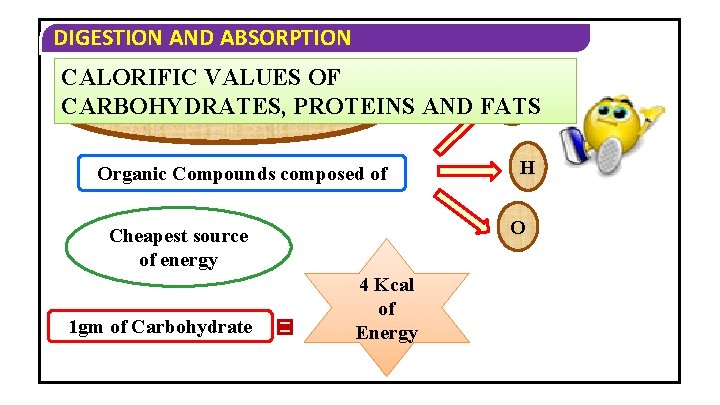
DIGESTION AND ABSORPTION CALORIFIC VALUES OF C CARBOHYDRATES, Carbohydrates PROTEINS AND FATS Organic Compounds composed of O Cheapest source of energy 1 gm of Carbohydrate H 4 Kcal of Energy
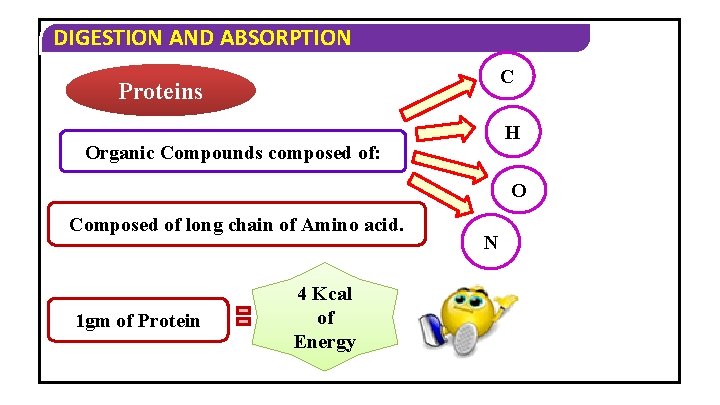
DIGESTION AND ABSORPTION C Proteins H Organic Compounds composed of: O Composed of long chain of Amino acid. 1 gm of Protein 4 Kcal of Energy N
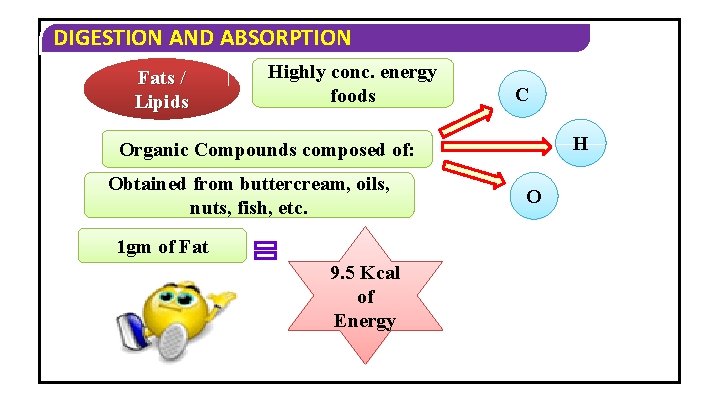
DIGESTION AND ABSORPTION Fats / Lipids Highly conc. energy foods C H Organic Compounds composed of: Obtained from buttercream, oils, nuts, fish, etc. 1 gm of Fat 9. 5 Kcal of Energy O
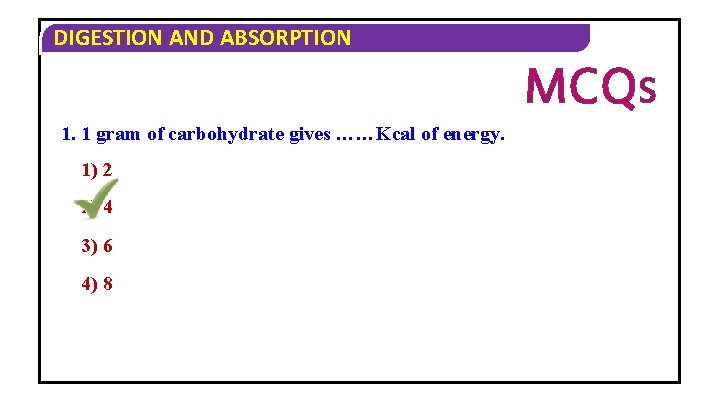
DIGESTION AND ABSORPTION MCQS 1. 1 gram of carbohydrate gives ……Kcal of energy. 1) 2 2) 4 3) 6 4) 8
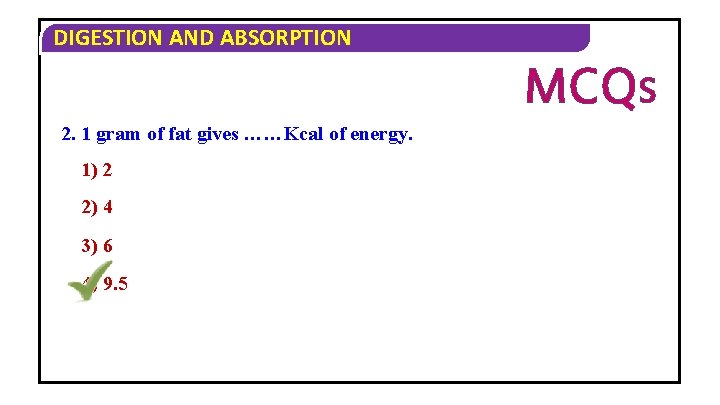
DIGESTION AND ABSORPTION MCQS 2. 1 gram of fat gives ……Kcal of energy. 1) 2 2) 4 3) 6 4) 9. 5
DIGESTION AND ABSORPTION
DIGESTION AND ABSORPTION DISORDERS OF THE DIGESTIVE SYSTEM v The inflammation of the intestinal tract is the most common ailment due to bacterial or viral infections. v The infections are also caused by the parasites of the intestine such as tape worm, round worm, thread worm, hook worm, pin worm.
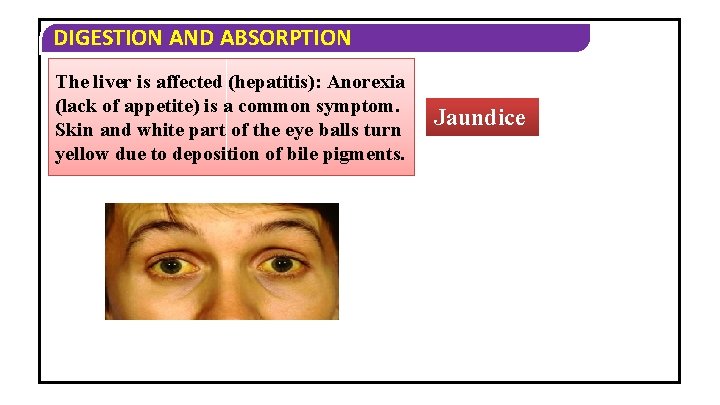
DIGESTION AND ABSORPTION The liver is affected (hepatitis): Anorexia (lack of appetite) is a common symptom. Skin and white part of the eye balls turn yellow due to deposition of bile pigments. Jaundice
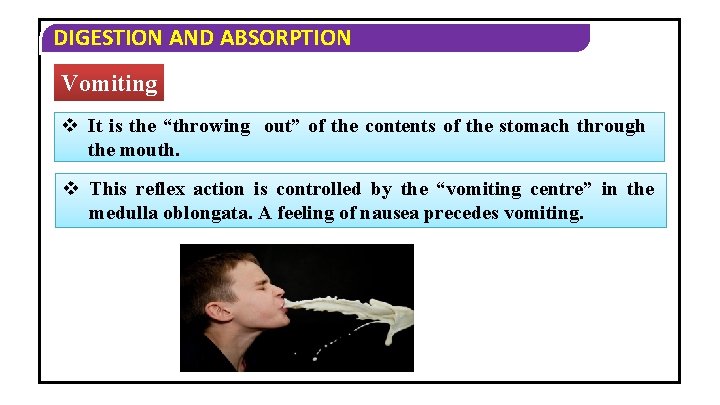
DIGESTION AND ABSORPTION Vomiting v It is the “throwing out” of the contents of the stomach through the mouth. v This reflex action is controlled by the “vomiting centre” in the medulla oblongata. A feeling of nausea precedes vomiting.
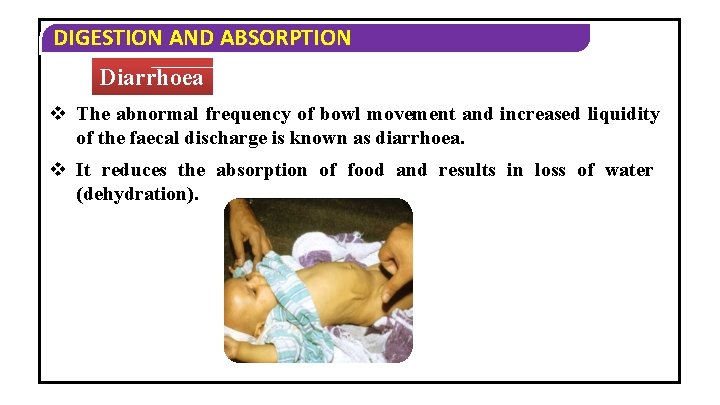
DIGESTION AND ABSORPTION Diarrhoea v The abnormal frequency of bowl movement and increased liquidity of the faecal discharge is known as diarrhoea. v It reduces the absorption of food and results in loss of water (dehydration).
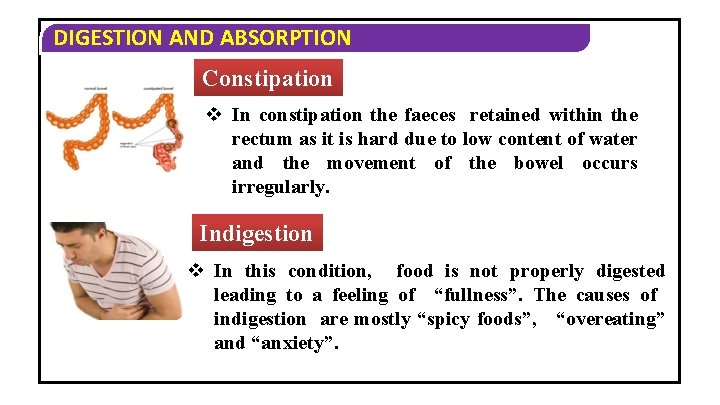
DIGESTION AND ABSORPTION Constipation v In constipation the faeces retained within the rectum as it is hard due to low content of water and the movement of the bowel occurs irregularly. Indigestion v In this condition, food is not properly digested leading to a feeling of “fullness”. The causes of indigestion are mostly “spicy foods”, “overeating” and “anxiety”.
DIGESTION AND ABSORPTION MCQS 1. The abnormal frequency of bowl movement and increased liquidity of the faecal discharge is called …. . 1) Vomiting 2) Constipation 3) Diarrhoea 4) Jaundice
DIGESTION AND ABSORPTION Thank you…
- Slides: 31