
Digestion and Absorption The Human Body From Food
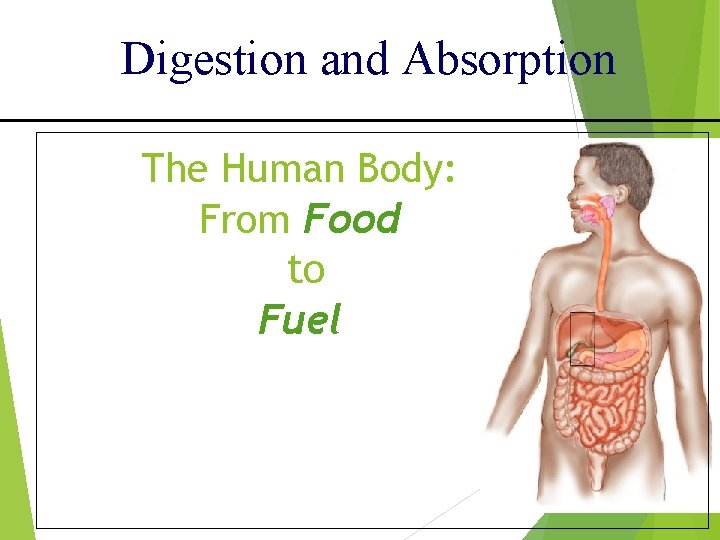
Digestion and Absorption The Human Body: From Food to Fuel
Digestion & Absorption overview
Digestion, Absorption, Transport Digestion Breakdown of food molecules for absorption into circulation Mechanical: Chemical: breaks large food particles to small breaking of covalent bonds by digestive enzymes Absorption Molecules and transport are moved out of digestive tract and into circulation for distribution throughout body
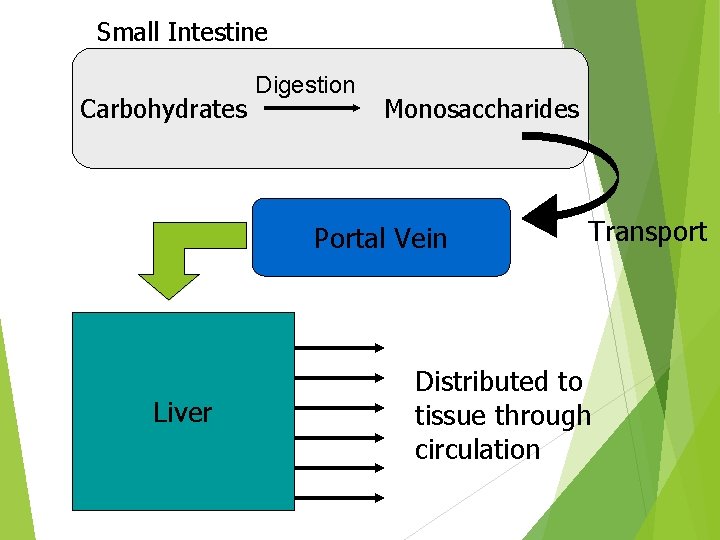
Small Intestine Carbohydrates Digestion Monosaccharides Portal Vein Liver Transport Distributed to tissue through circulation
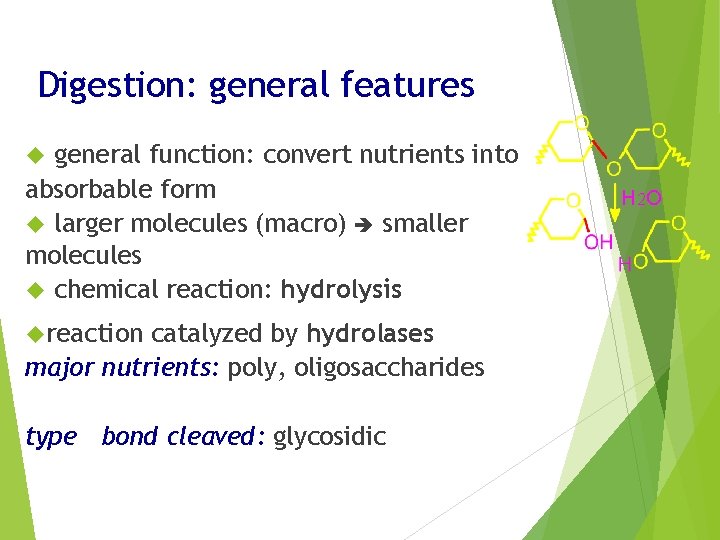
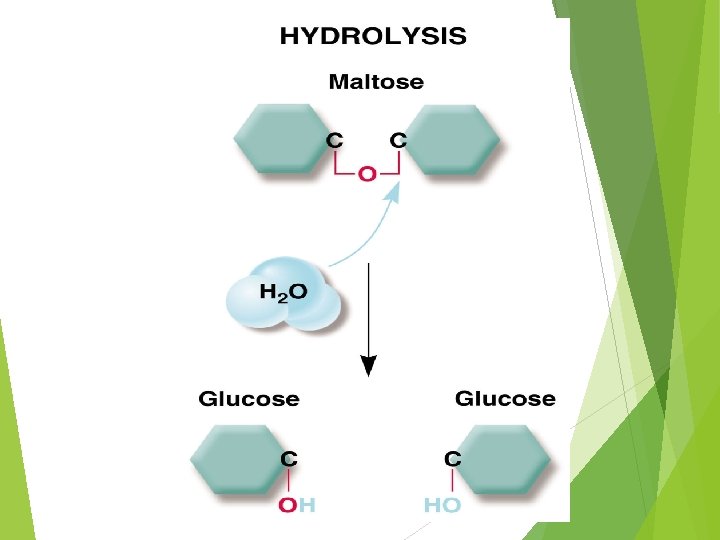
Digestion: general features general function: convert nutrients into absorbable form larger molecules (macro) smaller molecules chemical reaction: hydrolysis reaction catalyzed by hydrolases major nutrients: poly, oligosaccharides type bond cleaved: glycosidic H 2 O
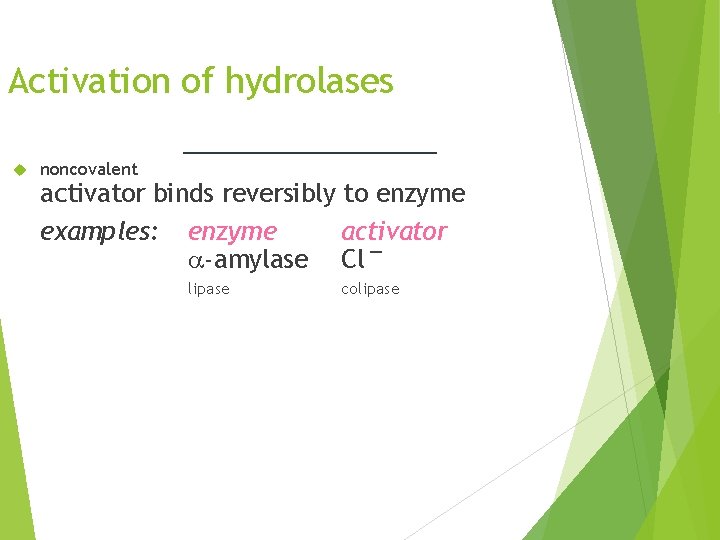
Activation of hydrolases noncovalent activator binds reversibly to enzyme examples: enzyme activator a-amylase Cl – lipase colipase
Digestion in the Stomach Different nutrients leave the stomach at different rates: Carbohydrates first, followed by protein, protein fat, fat and fibrous foods
Digestion & Absorption I. Carbohydrates
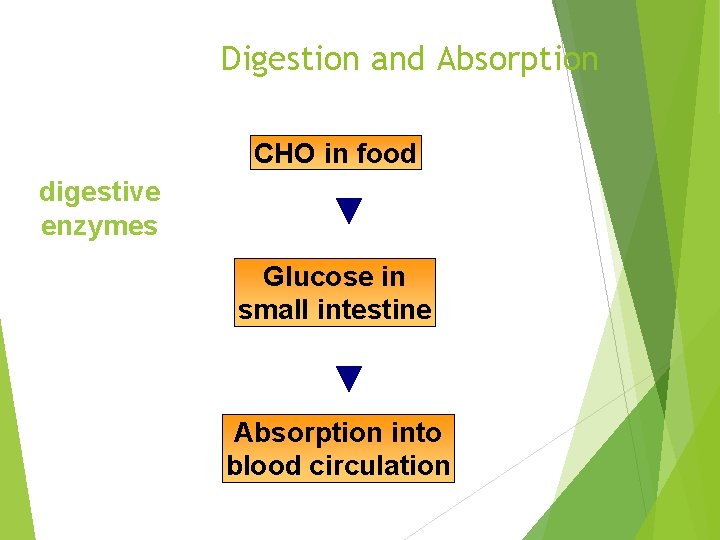
Digestion and Absorption CHO in food digestive enzymes Glucose in small intestine Absorption into blood circulation
Dietary carbohydrates ª ª ª ª The major dietary carbohydrates are starch sucrose lactose. Small amounts of free glucose Fructose glycogen cellulose (indigestible polysaccharides).
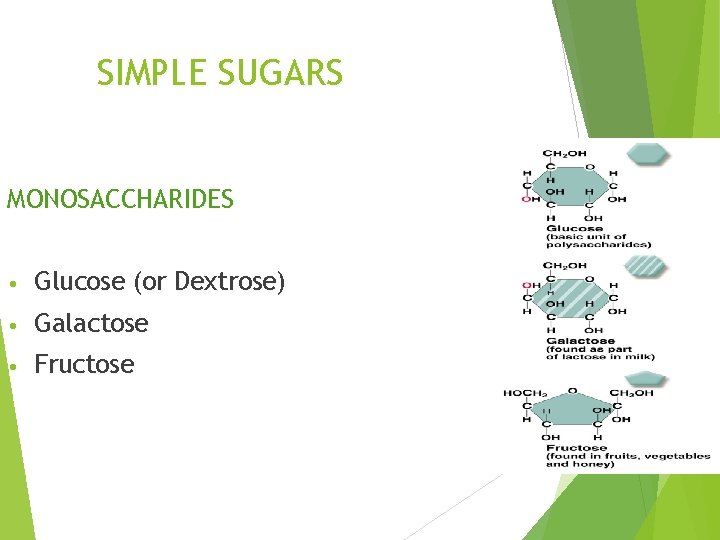
SIMPLE SUGARS MONOSACCHARIDES • Glucose (or Dextrose) • Galactose • Fructose
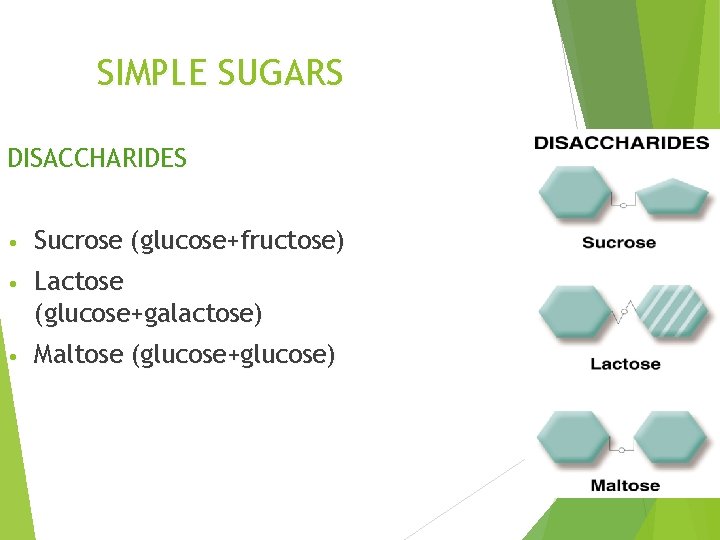
SIMPLE SUGARS DISACCHARIDES • Sucrose (glucose+fructose) • Lactose (glucose+galactose) • Maltose (glucose+glucose)
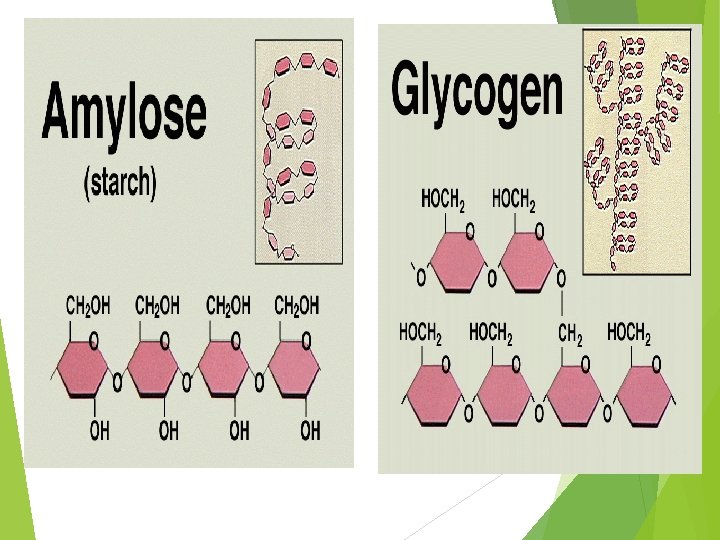
COMPLEX CARBOHYDRATES Polysaccarides: 1. Starch Amylose • Amylopectin • 2. Glycogen – animal form of starch.
COMPLEX CARBOHYDRATES q FIBER • • • (cannot be digested) Cellulose Pectin Gums
Digestion of carbohydrates
Digestion of Carbohydrates Monosaccharides Do not need hydrolysis before absorption Di- and poly-saccharides Relatively large molecules Must be hydrolyzed prior to absorption Hydrolyzed to monosaccharides Only monosaccharides can be absorbed
1. in the mouth • Salivary α-amylase: cleaves starch and glycogen • by breaking in random the α-1, 4 linkages between glucose residues within the chains • leading to α-dextrins
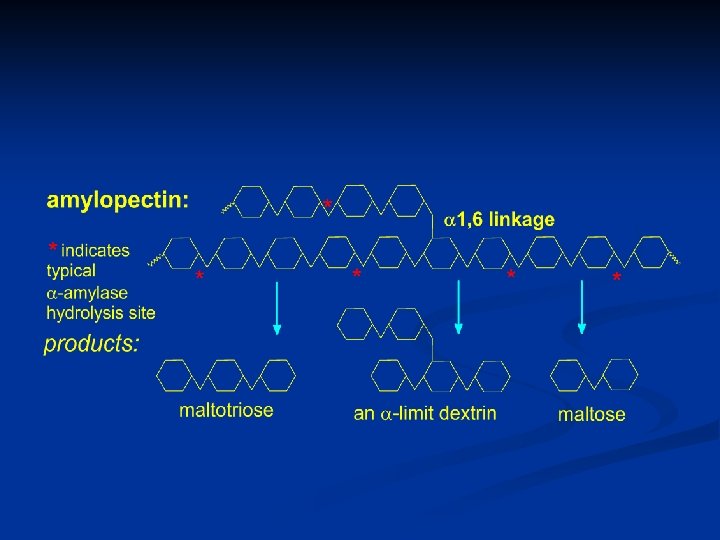
2. in the intestine A- Digestion by pancreatic enzymes: Pancreatic α-amylase, like the salivary enzyme • Cleaves internal α 1 -4 linkages between glucose residues within glucose polymers • Gives rise to maltose, maltose maltotriose and small oligosaccharides containing α-1 -4 and α-1 -6 linkages (α-limit dextrins). dextrins
2. in the intestine B- Digestion by intestinal enzymes Brush borders intestinal enzymes are: q Oligo 1, 6 glucosidase (α-dextrinase = isomaltase) releases glucose residues from branched oligosaccharides.
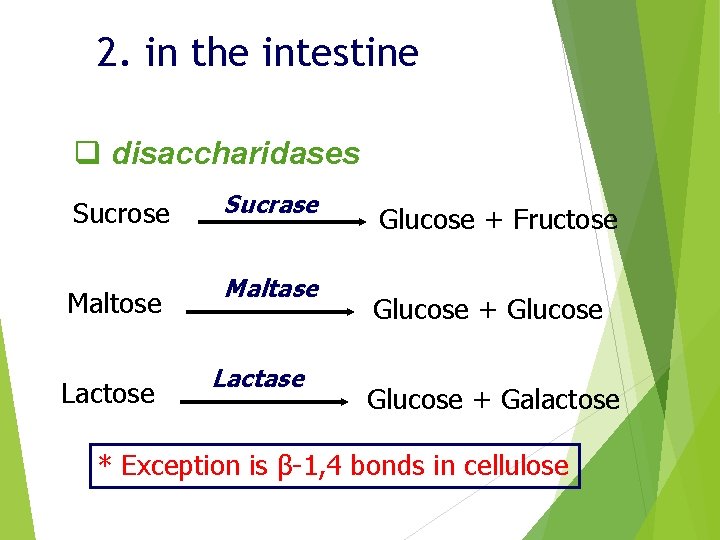
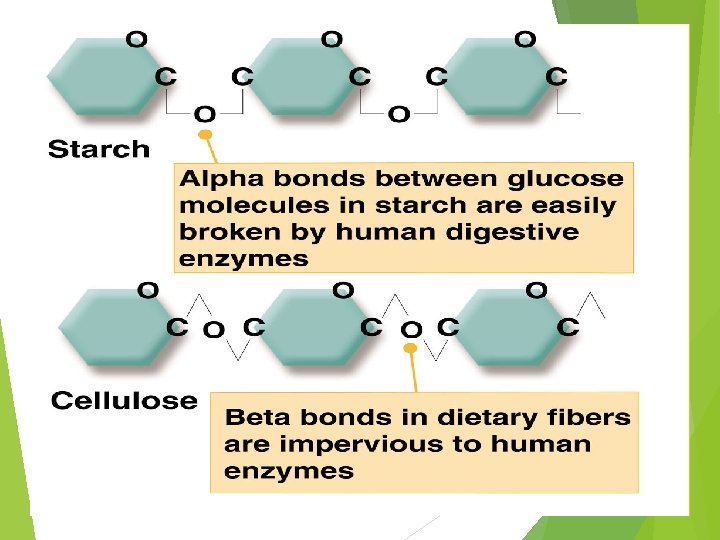
2. in the intestine q disaccharidases Sucrose Maltose Lactose Sucrase Maltase Lactase Glucose + Fructose Glucose + Galactose * Exception is β-1, 4 bonds in cellulose
Indigestible polysaccharides Cellulose Consists β 1, 4) 1, 4 of glucose units linked by Represents the part of the dietary fiber that passes through the intestine into the faeces.
N. B. : α-amylases of saliva and pancreas can not hydrolyze: 1. α 1, 6 linkages. 2. terminal α 1, 4 linkages. 3. the α 1, 4 linkages next to branching points.
The end product of carbohydrate digestion is monosaccharides • Glucose • fructose • galactose
Abnormal degradation of disaccharides Lactose intolerance
Abnormal degradation of disaccharides. Lactose intolerance It is due to lactase deficiency. This may be due to: • genetic defect. • acquired due to: - injuries to the mucosa (intestinal disease or drugs) - physiological decline with age.
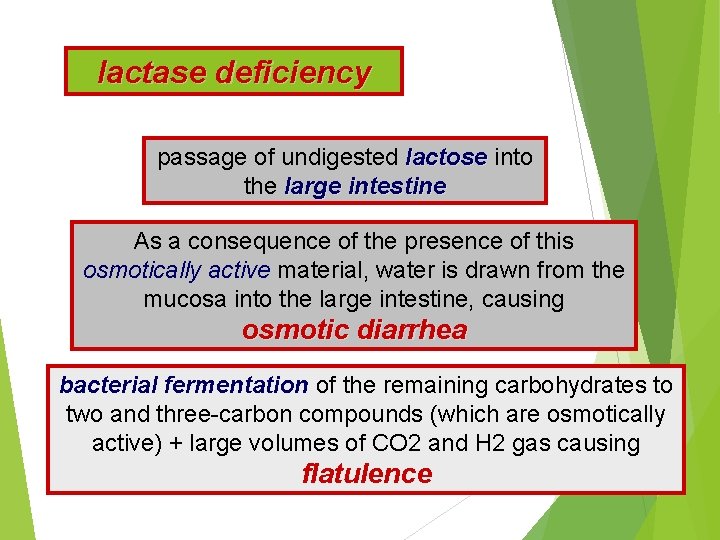
lactase deficiency passage of undigested lactose into the large intestine As a consequence of the presence of this osmotically active material, water is drawn from the mucosa into the large intestine, causing osmotic diarrhea bacterial fermentation of the remaining carbohydrates to two and three-carbon compounds (which are osmotically active) + large volumes of CO 2 and H 2 gas causing flatulence
Absorption of carbohydrates
Absorption of monosaccharides The duodenum and upper jejunum absorb the bulk of the dietary sugars. Insulin is not required for the uptake of glucose by the intestinal cells. Absorption is carrier mediated process: From the lumen to enterocyte: there are two types of transport systems:
1. Na+-dependent carrier protein (Secondary active transport) There is a certain protein carrier (transport protein) at the brush border requires a concurrent uptake of sodium ions and D-glucose or D-galactose The energy for their transport is provided indirectly, by the active transport of Na+ out of the cell (Na+- K+ ATPase), this maintains a concentration gradient across the luminal border of the cell, so more Na+ and consequently more glucose enter.
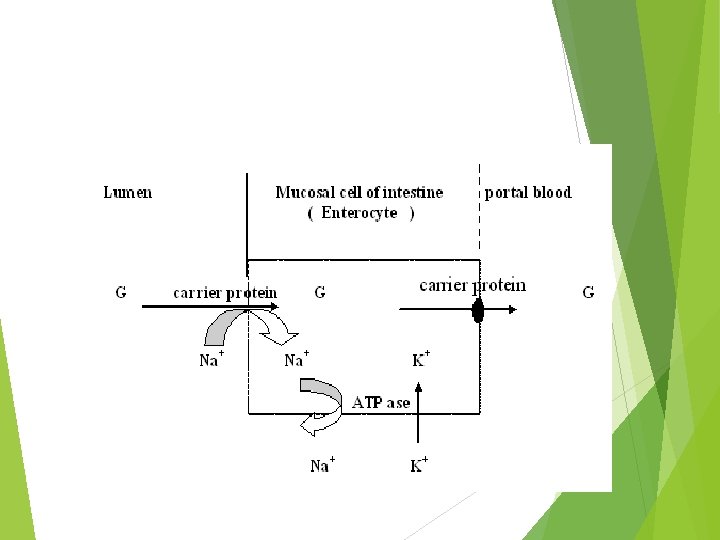
2 - Na+-independent carrier protein (facilitated- diffusion) for D-fructose Where carrier proteins move them in the direction of their concentration gradients and no energy is required. From the contraluminal plasma membrane a Na+ - independent transport system (facilitated diffusion) diffusion mediates exit of monosaccharides from epithelial cells with a concentration gradient.
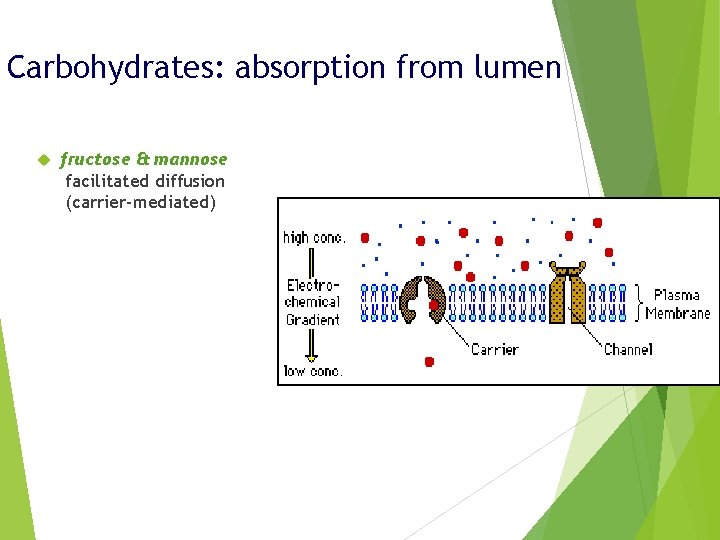
Carbohydrates: absorption from lumen fructose & mannose facilitated diffusion (carrier-mediated)
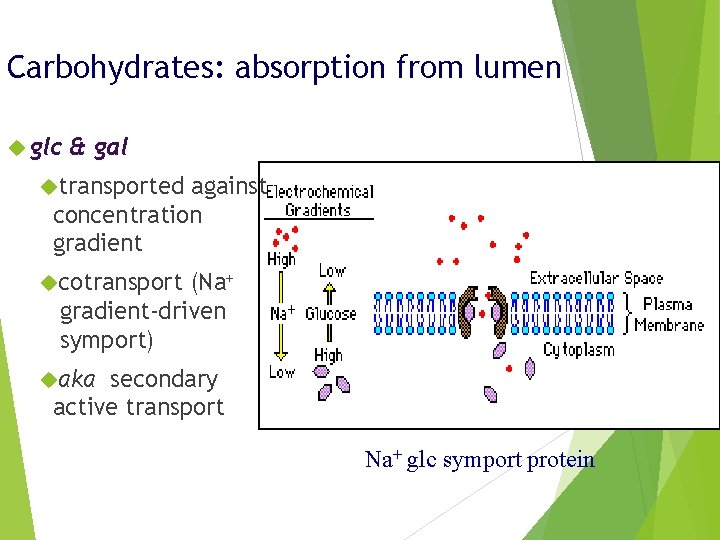
Carbohydrates: absorption from lumen glc & gal transported against concentration gradient cotransport (Na+ gradient-driven symport) aka secondary active transport Na+ glc symport protein
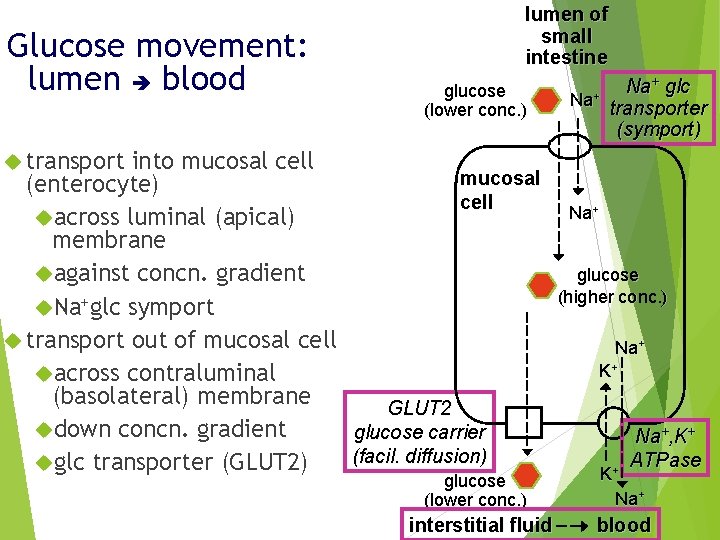
Glucose movement: lumen blood transport into mucosal cell (enterocyte) across luminal (apical) membrane against concn. gradient Na+glc symport transport out of mucosal cell across contraluminal (basolateral) membrane down concn. gradient glc transporter (GLUT 2) lumen of small intestine glucose (lower conc. ) mucosal cell + glc Na Na+ transporter (symport) Na+ glucose (higher conc. ) Na+ K+ GLUT 2 glucose carrier (facil. diffusion) Na+, K+ ATPase glucose (lower conc. ) K+ Na+ interstitial fluid blood
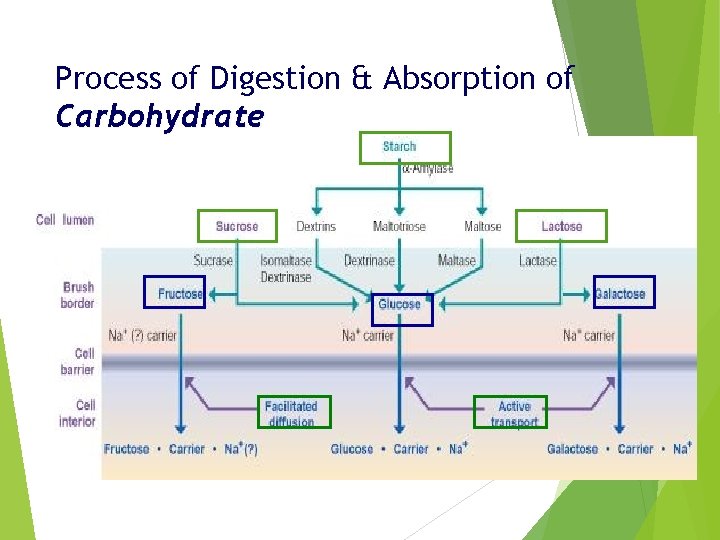
Process of Digestion & Absorption of Carbohydrate
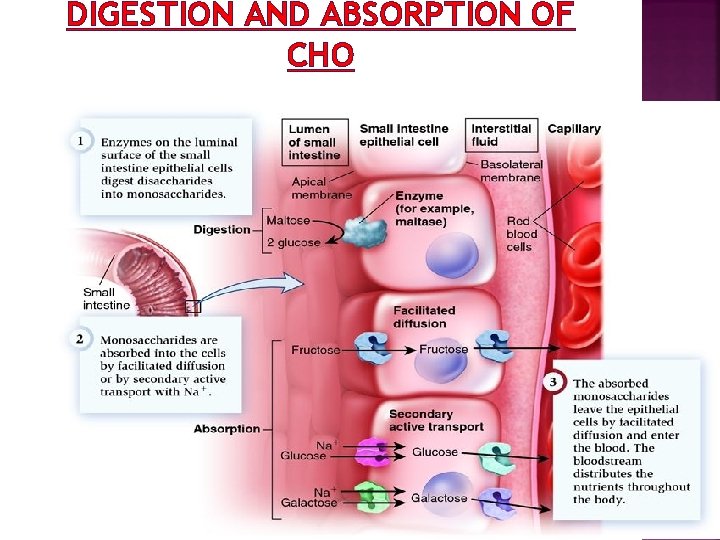
DIGESTION AND ABSORPTION OF CHO
- Slides: 41