
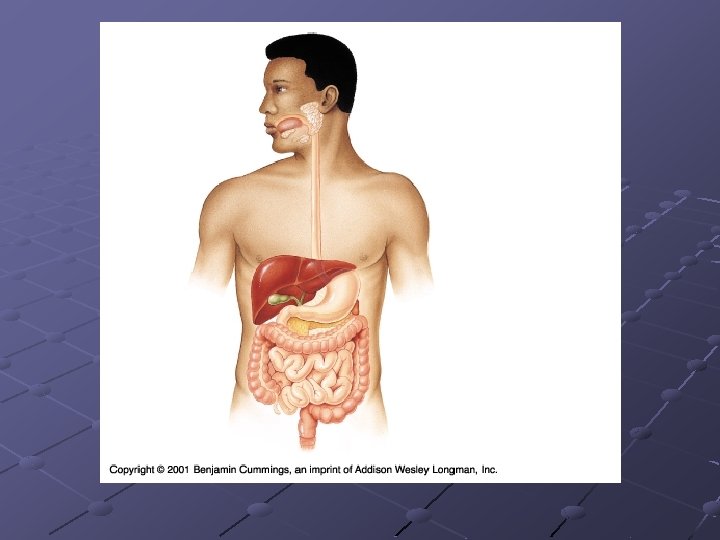
Digestion Anatomy of digestive system review 4 major
- Slides: 56
Digestion Anatomy of digestive system (review!) 4 major processes of digestive system: Gastrointestinal System 1. Motility 2. Secretion 3. Digestion 4. Absorption
Motility 2 purposes: Forward movement of food Mechanical mixing GI smooth muscles contract spontaneously Pacemaker cells, (Interstitial Cells of Cajal), connected by gap junctions, generate slow wave potentials AP’s spread throughout longitudinal muscles (gap junctions) wave of contraction n Like cardiac muscle, Ca 2+ can regulate contraction strength 1. 2. 3. 4. Motility Secretion Digestion Absorption
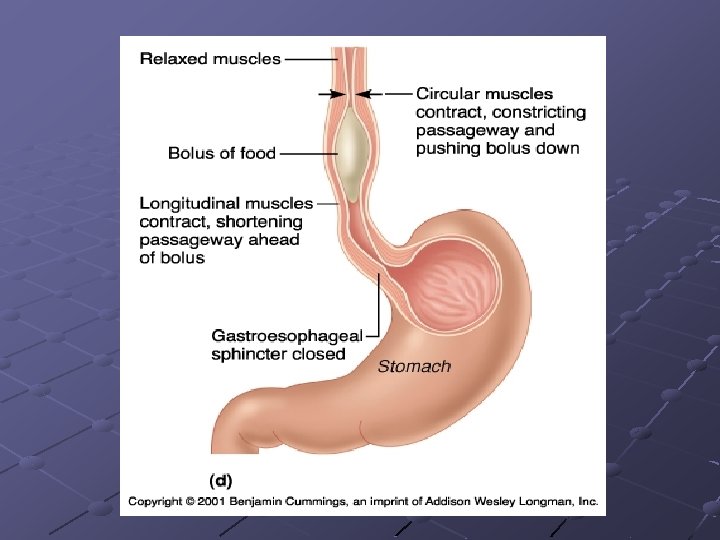
Different Patterns of Contraction Tonic Contractions Sustained contraction, usually in the stomach Phasic Contractions Peristaltic contractions n n progressive waves moving along segments of longitudinal layer forward propulsion circular layer contracts proximal to bolus Especially esophagus Segmental contractions n n alternate contraction & relaxation lead to mixing A side effect of narcotics
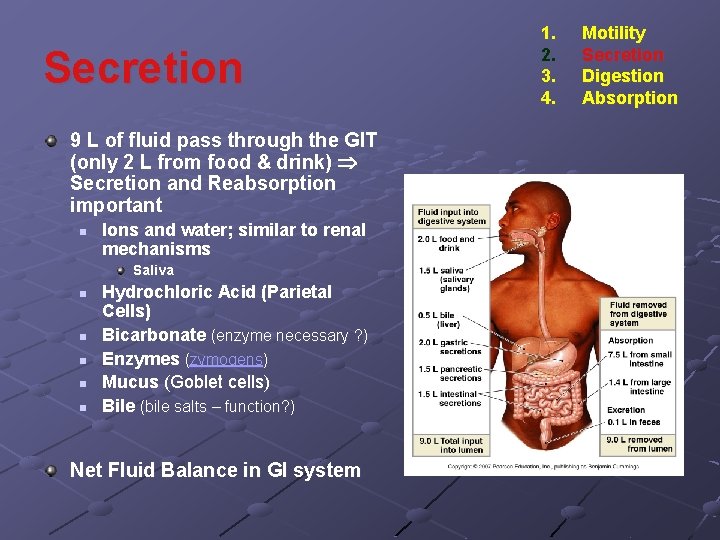
Secretion 9 L of fluid pass through the GIT (only 2 L from food & drink) Secretion and Reabsorption important n Ions and water; similar to renal mechanisms Saliva n n n Hydrochloric Acid (Parietal Cells) Bicarbonate (enzyme necessary ? ) Enzymes (zymogens) Mucus (Goblet cells) Bile (bile salts – function? ) Net Fluid Balance in GI system 1. 2. 3. 4. Motility Secretion Digestion Absorption
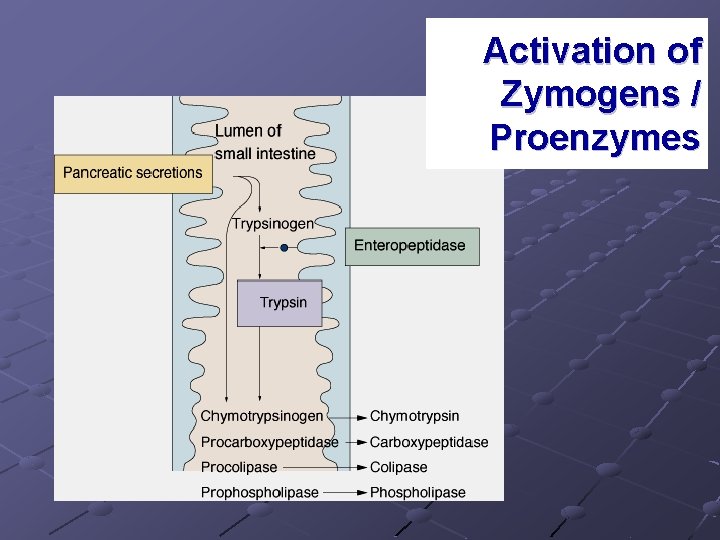
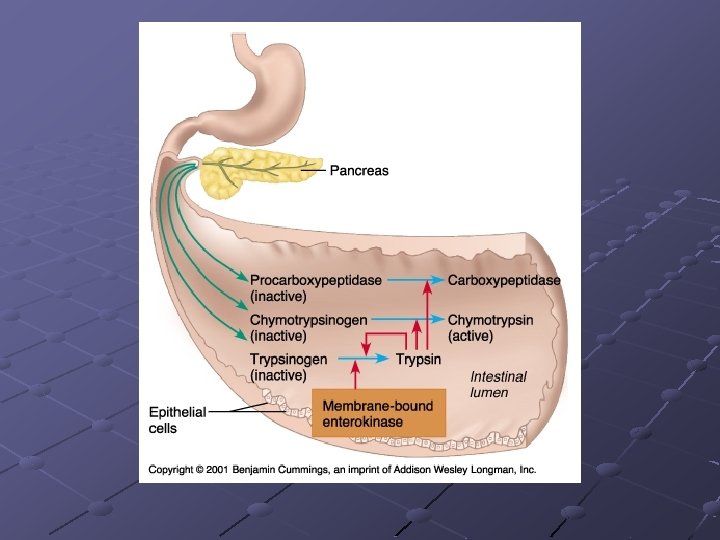
Activation of Zymogens / Proenzymes
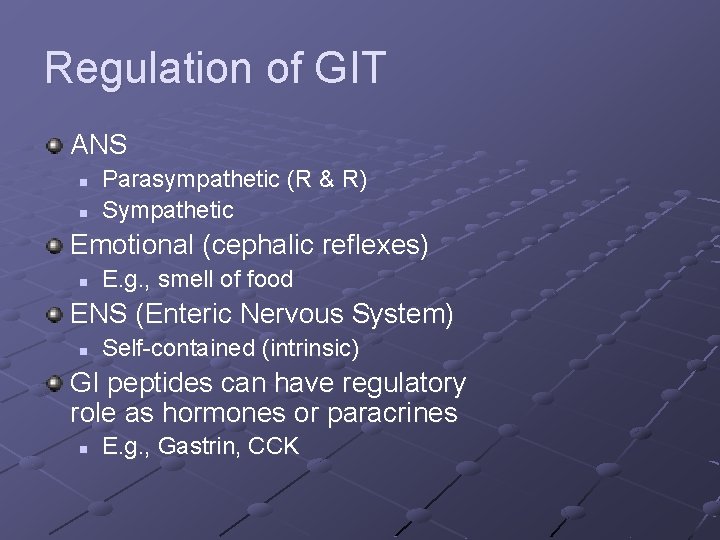
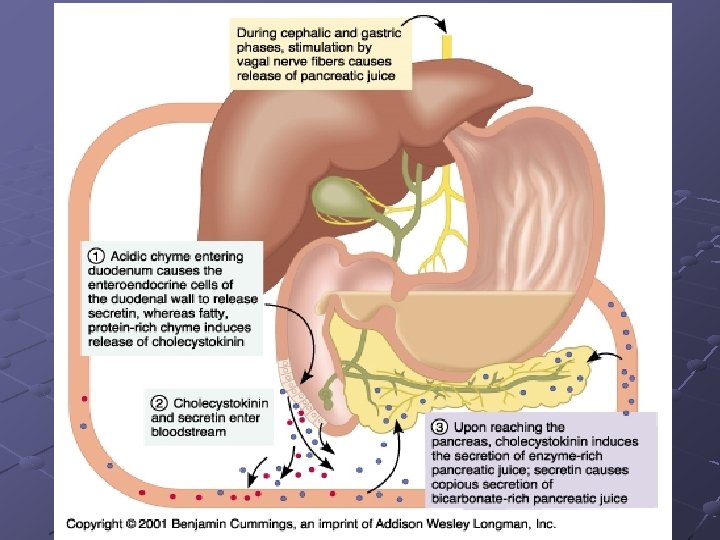
Regulation of GIT ANS n n Parasympathetic (R & R) Sympathetic Emotional (cephalic reflexes) n E. g. , smell of food ENS (Enteric Nervous System) n Self-contained (intrinsic) GI peptides can have regulatory role as hormones or paracrines n E. g. , Gastrin, CCK
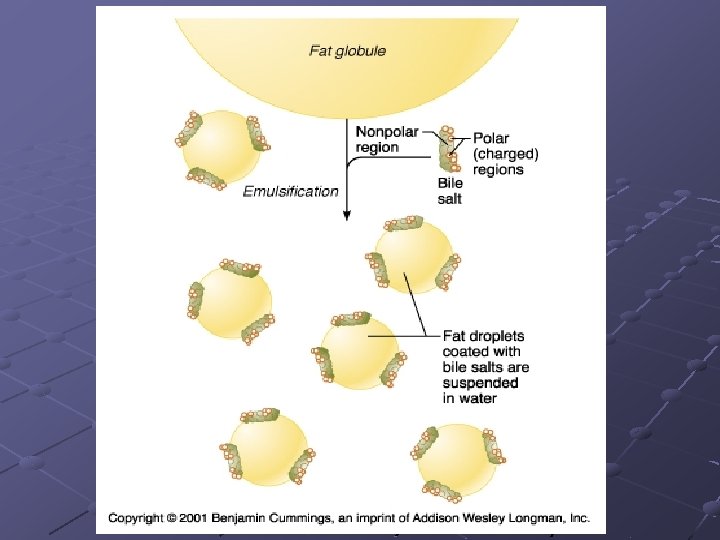
Digestion Overview Mechanical breakdown and mixing aid enzymatic breakdown n Chewing n Tonic contractions, esp. stomach Enzymatic breakdown converts macromolecules into absorbable units Bile emulsifies fats Optimal p. H of enzymes indicates location of activity 1. 2. 3. 4. Motility Secretion Digestion Absorption
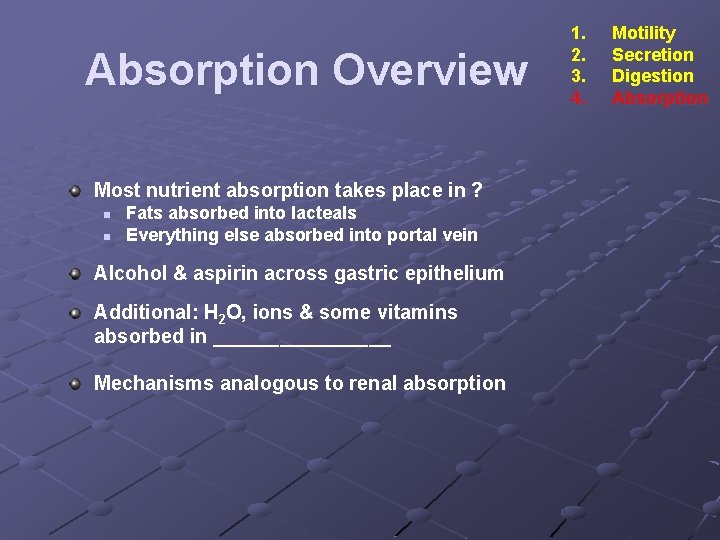
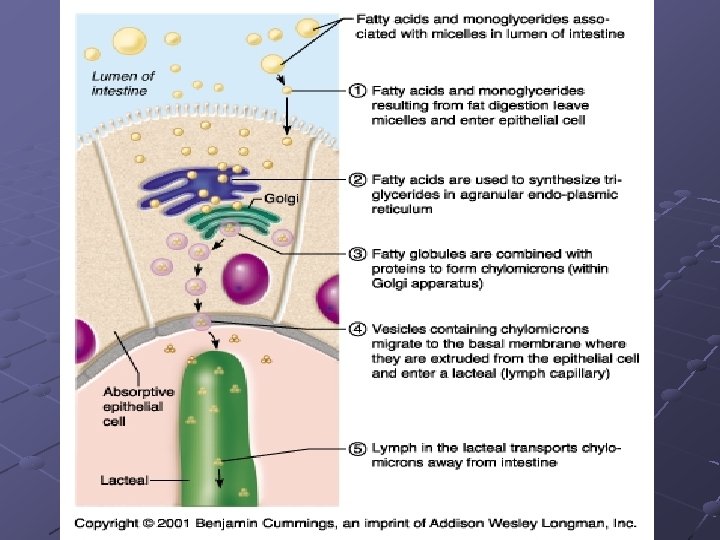
Absorption Overview Most nutrient absorption takes place in ? n n Fats absorbed into lacteals Everything else absorbed into portal vein Alcohol & aspirin across gastric epithelium Additional: H 2 O, ions & some vitamins absorbed in ________ Mechanisms analogous to renal absorption 1. 2. 3. 4. Motility Secretion Digestion Absorption
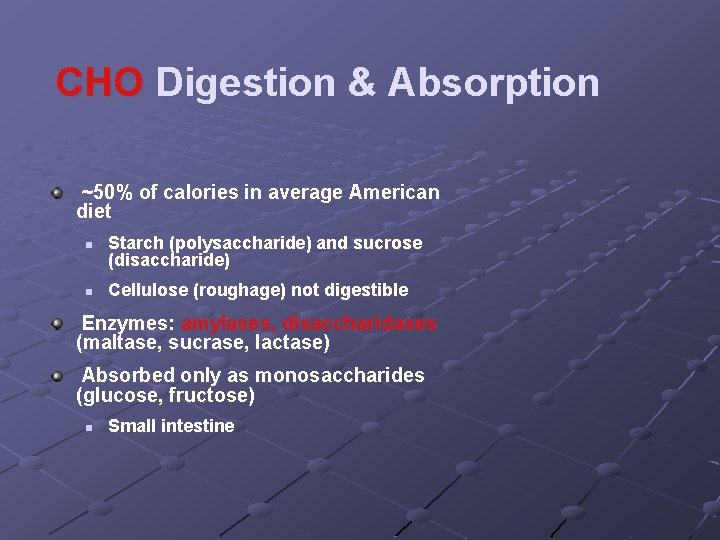
CHO Digestion & Absorption ~50% of calories in average American diet n n Starch (polysaccharide) and sucrose (disaccharide) Cellulose (roughage) not digestible Enzymes: amylases, disaccharidases (maltase, sucrase, lactase) Absorbed only as monosaccharides (glucose, fructose) n Small intestine
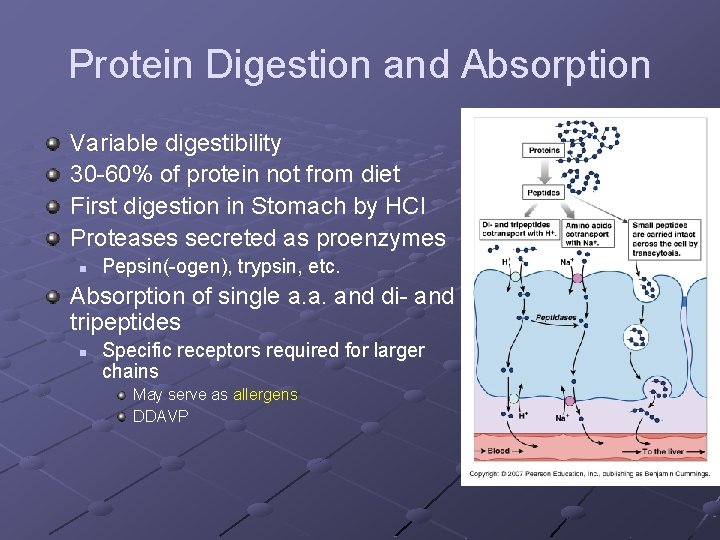
Protein Digestion and Absorption Variable digestibility 30 -60% of protein not from diet First digestion in Stomach by HCl Proteases secreted as proenzymes n Pepsin(-ogen), trypsin, etc. Absorption of single a. a. and di- and tripeptides n Specific receptors required for larger chains May serve as allergens DDAVP
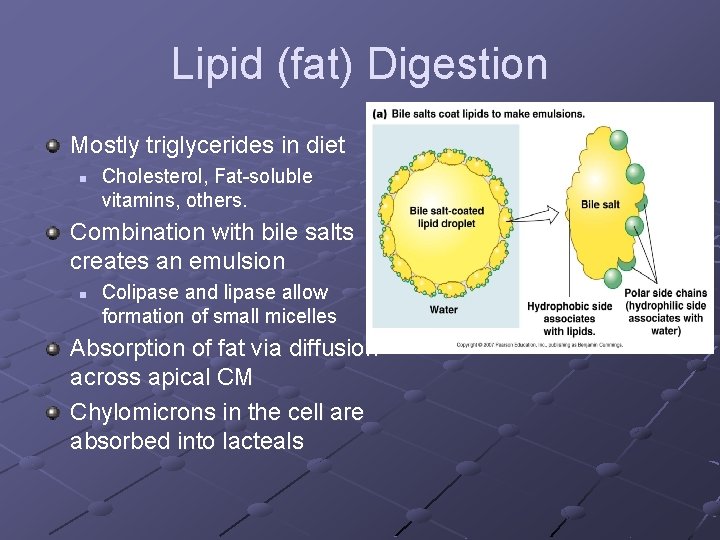
Lipid (fat) Digestion Mostly triglycerides in diet n Cholesterol, Fat-soluble vitamins, others. Combination with bile salts creates an emulsion n Colipase and lipase allow formation of small micelles Absorption of fat via diffusion across apical CM Chylomicrons in the cell are absorbed into lacteals
Other Stuff Water soluble vitamins— mediated transport Fat soluble vitamins via absorption Water, Ions and Minerals n Various locations and methods, e. g, diffusion, carrier proteins Nucleic Acids
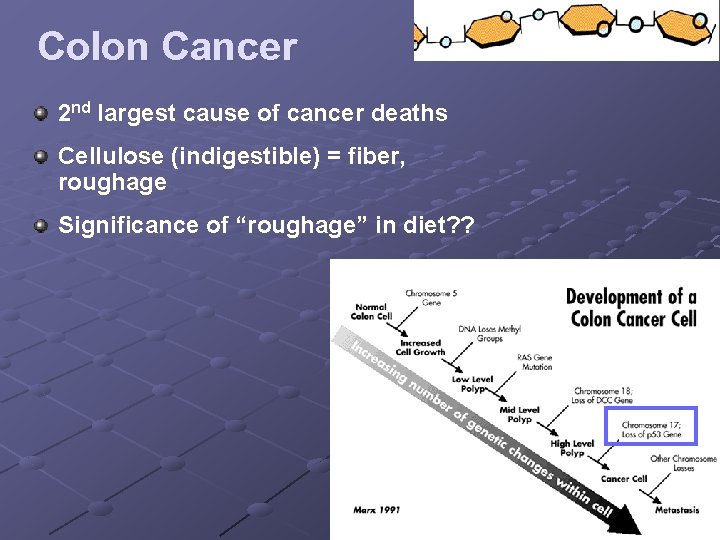
Colon Cancer 2 nd largest cause of cancer deaths Cellulose (indigestible) = fiber, roughage Significance of “roughage” in diet? ?
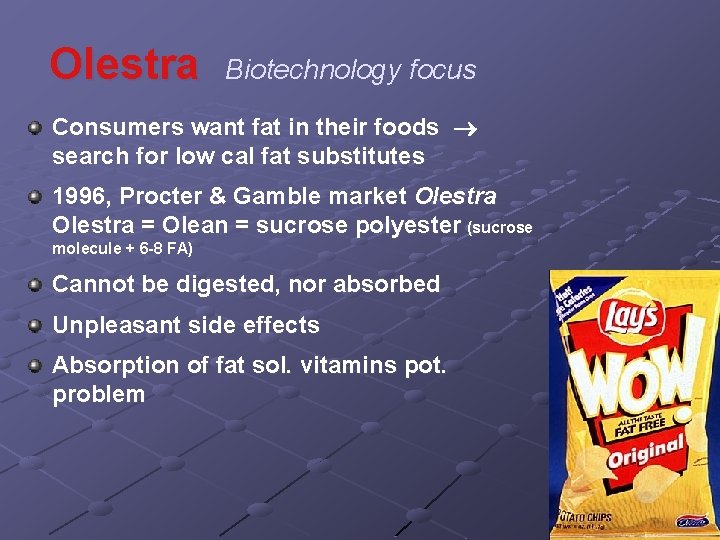
Olestra Biotechnology focus Consumers want fat in their foods search for low cal fat substitutes 1996, Procter & Gamble market Olestra = Olean = sucrose polyester (sucrose molecule + 6 -8 FA) Cannot be digested, nor absorbed Unpleasant side effects Absorption of fat sol. vitamins pot. problem
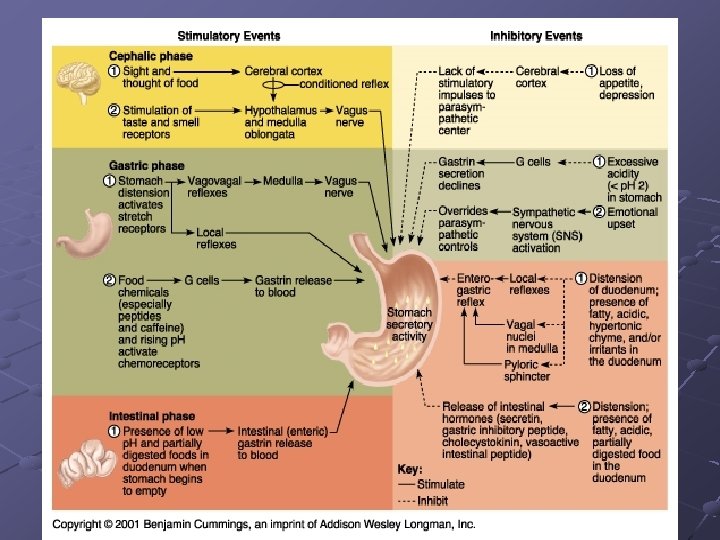
Phases of Digestion/Absorption 1. 2. 3. 4. Cephalic Gastric Intestinal Defecation
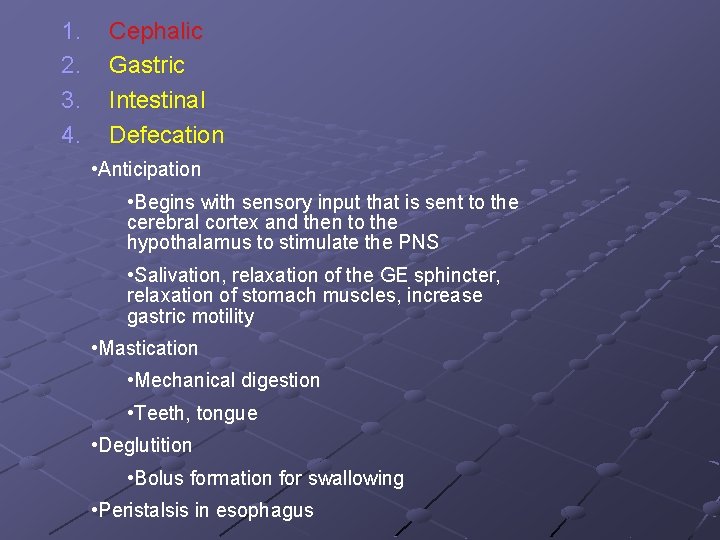
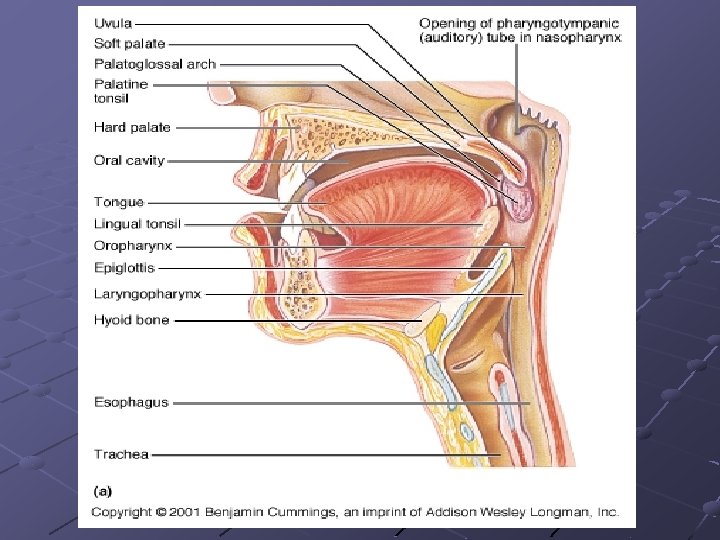
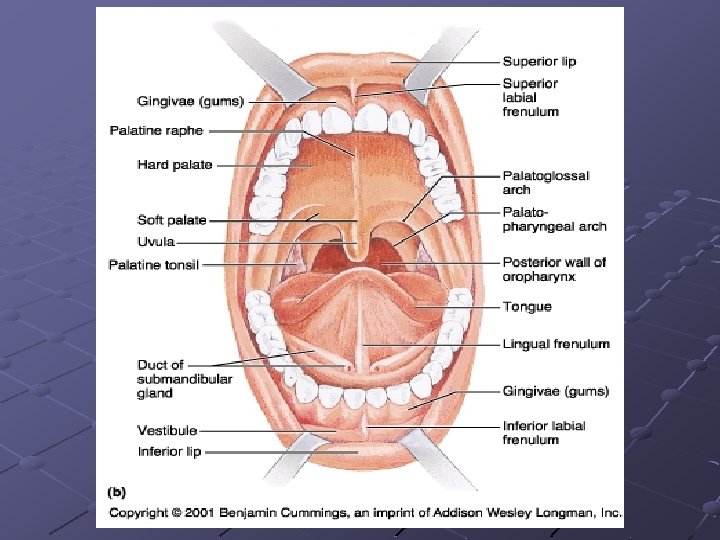
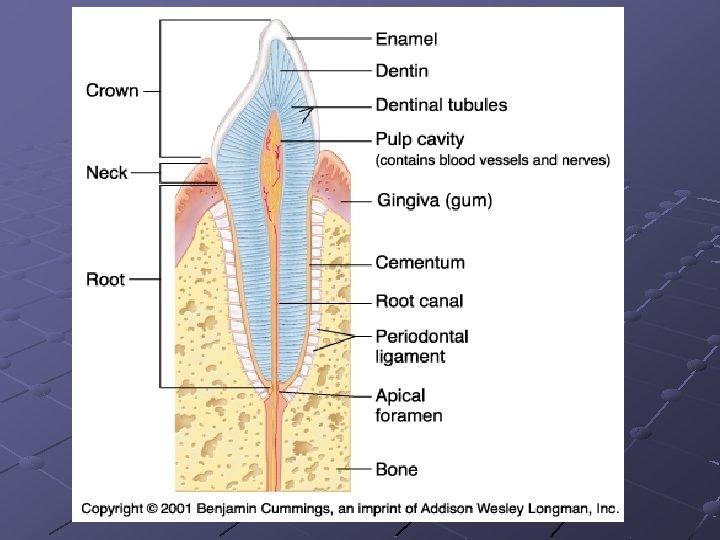
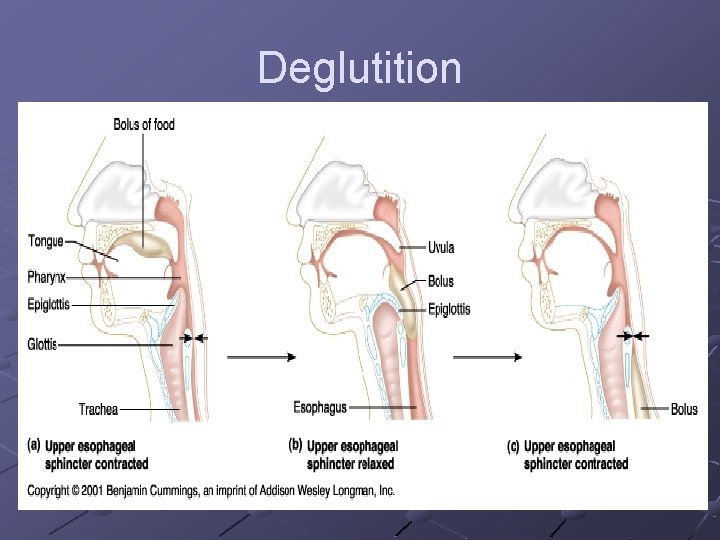
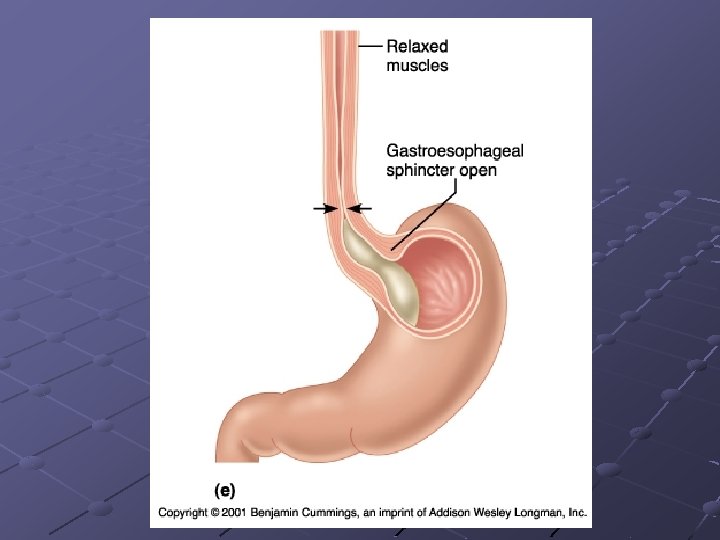
1. 2. 3. 4. Cephalic Gastric Intestinal Defecation • Anticipation • Begins with sensory input that is sent to the cerebral cortex and then to the hypothalamus to stimulate the PNS • Salivation, relaxation of the GE sphincter, relaxation of stomach muscles, increase gastric motility • Mastication • Mechanical digestion • Teeth, tongue • Deglutition • Bolus formation for swallowing • Peristalsis in esophagus
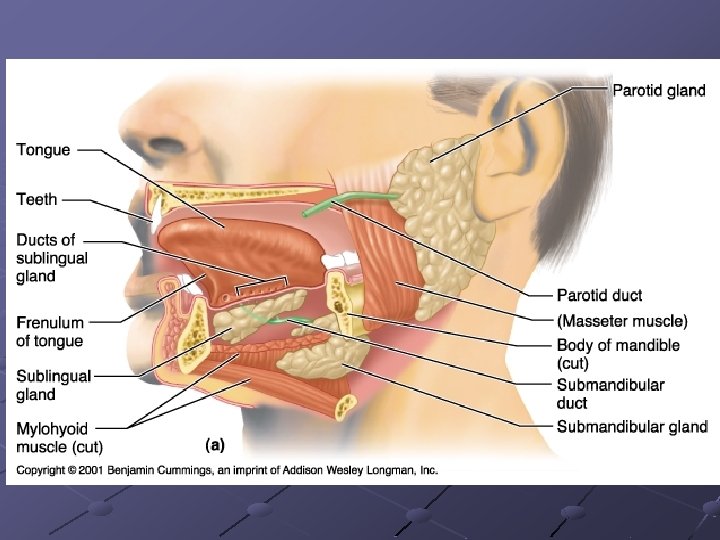
Salivary Glands Parotid Glands n Secretes Mucous Allows for smooth swallowing of bolus Mumps Sublingual and Submandibular glands secrete Amylase n Breaks down complex carbohydrates into simple carbohydrates
Deglutition
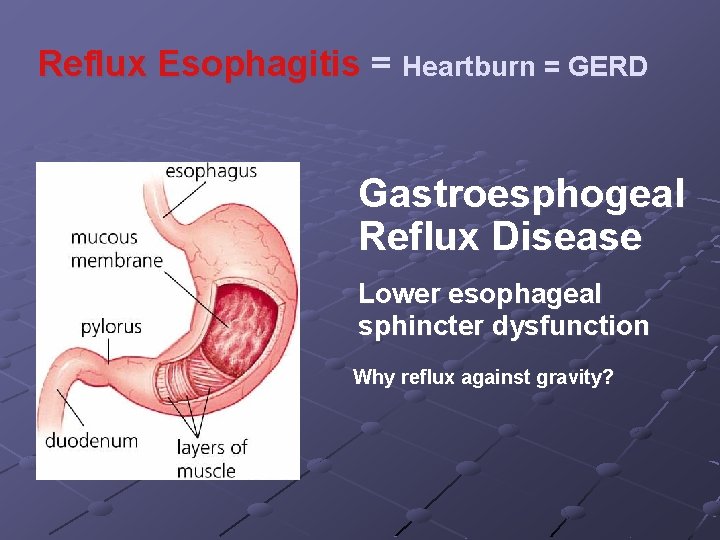
Reflux Esophagitis = Heartburn = GERD Gastroesphogeal Reflux Disease Lower esophageal sphincter dysfunction Why reflux against gravity?
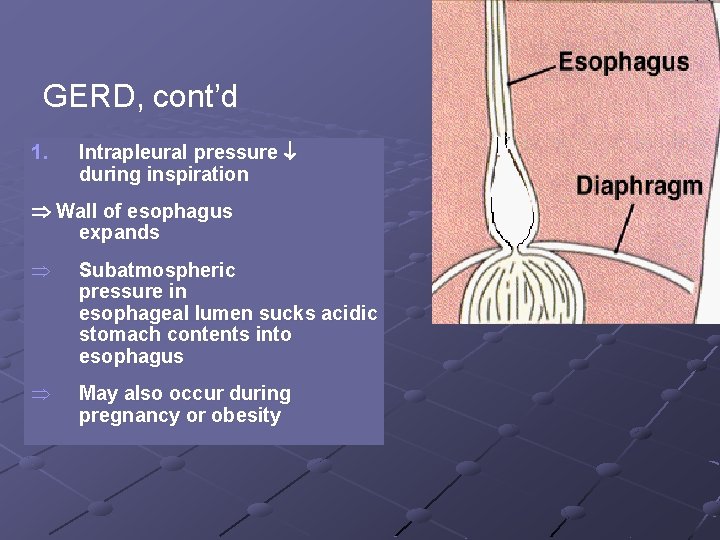
GERD, cont’d 1. Intrapleural pressure during inspiration Wall of esophagus expands Þ Subatmospheric pressure in esophageal lumen sucks acidic stomach contents into esophagus Þ May also occur during pregnancy or obesity
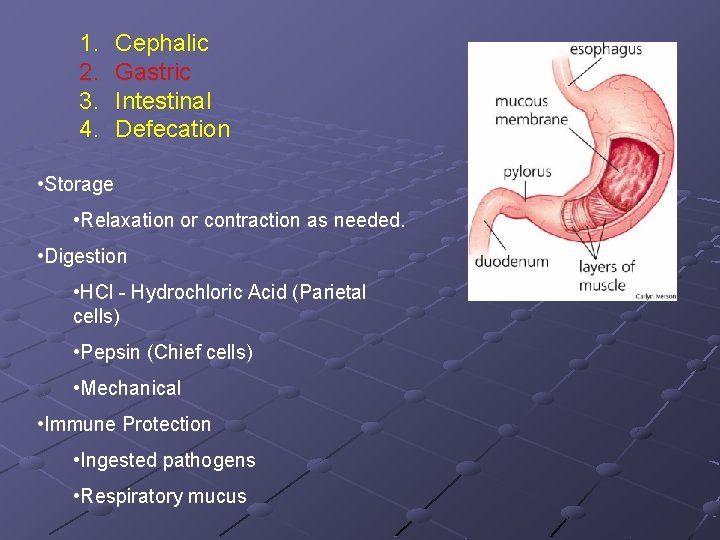
1. 2. 3. 4. Cephalic Gastric Intestinal Defecation • Storage • Relaxation or contraction as needed. • Digestion • HCl - Hydrochloric Acid (Parietal cells) • Pepsin (Chief cells) • Mechanical • Immune Protection • Ingested pathogens • Respiratory mucus
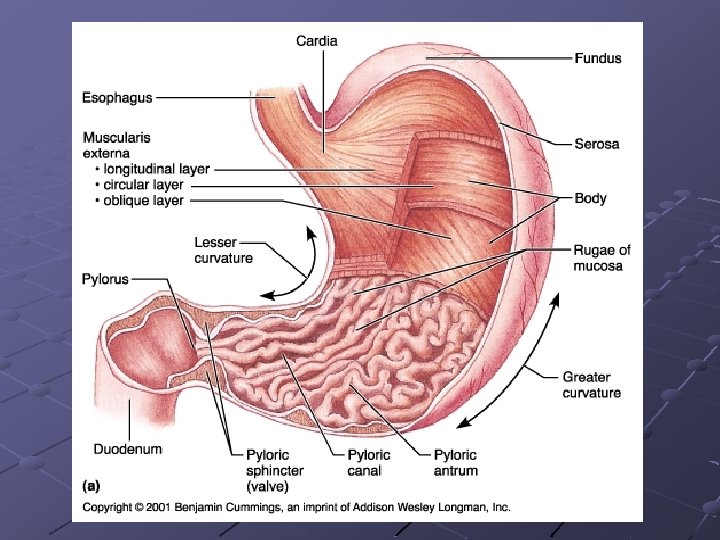
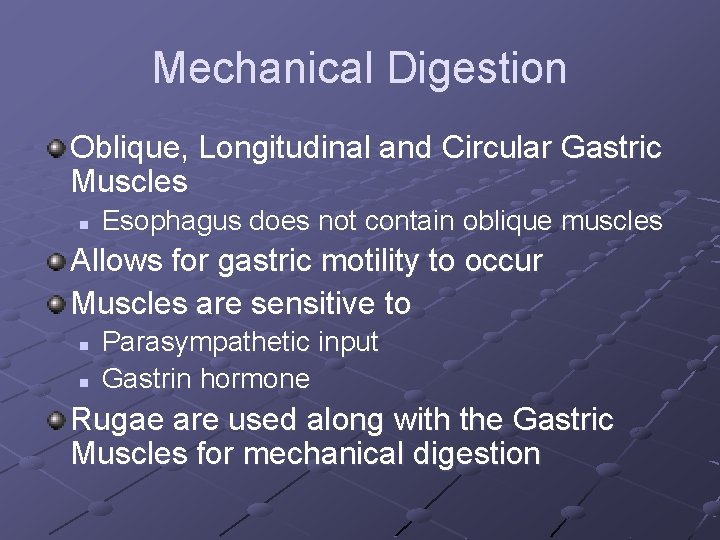
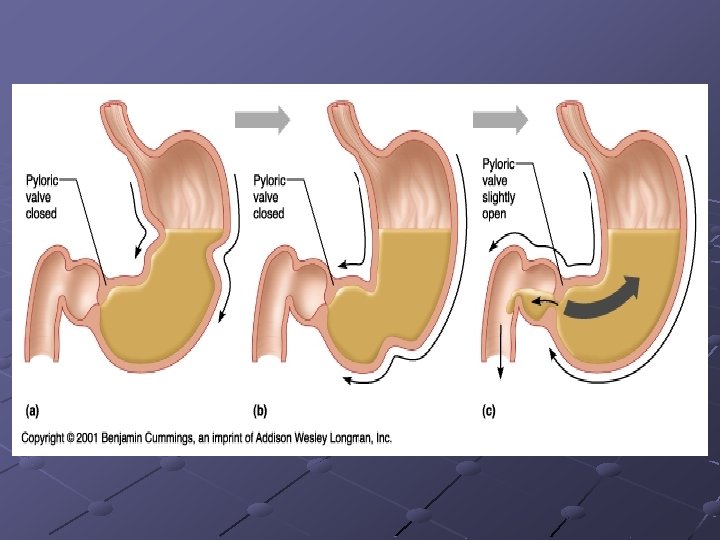
Mechanical Digestion Oblique, Longitudinal and Circular Gastric Muscles n Esophagus does not contain oblique muscles Allows for gastric motility to occur Muscles are sensitive to n n Parasympathetic input Gastrin hormone Rugae are used along with the Gastric Muscles for mechanical digestion
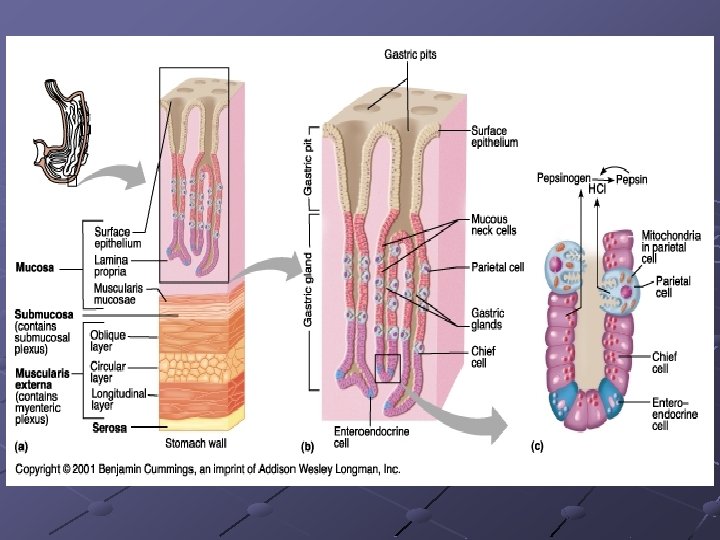
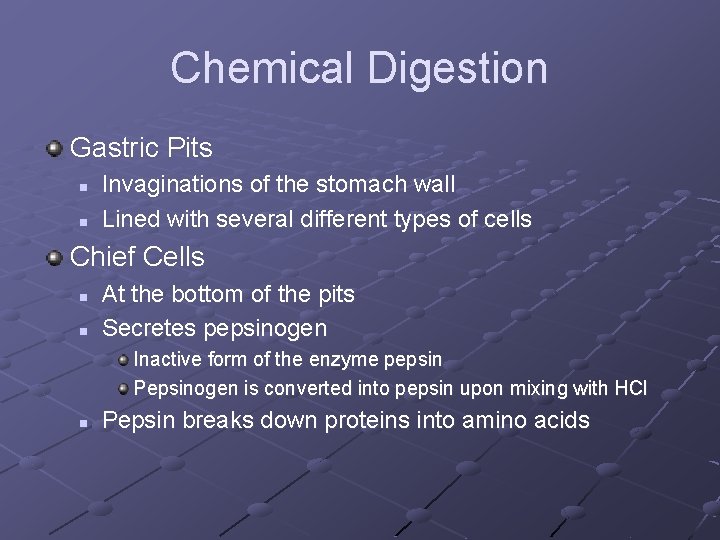
Chemical Digestion Gastric Pits n n Invaginations of the stomach wall Lined with several different types of cells Chief Cells n n At the bottom of the pits Secretes pepsinogen Inactive form of the enzyme pepsin Pepsinogen is converted into pepsin upon mixing with HCl n Pepsin breaks down proteins into amino acids
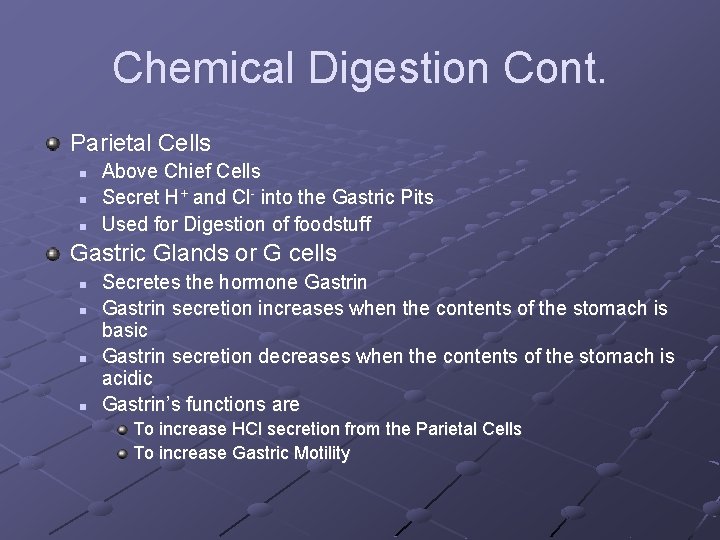
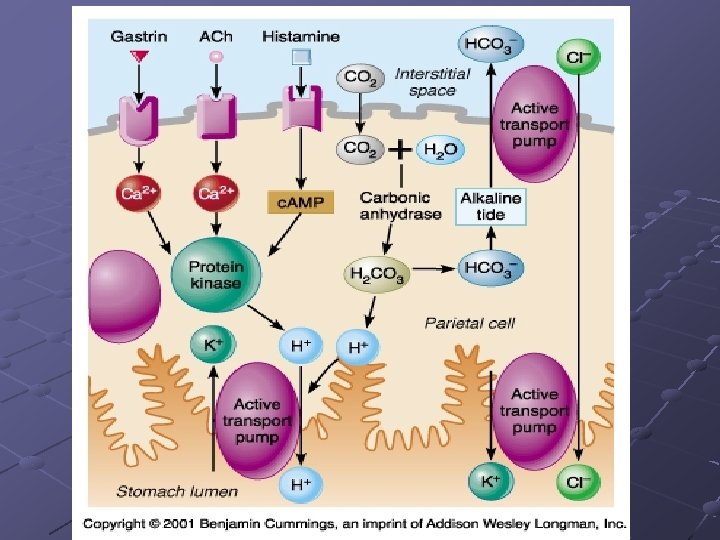
Chemical Digestion Cont. Parietal Cells n n n Above Chief Cells Secret H+ and Cl- into the Gastric Pits Used for Digestion of foodstuff Gastric Glands or G cells n n Secretes the hormone Gastrin secretion increases when the contents of the stomach is basic Gastrin secretion decreases when the contents of the stomach is acidic Gastrin’s functions are To increase HCl secretion from the Parietal Cells To increase Gastric Motility
Mucous Cells Secrete Mucous to coat the lumen of the stomach n Prevents ulceration H. Pylori also responsible for ulcers
Question 18 year old White Female Adult enters into the emergency room. She has been vomiting for over 72 hours. You observe she is also hypoventilating. How is the vomiting and hypoventilation tied together? List two of the possible problems are that your patient is experiencing. HINT: Don’t forget the Parietal Cell
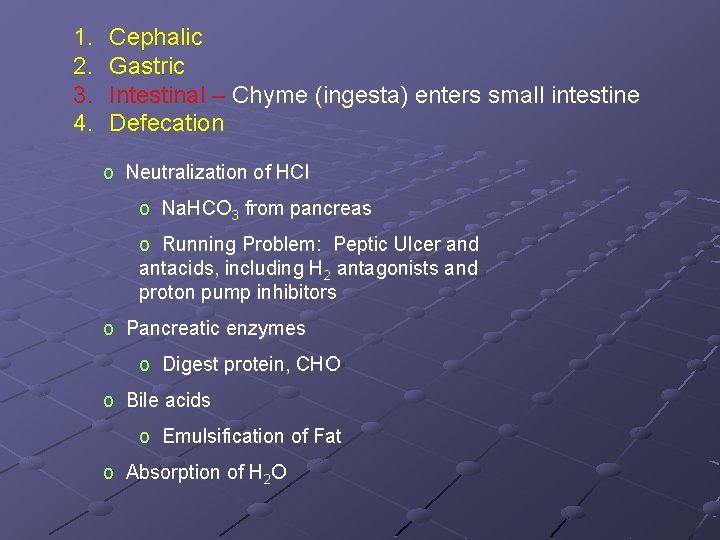
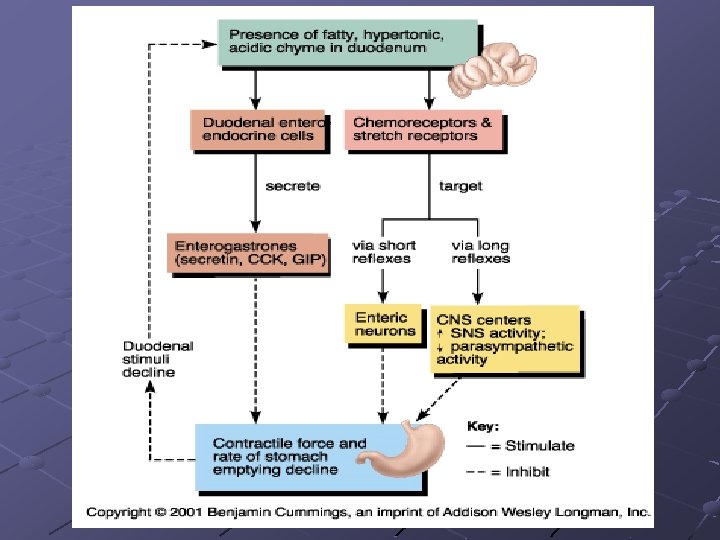
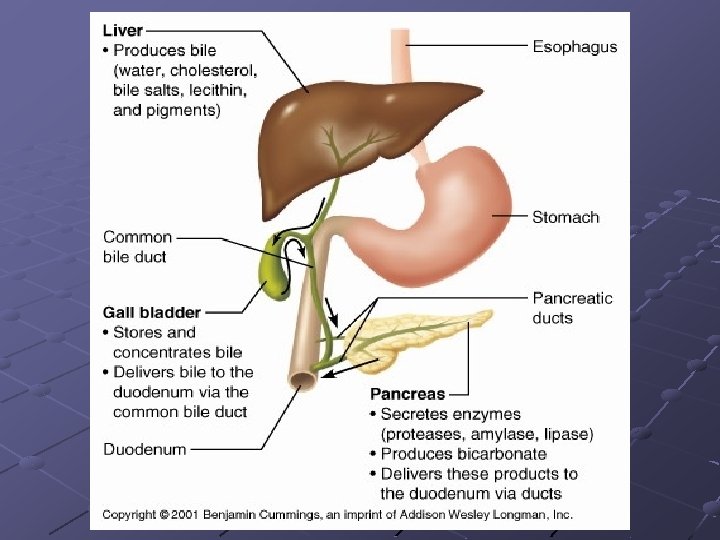
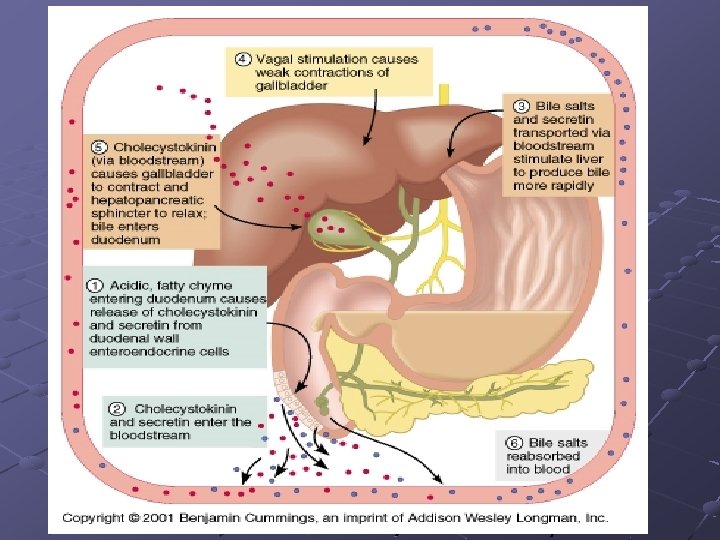
1. 2. 3. 4. Cephalic Gastric Intestinal – Chyme (ingesta) enters small intestine Defecation o Neutralization of HCl o Na. HCO 3 from pancreas o Running Problem: Peptic Ulcer and antacids, including H 2 antagonists and proton pump inhibitors o Pancreatic enzymes o Digest protein, CHO o Bile acids o Emulsification of Fat o Absorption of H 2 O
Mechanical Digestion Peristalsis and Segmentation n n Occurs in the small intestine Food is basically shaken back and forth in small segments along the length of the small intestine
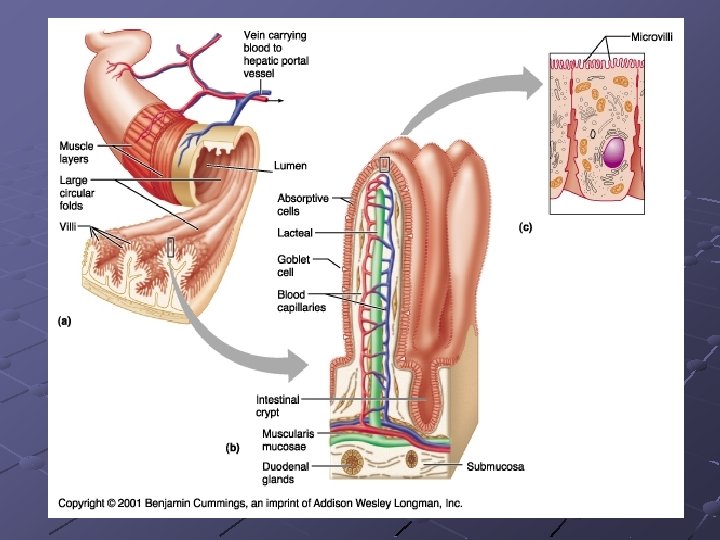
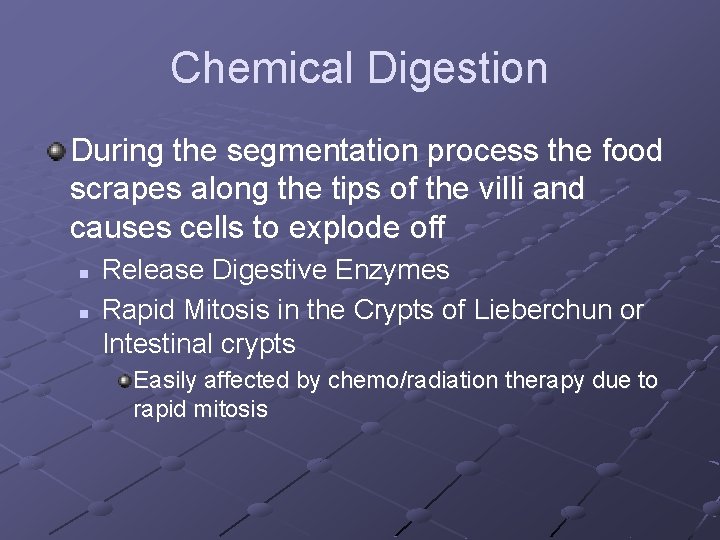
Chemical Digestion During the segmentation process the food scrapes along the tips of the villi and causes cells to explode off n n Release Digestive Enzymes Rapid Mitosis in the Crypts of Lieberchun or Intestinal crypts Easily affected by chemo/radiation therapy due to rapid mitosis
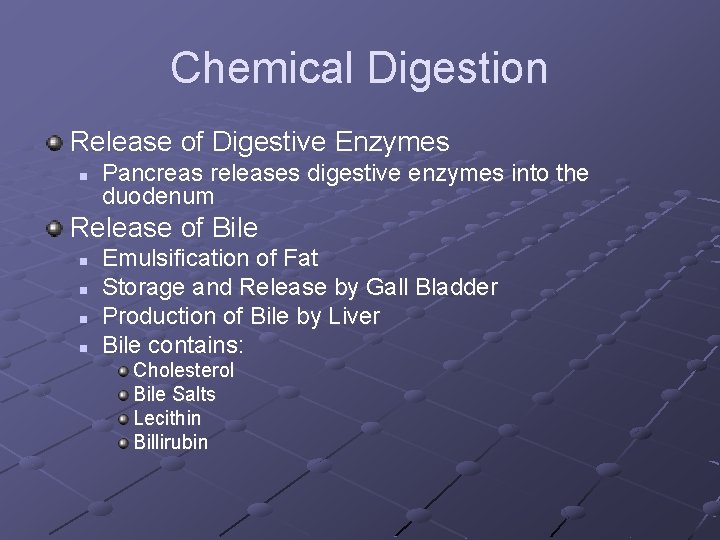
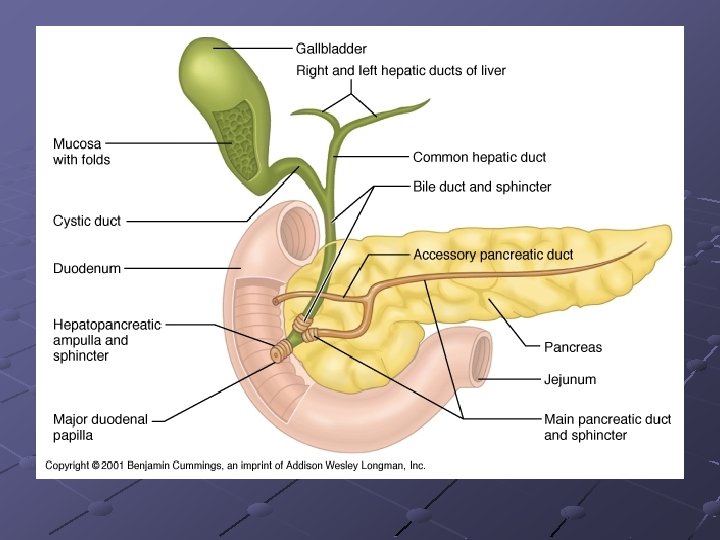
Chemical Digestion Release of Digestive Enzymes n Pancreas releases digestive enzymes into the duodenum Release of Bile n n Emulsification of Fat Storage and Release by Gall Bladder Production of Bile by Liver Bile contains: Cholesterol Bile Salts Lecithin Billirubin
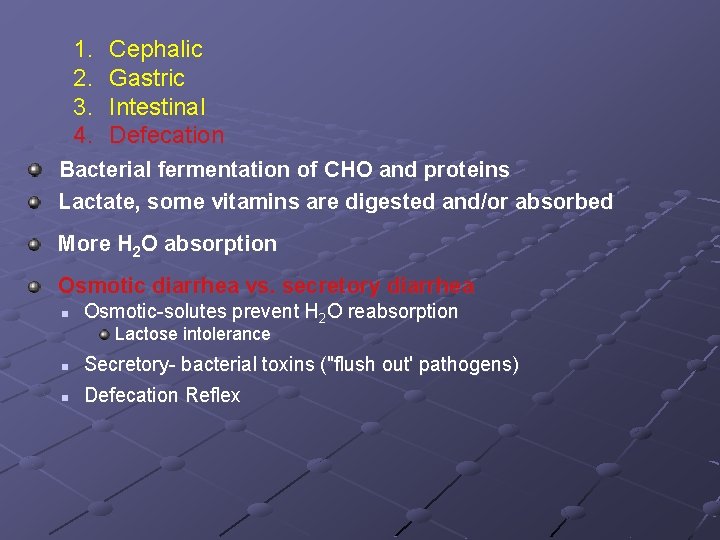
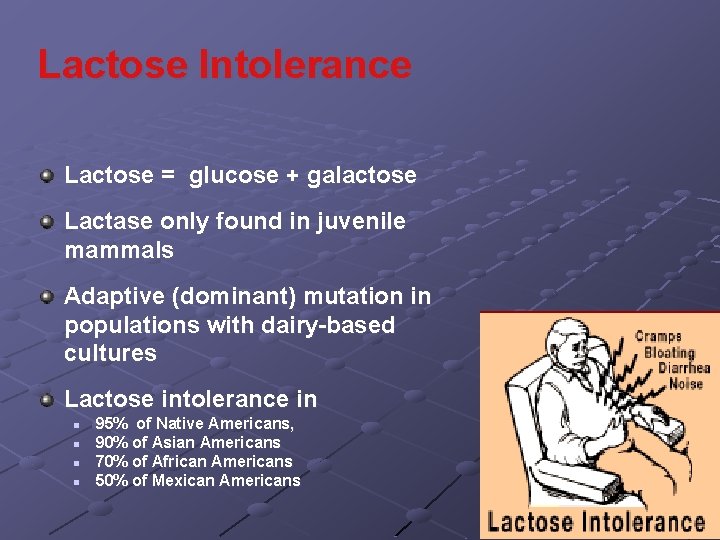
1. 2. 3. 4. Cephalic Gastric Intestinal Defecation Bacterial fermentation of CHO and proteins Lactate, some vitamins are digested and/or absorbed More H 2 O absorption Osmotic diarrhea vs. secretory diarrhea n Osmotic-solutes prevent H 2 O reabsorption Lactose intolerance n Secretory- bacterial toxins ("flush out' pathogens) n Defecation Reflex
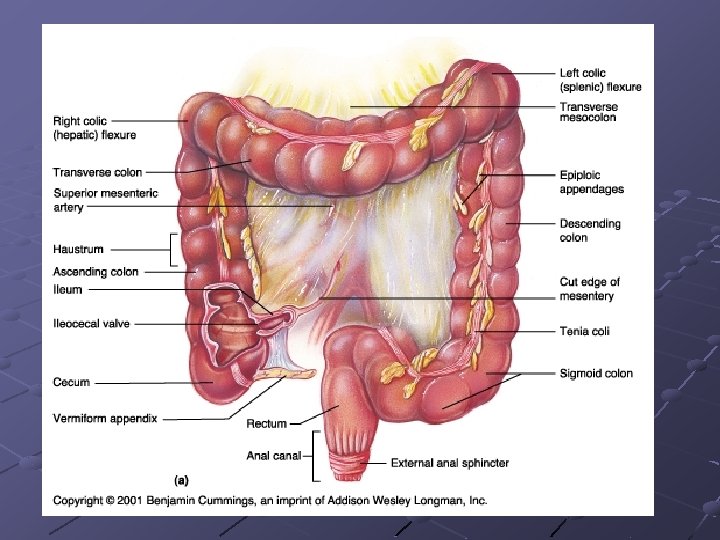
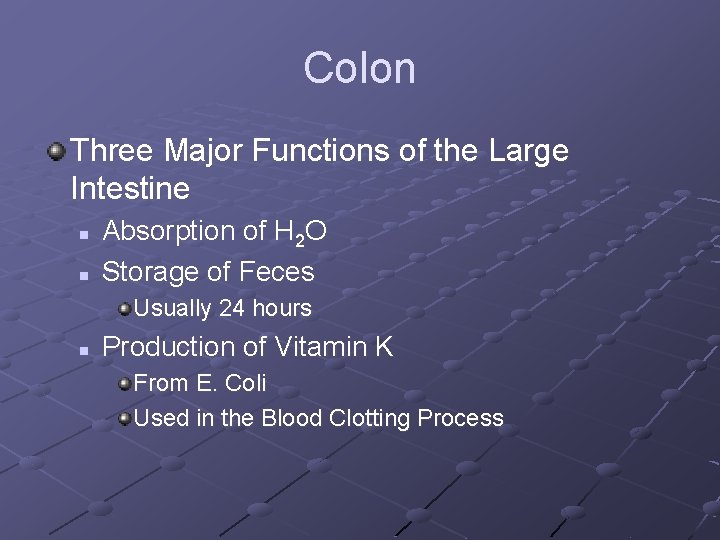
Colon Three Major Functions of the Large Intestine n n Absorption of H 2 O Storage of Feces Usually 24 hours n Production of Vitamin K From E. Coli Used in the Blood Clotting Process
Lactose Intolerance Lactose = glucose + galactose Lactase only found in juvenile mammals Adaptive (dominant) mutation in populations with dairy-based cultures Lactose intolerance in n n 95% of Native Americans, 90% of Asian Americans 70% of African Americans 50% of Mexican Americans