
Digestion 24 30 Morphology of the liver function
- Slides: 25
Digestion 24 - 30
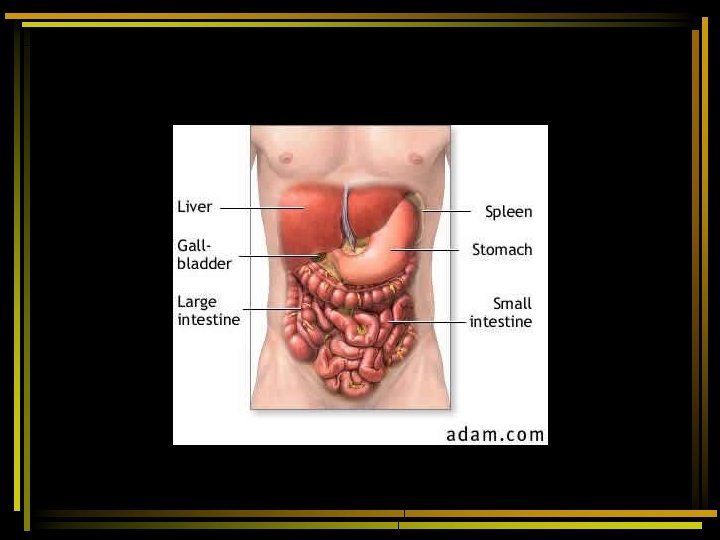
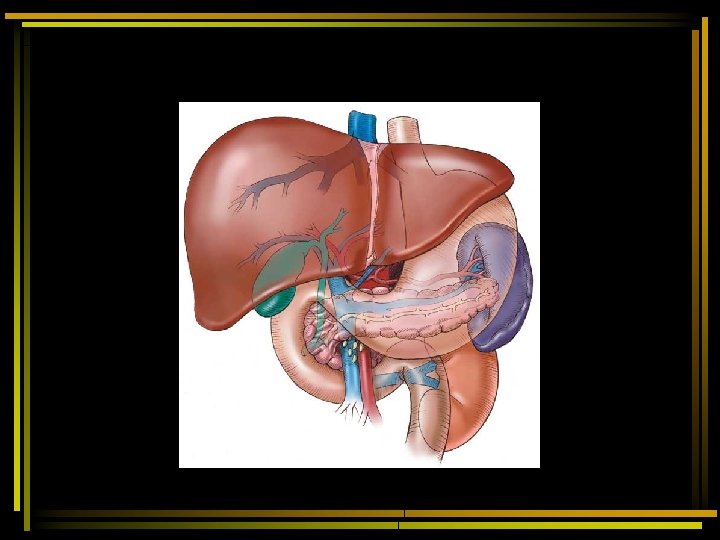
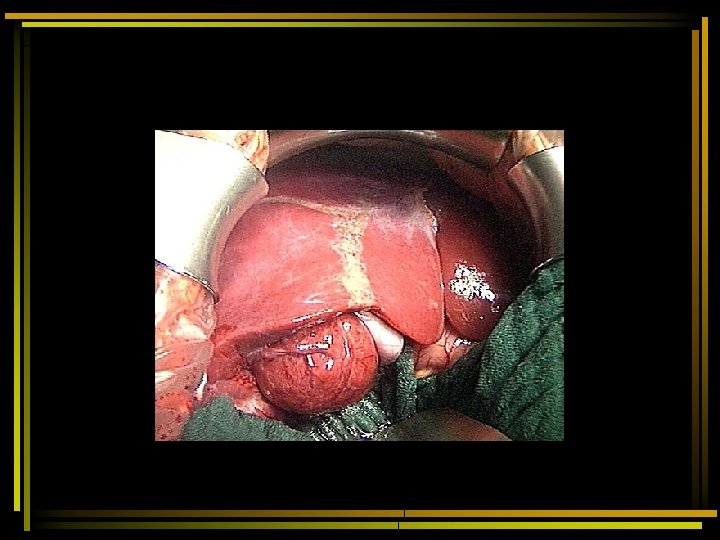
Morphology of the liver & function of hexagonal-shaped structures (24) • The liver is the largest gland in the body • It is comprised of 4 lobes: right, left, caudate and quadrate
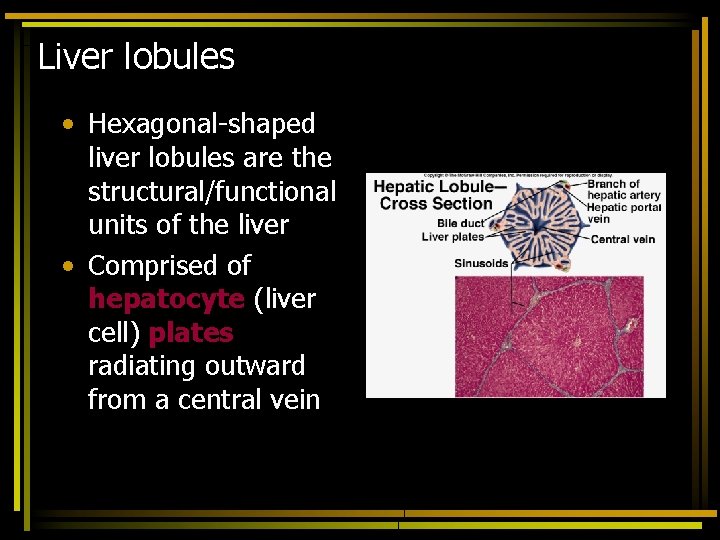
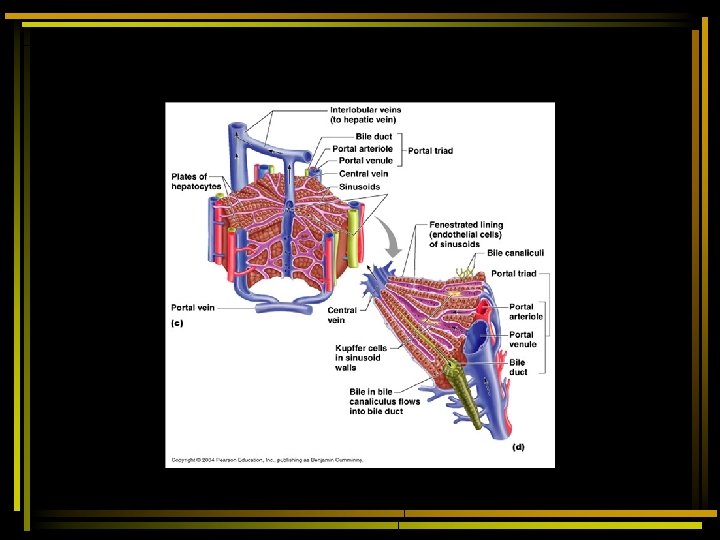
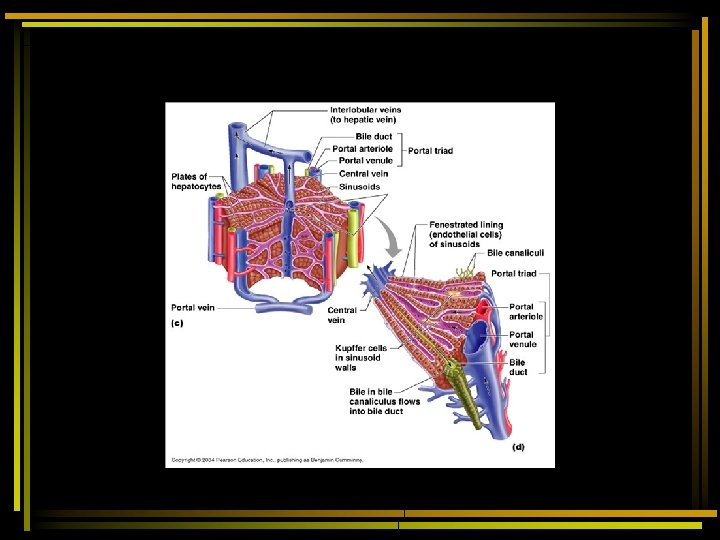
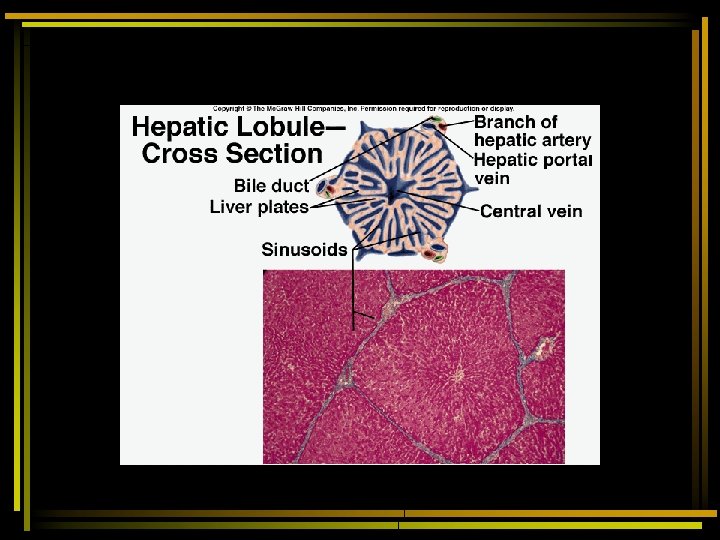
Liver lobules • Hexagonal-shaped liver lobules are the structural/functional units of the liver • Comprised of hepatocyte (liver cell) plates radiating outward from a central vein
Portal triads • Portal triads are found at each of the six corners of each liver lobule • Portal triads consist of a bile duct and Hepatic artery – supplies oxygen-rich blood to the liver • Hepatic portal vein – carries venous blood with nutrients from digestive system
Hepatocytes • • Hepatocytes’ functions include: Production of bile Processing of blood borne nutrients Storage of fat-soluble vitamins (A, D, E) • Detoxification (alcohol, Tylenol)
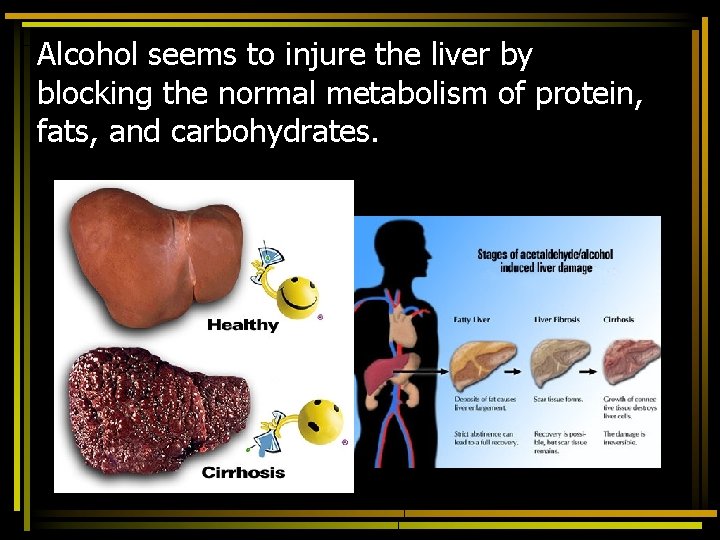
Alcohol seems to injure the liver by blocking the normal metabolism of protein, fats, and carbohydrates.
Bile duct location, composition of bile, relationship to gall bladder (25) • The bile duct is located in the portal triad of liver lobules • Bile is comprised of yellow-green, alkaline solution • Bile is stored in the gallbladder
Function and composition of bile (26) • Bile is comprised of bile salts, bile pigments, cholesterol, electrolytes • Bile salts are cholesterol derivatives that • Emulsify fat • Facilitate fat and cholesterol absorption • Help solubilize cholesterol
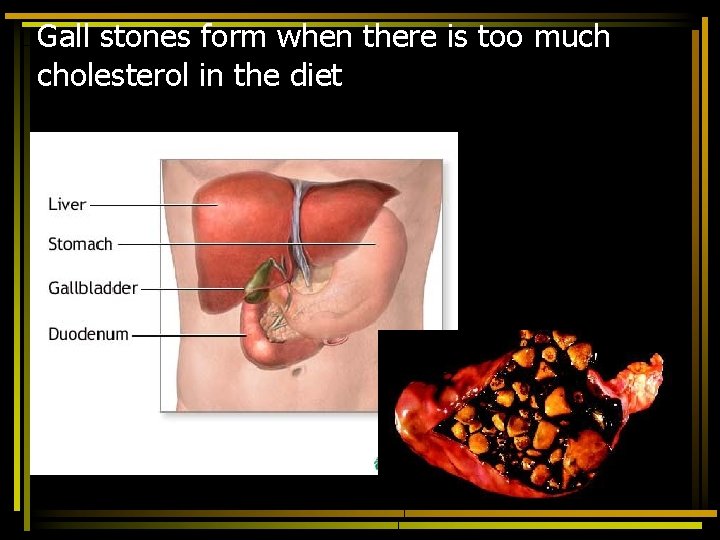
Gall stones form when there is too much cholesterol in the diet
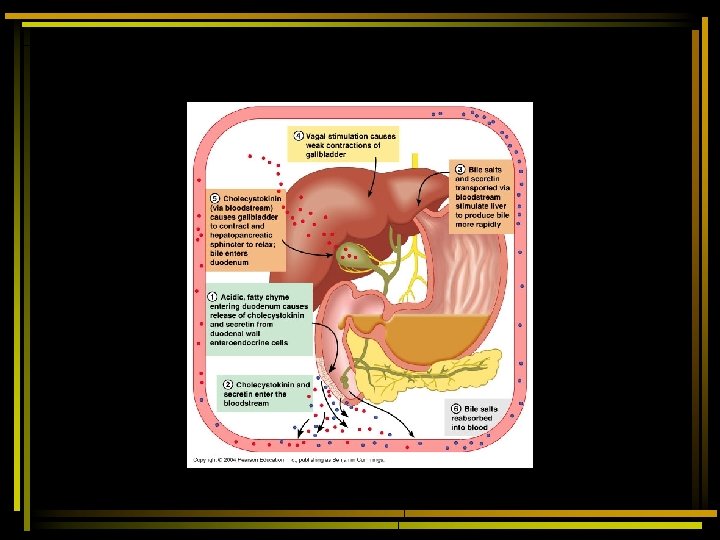
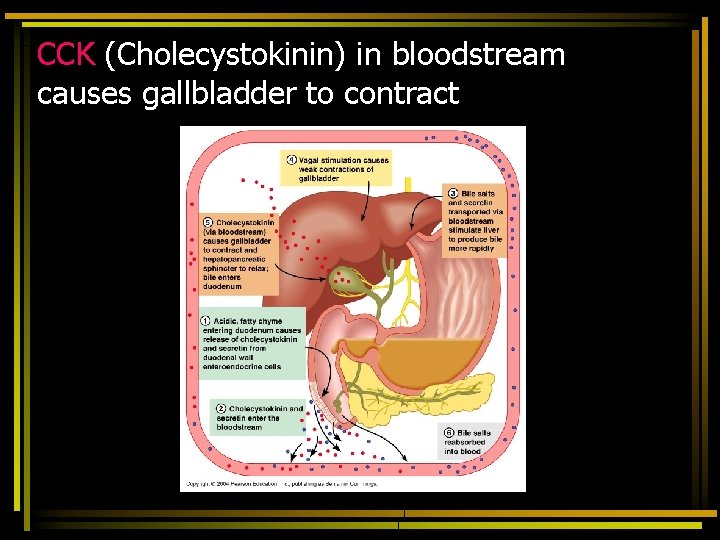
Bile release regulation (27) • CCK: acidic, fatty chyme causes the duodenum to release CCK (Cholecystokinin) and secretin into the bloodstream • Bile salts and secretin transported in blood stimulate the liver to produce bile • CCK causes: • The gall bladder to contract • The hepatopancreatic sphincter to relax & bile enters the duodenum
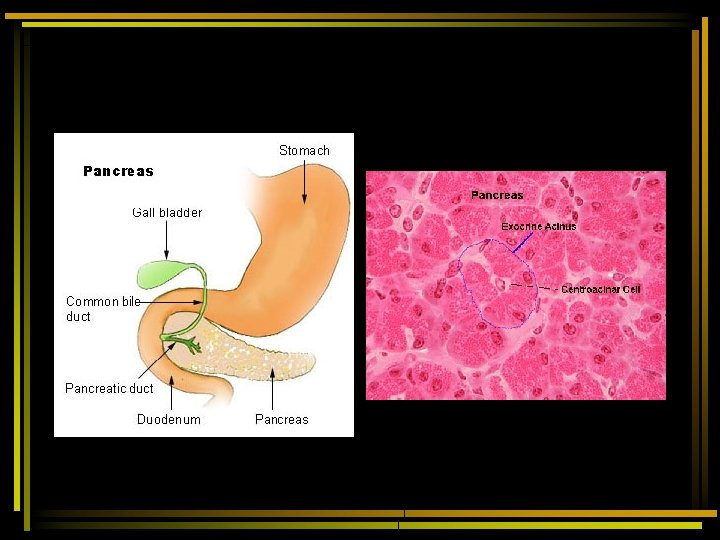
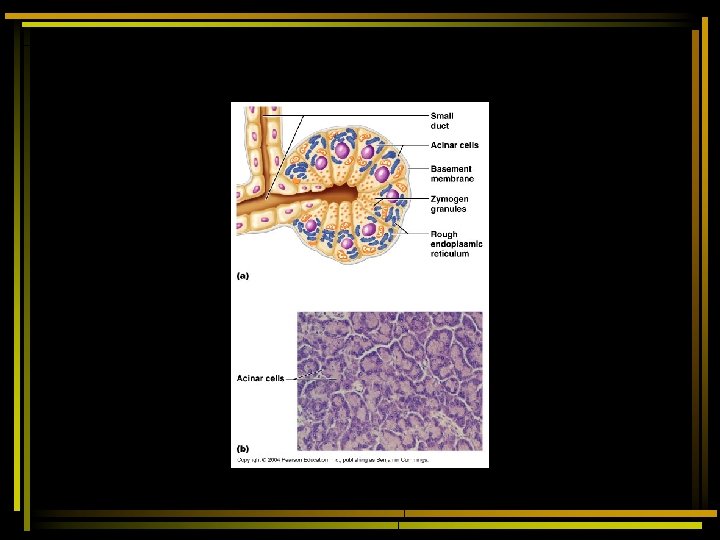
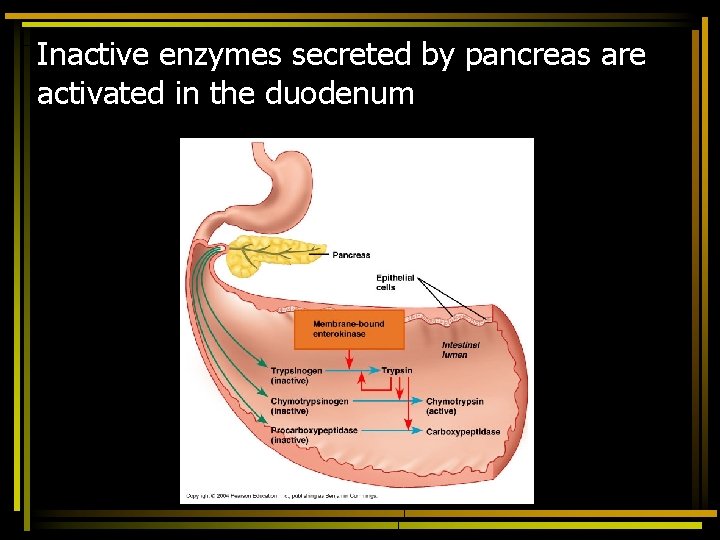
Pancreas: function of exocrine glands. Enzymes released in active or inactive form? (28) • The exocrine (ducts) glands of the pancreas secrete pancreatic juice which breaks down all categories of foodstuff. • Acini – clusters of secretory cells – contain zymogen granules with digestive enzymes • Enzymes are released in inactive form and become active in the duodenum
Endocrine function of the pancreas (29) • The endocrine function of the pancreas is to release insulin and glucagons (hormone) • Insulin causes most of the body's cells to take up glucose from the blood • Glucose is stored as glycogen in the liver and muscle, and stops use of fat as an energy source
Recall glucagon • Glucagon is an important hormone involved in carbohydrate metabolism. • Produced by the pancreas, it is released when the glucose level in the blood is low (hypoglycemia), causing the liver to convert stored glycogen into glucose and release it into the bloodstream. • This action of glucagon is opposite to that of insulin, which instructs the body's cells to take in glucose from the blood in times of satiation.
Inactive enzymes secreted by pancreas are activated in the duodenum
CCK & secretin influence on pancreatic secretion (30) • CCK (Cholecystokinin) in bloodstream causes gallbladder to contract and the hepatopancreatic sphincter to relax & pancreatic juice is released into duodenum
CCK (Cholecystokinin) in bloodstream causes gallbladder to contract