
DIG DEEPER STARTS HERE Dig Deeper Resources Medicaid

- Slides: 27
DIG DEEPER STARTS HERE
Dig Deeper Resources • Medicaid funding: how it works and what influences it • Medicaid payment and reimbursement • Children, families, and services through Medicaid, including unique populations • EPSDT • How Medicaid stacks up to other insurance options • Insurance coverage and health outcomes: A comparison of the US and other industrialized countries • Additional advocacy resources
Medicaid funding: how it works and economic influences
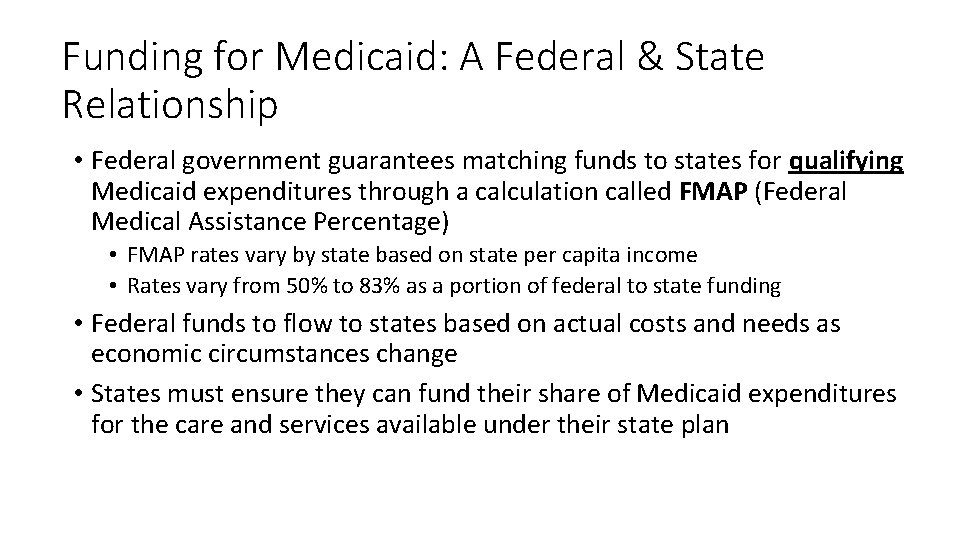
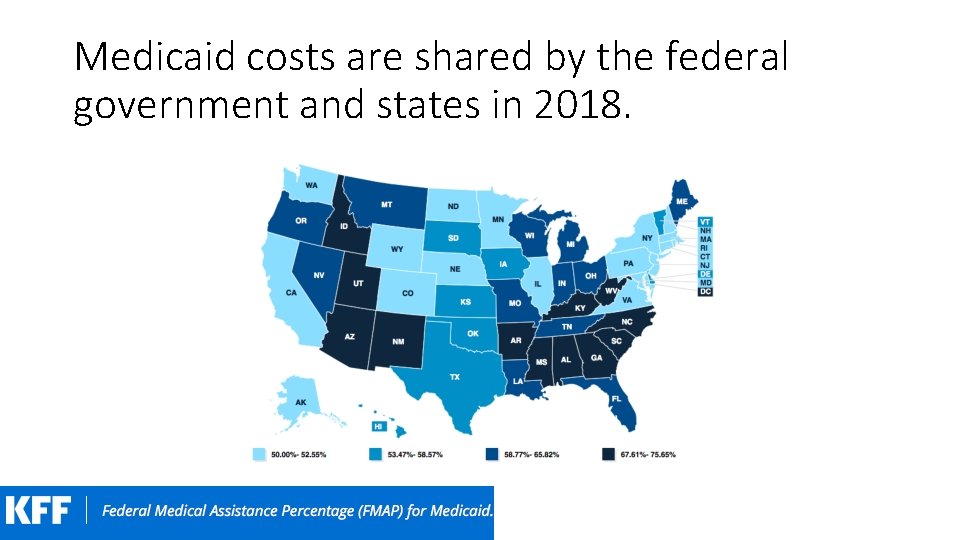
Funding for Medicaid: A Federal & State Relationship • Federal government guarantees matching funds to states for qualifying Medicaid expenditures through a calculation called FMAP (Federal Medical Assistance Percentage) • FMAP rates vary by state based on state per capita income • Rates vary from 50% to 83% as a portion of federal to state funding • Federal funds to flow to states based on actual costs and needs as economic circumstances change • States must ensure they can fund their share of Medicaid expenditures for the care and services available under their state plan
Medicaid costs are shared by the federal government and states in 2018.
Other Sources of Funding for Medicaid • Disproportionate Share Hospital payments (DSH) for “Safety Net Hospitals” • State Financing of the Non-Federal Share • State general fund appropriations • Provider taxes and fees
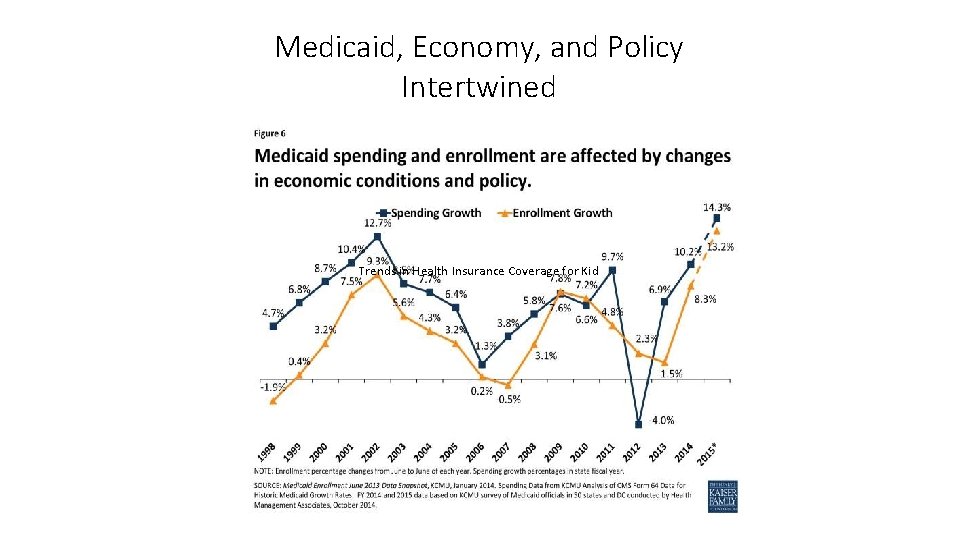
Medicaid, Economy, and Policy Intertwined Trends in Health Insurance Coverage for Kid
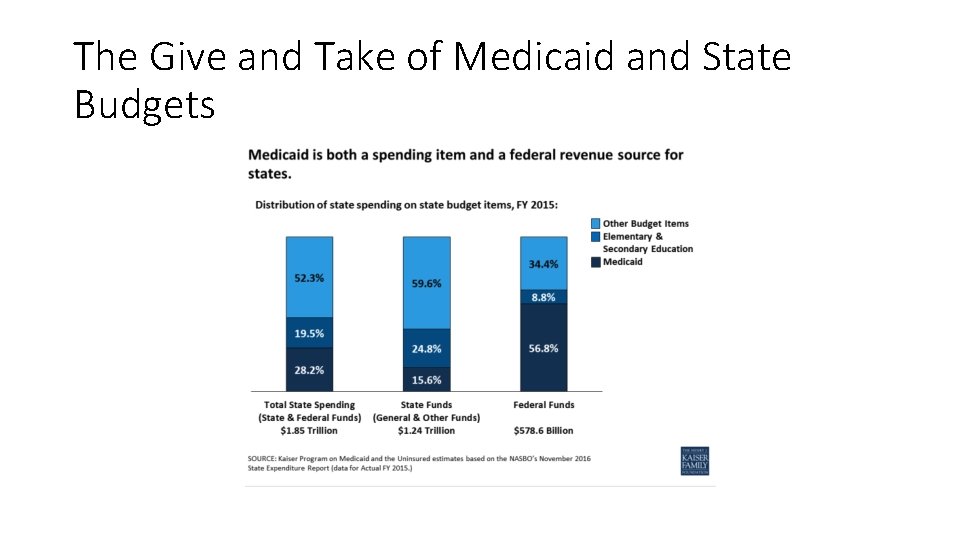
The Give and Take of Medicaid and State Budgets
Medicaid payment and reimbursement
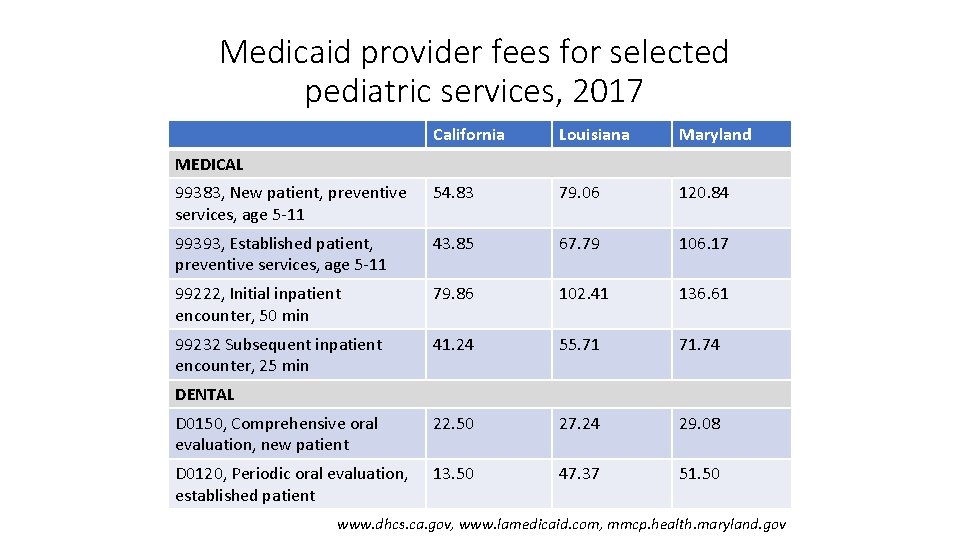
Medicaid provider fees for selected pediatric services, 2017 California Louisiana Maryland 99383, New patient, preventive services, age 5 -11 54. 83 79. 06 120. 84 99393, Established patient, preventive services, age 5 -11 43. 85 67. 79 106. 17 99222, Initial inpatient encounter, 50 min 79. 86 102. 41 136. 61 99232 Subsequent inpatient encounter, 25 min 41. 24 55. 71 71. 74 D 0150, Comprehensive oral evaluation, new patient 22. 50 27. 24 29. 08 D 0120, Periodic oral evaluation, established patient 13. 50 47. 37 51. 50 MEDICAL DENTAL www. dhcs. ca. gov, www. lamedicaid. com, mmcp. health. maryland. gov
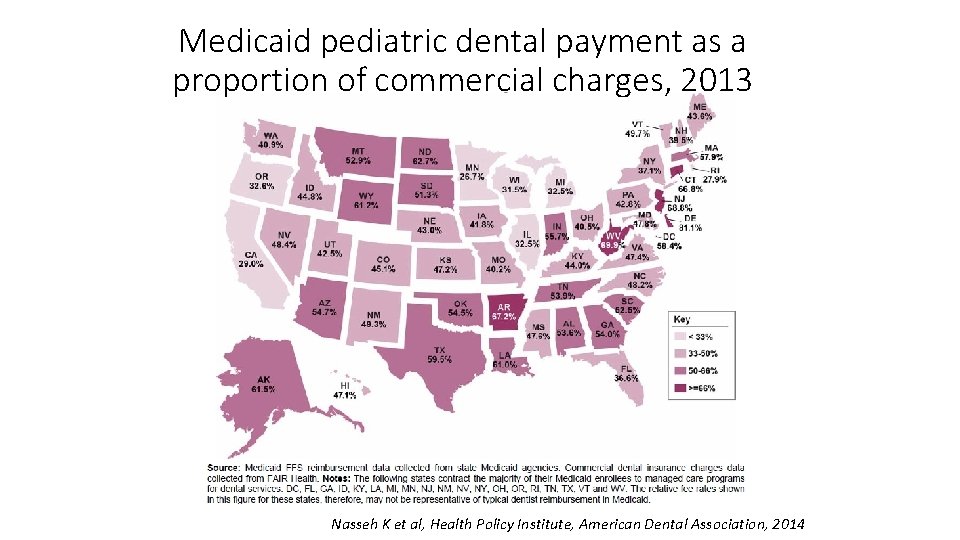
Medicaid pediatric dental payment as a proportion of commercial charges, 2013 Nasseh K et al, Health Policy Institute, American Dental Association, 2014
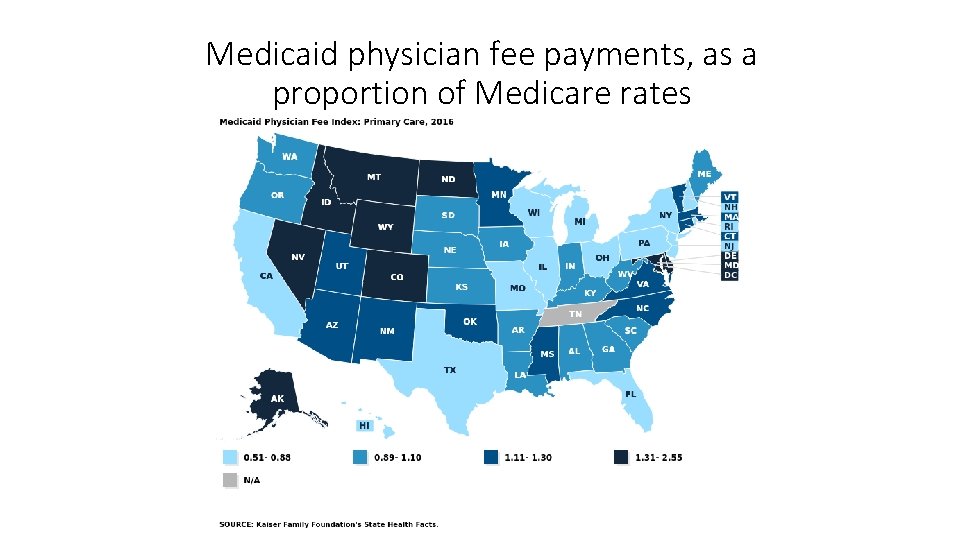
Medicaid physician fee payments, as a proportion of Medicare rates
Children, families, and services through Medicaid, including unique populations
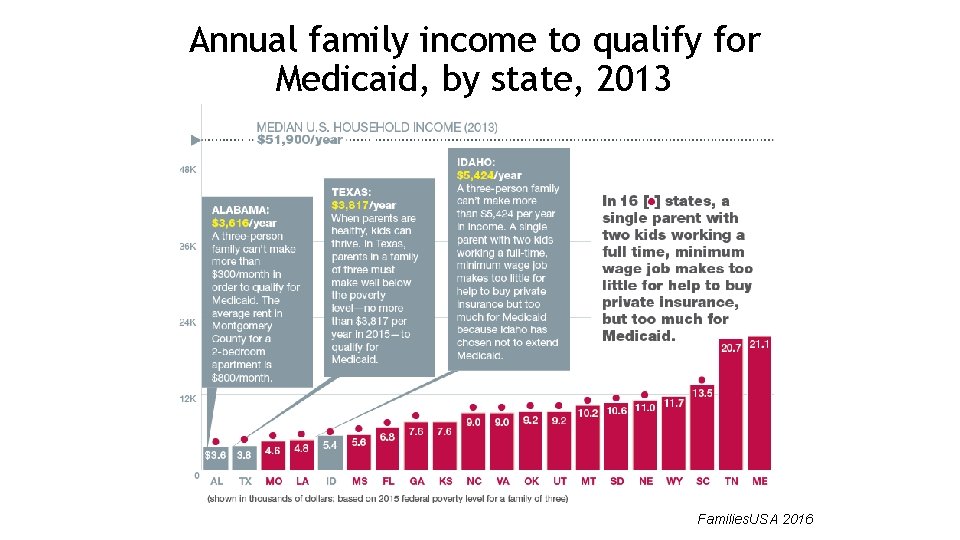
Annual family income to qualify for Medicaid, by state, 2013 Families. USA 2016
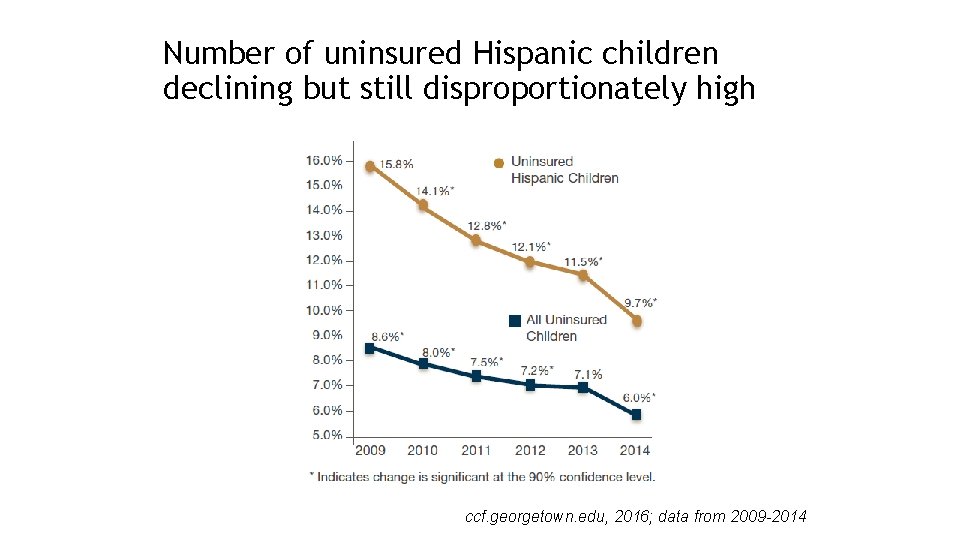
Number of uninsured Hispanic children declining but still disproportionately high ccf. georgetown. edu, 2016; data from 2009 -2014
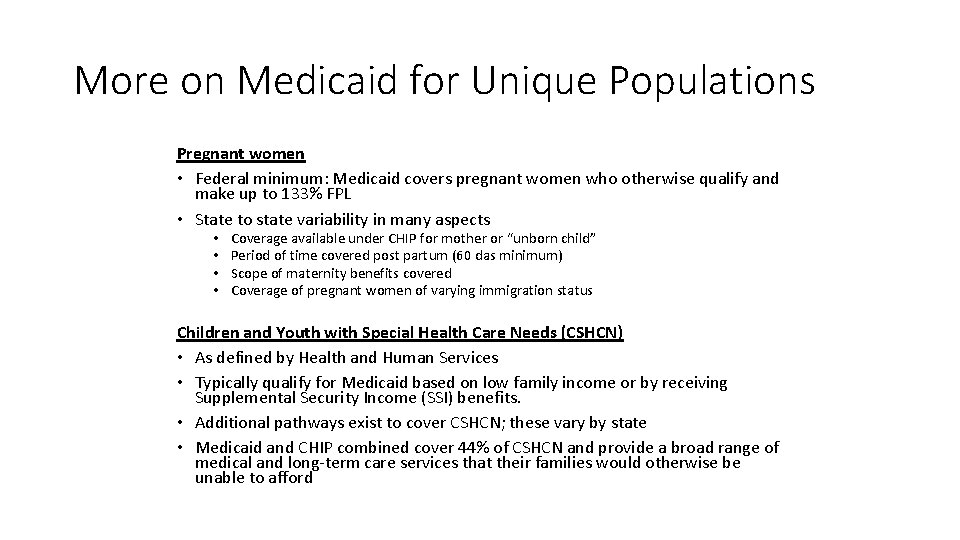
More on Medicaid for Unique Populations Pregnant women • Federal minimum: Medicaid covers pregnant women who otherwise qualify and make up to 133% FPL • State to state variability in many aspects • • Coverage available under CHIP for mother or “unborn child” Period of time covered post partum (60 das minimum) Scope of maternity benefits covered Coverage of pregnant women of varying immigration status Children and Youth with Special Health Care Needs (CSHCN) • As defined by Health and Human Services • Typically qualify for Medicaid based on low family income or by receiving Supplemental Security Income (SSI) benefits. • Additional pathways exist to cover CSHCN; these vary by state • Medicaid and CHIP combined cover 44% of CSHCN and provide a broad range of medical and long-term care services that their families would otherwise be unable to afford
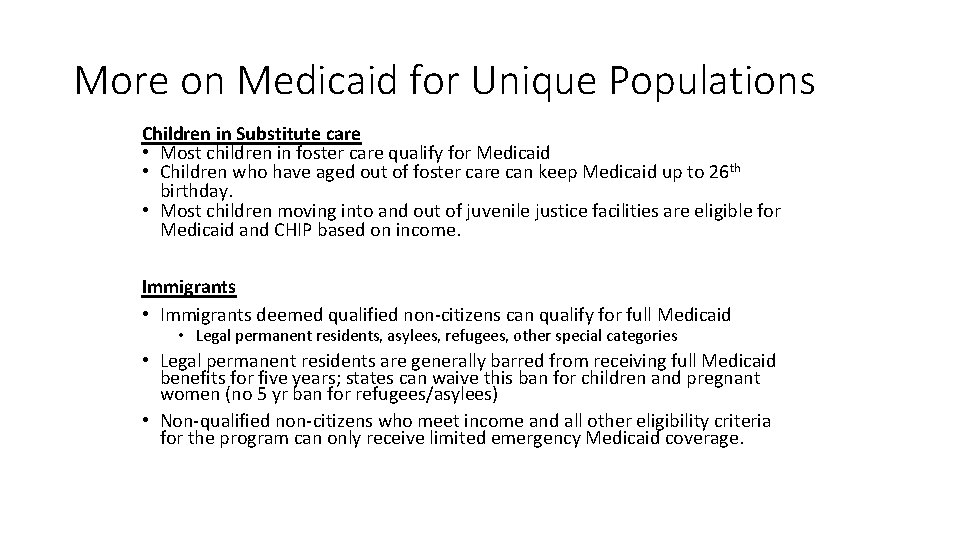
More on Medicaid for Unique Populations Children in Substitute care • Most children in foster care qualify for Medicaid • Children who have aged out of foster care can keep Medicaid up to 26 th birthday. • Most children moving into and out of juvenile justice facilities are eligible for Medicaid and CHIP based on income. Immigrants • Immigrants deemed qualified non-citizens can qualify for full Medicaid • Legal permanent residents, asylees, refugees, other special categories • Legal permanent residents are generally barred from receiving full Medicaid benefits for five years; states can waive this ban for children and pregnant women (no 5 yr ban for refugees/asylees) • Non-qualified non-citizens who meet income and all other eligibility criteria for the program can only receive limited emergency Medicaid coverage.
More on EPSDT: Mandated Basic Coverage • Screening • Age-appropriate medical, dental, vision and hearing screening services at specified times, and when health problems arise or are suspected • Includes periodic developmental and behavioral screening • Visit includes Comprehensive health and developmental history, comprehensive physical exam, immunizations, lab testing, education and anticipatory guidance
More on EPSDT: Mandated Basic Coverage • Diagnosis • Prompt diagnostic workup and follow-up • Work-up can be in patient or outpatient as determined by provider • Treatment • Includes physical and mental illnesses or conditions • Includes physician and hospital services, private duty nursing, personal care services, home health and medical equipment and supplies, rehabilitative services, and vision, hearing, and dental services
More on EPSDT: Sources • Medicaid. EPSDT – A Guide for States. https: //www. medicaid. gov/medicaid/benefits/downloads/epsdt_coverage_guid e. pdf • Look at page 39 of this document for a general overview/summary • HRSA. Early Periodic Screening, Diagnosis, and Treatment. https: //mchb. hrsa. gov/maternal-child-health-initiatives/mchb-programs/earlyperiodic-screening-diagnosis-and-treatment#core • Georgetown University. EPSDT: A Primer on Medicaid’s Pediatric Benefit. https: //ccf. georgetown. edu/wp-content/uploads/2016/03/EPSDT-fact-sheet. pdf. • Medicaid. gov. Early Periodic Screening, Diagnosis, and Treatment. https: //www. medicaid. gov/medicaid/benefits/epsdt/index. html • Recent publication (June 2017) on implications of budget cuts • https: //ccf. georgetown. edu/wp-content/uploads/2017/06/EPSDT-At-Risk. Final. pdf
How Medicaid stacks up to other insurance options
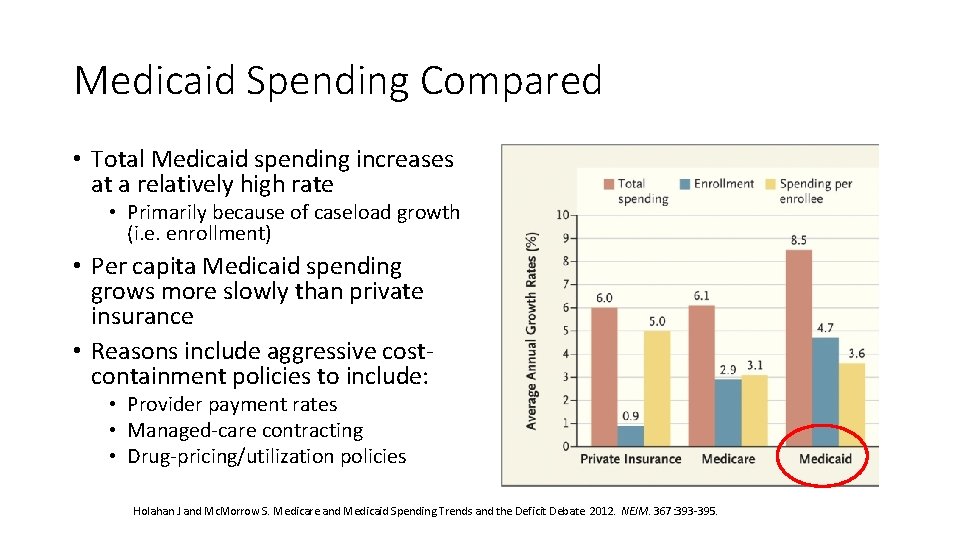
Medicaid Spending Compared • Total Medicaid spending increases at a relatively high rate • Primarily because of caseload growth (i. e. enrollment) • Per capita Medicaid spending grows more slowly than private insurance • Reasons include aggressive costcontainment policies to include: • Provider payment rates • Managed-care contracting • Drug-pricing/utilization policies Holahan J and Mc. Morrow S. Medicare and Medicaid Spending Trends and the Deficit Debate. 2012. NEJM. 367: 393 -395.
More on How Medicaid Stacks Up • What misconceptions have you commonly heard about Medicaid? Setting the facts straight about Medicaid: https: //www. kff. org/medicaid/issue-brief/10 -things-to-know-aboutmedicaid-setting-the-facts-straight/ • In regards to access to care and outcomes, Medicaid gets the job done (even comparatively to private insurance): https: //www. kff. org/medicaid/issue-brief/data-note-three-findingsabout-access-to-care-and-health-outcomes-in-medicaid/
Insurance coverage and health outcomes: A comparison of the US and other industrialized countries
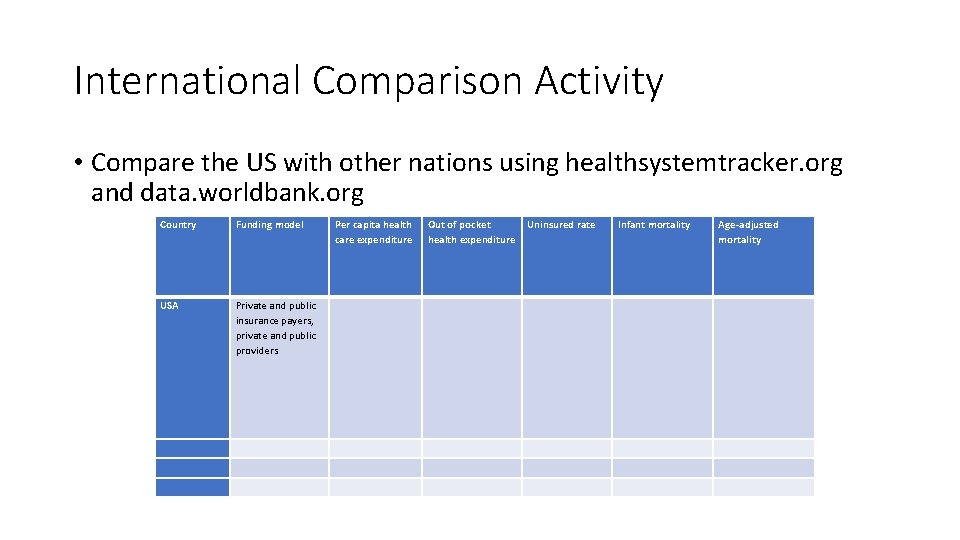
International Comparison Activity • Compare the US with other nations using healthsystemtracker. org and data. worldbank. org Country Funding model Per capita health care expenditure Out of pocket health expenditure Uninsured rate Infant mortality Age-adjusted mortality USA Private and public insurance payers, private and public providers
Additional Advocacy Resources
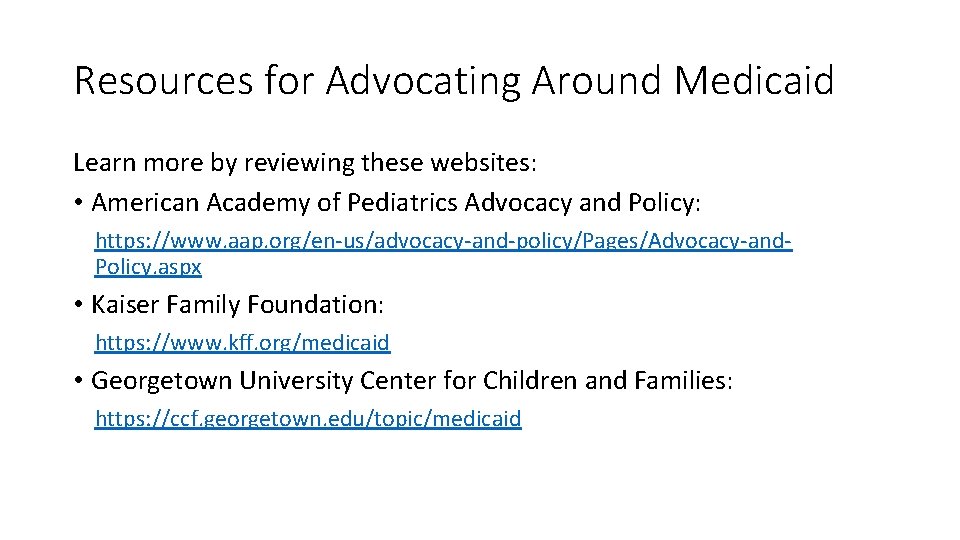
Resources for Advocating Around Medicaid Learn more by reviewing these websites: • American Academy of Pediatrics Advocacy and Policy: https: //www. aap. org/en-us/advocacy-and-policy/Pages/Advocacy-and. Policy. aspx • Kaiser Family Foundation: https: //www. kff. org/medicaid • Georgetown University Center for Children and Families: https: //ccf. georgetown. edu/topic/medicaid