
Diffusion Osmosis and the Plasma Membrane Prefixes Suffixes
Diffusion, Osmosis, and the Plasma Membrane
Prefixes, Suffixes, and Vocabulary • Diffusion = the movement of particles from a high concentration to a low concentration. • Osmosis = The diffusion of water. • Hyper = high, over. • Hypo = low, under. • Iso = equal.
What we already know…. . • All living things have 7 common characteristics. • All living organisms have cells and DNA. • DNA contains all the genetic information for living organisms. • Homeostasis is maintaining a stable, internal environment. How do living organisms homeostasis? maintain
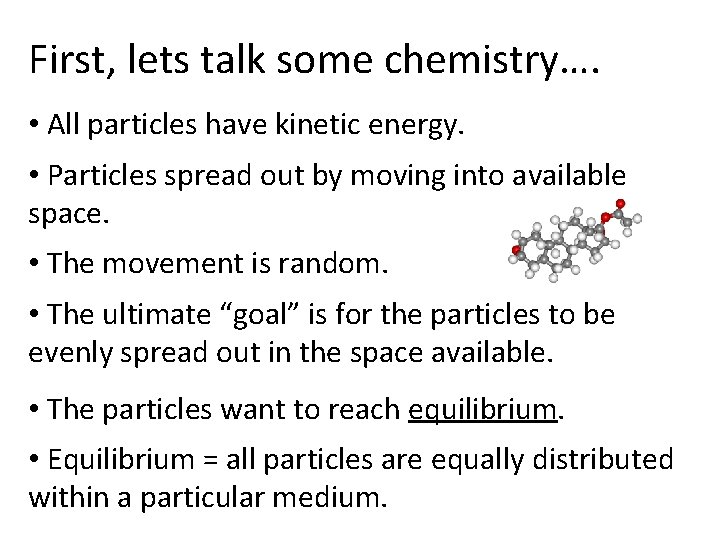
First, lets talk some chemistry…. • All particles have kinetic energy. • Particles spread out by moving into available space. • The movement is random. • The ultimate “goal” is for the particles to be evenly spread out in the space available. • The particles want to reach equilibrium. • Equilibrium = all particles are equally distributed within a particular medium.
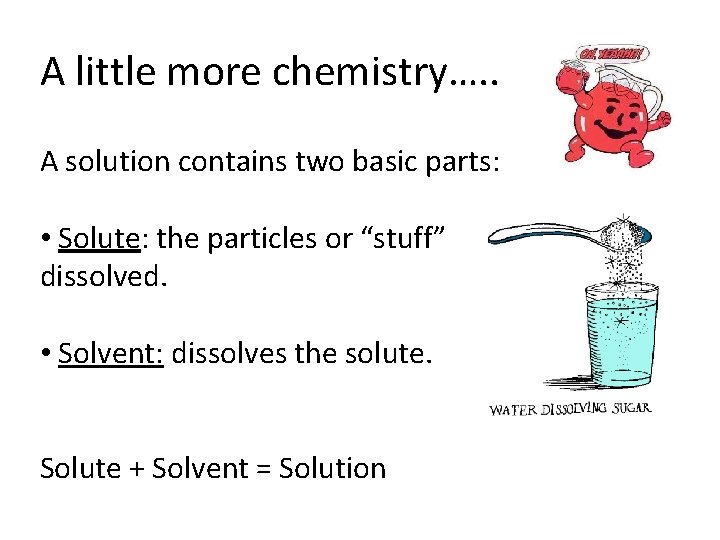
A little more chemistry…. . A solution contains two basic parts: • Solute: the particles or “stuff” dissolved. • Solvent: dissolves the solute. Solute + Solvent = Solution being
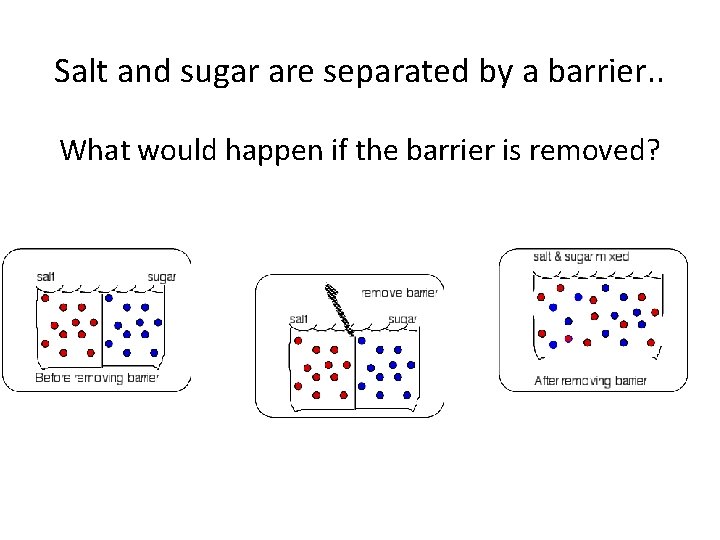
Salt and sugar are separated by a barrier. . What would happen if the barrier is removed?
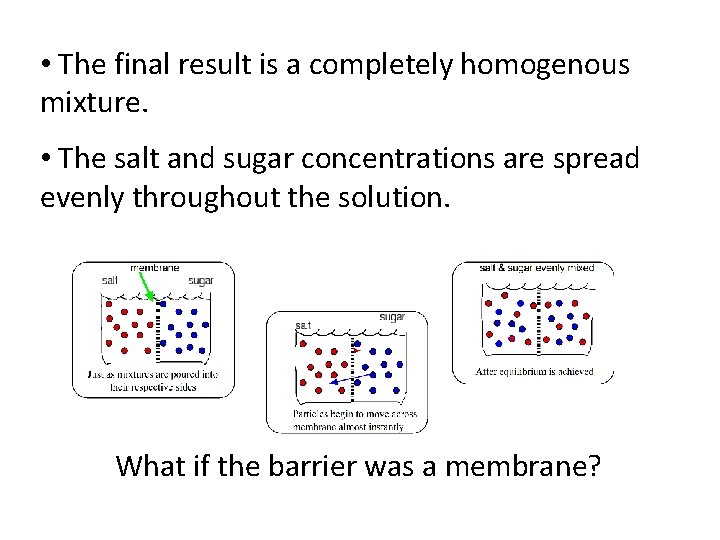
• The final result is a completely homogenous mixture. • The salt and sugar concentrations are spread evenly throughout the solution. What if the barrier was a membrane?
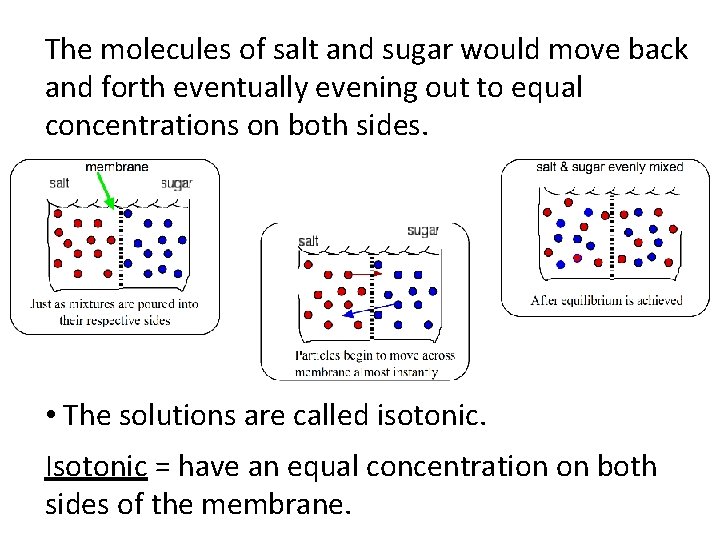
The molecules of salt and sugar would move back and forth eventually evening out to equal concentrations on both sides. • The solutions are called isotonic. Isotonic = have an equal concentration on both sides of the membrane.
What if the molecules are too big to fit through the membrane? • If the particles cannot move, then the solvent (usually water) will move. • The solute stays on one side or the other side of the membrane. • This is a special type of diffusion called osmosis. Osmosis = the diffusion of water.
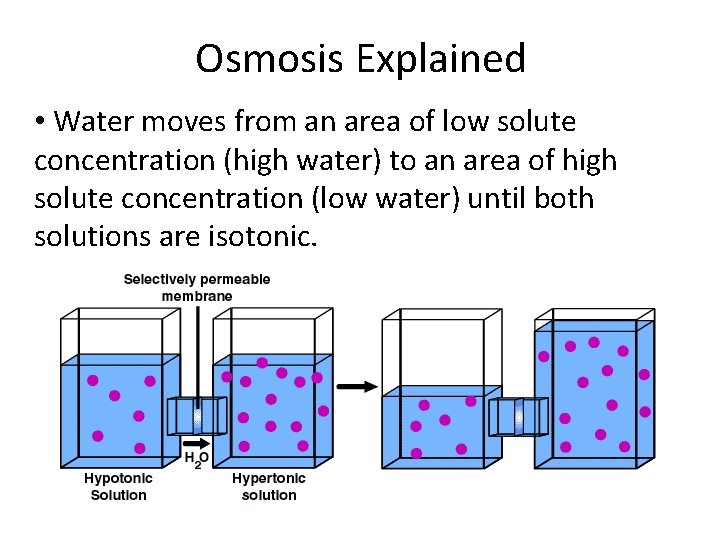
Osmosis Explained • Water moves from an area of low solute concentration (high water) to an area of high solute concentration (low water) until both solutions are isotonic.
Hypertonic Solutions: have more dissolved solute and less water. Hypotonic Solutions: have less dissolved solute and more water. Isotonic: equal amount of solute on each side of a membrane.
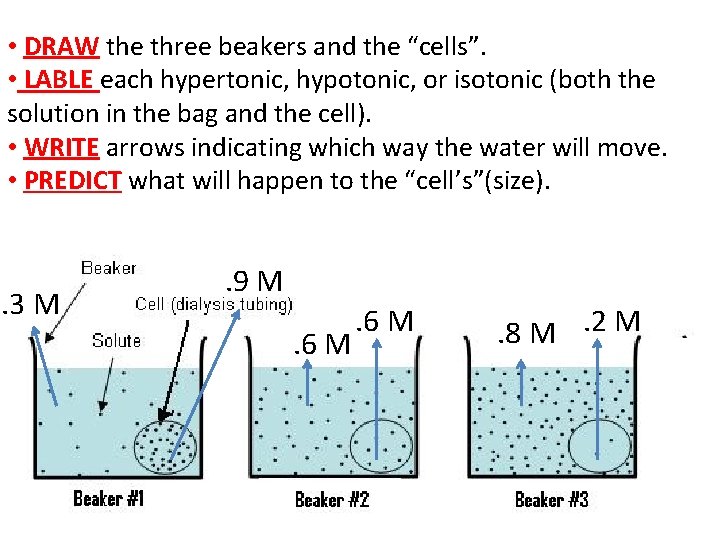
• DRAW the three beakers and the “cells”. • LABLE each hypertonic, hypotonic, or isotonic (both the solution in the bag and the cell). • WRITE arrows indicating which way the water will move. • PREDICT what will happen to the “cell’s”(size). . 3 M . 9 M. 6 M . 8 M. 2 M
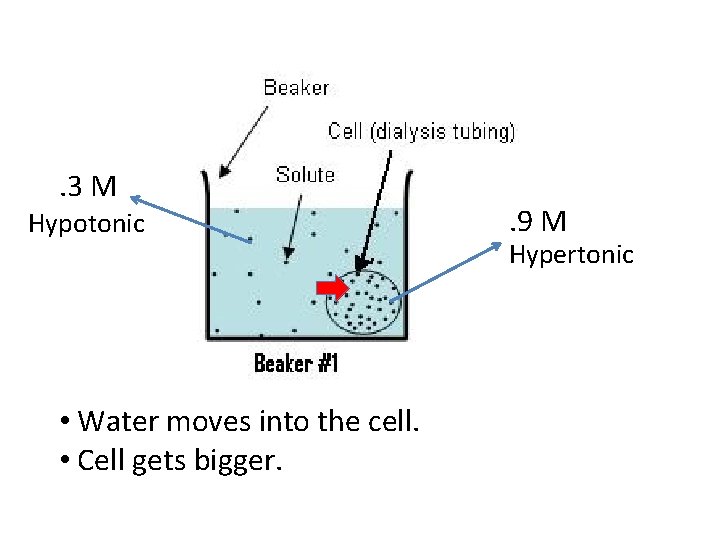
. 3 M Hypotonic • Water moves into the cell. • Cell gets bigger. . 9 M Hypertonic
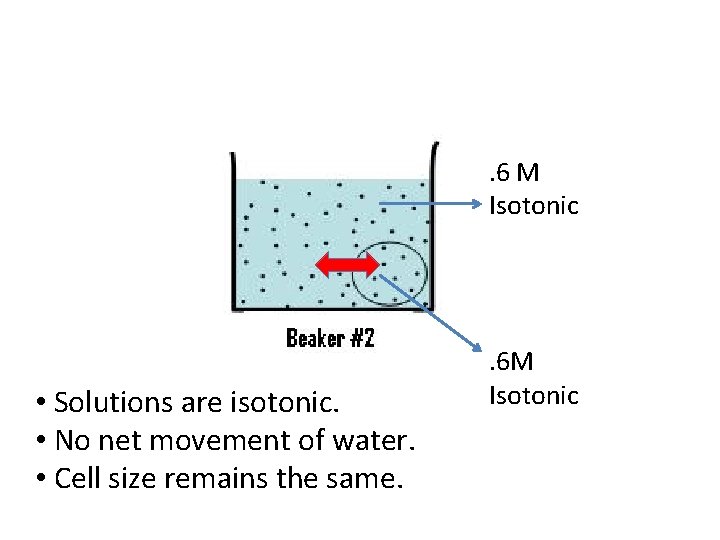
. 6 M Isotonic • Solutions are isotonic. • No net movement of water. • Cell size remains the same. . 6 M Isotonic
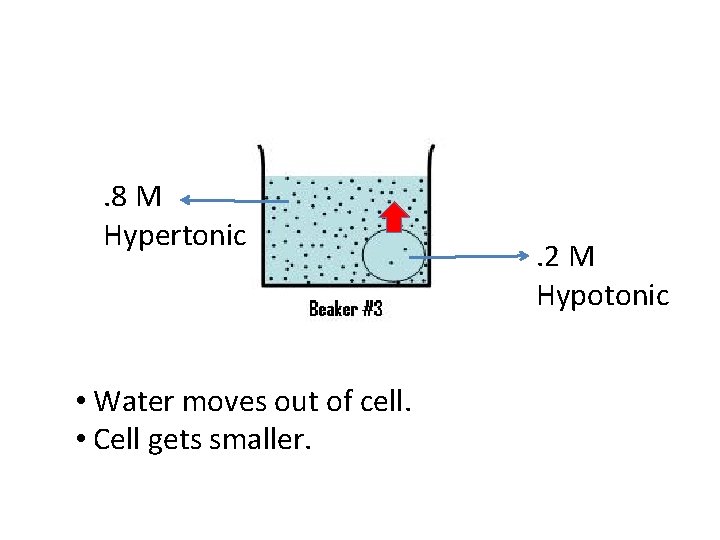
. 8 M Hypertonic • Water moves out of cell. • Cell gets smaller. . 2 M Hypotonic
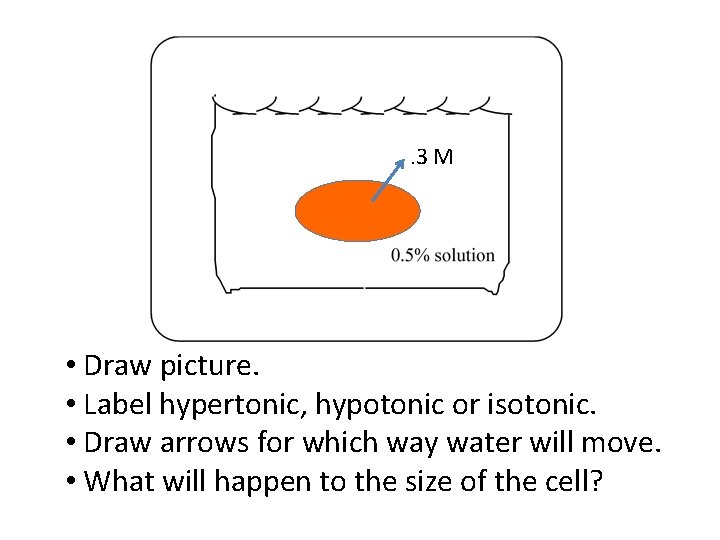
. 3 M • Draw picture. • Label hypertonic, hypotonic or isotonic. • Draw arrows for which way water will move. • What will happen to the size of the cell?
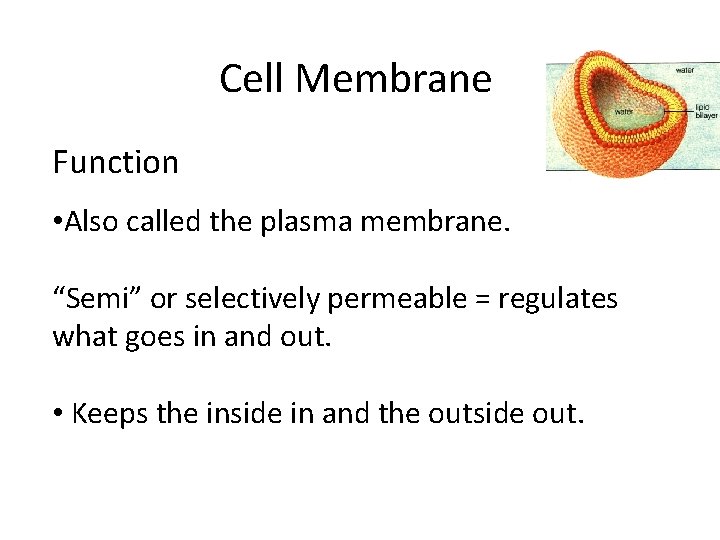
Cell Membrane Function • Also called the plasma membrane. “Semi” or selectively permeable = regulates what goes in and out. • Keeps the inside in and the outside out.
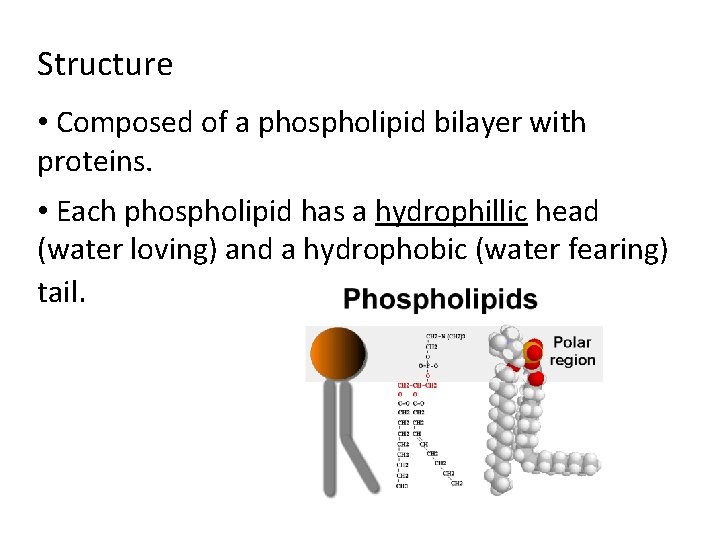
Structure • Composed of a phospholipid bilayer with proteins. • Each phospholipid has a hydrophillic head (water loving) and a hydrophobic (water fearing) tail.
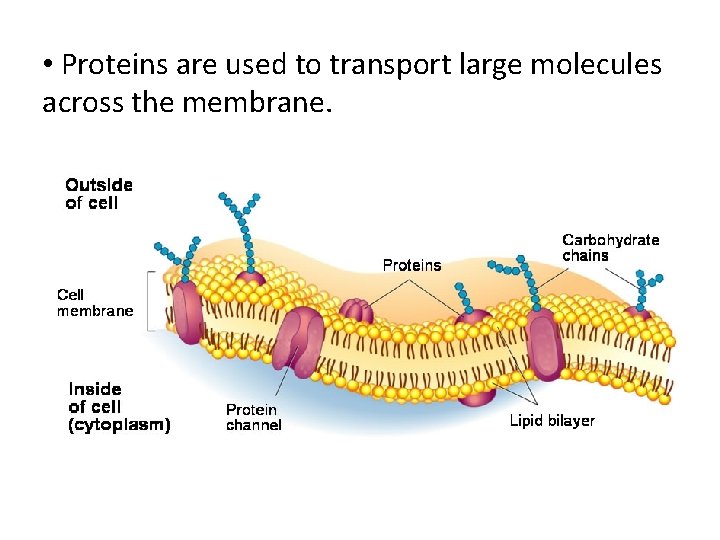
• Proteins are used to transport large molecules across the membrane.
- Slides: 19