
Diffusion of Languages Diffusion n Sound Shifts charting

- Slides: 20
Diffusion of Languages
Diffusion n Sound Shifts – charting of the diversification of languages over time; e. g. octo (Latin), otto (Ita), ocho (Spa), … n Deep Reconstruction – find vocabulary of an extinct language and go backward; Proto. Indo European • William Jones (>200 yrs. ago) – Sanskrit similar to Greek and Latin • Jacob Grimm – related languages have similar, but not identical consonants; e. g. vater (Ger) … vader (Dut), father (Eng) – softening over time • 4 Tasks: Reconstruct the ancient language, find the hearth, routes of diffusion, and peoples’ ways of life
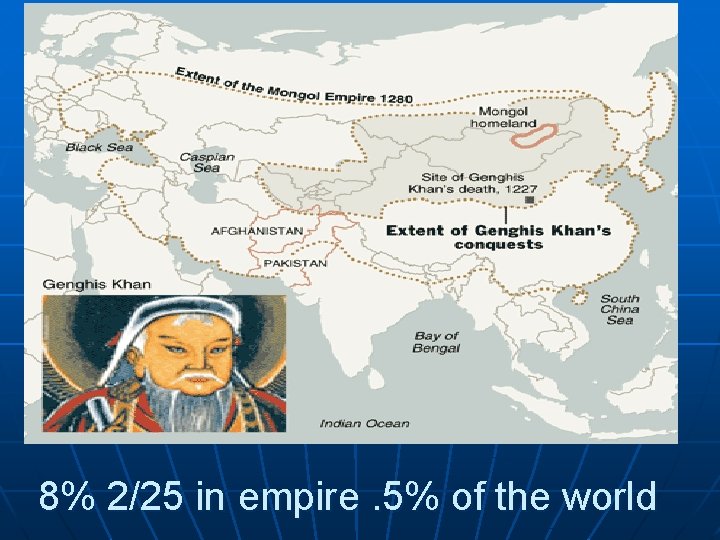
8% 2/25 in empire. 5% of the world
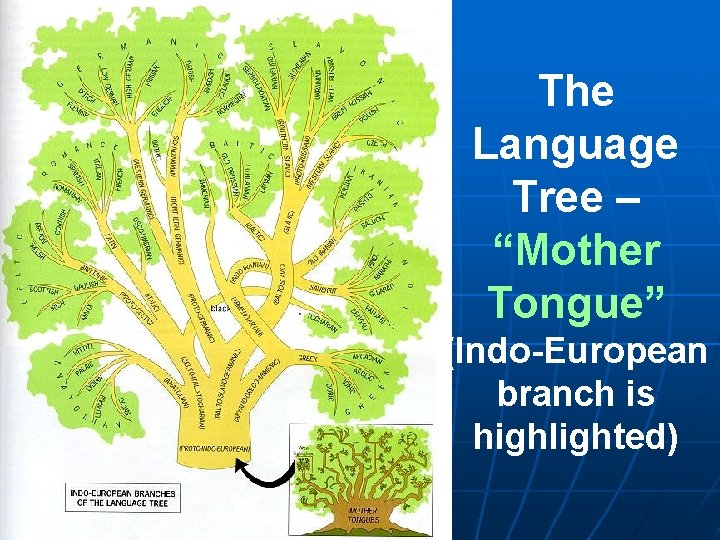
The Language Tree – “Mother Tongue” (Indo-European branch is highlighted)
n n Divergence – differentiation over time and space; languages branch into dialects, become isolated, then new languages—Quebec and Potuguese Convergence – linked to human mobility (relocation diffusion); complicates rules of reconstruction— 800, 1066 Replacement – modification of a language by stronger cultures (acculturation); e. g. Hungarian surrounded by Ind-Eur, Basque? Clues: Linguists look for environmental vocabulary (landforms, vegetation, …)
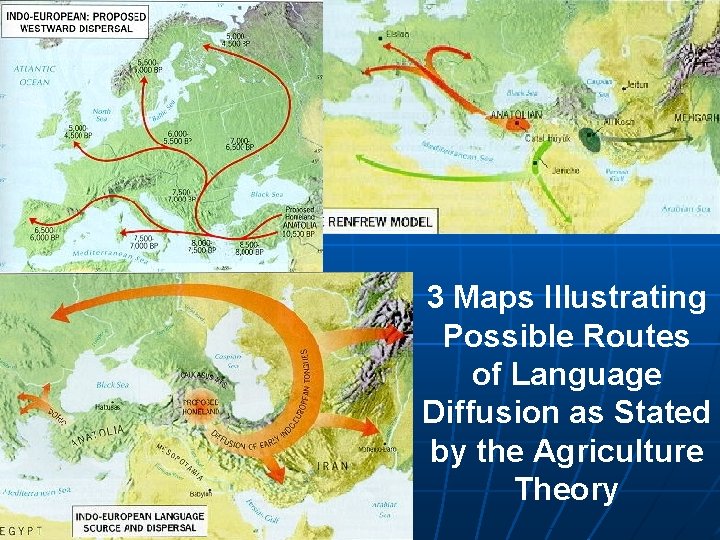
n n n Conquest Theory: Hearth is Ukraine (>5, 000 yrs. ago); people used horses, wheel, and trade, spread language westward (sound shifts)2/25 Agriculture Theory: Hearth is Anatolia (Turkey >10, 000 yrs. ago); Ukraine relied on pastoralism, not farming • Farming people of Anatolia moved N & W • Distance decay from source area; some nonfarming people held out (Basque in Spain) • Drawbacks: Anatolia not ideal for farming, some evidence states Proto-Indo-European language spread eastward first • Mountains, trees, monkeys… all present in that area— 7, 00 -9, 000 years ago Renfrew Model – 3 hearths: Anatolia - Eur, Fertile Crescent (West) – N. Afr. & Arabia, Fert. Cres. (East) – Iran through India
3 Maps Illustrating Possible Routes of Language Diffusion as Stated by the Agriculture Theory
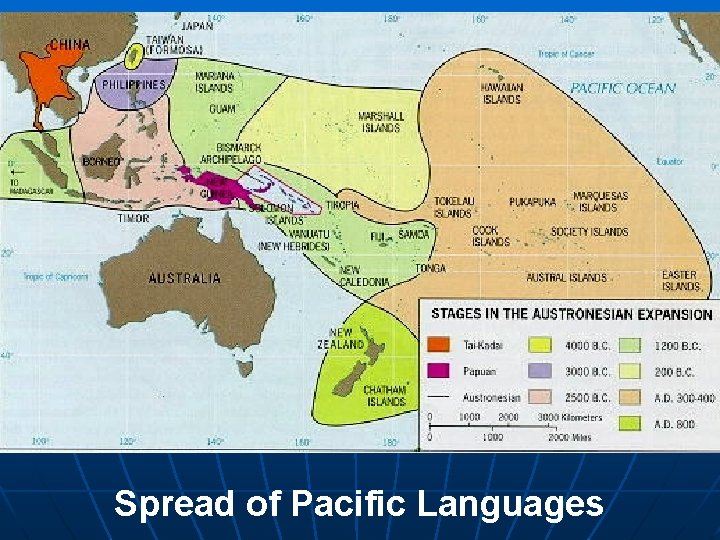
Spread of Pacific Languages
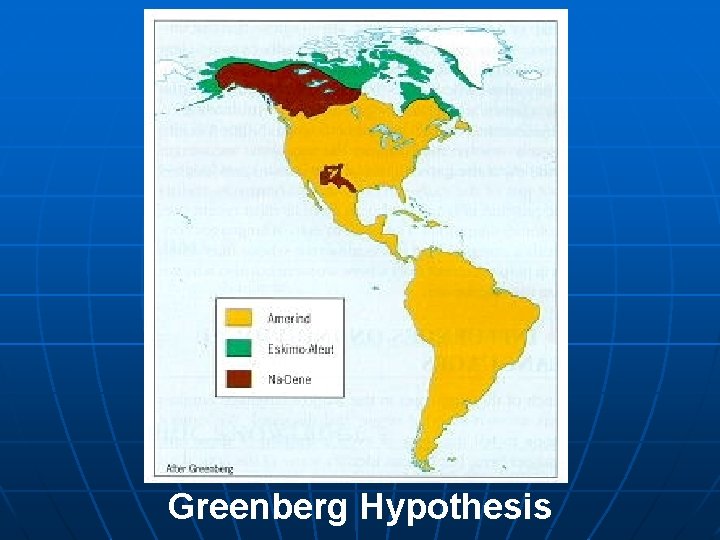
Greenberg Hypothesis
Modern Language Mosaics
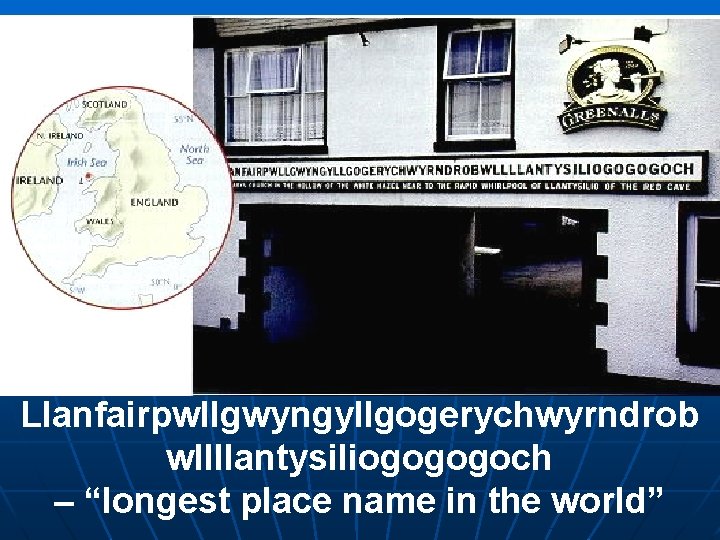
Llanfairpwllgwyngyllgogerychwyrndrob wllllantysiliogogogoch – “longest place name in the world”
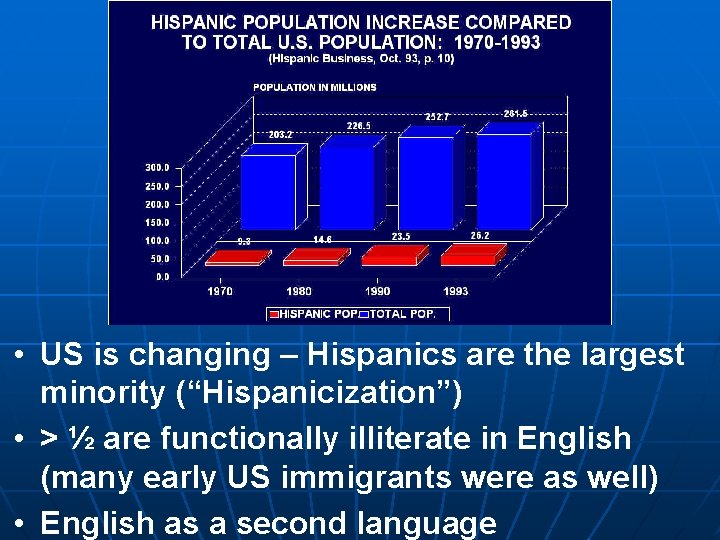
• US is changing – Hispanics are the largest minority (“Hispanicization”) • > ½ are functionally illiterate in English (many early US immigrants were as well) • English as a second language
• One Global Language? • Esperanto Experiment – occurred in early 1900 s – based on Latin & other Eur. languages – failed – not a global tongue (Indo-Eur. ), lacked practical utility • English – becoming a lingua franca of the world (commerce and science) • Latin—French—German —English
n n Lingua Franca • Ancient Mediterranean - “Frankish language” • Today - “common language”, second language Pidgin – a lingua franca that has been simplified and modified through contact w/ other languages Creole • Caribbean – mixing during slavery & colonizing • Today – pidgin later adopted as mother tongue Creolization – lingua franca – becomes a pidgin – then becomes a creole language
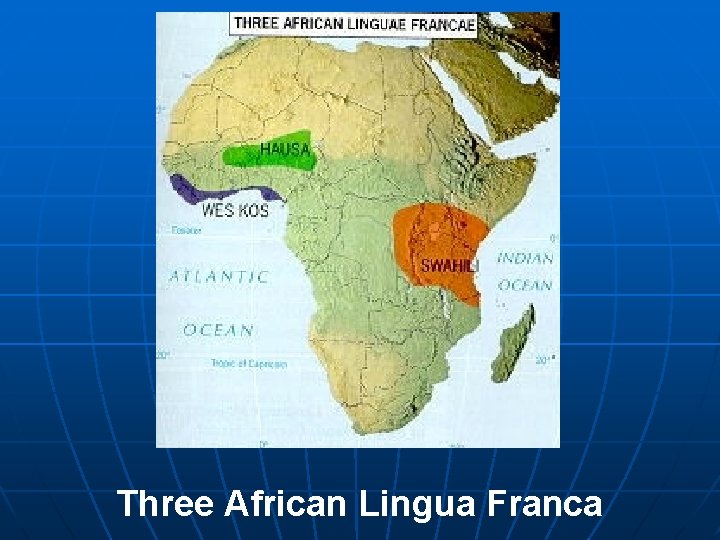
Three African Lingua Franca
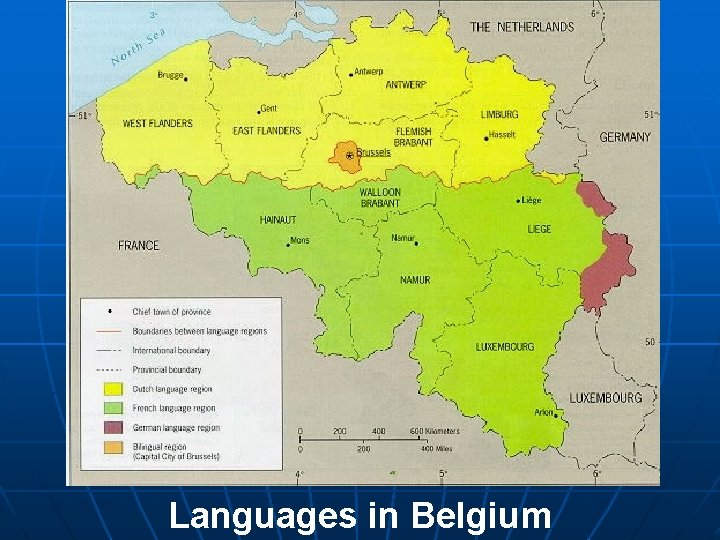
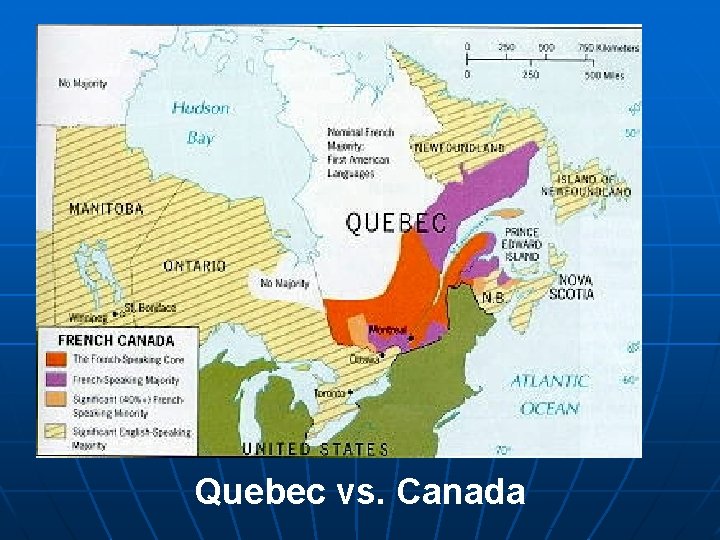
• Language & Culture • Monolingual states – Japan, Venezuela, Iceland, Portugal, Poland Lesotho, … • Multilingual states – all others – Belgium – Dutch vs. French (Brussels officially bilingual) – Canada – Quebec (French by law), English everywhere else
Languages in Belgium
Quebec vs. Canada
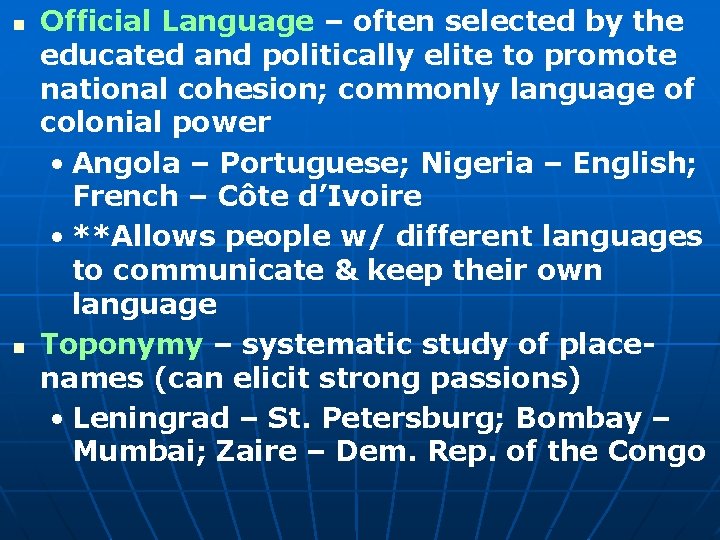
n n Official Language – often selected by the educated and politically elite to promote national cohesion; commonly language of colonial power • Angola – Portuguese; Nigeria – English; French – Côte d’Ivoire • **Allows people w/ different languages to communicate & keep their own language Toponymy – systematic study of placenames (can elicit strong passions) • Leningrad – St. Petersburg; Bombay – Mumbai; Zaire – Dem. Rep. of the Congo