
Diffusion of Innovations Make a better mousetrap and
Diffusion of Innovations “Make a better mousetrap and the world will beat a path to your door. ” –Ralph Waldo Emerson “Not necessarily. ” 9/6/2021 Information Technology 1
Introduction Diffusion – a process by which an innovation is communicated through certain channels over time among members of a social system Innovation – an idea, practice, or object that is perceived as new by an individual or other unit of adoption Hardware Software Example – QWERTY vs. . Dvorak Home keys: 32% vs. 70% Left hand (57%) vs. . Right hand (56%) 9/6/2021 Information Technology 2
Overview of Issues 1. 2. 3. 4. 5. Innovation Social System Time (Decision-making) Communication Channels Consequences 9/6/2021 Information Technology 3
1. Innovation A. Origins Needs/problems Developers (skunkworks – Lockheed, 1943) Poachers (Fax 1843, Alexander Bain, clockmaker, RCA, Xerox, Sharp) Consumers Serendipitously (Major Technologies for Heart Surgery/Treatment (41% no relation)) 9/6/2021 Information Technology 4
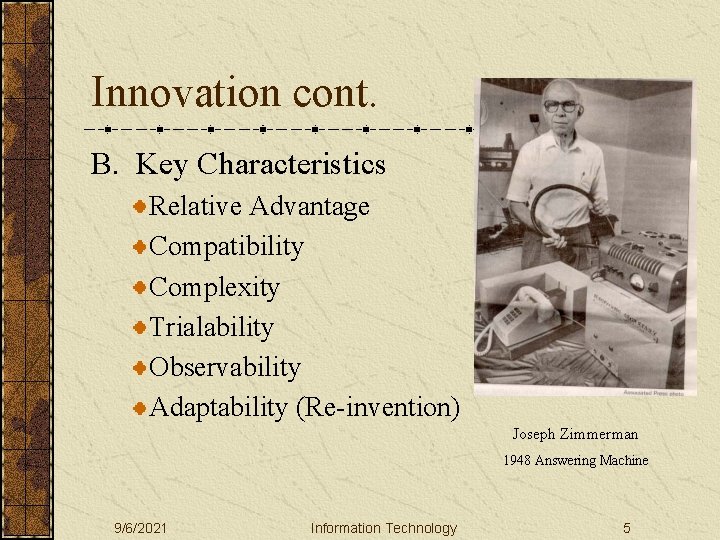
Innovation cont. B. Key Characteristics Relative Advantage Compatibility Complexity Trialability Observability Adaptability (Re-invention) Joseph Zimmerman 1948 Answering Machine 9/6/2021 Information Technology 5
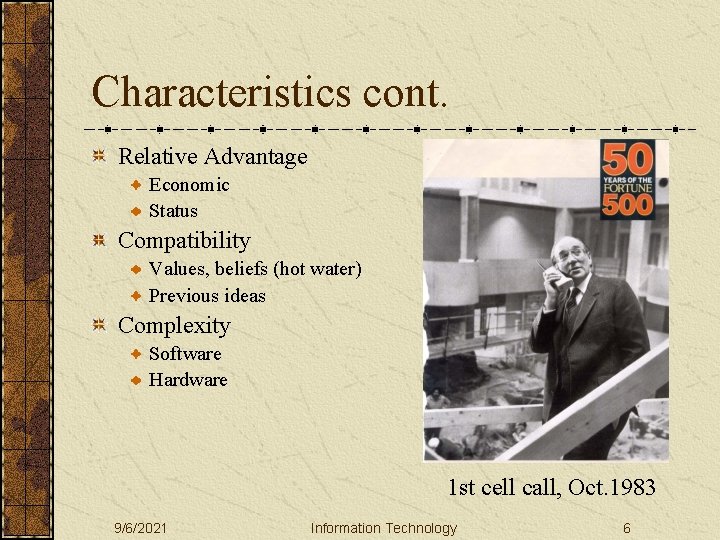
Characteristics cont. Relative Advantage Economic Status Compatibility Values, beliefs (hot water) Previous ideas Complexity Software Hardware 1 st cell call, Oct. 1983 9/6/2021 Information Technology 6
Characteristics cont Trialability Experimenting without commitment Observability Immediate Long-term (AIDS prevention) Adaptability Customize Use for unintended purposes 9/6/2021 Information Technology 7
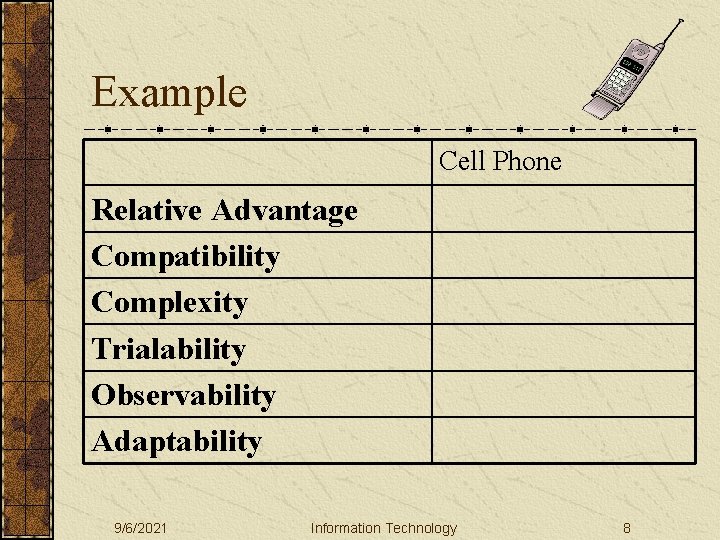
Example Cell Phone Relative Advantage Compatibility Complexity Trialability Observability Adaptability 9/6/2021 Information Technology 8
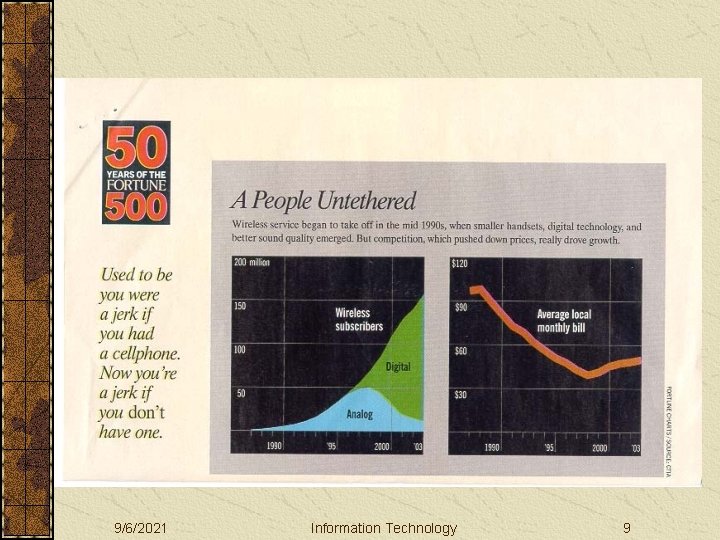
9/6/2021 Information Technology 9
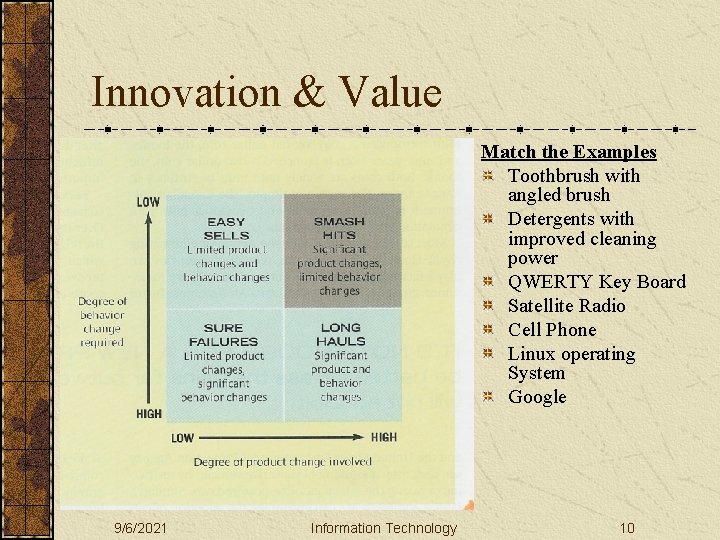
Innovation & Value Match the Examples Toothbrush with angled brush Detergents with improved cleaning power QWERTY Key Board Satellite Radio Cell Phone Linux operating System Google 9/6/2021 Information Technology 10
Innovation cont. C. So what? Increase incentives Increase visibility of results Avoid the “empty vessel fallacy” Be attentive to naming Encourage “tinkering” Decrease perceived complexity (use role-models) Allow trial periods 9/6/2021 Information Technology 11
2. Social System A. Definition – a set of interrelated units engaged in a joint problem-solving to accomplish a common goal. B. Key elements Innovators Early adopters Early majority Late majority Laggards 9/6/2021 Information Technology 12
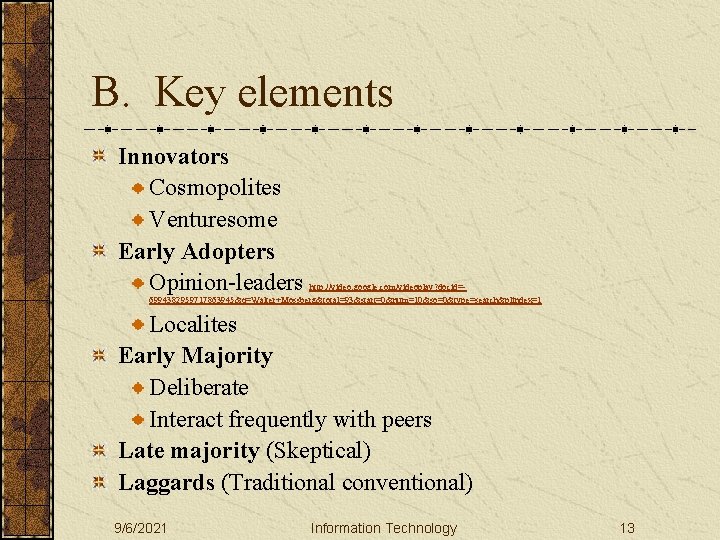
B. Key elements Innovators Cosmopolites Venturesome Early Adopters Opinion-leaders http: //video. google. com/videoplay? docid=6994382959717863945&q=Walter+Mossberg&total=93&start=0&num=10&so=0&type=search&plindex=1 Localites Early Majority Deliberate Interact frequently with peers Late majority (Skeptical) Laggards (Traditional conventional) 9/6/2021 Information Technology 13
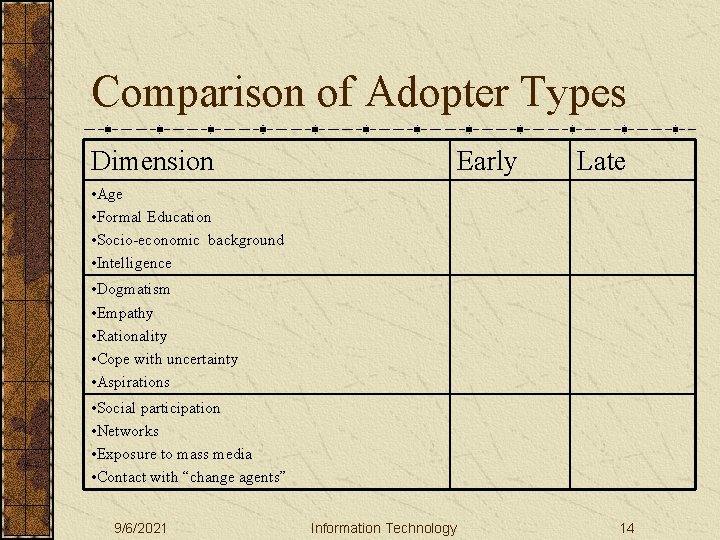
Comparison of Adopter Types Dimension Early Late • Age • Formal Education • Socio-economic background • Intelligence • Dogmatism • Empathy • Rationality • Cope with uncertainty • Aspirations • Social participation • Networks • Exposure to mass media • Contact with “change agents” 9/6/2021 Information Technology 14
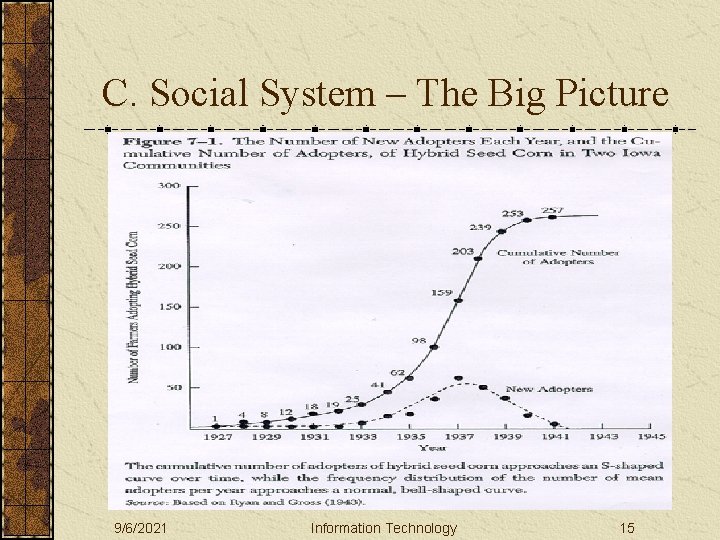
C. Social System – The Big Picture 9/6/2021 Information Technology 15
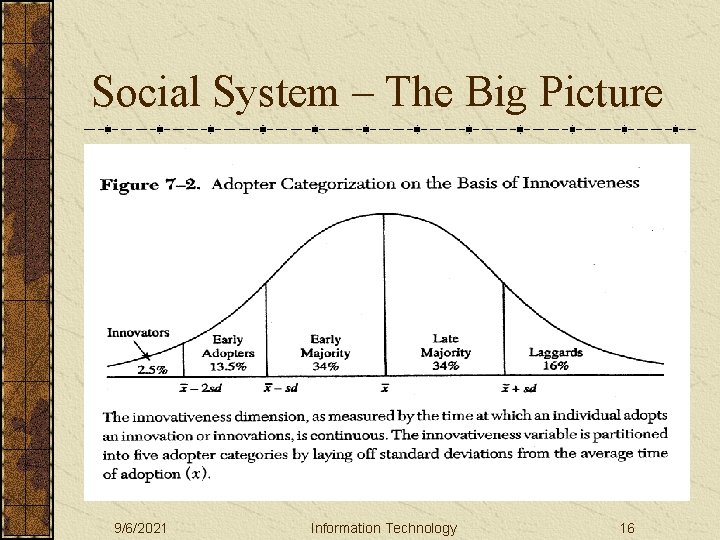
Social System – The Big Picture 9/6/2021 Information Technology 16
Social System cont. D. So What? Segment your audience Stress different features of the innovation with different audiences Recognize that the “change agent” may not be the best person to persuade certain groups. 9/6/2021 Information Technology 17
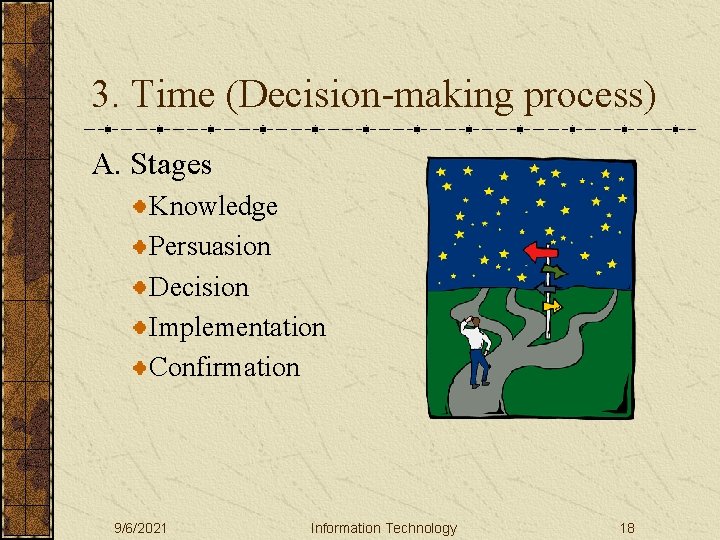
3. Time (Decision-making process) A. Stages Knowledge Persuasion Decision Implementation Confirmation 9/6/2021 Information Technology 18
Stages cont. Knowledge stage Recall of information Comprehension of messages Knowledge or skill to make adoption Persuasion stage Liking the innovation Discussing new behavior with others Accepting messages about innovation Forming positive opinions Supporting innovation 9/6/2021 Information Technology 19
Stages cont. Decision stage Form intention to seek more information Form intention to try innovation Implementation stage Use the innovation on a regular basis Acquire additional information Confirmation stage Recognizing the benefits Integrating the innovation into routine Promote to others 9/6/2021 Information Technology 20
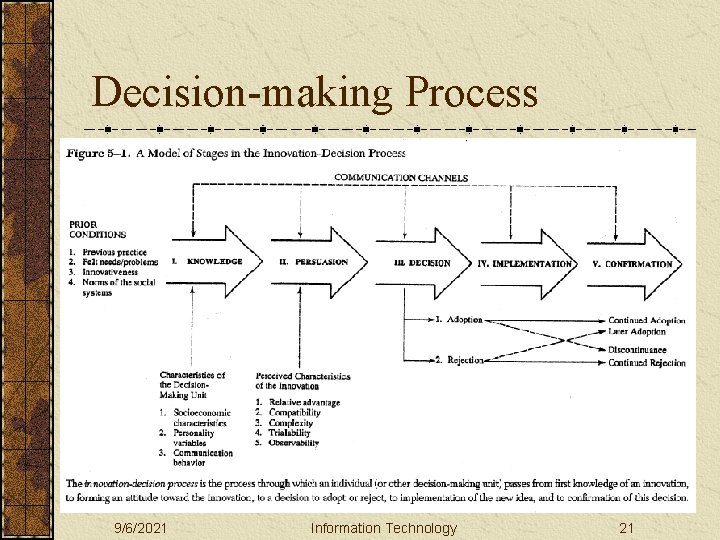
Decision-making Process 9/6/2021 Information Technology 21
Stages cont. B. So what? Recognize that adoption is not a one-shot decision • Active rejection • Passive rejection Use mass media in the 1 st phase Use interpersonal networks in phases 2 – 5 9/6/2021 Information Technology 22
4. Communication channels A. Important channels Change agents Mass media Interpersonal networks 9/6/2021 Information Technology 23
Change agents Examples – teachers, consultants, public health workers, agricultural extension agents, salespeople etc. (linkers) Roles Develop need Establish information-sharing relationship Diagnosis problems Create intent to change Translate intent into action Stabilize adoption Methods Foster credibility Emphasize homophily Focus on clients 9/6/2021 Information Technology 24
Mass media Hypodermic needle model Two-step flow model Multi-step flow 9/6/2021 Information Technology 25
Interpersonal Channel Established through personal networks of like people Achieving critical mass (80 -20 rule) 9/6/2021 Information Technology 26
Channels cont. B. So What? Recognize limits of mass media Distinguish between “competence” and “interpersonal” credibility Develop strategy linked to phases and timing 9/6/2021 Information Technology 27
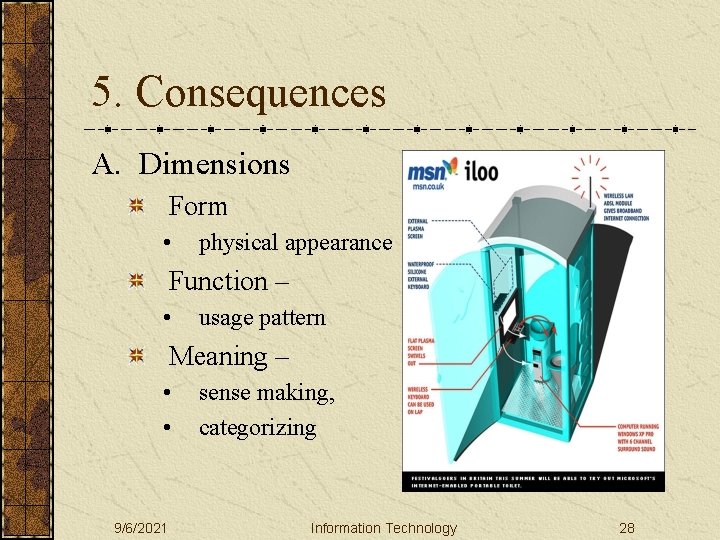
5. Consequences A. Dimensions Form • physical appearance Function – • usage pattern Meaning – • • 9/6/2021 sense making, categorizing Information Technology 28
Consequences cont. B. Types Desirable versus undesirable (productivity, higher income, equity etc. ) Direct versus indirect Anticipated versus unanticipated 9/6/2021 Information Technology 29
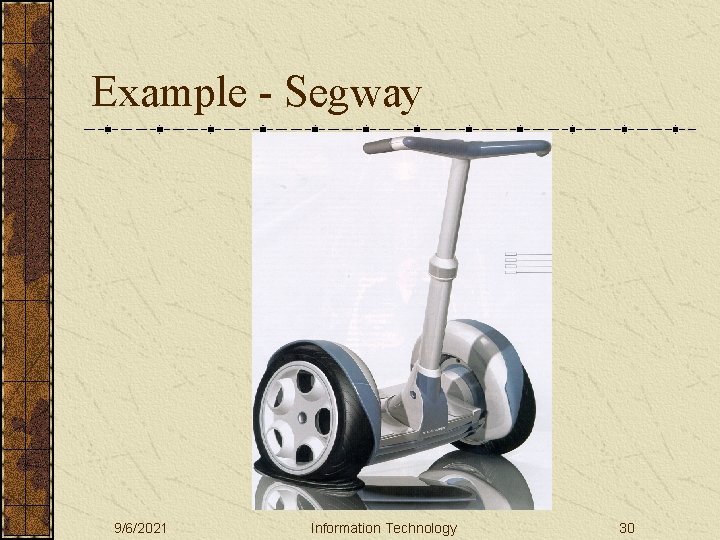
Example - Segway 9/6/2021 Information Technology 30
Consequences cont. C. So what? Anticipate both positive & negative consequences Recognize that some important consequences will emerge over time Discuss the implicit tradeoffs made by adoption Realize that an innovations benefits and liabilities are not easily separated. Monitor the meanings associated with the innovation. 9/6/2021 Information Technology 31
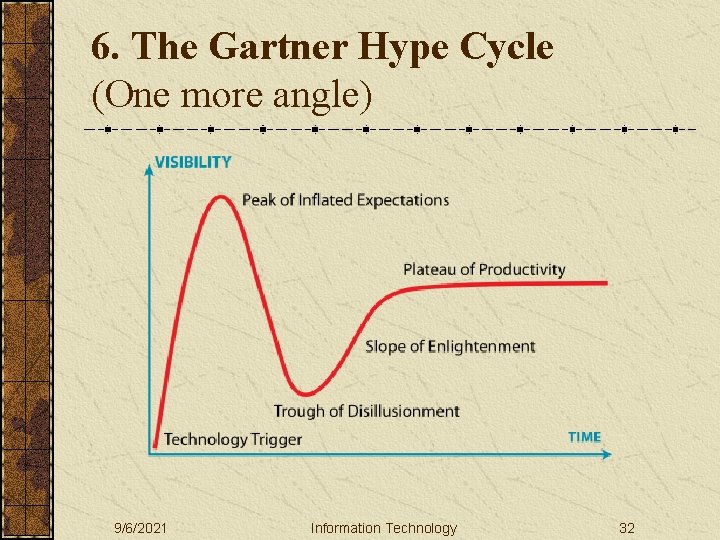
6. The Gartner Hype Cycle (One more angle) 9/6/2021 Information Technology 32
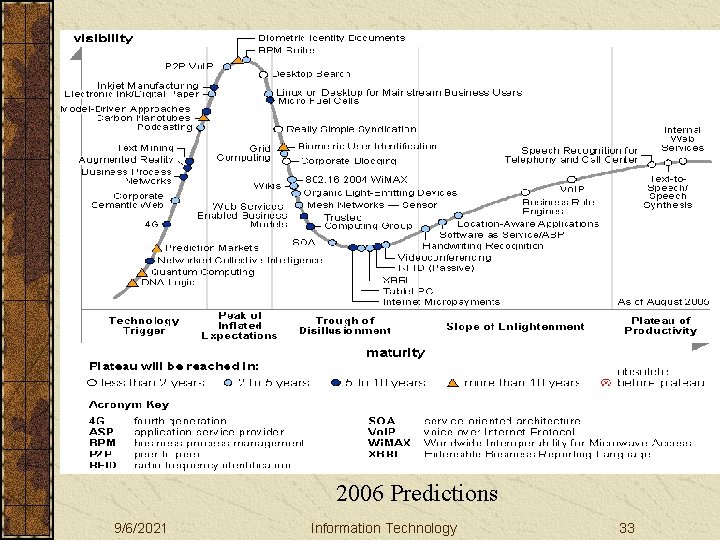
2006 Predictions 9/6/2021 Information Technology 33
- Slides: 33