
Diffusion Mass TransferI Mr D P Deshpande Assistant




- Slides: 49
Diffusion Mass Transfer-I Mr. D. P. Deshpande Assistant Professor, Department of Chemical Engineering , DYPIEMR
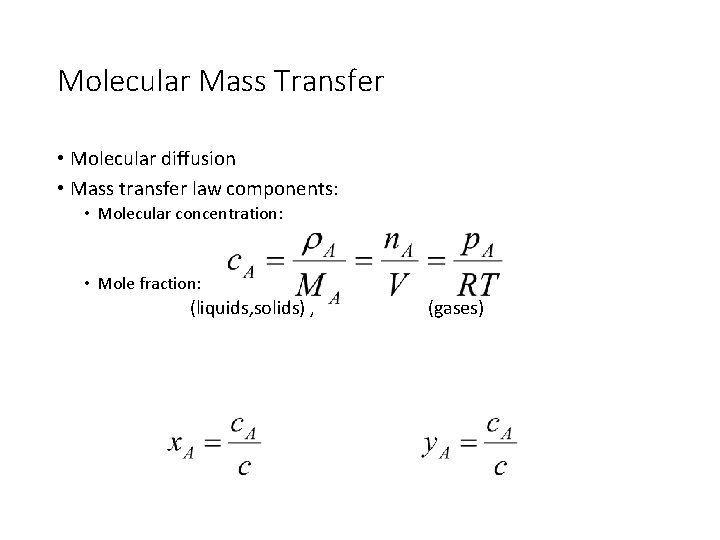
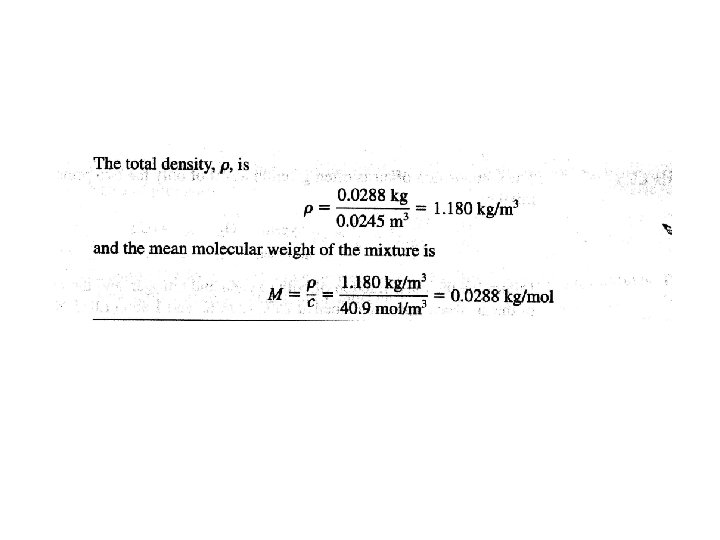
Molecular Mass Transfer • Molecular diffusion • Mass transfer law components: • Molecular concentration: • Mole fraction: (liquids, solids) , (gases)
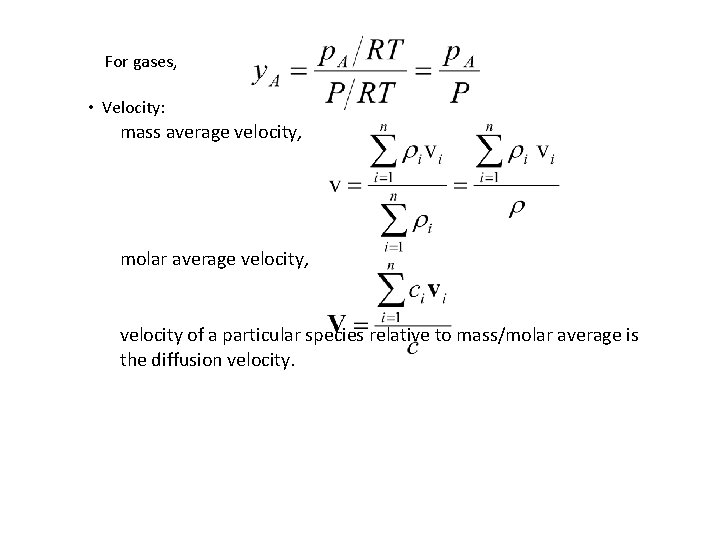
For gases, • Velocity: mass average velocity, molar average velocity, velocity of a particular species relative to mass/molar average is the diffusion velocity.
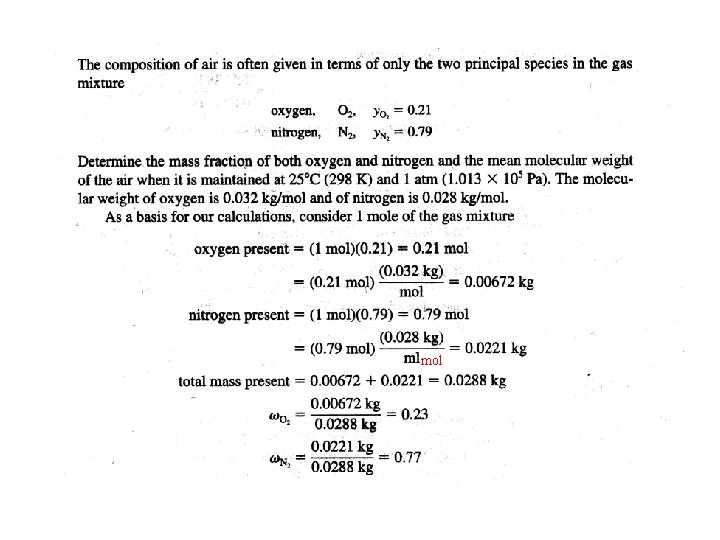
mol
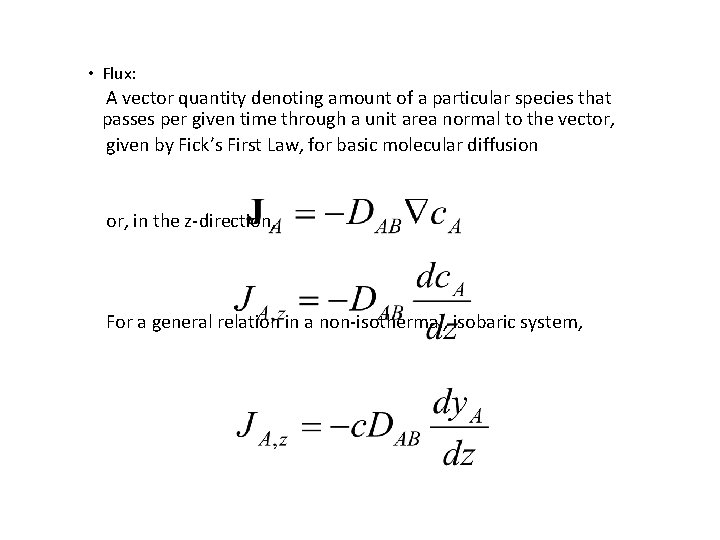
• Flux: A vector quantity denoting amount of a particular species that passes per given time through a unit area normal to the vector, given by Fick’s First Law, for basic molecular diffusion or, in the z-direction, For a general relation in a non-isothermal, isobaric system,
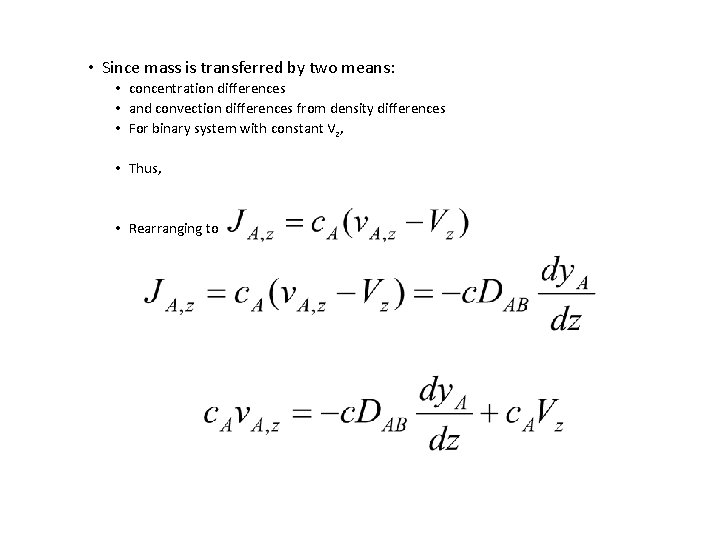
• Since mass is transferred by two means: • concentration differences • and convection differences from density differences • For binary system with constant Vz, • Thus, • Rearranging to
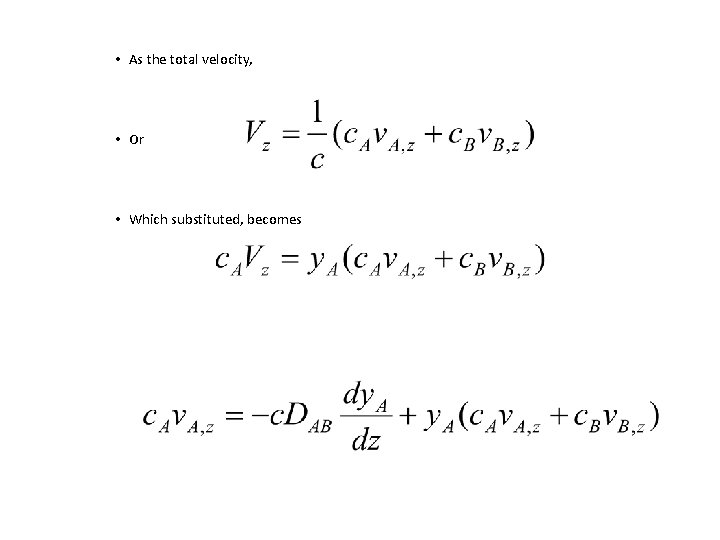
• As the total velocity, • Or • Which substituted, becomes
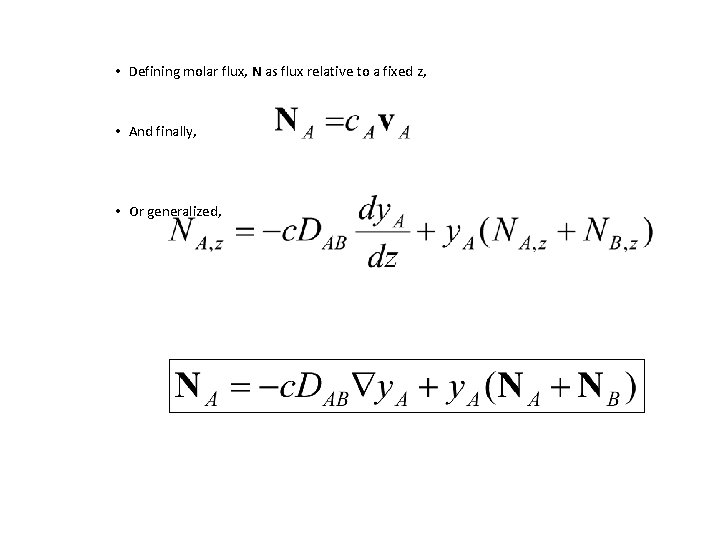
• Defining molar flux, N as flux relative to a fixed z, • And finally, • Or generalized,
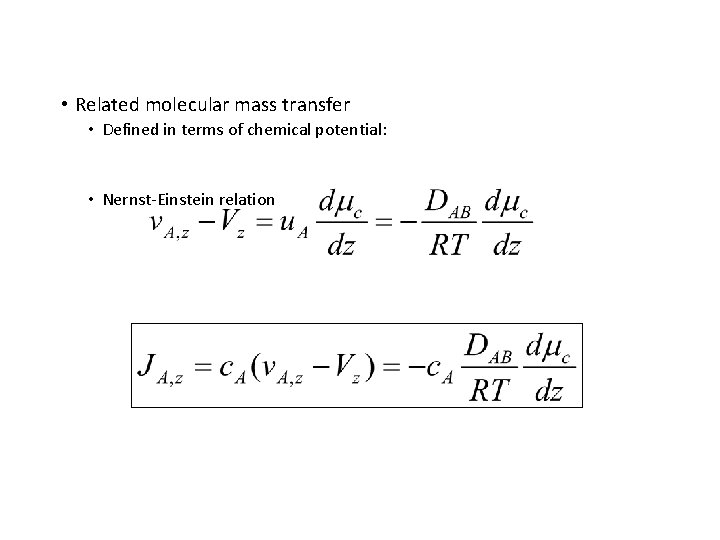
• Related molecular mass transfer • Defined in terms of chemical potential: • Nernst-Einstein relation
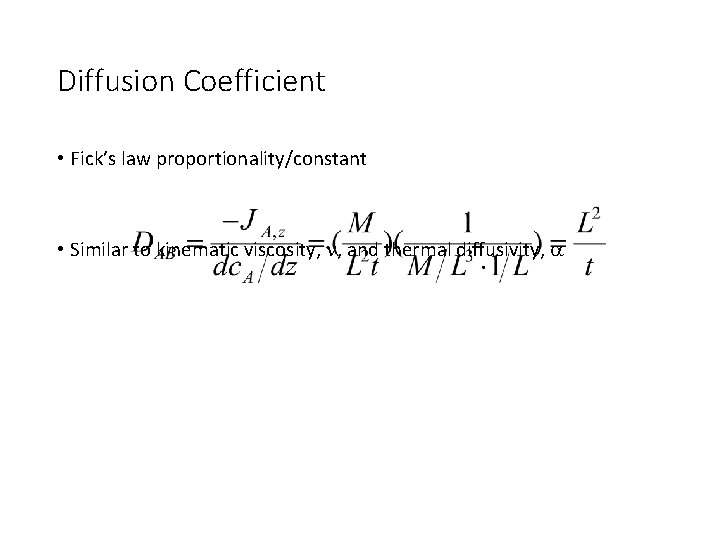
Diffusion Coefficient • Fick’s law proportionality/constant • Similar to kinematic viscosity, n, and thermal diffusivity, a
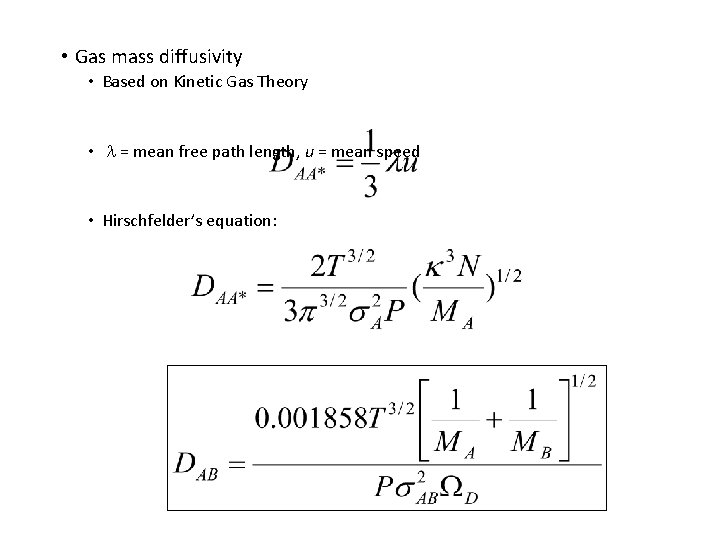
• Gas mass diffusivity • Based on Kinetic Gas Theory • l = mean free path length, u = mean speed • Hirschfelder’s equation:
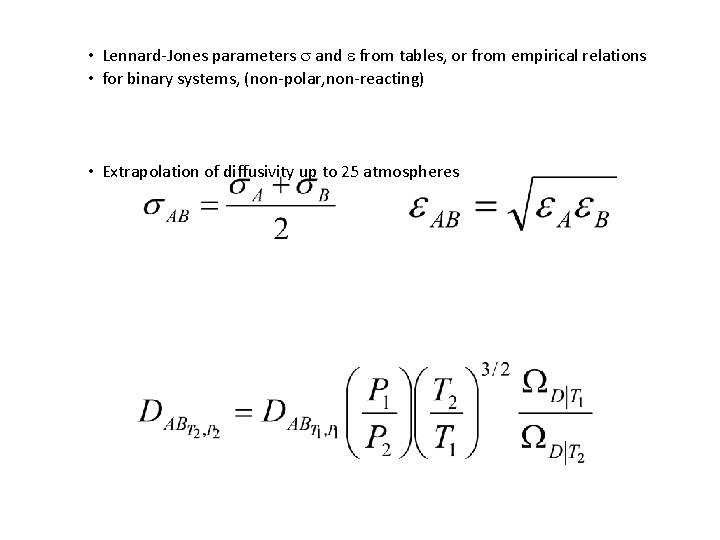
• Lennard-Jones parameters s and e from tables, or from empirical relations • for binary systems, (non-polar, non-reacting) • Extrapolation of diffusivity up to 25 atmospheres
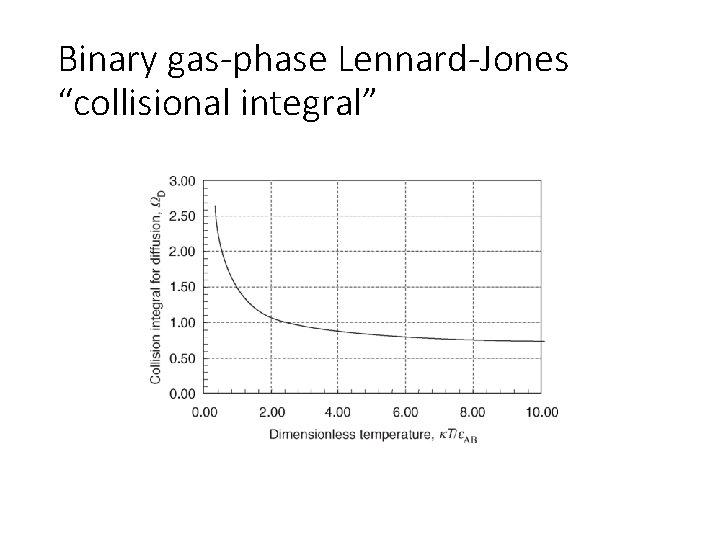
Binary gas-phase Lennard-Jones “collisional integral”
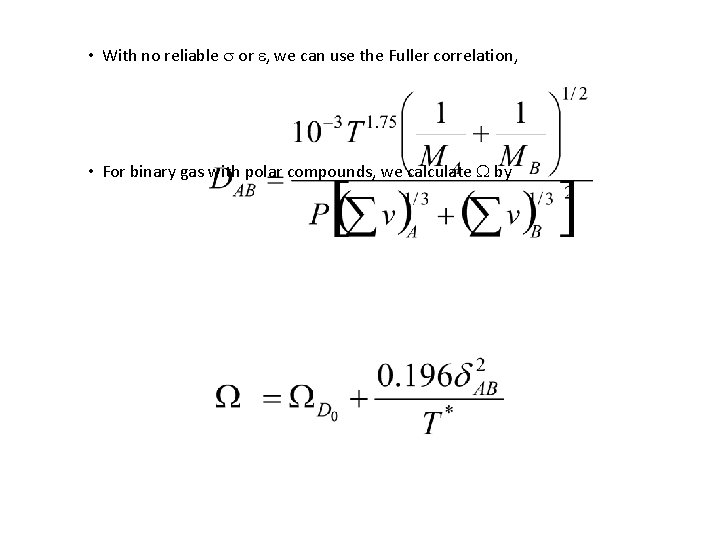
• With no reliable s or e, we can use the Fuller correlation, • For binary gas with polar compounds, we calculate W by
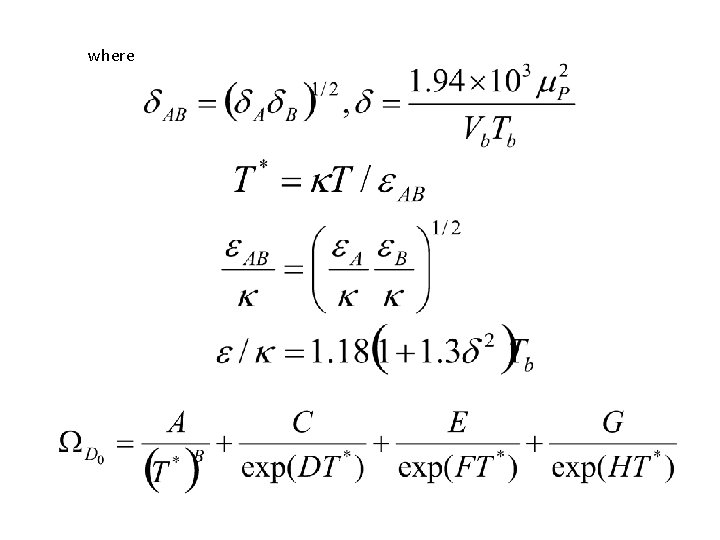
where
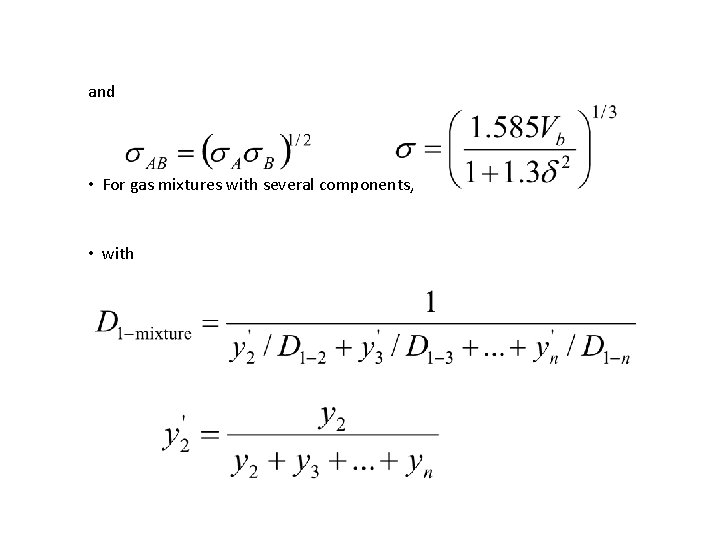
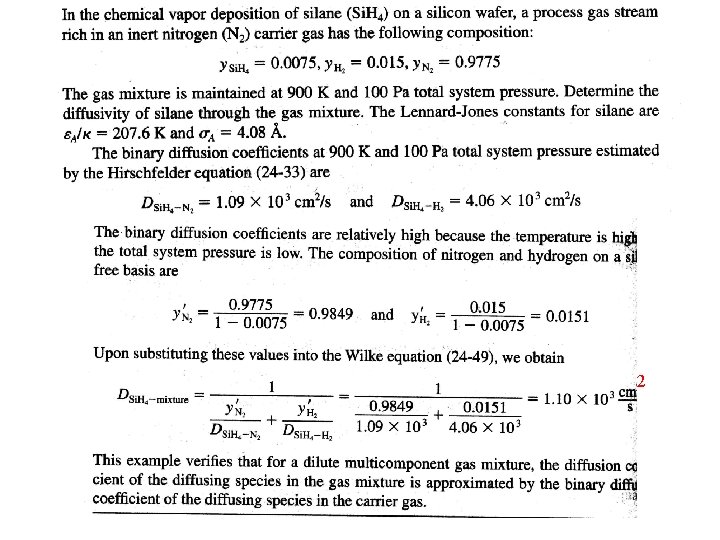
and • For gas mixtures with several components, • with
2
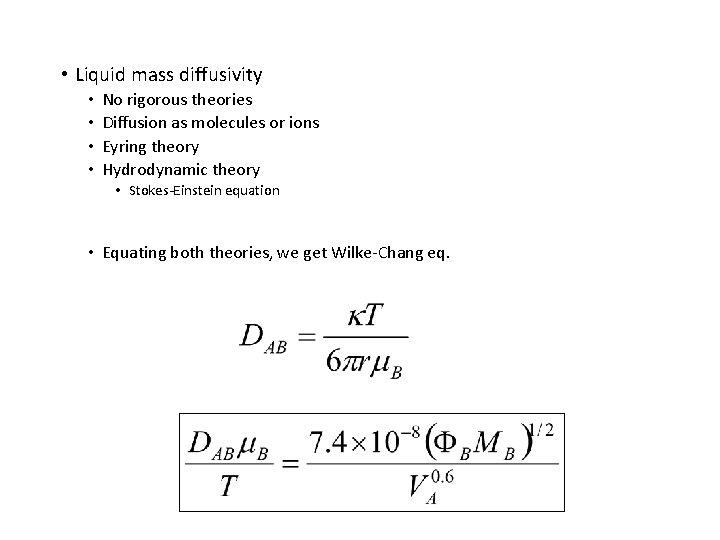
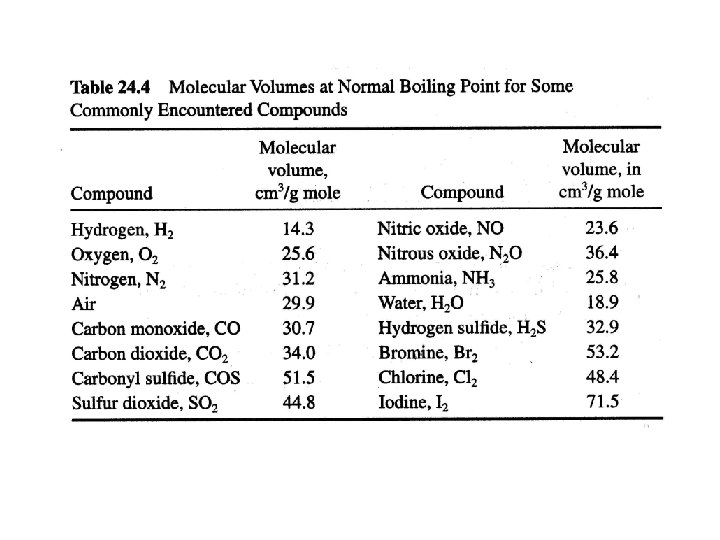
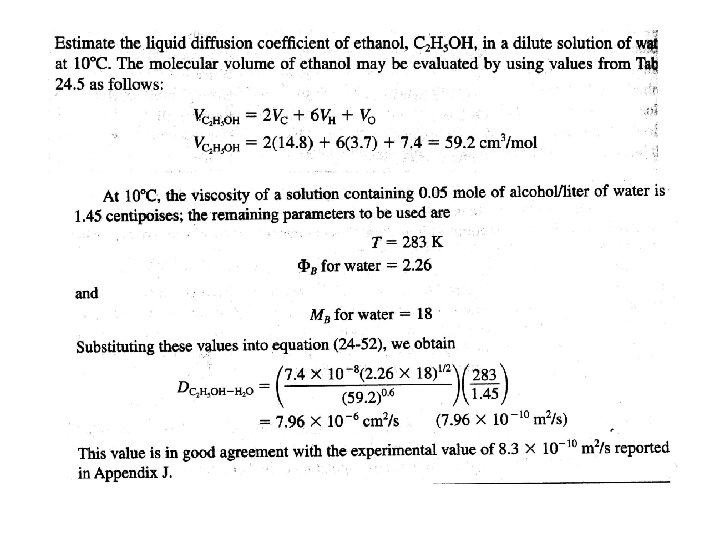
• Liquid mass diffusivity • • No rigorous theories Diffusion as molecules or ions Eyring theory Hydrodynamic theory • Stokes-Einstein equation • Equating both theories, we get Wilke-Chang eq.
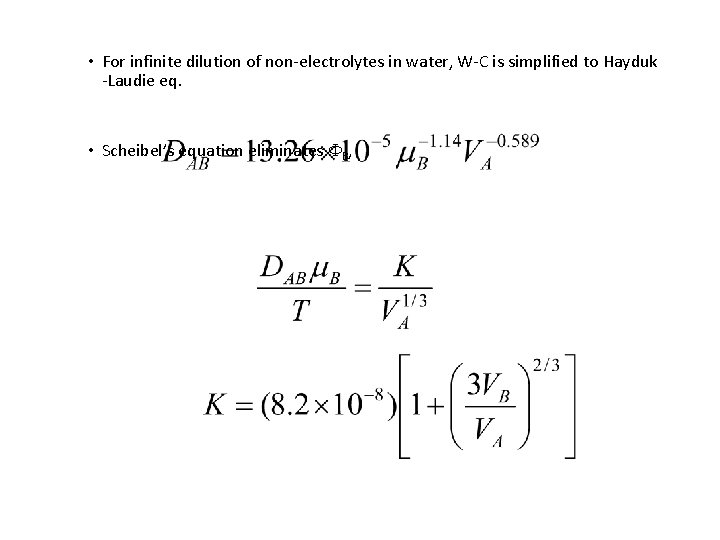
• For infinite dilution of non-electrolytes in water, W-C is simplified to Hayduk -Laudie eq. • Scheibel’s equation eliminates FB,
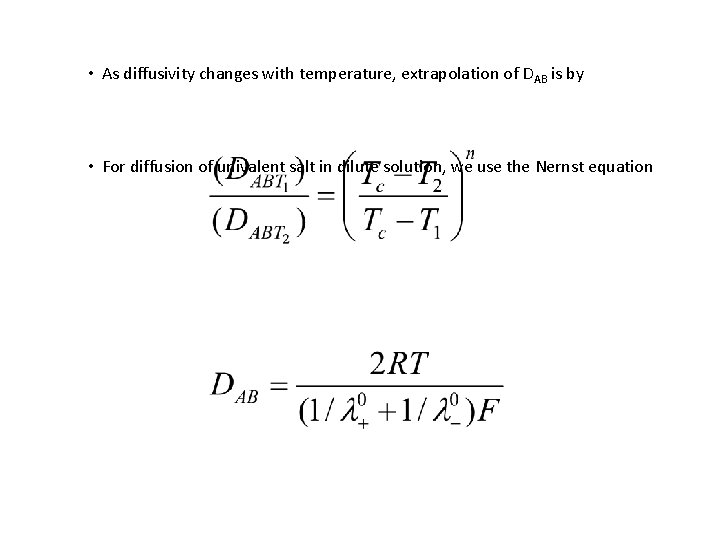
• As diffusivity changes with temperature, extrapolation of DAB is by • For diffusion of univalent salt in dilute solution, we use the Nernst equation
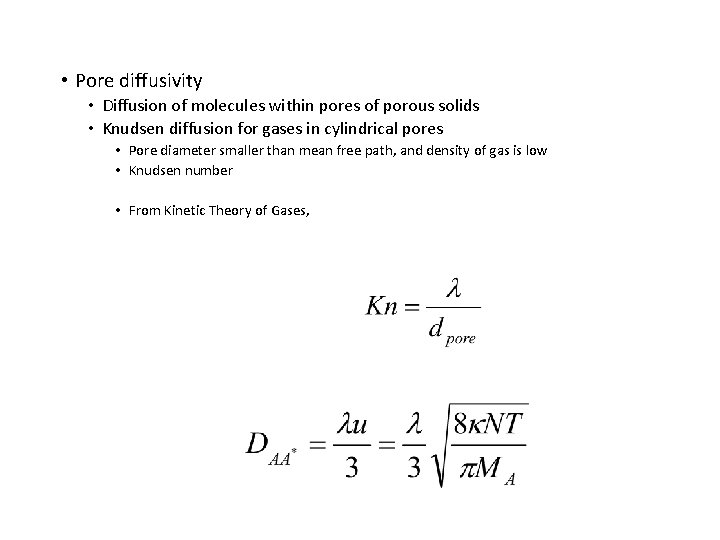
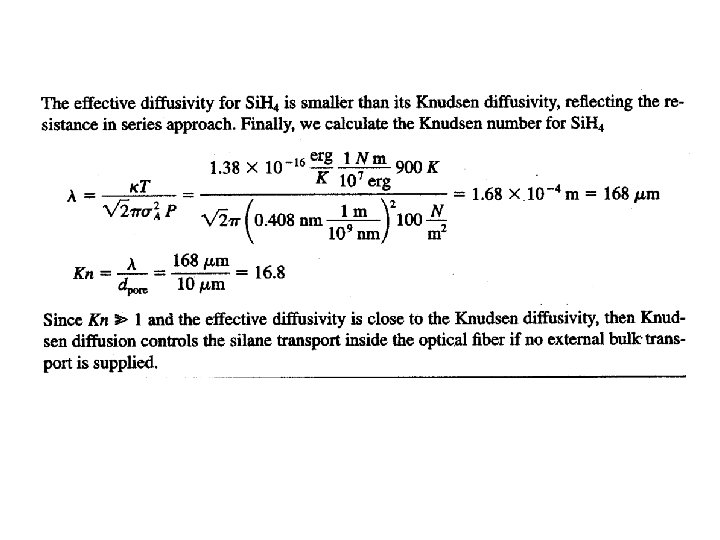
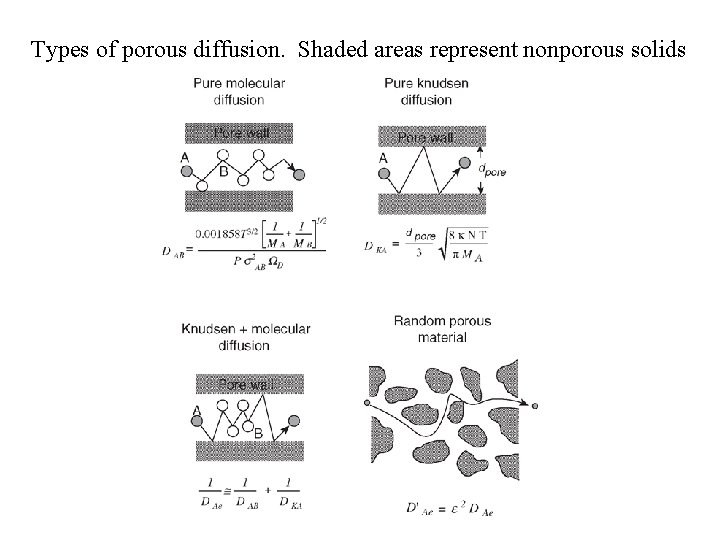
• Pore diffusivity • Diffusion of molecules within pores of porous solids • Knudsen diffusion for gases in cylindrical pores • Pore diameter smaller than mean free path, and density of gas is low • Knudsen number • From Kinetic Theory of Gases,
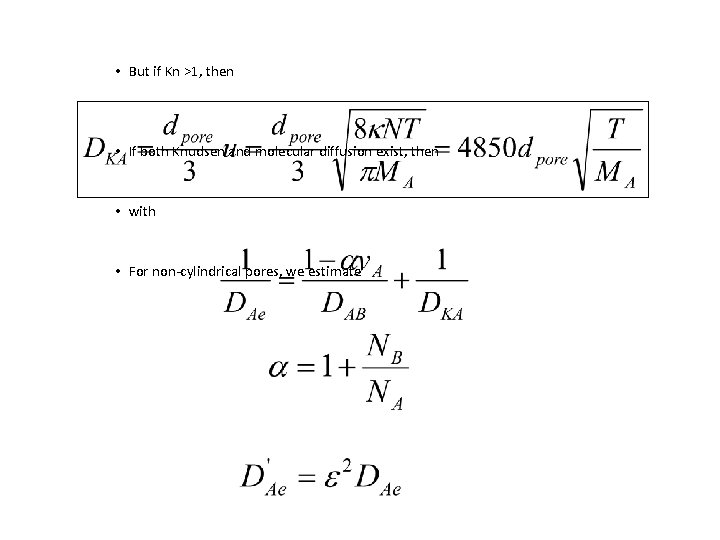
• But if Kn >1, then • If both Knudsen and molecular diffusion exist, then • with • For non-cylindrical pores, we estimate
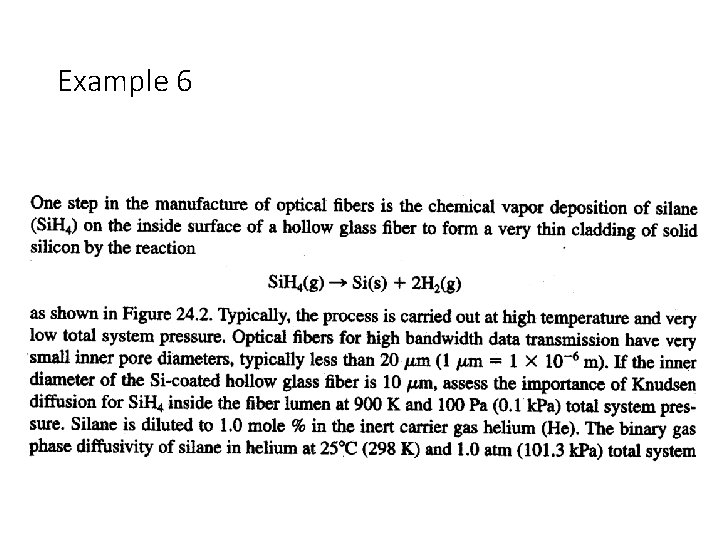
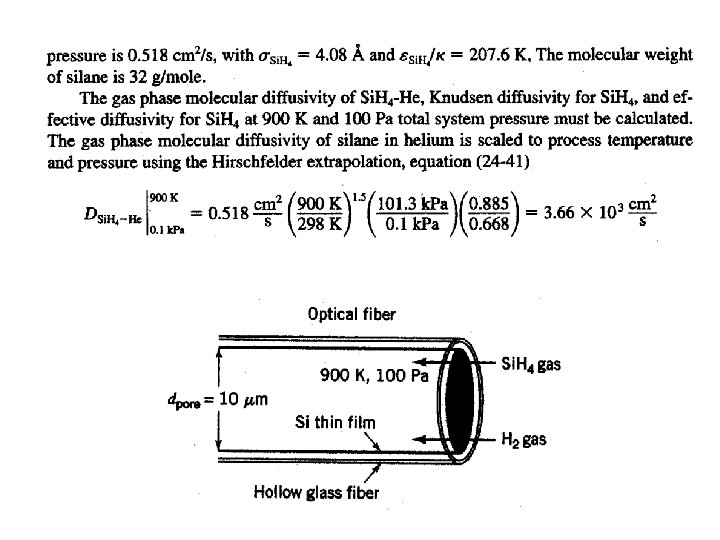
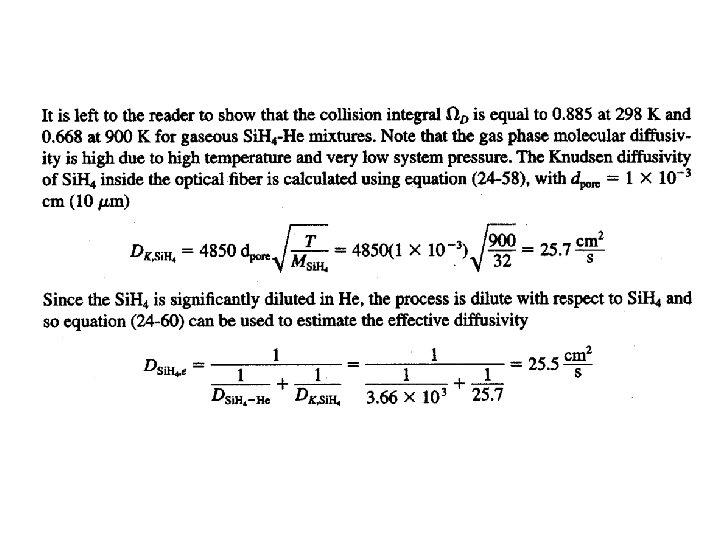
Example 6
Types of porous diffusion. Shaded areas represent nonporous solids
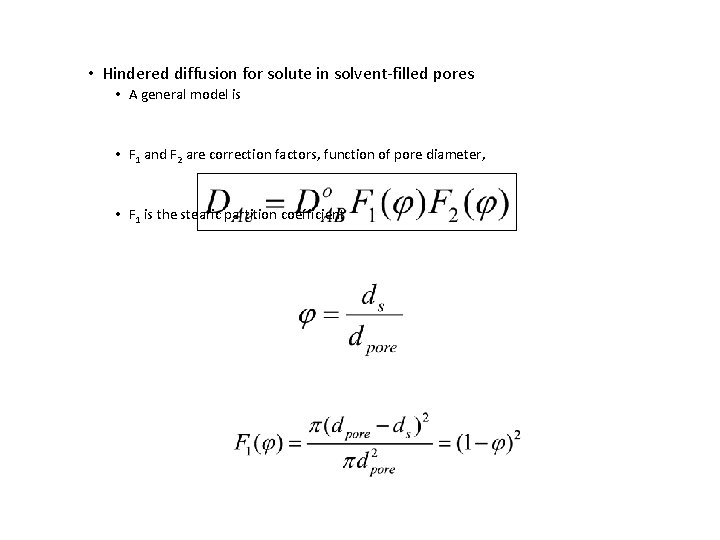
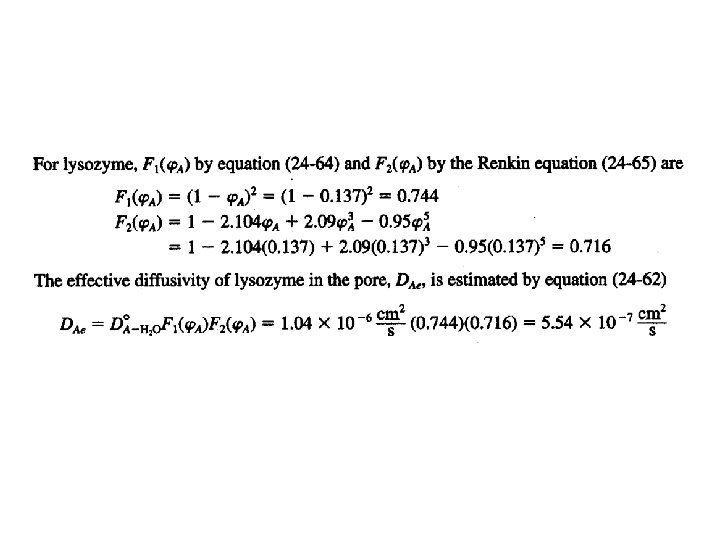
• Hindered diffusion for solute in solvent-filled pores • A general model is • F 1 and F 2 are correction factors, function of pore diameter, • F 1 is the stearic partition coefficient
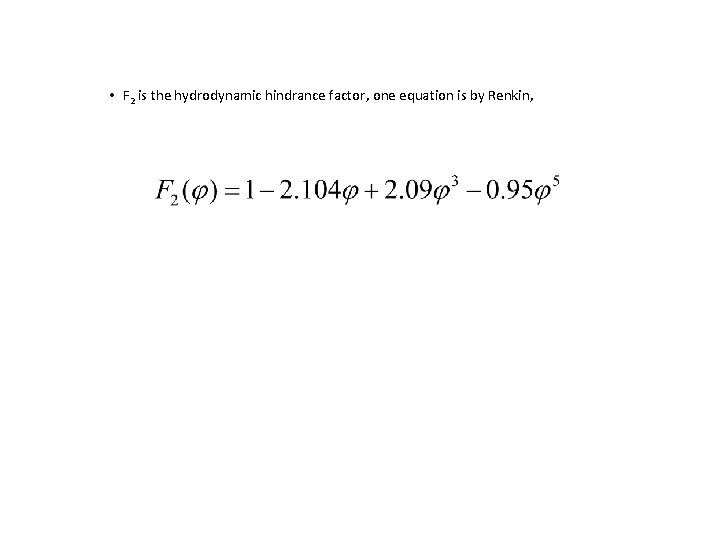
• F 2 is the hydrodynamic hindrance factor, one equation is by Renkin,
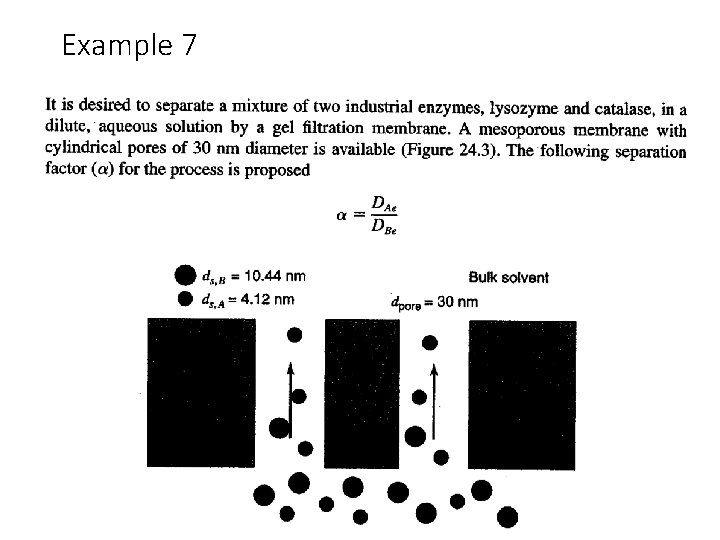
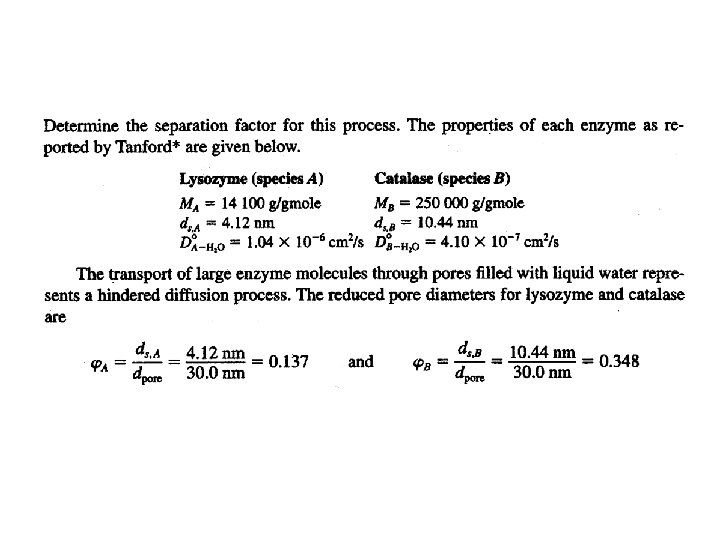
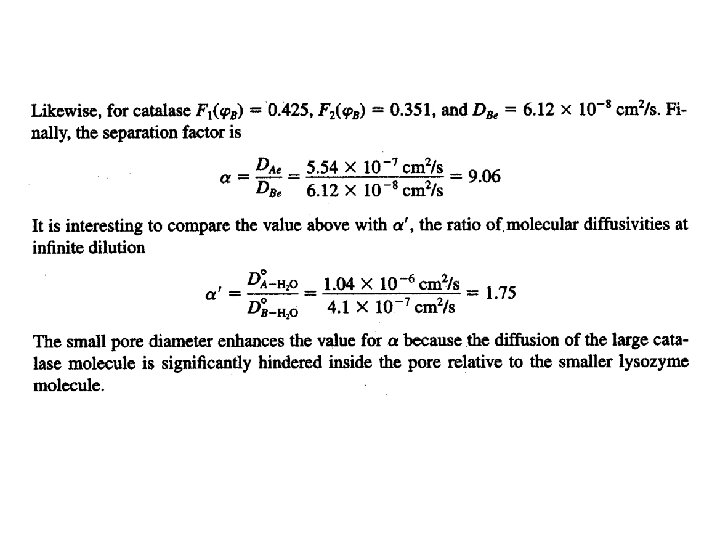
Example 7
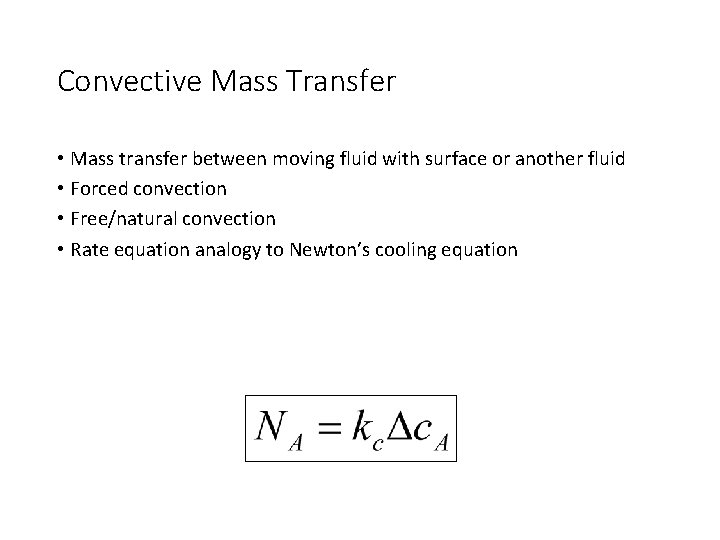
Convective Mass Transfer • Mass transfer between moving fluid with surface or another fluid • Forced convection • Free/natural convection • Rate equation analogy to Newton’s cooling equation
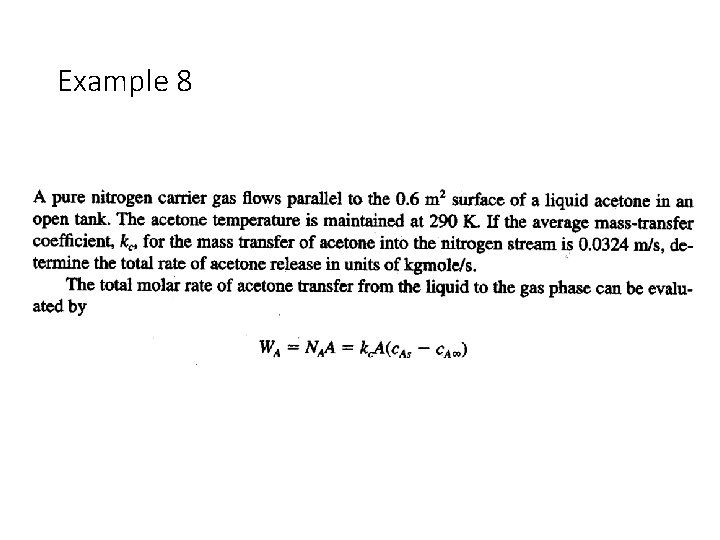
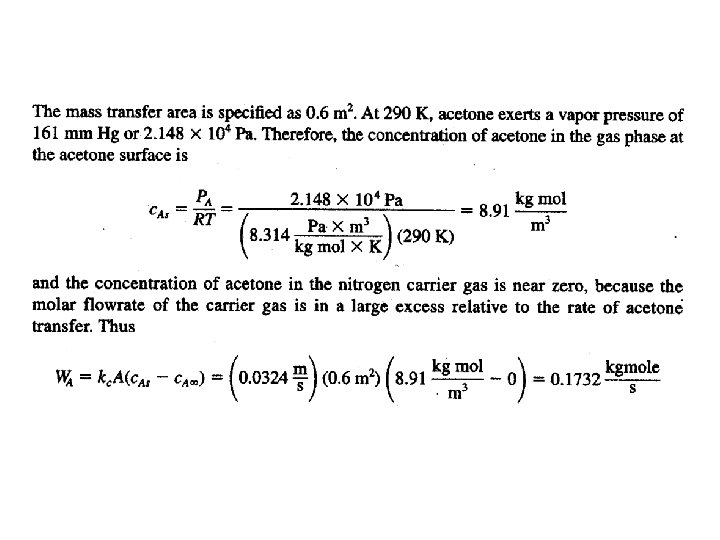
Example 8
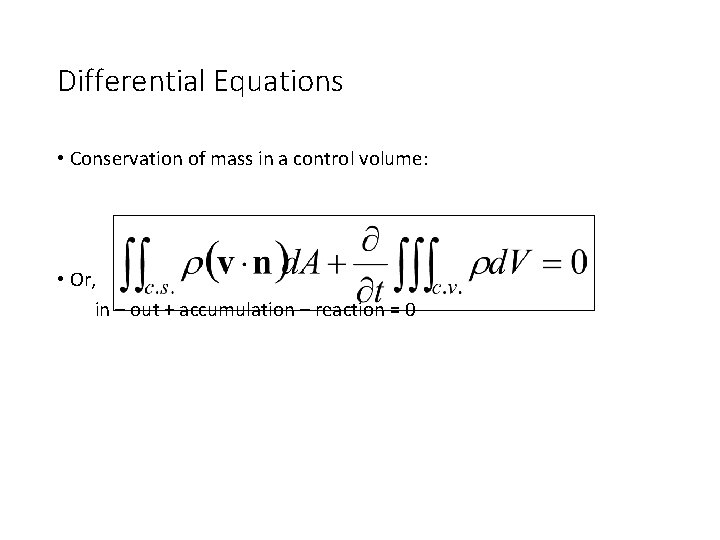
Differential Equations • Conservation of mass in a control volume: • Or, in – out + accumulation – reaction = 0
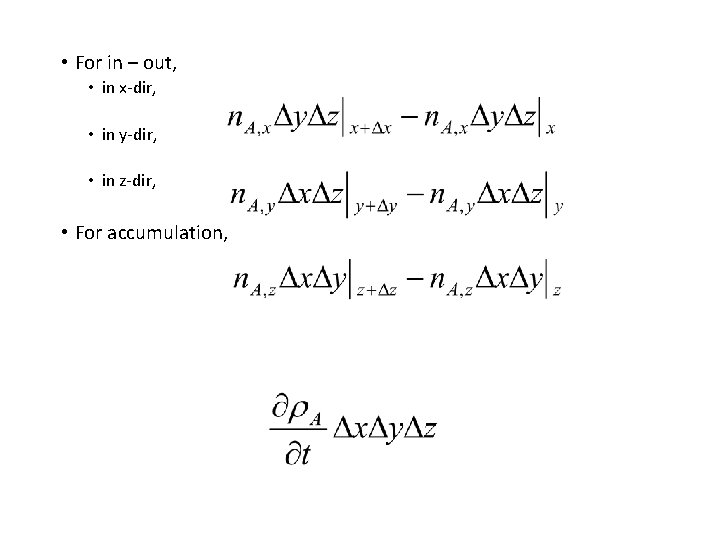
• For in – out, • in x-dir, • in y-dir, • in z-dir, • For accumulation,
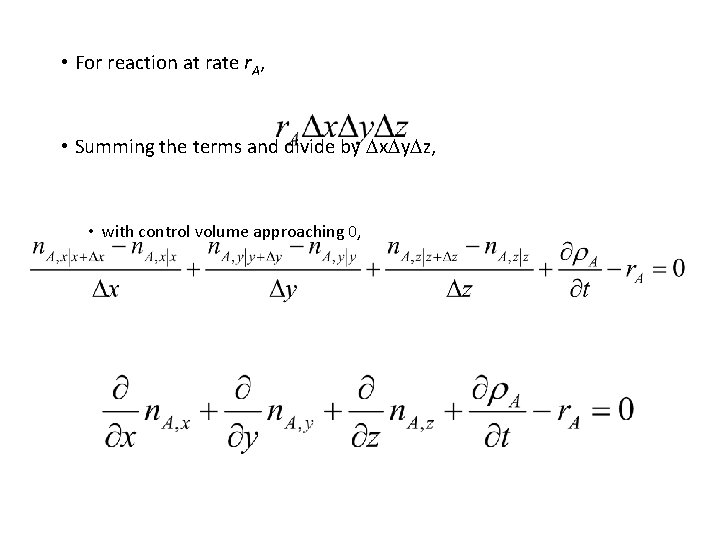
• For reaction at rate r. A, • Summing the terms and divide by Dx. Dy. Dz, • with control volume approaching 0,
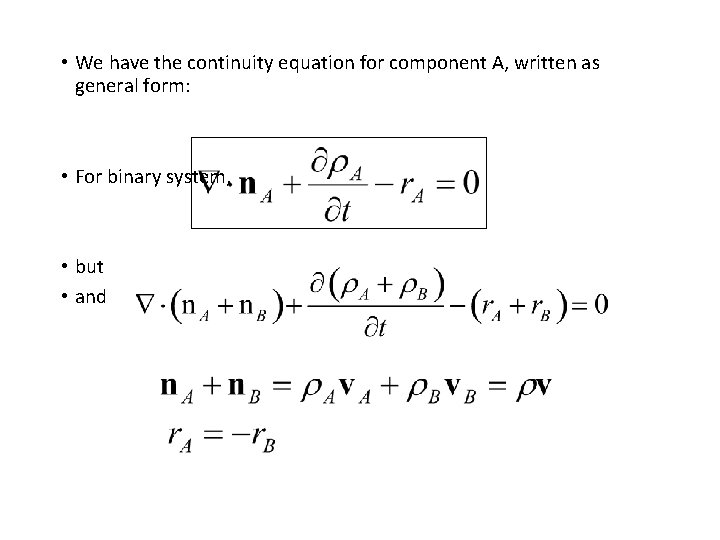
• We have the continuity equation for component A, written as general form: • For binary system, • but • and
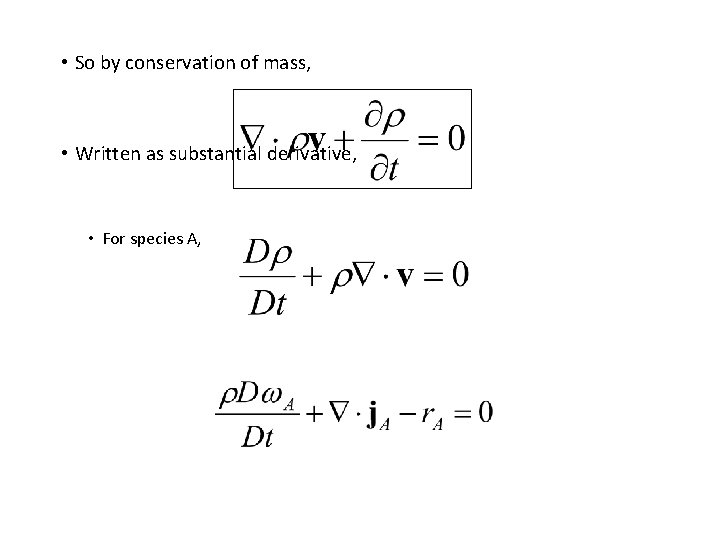
• So by conservation of mass, • Written as substantial derivative, • For species A,
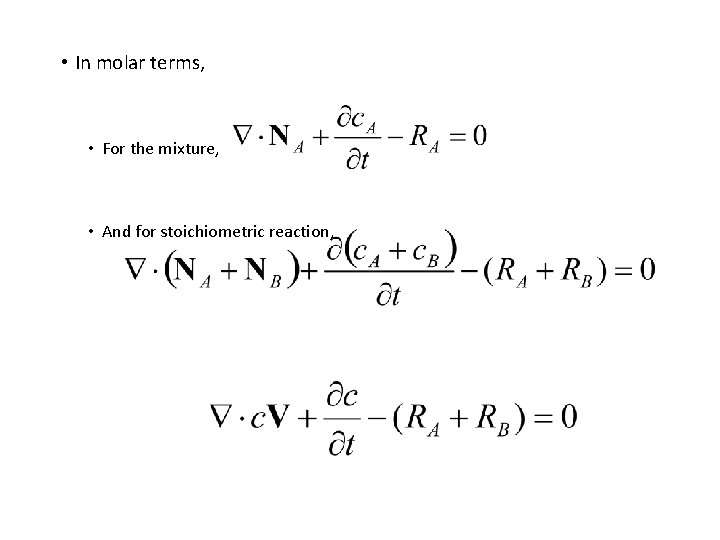
• In molar terms, • For the mixture, • And for stoichiometric reaction,