
Diffusion in Human Geography Fall 2011 Sonya Groves
- Slides: 7
Diffusion in Human Geography Fall 2011 Sonya Groves AP Human Geography
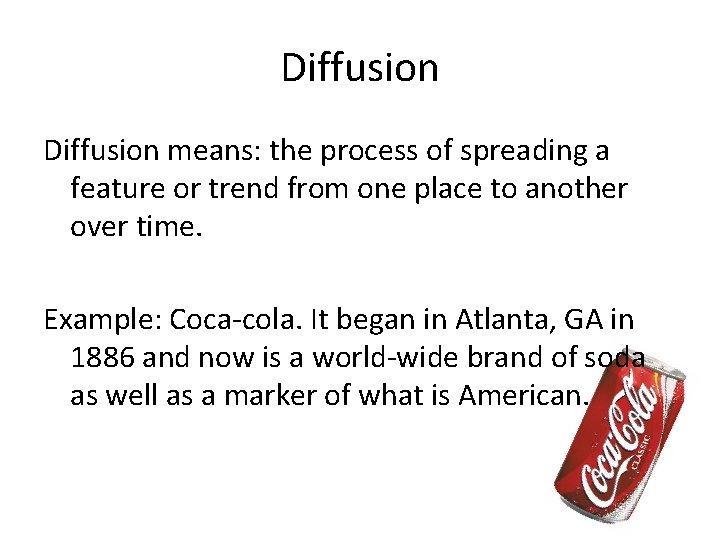
Diffusion means: the process of spreading a feature or trend from one place to another over time. Example: Coca-cola. It began in Atlanta, GA in 1886 and now is a world-wide brand of soda as well as a marker of what is American.
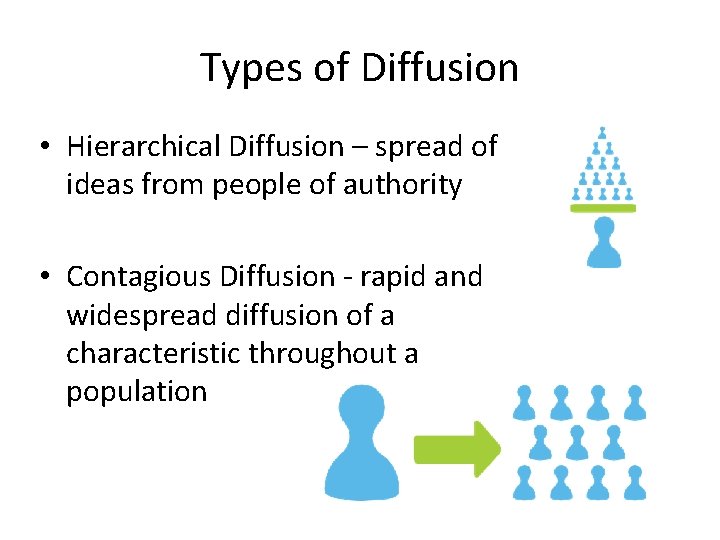
Types of Diffusion • Hierarchical Diffusion – spread of ideas from people of authority • Contagious Diffusion - rapid and widespread diffusion of a characteristic throughout a population
Types of Diffusion Continued • Material Diffusion – commercial products that are diffused over a wide area • Technological Diffusion – where technological advances are diffused over a wide area
Types of Diffusion Continued • Relocation Diffusion - an idea or innovation that migrates into new areas, leaving behind its origin or source of the cultural trait. • Expansion Diffusion -an innovation or idea that develops in a source area and remains strong there, while also spreading outward to other areas.
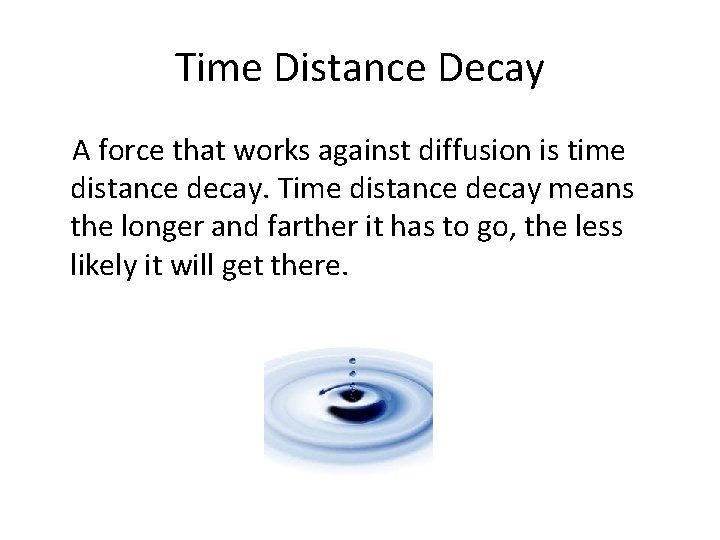
Time Distance Decay A force that works against diffusion is time distance decay. Time distance decay means the longer and farther it has to go, the less likely it will get there.
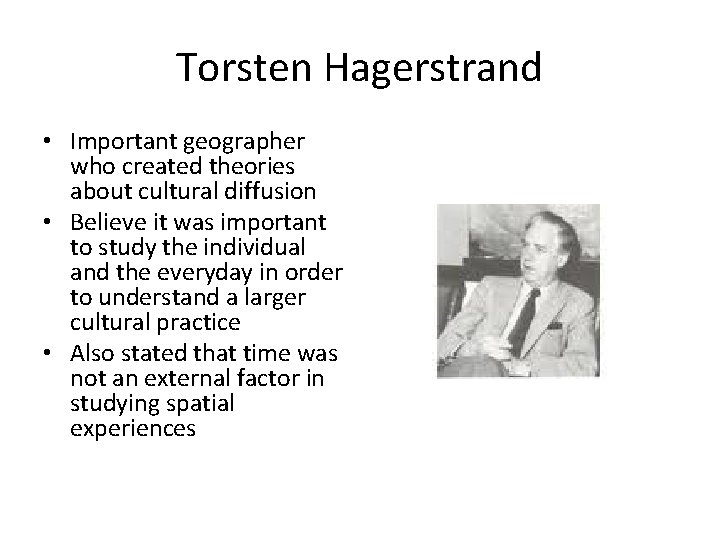
Torsten Hagerstrand • Important geographer who created theories about cultural diffusion • Believe it was important to study the individual and the everyday in order to understand a larger cultural practice • Also stated that time was not an external factor in studying spatial experiences