
Diffusion Factors Affecting Diffusion Distance the particle has

- Slides: 48
Diffusion • Factors Affecting Diffusion – Distance the particle has to move – Molecule size • Smaller is faster – Temperature • More heat, faster motion – Gradient size • The difference between high and low concentrations – Electrical forces • Opposites attract, like charges repel Copyright © 2010 Pearson Education, Inc.
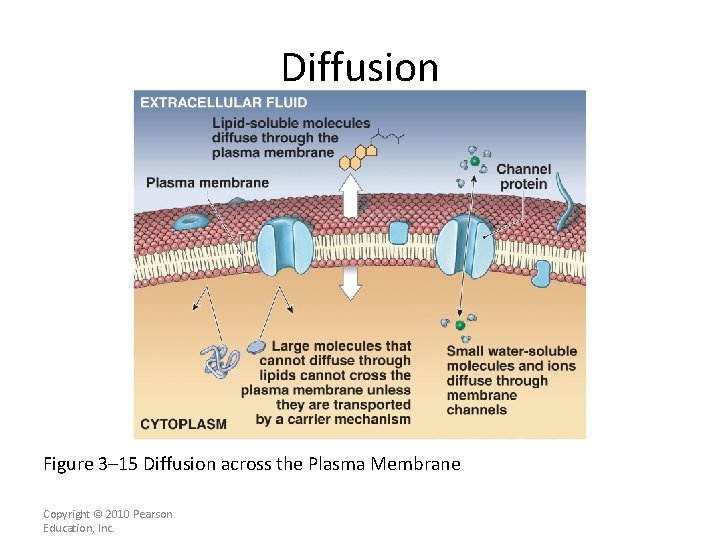
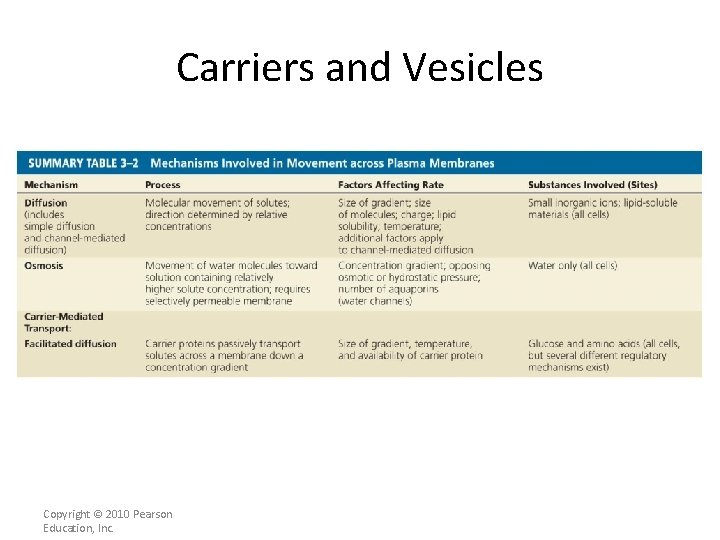
Diffusion • Diffusion Across Plasma Membranes – Can be simple or channel mediated • Materials that diffuse through plasma membrane by simple diffusion: – lipid-soluble compounds (alcohols, fatty acids, and steroids) – dissolved gases (oxygen and carbon dioxide) • Materials that pass through transmembrane proteins (channels): – are water–soluble compounds – are ions Copyright © 2010 Pearson Education, Inc.
Diffusion • Diffusion Across Plasma Membranes – Factors in channel-mediated diffusion • Passage depends on: – size – charge – interaction with the channel Copyright © 2010 Pearson Education, Inc.
Diffusion Figure 3– 15 Diffusion across the Plasma Membrane Copyright © 2010 Pearson Education, Inc.
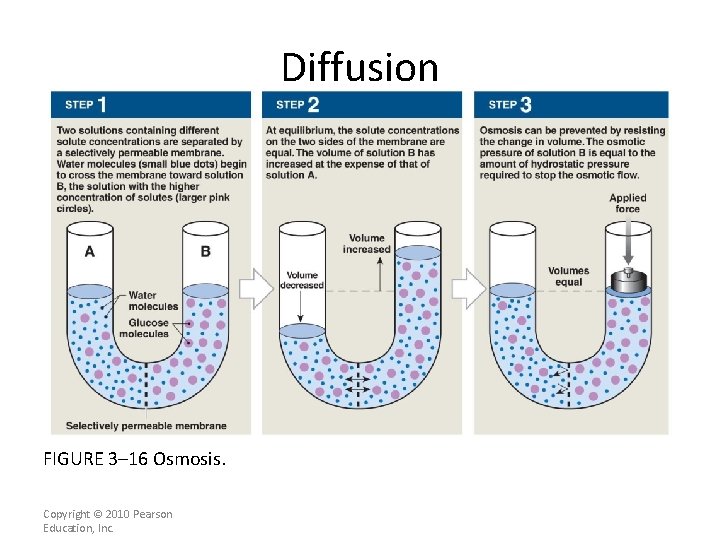
Diffusion • Osmosis: A Special Case of Diffusion – Osmosis is the diffusion of water across the cell membrane • More solute molecules, lower concentration of water molecules • Membrane must be freely permeable to water, selectively permeable to solutes • Water molecules diffuse across membrane toward solution with more solutes • Volume increases on the side with more solutes Copyright © 2010 Pearson Education, Inc.
Diffusion FIGURE 3– 16 Osmosis. Copyright © 2010 Pearson Education, Inc.
Diffusion • Osmosis: A Special Case of Diffusion – Osmotic Pressure • Is the force of a concentration gradient of water • Equals the force (hydrostatic pressure) needed to block osmosis Copyright © 2010 Pearson Education, Inc.
Diffusion • Osmolarity and Tonicity – The osmotic effect of a solute on a cell: • Two fluids may have equal osmolarity, but different tonicity – Isotonic (iso- = same, tonos = tension) • A solution that does not cause osmotic flow of water in or out of a cell – Hypotonic (hypo- = below) • Has less solutes and loses water through osmosis – Hypertonic (hyper- = above) • Has more solutes and gains water by osmosis Copyright © 2010 Pearson Education, Inc.
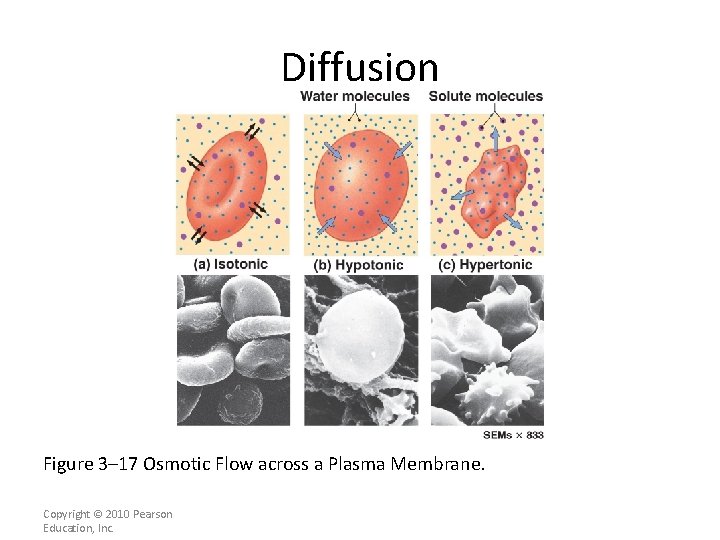
Diffusion • Osmolarity and Tonicity – A cell in a hypotonic solution: • Gains water • Ruptures (hemolysis of red blood cells) – A cell in a hypertonic solution: • Loses water • Shrinks (crenation of red blood cells) Copyright © 2010 Pearson Education, Inc.
Diffusion Figure 3– 17 Osmotic Flow across a Plasma Membrane. Copyright © 2010 Pearson Education, Inc.
Carriers and Vesicles • Carrier-Mediated Transport – Carrier-mediated transport of ions and organic substrates • Facilitated diffusion • Active transport – Characteristics • Specificity: – one transport protein, one set of substrates • Saturation limits: – rate depends on transport proteins, not substrate • Regulation: – cofactors such as hormones Copyright © 2010 Pearson Education, Inc.
Carriers and Vesicles • Carrier-Mediated Transport – Cotransport • Two substances move in the same direction at the same time – Countertransport • One substance moves in while another moves out Copyright © 2010 Pearson Education, Inc.
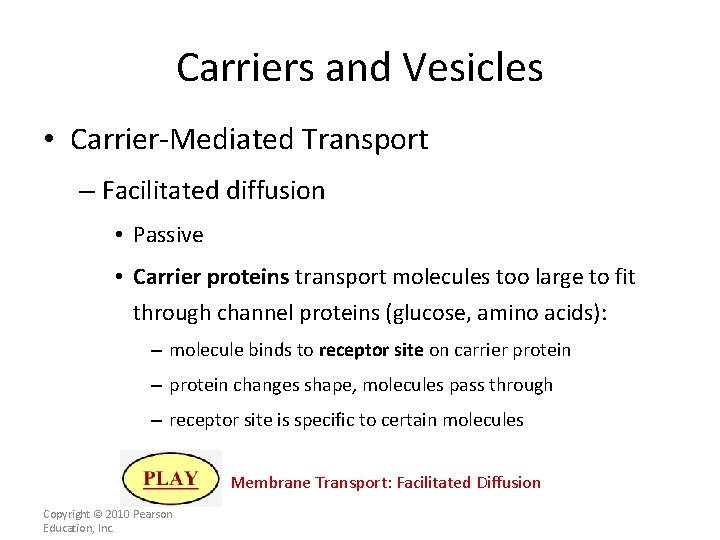
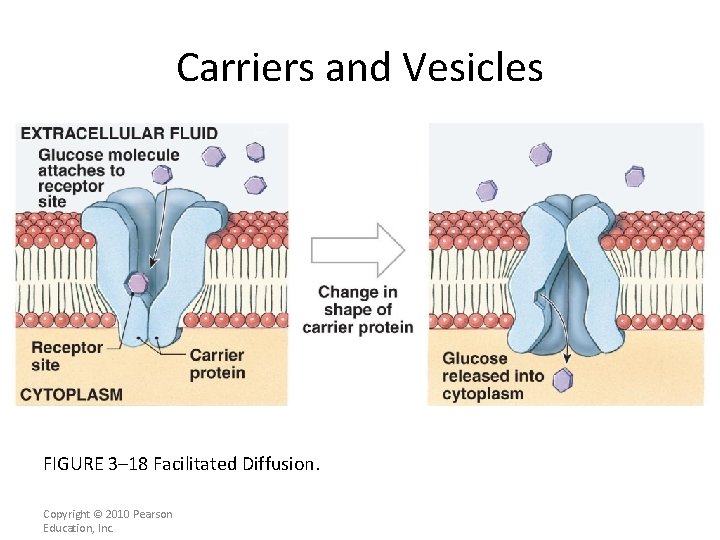
Carriers and Vesicles • Carrier-Mediated Transport – Facilitated diffusion • Passive • Carrier proteins transport molecules too large to fit through channel proteins (glucose, amino acids): – molecule binds to receptor site on carrier protein – protein changes shape, molecules pass through – receptor site is specific to certain molecules Membrane Transport: Facilitated Diffusion Copyright © 2010 Pearson Education, Inc.
Carriers and Vesicles FIGURE 3– 18 Facilitated Diffusion. Copyright © 2010 Pearson Education, Inc.
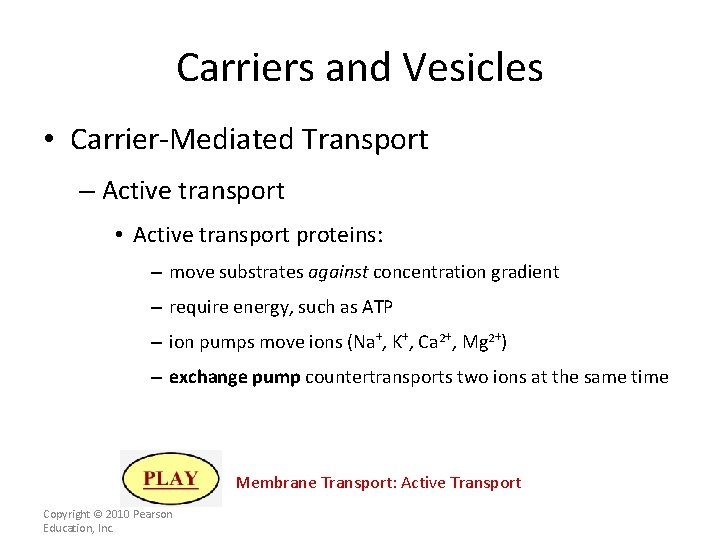
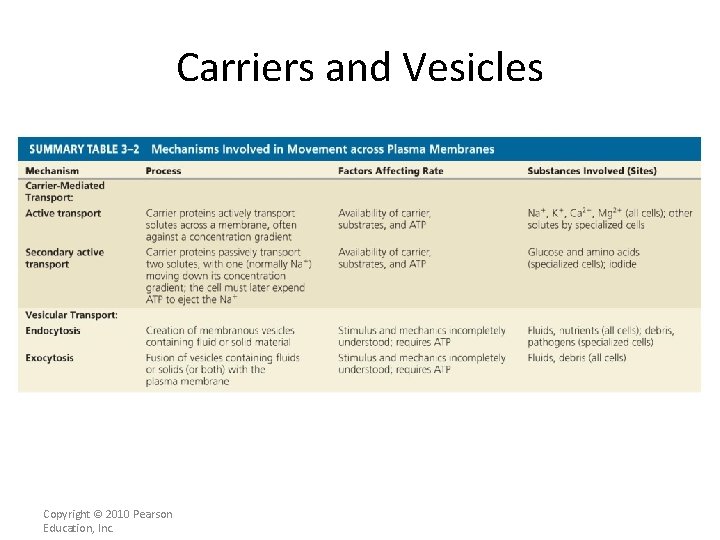
Carriers and Vesicles • Carrier-Mediated Transport – Active transport • Active transport proteins: – move substrates against concentration gradient – require energy, such as ATP – ion pumps move ions (Na+, K+, Ca 2+, Mg 2+) – exchange pump countertransports two ions at the same time Membrane Transport: Active Transport Copyright © 2010 Pearson Education, Inc.
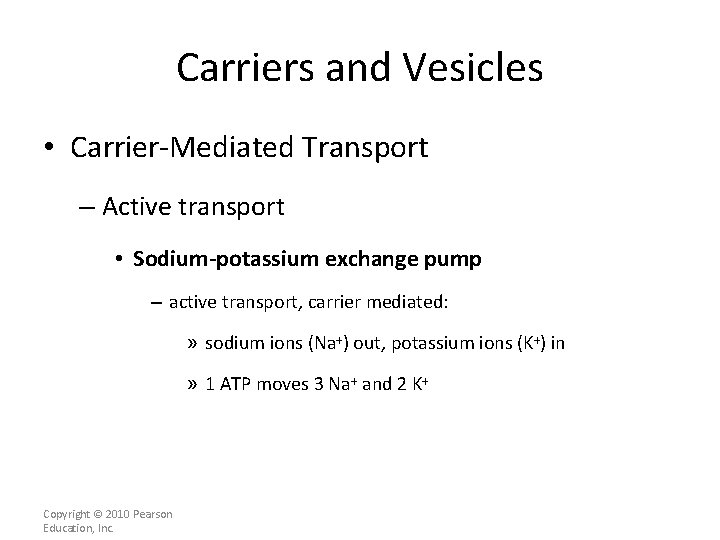
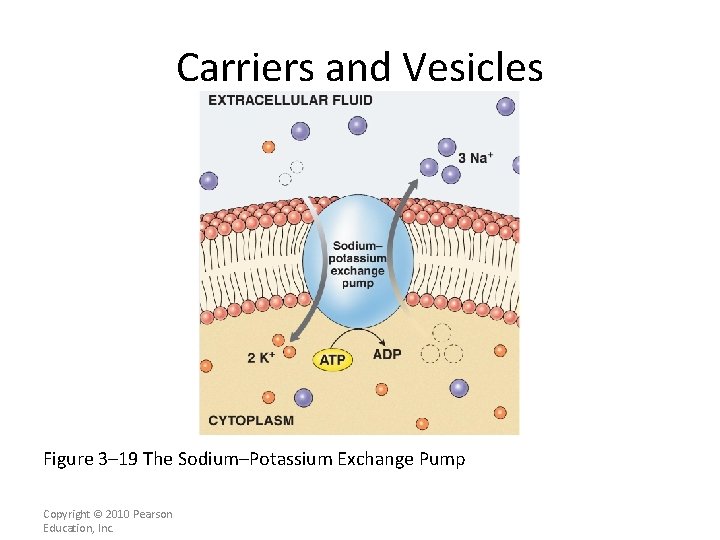
Carriers and Vesicles • Carrier-Mediated Transport – Active transport • Sodium-potassium exchange pump – active transport, carrier mediated: » sodium ions (Na+) out, potassium ions (K+) in » 1 ATP moves 3 Na+ and 2 K+ Copyright © 2010 Pearson Education, Inc.
Carriers and Vesicles Figure 3– 19 The Sodium–Potassium Exchange Pump Copyright © 2010 Pearson Education, Inc.
Carriers and Vesicles • Carrier-Mediated Transport – Active transport • Secondary active transport – Na+ concentration gradient drives glucose transport – ATP energy pumps Na+ back out Copyright © 2010 Pearson Education, Inc.
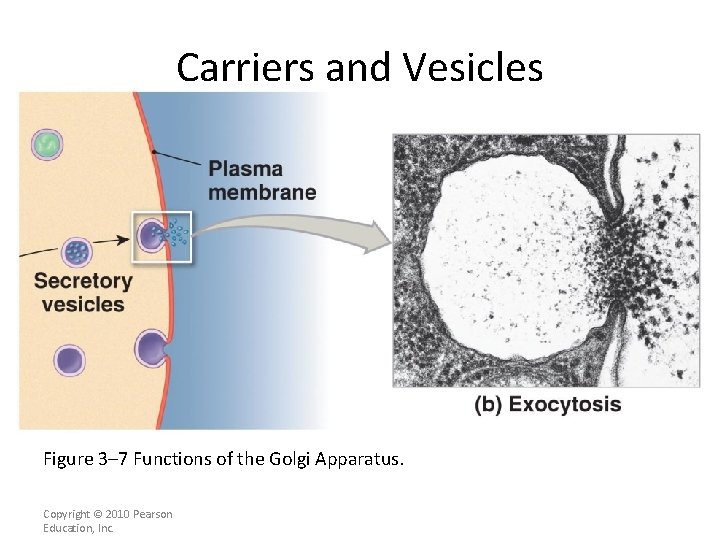
Carriers and Vesicles • Vesicular Transport (or bulk transport) – Materials move into or out of cell in vesicles • Endocytosis (endo- = inside) is active transport using ATP: – receptor mediated – pinocytosis – phagocytosis • Exocytosis (exo- = outside) – Granules or droplets are released from the cell Copyright © 2010 Pearson Education, Inc.
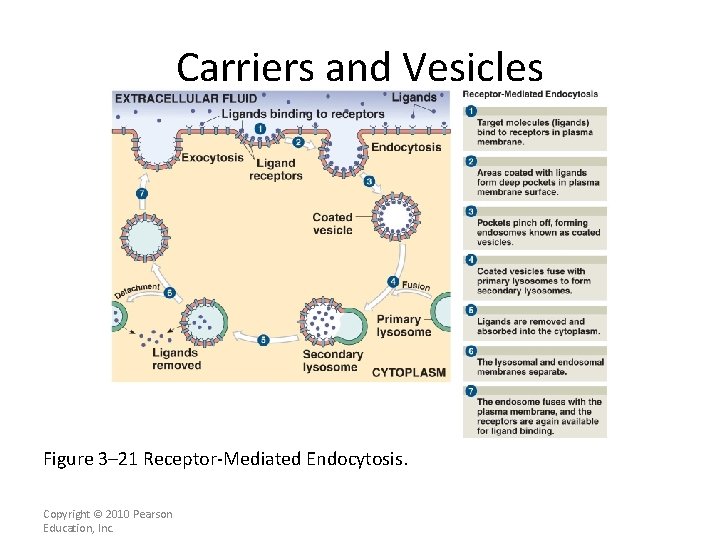
Carriers and Vesicles • Endocytosis – Receptor-mediated endocytosis: • Receptors (glycoproteins) bind target molecules (ligands) • Coated vesicle (endosome) carries ligands and receptors into the cell Copyright © 2010 Pearson Education, Inc.
Carriers and Vesicles Figure 3– 21 Receptor-Mediated Endocytosis. Copyright © 2010 Pearson Education, Inc.
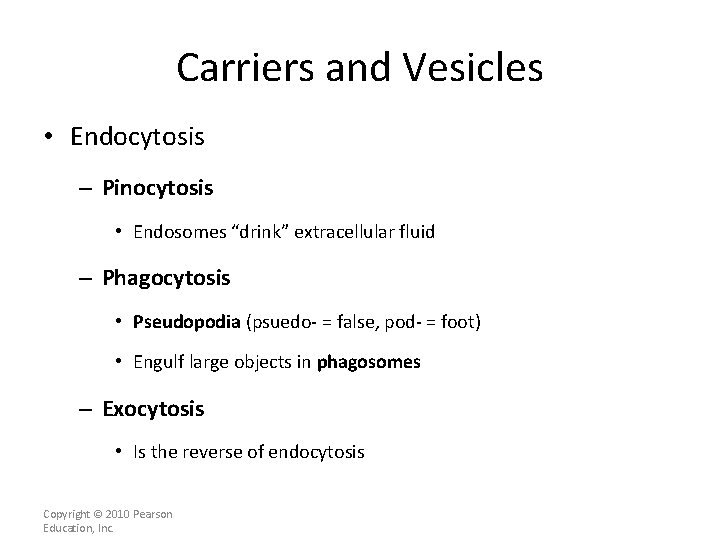
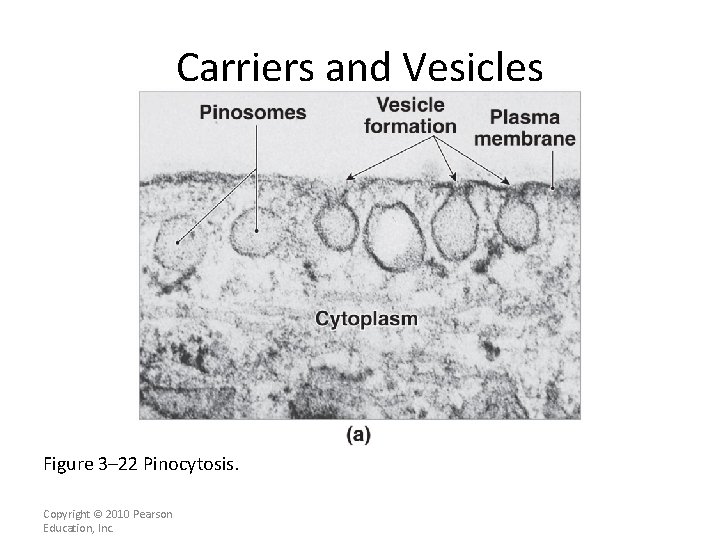
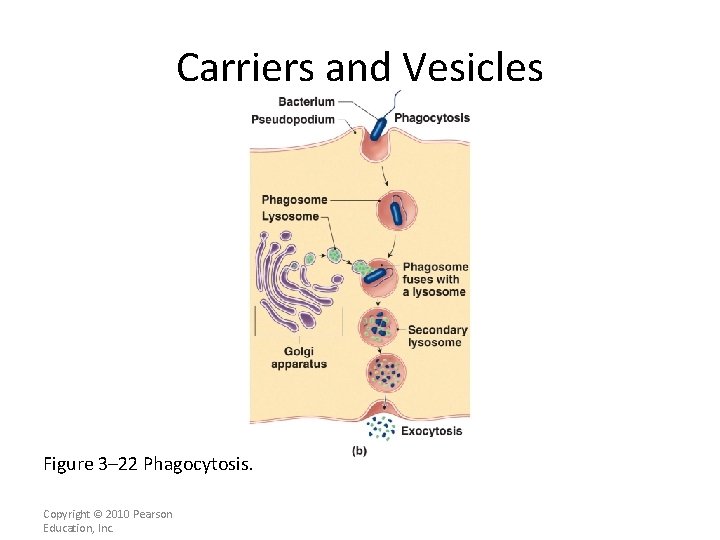
Carriers and Vesicles • Endocytosis – Pinocytosis • Endosomes “drink” extracellular fluid – Phagocytosis • Pseudopodia (psuedo- = false, pod- = foot) • Engulf large objects in phagosomes – Exocytosis • Is the reverse of endocytosis Copyright © 2010 Pearson Education, Inc.
Carriers and Vesicles Figure 3– 22 Pinocytosis. Copyright © 2010 Pearson Education, Inc.
Carriers and Vesicles Figure 3– 22 Phagocytosis. Copyright © 2010 Pearson Education, Inc.
Carriers and Vesicles Figure 3– 7 Functions of the Golgi Apparatus. Copyright © 2010 Pearson Education, Inc.
Carriers and Vesicles Copyright © 2010 Pearson Education, Inc.
Carriers and Vesicles Copyright © 2010 Pearson Education, Inc.
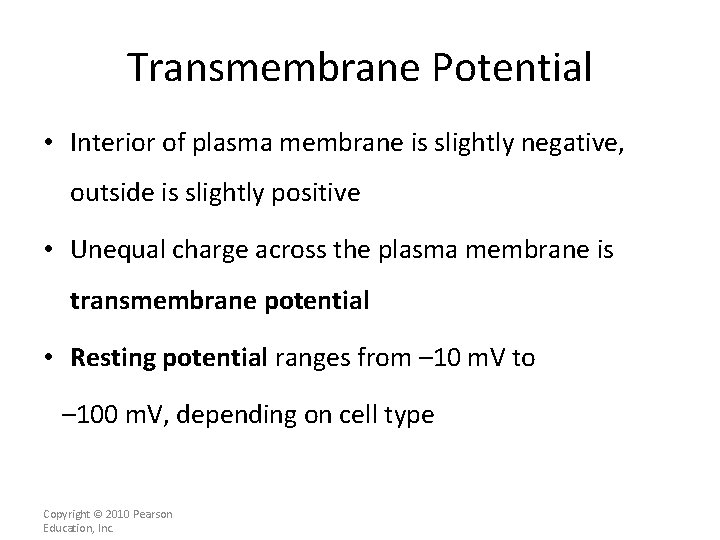
Transmembrane Potential • Interior of plasma membrane is slightly negative, outside is slightly positive • Unequal charge across the plasma membrane is transmembrane potential • Resting potential ranges from – 10 m. V to – 100 m. V, depending on cell type Copyright © 2010 Pearson Education, Inc.
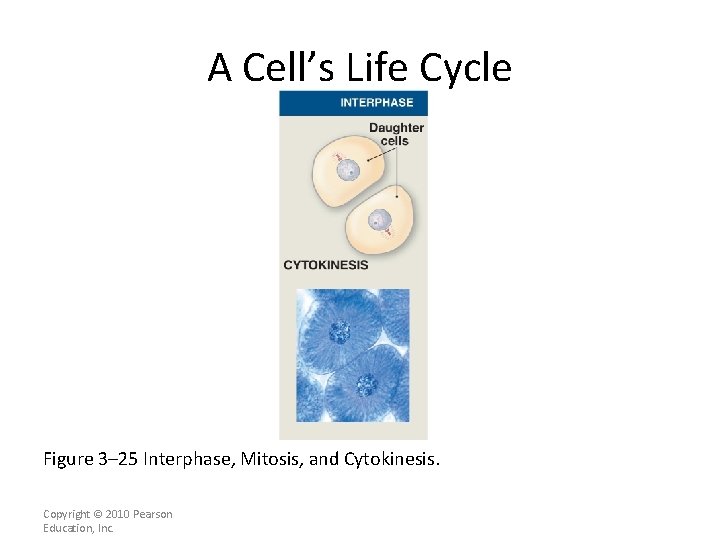
A Cell’s Life Cycle • Most of a cell’s life is spent in a nondividing state (interphase) • Body (somatic) cells divide in three stages – DNA replication duplicates genetic material exactly – Mitosis divides genetic material equally – Cytokinesis divides cytoplasm and organelles into two daughter cells Interphase, Mitosis, and Cytokinesis Copyright © 2010 Pearson Education, Inc.
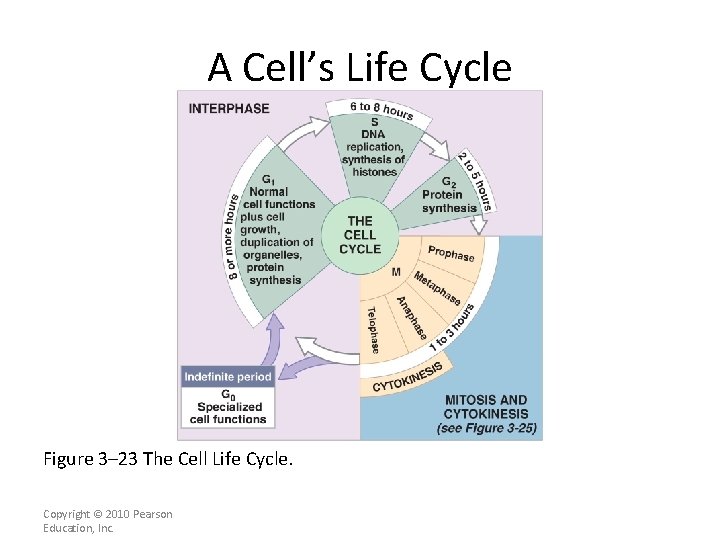
A Cell’s Life Cycle Figure 3– 23 The Cell Life Cycle. Copyright © 2010 Pearson Education, Inc.
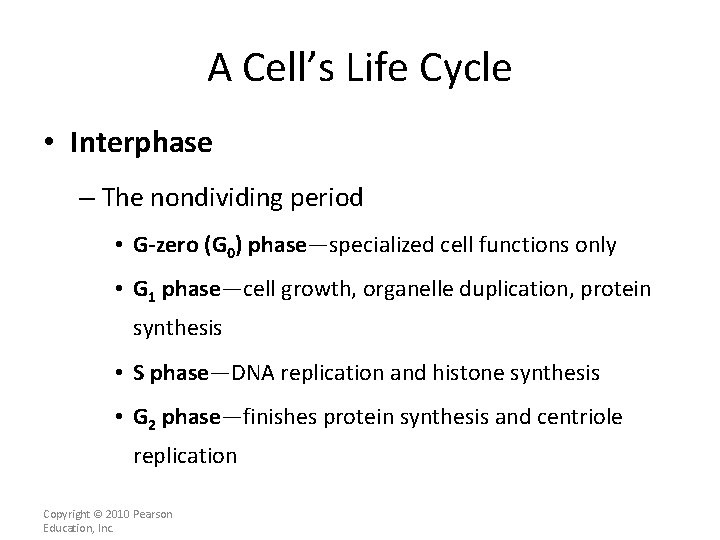
A Cell’s Life Cycle • Interphase – The nondividing period • G-zero (G 0) phase—specialized cell functions only • G 1 phase—cell growth, organelle duplication, protein synthesis • S phase—DNA replication and histone synthesis • G 2 phase—finishes protein synthesis and centriole replication Copyright © 2010 Pearson Education, Inc.
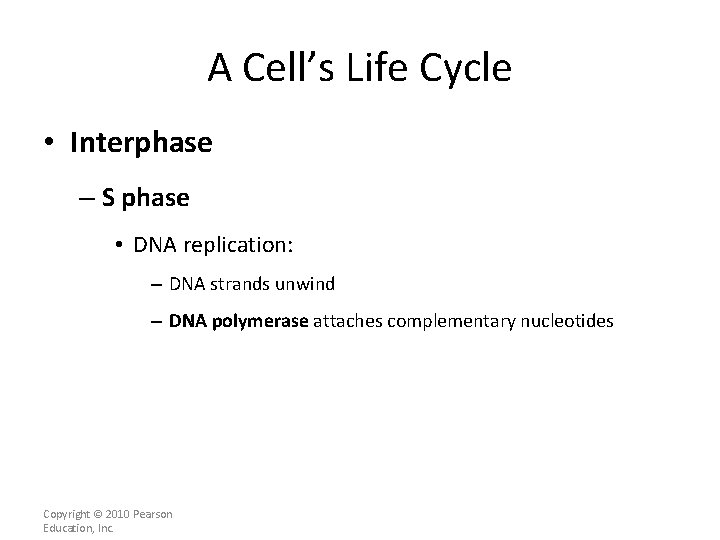
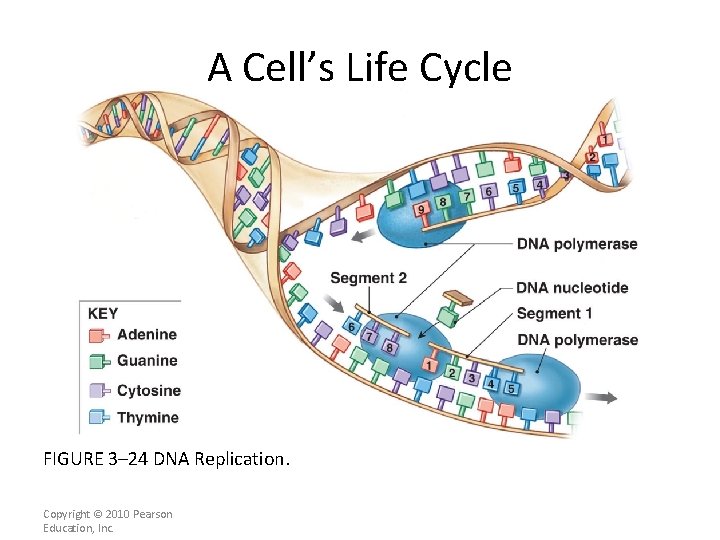
A Cell’s Life Cycle • Interphase – S phase • DNA replication: – DNA strands unwind – DNA polymerase attaches complementary nucleotides Copyright © 2010 Pearson Education, Inc.
A Cell’s Life Cycle FIGURE 3– 24 DNA Replication. Copyright © 2010 Pearson Education, Inc.
A Cell’s Life Cycle • Mitosis – Divides duplicated DNA into two sets of chromosomes • DNA coils tightly into chromatids • Chromatids connect at a centromere • Protein complex around centromere is kinetochore Copyright © 2010 Pearson Education, Inc.
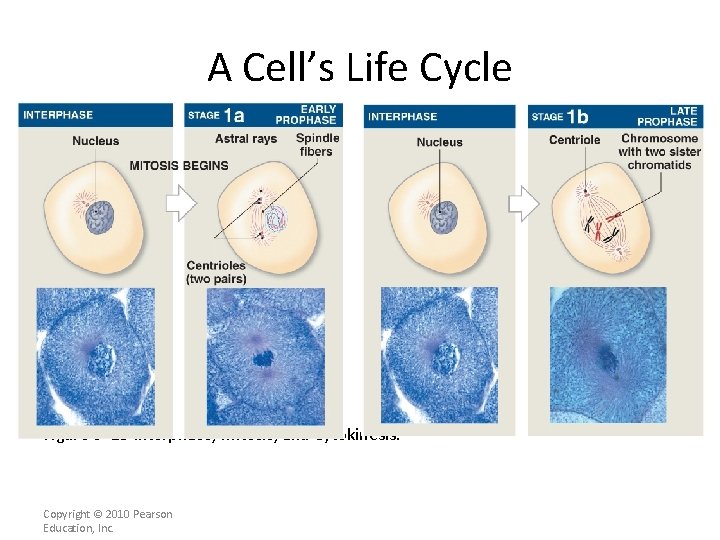
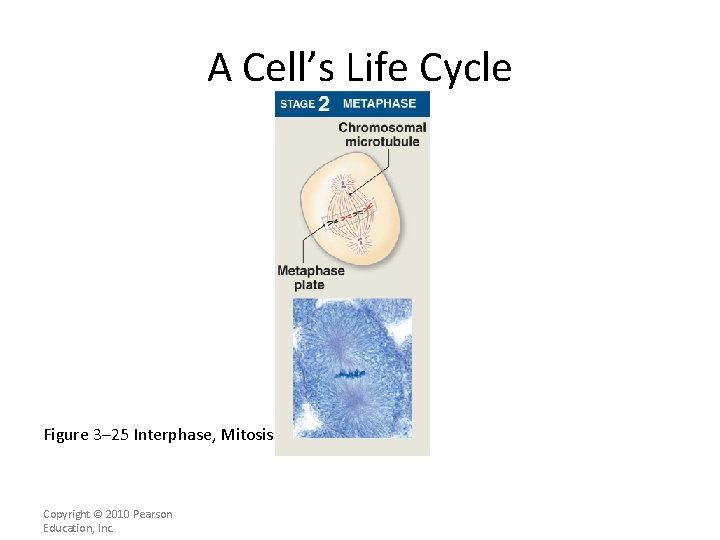
A Cell’s Life Cycle • Mitosis – Prophase • Nucleoli disappear • Centriole pairs move to cell poles • Microtubules (spindle fibers) extend between centriole pairs • Nuclear envelope disappears • Spindle fibers attach to kinetochore – Metaphase • Chromosomes align in a central plane (metaphase plate) Copyright © 2010 Pearson Education, Inc.
A Cell’s Life Cycle Figure 3– 25 Interphase, Mitosis, and Cytokinesis. Copyright © 2010 Pearson Education, Inc.
A Cell’s Life Cycle Figure 3– 25 Interphase, Mitosis, and Cytokinesis. Copyright © 2010 Pearson Education, Inc.
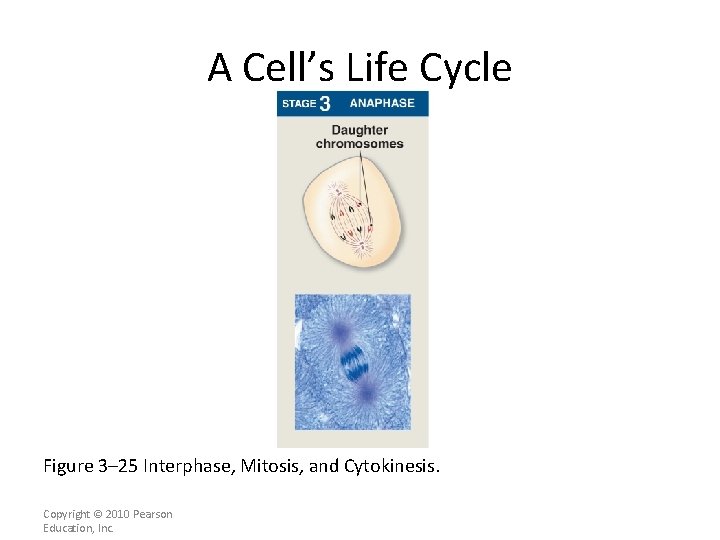
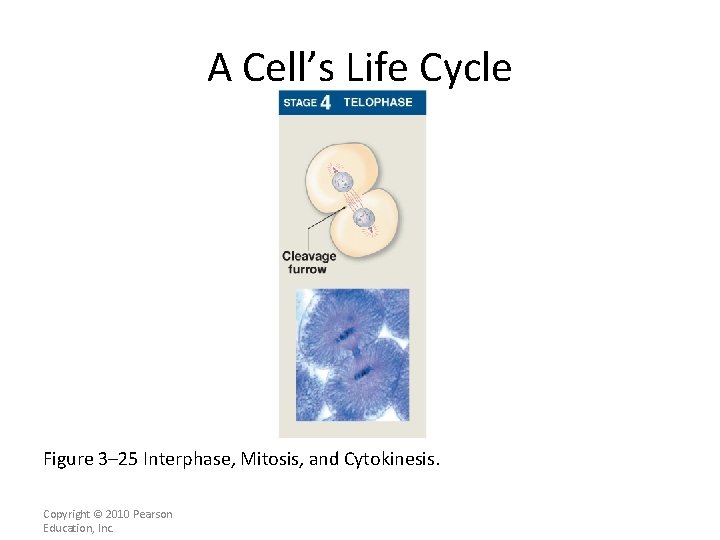
A Cell’s Life Cycle • Mitosis – Anaphase • Microtubules pull chromosomes apart • Daughter chromosomes group near centrioles – Telophase • Nuclear membranes reform • Chromosomes uncoil • Nucleoli reappear • Cell has two complete nuclei Copyright © 2010 Pearson Education, Inc.
A Cell’s Life Cycle Figure 3– 25 Interphase, Mitosis, and Cytokinesis. Copyright © 2010 Pearson Education, Inc.
A Cell’s Life Cycle • Cytokinesis – Division of the cytoplasm • Cleavage furrow around metaphase plate • Membrane closes, producing daughter cells Copyright © 2010 Pearson Education, Inc.
A Cell’s Life Cycle Figure 3– 25 Interphase, Mitosis, and Cytokinesis. Copyright © 2010 Pearson Education, Inc.
A Cell’s Life Cycle Figure 3– 25 Interphase, Mitosis, and Cytokinesis. Copyright © 2010 Pearson Education, Inc.
A Cell’s Life Cycle • Mitotic Rate and Energy Use – Rate of cell division • Slower mitotic rate means longer cell life • Cell division requires energy (ATP) – Muscle cells, neurons rarely divide – Exposed cells (skin and digestive tract) live only days or hours Copyright © 2010 Pearson Education, Inc.
Regulating the Cell Life Cycle • Normally, cell division balances cell loss • Increased cell division – Internal factors (M-phase promoting factor, MPF) – Extracellular chemical factors (growth factors) • Decreased cell division – Repressor genes (faulty repressors cause cancers) – Worn out telomeres (terminal DNA segments) Copyright © 2010 Pearson Education, Inc.
Tumors and Cancer • Cancer develops in steps – Abnormal cell – Primary tumor – Metastasis – Secondary tumor Copyright © 2010 Pearson Education, Inc.
Tumors and Cancer • Tumor (neoplasm) – Enlarged mass of cells – Abnormal cell growth and division – Benign tumor • Contained • Not life threatening – Malignant tumor • Spreads into surrounding tissues (invasion) • Starts new tumors (metastasis) Copyright © 2010 Pearson Education, Inc.
Cell Differentiation • All cells carry complete DNA instructions for all body functions • Cells specialize or differentiate – To form tissues (liver cells, fat cells, and neurons) – By turning off all genes not needed by that cell • All body cells, except sex cells, contain the same 46 chromosomes • Differentiation depends on which genes are active and which are inactive Copyright © 2010 Pearson Education, Inc.