
DIFFUSION AND OSMOSIS 12 Biology Learning Intentions Success
DIFFUSION AND OSMOSIS 12 Biology
Learning Intentions & Success Criteria To understand that the movement of materials across membranes occurs via diffusion, osmosis, active transport and/or endocytosis I can define the terms diffusion and osmosis I can draw diagrams showing the movement of particles across a concentration gradient or membrane
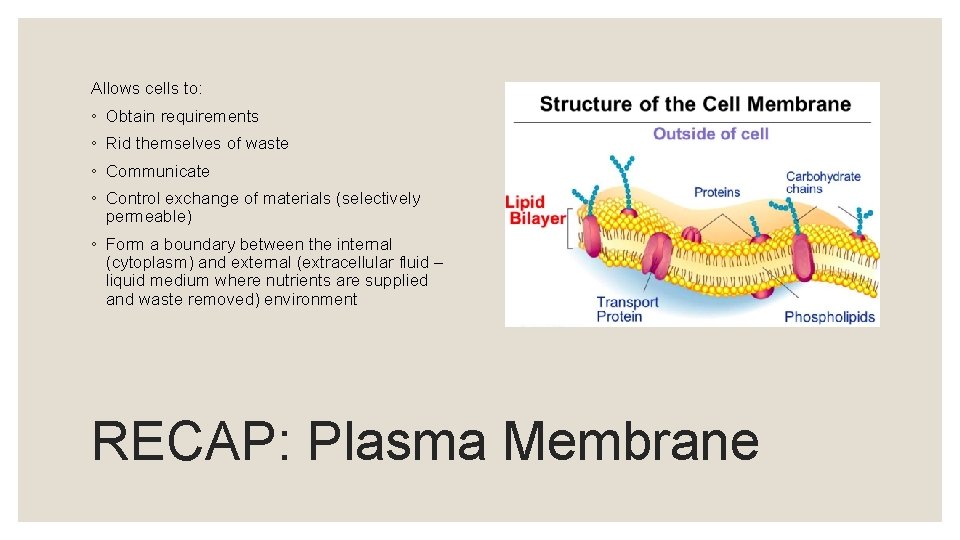
Allows cells to: ◦ Obtain requirements ◦ Rid themselves of waste ◦ Communicate ◦ Control exchange of materials (selectively permeable) ◦ Form a boundary between the internal (cytoplasm) and external (extracellular fluid – liquid medium where nutrients are supplied and waste removed) environment RECAP: Plasma Membrane
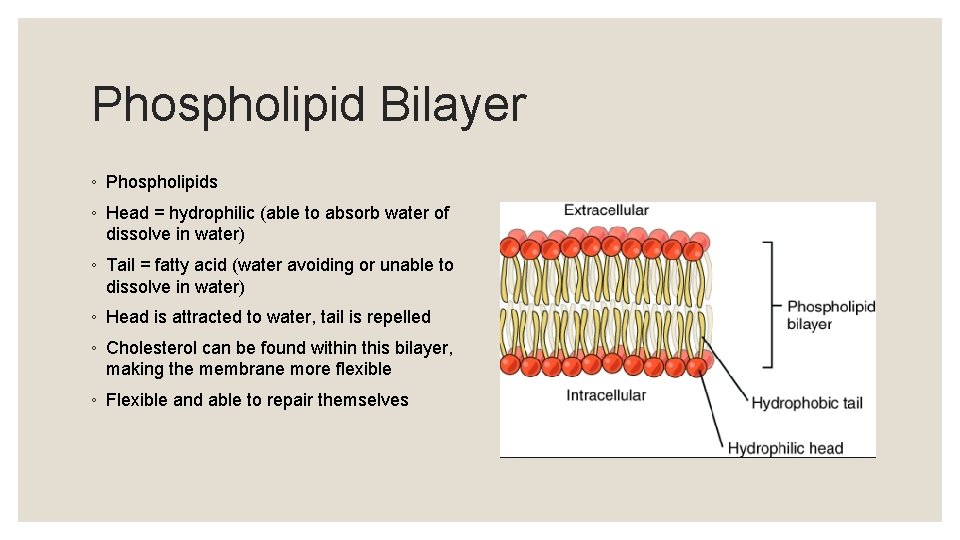
Phospholipid Bilayer ◦ Phospholipids ◦ Head = hydrophilic (able to absorb water of dissolve in water) ◦ Tail = fatty acid (water avoiding or unable to dissolve in water) ◦ Head is attracted to water, tail is repelled ◦ Cholesterol can be found within this bilayer, making the membrane more flexible ◦ Flexible and able to repair themselves

Adhesion proteins = link cells together Transport proteins = passage for specific substances Receptor proteins = receives chemical signals from outside of the cell Recognition proteins (glycoproteins) = markers/antigens to show they belong to the cell – immune system will attach if not! Membrane Proteins
Role of Cell Membrane Phospholipid Bilayer ◦ Gives shape ◦ Boundary of cell ◦ Allows some molecules to diffuse through Proteins: ◦ Communication ◦ Linking cells together ◦ Transport of larger molecules
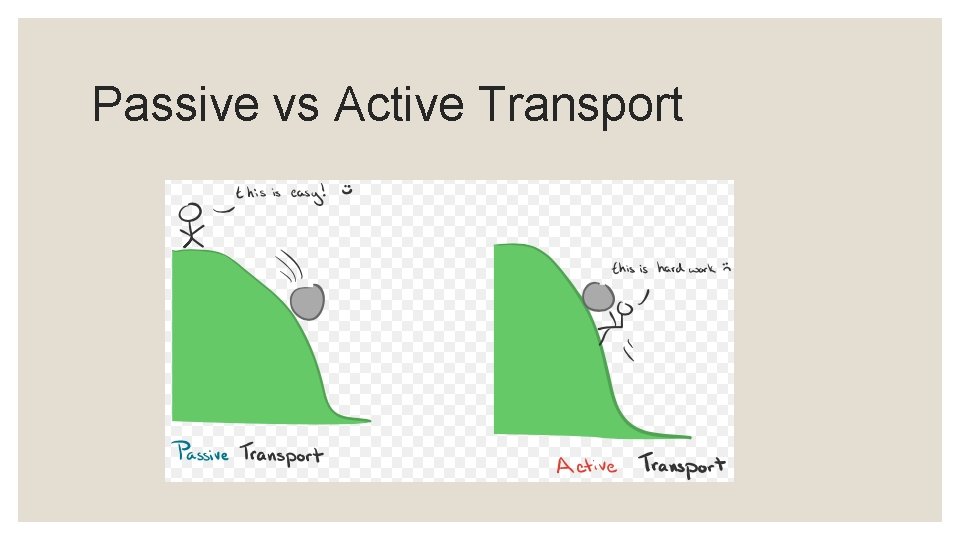
Passive vs Active Transport
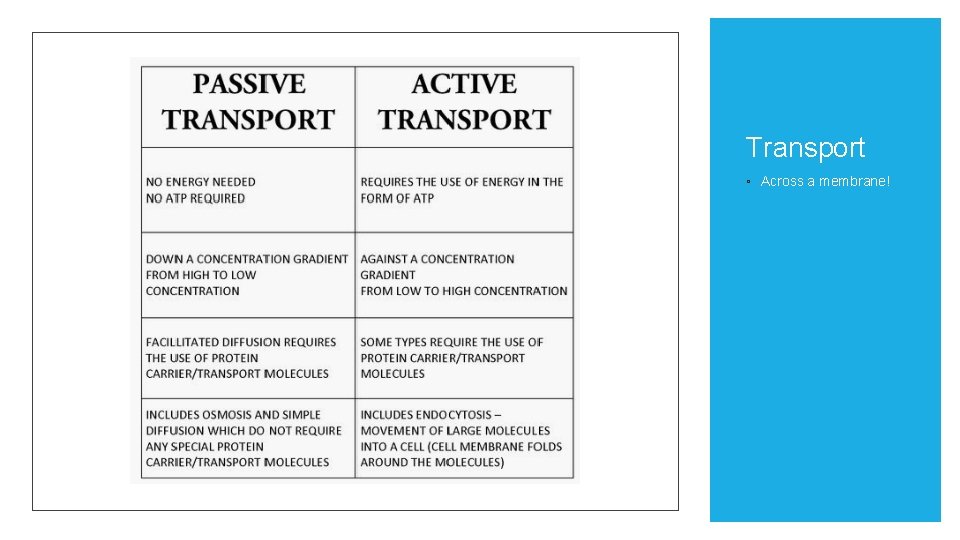
Transport ◦ Across a membrane!
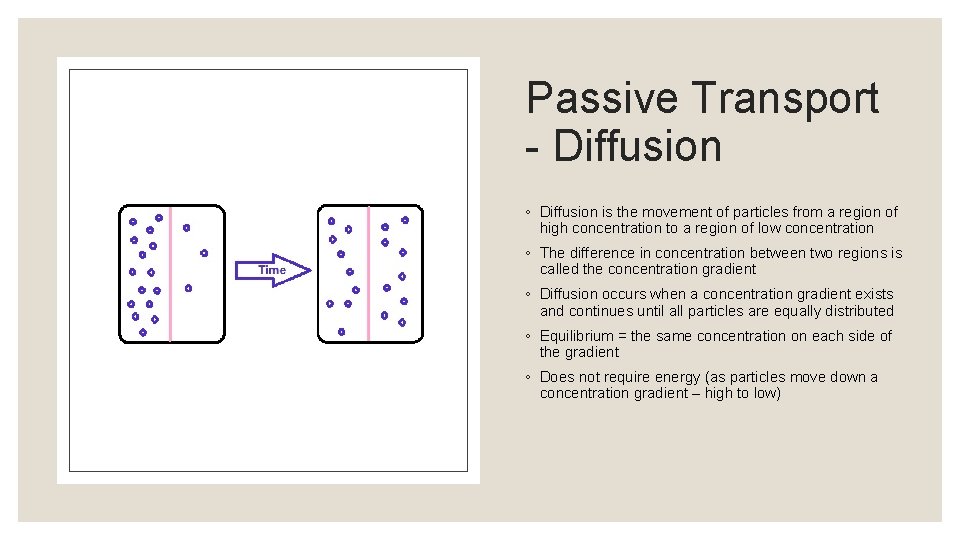
Passive Transport - Diffusion ◦ Diffusion is the movement of particles from a region of high concentration to a region of low concentration ◦ The difference in concentration between two regions is called the concentration gradient ◦ Diffusion occurs when a concentration gradient exists and continues until all particles are equally distributed ◦ Equilibrium = the same concentration on each side of the gradient ◦ Does not require energy (as particles move down a concentration gradient – high to low)
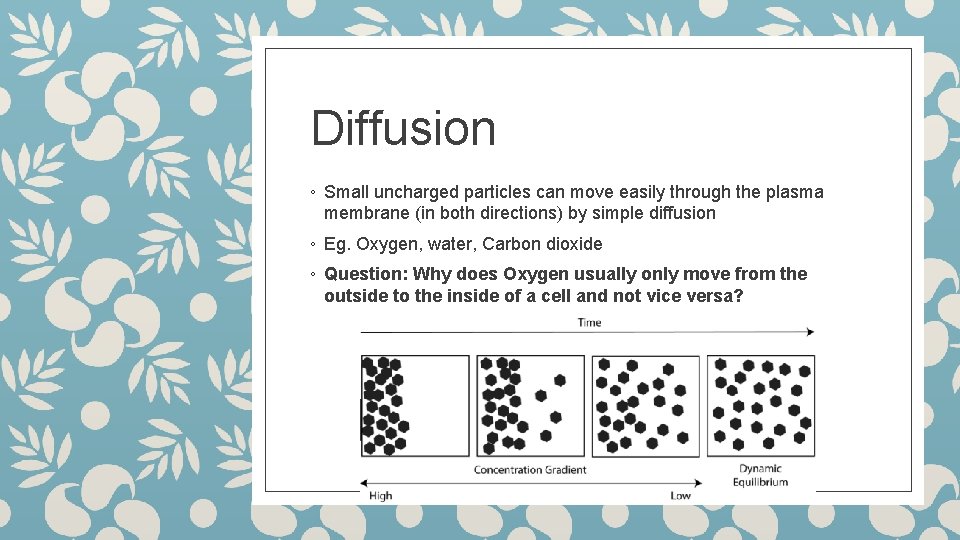
Diffusion ◦ Small uncharged particles can move easily through the plasma membrane (in both directions) by simple diffusion ◦ Eg. Oxygen, water, Carbon dioxide ◦ Question: Why does Oxygen usually only move from the outside to the inside of a cell and not vice versa?
Facilitated Diffusion ◦ Charged particles (ions) and larger molecules (glucose and amino acids) cannot simply diffuse through the lipid bilayer ◦ Some proteins within the cell membrane are able to help = facilitated diffusion ◦ Carrier Proteins = bind to specific molecules on one side (high concentration) and move them through to the other side (low concentration) ◦ Channel Proteins = Narrow passageways in which ions (only of a specific size and shape) can diffuse quickly
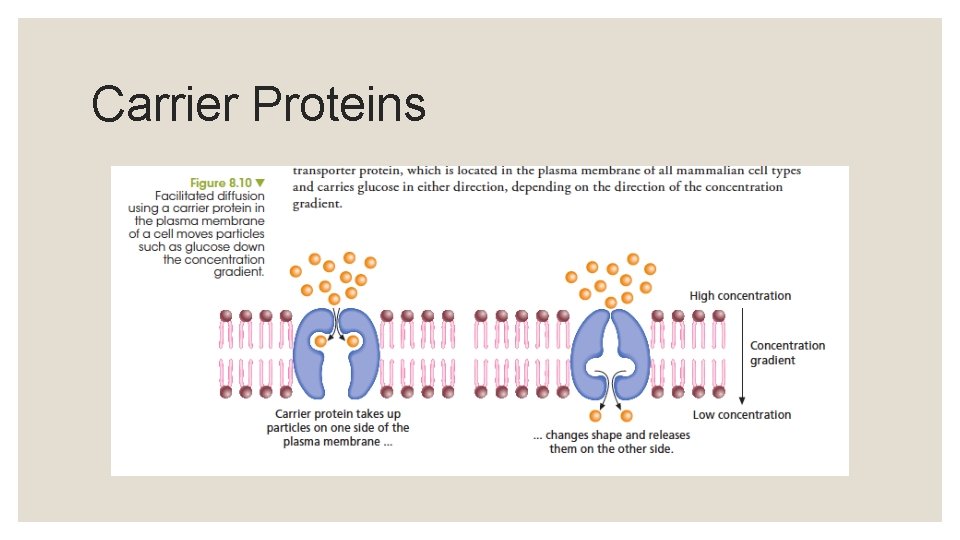
Carrier Proteins
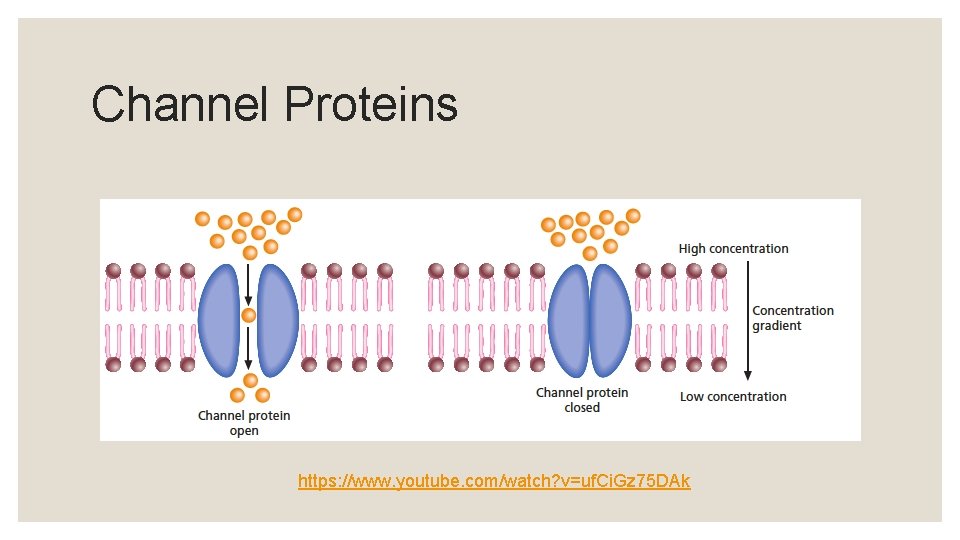
Channel Proteins https: //www. youtube. com/watch? v=uf. Ci. Gz 75 DAk
Practice Questions:
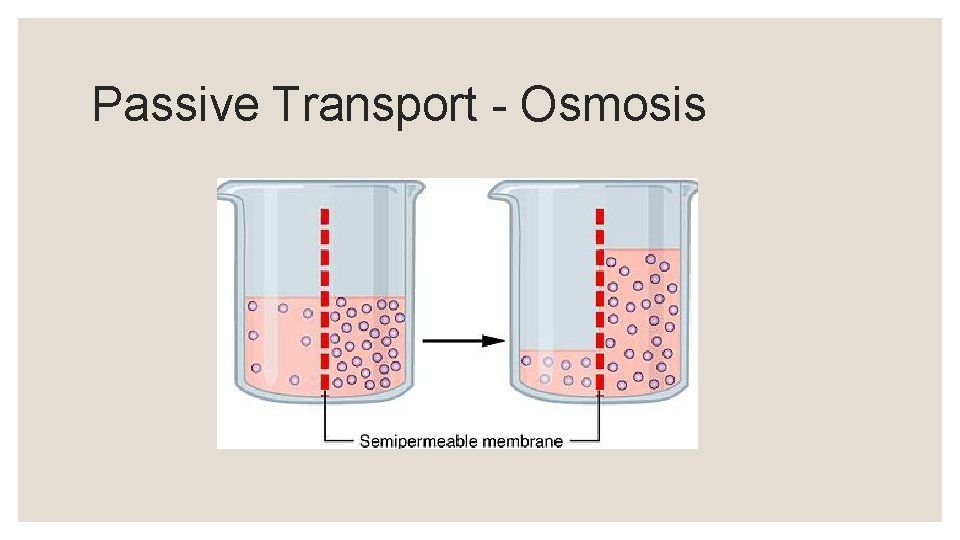
Passive Transport - Osmosis
Osmosis Terms: Solution: The medium in which water transports materials Solvent: Water particles Solute: Salt/sugar or a concentrated particle A dilute solution has a high concentration of water compared to the solute A concentrated solution has a low concentration of water and high concentration of solute particles
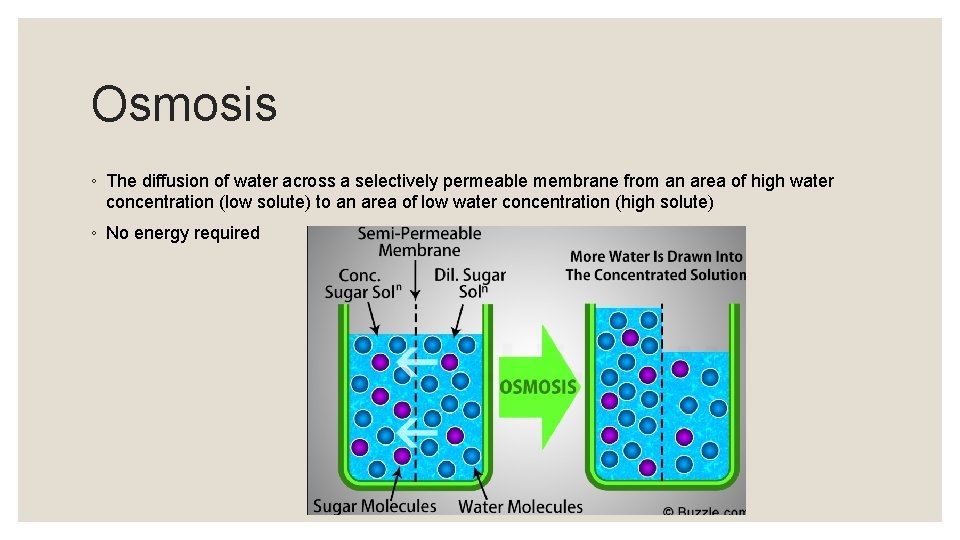
Osmosis ◦ The diffusion of water across a selectively permeable membrane from an area of high water concentration (low solute) to an area of low water concentration (high solute) ◦ No energy required
Worksheet
Homework: Define the terms: ◦ Isotonic ◦ Hypertonic ◦ Hypotonic
- Slides: 19