
Differs from capillaries Dilated large lumen Spaces between
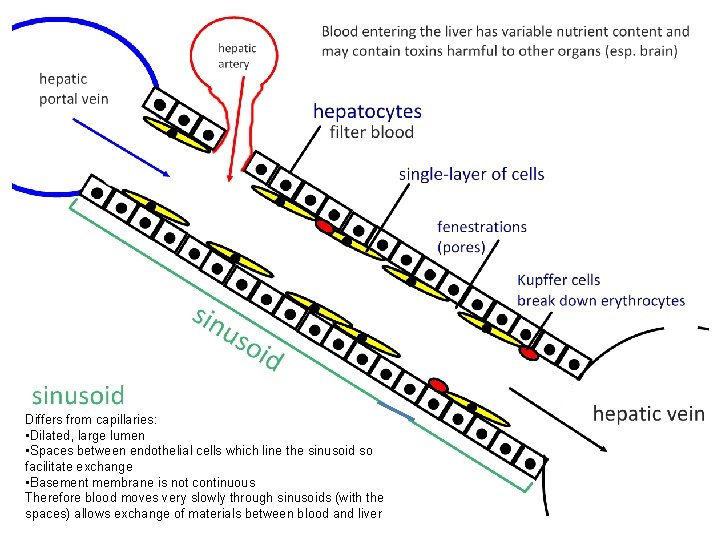
Differs from capillaries: • Dilated, large lumen • Spaces between endothelial cells which line the sinusoid so facilitate exchange • Basement membrane is not continuous Therefore blood moves very slowly through sinusoids (with the spaces) allows exchange of materials between blood and liver
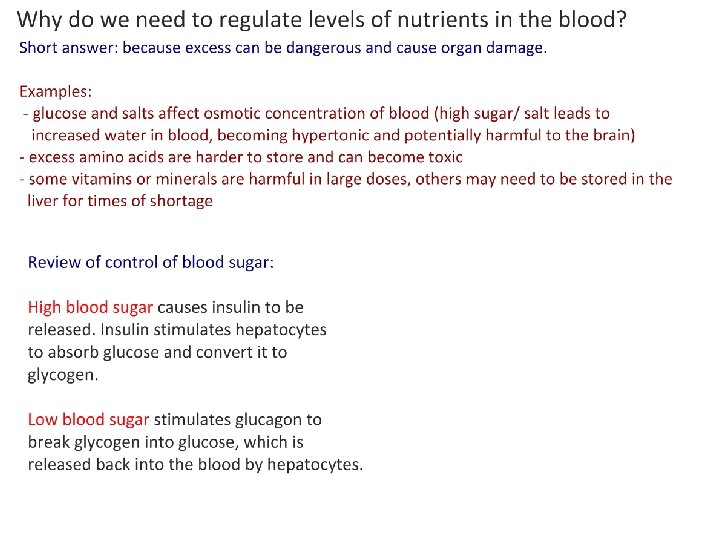
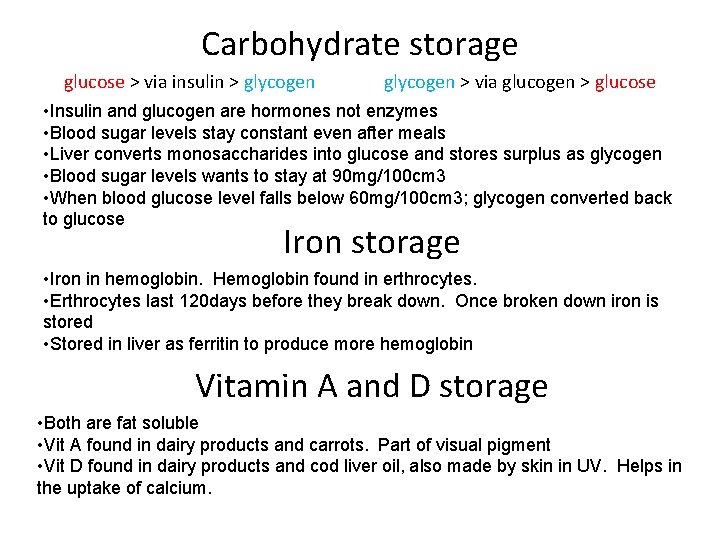
Carbohydrate storage glucose > via insulin > glycogen > via glucogen > glucose • Insulin and glucogen are hormones not enzymes • Blood sugar levels stay constant even after meals • Liver converts monosaccharides into glucose and stores surplus as glycogen • Blood sugar levels wants to stay at 90 mg/100 cm 3 • When blood glucose level falls below 60 mg/100 cm 3; glycogen converted back to glucose Iron storage • Iron in hemoglobin. Hemoglobin found in erthrocytes. • Erthrocytes last 120 days before they break down. Once broken down iron is stored • Stored in liver as ferritin to produce more hemoglobin Vitamin A and D storage • Both are fat soluble • Vit A found in dairy products and carrots. Part of visual pigment • Vit D found in dairy products and cod liver oil, also made by skin in UV. Helps in the uptake of calcium.
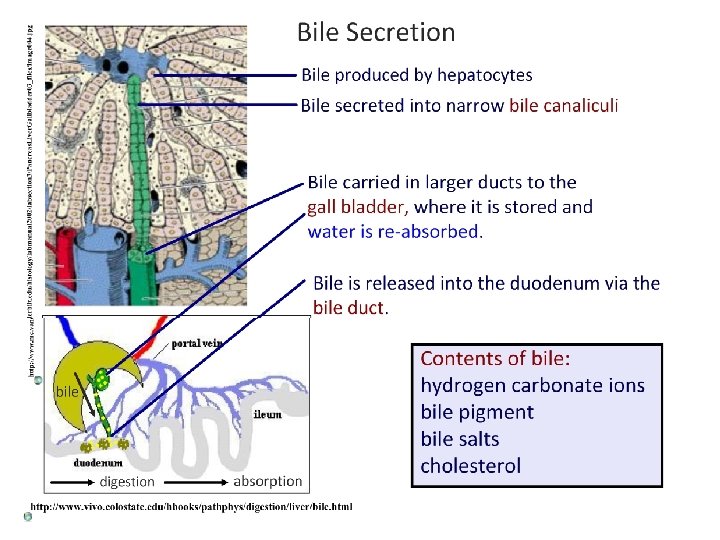
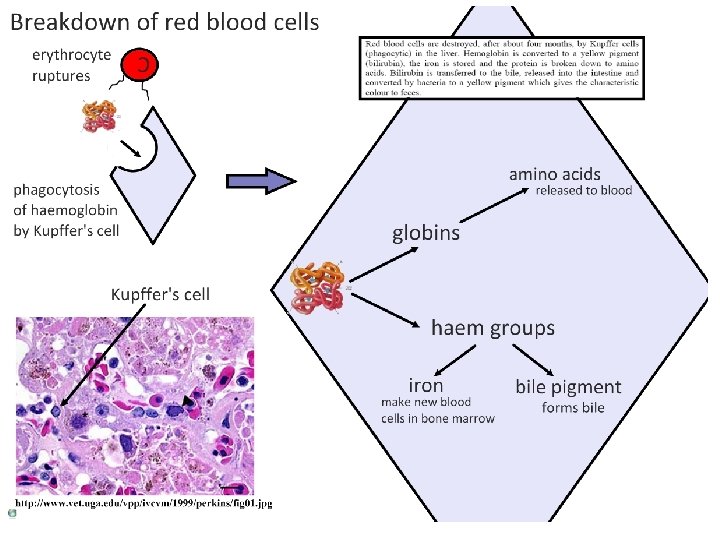
Hemoglobin breakdown • Humans have approx 500000 erthrocytes per cm 3 blood • Humans have 5 litres of blood so A LOT of erthrocytes • Break down every 120 days so many need to be made and broken down efficiently • Old erthrocytes broken down by phagocytosis in the liver (Kupffer cells), spleen and bone marrow • Broken down into heme and globin • Iron in heme broken down in bone arrow for new hemoglobin • Rest secreted via bile duct – make colour of poo • Globin is a protein and is broken down into amino acids
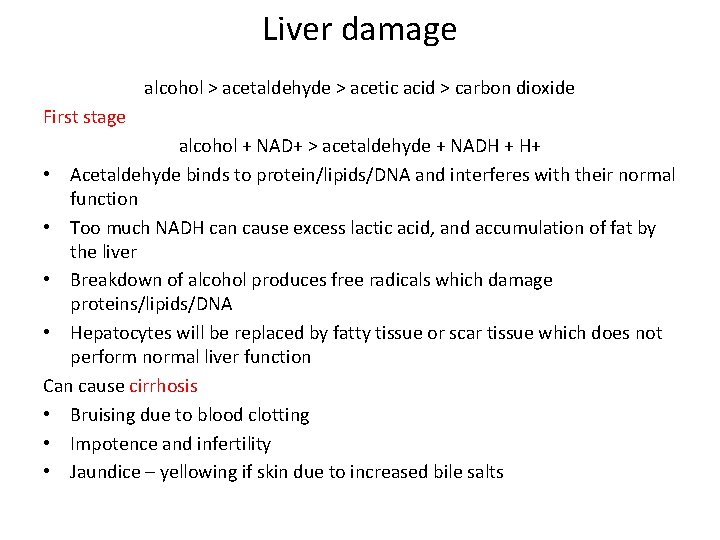
Liver damage alcohol > acetaldehyde > acetic acid > carbon dioxide First stage alcohol + NAD+ > acetaldehyde + NADH + H+ • Acetaldehyde binds to protein/lipids/DNA and interferes with their normal function • Too much NADH can cause excess lactic acid, and accumulation of fat by the liver • Breakdown of alcohol produces free radicals which damage proteins/lipids/DNA • Hepatocytes will be replaced by fatty tissue or scar tissue which does not perform normal liver function Can cause cirrhosis • Bruising due to blood clotting • Impotence and infertility • Jaundice – yellowing if skin due to increased bile salts
- Slides: 11