
Differentiation Positioning and PLC Need to Differentiate Most
- Slides: 21
Differentiation, Positioning and PLC
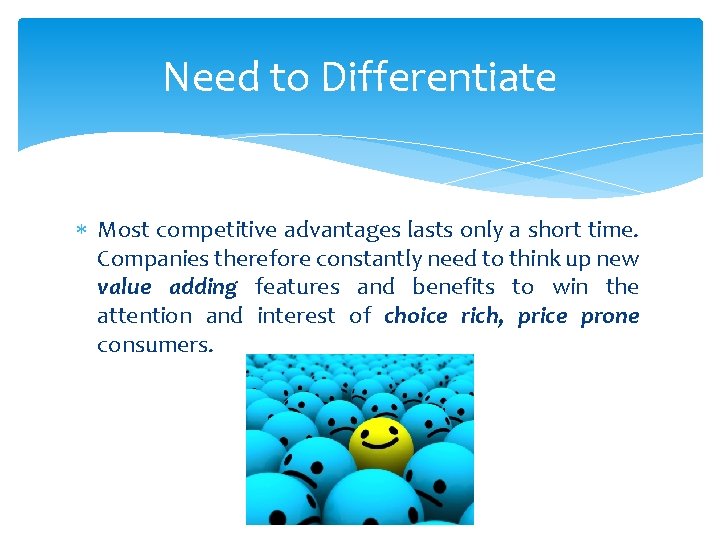
Need to Differentiate Most competitive advantages lasts only a short time. Companies therefore constantly need to think up new value adding features and benefits to win the attention and interest of choice rich, price prone consumers.
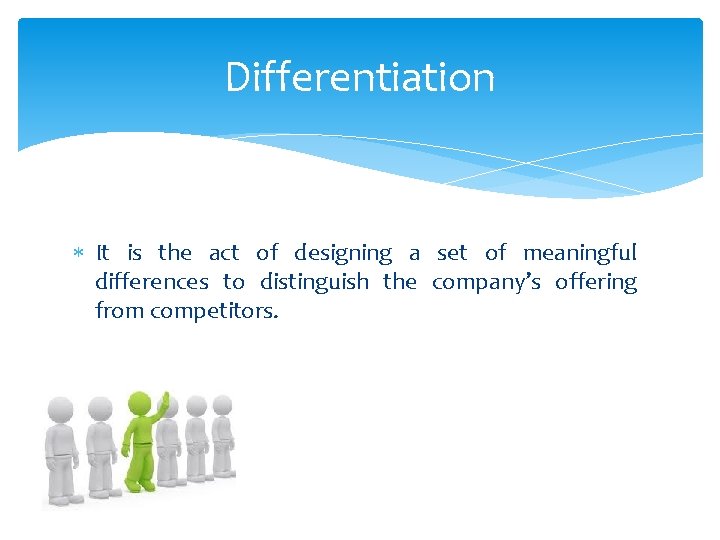
Differentiation It is the act of designing a set of meaningful differences to distinguish the company’s offering from competitors.
How can you differentiate? Differentiation can be done in various ways depending on the industry and product category. Differentiation can occur in one or more of these areas – product, services, personnel, channel, image.
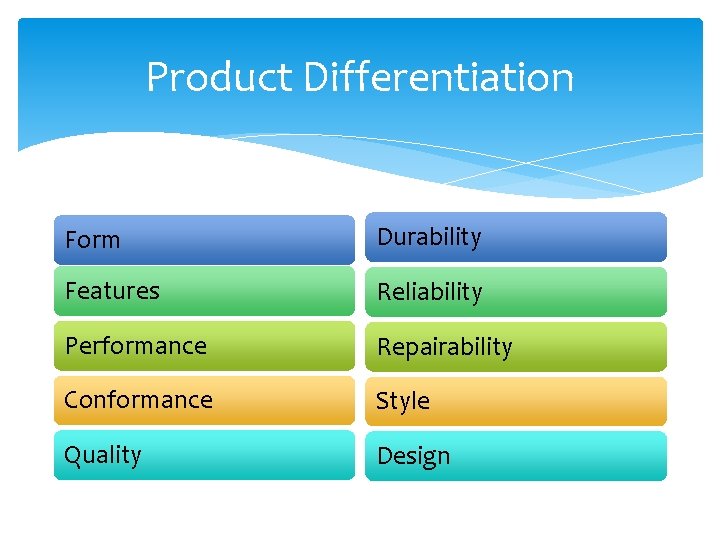
Product Differentiation Form Durability Features Reliability Performance Repairability Conformance Style Quality Design
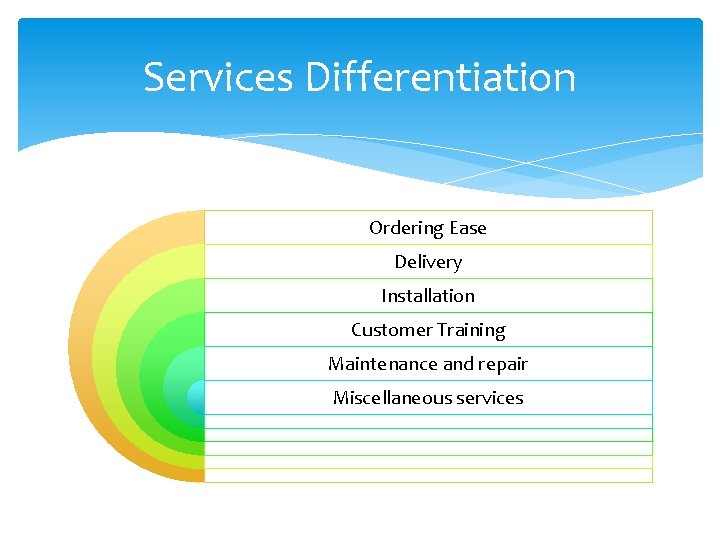
Services Differentiation Ordering Ease Delivery Installation Customer Training Maintenance and repair Miscellaneous services
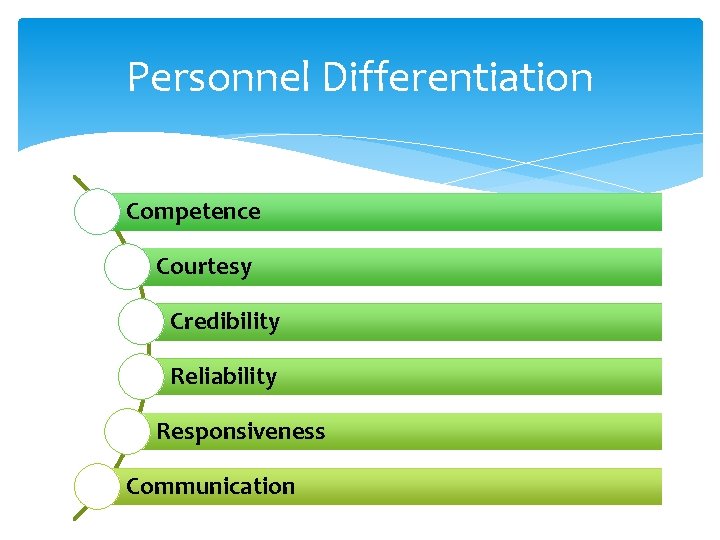
Personnel Differentiation Competence Courtesy Credibility Reliability Responsiveness Communication
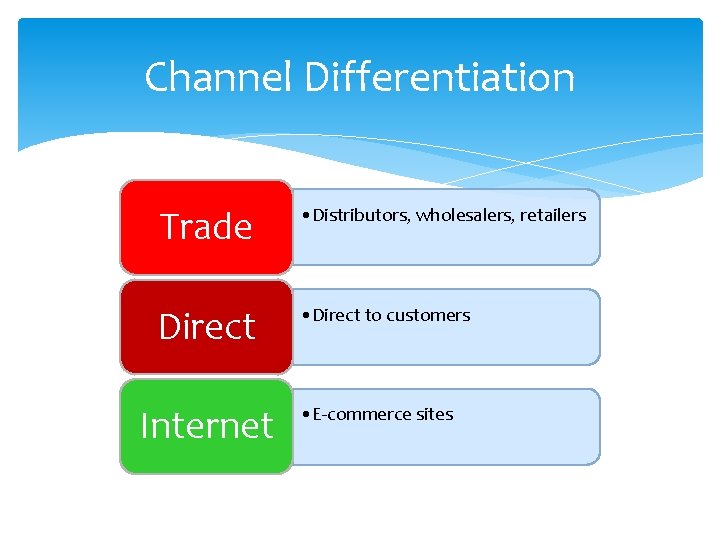
Channel Differentiation Trade • Distributors, wholesalers, retailers Direct • Direct to customers Internet • E-commerce sites
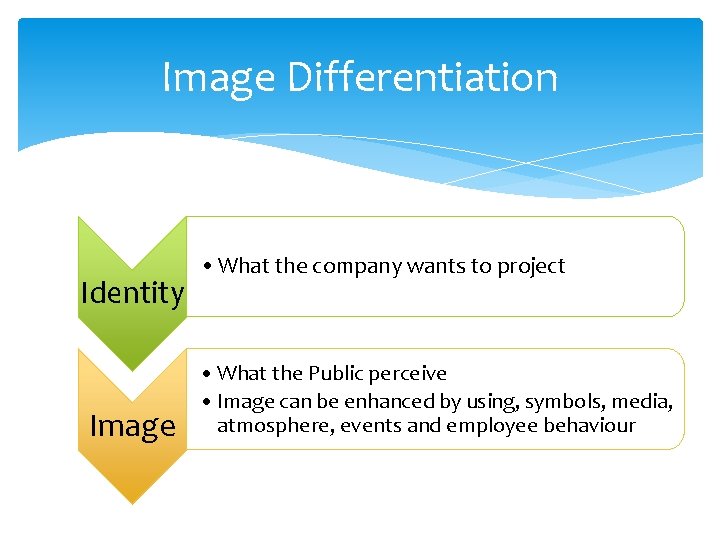
Image Differentiation Identity Image • What the company wants to project • What the Public perceive • Image can be enhanced by using, symbols, media, atmosphere, events and employee behaviour
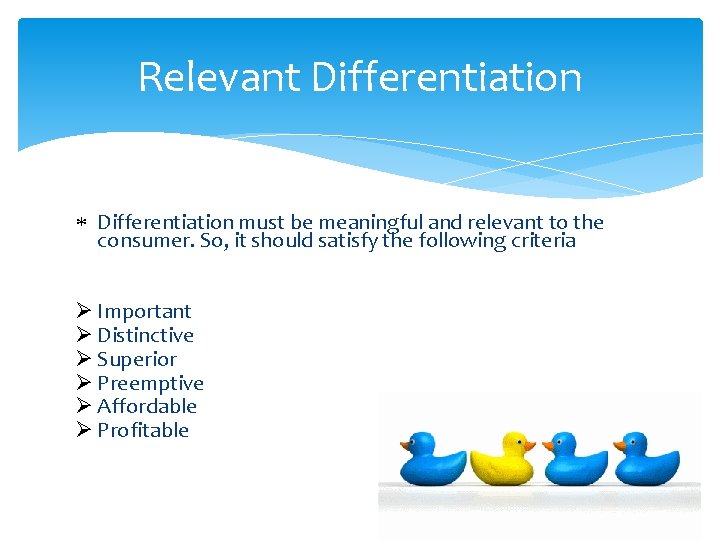
Relevant Differentiation must be meaningful and relevant to the consumer. So, it should satisfy the following criteria Ø Important Ø Distinctive Ø Superior Ø Preemptive Ø Affordable Ø Profitable
USP This should be exclusive to the product and make a significant relevant impact to the consumer
Positioning The act of designing the company’s offering and image to occupy a distinctive place in the consumer’s mind. Positioning normally takes one position in the mind. More than one, the company runs the risk of customer credibility and dilution of positioning
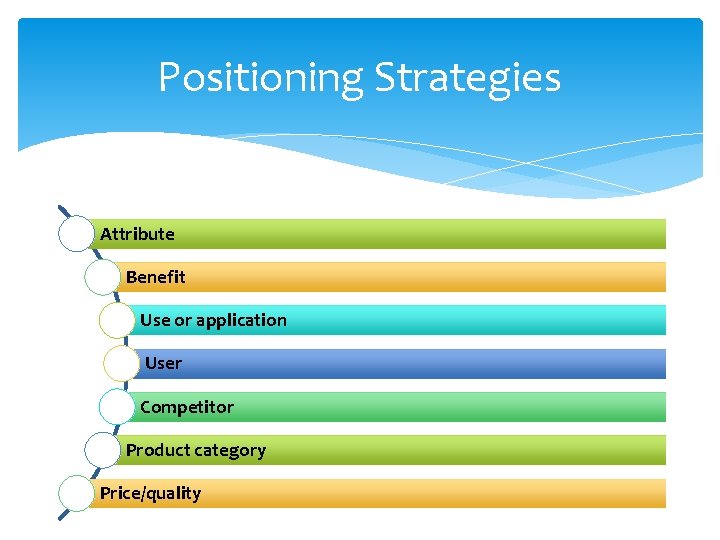
Positioning Strategies Attribute Benefit Use or application User Competitor Product category Price/quality
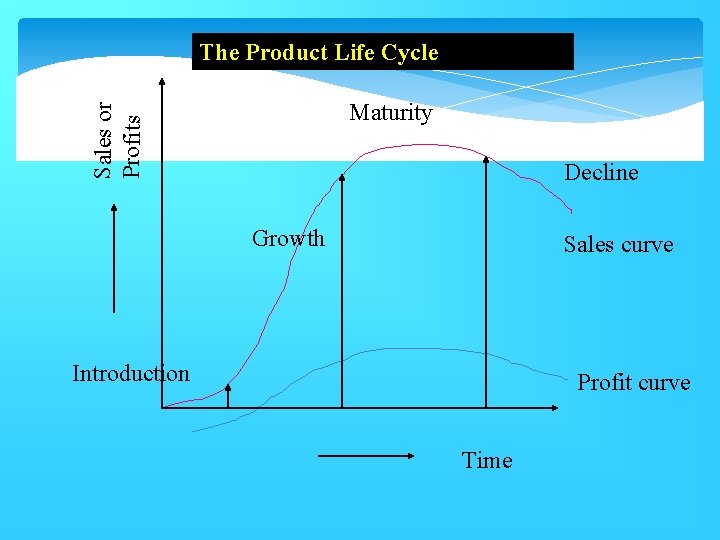
PLC Products have a limited life Product sales pass through distinct stages Profits rise and fall at different stages of the PLC Product require different strategies in each stage of the PLC
The Product Life Cycle Sales or Profits Maturity Decline Growth Sales curve Introduction Profit curve Time
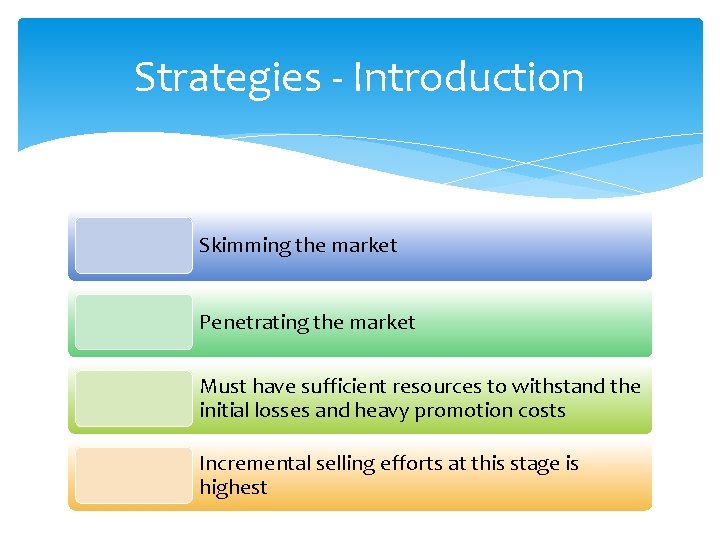
Strategies - Introduction Skimming the market Penetrating the market Must have sufficient resources to withstand the initial losses and heavy promotion costs Incremental selling efforts at this stage is highest
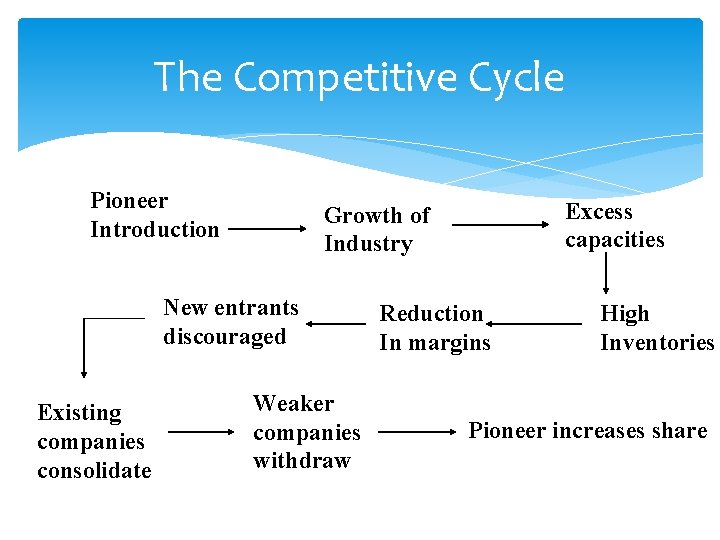
The Competitive Cycle Pioneer Introduction New entrants discouraged Existing companies consolidate Excess capacities Growth of Industry Weaker companies withdraw Reduction In margins High Inventories Pioneer increases share
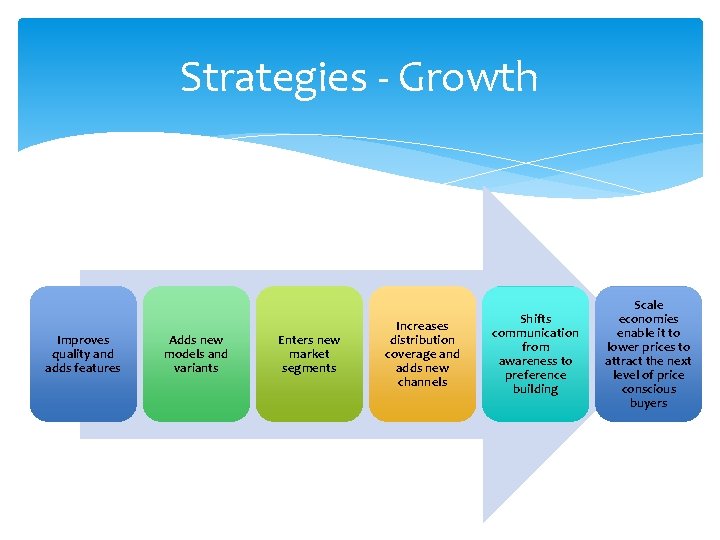
Strategies - Growth Improves quality and adds features Adds new models and variants Enters new market segments Increases distribution coverage and adds new channels Shifts communication from awareness to preference building Scale economies enable it to lower prices to attract the next level of price conscious buyers
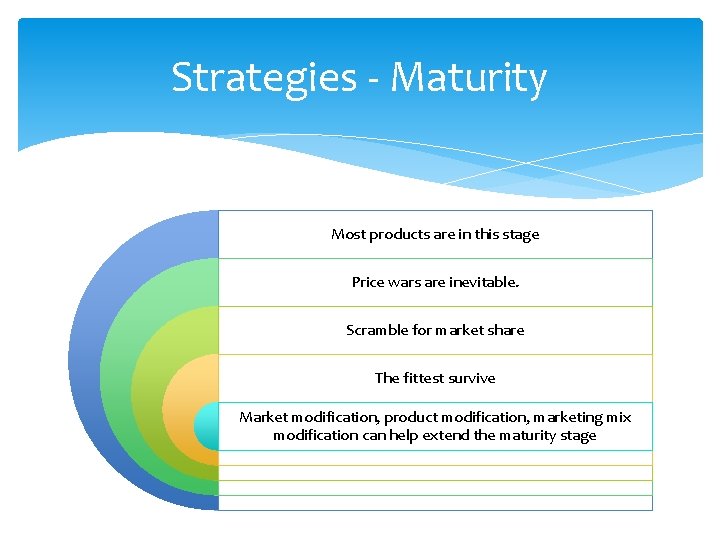
Strategies - Maturity Most products are in this stage Price wars are inevitable. Scramble for market share The fittest survive Market modification, product modification, marketing mix modification can help extend the maturity stage
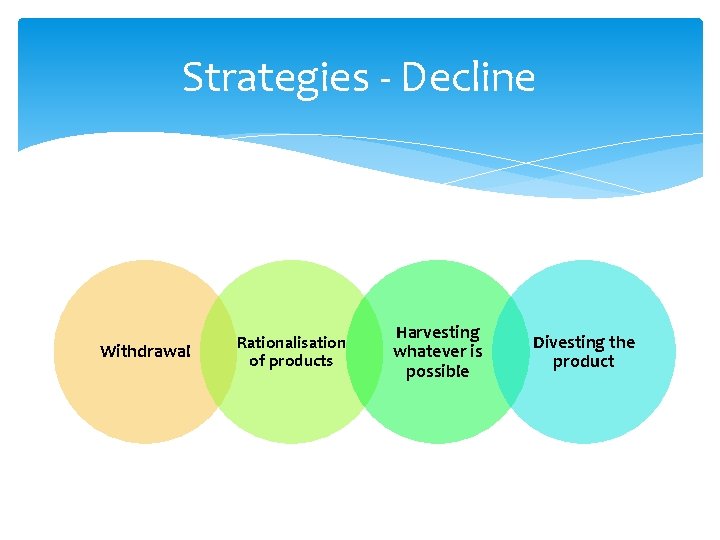
Strategies - Decline Withdrawal Rationalisation of products Harvesting whatever is possible Divesting the product
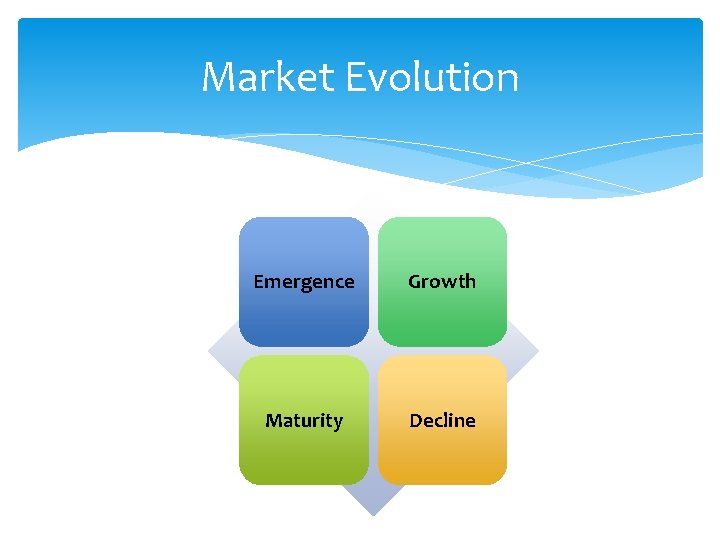
Market Evolution Emergence Growth Maturity Decline