
Differentiating Levels of a Learning Progression How to
- Slides: 5
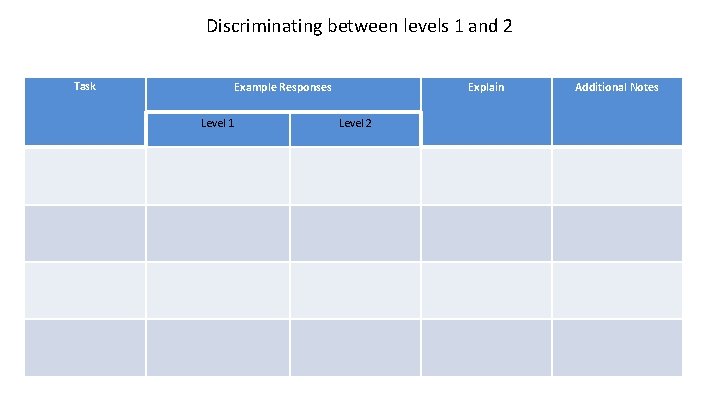
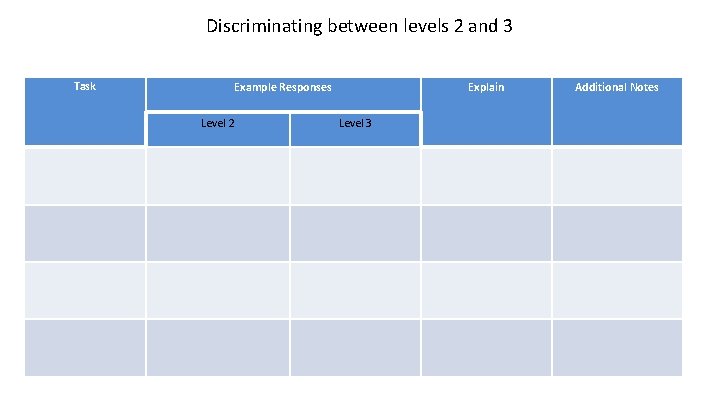
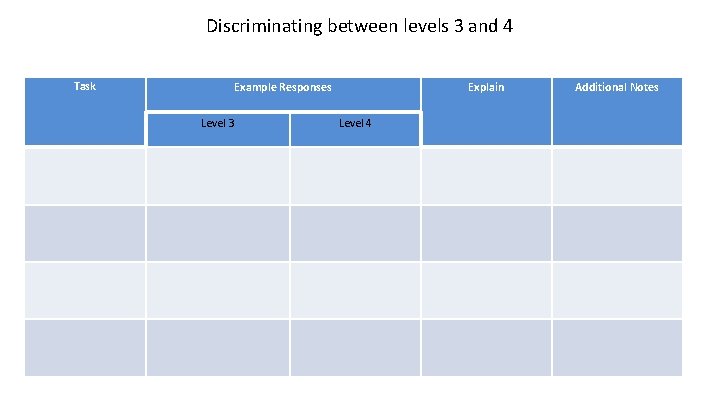
Differentiating Levels of a Learning Progression How to complete this document: • The purpose of this document is to provide a framework for thinking about how your project distinguishes the level of your progression at which a student is performing. • The “Task” column on the left describes an action, task, or other interaction that the student participates in. • The next two columns describe two potential ways of completing, answering, or interacting with the task: one way would describe a student at level 1 of your learning progression and the other would describe a student at level 2 of your learning progression • The next column, labeled “Explain”, is your change to explain how these two columns differ, or distinguish between levels 1 and 2. • The fifth column is optional, but allows you to add any additional information that may not have been captured by the other columns in the table. • Pages 3 through 5 ask for the same information distinguishing between levels 2 -3, 3 -4, and 4 -5 respectively. • If a single task in your project distinguishes between more than two levels, feel free to list it on multiple pages. • If your Learning Progression has more than five levels, you should copy the page and change titles, as needed. • In all of these tables you may add extra columns or rows, or adjust the size of cells, as needed.
Discriminating between levels 1 and 2 Task Example Responses Level 1 Explain Level 2 Additional Notes
Discriminating between levels 2 and 3 Task Example Responses Level 2 Explain Level 3 Additional Notes
Discriminating between levels 3 and 4 Task Example Responses Level 3 Explain Level 4 Additional Notes
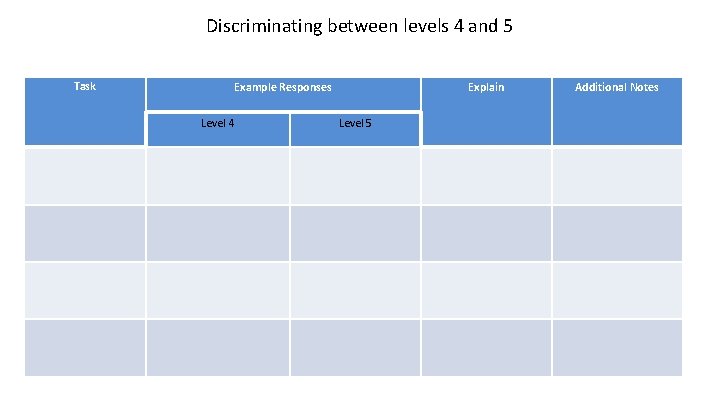
Discriminating between levels 4 and 5 Task Example Responses Level 4 Explain Level 5 Additional Notes