
Differentiating Instruction for English Language Learners SIOP Writing


- Slides: 29
Differentiating Instruction for English Language Learners SIOP: Writing Language Objectives Mary Morgan ESL Elementary Resource Teacher July 8, 2009
Objectives • Review or learn levels of second language acquisition • Learn rationale for writing language objectives for ELLs in content areas • Access tools for writing language objectives • Practice writing language objectives and share in small or large group
What is SIOP? Making Content Comprehensible for English Language Learners: THE SIOP MODEL by Jana Echevarria, Mary. Ellen Vogt, and Deborah J. Short SIOP=Sheltered Instruction Observation Protocol
“It is critical to set both content objectives and language objectives. Just as language learning cannot occur if we only focus on subject matter, content knowledge cannot grow if we only focus on learning the English language. ” Hill & Flynn, 2006
“Systematic language development has to take place for students to eventually have the academic literacy skills they need to survive in the classroom. ” Hill & Flynn, 2006
Four Reasons for Combining Content and Language Objectives 1. Language forms and vocabulary will develop as students study areas of interest. 2. Motivation plays a role in learning complex language structures. 3. Teachers can activate and build on students’ prior knowledge in the content areas. 4. Language structure and form should be learned in authentic contexts rather than through contrived drills in language workbooks. Brinton, Snow, and Wesch, 1989
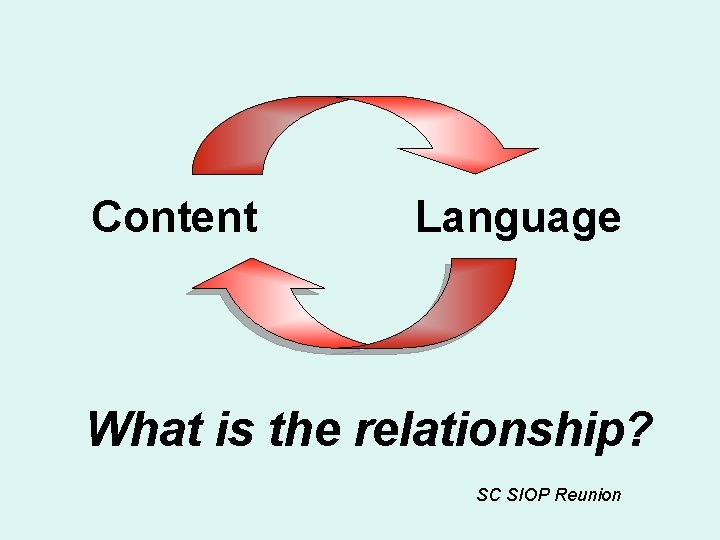
Content Language What is the relationship? SC SIOP Reunion
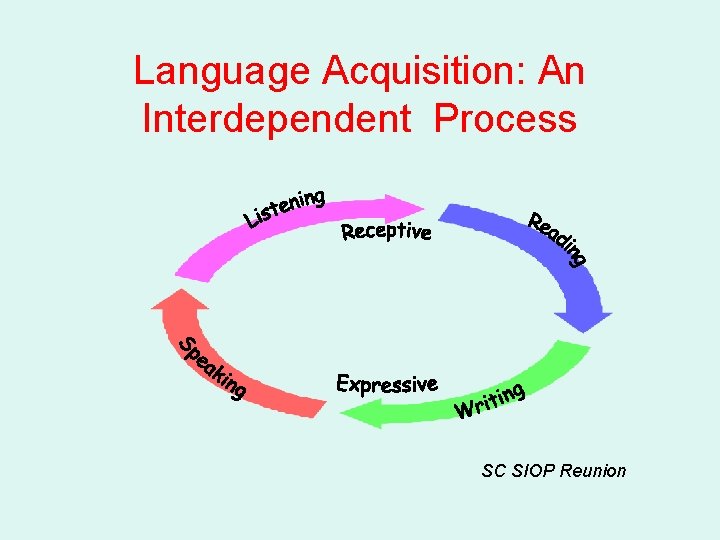
Language Acquisition: An Interdependent Process SC SIOP Reunion
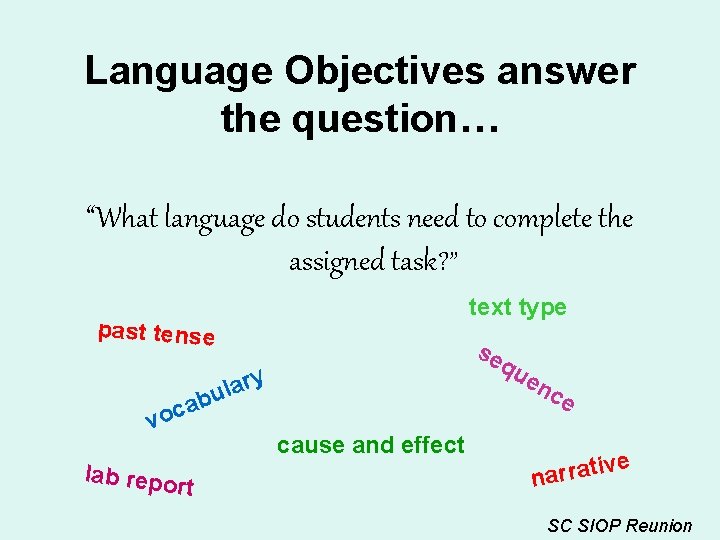
Language Objectives answer the question… “What language do students need to complete the assigned task? ” text type past tense oca v lab repo rt se qu ry a l bu cause and effect en ce e v i t a r r na SC SIOP Reunion
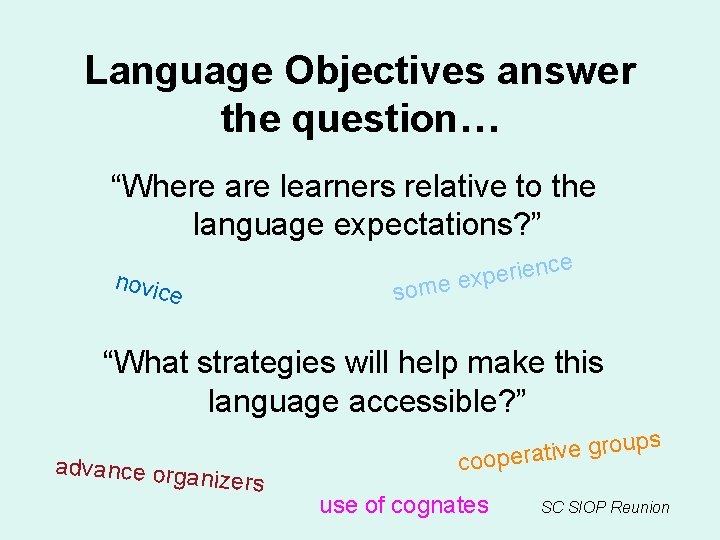
Language Objectives answer the question… “Where are learners relative to the language expectations? ” novic e e c n e i r e e exp som “What strategies will help make this language accessible? ” advance orga nizers s oup r g e v i t a r coope use of cognates SC SIOP Reunion
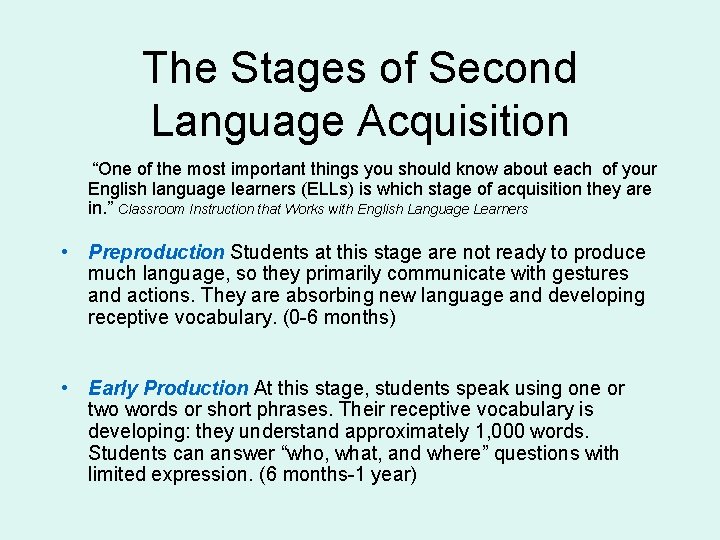
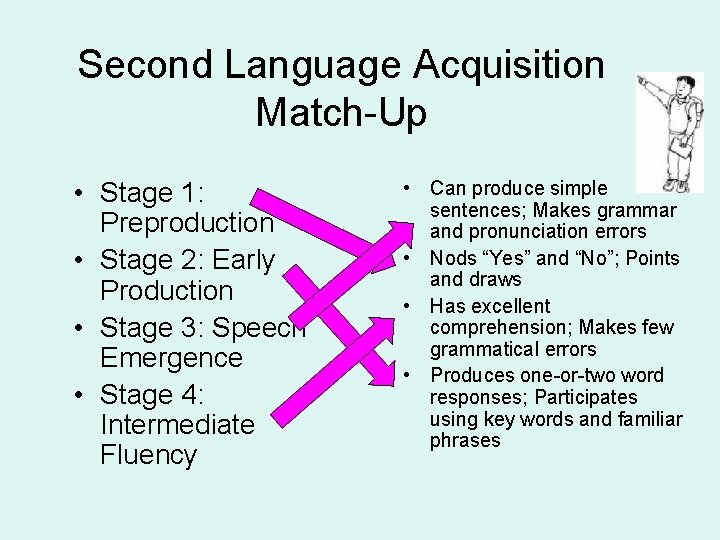
The Stages of Second Language Acquisition “One of the most important things you should know about each of your English language learners (ELLs) is which stage of acquisition they are in. ” Classroom Instruction that Works with English Language Learners • Preproduction Students at this stage are not ready to produce much language, so they primarily communicate with gestures and actions. They are absorbing new language and developing receptive vocabulary. (0 -6 months) • Early Production At this stage, students speak using one or two words or short phrases. Their receptive vocabulary is developing: they understand approximately 1, 000 words. Students can answer “who, what, and where” questions with limited expression. (6 months-1 year)
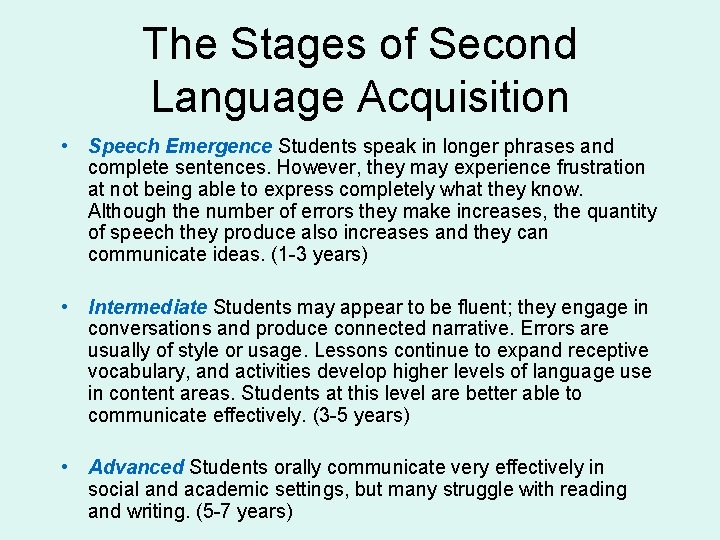
The Stages of Second Language Acquisition • Speech Emergence Students speak in longer phrases and complete sentences. However, they may experience frustration at not being able to express completely what they know. Although the number of errors they make increases, the quantity of speech they produce also increases and they can communicate ideas. (1 -3 years) • Intermediate Students may appear to be fluent; they engage in conversations and produce connected narrative. Errors are usually of style or usage. Lessons continue to expand receptive vocabulary, and activities develop higher levels of language use in content areas. Students at this level are better able to communicate effectively. (3 -5 years) • Advanced Students orally communicate very effectively in social and academic settings, but many struggle with reading and writing. (5 -7 years)
Second Language Acquisition Match-Up • Stage 1: Preproduction • Stage 2: Early Production • Stage 3: Speech Emergence • Stage 4: Intermediate Fluency • Can produce simple sentences; Makes grammar and pronunciation errors • Nods “Yes” and “No”; Points and draws • Has excellent comprehension; Makes few grammatical errors • Produces one-or-two word responses; Participates using key words and familiar phrases
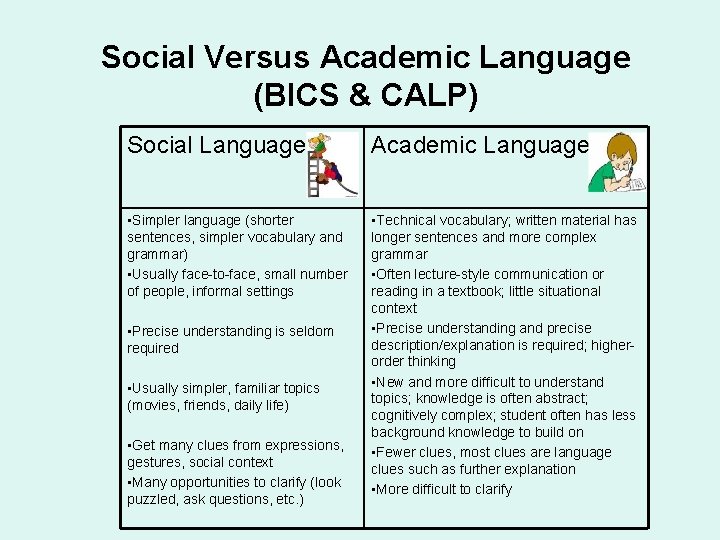
Social Versus Academic Language (BICS & CALP) Social Language Academic Language • Simpler language (shorter sentences, simpler vocabulary and grammar) • Usually face-to-face, small number of people, informal settings • Technical vocabulary; written material has longer sentences and more complex grammar • Often lecture-style communication or reading in a textbook; little situational context • Precise understanding and precise description/explanation is required; higherorder thinking • New and more difficult to understand topics; knowledge is often abstract; cognitively complex; student often has less background knowledge to build on • Fewer clues, most clues are language clues such as further explanation • More difficult to clarify • Precise understanding is seldom required • Usually simpler, familiar topics (movies, friends, daily life) • Get many clues from expressions, gestures, social context • Many opportunities to clarify (look puzzled, ask questions, etc. )
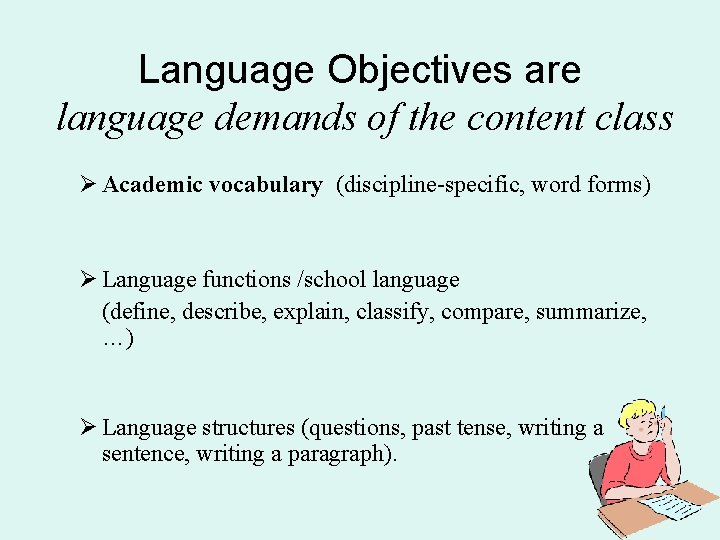
Language Objectives are language demands of the content class Ø Academic vocabulary (discipline-specific, word forms) Ø Language functions /school language (define, describe, explain, classify, compare, summarize, …) Ø Language structures (questions, past tense, writing a sentence, writing a paragraph).
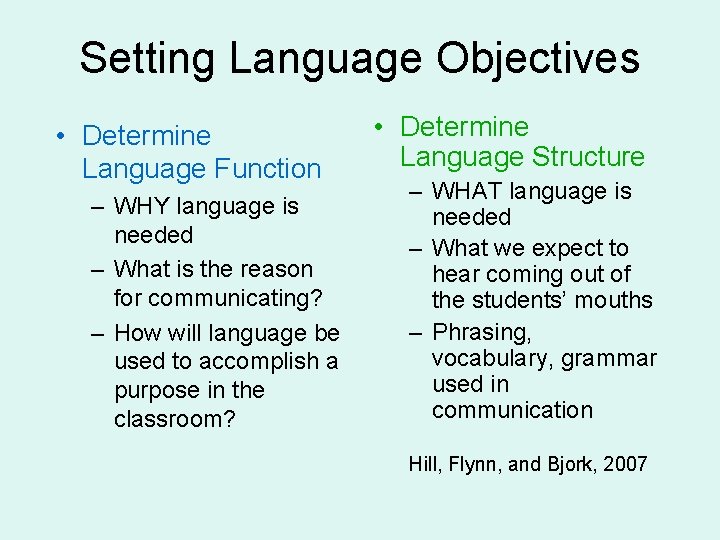
Setting Language Objectives • Determine Language Function – WHY language is needed – What is the reason for communicating? – How will language be used to accomplish a purpose in the classroom? • Determine Language Structure – WHAT language is needed – What we expect to hear coming out of the students’ mouths – Phrasing, vocabulary, grammar used in communication Hill, Flynn, and Bjork, 2007
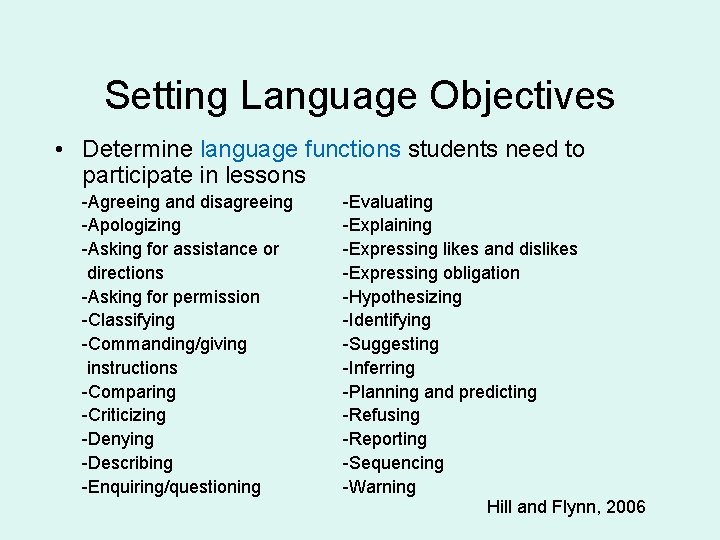
Setting Language Objectives • Determine language functions students need to participate in lessons -Agreeing and disagreeing -Apologizing -Asking for assistance or directions -Asking for permission -Classifying -Commanding/giving instructions -Comparing -Criticizing -Denying -Describing -Enquiring/questioning -Evaluating -Explaining -Expressing likes and dislikes -Expressing obligation -Hypothesizing -Identifying -Suggesting -Inferring -Planning and predicting -Refusing -Reporting -Sequencing -Warning Hill and Flynn, 2006
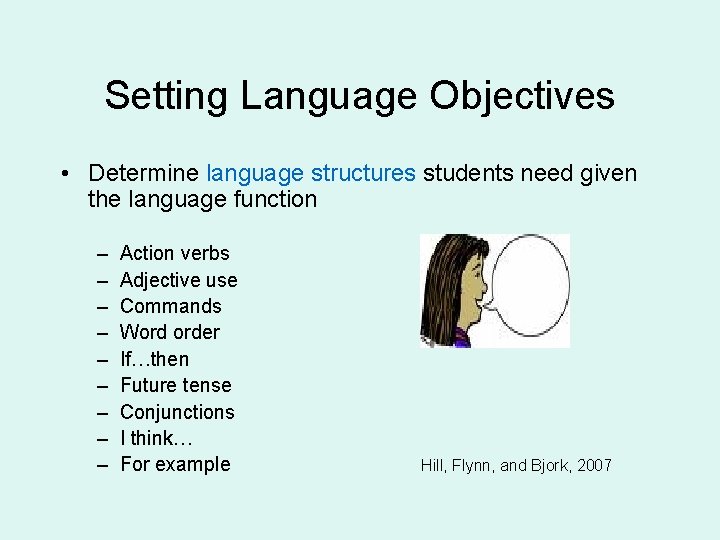
Setting Language Objectives • Determine language structures students need given the language function – – – – – Action verbs Adjective use Commands Word order If…then Future tense Conjunctions I think… For example Hill, Flynn, and Bjork, 2007
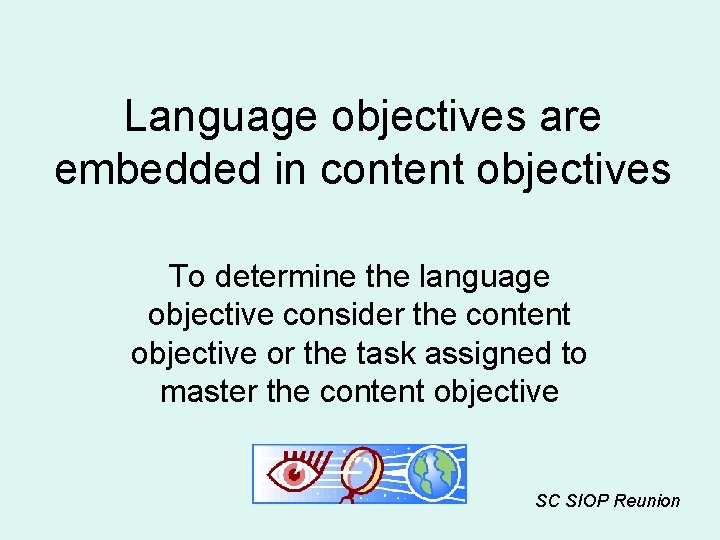
Language objectives are embedded in content objectives To determine the language objective consider the content objective or the task assigned to master the content objective SC SIOP Reunion
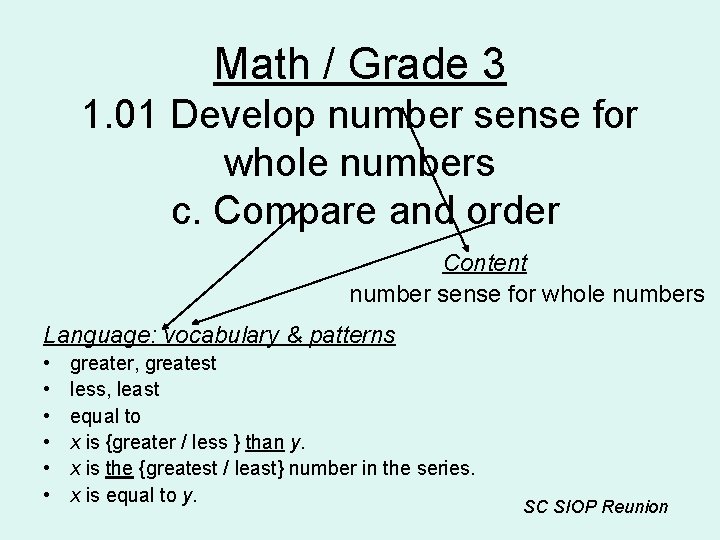
Math / Grade 3 1. 01 Develop number sense for whole numbers c. Compare and order Content number sense for whole numbers Language: vocabulary & patterns • • • greater, greatest less, least equal to x is {greater / less } than y. x is the {greatest / least} number in the series. x is equal to y. SC SIOP Reunion
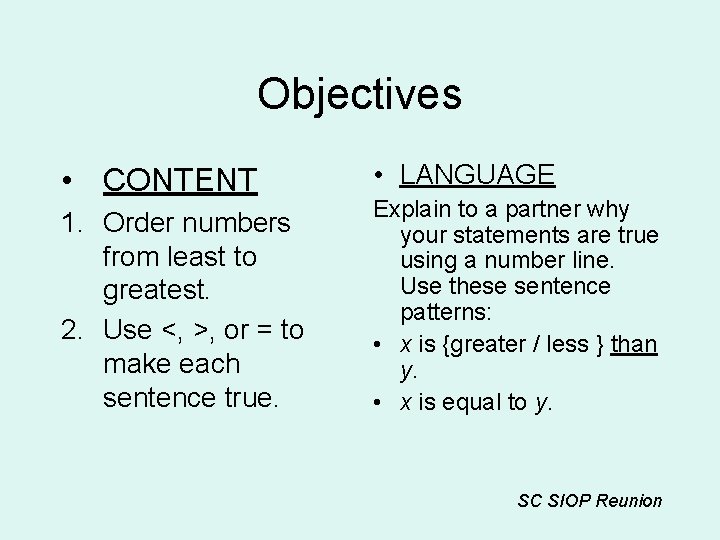
Objectives • CONTENT 1. Order numbers from least to greatest. 2. Use <, >, or = to make each sentence true. • LANGUAGE Explain to a partner why your statements are true using a number line. Use these sentence patterns: • x is {greater / less } than y. • x is equal to y. SC SIOP Reunion
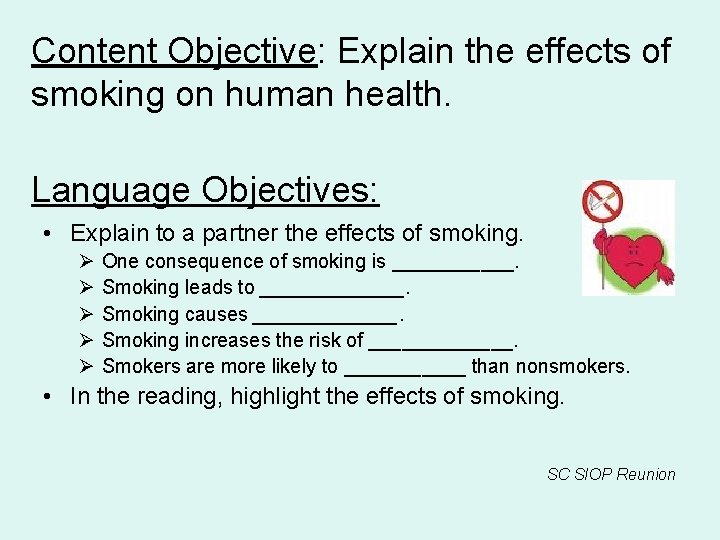
Content Objective: Explain the effects of smoking on human health. Language Objectives: • Explain to a partner the effects of smoking. Ø Ø Ø One consequence of smoking is ______. Smoking leads to _______. Smoking causes _______. Smoking increases the risk of _______. Smokers are more likely to ______ than nonsmokers. • In the reading, highlight the effects of smoking. SC SIOP Reunion
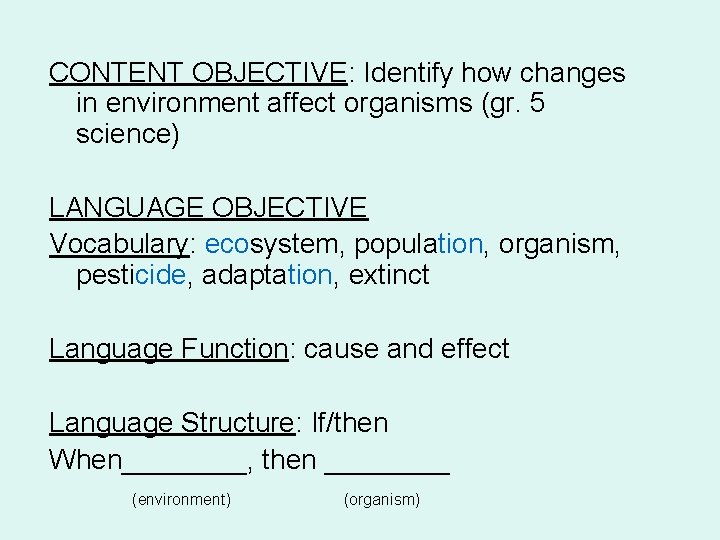
CONTENT OBJECTIVE: Identify how changes in environment affect organisms (gr. 5 science) LANGUAGE OBJECTIVE Vocabulary: ecosystem, population, organism, pesticide, adaptation, extinct Language Function: cause and effect Language Structure: If/then When____, then ____ (environment) (organism)
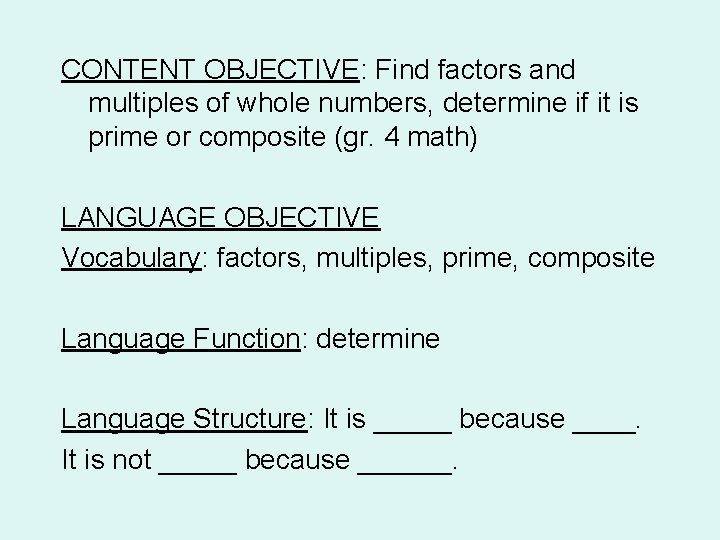
CONTENT OBJECTIVE: Find factors and multiples of whole numbers, determine if it is prime or composite (gr. 4 math) LANGUAGE OBJECTIVE Vocabulary: factors, multiples, prime, composite Language Function: determine Language Structure: It is _____ because ____. It is not _____ because ______.
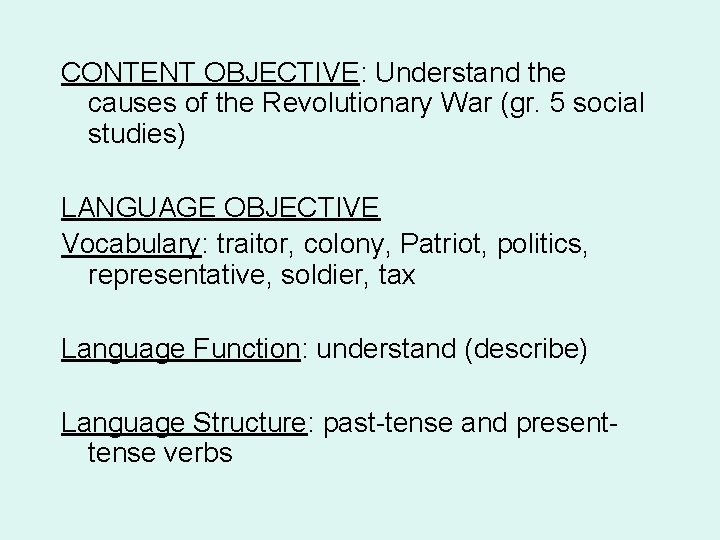
CONTENT OBJECTIVE: Understand the causes of the Revolutionary War (gr. 5 social studies) LANGUAGE OBJECTIVE Vocabulary: traitor, colony, Patriot, politics, representative, soldier, tax Language Function: understand (describe) Language Structure: past-tense and presenttense verbs
WIDA ACCESS for ELLs • CAN DO Descriptors http: //wida. wceruw. org/standards/CAN_D Os/index. aspx
Other Resources • “Academic Language Functions” Handout • “Providing a Direction for Learning: Setting Language Objectives for English Language Learners” by Hill, Flynn, and Bjork • “Helpful Tips” Handout • Core Content 4. 1
Let’s Try It! • Choose a content objective that you have taught or will teach. • Work with a partner to write a language objective for your content objective on the language objective practice page. Remember to consider the language levels of your students. • Be prepared to share with the whole group.