
Differentiating Instruction By Lisa Neal Differentiation and its
Differentiating Instruction By Lisa Neal
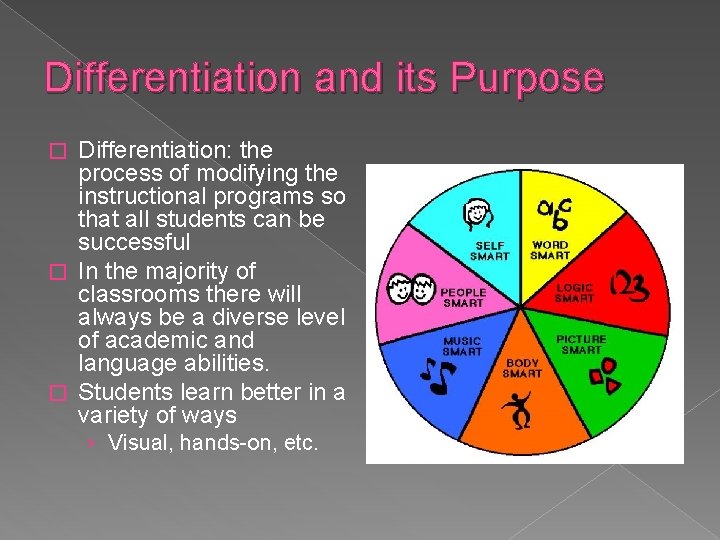
Differentiation and its Purpose Differentiation: the process of modifying the instructional programs so that all students can be successful � In the majority of classrooms there will always be a diverse level of academic and language abilities. � Students learn better in a variety of ways � › Visual, hands-on, etc.
Characteristics of Differentiated Instruction � High Standards � Assessment-Instruction Link � Flexible Grouping � Reading Materials � Varied Instructional Activities � Instructional Modifications � Respect � Academic Achievement
Levels of Differentiation � Rigorous › Teachers provide challenging instruction that encourages students’ active engagement in learning � Relevant › Teachers address literacy standards to assure that students learn essential knowledge, strategies, and skills. � Flexible › Teachers use a variety of instructional procedures and grouping techniques to support students. � Complex › Teachers engage students in thinking deeply about books they’re reading, compositions they’re writing, and concepts they’re learning.
Modifying Instruction � Differentiating the Content › Teachers teach on teaching the essential content to all students › More or less practice is given to students to meet their individual needs �Decided by assessing students’ prior knowledge › Increased complexity of instructional activities is given to students who are familiar with the content

Modifying Instruction � Differentiating › › › the Process Varied materials Varied instruction Varied activities Grouping students Teachers make decisions about involving students in activities that allow them to process what they’re learning through oral, written, or visual means
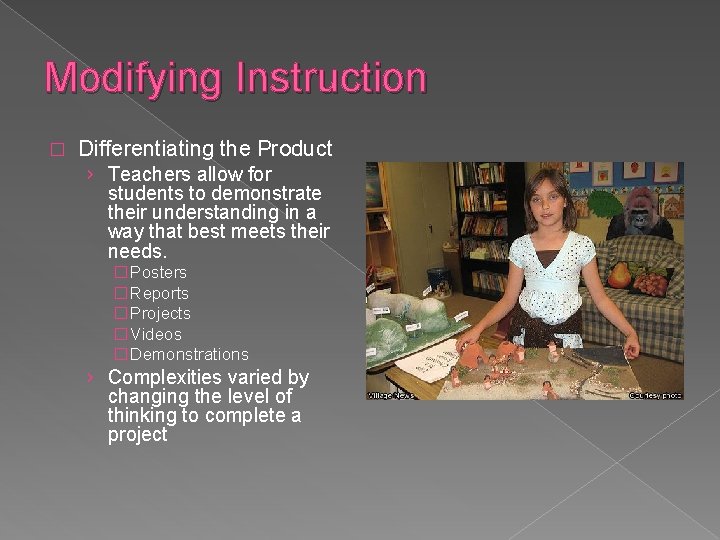
Modifying Instruction � Differentiating the Product › Teachers allow for students to demonstrate their understanding in a way that best meets their needs. �Posters �Reports �Projects �Videos �Demonstrations › Complexities varied by changing the level of thinking to complete a project
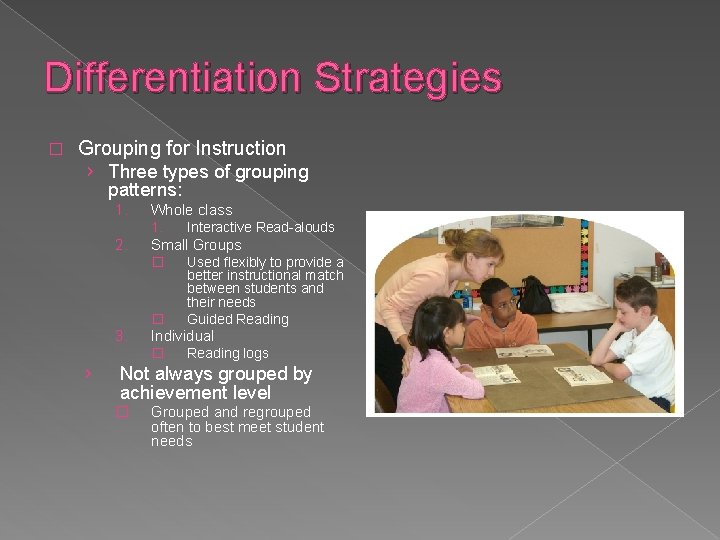
Differentiation Strategies � Grouping for Instruction › Three types of grouping patterns: 1. 2. Whole class 1. Interactive Read-alouds Small Groups � Used flexibly to provide a better instructional match between students and their needs Guided Reading 3. › � Individual � Reading logs Not always grouped by achievement level � Grouped and regrouped often to best meet student needs
Differentiation Strategies � Tiered Activities › Different levels of related activities that focus on the same essential knowledge. › Varied by: �Complexity of thinking �Reading level �Form of expression
Differentiation Strategies � Literacy Centers › Contain meaningful, purposeful activities that students can work at in small groups › Activities relate to concepts, strategies, and skills that the teacher has recently taught
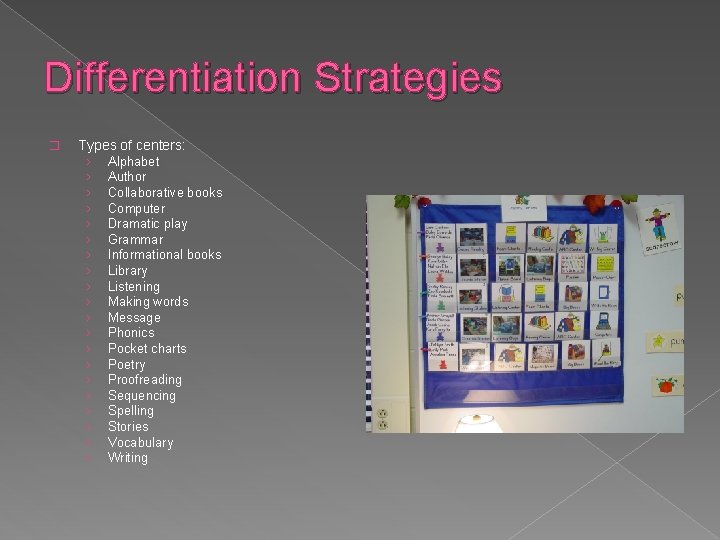
Differentiation Strategies � Types of centers: › › › › › Alphabet Author Collaborative books Computer Dramatic play Grammar Informational books Library Listening Making words Message Phonics Pocket charts Poetry Proofreading Sequencing Spelling Stories Vocabulary Writing
Differentiation Strategies � Differentiated Projects › Allows students to follow their interests › Allows students to demonstrate what they learned in an authentic way › Especially valuable for all academic ability levels �Advanced students have the opportunity to go beyond the classroom setting �Struggling students can get assistance from group members and be assessed in a way they feel most comfortable.
Resources � Pictures: � http: //s 1. hubimg. com/u/1487572_f 520. jpg � http: //www. thevillagenews. com/media/photo/ 23038. jpg � http: //www. sheddtutoring. org/Small_Group_ Reading_Summer_2003. JPG � http: //www. lindaslearninglinks. com/litcenterp hotos. html
- Slides: 13