
DIFFERENTIATED INSTRUCTION IN THE BLENDED LEARNING CLASSROOM Presented
“DIFFERENTIATED INSTRUCTION IN THE BLENDED LEARNING CLASSROOM” Presented by: Dr. Plummer, Presenter
Determine that the thing can and shall be done, and then we shall find the way. -Abraham Lincoln
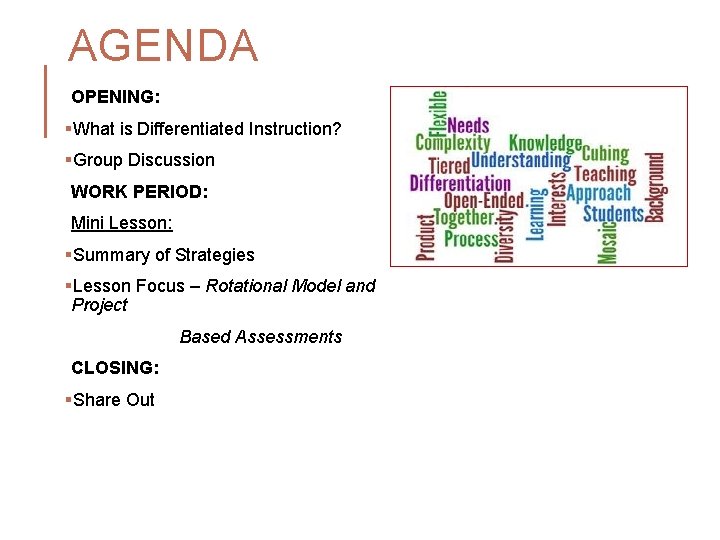
AGENDA OPENING: §What is Differentiated Instruction? §Group Discussion WORK PERIOD: Mini Lesson: §Summary of Strategies §Lesson Focus – Rotational Model and Project Based Assessments CLOSING: §Share Out
OPENING What is Differentiated Instruction? Content (Curriculum): Differentiating the content means to put more depth into the curriculum through organizing the curriculum concepts and structure of knowledge. Process (Instruction): Differentiating the process requires the use of varied instructional techniques and materials to enhance learning for students. Product (Assessment): When products are differentiated, cognitive development and the students’ abilities to express themselves improve.
“Differentiation is simply a teacher attending to the learning needs of a particular student or small group of students, rather than teaching a class as though all individuals in it were basically alike. ” -Carol Ann Tomlinson (2000)

LET’S DISCUS S
QUESTION What were some ways that you differentiated your instruction in your traditional classroom?
WORK PERIOD: MINI LESSON Summary of Strategies ØQuestioning ØFlexible Grouping ØTiered Assignments ØProject Based Tasks
WORK PERIOD Choices ØMenu of Options ØChoices Board ØOpen-Ended Tasks ØStations/Interest Centers ØLeveled Learning Centers CONT.
WHAT WORKS IN THE BLENDED CLASSROOM? Rotational Model/Station Teaching ØTeacher divides the Content into parts and the Students into groups. Students rotate through the groups to complete daily tasks. ØTeachers base differentiated stations on student assessment data.
WORK PERIOD Flexible Grouping ØCan be determined by readiness, interest, skill, student, teacher, or by learning style. ØRequires preassessment in order to make decisions about students’ instructional needs. CONT.
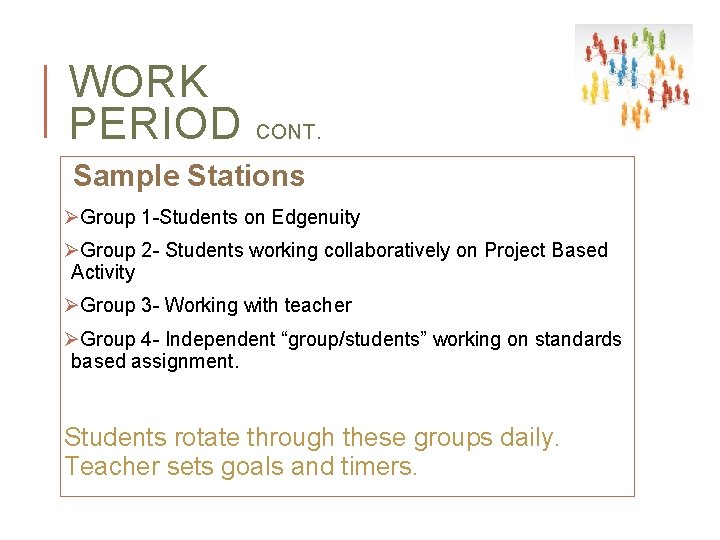
WORK PERIOD CONT. Sample Stations ØGroup 1 -Students on Edgenuity ØGroup 2 - Students working collaboratively on Project Based Activity ØGroup 3 - Working with teacher ØGroup 4 - Independent “group/students” working on standards based assignment. Students rotate through these groups daily. Teacher sets goals and timers.
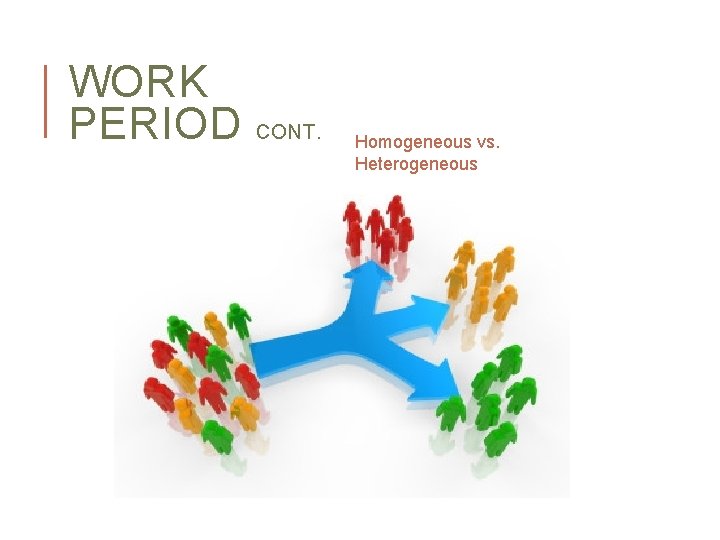
WORK PERIOD CONT. Homogeneous vs. Heterogeneous
WORK PERIOD CONT. Practice: Take a few moments to devise stations that you can use in your classroom
CLOSING Share Out

TH E
- Slides: 16