
Different types of diplomacy When negotiations take place
- Slides: 53
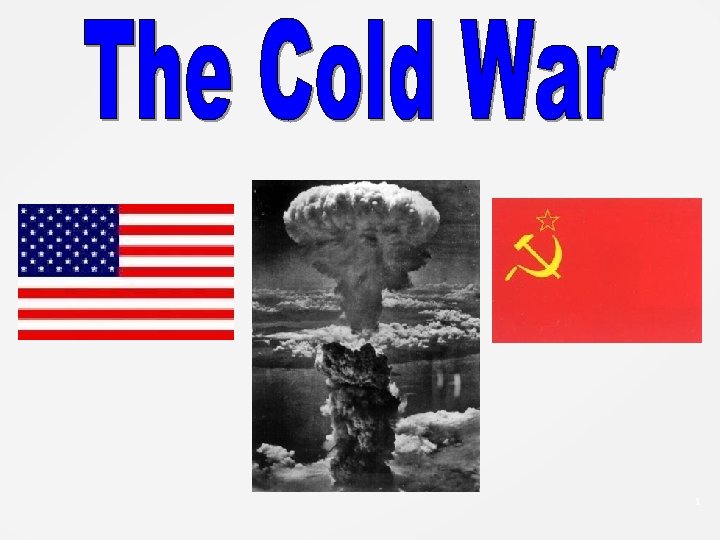
Different types of diplomacy When negotiations take place between nations it is known as diplomacy. There are different types of diplomacy: Hot War : this is actual warfare. All talks have failed and the armies are fighting. Warm War : this is where talks are still going on and there would always be a chance of a peaceful outcome but armies, navies etc. are being fully mobilised and war plans are being put into operation ready for the command to fight. Cold War : this term is used to describe the relationship between America and the Soviet Union 1945 to 1991. Neither side ever fought the other - the consequences would have been too appalling.
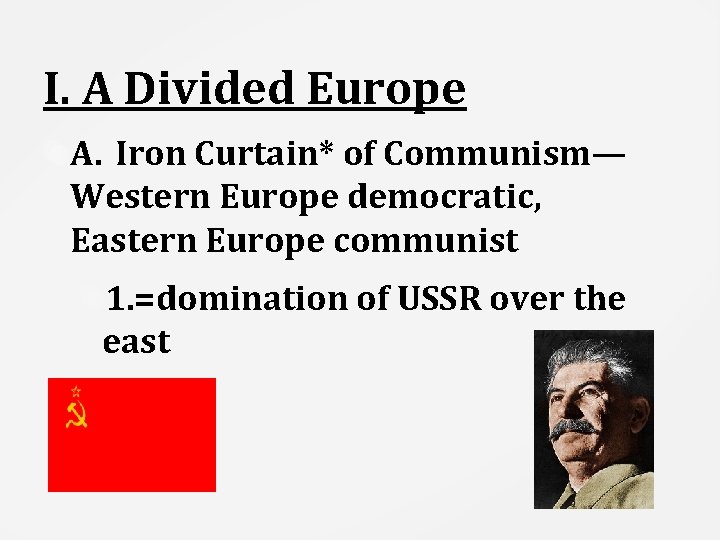
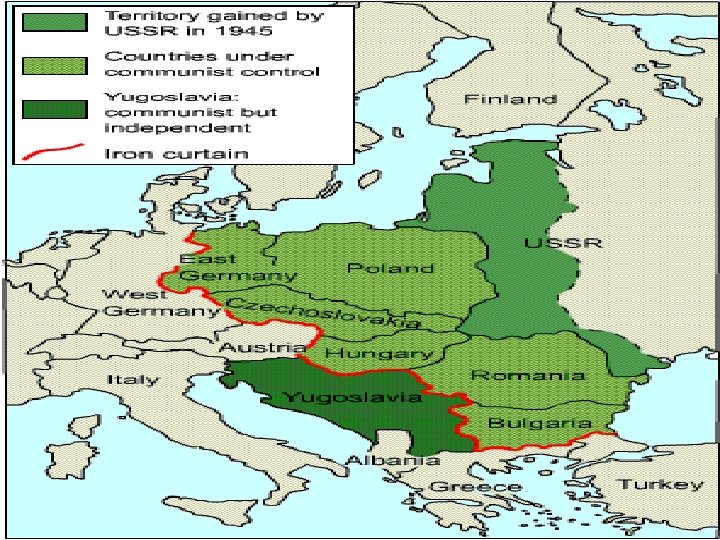
I. A Divided Europe A. Iron Curtain* of Communism— Western Europe democratic, Eastern Europe communist 1. =domination of USSR over the east
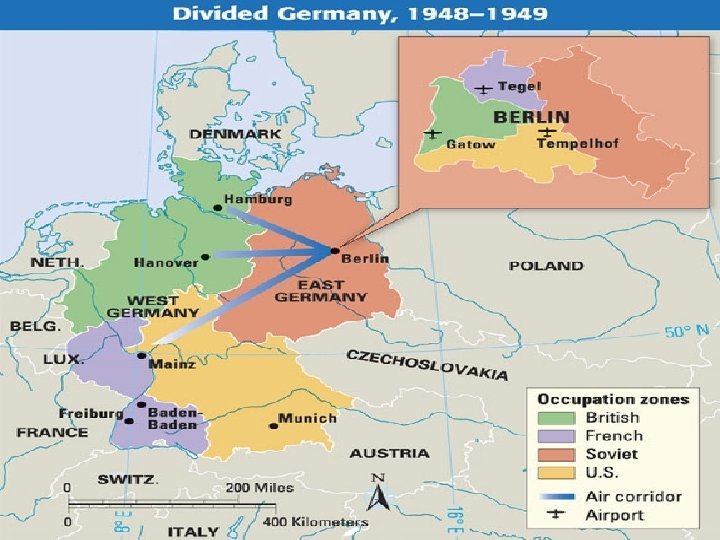
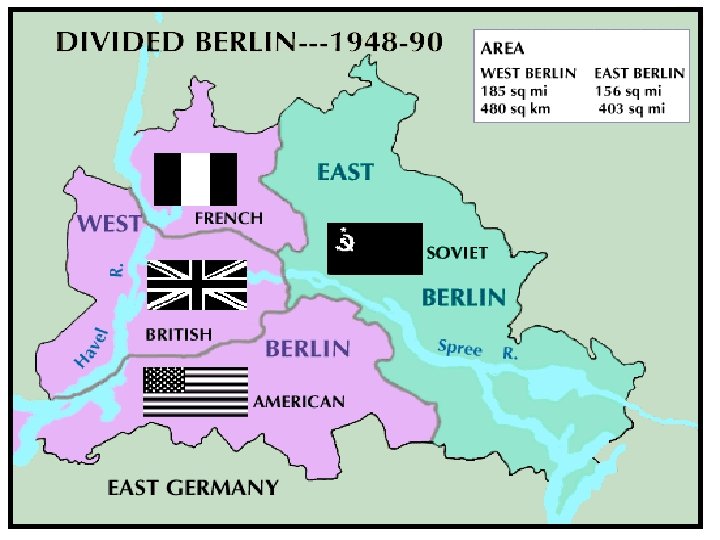
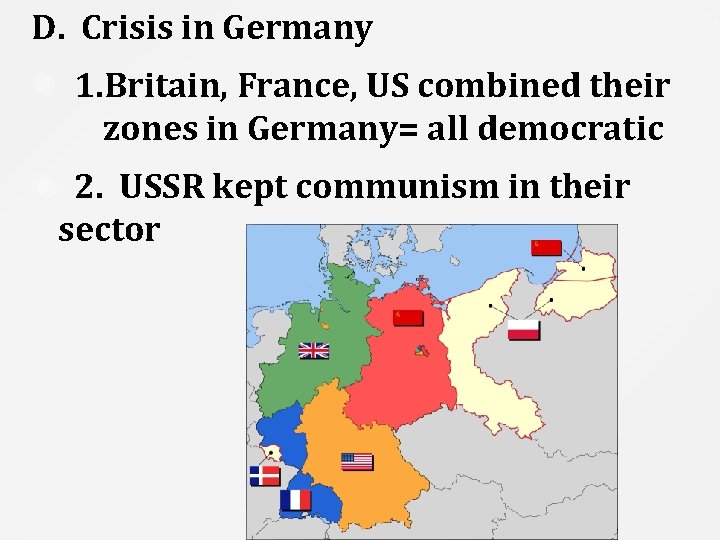
II. Germany & Japan Transformed A. Democracy in West Germany 1. Germany & Berlin divided into 4 sectors: a. between Britain, US, France, USSR
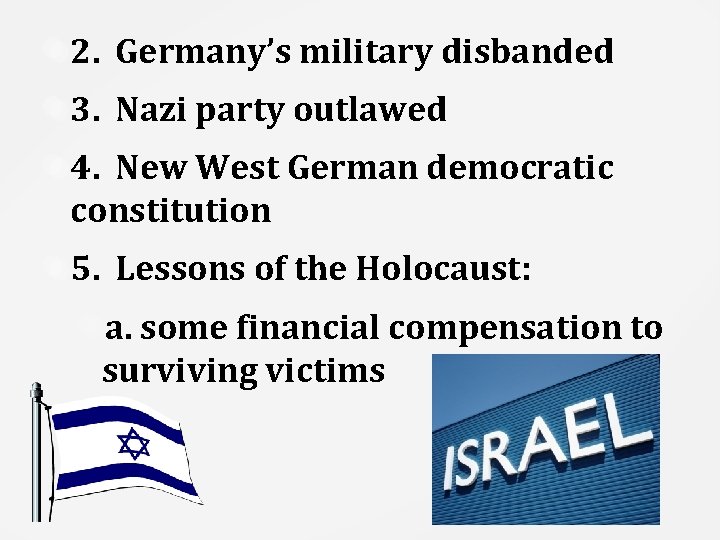
2. Germany’s military disbanded 3. Nazi party outlawed 4. New West German democratic constitution 5. Lessons of the Holocaust: a. some financial compensation to surviving victims
B. Democracy in Japan 1. Occupied by US after WWII 2. Japan’s military disbanded 3. War crimes trials 4. US wanted to end Japanese militarism & create a democratic govt in Japan to be an ally
5. Japan’s New Constitution: a. Written with help of the US b. Created constitutional monarchy; just like Britain c. Set up democratic govt d. Basic rights to Japanese e. Disbanded overseas empire of Japan (= China really happy!)
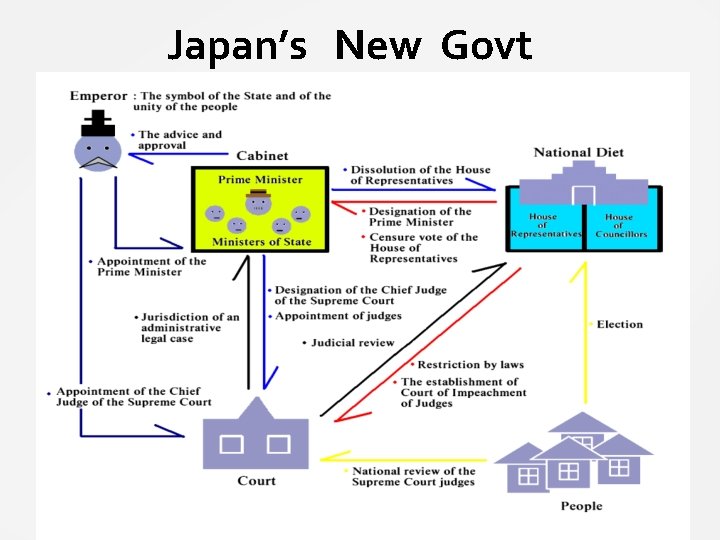
Japan’s New Govt
III. Two Superpowers* A. US (democratic) v. USSR (communist) 1. Both came to dominate the world 2. Became enemies (both have Abomb) 3. =due to decline of Britain & France a. both drained by WWII
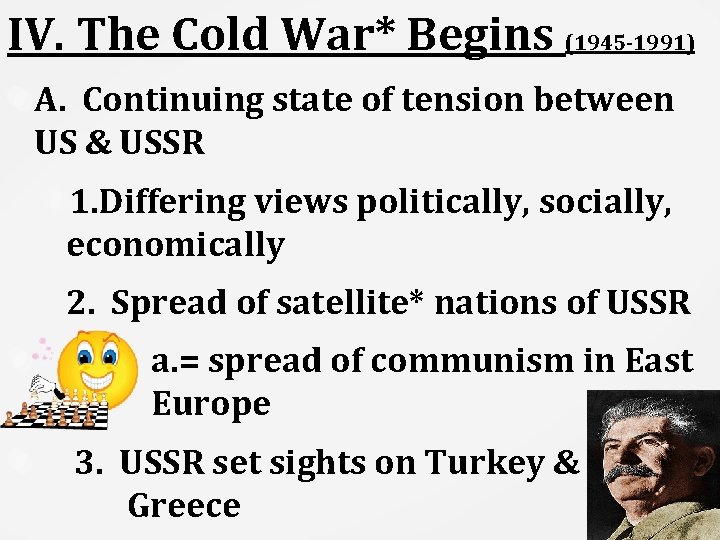
IV. The Cold War* Begins (1945 -1991) A. Continuing state of tension between US & USSR 1. Differing views politically, socially, economically 2. Spread of satellite* nations of USSR a. = spread of communism in East Europe 3. USSR set sights on Turkey & Greece
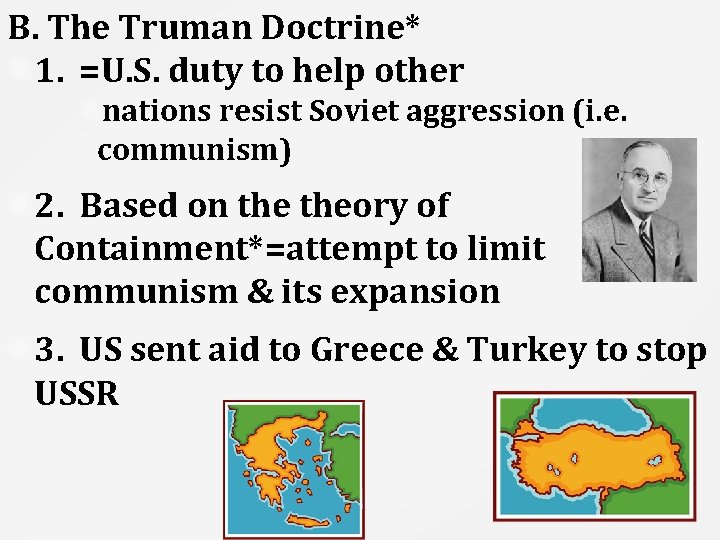
B. The Truman Doctrine* 1. =U. S. duty to help other nations resist Soviet aggression (i. e. communism) 2. Based on theory of Containment*=attempt to limit communism & its expansion 3. US sent aid to Greece & Turkey to stop USSR
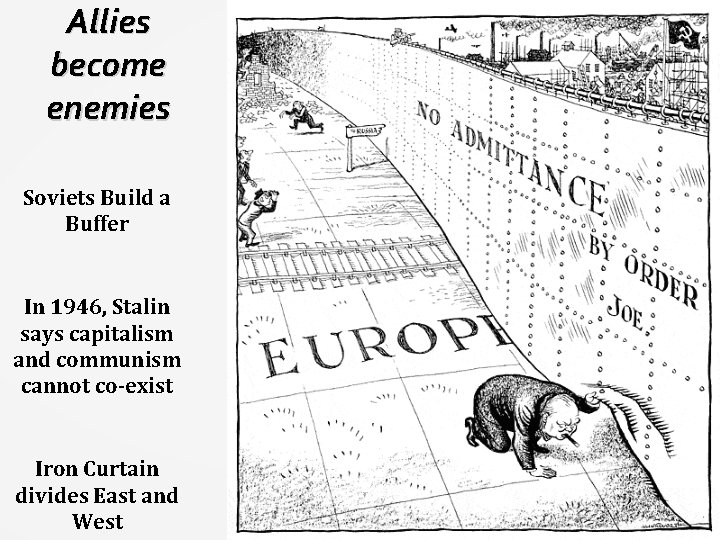
Allies become enemies Soviets Build a Buffer In 1946, Stalin says capitalism and communism cannot co-exist Iron Curtain divides East and West
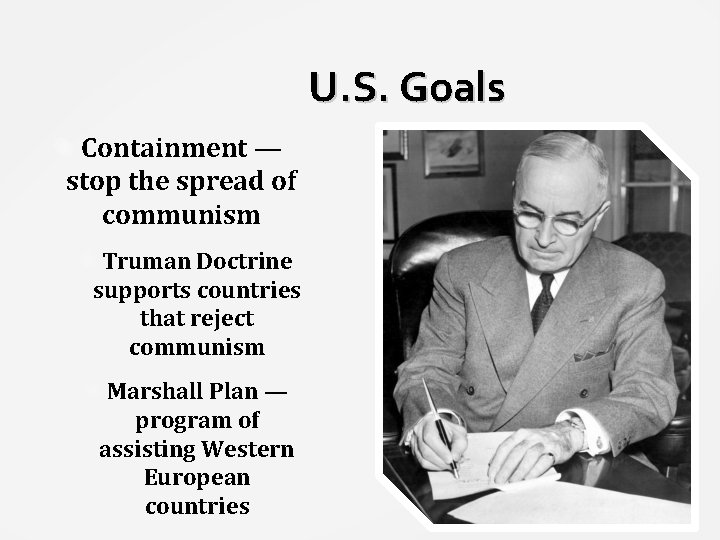
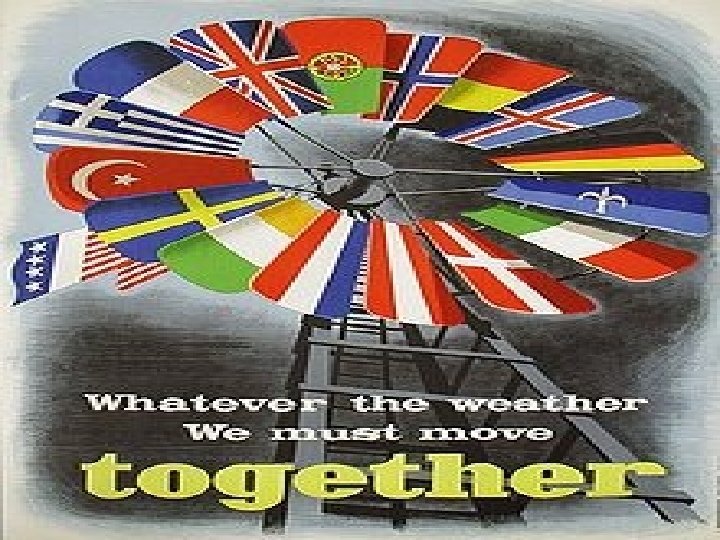
U. S. Goals Containment — stop the spread of communism Truman Doctrine supports countries that reject communism Marshall Plan — program of assisting Western European countries
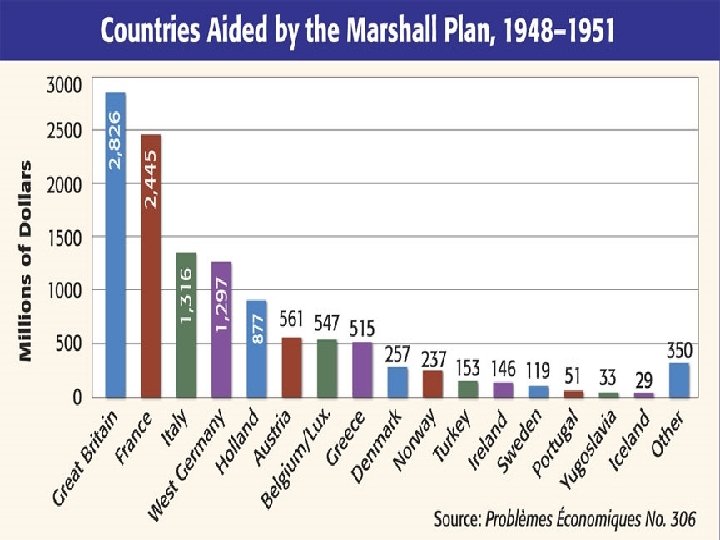
C. The Marshall Plan* 1. =massive economic aid package to Europe after WWII designed to help in rebuilding & to resist communism a. opposite of Treaty of Versailles 2. Only West Europe (democratic) took the aide http: //en. wikipedia. org/wiki/Marshall_ Plan
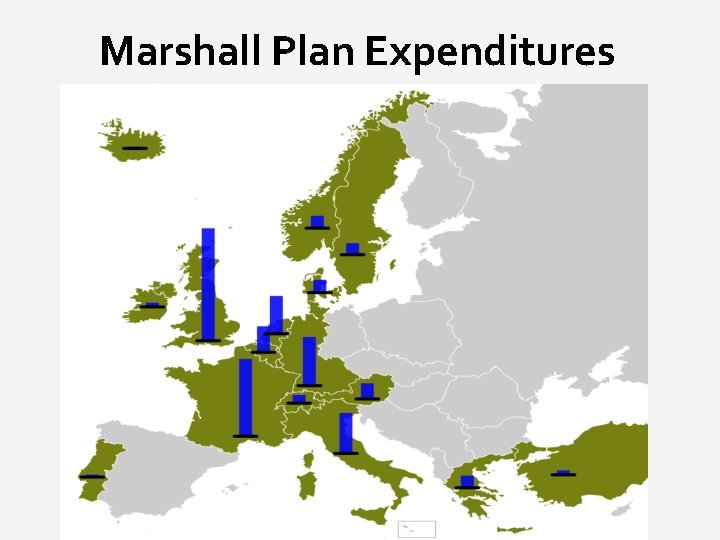
Marshall Plan Expenditures
D. Crisis in Germany 1. Britain, France, US combined their zones in Germany= all democratic 2. USSR kept communism in their sector
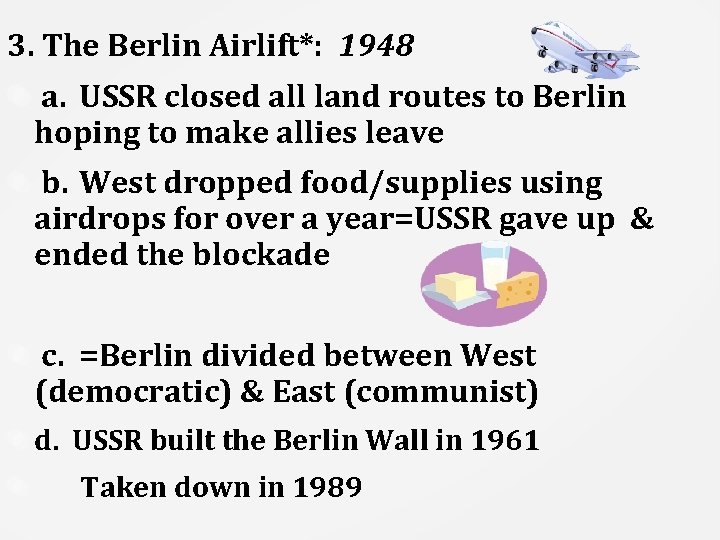
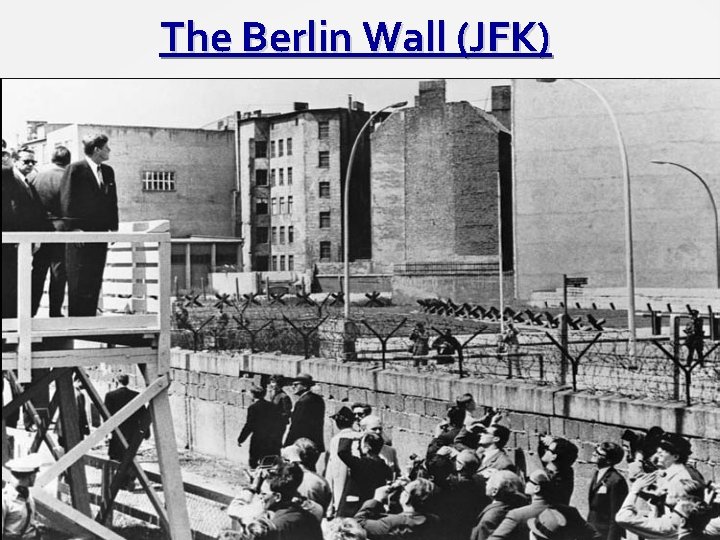
3. The Berlin Airlift*: 1948 a. USSR closed all land routes to Berlin hoping to make allies leave b. West dropped food/supplies using airdrops for over a year=USSR gave up & ended the blockade c. =Berlin divided between West (democratic) & East (communist) d. USSR built the Berlin Wall in 1961 Taken down in 1989
The Berlin Wall (JFK)
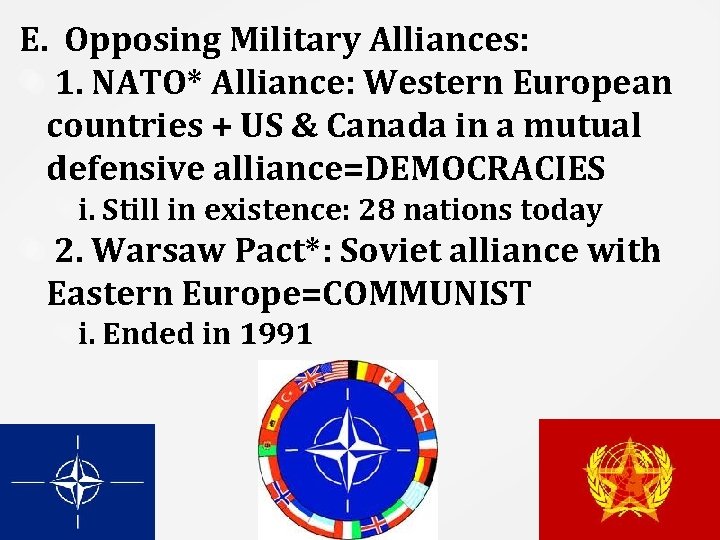
E. Opposing Military Alliances: 1. NATO* Alliance: Western European countries + US & Canada in a mutual defensive alliance=DEMOCRACIES i. Still in existence: 28 nations today 2. Warsaw Pact*: Soviet alliance with Eastern Europe=COMMUNIST i. Ended in 1991
V. The Cold War Heats Up A. Repression in Eastern Europe 1. Revolts in East Germany & Poland, squashed by Soviets with troops, violence 2. Stalin died 1953, but communism kept on
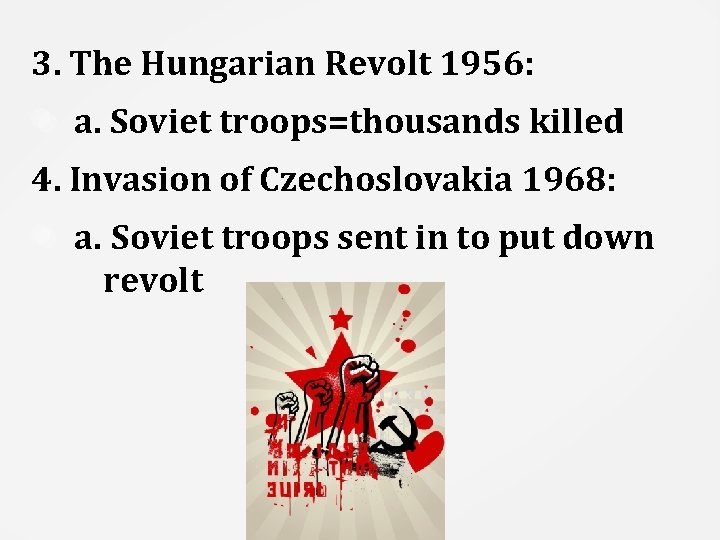
3. The Hungarian Revolt 1956: a. Soviet troops=thousands killed 4. Invasion of Czechoslovakia 1968: a. Soviet troops sent in to put down revolt
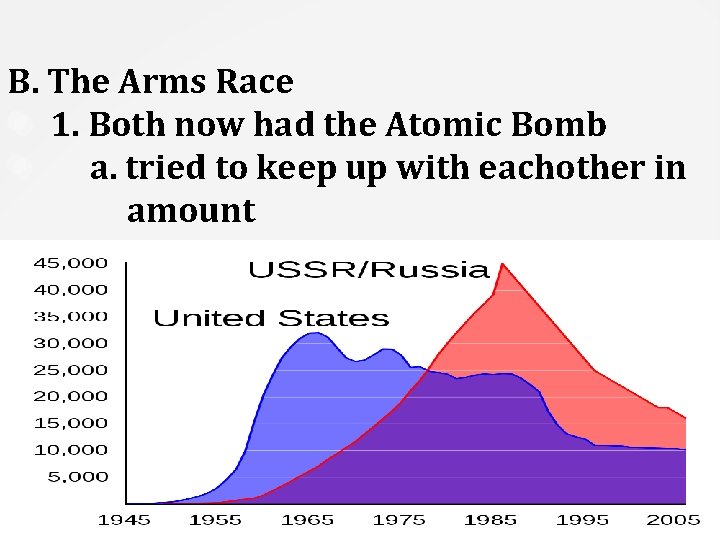
B. The Arms Race 1. Both now had the Atomic Bomb a. tried to keep up with eachother in amount b. =MAD (Mutually Assured Destruction)
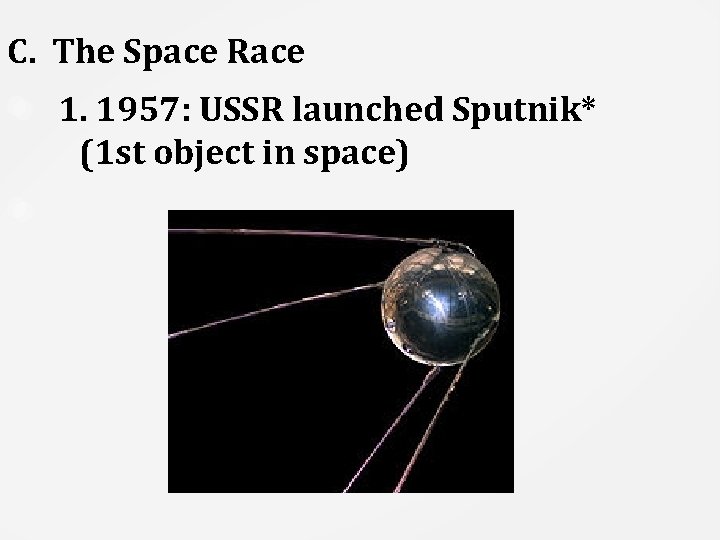
C. The Space Race 1. 1957: USSR launched Sputnik* (1 st object in space)
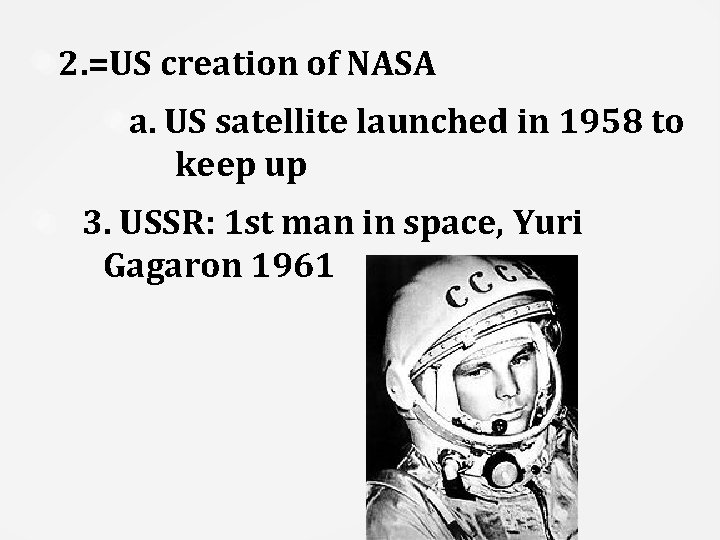
2. =US creation of NASA a. US satellite launched in 1958 to keep up 3. USSR: 1 st man in space, Yuri Gagaron 1961
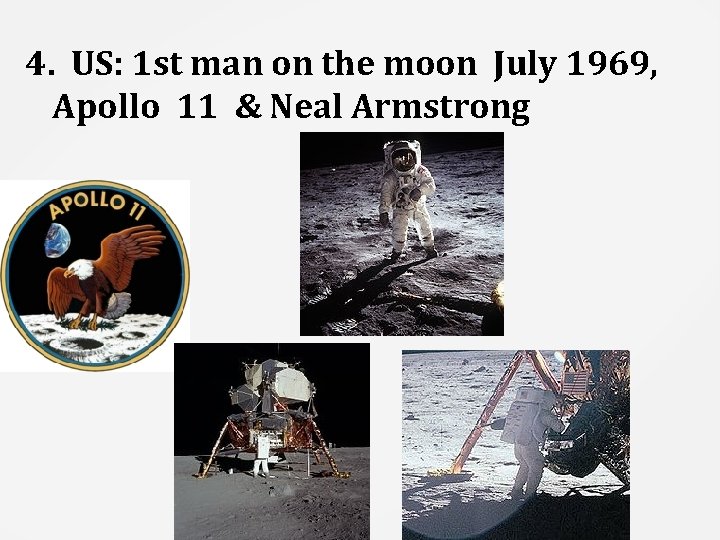
4. US: 1 st man on the moon July 1969, Apollo 11 & Neal Armstrong
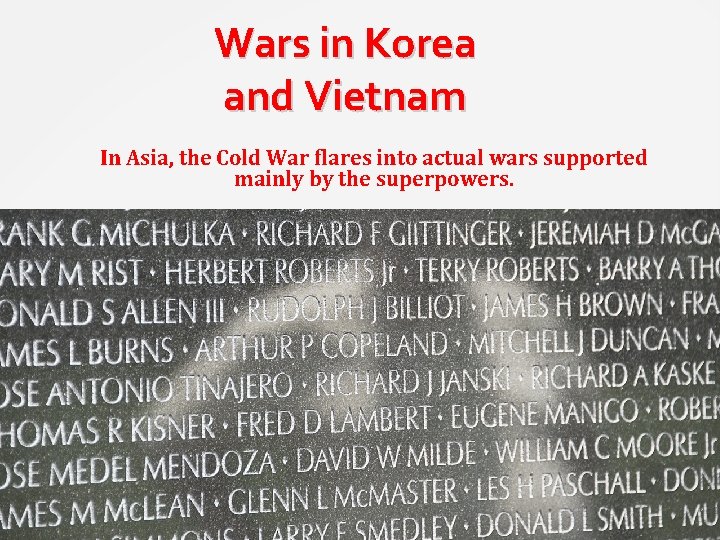
Wars in Korea and Vietnam In Asia, the Cold War flares into actual wars supported mainly by the superpowers.
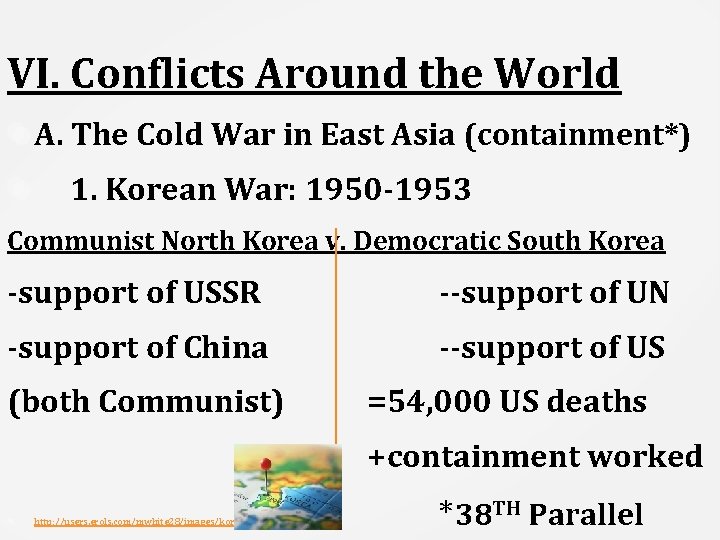
VI. Conflicts Around the World A. The Cold War in East Asia (containment*) 1. Korean War: 1950 -1953 Communist North Korea v. Democratic South Korea -support of USSR --support of UN -support of China --support of US (both Communist) =54, 000 US deaths +containment worked http: //users. erols. com/mwhite 28/images/korean_w. gif *38 TH Parallel
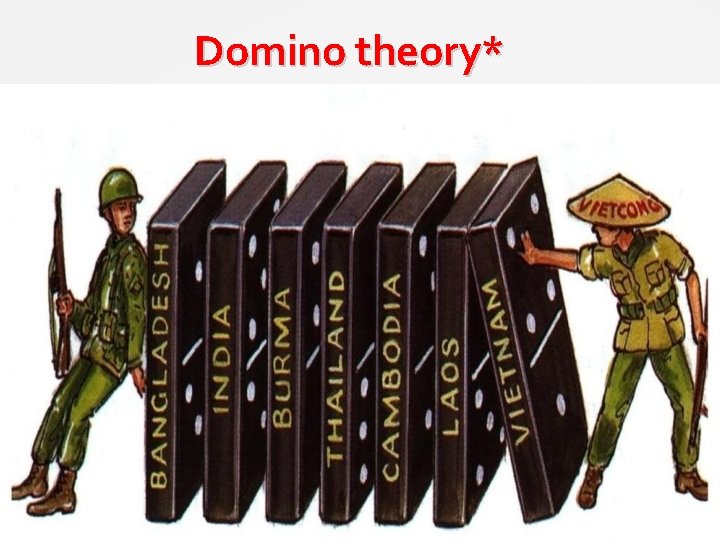
Domino theory*
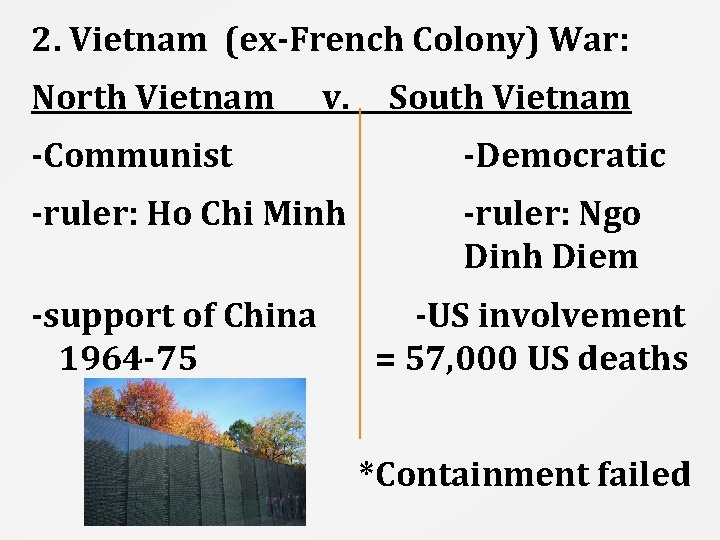
2. Vietnam (ex-French Colony) War: North Vietnam v. South Vietnam -Communist -Democratic -ruler: Ho Chi Minh -ruler: Ngo Dinh Diem -support of China 1964 -75 -US involvement = 57, 000 US deaths *Containment failed
B. The Cold War in the Middle East 1. Arab States & Israel a. Gamal Abdel Nasser: ruler of Egypt 1950 s (cotton #1 export) i. Nationalized Suez Canal: i. e. Egypt took control of it from the British ii. Support of USSR: built Aswan Dam iii. Went to war twice w/ Israel (Jewish) 1. US supported Israel (the only democracy in the Middle East & the enemy of Egypt)
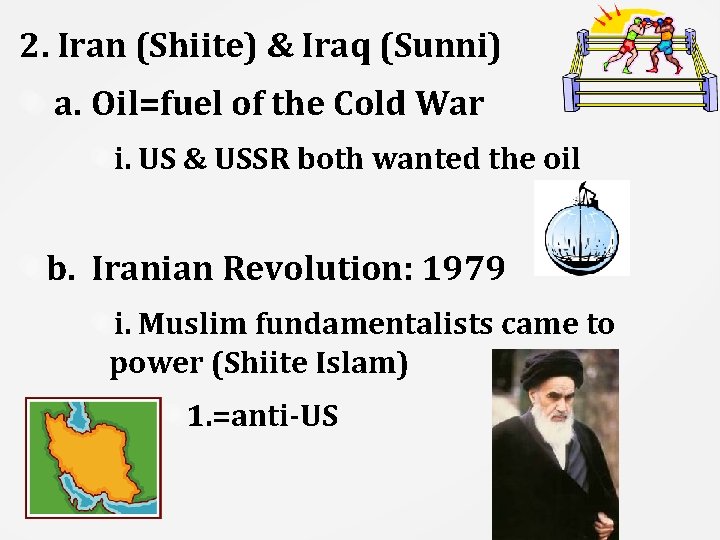
2. Iran (Shiite) & Iraq (Sunni) a. Oil=fuel of the Cold War i. US & USSR both wanted the oil b. Iranian Revolution: 1979 i. Muslim fundamentalists came to power (Shiite Islam) 1. =anti-US
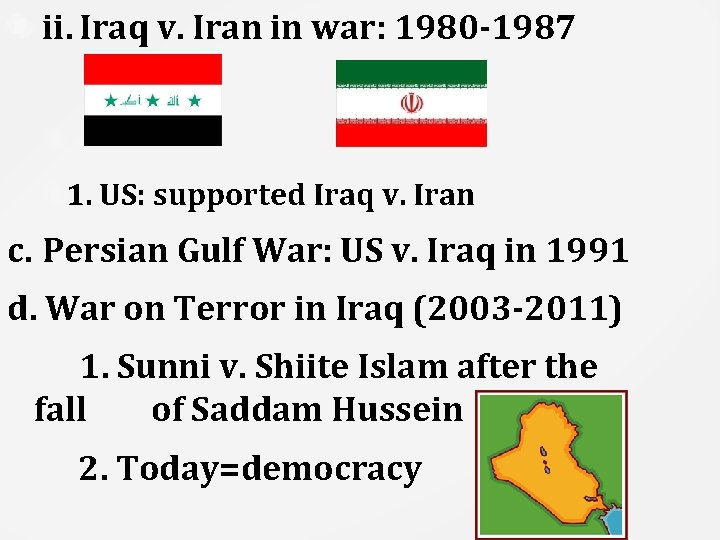
ii. Iraq v. Iran in war: 1980 -1987 1. US: supported Iraq v. Iran c. Persian Gulf War: US v. Iraq in 1991 d. War on Terror in Iraq (2003 -2011) 1. Sunni v. Shiite Islam after the fall of Saddam Hussein 2. Today=democracy
3. OPEC (Organization of Petroleum Exporting Countries)* 12 today a. Formed in 1960: Iran, Iraq, Kuwait, Saudi Arabia, Venezuela b. Algeria, Angola, Ecuador, Libya, Nigeria, Qatar, United Arab Emirates
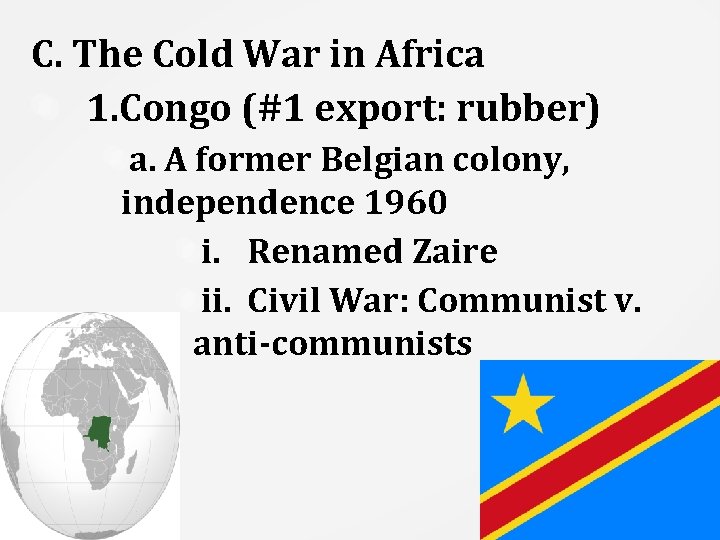
C. The Cold War in Africa 1. Congo (#1 export: rubber) a. A former Belgian colony, independence 1960 i. Renamed Zaire ii. Civil War: Communist v. anti-communists
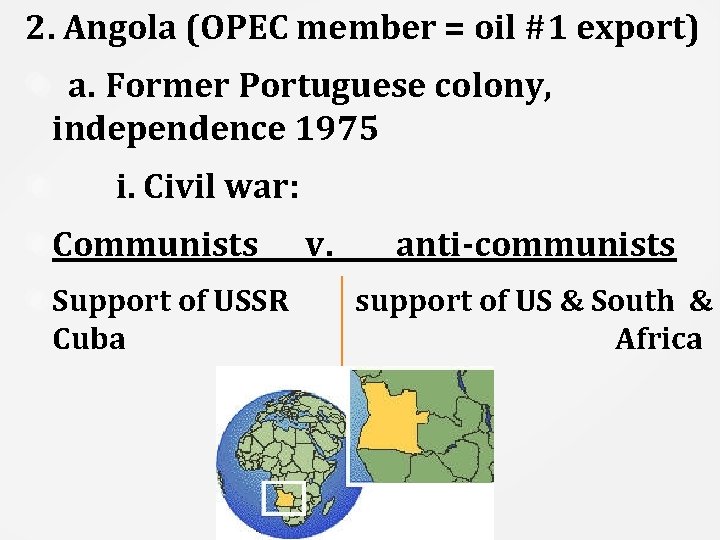
2. Angola (OPEC member = oil #1 export) a. Former Portuguese colony, independence 1975 i. Civil war: Communists Support of USSR Cuba v. anti-communists support of US & South & Africa
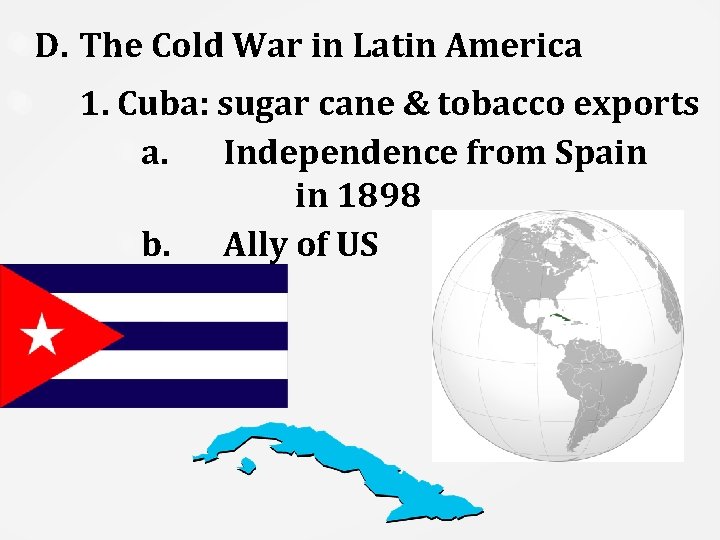
D. The Cold War in Latin America 1. Cuba: sugar cane & tobacco exports a. Independence from Spain in 1898 b. Ally of US
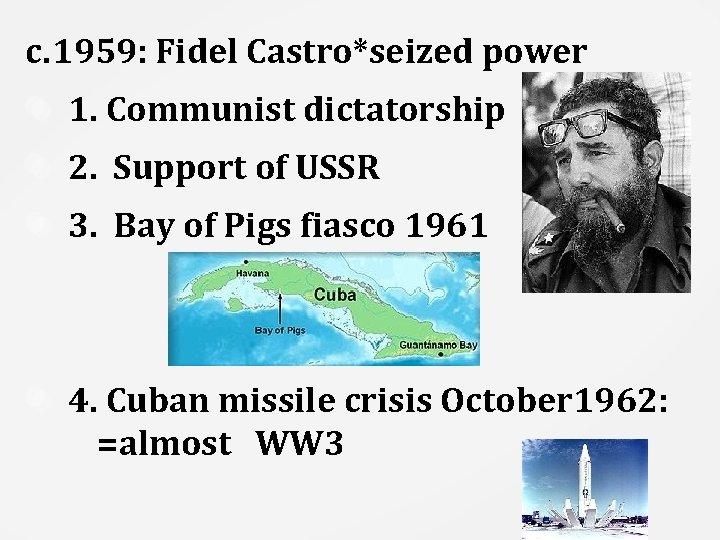
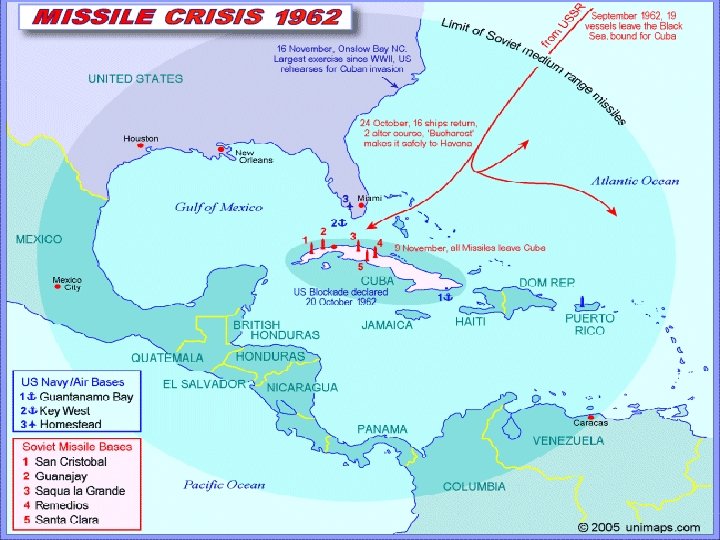
c. 1959: Fidel Castro*seized power 1. Communist dictatorship 2. Support of USSR 3. Bay of Pigs fiasco 1961 4. Cuban missile crisis October 1962: =almost WW 3
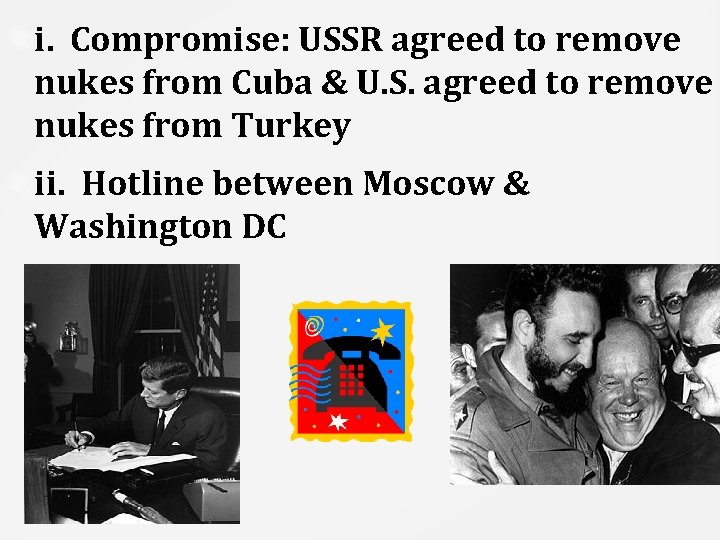
i. Compromise: USSR agreed to remove nukes from Cuba & U. S. agreed to remove nukes from Turkey ii. Hotline between Moscow & Washington DC
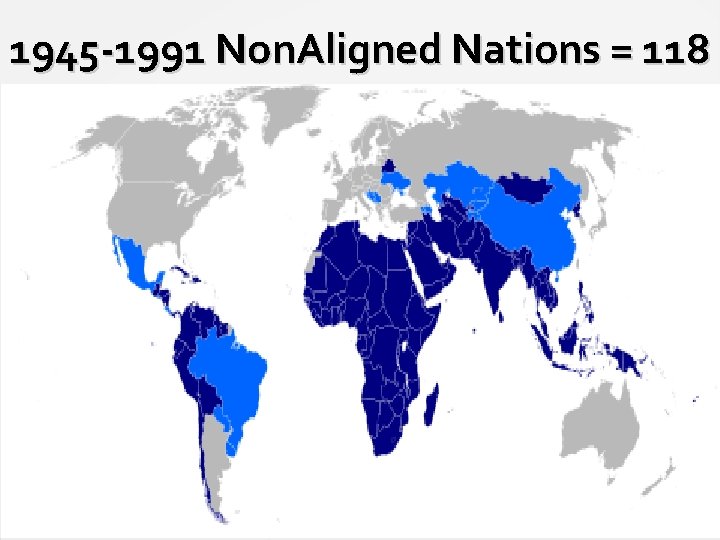
VII. The Non. Aligned Nations* A. Those nations not on either side during Cold War (=neutral) 118 total 1. i. e. didn’t choose sides in Communist v. anti-communist =remained neutral 2. India, Yugoslavia, many African nations, Switzerland a. Goals: remain neutral & trade with both=more $
1945 -1991 Non. Aligned Nations = 118
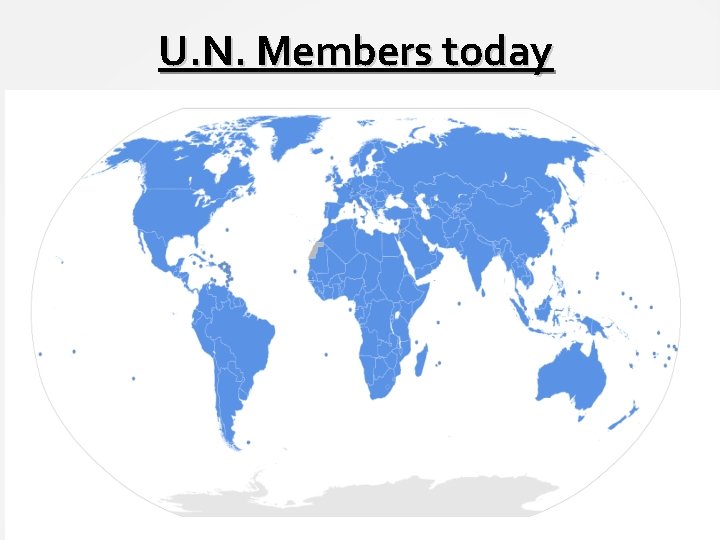
VIII. The Role of the United Nations A. Place where US & USSR could voice their differences to avoid war 1. Blocks (alliances) emerged: Allies of the US v. Allies of the USSR =anti-communists NATO members Warsaw Pact & China 2. Peace keeping forces, health services to poor nations * 192 nations today Meet in New York
U. N. Members today
Economic Issues of the 20 th Century
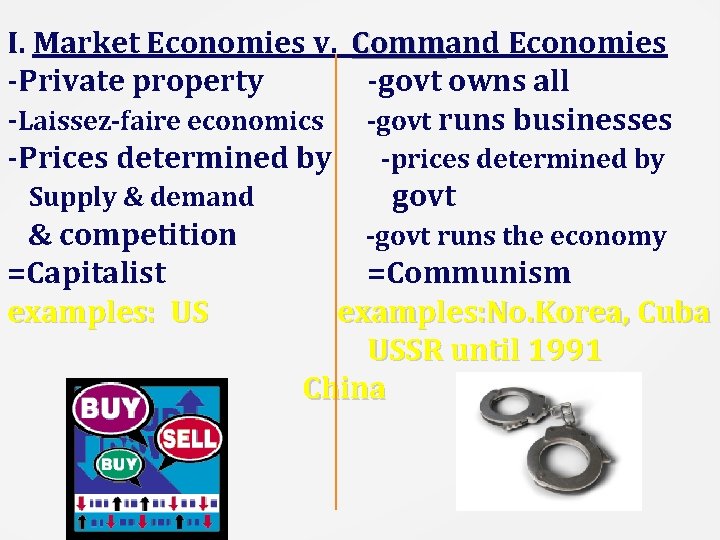
I. Market Economies v. Command Economies Comm -Private property -govt owns all -Laissez-faire economics -govt runs businesses -Prices determined by -prices determined by Supply & demand govt & competition -govt runs the economy =Capitalist =Communism examples: US examples: No. Korea, Cuba USSR until 1991 China
II. The Economies of Developing Nations A. Developed Nations*=US, Russia, Japan, Europe, Australia, Canada 1. =modern agriculture, industry, advanced technology, strong educational system
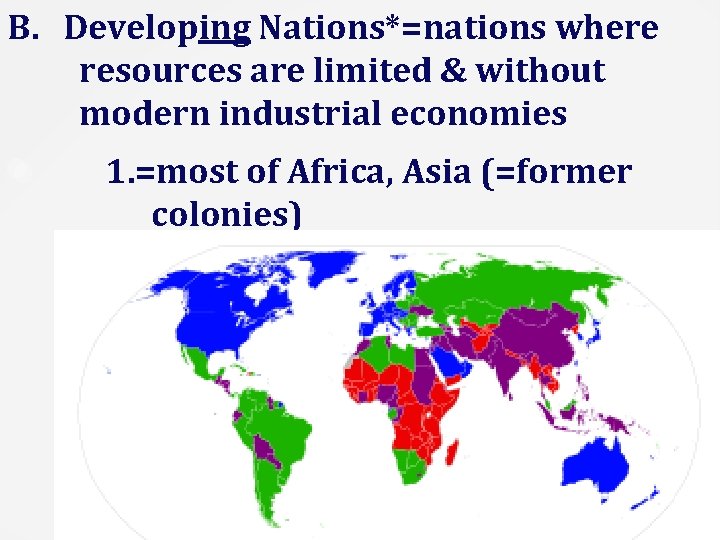
B. Developing Nations*=nations where resources are limited & without modern industrial economies 1. =most of Africa, Asia (=former colonies)
2. Problems: a. overpopulation, natural disasters, debt, lack of public education, not enough food b. overcoming imperialism that just ended 3. Goals: a. build industry (=jobs=more tax $) b. improve agriculture & education c. control population