
Different diets different lives All animals eat other

- Slides: 17
Different diets; different lives § All animals eat other organisms u Herbivores § eat mainly plants w gorillas, cows, rabbits, snails u Carnivores § eat other animals w sharks, hawks, spiders, snakes u Omnivores § eat animals & plants w cockroaches, bears, raccoons, humans w humans evolved as hunters, scavengers & gatherers
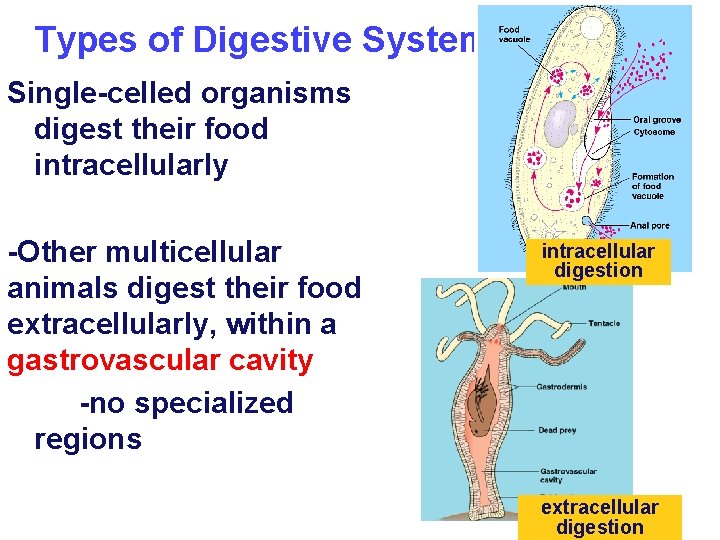
Types of Digestive Systems Single-celled organisms digest their food intracellularly -Other multicellular animals digest their food extracellularly, within a gastrovascular cavity -no specialized regions intracellular digestion extracellular digestion 2
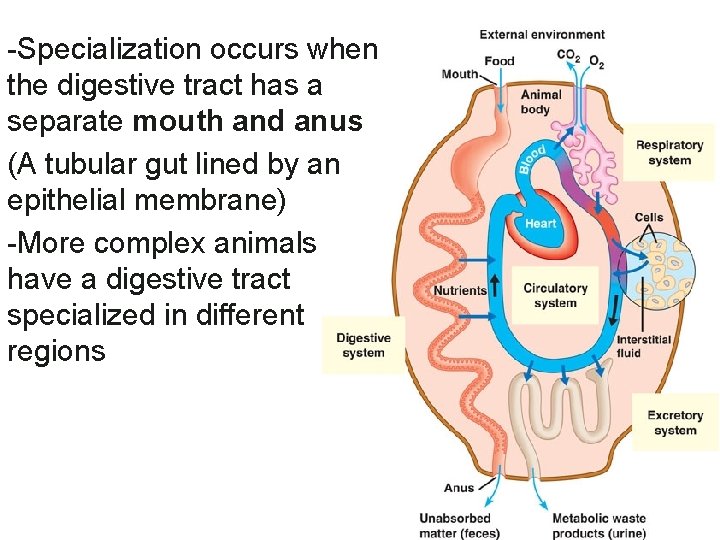
-Specialization occurs when the digestive tract has a separate mouth and anus (A tubular gut lined by an epithelial membrane) -More complex animals have a digestive tract specialized in different regions
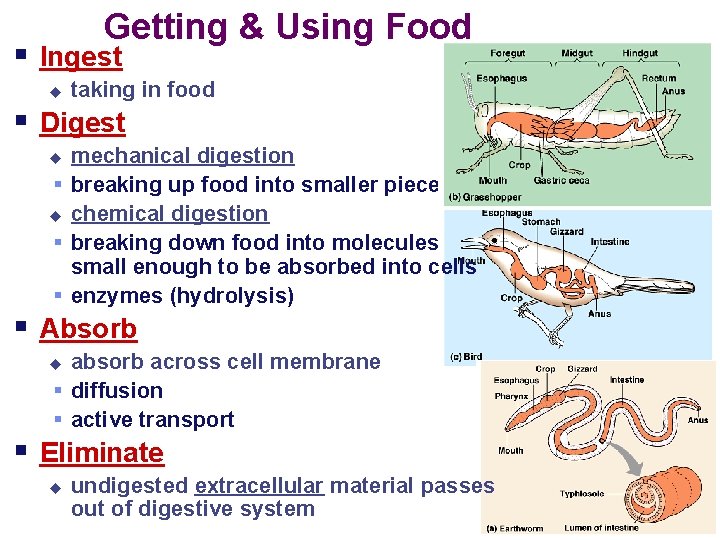
Getting & Using Food § Ingest u taking in food § Digest mechanical digestion § breaking up food into smaller pieces u chemical digestion § breaking down food into molecules small enough to be absorbed into cells § enzymes (hydrolysis) u § Absorb across cell membrane § diffusion § active transport u § Eliminate u undigested extracellular material passes out of digestive system
Vertebrate Digestive Systems The digestive system consists of a tubular gastrointestinal tract and accessory organs -Mouth and pharynx = Entry -Esophagus = Delivers food to stomach -Stomach = Preliminary digestion -Small intestine = Absorption -Large intestine = Concentration of wastes -Cloaca or rectum = Waste storage 5
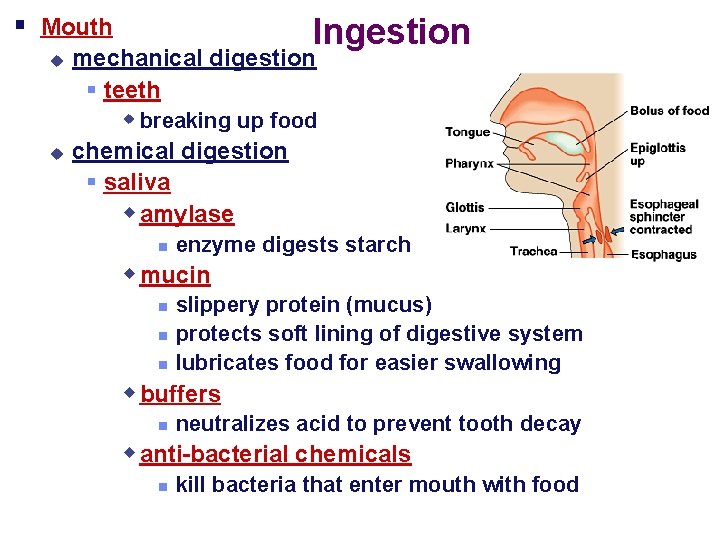
§ Mouth u u Ingestion mechanical digestion § teeth w breaking up food chemical digestion § saliva w amylase n enzyme digests starch w mucin n slippery protein (mucus) protects soft lining of digestive system lubricates food for easier swallowing w buffers n neutralizes acid to prevent tooth decay w anti-bacterial chemicals n kill bacteria that enter mouth with food
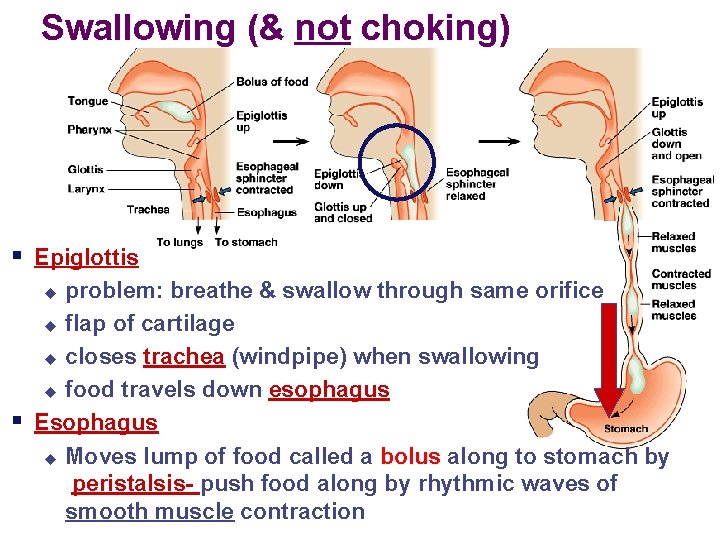
Swallowing (& not choking) § Epiglottis problem: breathe & swallow through same orifice u flap of cartilage u closes trachea (windpipe) when swallowing u food travels down esophagus Esophagus u Moves lump of food called a bolus along to stomach by peristalsis- push food along by rhythmic waves of smooth muscle contraction u §
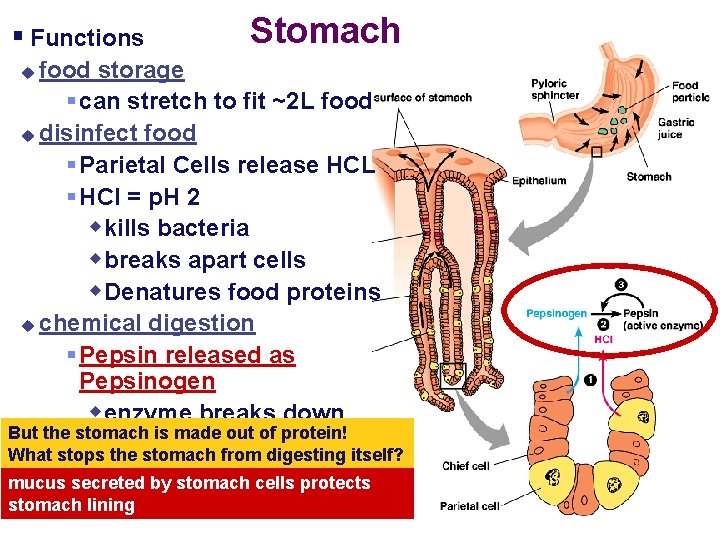
§ Functions Stomach food storage § can stretch to fit ~2 L food u disinfect food § Parietal Cells release HCL § HCl = p. H 2 wkills bacteria wbreaks apart cells w. Denatures food proteins u chemical digestion § Pepsin released as Pepsinogen wenzyme breaks down But the stomach is made out of protein! proteins What stops the stomach from digesting itself? wsecreted as pepsinogen mucus secreted by stomach cells protects n activated by HCl stomach lining u
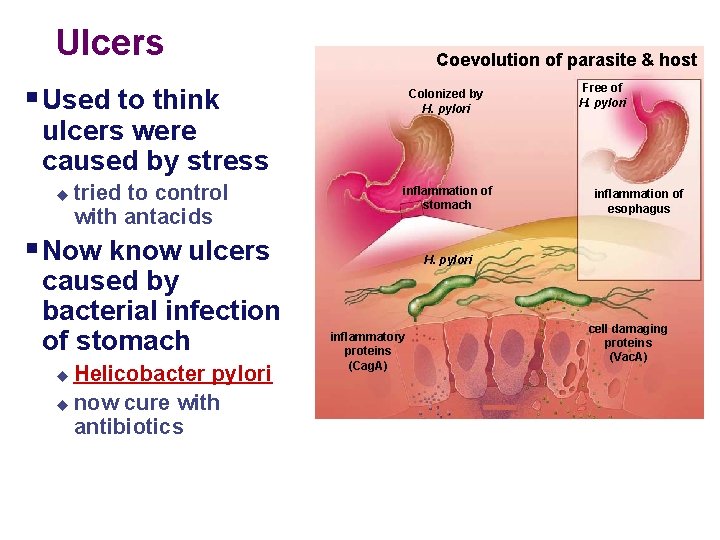
Ulcers Coevolution of parasite & host § Used to think Colonized by H. pylori ulcers were caused by stress u tried to control with antacids inflammation of stomach § Now know ulcers caused by bacterial infection of stomach Helicobacter pylori u now cure with antibiotics u Free of H. pylori inflammation of esophagus H. pylori inflammatory proteins (Cag. A) cell damaging proteins (Vac. A)
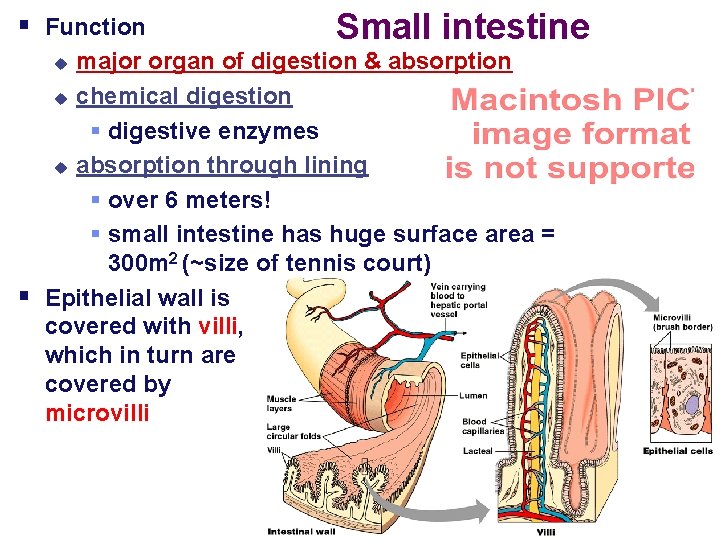
§ Function major organ of digestion & absorption u chemical digestion § digestive enzymes u absorption through lining § over 6 meters! § small intestine has huge surface area = 300 m 2 (~size of tennis court) Epithelial wall is covered with villi, which in turn are covered by microvilli u § Small intestine
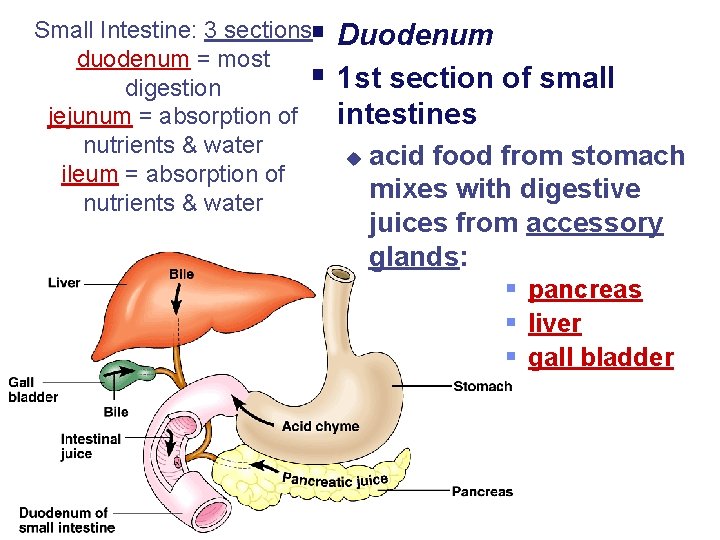
Small Intestine: 3 sections§ duodenum = most § digestion jejunum = absorption of nutrients & water ileum = absorption of nutrients & water Duodenum 1 st section of small intestines u acid food from stomach mixes with digestive juices from accessory glands: § pancreas § liver § gall bladder
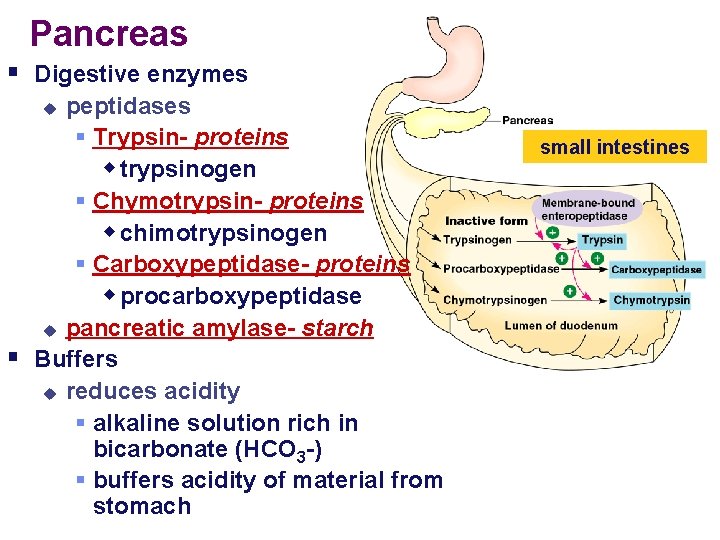
Pancreas § Digestive enzymes peptidases § Trypsin- proteins w trypsinogen § Chymotrypsin- proteins w chimotrypsinogen § Carboxypeptidase- proteins w procarboxypeptidase u pancreatic amylase- starch Buffers u reduces acidity § alkaline solution rich in bicarbonate (HCO 3 -) § buffers acidity of material from stomach u § small intestines
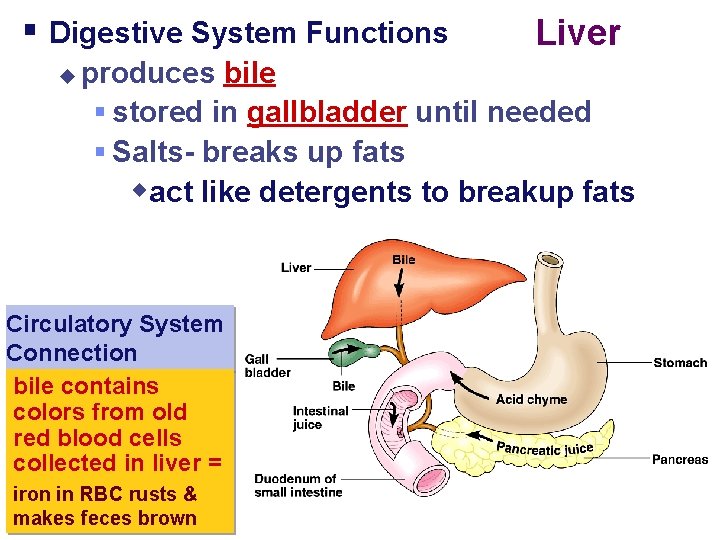
§ Digestive System Functions u Liver produces bile § stored in gallbladder until needed § Salts- breaks up fats wact like detergents to breakup fats Circulatory System Connection bile contains colors from old red blood cells collected in liver = iron in RBC rusts & makes feces brown
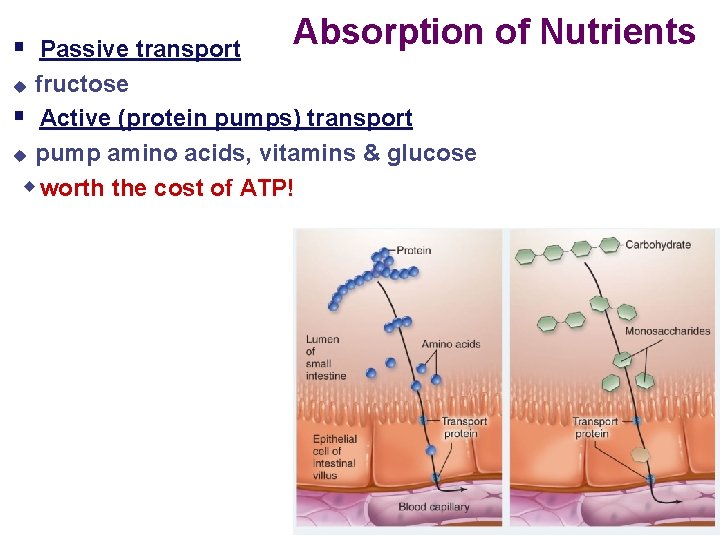
§ Passive transport Absorption of Nutrients fructose § Active (protein pumps) transport u pump amino acids, vitamins & glucose w worth the cost of ATP! u
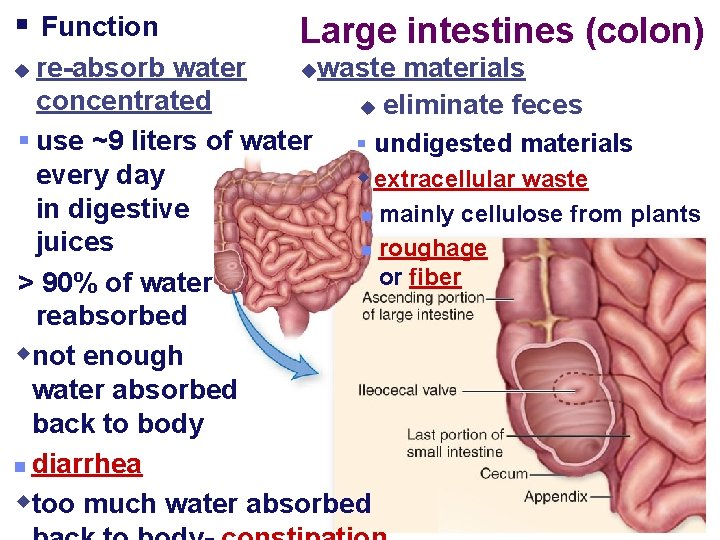
§ Function Large intestines (colon) re-absorb water waste materials concentrated u eliminate feces § use ~9 liters of water § undigested materials every day w extracellular waste in digestive n mainly cellulose from plants juices n roughage or fiber > 90% of water reabsorbed wnot enough water absorbed back to body n diarrhea wtoo much water absorbed u
Flora of large intestines § Living in the large intestine is a rich flora of harmless, helpful bacteria u Escherichia coli (E. coli) § a favorite research organism u bacteria produce vitamins § vitamin K; biotin, folic acid & other B vitamins u generate gases § by-product of bacterial metabolism § methane, hydrogen sulfide
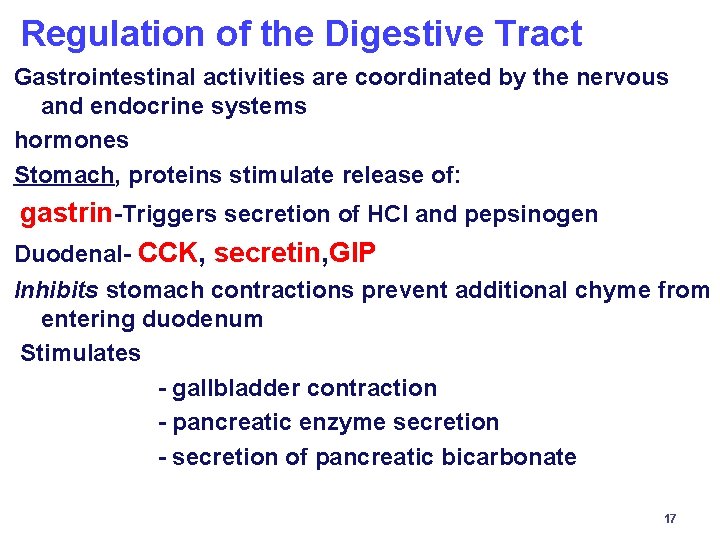
Regulation of the Digestive Tract Gastrointestinal activities are coordinated by the nervous and endocrine systems hormones Stomach, proteins stimulate release of: gastrin-Triggers secretion of HCl and pepsinogen Duodenal- CCK, secretin, GIP Inhibits stomach contractions prevent additional chyme from entering duodenum Stimulates - gallbladder contraction - pancreatic enzyme secretion - secretion of pancreatic bicarbonate 17