
Different Beliefs on The Value of Human Life
Different Beliefs on The Value of Human Life Part 2 Lesson for Year 11 Ethics Education Mr Roger Tirazona
What am I expected to achieve? • to be able to understand that Religions and our cultures influence our view of what is Life and its value. • to be able to reflect on what is the value of human life, meaning and purpose.
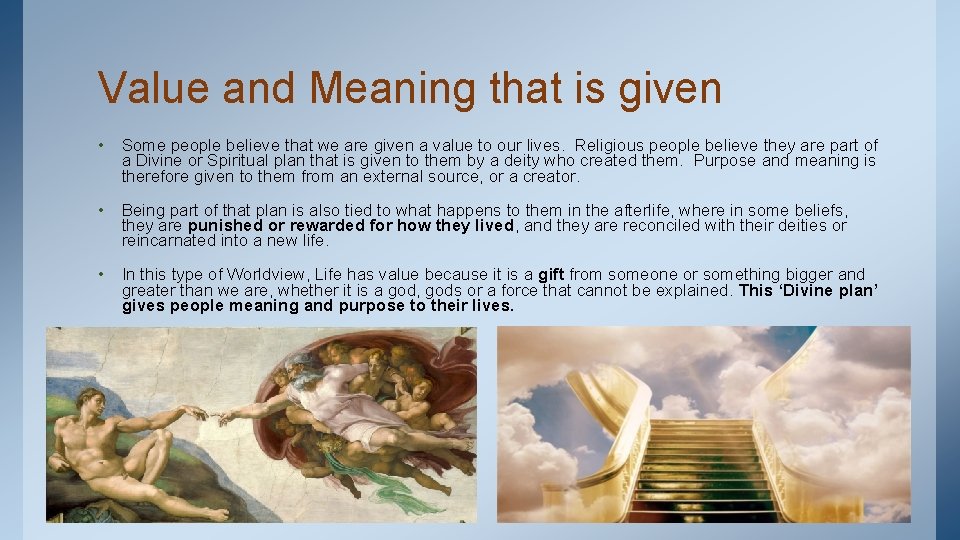
Value and Meaning that is given • Some people believe that we are given a value to our lives. Religious people believe they are part of a Divine or Spiritual plan that is given to them by a deity who created them. Purpose and meaning is therefore given to them from an external source, or a creator. • Being part of that plan is also tied to what happens to them in the afterlife, where in some beliefs, they are punished or rewarded for how they lived, and they are reconciled with their deities or reincarnated into a new life. • In this type of Worldview, Life has value because it is a gift from someone or something bigger and greater than we are, whether it is a god, gods or a force that cannot be explained. This ‘Divine plan’ gives people meaning and purpose to their lives.
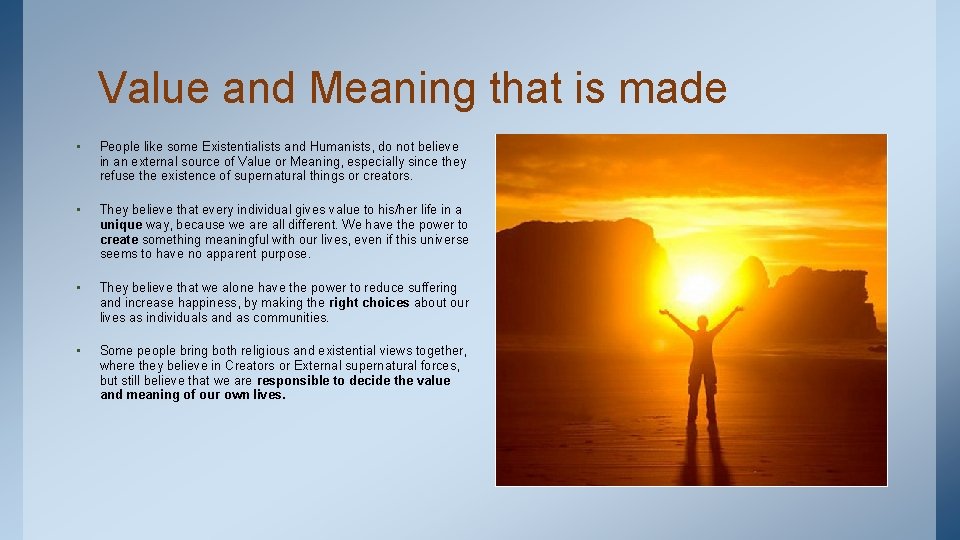
Value and Meaning that is made • People like some Existentialists and Humanists, do not believe in an external source of Value or Meaning, especially since they refuse the existence of supernatural things or creators. • They believe that every individual gives value to his/her life in a unique way, because we are all different. We have the power to create something meaningful with our lives, even if this universe seems to have no apparent purpose. • They believe that we alone have the power to reduce suffering and increase happiness, by making the right choices about our lives as individuals and as communities. • Some people bring both religious and existential views together, where they believe in Creators or External supernatural forces, but still believe that we are responsible to decide the value and meaning of our own lives.

The Sanctity of Life • Religious people believe that the death of the physical body is not the end. After their time on Earth, they believe that humans will have eternal life in the afterlife. (Revise Part 1) • Religious people believe there is some supernatural element to our existence, sometimes called a ‘soul’, and this immortal side of our existence is seen as an added, external value to a person’s life. • These kinds of Worldviews tend to see human life as something sacred and as something inviolable (meaning that it cannot be destroyed). Since Life is a gift from an all-powerful Creator or God/s, this gift can never be harmed. This teaching is called the The Sanctity of Life. • Most Religious worldviews have rules and commandments against killing and taking away life. Usually they believe that nobody but the creator of life, has the power to give or take away life. So in terms of Rights, they see the Right to Life as an Absolute Right that can never be taken away for any reason.
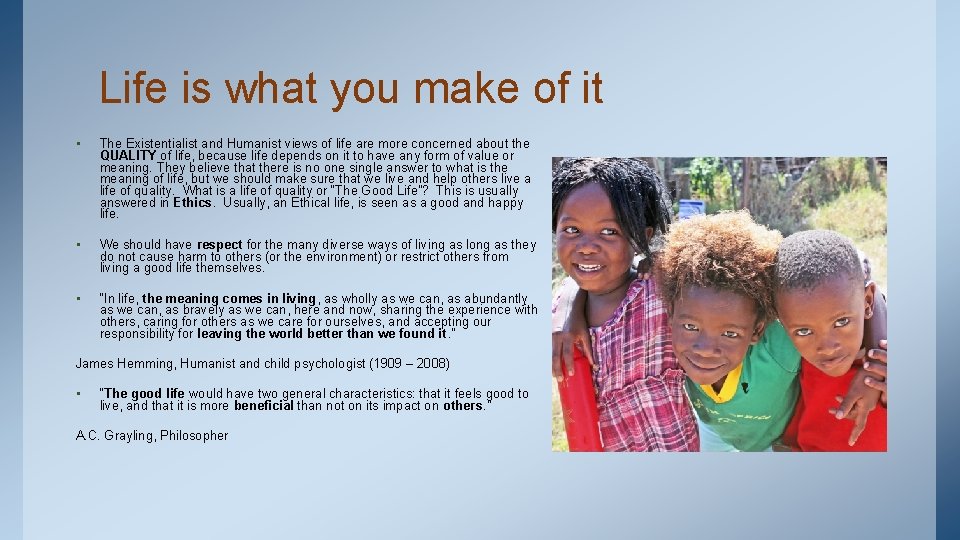
Life is what you make of it • The Existentialist and Humanist views of life are more concerned about the QUALITY of life, because life depends on it to have any form of value or meaning. They believe that there is no one single answer to what is the meaning of life, but we should make sure that we live and help others live a life of quality. What is a life of quality or “The Good Life”? This is usually answered in Ethics. Usually, an Ethical life, is seen as a good and happy life. • We should have respect for the many diverse ways of living as long as they do not cause harm to others (or the environment) or restrict others from living a good life themselves. • “In life, the meaning comes in living, as wholly as we can, as abundantly as we can, as bravely as we can, here and now, sharing the experience with others, caring for others as we care for ourselves, and accepting our responsibility for leaving the world better than we found it. ” James Hemming, Humanist and child psychologist (1909 – 2008) • “The good life would have two general characteristics: that it feels good to live, and that it is more beneficial than not on its impact on others. ” A. C. Grayling, Philosopher
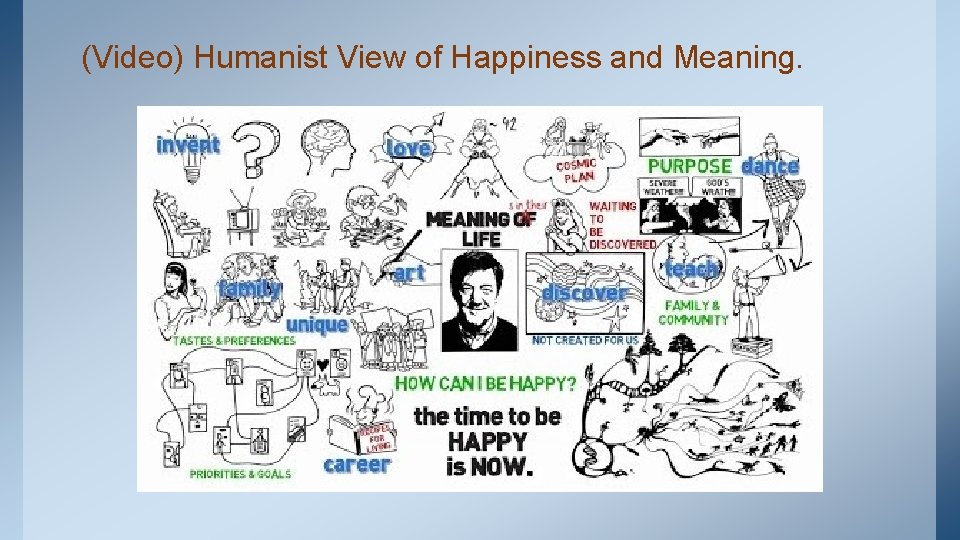
(Video) Humanist View of Happiness and Meaning.
Reflective Questions • What would a Christian, Muslim or Jew think about ending someone else’s life? • Are there any instances where it is justified to end a life? • How do your beliefs shape how you think about the value of your life? • If there is a Right to Life, is there a Right to die? (more on this in future lessons) • Do only Humans have a right to life? What about non human living things? • Can you think of instances where life has no quality at all? • Why are human achievements important to Humanists? • Is there anything more important than Happiness?
End • This Part 2 presentation is the end of this unit. • This unit is an important foundation for the upcoming units for Year 11. • At the end of this presentation and reflection, you should revise your learning intentions at the top of Parts 1 & 2, and assess that you are confident with them.
- Slides: 9