
Differences Organic vs Conventional Production Conventional Production n
- Slides: 7
Differences Organic vs. Conventional Production
Conventional Production n n Most farmers in the U. S. use conventional production practices. Use synthetic chemicals, such as: n n Fertilizers Pesticides Herbicides Antibiotics D 7. 02 -- Differences
Organic Food Production n Focus on management practices that promote and enhance ecological harmony Practices encourage soil and water conservation and to reduce pollution. To be labeled organic, must meet specific standards. D 7. 02 -- Differences
Organic Food Trends n n Grown at nearly 20% per year for the last seven years. Americans spent more than $51 billion on natural and organic products in 2005. Consumers in the U. S. and the European Union (EU) make up 95% of the world’s retail sales of organic food products -- estimated at more than $25 billion worldwide. Research is currently being done to explore the differences in conventionally and organic produced food. D 7. 02 -- Differences
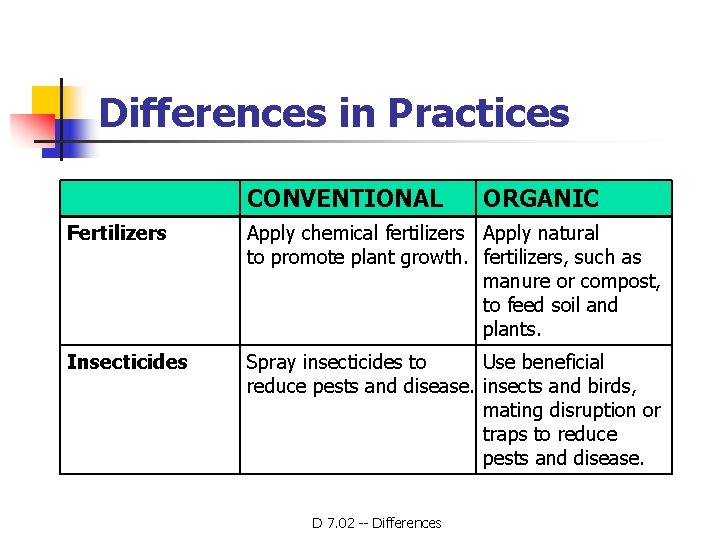
Differences in Practices CONVENTIONAL ORGANIC Fertilizers Apply chemical fertilizers Apply natural to promote plant growth. fertilizers, such as manure or compost, to feed soil and plants. Insecticides Spray insecticides to Use beneficial reduce pests and disease. insects and birds, mating disruption or traps to reduce pests and disease. D 7. 02 -- Differences
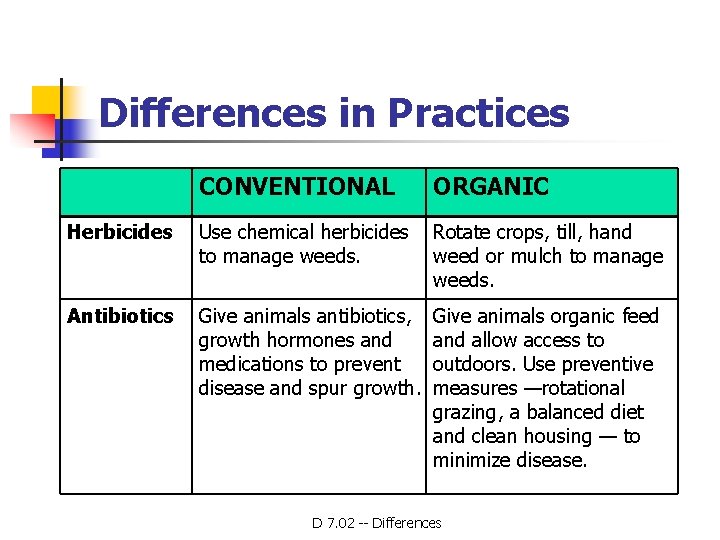
Differences in Practices CONVENTIONAL ORGANIC Herbicides Use chemical herbicides to manage weeds. Rotate crops, till, hand weed or mulch to manage weeds. Antibiotics Give animals antibiotics, growth hormones and medications to prevent disease and spur growth. Give animals organic feed and allow access to outdoors. Use preventive measures —rotational grazing, a balanced diet and clean housing — to minimize disease. D 7. 02 -- Differences
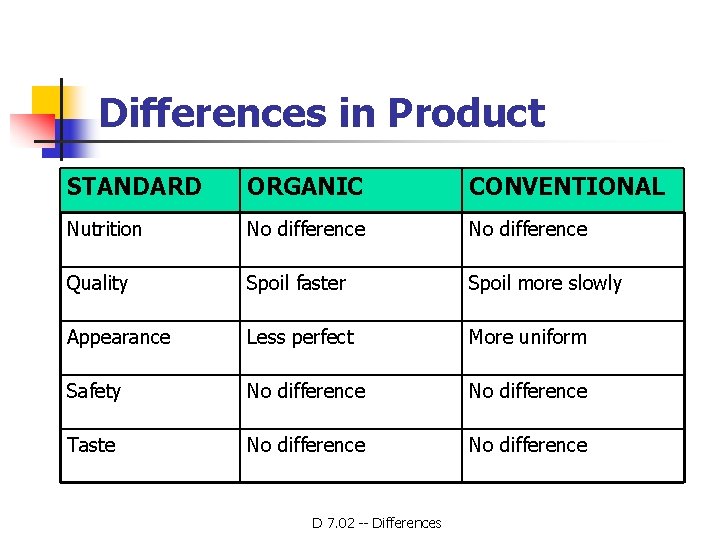
Differences in Product STANDARD ORGANIC CONVENTIONAL Nutrition No difference Quality Spoil faster Spoil more slowly Appearance Less perfect More uniform Safety No difference Taste No difference D 7. 02 -- Differences