
Differences in crosscultural consumer behaviour and consequences for
Differences in cross-cultural consumer behaviour and consequences for branding Dr. Ivana First University of Rijeka Agios Nikolaos, 7 th July 2011.
Istraživačko pitanje? Does culture influences consumer perception of brands?
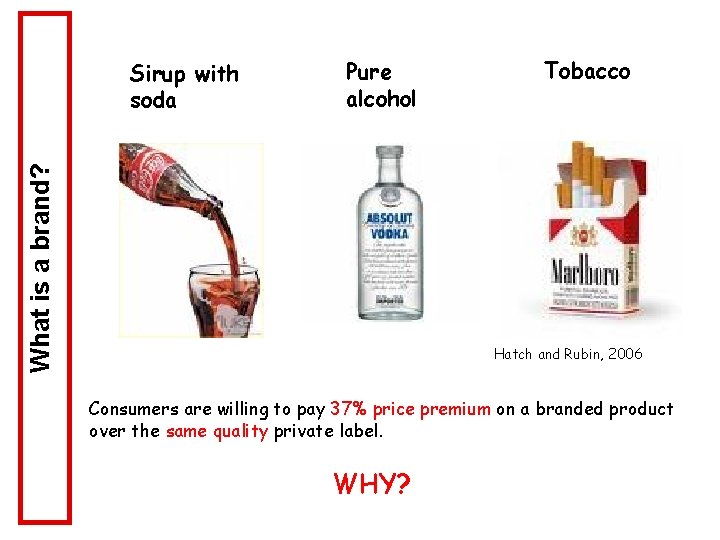
Pure alcohol What is a brand? Sirup with soda Tobacco Hatch and Rubin, 2006 Consumers are willing to pay 37% price premium on a branded product over the same quality private label. WHY?
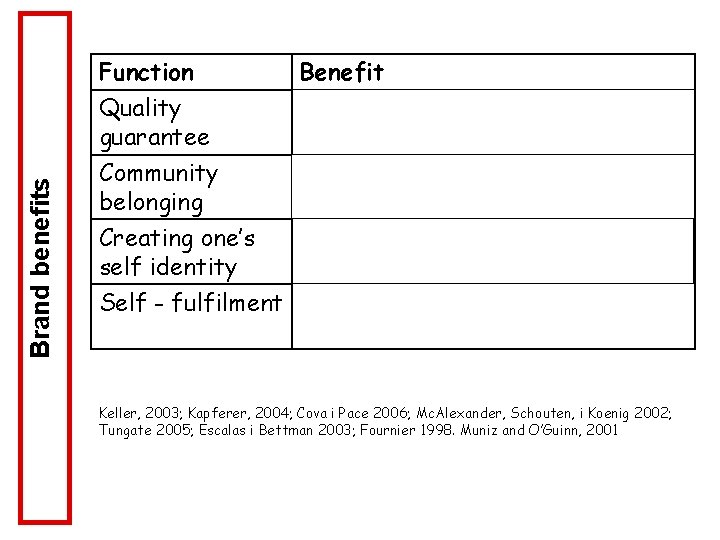
Brand benefits Function Benefit Quality guarantee Community belonging Reducing risk, Reducing time Bonding, familiarity relationship Creating one’s Personalising one’s choice self identity Self - fulfilment Ethical and social responsibility confirmation Keller, 2003; Kapferer, 2004; Cova i Pace 2006; Mc. Alexander, Schouten, i Koenig 2002; Tungate 2005; Escalas i Bettman 2003; Fournier 1998. Muniz and O’Guinn, 2001
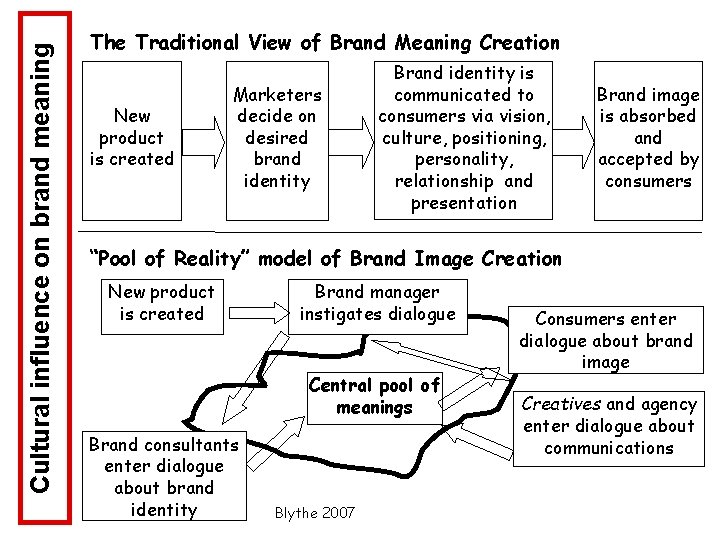
Cultural influence on brand meaning The Traditional View of Brand Meaning Creation New product is created Marketers decide on desired brand identity Brand identity is communicated to consumers via vision, culture, positioning, personality, relationship and presentation Brand image is absorbed and accepted by consumers “Pool of Reality” model of Brand Image Creation New product is created Brand manager instigates dialogue Central pool of meanings Brand consultants enter dialogue about brand identity Blythe 2007 Consumers enter dialogue about brand image Creatives and agency enter dialogue about communications
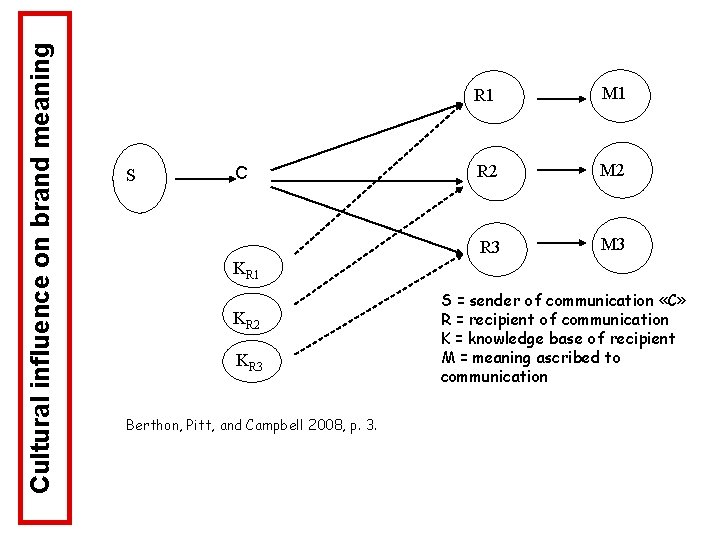
Cultural influence on brand meaning S C R 1 M 1 R 2 M 2 R 3 M 3 KR 1 KR 2 KR 3 Berthon, Pitt, and Campbell 2008, p. 3. S = sender of communication «C» R = recipient of communication K = knowledge base of recipient M = meaning ascribed to communication
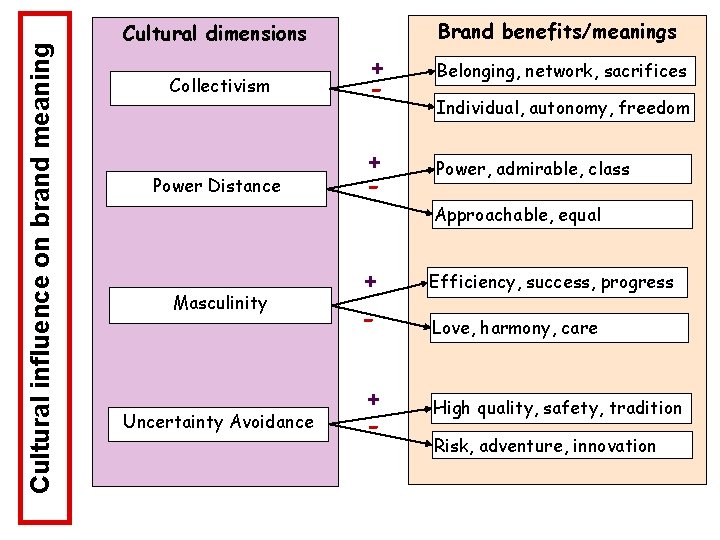
Cultural influence on brand meaning Brand benefits/meanings Cultural dimensions Collectivism + - Power Distance + - Masculinity Uncertainty Avoidance + + - Belonging, network, sacrifices Individual, autonomy, freedom Power, admirable, class Approachable, equal Efficiency, success, progress Love, harmony, care High quality, safety, tradition Risk, adventure, innovation
Cultural influence on brand meaning EXCERSISE What does Coca-cola mean to you? Where do you come from? Do you like Coca-cola?
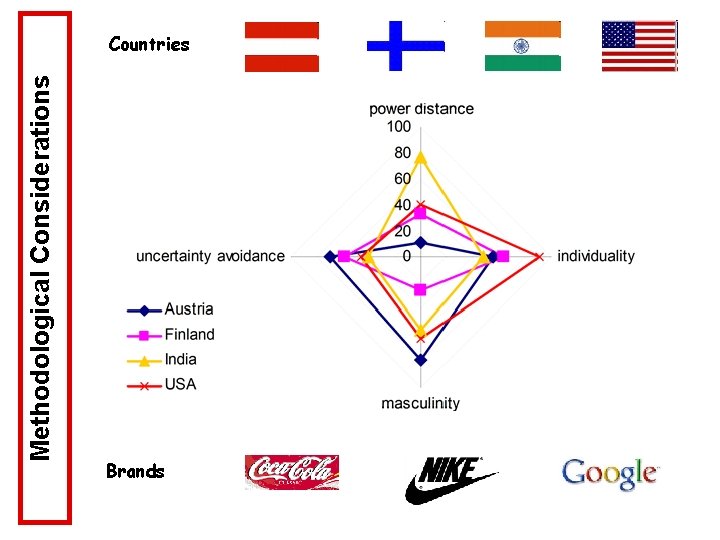
Methodological Considerations Countries Brands
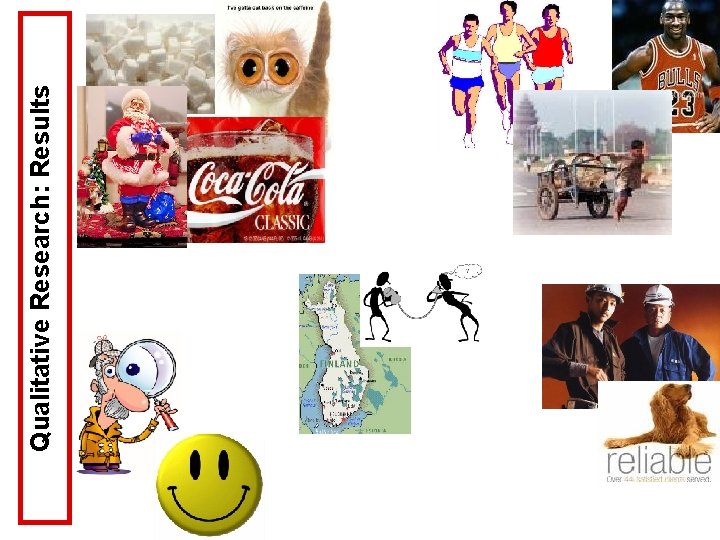
Qualitative Research: Results
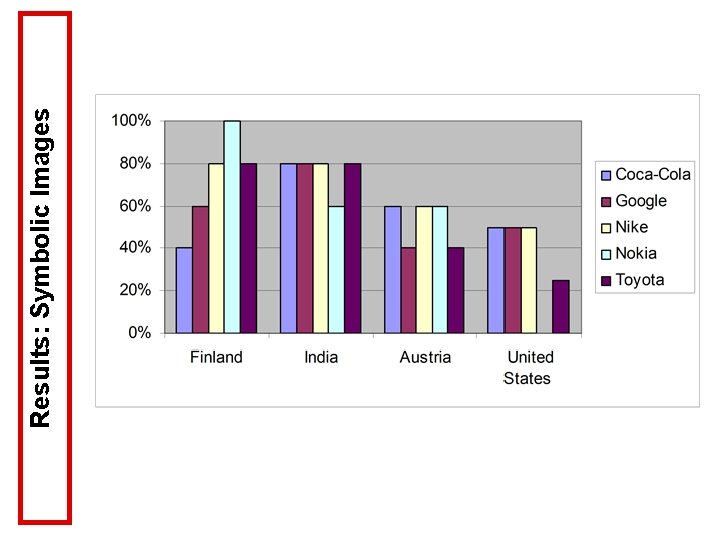
Results: Symbolic Images
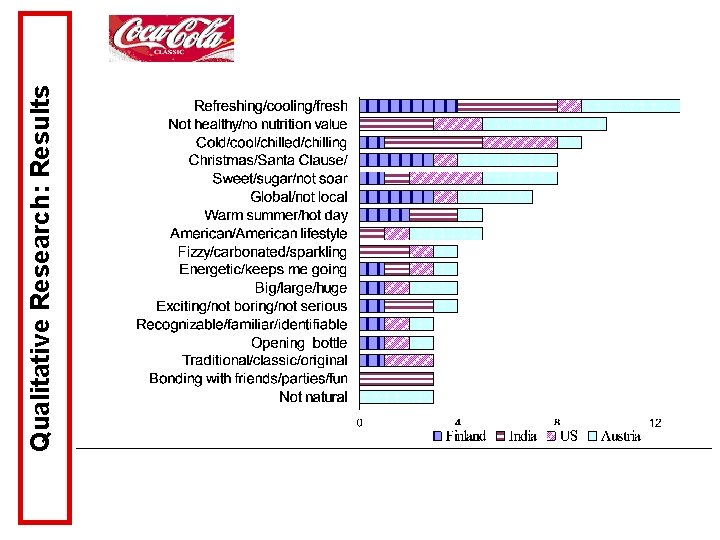
Qualitative Research: Results
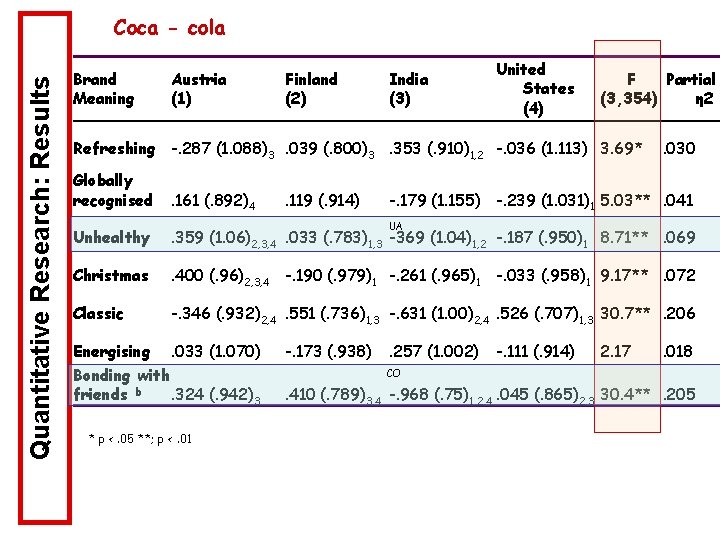
Quantitative Research: Results Coca - cola Brand Meaning Austria (1) Finland (2) India (3) United States (4) F Partial (3, 354) η 2 Refreshing -. 287 (1. 088)3. 039 (. 800)3. 353 (. 910)1, 2 -. 036 (1. 113) 3. 69* . 030 Globally recognised . 161 (. 892)4 Unhealthy . 359 (1. 06)2, 3, 4. 033 (. 783)1, 3 -369 (1. 04)1, 2 -. 187 (. 950)1 8. 71**. 069 Christmas . 400 (. 96)2, 3, 4 -. 190 (. 979)1 -. 261 (. 965)1 -. 033 (. 958)1 9. 17**. 072 Classic -. 346 (. 932)2, 4. 551 (. 736)1, 3 -. 631 (1. 00)2, 4. 526 (. 707)1, 3 30. 7**. 206 Energising . 033 (1. 070) . 119 (. 914) -. 179 (1. 155) -. 239 (1. 031)1 5. 03**. 041 UA Bonding with friends b. 324 (. 942)3 * p <. 05 **; p <. 01 -. 173 (. 938) . 257 (1. 002) -. 111 (. 914) 2. 17 . 018 CO . 410 (. 789)3, 4 -. 968 (. 75)1, 2, 4. 045 (. 865)2, 3 30. 4**. 205
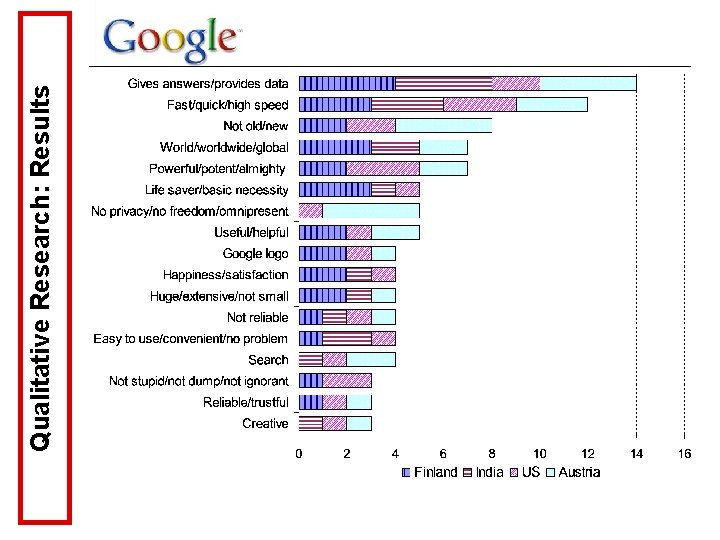
Qualitative Research: Results
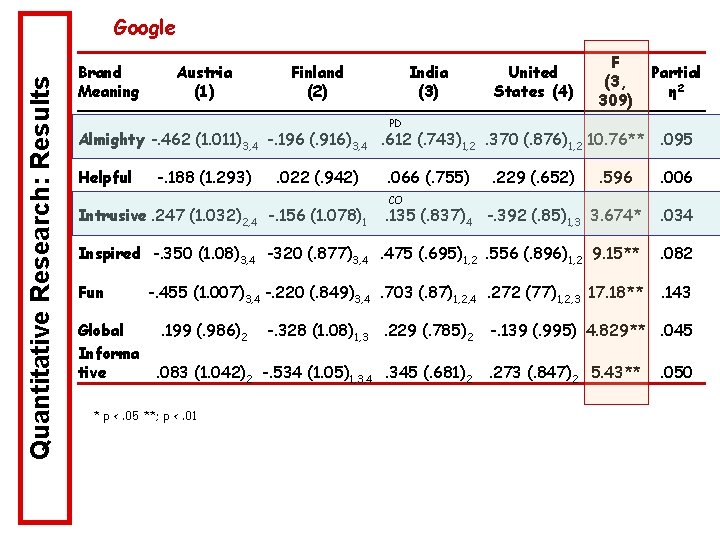
Quantitative Research: Results Google Brand Meaning Austria (1) Finland (2) India (3) United States (4) F (3, 309) Partial η 2 PD Almighty -. 462 (1. 011)3, 4 -. 196 (. 916)3, 4. 612 (. 743)1, 2. 370 (. 876)1, 2 10. 76**. 095 Helpful -. 188 (1. 293) . 022 (. 942) Intrusive. 247 (1. 032)2, 4 -. 156 (1. 078)1 . 066 (. 755) . 229 (. 652) . 596 CO . 006 . 135 (. 837)4 -. 392 (. 85)1, 3 3. 674* . 034 Inspired -. 350 (1. 08)3, 4 -320 (. 877)3, 4. 475 (. 695)1, 2. 556 (. 896)1, 2 9. 15** . 082 Fun . 143 -. 455 (1. 007)3, 4 -. 220 (. 849)3, 4. 703 (. 87)1, 2, 4. 272 (77)1, 2, 3 17. 18** Global. 199 (. 986)2 -. 328 (1. 08)1, 3. 229 (. 785)2 -. 139 (. 995) 4. 829**. 045 Informa tive. 083 (1. 042)2 -. 534 (1. 05)1, 3, 4. 345 (. 681)2. 273 (. 847)2 5. 43**. 050 * p <. 05 **; p <. 01
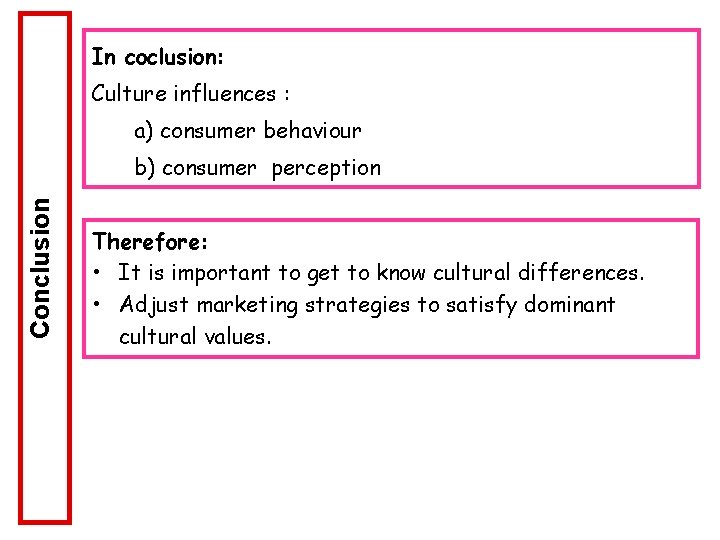
In coclusion: Culture influences : a) consumer behaviour Conclusion b) consumer perception Therefore: • It is important to get to know cultural differences. • Adjust marketing strategies to satisfy dominant cultural values.

Thank you! ifirst@efri. hr
- Slides: 17