
Differences between media LITERATURE PRINT MEDIA FILMMOVING IMAGE
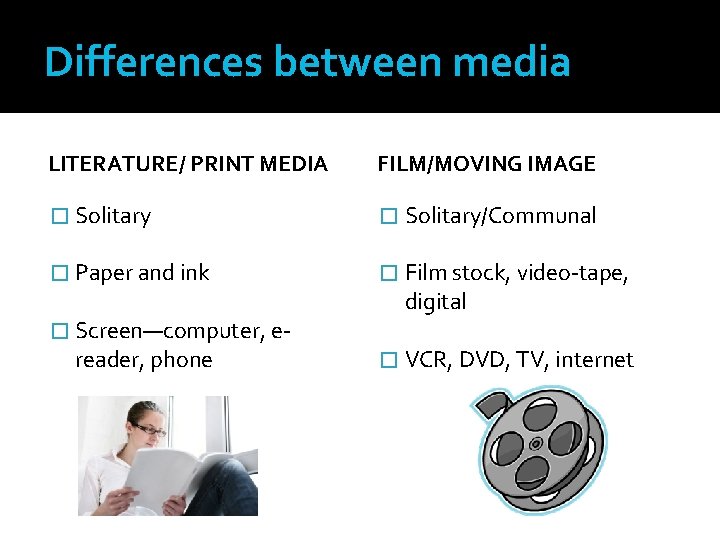
Differences between media LITERATURE/ PRINT MEDIA FILM/MOVING IMAGE � Solitary/Communal � Paper and ink � Film stock, video-tape, � Screen—computer, e- reader, phone digital � VCR, DVD, TV, internet
Interaction with the “text” BOOK MOVING PICTURE � Skim � Constant motion in theater � Re-read � Control in other situations � Bookmark � Annotate Replay Skip/scan Freeze
Languages PRINT FILM � Plot � Screenplay � Character � Act 0 rs Faces, gestures, voice � Setting � Sets Costumes, props
Languages 2 PRINT FILM � Dialogue � Interior monologue � Voiceover � Music, sound effects � Narrator ? ▪ Point of view: 1 st, 3 rd ▪ Omniscient, limited, unreliable

Languages 3 PRINT FILM � Diction: denotation, � Photography— connotation � Tone � Syntax: sentence structure � Style “photo” = “light” “graphy”= “writing” � Writing with light color, b& w, lens, film stock � Shots & angles: Framing, edition, transitions � Mis-en-scene
ANALYZING TEXT PRINT FILM � TEXT � VISUAL TEXT � EXPERIENCE OF THE � REACTION IS GERERALLY � REACTION IS INDIVIDUAL READER-GENERALLY PRIVATE VIEWER-GENERALLY PUBLIC AND SOCIAL
EVALUATING FILM
Experiential Circumstances �Age �Gender �Race �Socio-economic background �Geographic location �Education �Travels �Personal film viewing �All combine to create individual taste in film
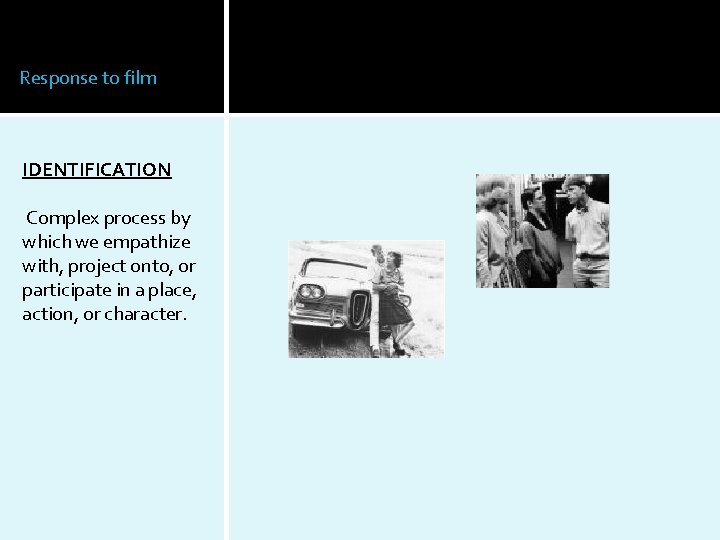
Response to film IDENTIFICATION Complex process by which we empathize with, project onto, or participate in a place, action, or character.
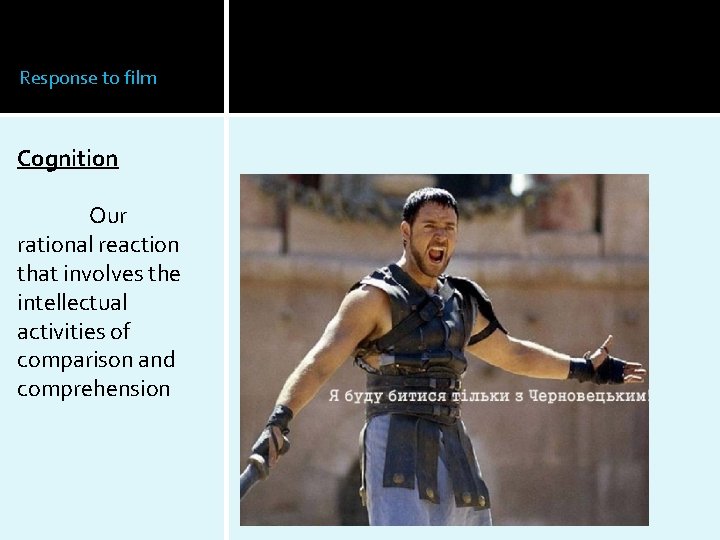
Response to film Cognition Our rational reaction that involves the intellectual activities of comparison and comprehension
- Slides: 10