
DIFAX Maps Upper Air Charts Weather maps generated
- Slides: 46
DIFAX Maps / Upper Air Charts • Weather maps generated by the NWS • Before the Internet or AWIPS, these were the basic weather analysis and forecast charts used by meteorologists • They were only available through a fax machine connected to a dedicated landline
• DIFAX maps are gradually being phased out; however, the most important ones are still produced • These maps are unique and contain information which is priceless for operational meteorologists • All meteorology students benefit from knowledge of these maps and their interpretation • If you understand how to interpret the black&white DIFAX chart, you should have no problem interpreting pretty colored charts from other sources
DIFAX Map Access National Weather Service: http: //weather. noaa. gov/fax/nwsfax. html Colorado State Archive: http: //ldm. atmos. colostate. edu/ SUNY Albany: http: //www. atmos. albany. edu/weather/difax. html
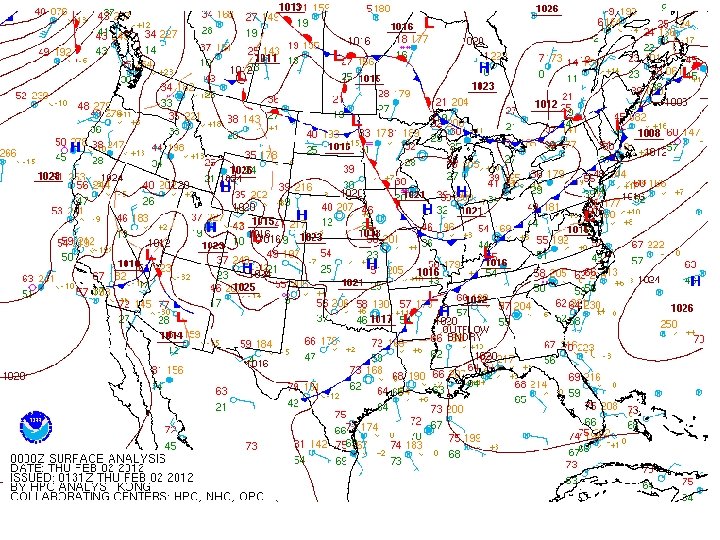
Surface Charts • Analyzed charts issued every 3 hours (00 Z – 21 Z) • Data includes – Hourly synoptic stations – Ship reports – Buoy reports • Maps can be found from the HPC: http: //www. hpc. ncep. noaa. gov/html/sfc 2. shtml
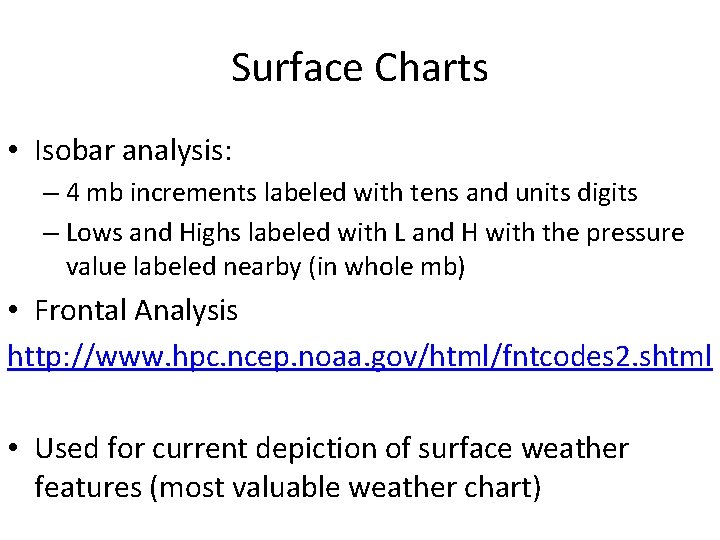
Surface Charts • Isobar analysis: – 4 mb increments labeled with tens and units digits – Lows and Highs labeled with L and H with the pressure value labeled nearby (in whole mb) • Frontal Analysis http: //www. hpc. ncep. noaa. gov/html/fntcodes 2. shtml • Used for current depiction of surface weather features (most valuable weather chart)
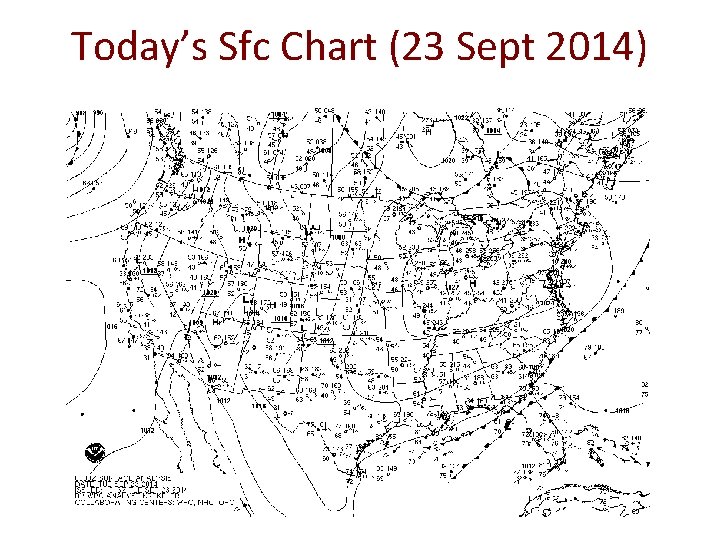
Today’s Sfc Chart (23 Sept 2014)
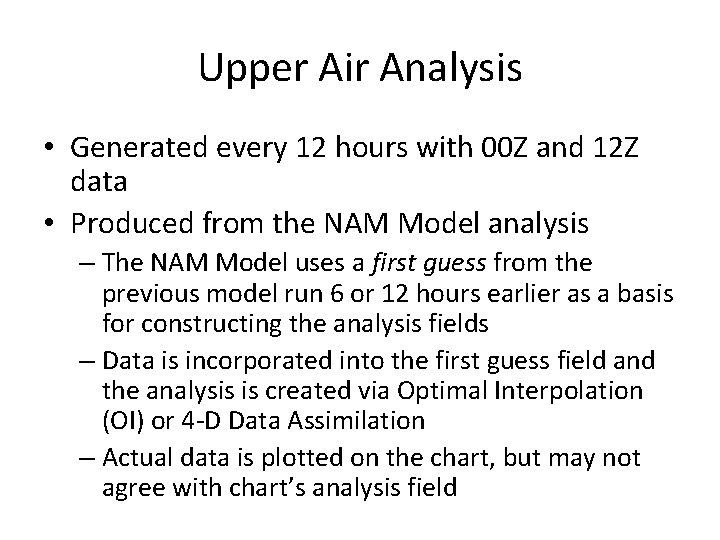
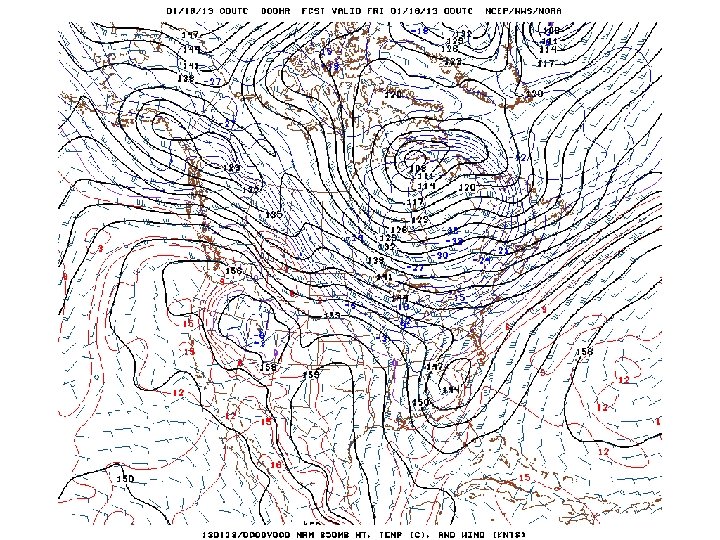
Upper Air Analysis • Generated every 12 hours with 00 Z and 12 Z data • Produced from the NAM Model analysis – The NAM Model uses a first guess from the previous model run 6 or 12 hours earlier as a basis for constructing the analysis fields – Data is incorporated into the first guess field and the analysis is created via Optimal Interpolation (OI) or 4 -D Data Assimilation – Actual data is plotted on the chart, but may not agree with chart’s analysis field
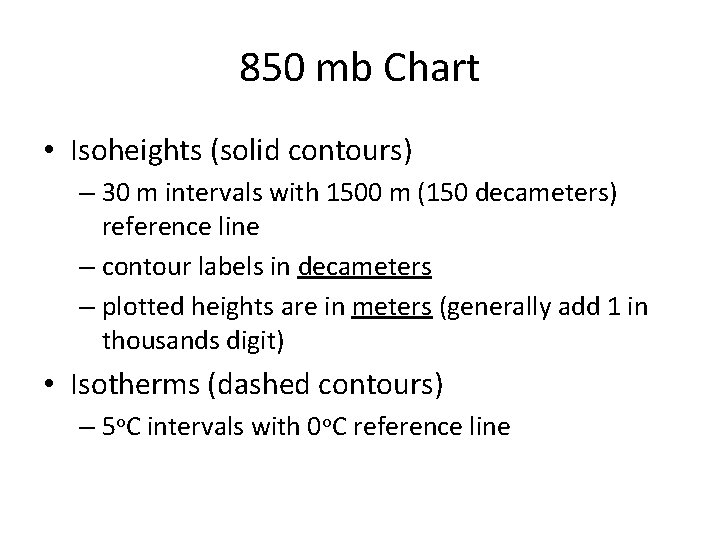
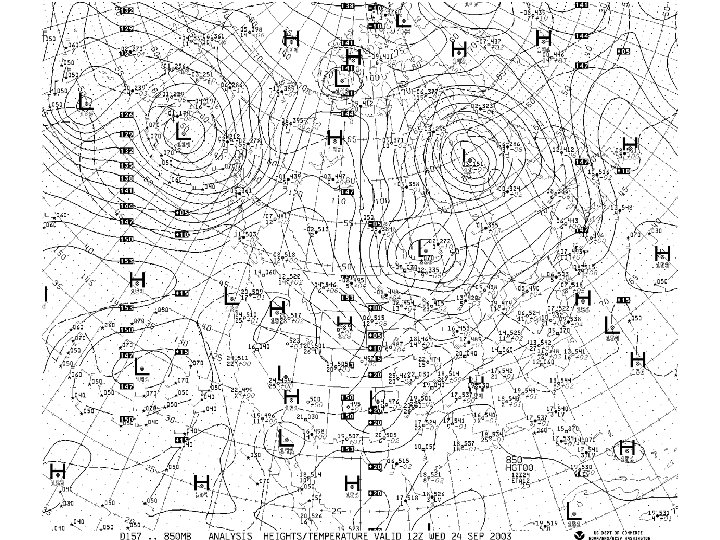
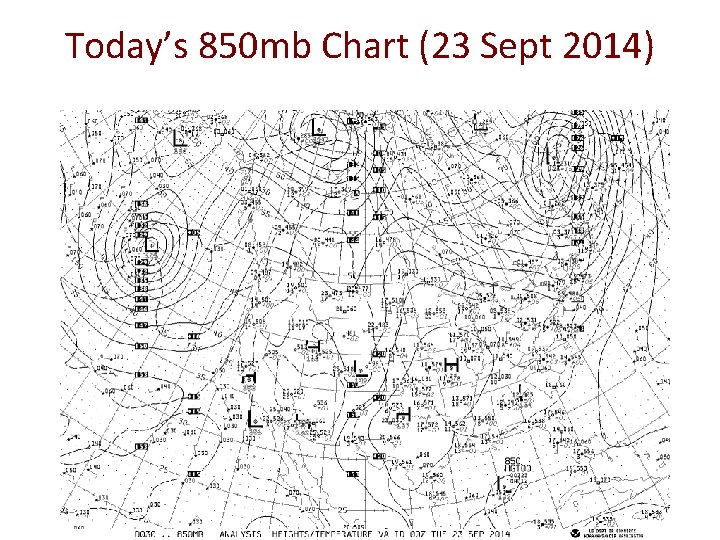
850 mb Chart • Isoheights (solid contours) – 30 m intervals with 1500 m (150 decameters) reference line – contour labels in decameters – plotted heights are in meters (generally add 1 in thousands digit) • Isotherms (dashed contours) – 5 o. C intervals with 0 o. C reference line
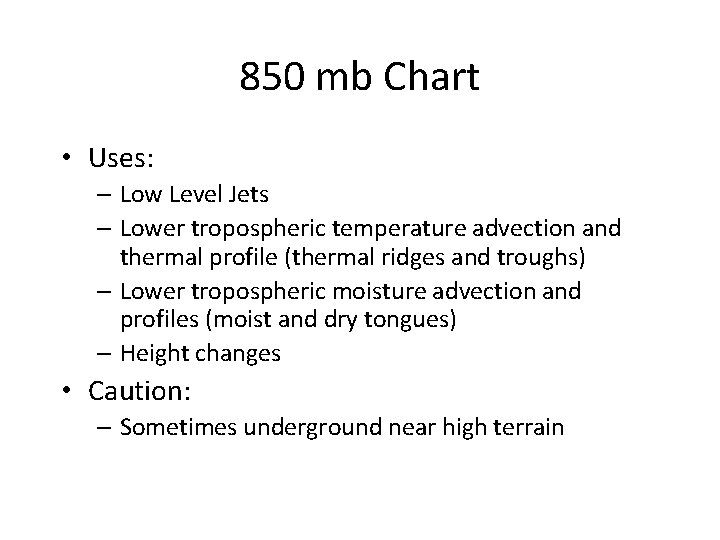
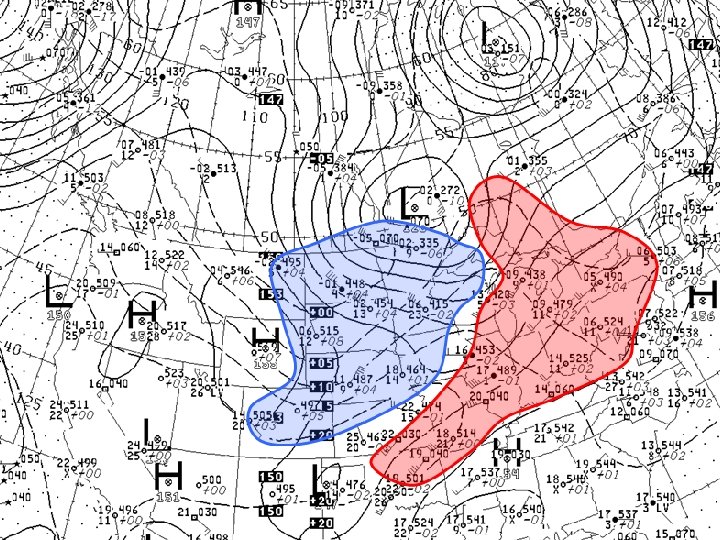
850 mb Chart • Uses: – Low Level Jets – Lower tropospheric temperature advection and thermal profile (thermal ridges and troughs) – Lower tropospheric moisture advection and profiles (moist and dry tongues) – Height changes • Caution: – Sometimes underground near high terrain
Today’s 850 mb Chart (23 Sept 2014)
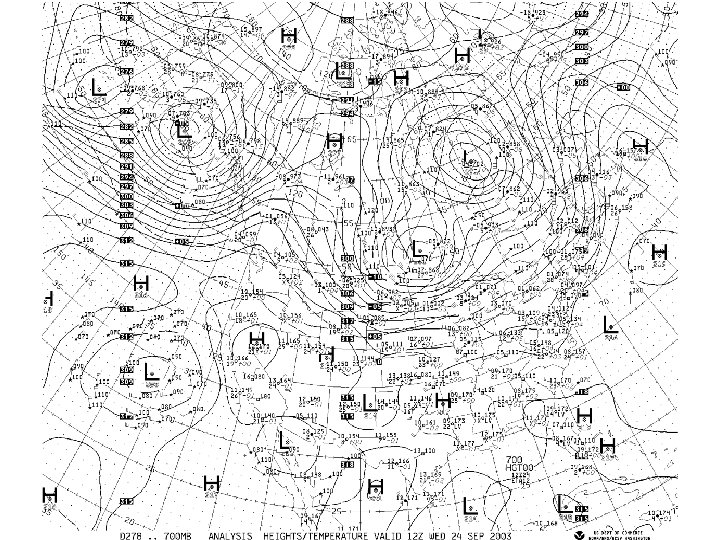
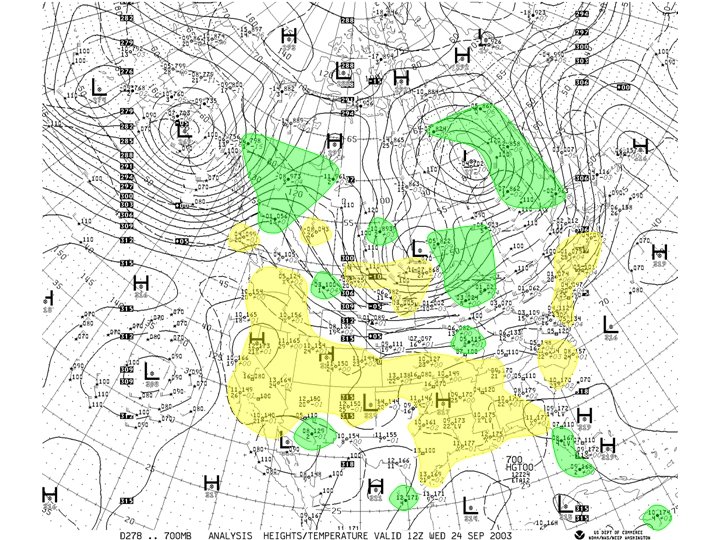
700 mb Chart • Isoheights (solid contours) – 30 m intervals with 3000 m (300 decameters) reference line – contour labels in decameters – plotted heights are in meters (generally add 2 or 3 in thousands digit) • Isotherms (dashed contours) – 5 o. C intervals with 0 o. C reference line
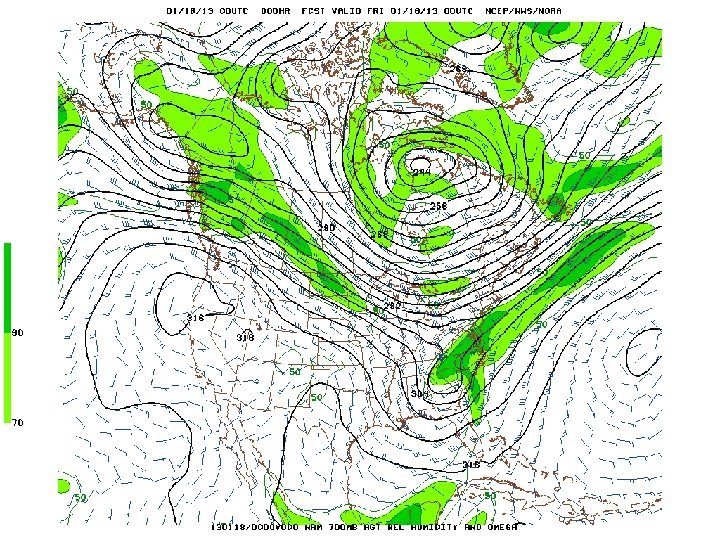
700 mb Chart • Uses: – Elevated tropospheric moisture advection and profiles (elevated dry intrusions; moist tongues) – Mid-tropospheric temperature advection and thermal profile (thermal ridges and troughs) – Mid-level jets – Height changes • Caution: – Sometimes near surface in higher terrain
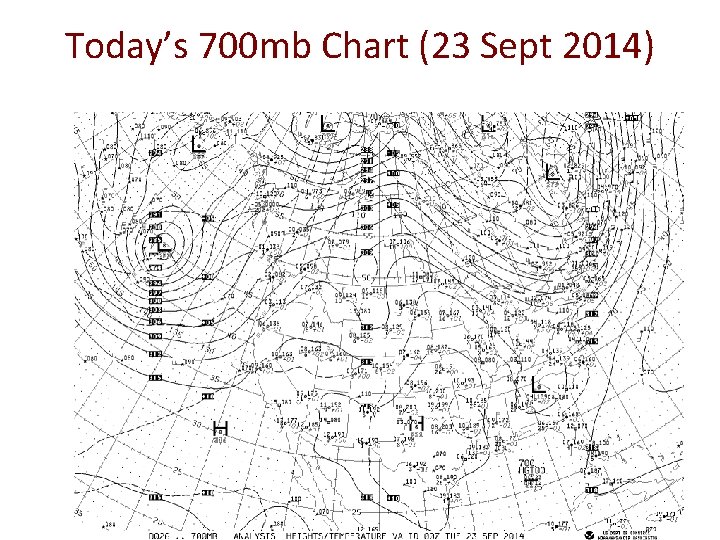
Today’s 700 mb Chart (23 Sept 2014)
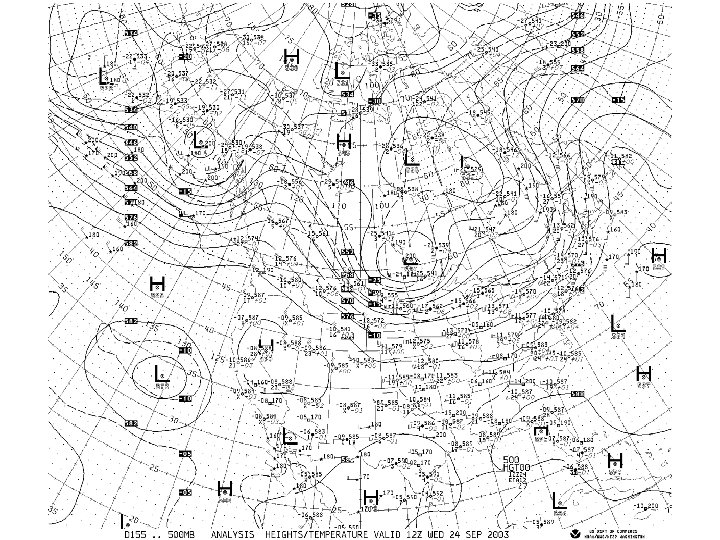
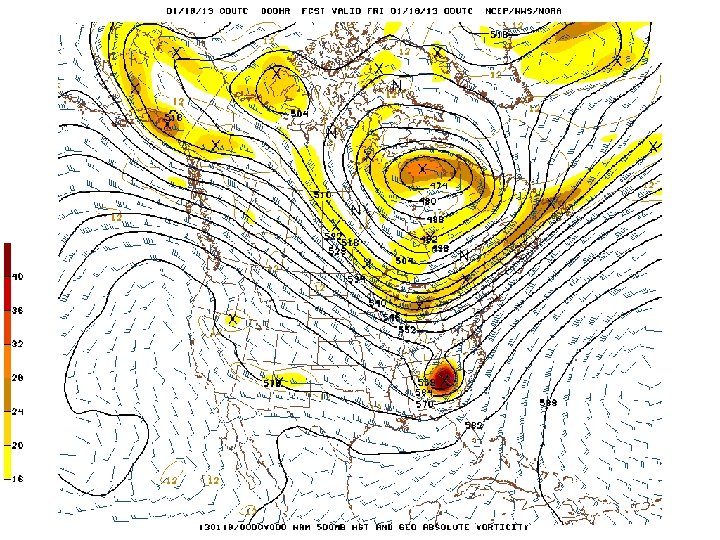
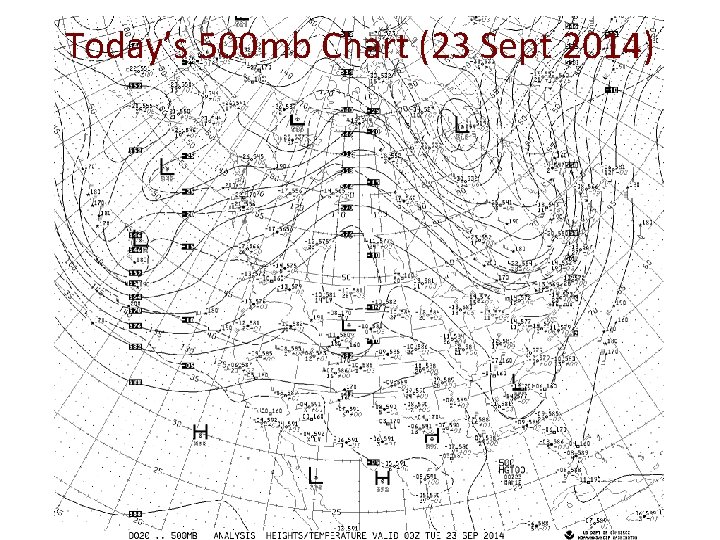
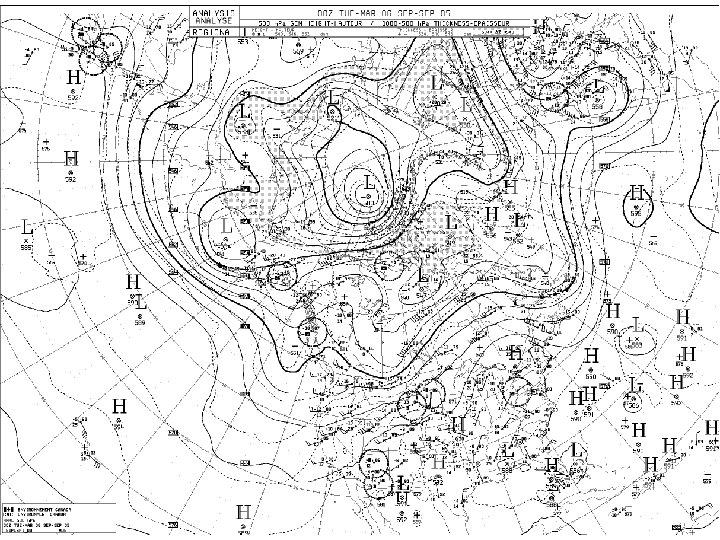
500 mb Chart (North America) • Isoheights (solid contours) – 60 m intervals with 5400 m (540 decameters) reference line – Contour labels in decameters – Plotted heights are in decameters • Isotherms (dashed contours) – 5 C intervals with 0 C reference line
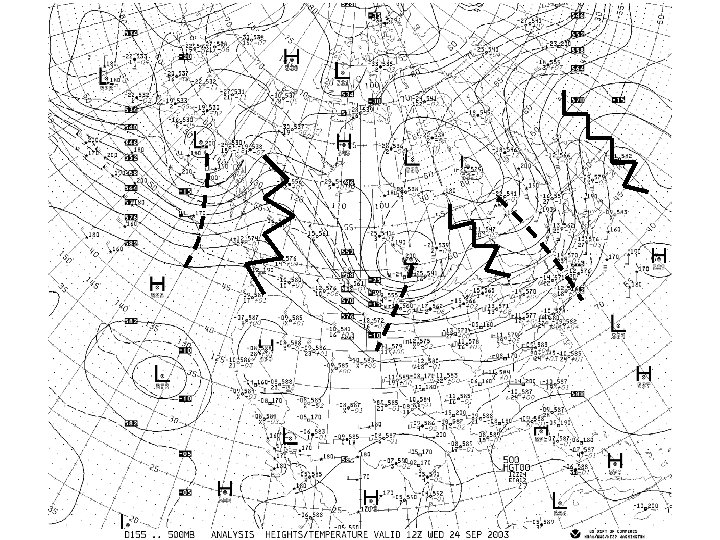
500 mb Chart (North America) • Uses: – Mid-tropospheric temperature advection and thermal profile – Mid-tropospheric moisture profile – Wave pattern in the westerlies • ID of longwaves and shortwaves – LND and approximate steering level for surface synoptic systems – Height changes and wave motion – Vertical and horizontal tilt of waves
Today’s 500 mb Chart (23 Sept 2014)
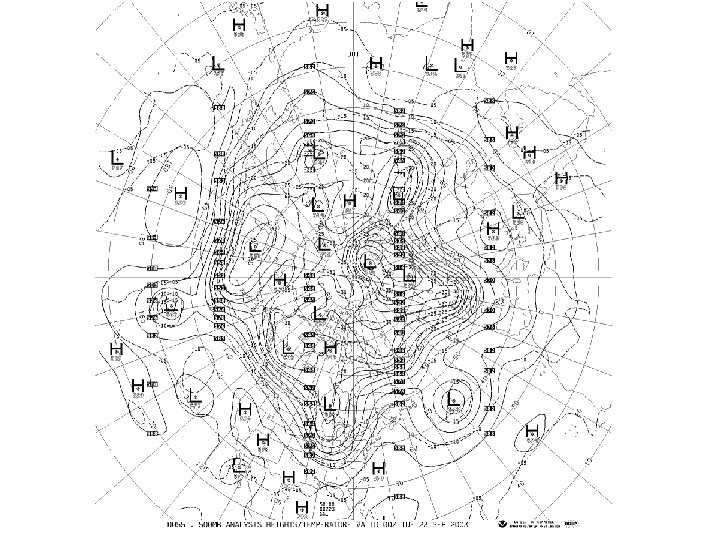
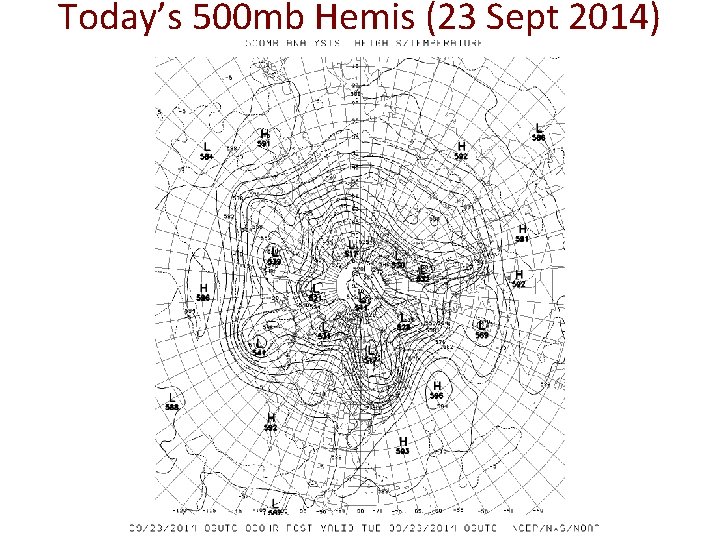
500 mb Chart (Hemispheric) • Contains same contours as the 500 mb North American analysis, except void of data plots • Additional Uses: – Circumpolar vortex – Planetary wave number and pattern – Wave ID
Today’s 500 mb Hemis (23 Sept 2014)
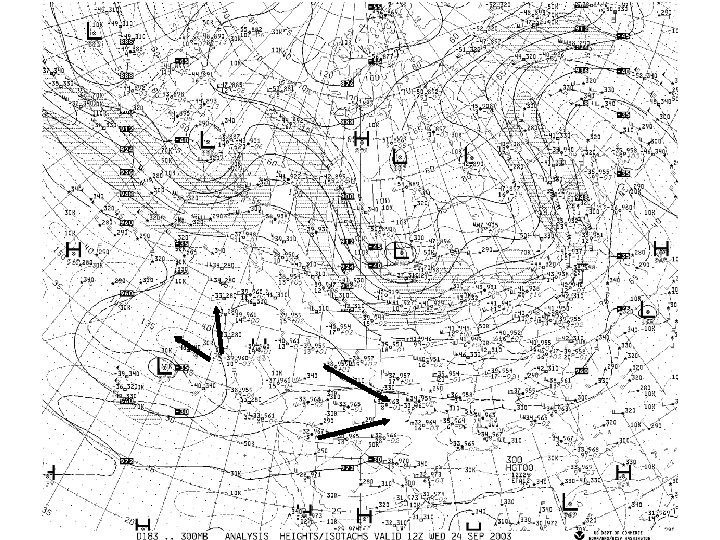
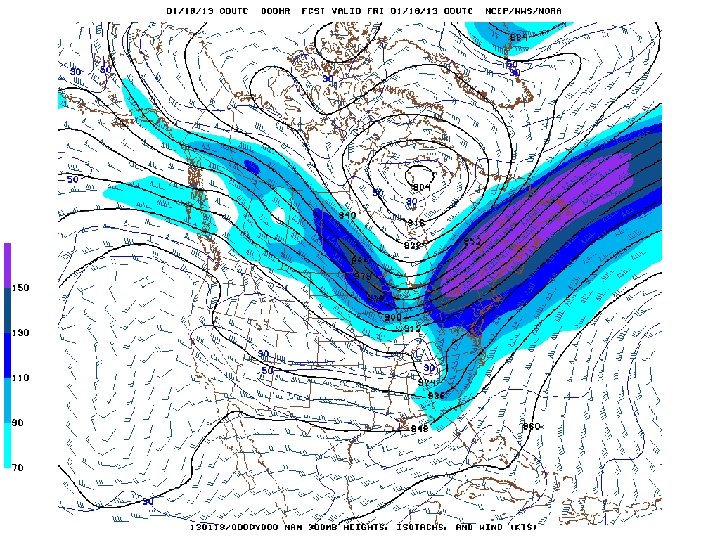
300 mb Chart • Isoheights (solid contours) – 120 m intervals with 9000 m (900 decameter) reference line – Contour labels in decameters – Plotted heights in decameters • Isotachs (light dashed contours) – 20 knot intervals with 10 knot reference line – Stippled regions represent: • 70 -110 knot winds • 150 -190 knot winds
300 mb Chart • Uses: – Polar jet stream location/configuration/intensity – 4 -quadrant jet/divergence relationship – Upper tropospheric wave pattern – Regions of difluence and confluence – Regions of upper-tropospheric vertical shear
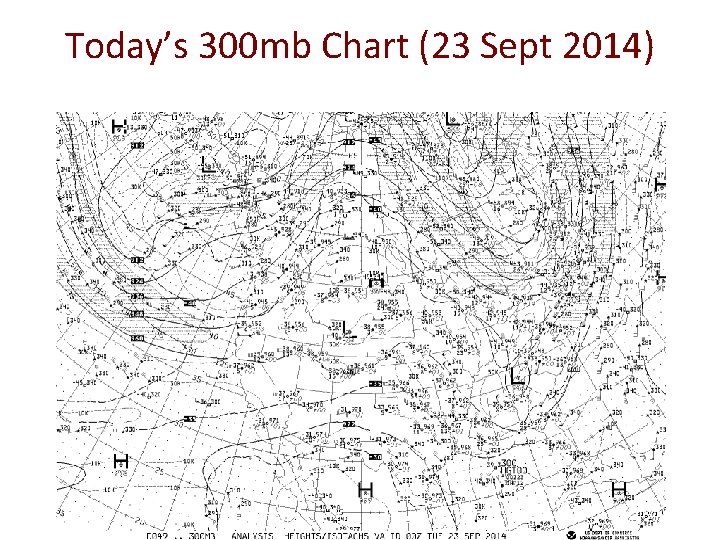
Today’s 300 mb Chart (23 Sept 2014)
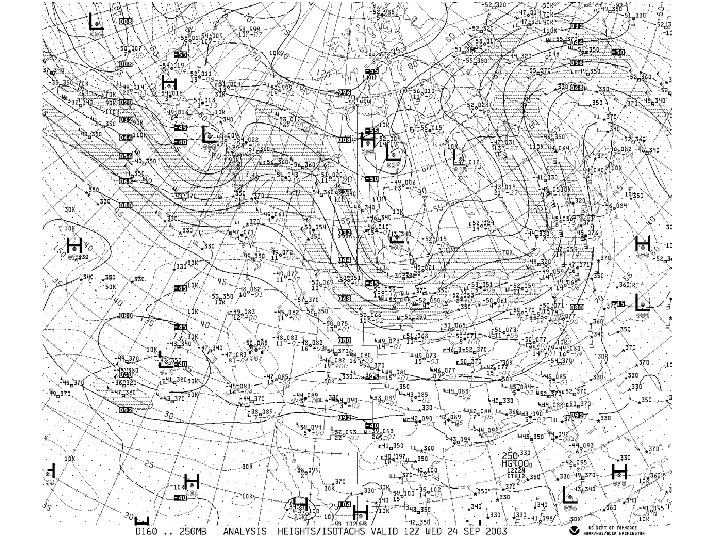
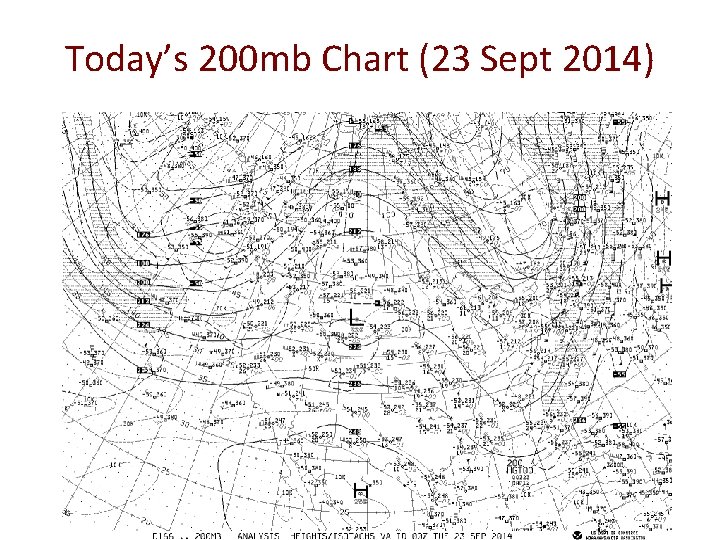
250 mb Analysis • Isoheights (solid contours) – 120 m intervals with 10, 000 m (1000 decameter) reference line – contour labels in decameters – plotted heights are in decameters (add 0 in ones digit for meters, and possibly a 1 for the tenthousands digit [if first plotted number is a 0]) • Isotherms (dashed heavy contours) – 5 o. C intervals with -50 o. C reference line
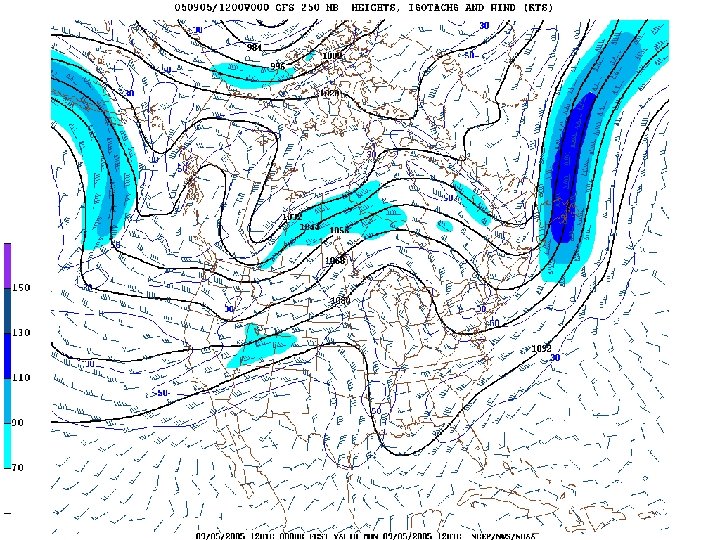
200/250 mb Analysis • Isotachs (light dashed contours) – 20 knot intervals with a 10 knot reference line – Stippled regions represent: • 70 -110 knot winds • 150 -190 knot winds
200/250 mb Analysis • Uses: – Sub-tropical jet stream location/configuration/intensity – the 4 -quadrant jet/divergence relationship – Upper-tropospheric wave pattern – Regions of Difluence and Confluence (convection/severe weather) – Regions of upper-tropospheric vertical shear (tropical cyclones) – Tropopause folds and breaks
Today’s 200 mb Chart (23 Sept 2014)
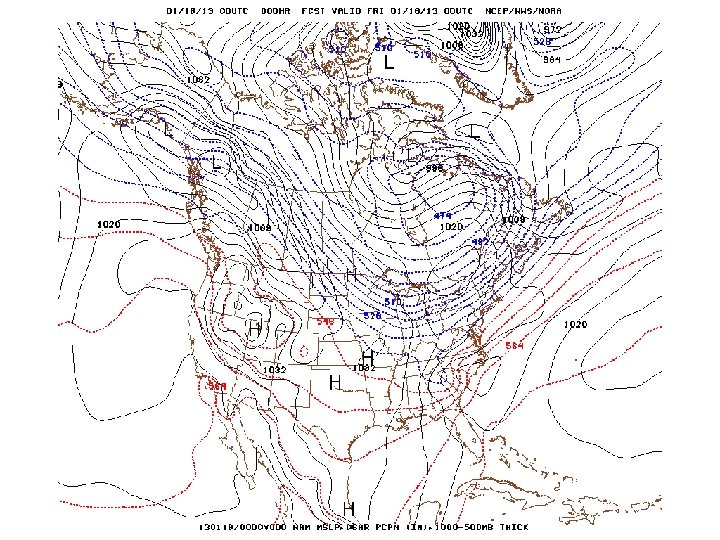
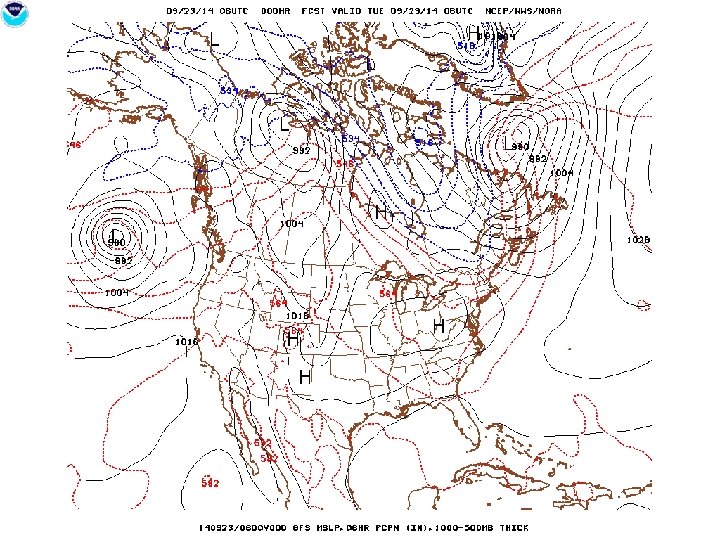
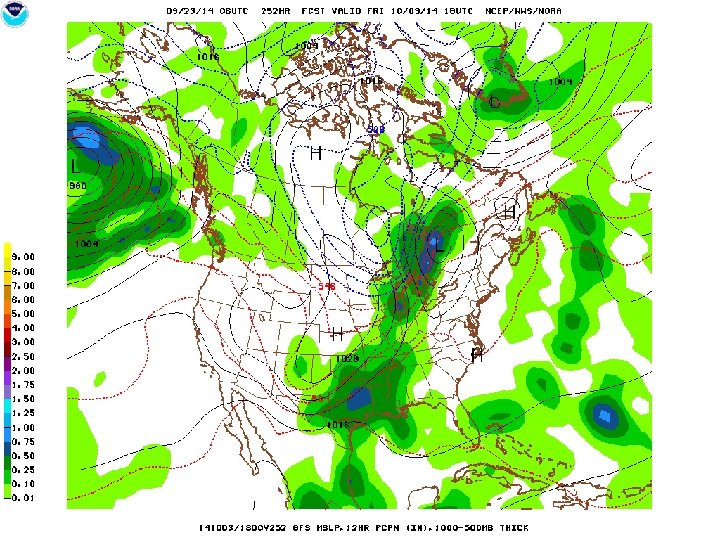
1000 -500 Thickness / MSLP Chart • Thickness Values (usually dashed contours) – Vertical distance in m between 1000 mb and 500 mb pressure levels – Function of avg virtual temperature of 1000 mb to 500 mb layer – Increments of 60 gpm • MSLP (solid black contour)
1000 -500 Thickness / MSLP Chart • Uses – Temperature advection • Thickness is proportionally to temperature • Use MSLP contours as proxy for wind (assume geostrophic – 5400 (540) line generally divides polar air from mid-latitude air (first guess for the rain-snow line)