
Diet Health Can you trust the headlines Sara
- Slides: 30
Diet & Health: Can you trust the headlines? Sara Stanner February 2020 Education Conference
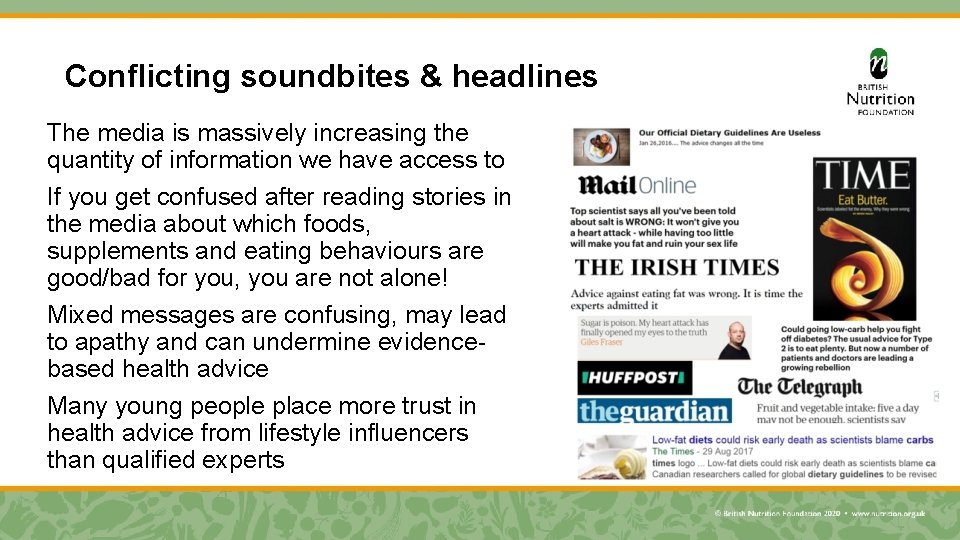
Conflicting soundbites & headlines The media is massively increasing the quantity of information we have access to If you get confused after reading stories in the media about which foods, supplements and eating behaviours are good/bad for you, you are not alone! Mixed messages are confusing, may lead to apathy and can undermine evidencebased health advice Many young people place more trust in health advice from lifestyle influencers than qualified experts
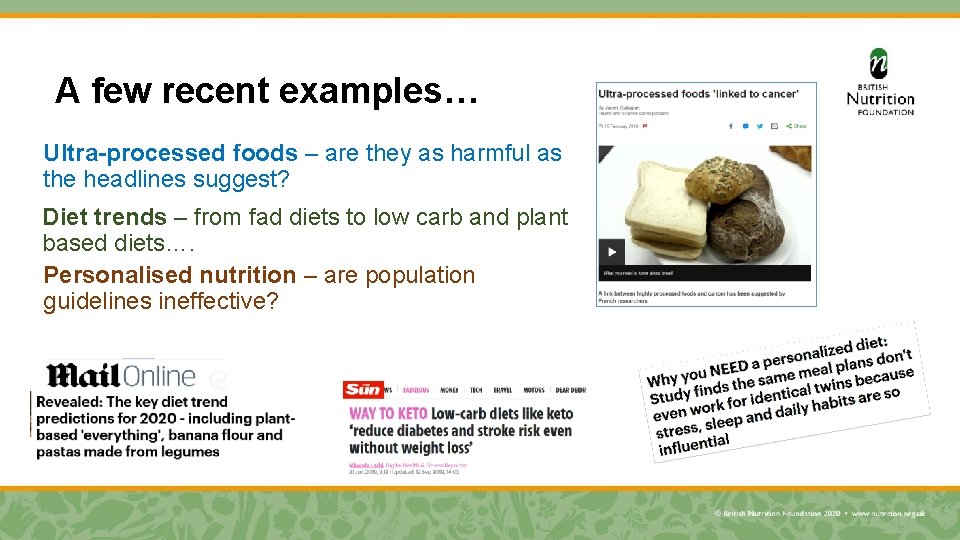
A few recent examples… Ultra-processed foods – are they as harmful as the headlines suggest? Diet trends – from fad diets to low carb and plant based diets…. Personalised nutrition – are population guidelines ineffective?
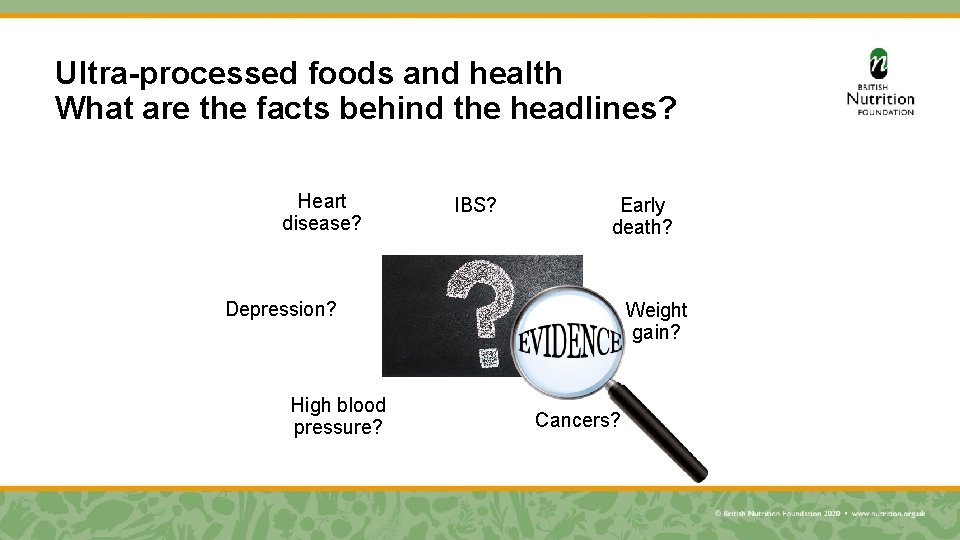
Ultra-processed foods and health What are the facts behind the headlines? Heart disease? IBS? Early death? Depression? High blood pressure? Weight gain? Cancers?
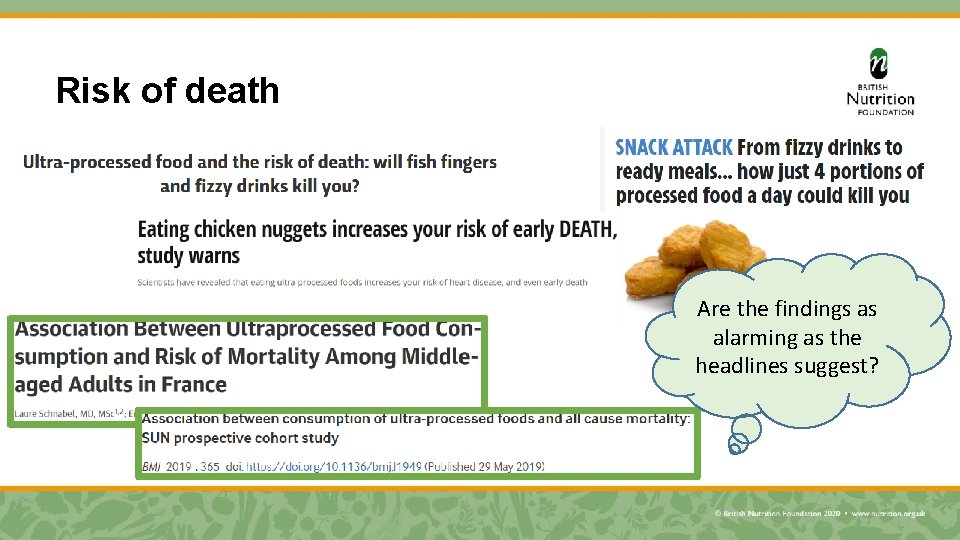
Risk of death Are the findings as alarming as the headlines suggest?
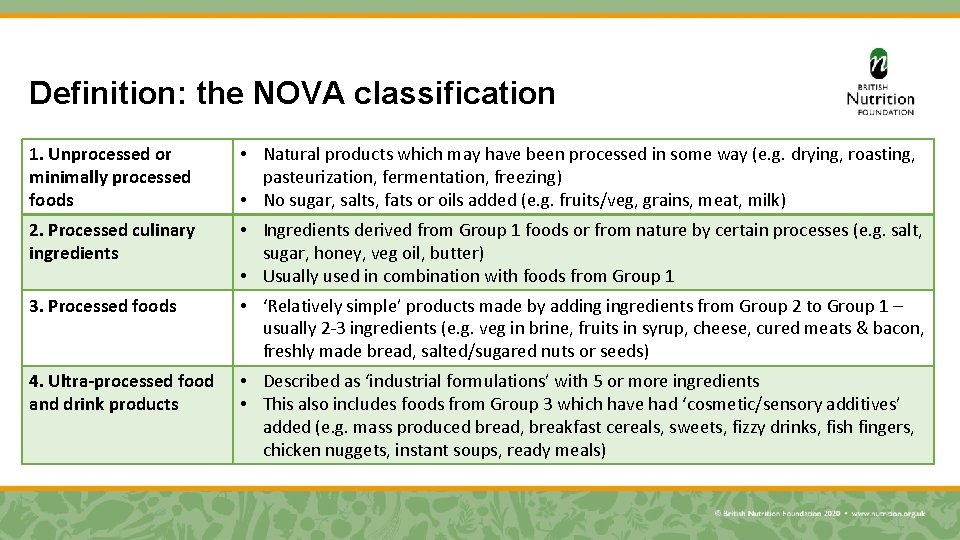
Definition: the NOVA classification 1. Unprocessed or minimally processed foods • Natural products which may have been processed in some way (e. g. drying, roasting, pasteurization, fermentation, freezing) • No sugar, salts, fats or oils added (e. g. fruits/veg, grains, meat, milk) 2. Processed culinary ingredients • Ingredients derived from Group 1 foods or from nature by certain processes (e. g. salt, sugar, honey, veg oil, butter) • Usually used in combination with foods from Group 1 3. Processed foods • ‘Relatively simple’ products made by adding ingredients from Group 2 to Group 1 – usually 2 -3 ingredients (e. g. veg in brine, fruits in syrup, cheese, cured meats & bacon, freshly made bread, salted/sugared nuts or seeds) 4. Ultra-processed food and drink products • Described as ‘industrial formulations’ with 5 or more ingredients • This also includes foods from Group 3 which have had ‘cosmetic/sensory additives’ added (e. g. mass produced bread, breakfast cereals, sweets, fizzy drinks, fish fingers, chicken nuggets, instant soups, ready meals)
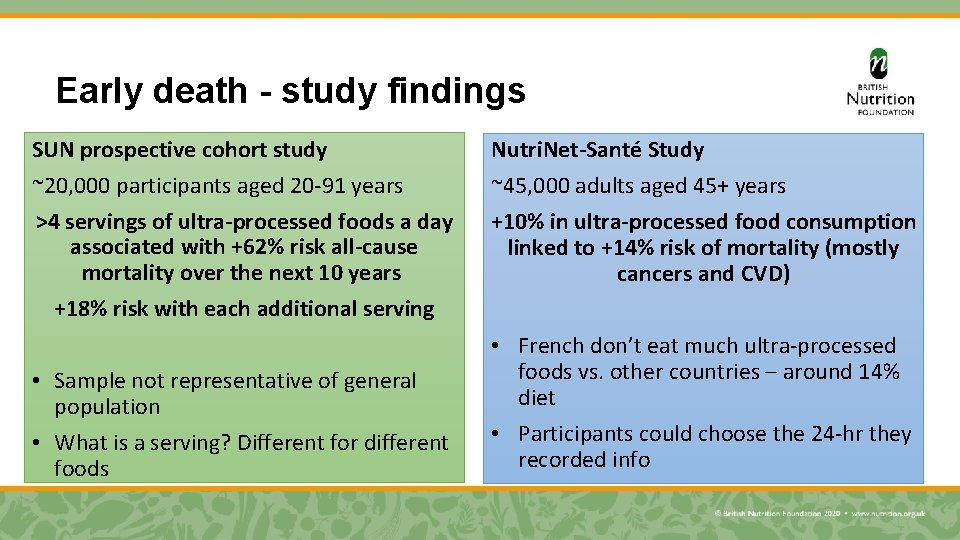
Early death - study findings SUN prospective cohort study ~20, 000 participants aged 20 -91 years >4 servings of ultra-processed foods a day associated with +62% risk all-cause mortality over the next 10 years +18% risk with each additional serving • Sample not representative of general population • What is a serving? Different for different foods Nutri. Net-Santé Study ~45, 000 adults aged 45+ years +10% in ultra-processed food consumption linked to +14% risk of mortality (mostly cancers and CVD) • French don’t eat much ultra-processed foods vs. other countries – around 14% diet • Participants could choose the 24 -hr they recorded info
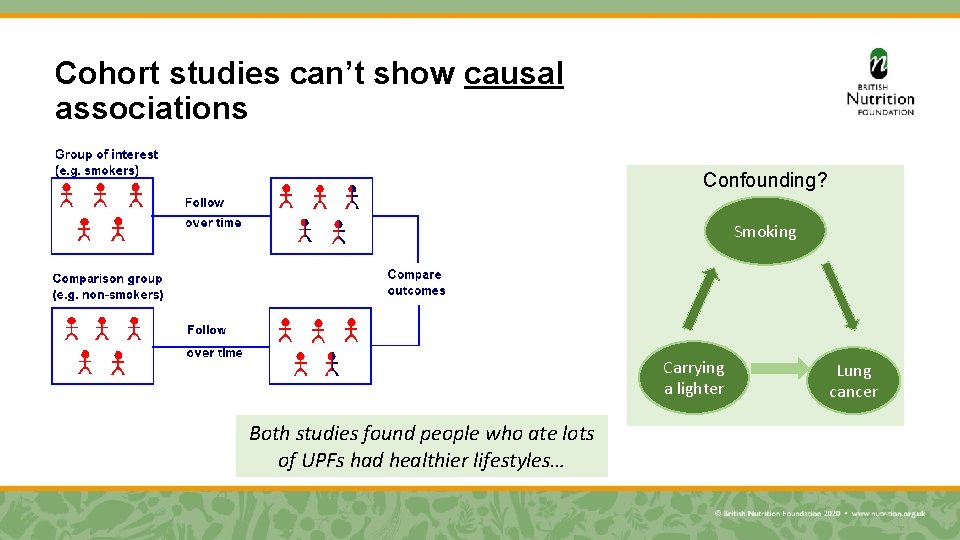
Cohort studies can’t show causal associations Confounding? Smoking Carrying a lighter Both studies found people who ate lots of UPFs had healthier lifestyles… Lung cancer
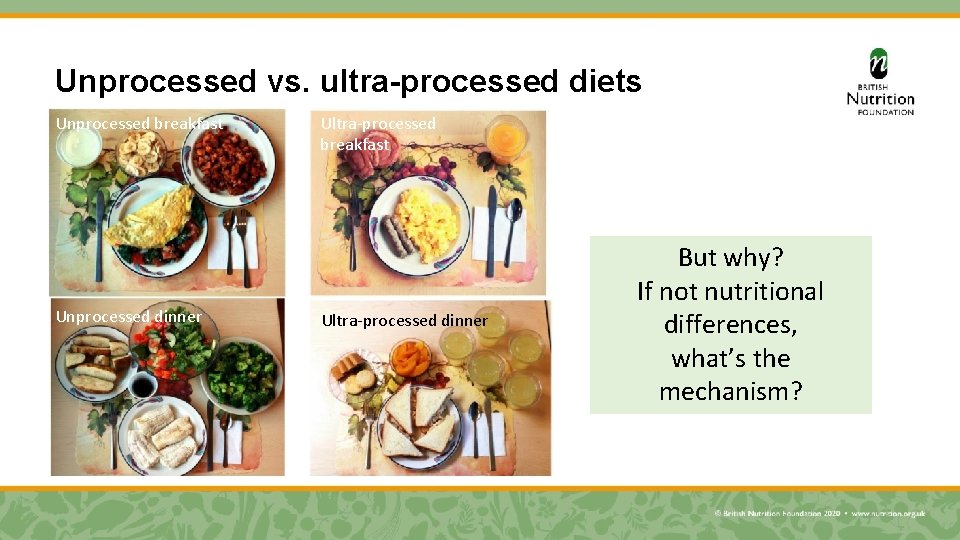
Unprocessed vs. ultra-processed diets Unprocessed breakfast Unprocessed dinner Ultra-processed breakfast Ultra-processed dinner But why? If not nutritional differences, what’s the mechanism?
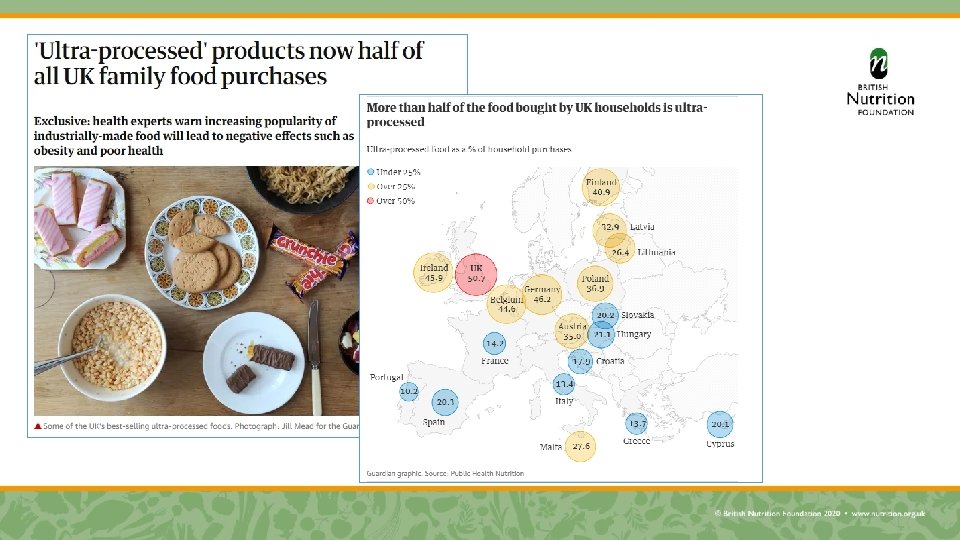
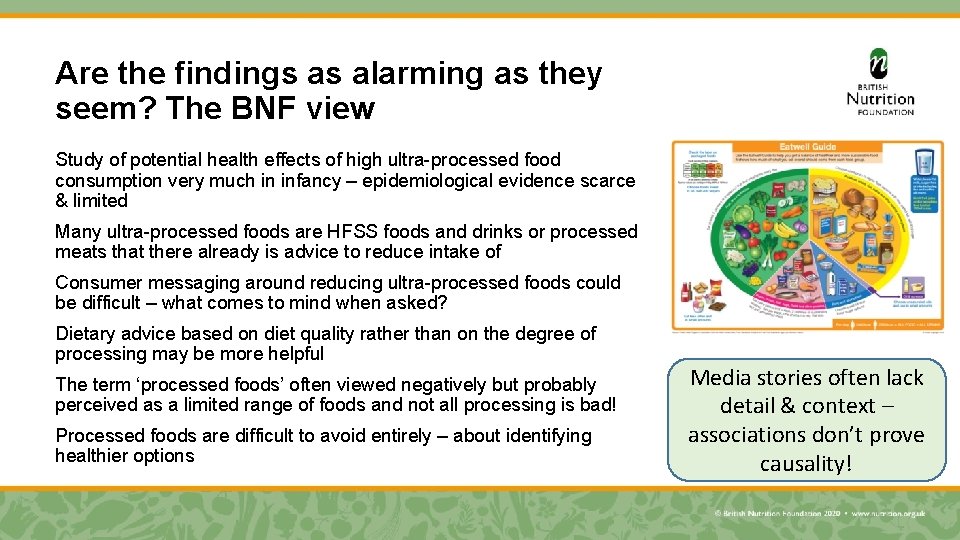
Are the findings as alarming as they seem? The BNF view Study of potential health effects of high ultra-processed food consumption very much in infancy – epidemiological evidence scarce & limited Many ultra-processed foods are HFSS foods and drinks or processed meats that there already is advice to reduce intake of Consumer messaging around reducing ultra-processed foods could be difficult – what comes to mind when asked? Dietary advice based on diet quality rather than on the degree of processing may be more helpful The term ‘processed foods’ often viewed negatively but probably perceived as a limited range of foods and not all processing is bad! Processed foods are difficult to avoid entirely – about identifying healthier options Media stories often lack detail & context – associations don’t prove causality!
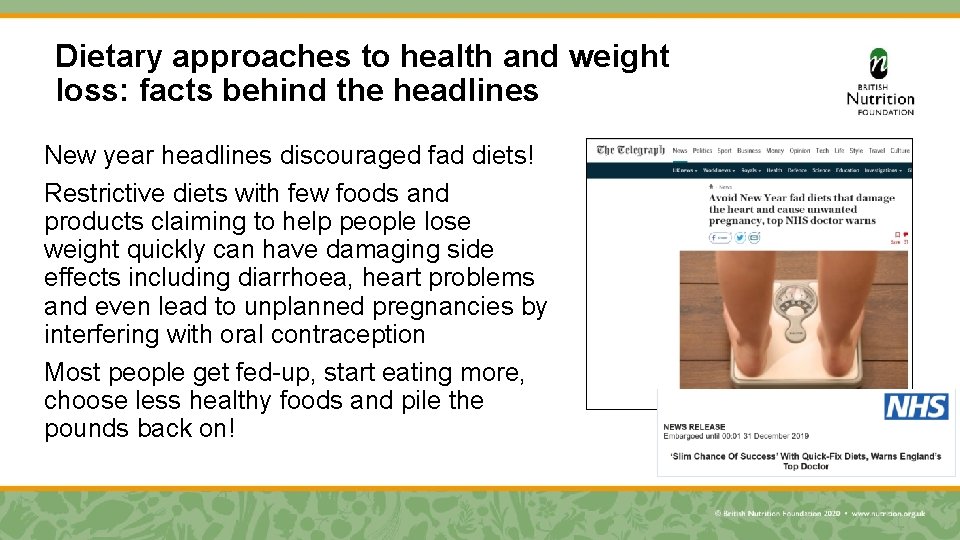
Dietary approaches to health and weight loss: facts behind the headlines New year headlines discouraged fad diets! Restrictive diets with few foods and products claiming to help people lose weight quickly can have damaging side effects including diarrhoea, heart problems and even lead to unplanned pregnancies by interfering with oral contraception Most people get fed-up, start eating more, choose less healthy foods and pile the pounds back on!
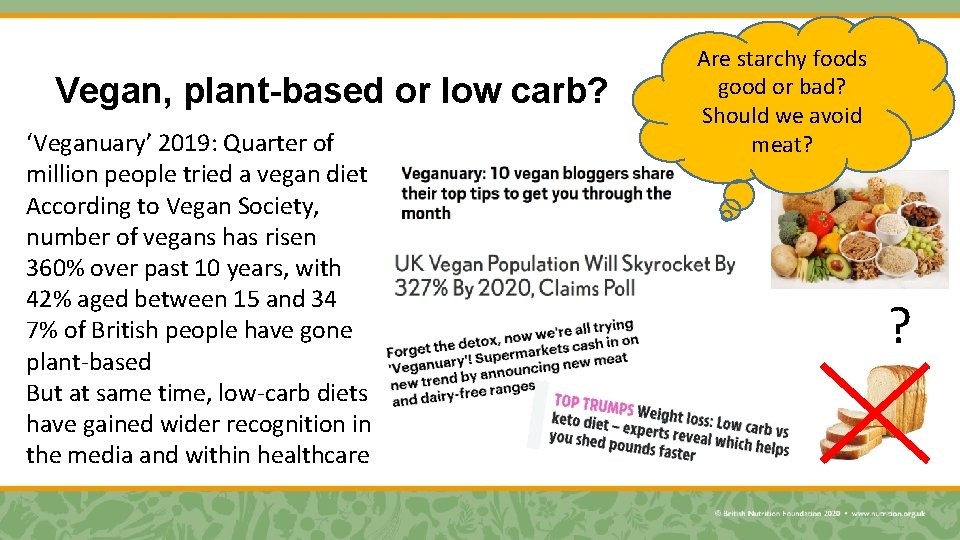
Vegan, plant-based or low carb? ‘Veganuary’ 2019: Quarter of million people tried a vegan diet According to Vegan Society, number of vegans has risen 360% over past 10 years, with 42% aged between 15 and 34 7% of British people have gone plant-based But at same time, low-carb diets have gained wider recognition in the media and within healthcare Are starchy foods good or bad? Should we avoid meat? ?
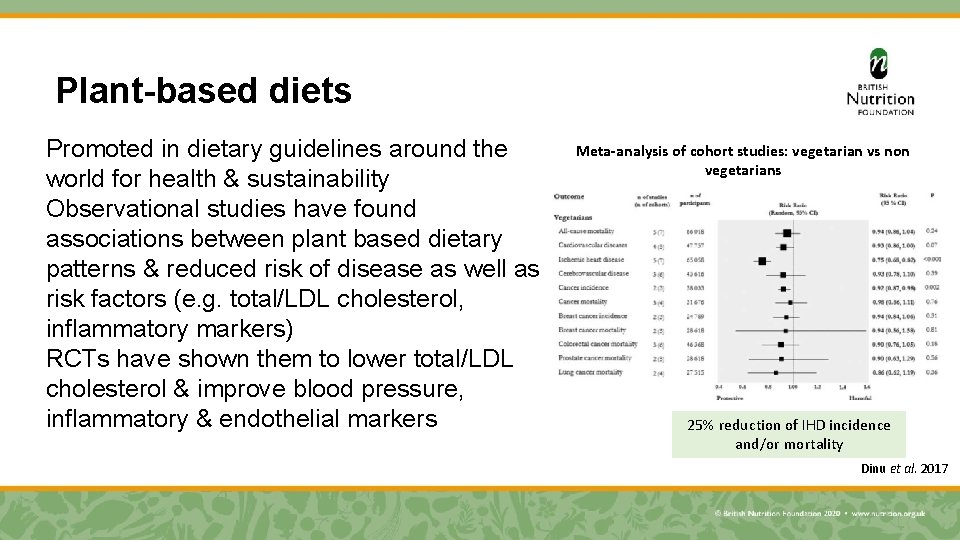
Plant-based diets Promoted in dietary guidelines around the world for health & sustainability Observational studies have found associations between plant based dietary patterns & reduced risk of disease as well as risk factors (e. g. total/LDL cholesterol, inflammatory markers) RCTs have shown them to lower total/LDL cholesterol & improve blood pressure, inflammatory & endothelial markers Meta-analysis of cohort studies: vegetarian vs non vegetarians 25% reduction of IHD incidence and/or mortality Dinu et al. 2017
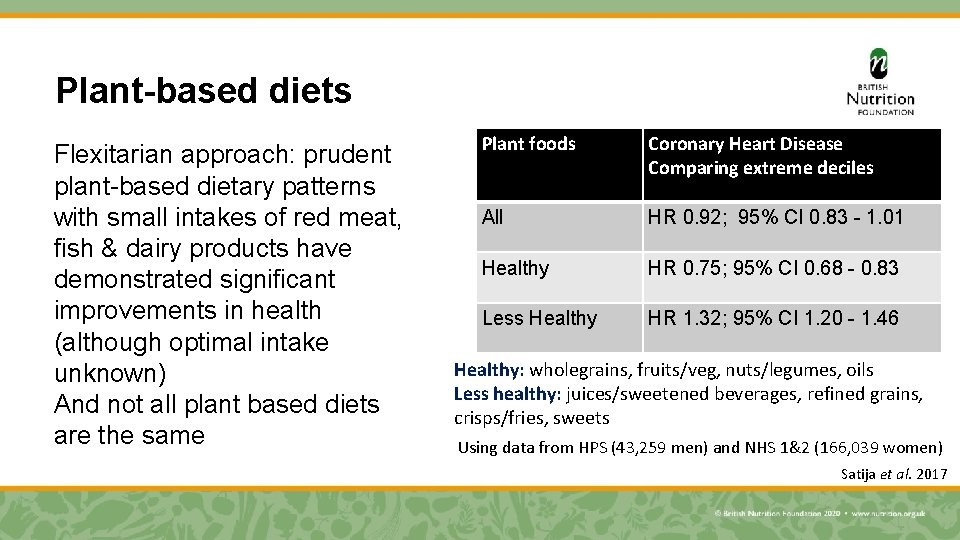
Plant-based diets Flexitarian approach: prudent plant-based dietary patterns with small intakes of red meat, fish & dairy products have demonstrated significant improvements in health (although optimal intake unknown) And not all plant based diets are the same Plant foods Coronary Heart Disease Comparing extreme deciles All HR 0. 92; 95% CI 0. 83 - 1. 01 Healthy HR 0. 75; 95% CI 0. 68 - 0. 83 Less Healthy HR 1. 32; 95% CI 1. 20 - 1. 46 Healthy: wholegrains, fruits/veg, nuts/legumes, oils Less healthy: juices/sweetened beverages, refined grains, crisps/fries, sweets Using data from HPS (43, 259 men) and NHS 1&2 (166, 039 women) Satija et al. 2017
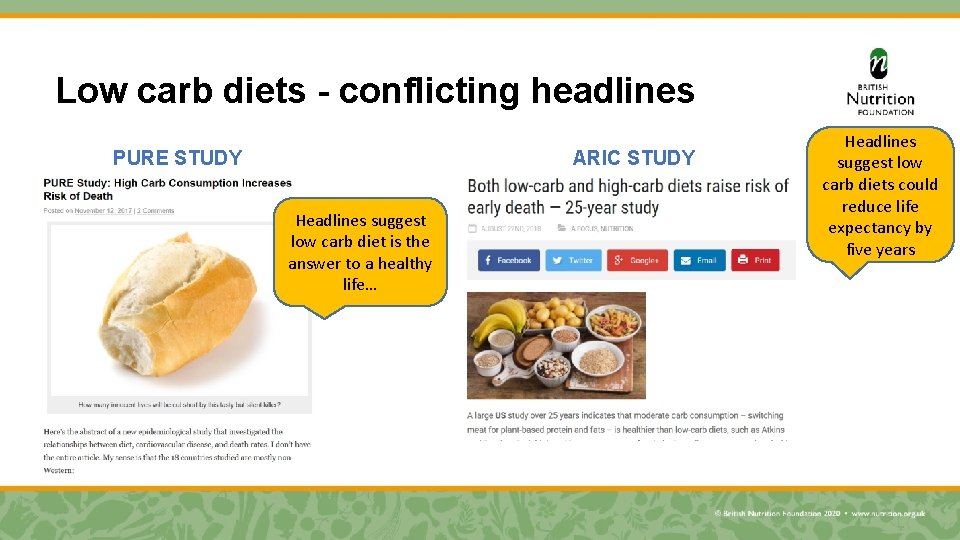
Low carb diets - conflicting headlines PURE STUDY ARIC STUDY Headlines suggest low carb diet is the answer to a healthy life… Headlines suggest low carb diets could reduce life expectancy by five years
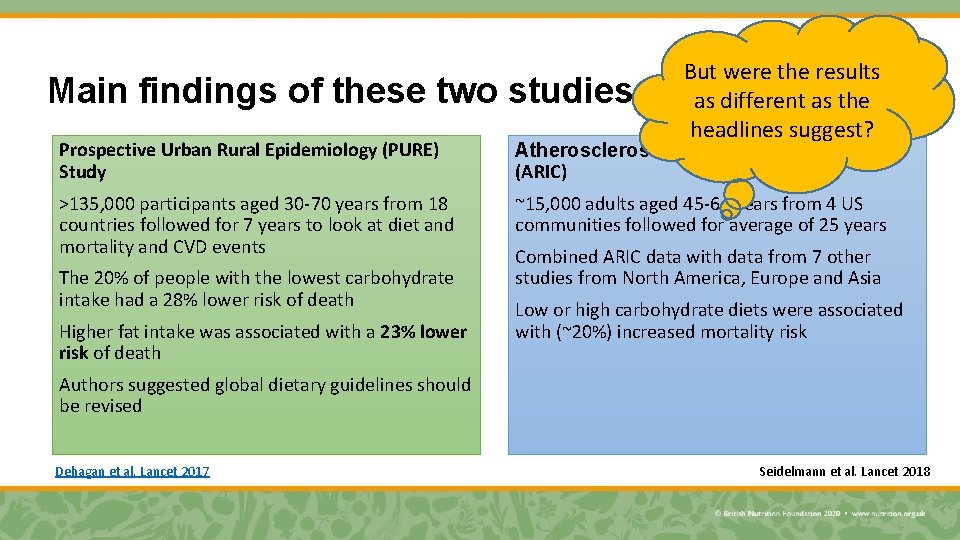
Main findings of these two studies But were the results as different as the headlines suggest? Prospective Urban Rural Epidemiology (PURE) Study Atherosclerosis Risk in Communities (ARIC) >135, 000 participants aged 30 -70 years from 18 countries followed for 7 years to look at diet and mortality and CVD events ~15, 000 adults aged 45 -64 years from 4 US communities followed for average of 25 years The 20% of people with the lowest carbohydrate intake had a 28% lower risk of death Higher fat intake was associated with a 23% lower risk of death Combined ARIC data with data from 7 other studies from North America, Europe and Asia Low or high carbohydrate diets were associated with (~20%) increased mortality risk Authors suggested global dietary guidelines should be revised Dehagan et al. Lancet 2017 Seidelmann et al. Lancet 2018
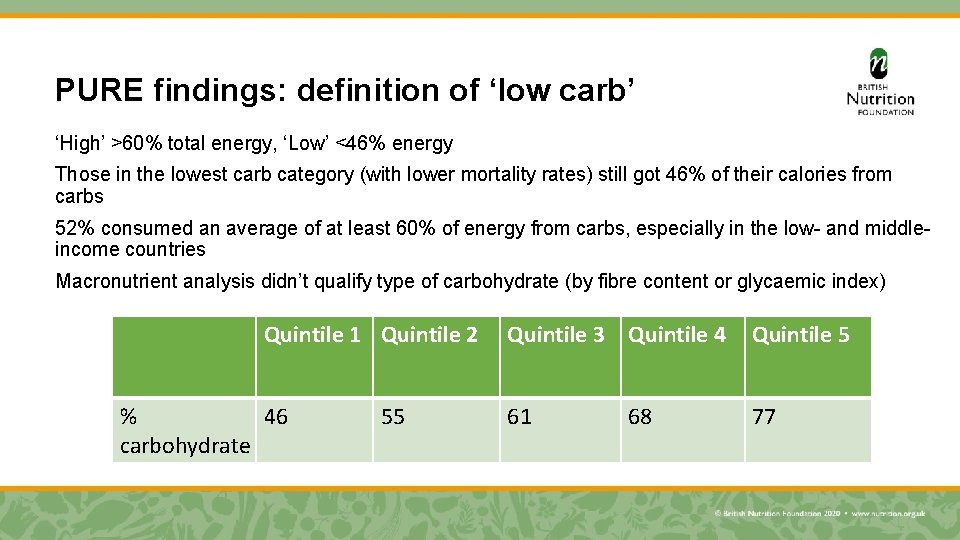
PURE findings: definition of ‘low carb’ ‘High’ >60% total energy, ‘Low’ <46% energy Those in the lowest carb category (with lower mortality rates) still got 46% of their calories from carbs 52% consumed an average of at least 60% of energy from carbs, especially in the low- and middleincome countries Macronutrient analysis didn’t qualify type of carbohydrate (by fibre content or glycaemic index) Quintile 1 Quintile 2 % 46 carbohydrate 55 Quintile 3 Quintile 4 Quintile 5 61 77 68
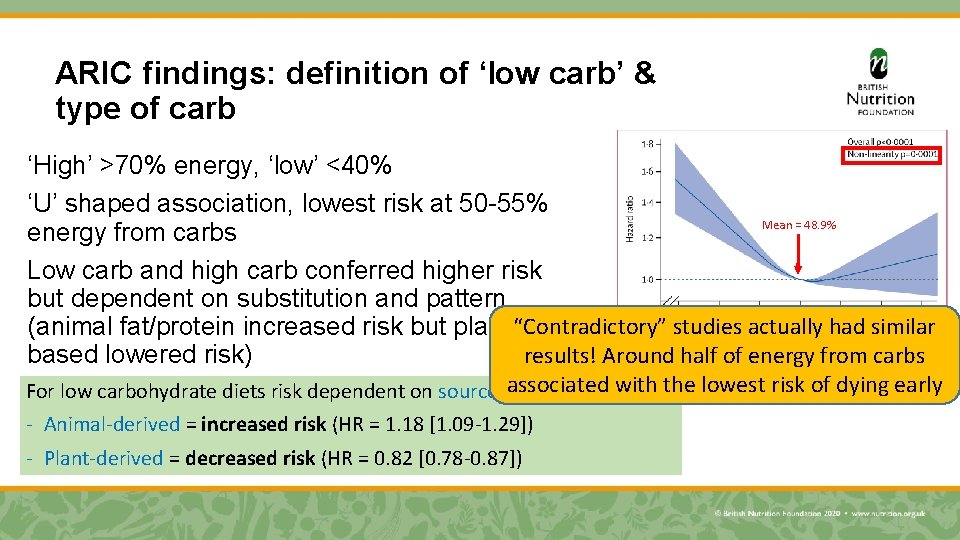
ARIC findings: definition of ‘low carb’ & type of carb ‘High’ >70% energy, ‘low’ <40% ‘U’ shaped association, lowest risk at 50 -55% Mean = 48. 9% energy from carbs Low carb and high carb conferred higher risk but dependent on substitution and pattern (animal fat/protein increased risk but plant “Contradictory” studies actually had similar results! Around half of energy from carbs based lowered risk) associated with the lowest risk of dying early For low carbohydrate diets risk dependent on source of fat and protein: - Animal-derived = increased risk (HR = 1. 18 [1. 09 -1. 29]) - Plant-derived = decreased risk (HR = 0. 82 [0. 78 -0. 87])
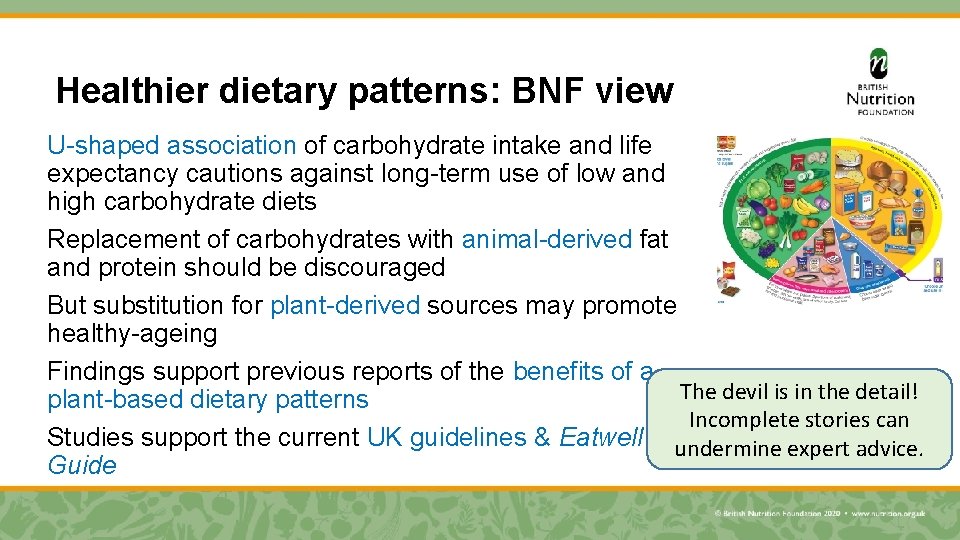
Healthier dietary patterns: BNF view U-shaped association of carbohydrate intake and life expectancy cautions against long-term use of low and high carbohydrate diets Replacement of carbohydrates with animal-derived fat and protein should be discouraged But substitution for plant-derived sources may promote healthy-ageing Findings support previous reports of the benefits of a The devil is in the detail! plant-based dietary patterns Incomplete stories can Studies support the current UK guidelines & Eatwell undermine expert advice. Guide
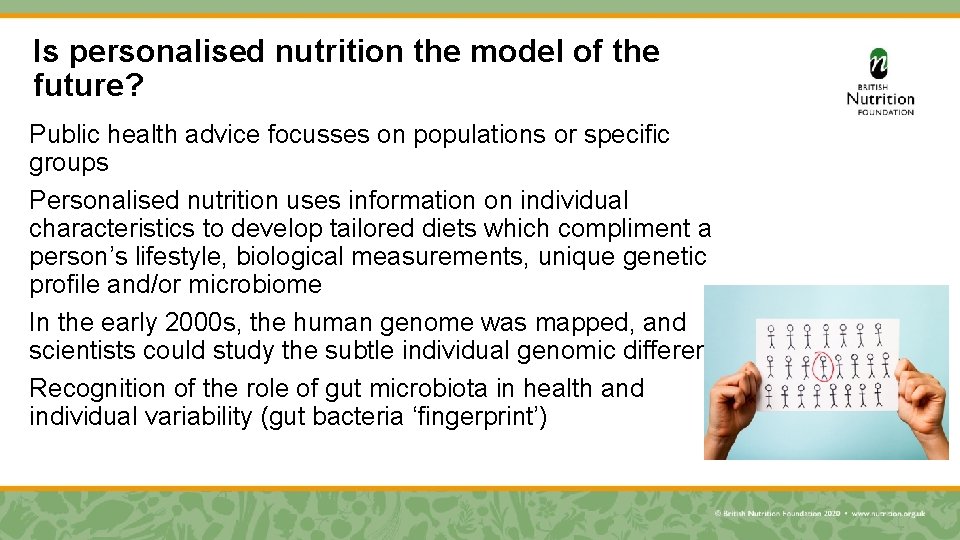
Is personalised nutrition the model of the future? Public health advice focusses on populations or specific groups Personalised nutrition uses information on individual characteristics to develop tailored diets which compliment a person’s lifestyle, biological measurements, unique genetic profile and/or microbiome In the early 2000 s, the human genome was mapped, and scientists could study the subtle individual genomic differences Recognition of the role of gut microbiota in health and individual variability (gut bacteria ‘fingerprint’)
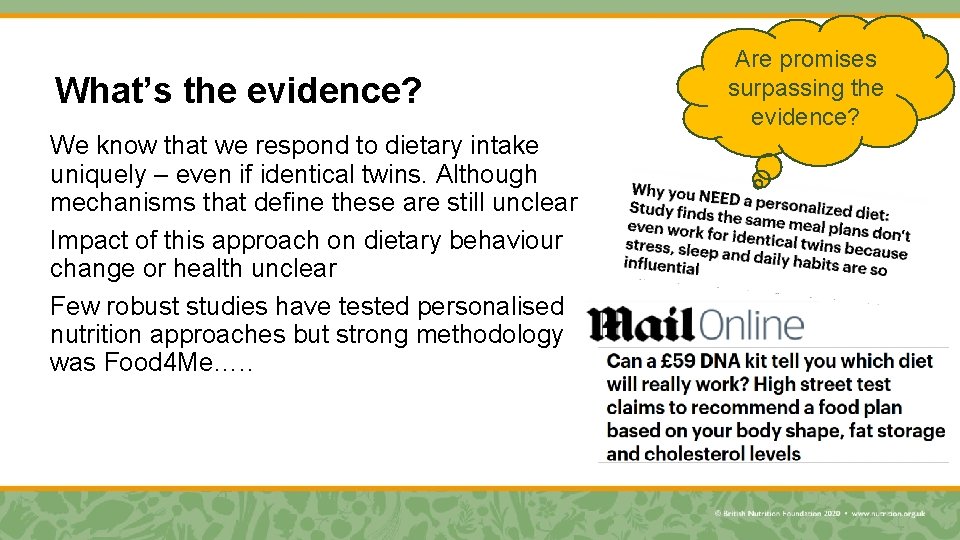
What’s the evidence? We know that we respond to dietary intake uniquely – even if identical twins. Although mechanisms that define these are still unclear Impact of this approach on dietary behaviour change or health unclear Few robust studies have tested personalised nutrition approaches but strong methodology was Food 4 Me…. . Are promises surpassing the evidence?
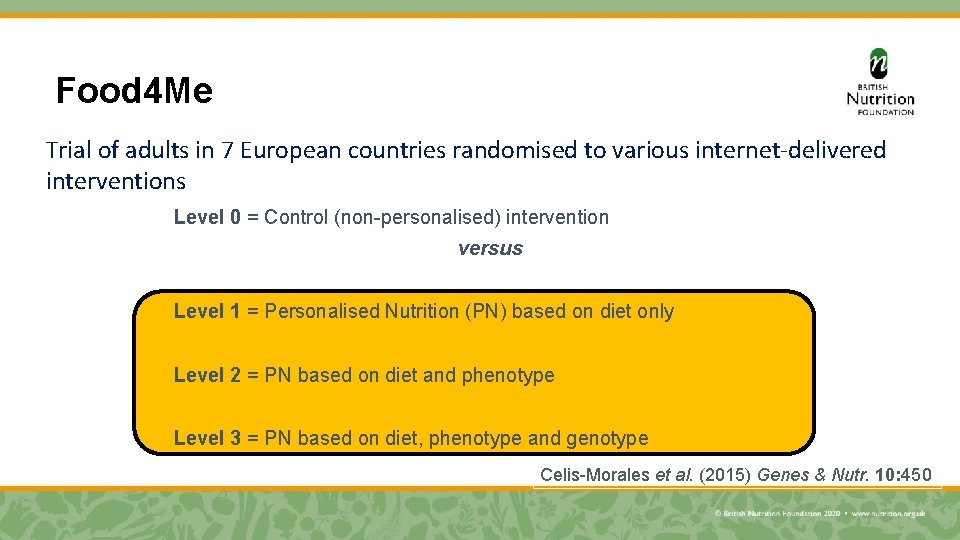
Food 4 Me Trial of adults in 7 European countries randomised to various internet-delivered interventions Level 0 = Control (non-personalised) intervention versus Level 1 = Personalised Nutrition (PN) based on diet only Level 2 = PN based on diet and phenotype Level 3 = PN based on diet, phenotype and genotype Celis-Morales et al. (2015) Genes & Nutr. 10: 450
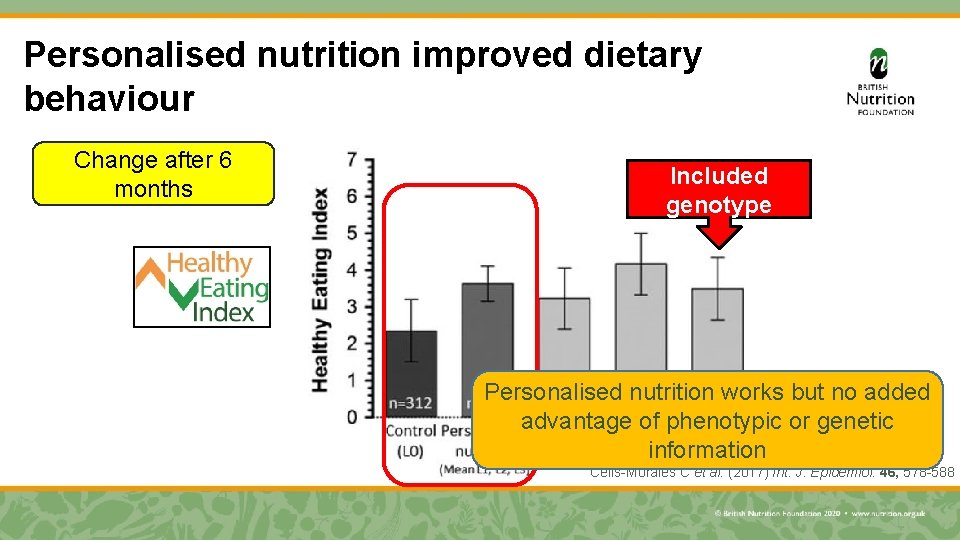
Personalised nutrition improved dietary behaviour Change after 6 months Included genotype Personalised nutrition works but no added advantage of phenotypic or genetic information Celis-Morales C et al. (2017) Int. J. Epidemiol. 46, 578 -588
Role of personalised nutrition: BNF view ‘One size fits all’ dietary advice may not be most effective technique for improving public health Tailoring advice to diet & lifestyle is likely to be more successful in changing dietary behaviour Digital age supports delivery of personalised advice, but there are concerns about management of data/individual privacy Wearable technologies (fitness trackers, mobile apps) to collect information continuously on physical activity, sleep, heart rate, stress, blood. Headlines often jump pressure etc may help motivation but whether they maintain sustained behaviour change is unknown ahead of the evidence The complex interactions between our personal gut microbiomes, ourbase. Often own genomes and the food we eat may well be key to future advice, but there science needs to catch is little evidence of additional benefit from more sophisticated & expensive approaches at present up with the hype!
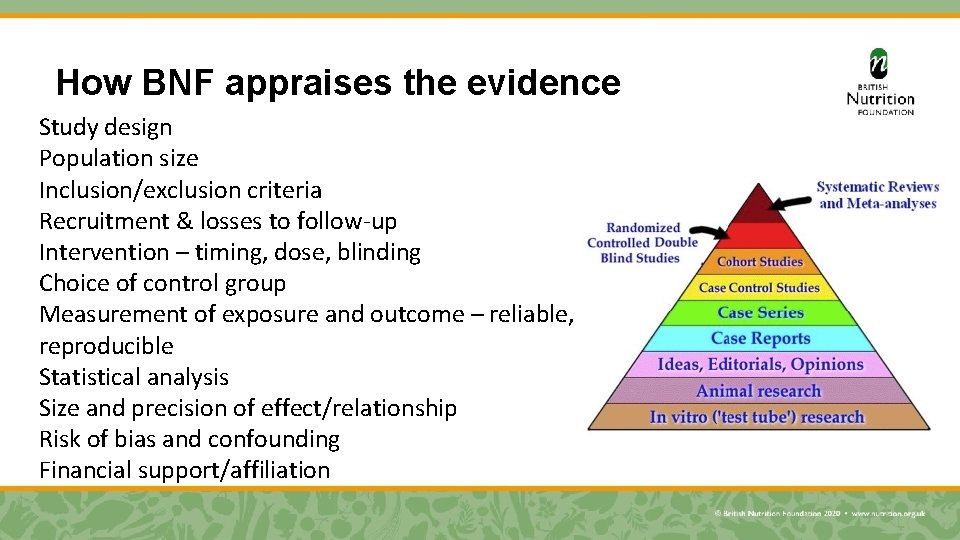
How BNF appraises the evidence Study design Population size Inclusion/exclusion criteria Recruitment & losses to follow-up Intervention – timing, dose, blinding Choice of control group Measurement of exposure and outcome – reliable, reproducible Statistical analysis Size and precision of effect/relationship Risk of bias and confounding Financial support/affiliation
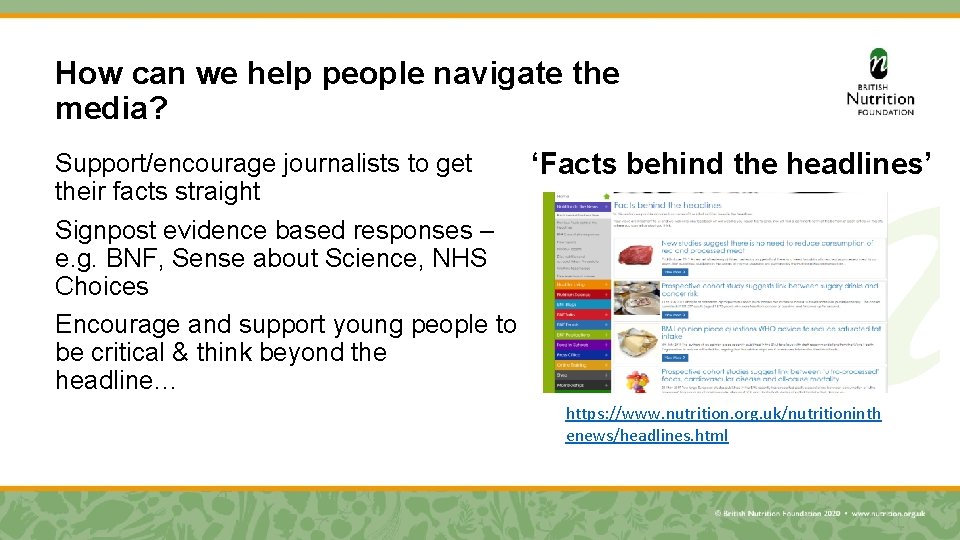
How can we help people navigate the media? Support/encourage journalists to get ‘Facts behind the headlines’ their facts straight Signpost evidence based responses – e. g. BNF, Sense about Science, NHS Choices Encourage and support young people to be critical & think beyond the headline… https: //www. nutrition. org. uk/nutritioninth enews/headlines. html
Fact or fiction? Is the evidence provided testimonials or personal opinion? Does it sound too good to be true? Is it suggesting a simple fix? Is the source of the information, such as a book author or blogger, trying to sell an unbalanced diet plan or a product like dietary supplements? Do they give an opinion from a general trusted source – e. g. charity/health organisation, government, educational organisation – who aren’t promoting or selling any products Does it suggest conflict with status quo? If so, does it also present opposite view? Look out for the word ‘new’ (this can mean the information is preliminary in nature) Ignore the headline - as you read the details of an article, you often find a different story emerges. The real story is usually at the end!
Further information Websites British Nutrition Foundation (BNF) Sense about Science NHS – Behind the Headlines BNF Resources (www. nutrition. org. uk) Webinars: Personalised nutrition - is it all in the gut? Plant-based diets - it's not just fruit and veg Facts Behind the headlines Regular updates on the evidence behind recent media stories Website factsheets Plant-based diets Healthy eating for vegans and vegetarians Blogs Should we all be going meat free?
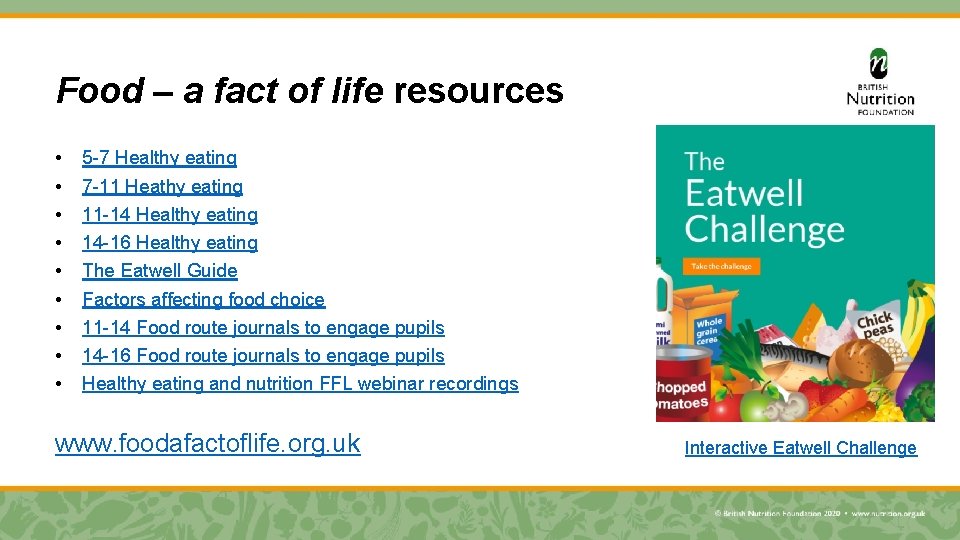
Food – a fact of life resources • • • 5 -7 Healthy eating 7 -11 Heathy eating 11 -14 Healthy eating 14 -16 Healthy eating The Eatwell Guide Factors affecting food choice 11 -14 Food route journals to engage pupils 14 -16 Food route journals to engage pupils Healthy eating and nutrition FFL webinar recordings www. foodafactoflife. org. uk Interactive Eatwell Challenge