
Diet and IBD Linda Parker Gastroenterology Dietician Questions
Diet and IBD Linda Parker Gastroenterology Dietician
Questions to answer l When not in flare can I eat anything? l Is there a good diet to follow? Does what I eat affect the disease? l Identifying food triggers…most common? l Using a food and symptoms diary
Can I eat anything when not in flare? l Dietary recommendations for IBD patients have been highly variable, largely due to the lack of research data available to guide clinical practice
Italian study - 1985 l l 71 patients either continued following a low residue diet or returned to an unrestricted Italian diet and reviewed for 2 years There were no differences between the two groups when evaluating rates of flares, intestinal obstructions, need for a hospital admission and/or need for surgery The addition of fibre into the “regular” Italian diet was tolerated well overall The study authors concluded that patients should be encouraged to eat an unrestricted diet as tolerated when not in flare
What is the guidance? l The European Crohn's and Colitis Organisation: “continuation of a regular diet is recommended during mildly active disease, both in UC and CD patients. The fibre-restricted diet should be used only on a temporary basis. ” (It is indicated in a few cases, such as acute relapse, strictures, and after some types of surgery)
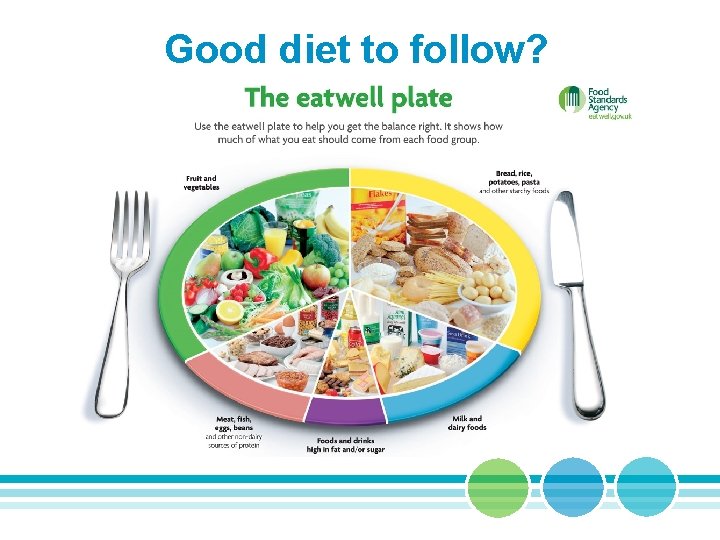
Good diet to follow?
Don’t be afraid of fibre l l l Soluble fibre absorbs water to make a gel which bulks but softens the stool Soluble fibre is fermented by bacteria in the colon producing short chain fatty acids (SCFAs) SCFAs increase good intestinal bacteria, which have an anti-inflammatory role, improve immune function, and protect intestinal barriers against harmful bacteria
What contains soluble fibre l l l Oats and barley Soft flesh of fruits and vegetables, especially root vegetables and those without lots of pips/seeds Peeling and cooking fruit and vegetables makes them more soluble Wholemeal bread (not granary/seeded) Pulses – chickpeas, beans, lentils
Identifying triggers l Keeping a symptom diary can help identify trigger foods l Once you've identified foods that cause your symptoms to flare up, you can choose either to avoid them or to learn new ways of preparing them that will make them tolerable
Foods to look out for l l l Alcohol and /or caffeine Milk and dairy products Spicy food Fatty food or fried foods High-fibre foods Tough meats
A word of caution… l l Foods can often be reintroduced when a flare up has settled Do not exclude a food without any evidence that it is a trigger Lots of exclusions will increase your risk of a unhealthy diet Try it for yourself rather than rely on what works for others

Any questions?
- Slides: 12