
Diet and Dental Caries Index Introduction Historical evidence



- Slides: 17
Diet and Dental Caries
Index • Introduction • Historical evidence linking diet and dental caries • Epidemiological evidence linking diet and dental caries • Experimental evidence linking diet and dental caries
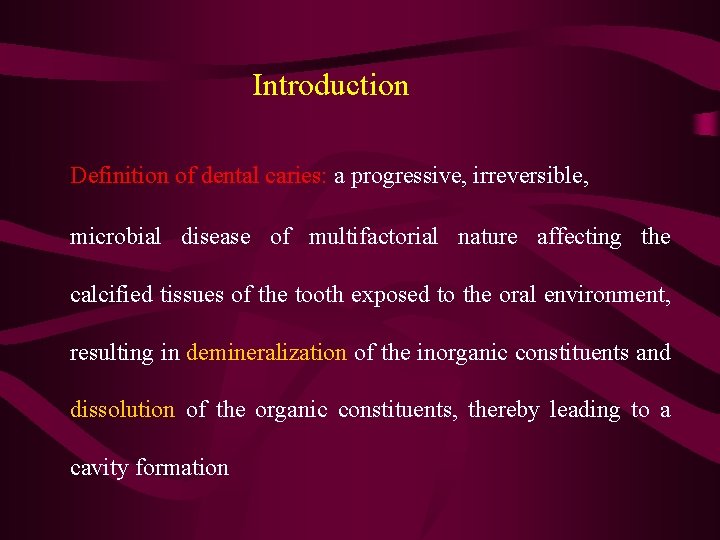
Introduction Definition of dental caries: a progressive, irreversible, microbial disease of multifactorial nature affecting the calcified tissues of the tooth exposed to the oral environment, resulting in demineralization of the inorganic constituents and dissolution of the organic constituents, thereby leading to a cavity formation
Evidence linking diet and dental caries can be summarized under: 1. Historical evidence 2. Epidemiological evidence 3. Experimental evidence
Historical evidence It was found that dental caries was present about 5 million years ago in South Africa in the Brachycephalic man of the Neolithic period. Interestingly, dietary pattern was not known. Eskimos skulls were free from caries.
Epidemiological evidence 1. Tristan da Cunha study: - a remote rocky island in the south Atlantic - prior to 1940, very low caries levels seen because of the consumption of raw diet - since 1940, island store sold sugar and sugar-containing foods - after a volcanic eruption, they were moved to England between 1961 and 1963 - dental caries levels showed a steady increase since 1940 s because of change in dietary habits
2. During World War II: - due to sugar restriction in diets during World War II (1939 – 1945), dental caries reduced among the civilians 3. Hereditary Fructose Intolerance (HFI): - an autosomal recessive disorder of fructose and sucrose metabolism - consumption causes malaise, nausea, vomiting, excessive sweating, cramps, tremors, convulsions, coma and even death - patients have to avoid foods containing fructose and sucrose - extremely low dental caries levels
Experimental evidence Animal studies: Orland et al (1954) - showed that rats reared in germ-free conditions and fed a cariogenic diet did not develop dental caries whereas similar rats fed the same diet but not reared in germ-free conditions did
Human studies: 1. Vipeholm Study (Gustaffson et al, 1954) - was conducted on 436 adult inmates of a mental institution at the Vipeholm hospital in Sweden from 1945 to 1953 - before the start of this study, the inmates’ diet was nutritious, containing little sugar, with no provision for between meal snacks; dental caries rate was relatively low - they were divided into nine groups depending on the type of food to be consumed during the study
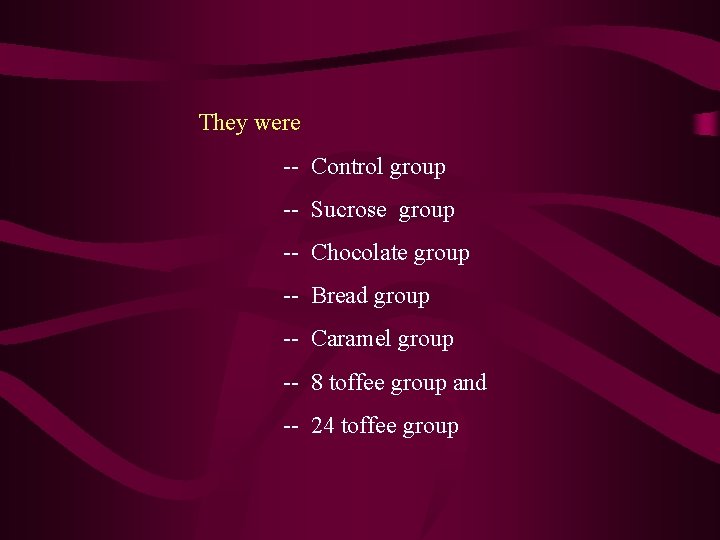
They were -- Control group -- Sucrose group -- Chocolate group -- Bread group -- Caramel group -- 8 toffee group and -- 24 toffee group
Conclusions: 1. Consumption of sugar in-between meals was associated with a marked increase in dental caries 2. Increase in carbohydrate intake increases the caries activity 3. Increase in caries activity disappears on withdrawal of sugarrich foods 4. Sugar intake, even in large amounts, had little effect on caries increment if it was ingested up to 4 times a day at mealtimes only 5. Risk of caries is greater if sugar is consumed in a form that will be retained on tooth surfaces 6. The increase in caries activity shows wide individual variation 7. Caries lesions occurred despite avoidance of sugar
2. Hopewood House Study (Sullivan and Harris, 1947 – 1962) - conducted in Bowral, rural New South Wales, Australia - Hopewood House had children of low socio-economic background from birth to 12 years of age - their diet was lacto-vegetarian (rich in milk products and raw vegetables) and mainly consisted of whole wheat flour products. Cheese, sugar, meat and refined carbohydrates were totally excluded - drinking water had a low amount of fluoride - oral hygiene practices were poor
Conclusions: - very low prevalence and severity of dental caries seen in spite of poor oral hygiene and low levels of fluoride in drinking water - when the children left this institution and were exposed to normal diet containing sugars, the carious rate increased to equal that of children in the state schools - though the children were on lacto-vegetarian diet right from birth, they did not have any special protection against dental caries when their teeth were exposed to sugar
3. Turku Sugar Study I (Scheinin and Makinen, 1972 to 1974) - carried out in Turku, Finland to study effect of substitution in diet of sucrose by fructose or xylitol - 125 subjects aged between 12 to 53 years - study population was divided into 3 groups: one group was given diet containing sucrose (35), another was given diet-containing fructose (38), the third group was given diet containing xylitol (52)
Conclusions: 1. dramatic reduction in dental caries incidence among subjects after 2 years of xylitol consumption 2. fructose was as cariogenic as sucrose for the first 12 months but became less so at the end of 24 months 3. frequent between meal chewing of xylitol gum produced an anticariogenic effect