
Diencephalon Diencephalon Thalamus dorsal thalamus Hypothalamus pituitary gland
- Slides: 38
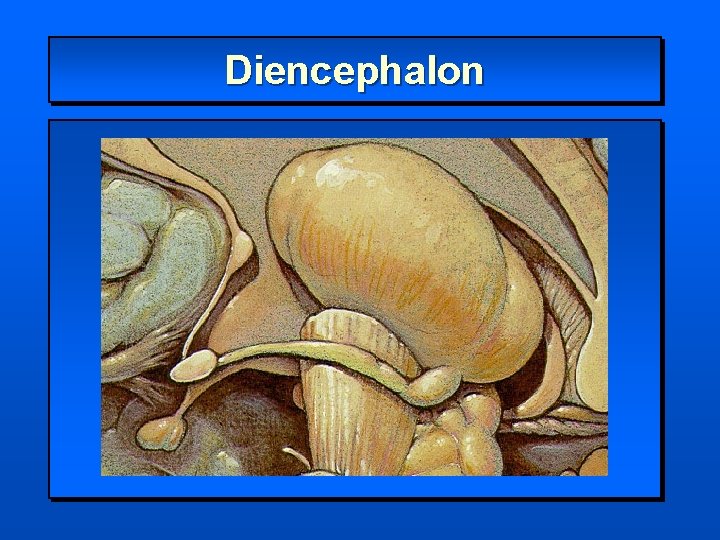
Diencephalon
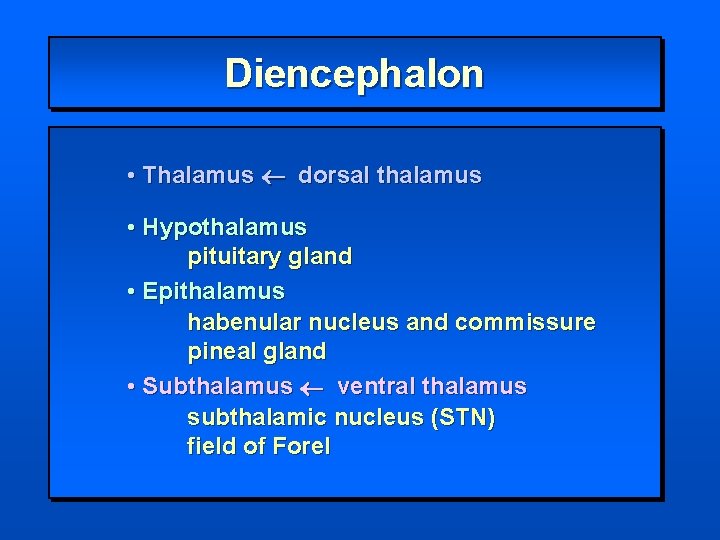
Diencephalon • Thalamus dorsal thalamus • Hypothalamus pituitary gland • Epithalamus habenular nucleus and commissure pineal gland • Subthalamus ventral thalamus subthalamic nucleus (STN) field of Forel
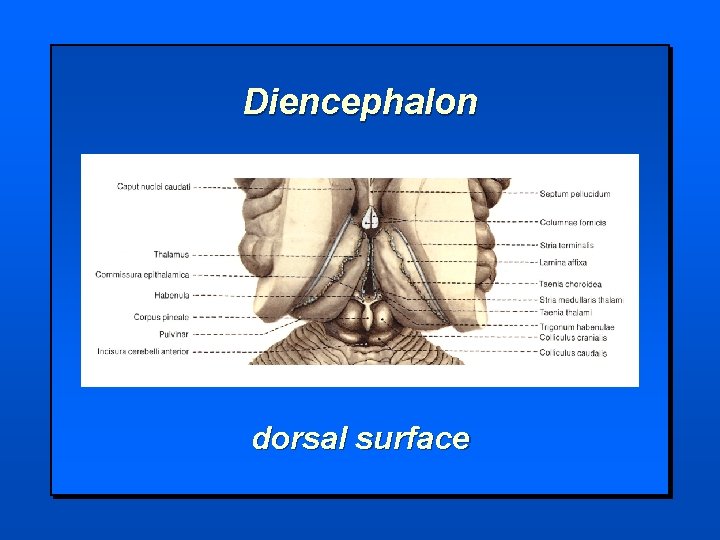
Diencephalon dorsal surface
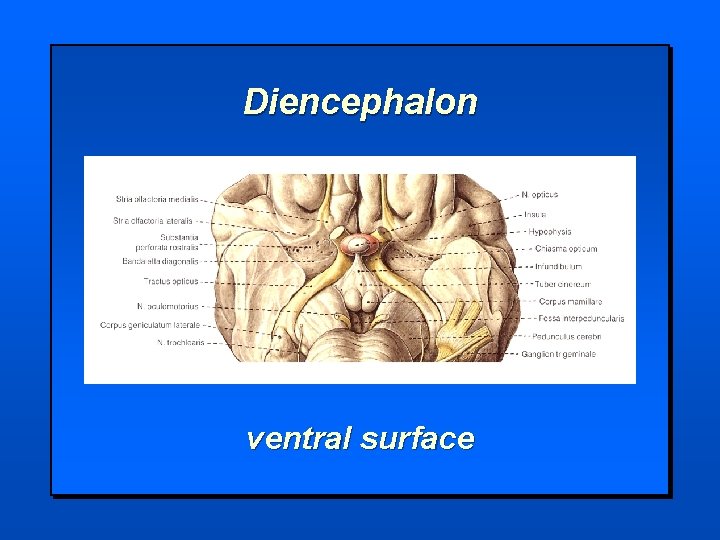
Diencephalon ventral surface
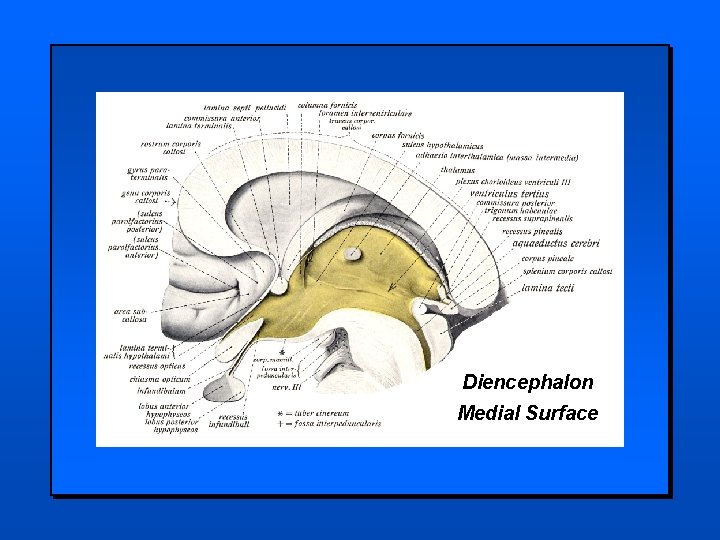
Diencephalon Medial Surface
THALAMUS
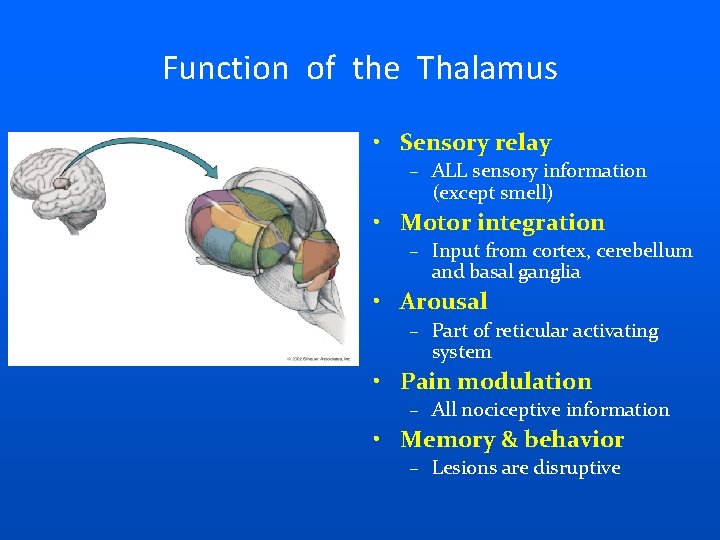
Function of the Thalamus • Sensory relay – ALL sensory information (except smell) • Motor integration – Input from cortex, cerebellum and basal ganglia • Arousal – Part of reticular activating system • Pain modulation – All nociceptive information • Memory & behavior – Lesions are disruptive
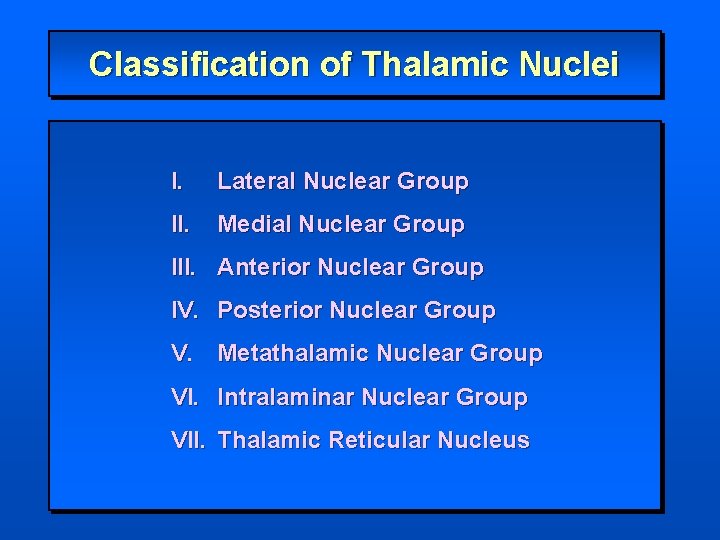
Classification of Thalamic Nuclei I. Lateral Nuclear Group II. Medial Nuclear Group III. Anterior Nuclear Group IV. Posterior Nuclear Group V. Metathalamic Nuclear Group VI. Intralaminar Nuclear Group VII. Thalamic Reticular Nucleus
Classification of Thalamic Nuclei
LATERAL NUCLEAR GROUP Ventral Nuclear Group Ventral Posterior Nucleus (VP) ventral posterolateral nucleus (VPL) ventral posteromedial nucleus (VPM)
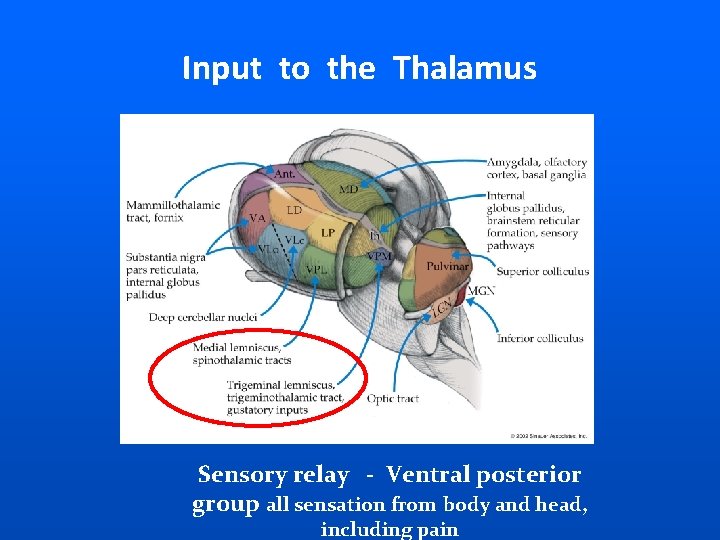
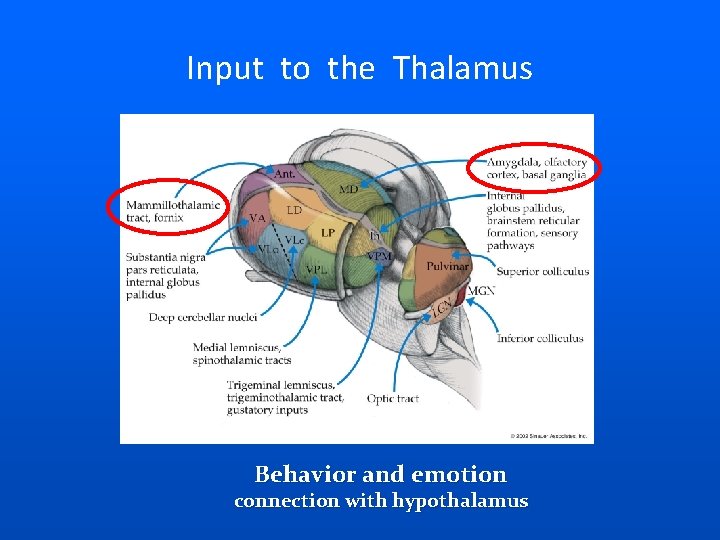
Input to the Thalamus Sensory relay - Ventral posterior group all sensation from body and head, including pain
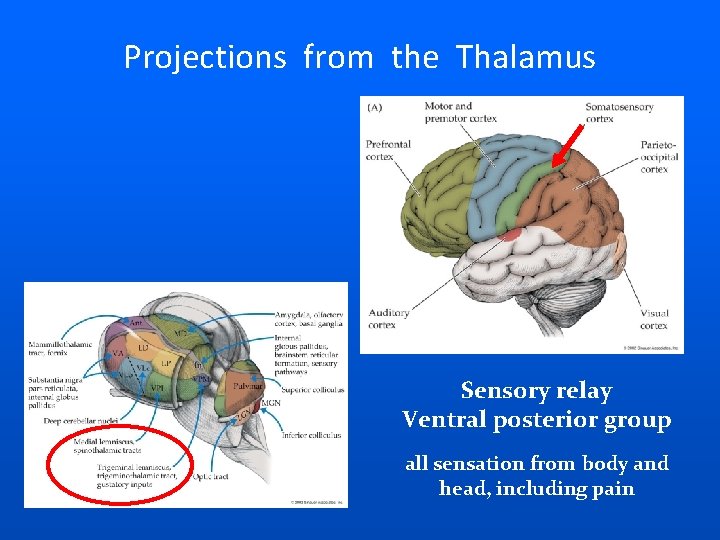
Projections from the Thalamus Sensory relay Ventral posterior group all sensation from body and head, including pain
LATERAL NUCLEAR GROUP Ventral Lateral Nucleus Ventral Anterior Nucleus
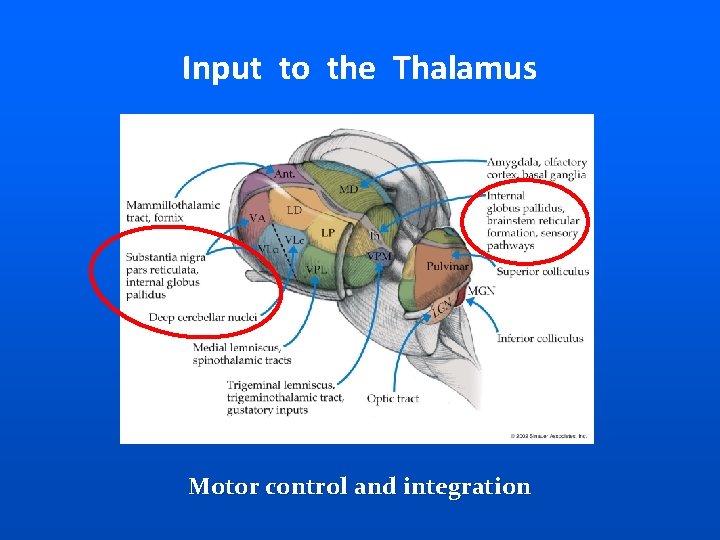
Input to the Thalamus Motor control and integration
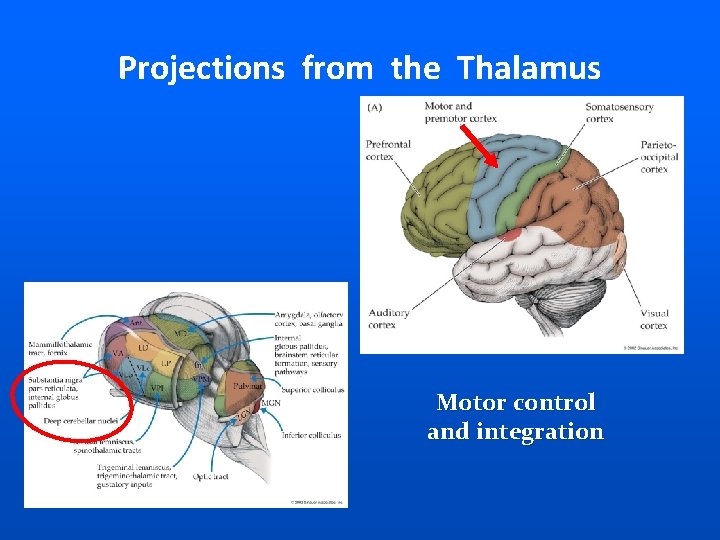
Projections from the Thalamus Motor control and integration
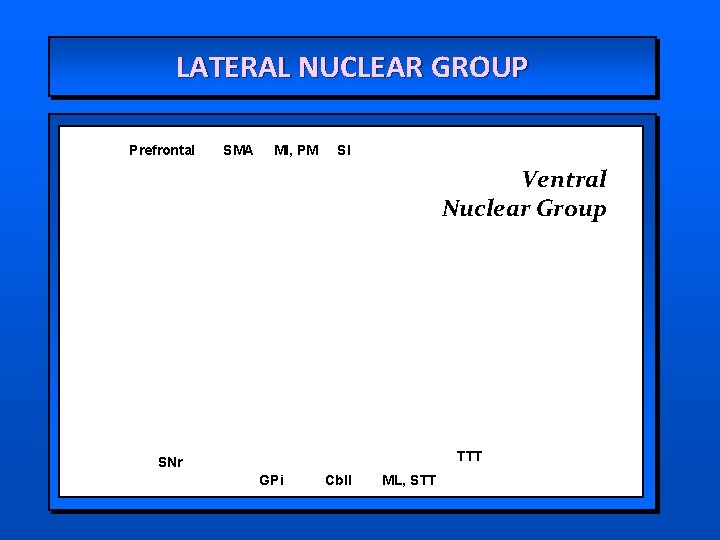
LATERAL NUCLEAR GROUP Prefrontal SMA MI, PM SI Ventral Nuclear Group TTT SNr GPi Cbll ML, STT
Lateral Dorsal Nuclear Group Lateral Dorsal Nucleus Lateral Posterior Nucleus Pulvinar
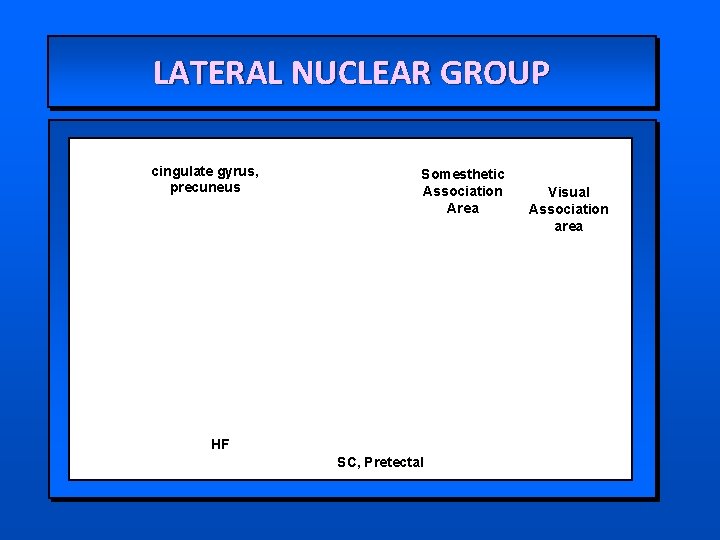
LATERAL NUCLEAR GROUP cingulate gyrus, precuneus Somesthetic Association Area HF SC, Pretectal Visual Association area
MEDIAL NUCLEAR GROUP Dorsomedial Nucleus (MD) - pars magnocellularis - pars parvocellularis Midline Nuclear Group
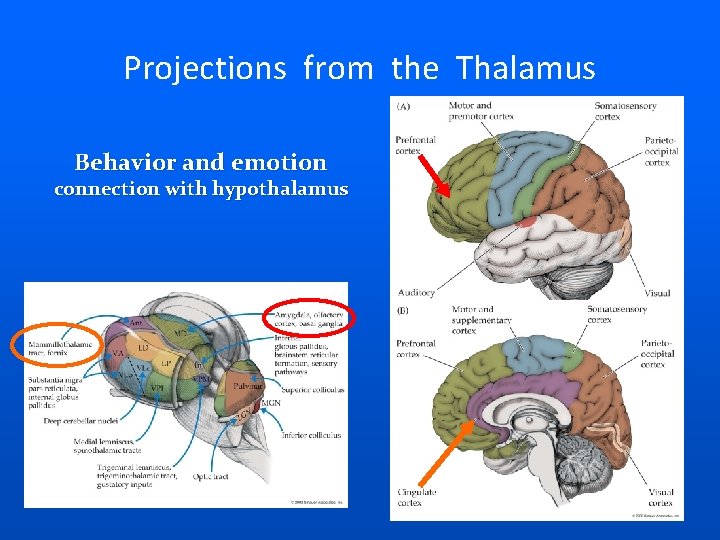
Input to the Thalamus Behavior and emotion connection with hypothalamus
Projections from the Thalamus Behavior and emotion connection with hypothalamus
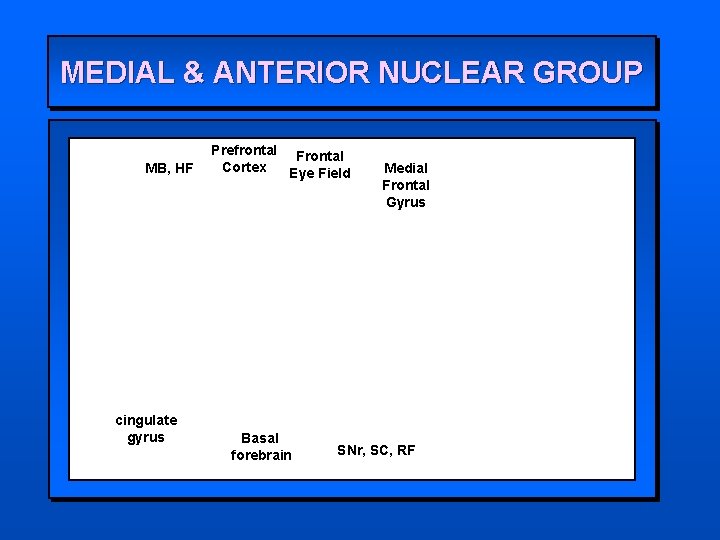
MEDIAL & ANTERIOR NUCLEAR GROUP MB, HF cingulate gyrus Prefrontal Frontal Cortex Eye Field Basal forebrain Medial Frontal Gyrus SNr, SC, RF
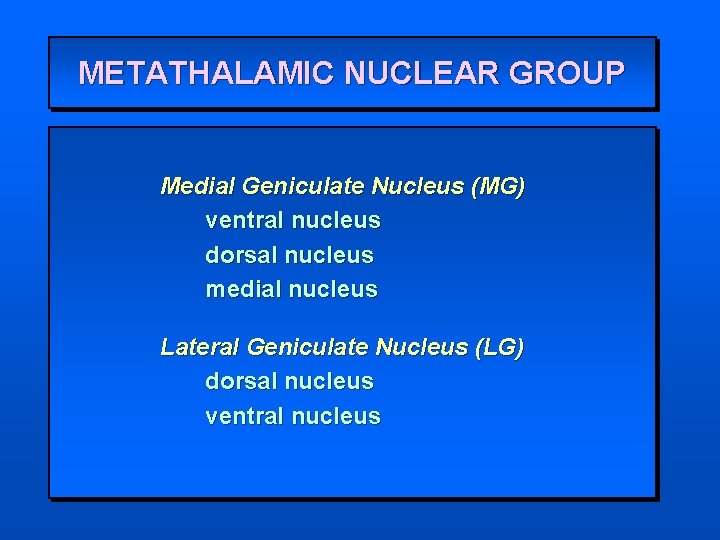
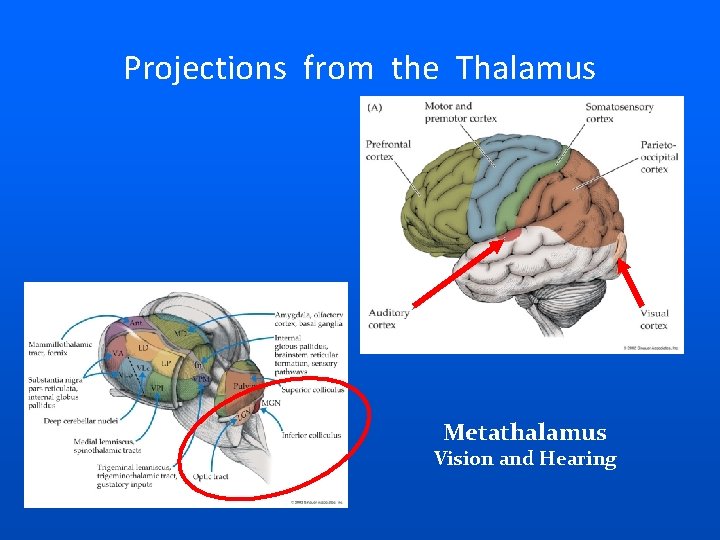
METATHALAMIC NUCLEAR GROUP Medial Geniculate Nucleus (MG) ventral nucleus dorsal nucleus medial nucleus Lateral Geniculate Nucleus (LG) dorsal nucleus ventral nucleus
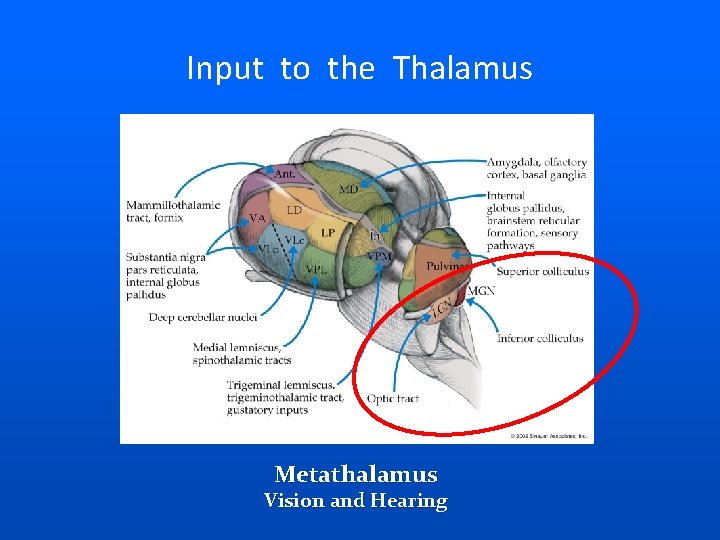
Input to the Thalamus Metathalamus Vision and Hearing
Projections from the Thalamus Metathalamus Vision and Hearing
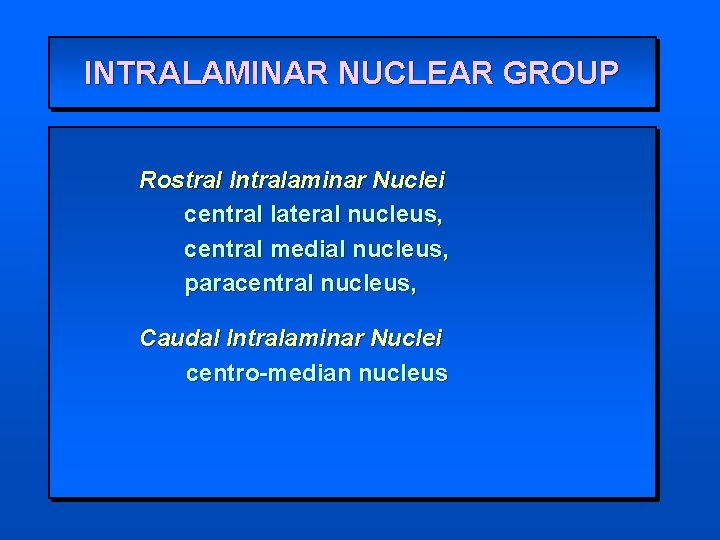
INTRALAMINAR NUCLEAR GROUP Rostral Intralaminar Nuclei central lateral nucleus, central medial nucleus, paracentral nucleus, Caudal Intralaminar Nuclei centro-median nucleus
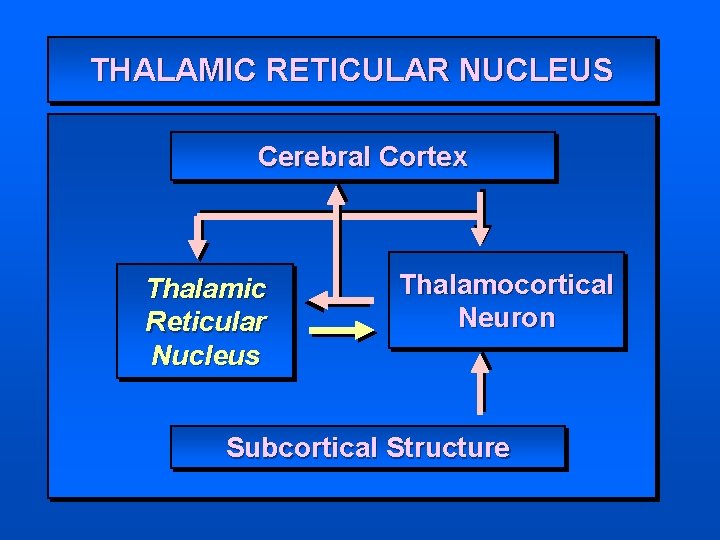
THALAMIC RETICULAR NUCLEUS Cerebral Cortex Thalamic Reticular Nucleus Thalamocortical Neuron Subcortical Structure
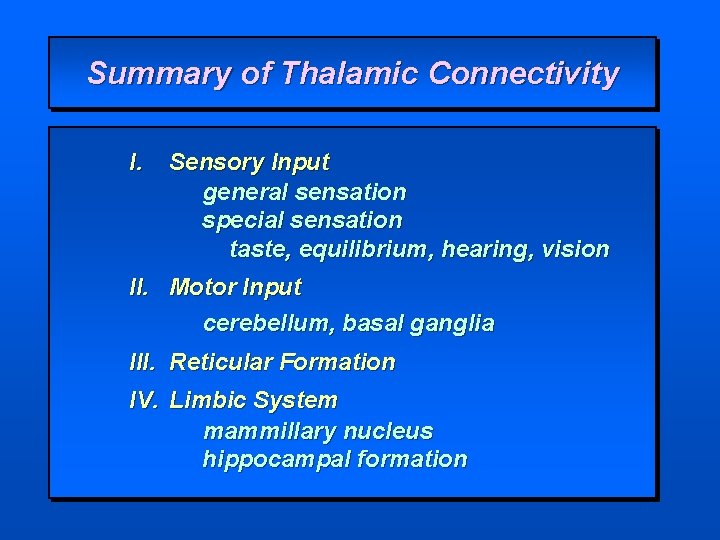
Summary of Thalamic Connectivity I. Sensory Input general sensation special sensation taste, equilibrium, hearing, vision II. Motor Input cerebellum, basal ganglia III. Reticular Formation IV. Limbic System mammillary nucleus hippocampal formation
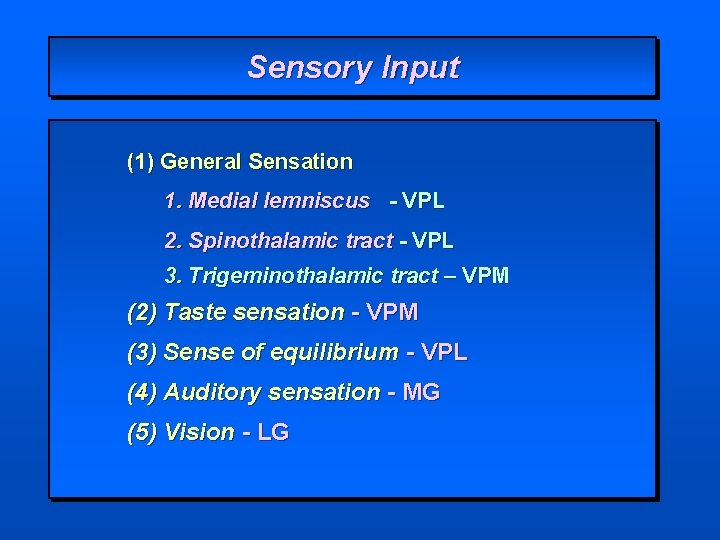
Sensory Input (1) General Sensation 1. Medial lemniscus - VPL 2. Spinothalamic tract - VPL 3. Trigeminothalamic tract – VPM (2) Taste sensation - VPM (3) Sense of equilibrium - VPL (4) Auditory sensation - MG (5) Vision - LG
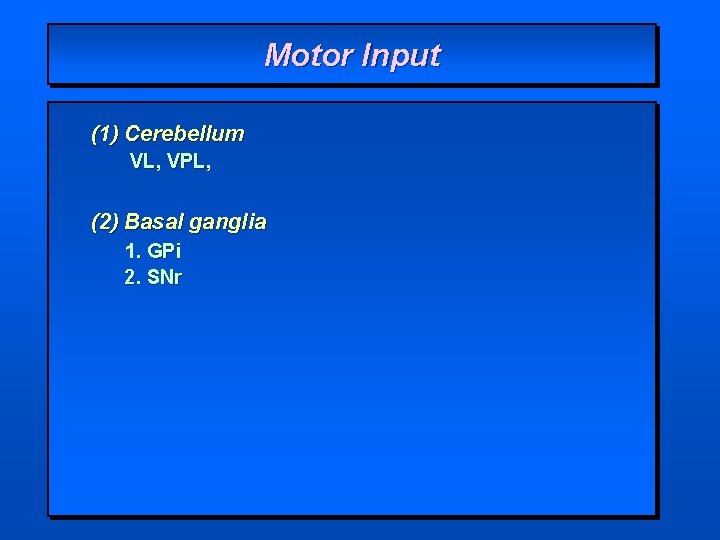
Motor Input (1) Cerebellum VL, VPL, (2) Basal ganglia 1. GPi 2. SNr
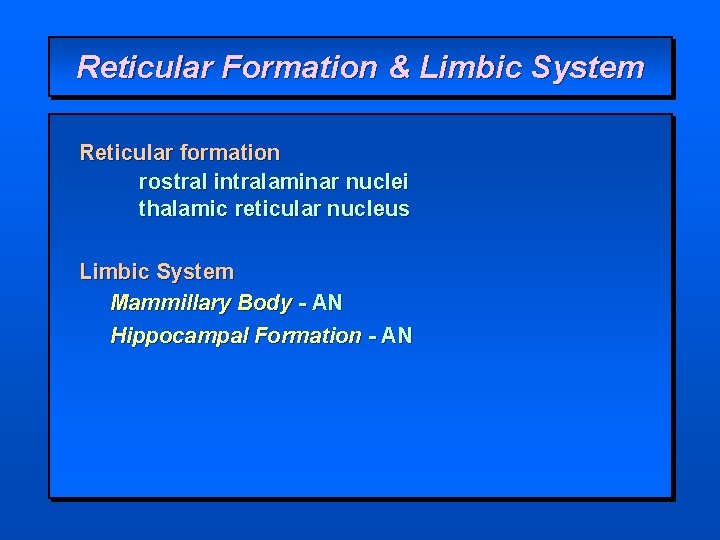
Reticular Formation & Limbic System Reticular formation rostral intralaminar nuclei thalamic reticular nucleus Limbic System Mammillary Body - AN Hippocampal Formation - AN
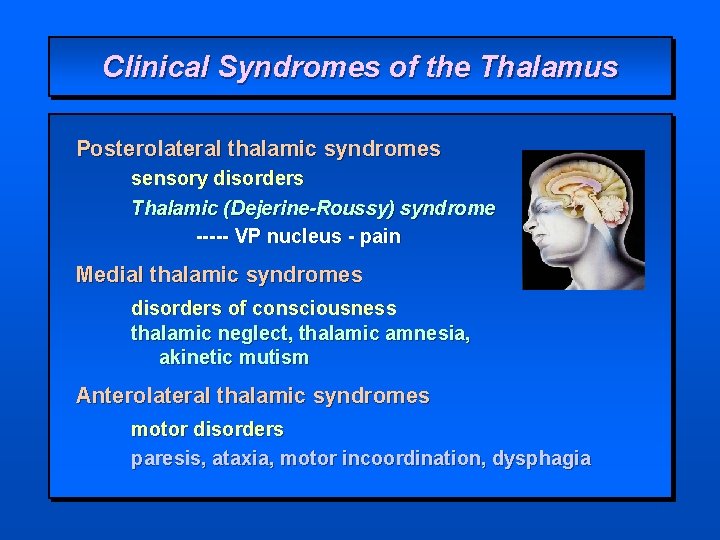
Clinical Syndromes of the Thalamus Posterolateral thalamic syndromes sensory disorders Thalamic (Dejerine-Roussy) syndrome ----- VP nucleus - pain Medial thalamic syndromes disorders of consciousness thalamic neglect, thalamic amnesia, akinetic mutism Anterolateral thalamic syndromes motor disorders paresis, ataxia, motor incoordination, dysphagia
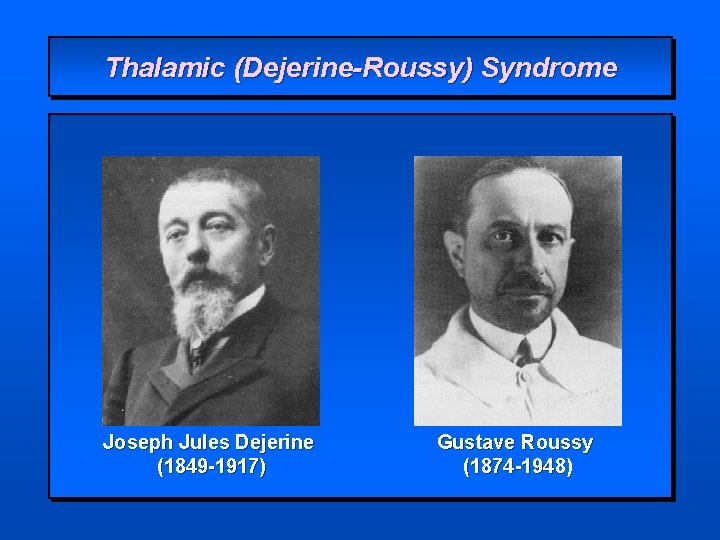
Thalamic (Dejerine-Roussy) Syndrome Joseph Jules Dejerine (1849 -1917) Gustave Roussy (1874 -1948)
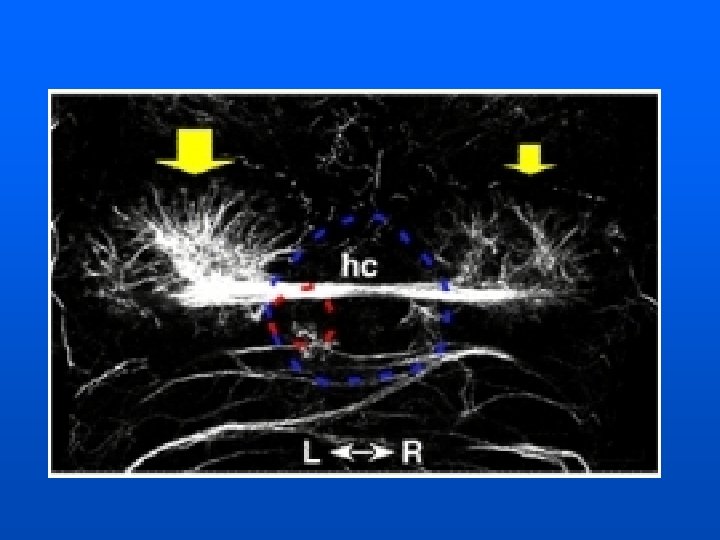
Epithalamus Limbic System Habenular Nucleus Medial Habenular Nucleus Lateral Habenular Nucleus Habenular Commissure Pineal Gland
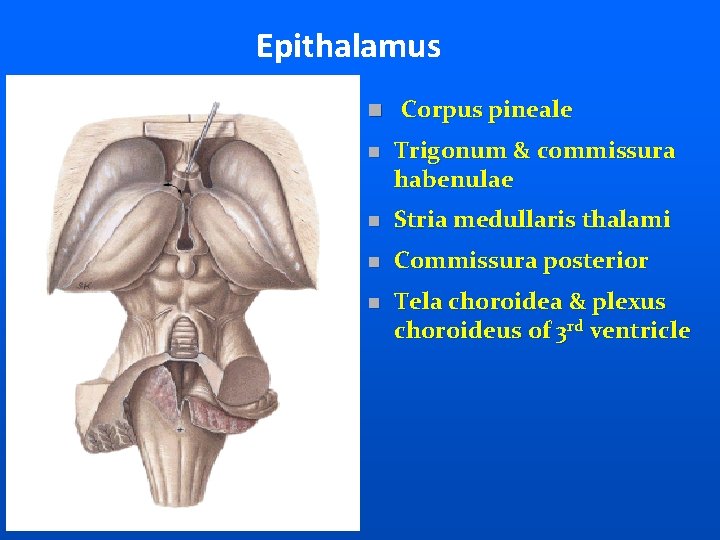
Epithalamus n Corpus pineale n Trigonum & commissura habenulae n Stria medullaris thalami n Commissura posterior n Tela choroidea & plexus choroideus of 3 rd ventricle
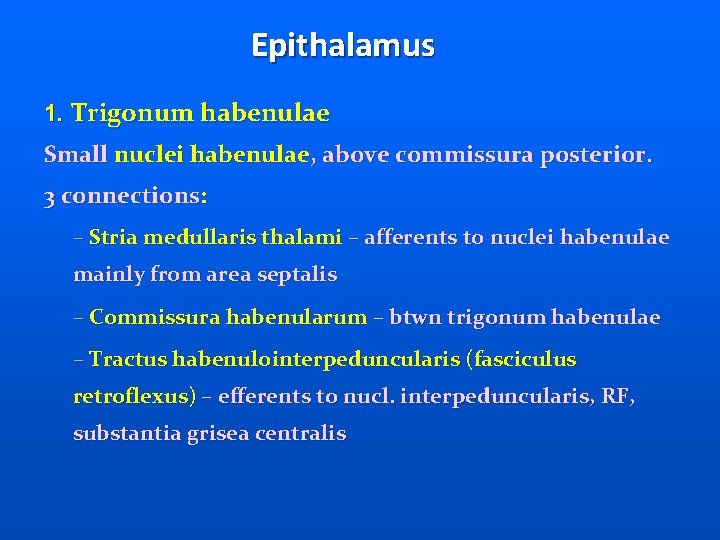
Epithalamus 1. Trigonum habenulae Small nuclei habenulae, above commissura posterior. 3 connections: – Stria medullaris thalami – afferents to nuclei habenulae mainly from area septalis – Commissura habenularum – btwn trigonum habenulae – Tractus habenulointerpeduncularis (fasciculus retroflexus) – efferents to nucl. interpeduncularis, RF, substantia grisea centralis
2. Functions of nuclei habenulae Vague. Supposed to mediate olfactory stimuli and feeding behavior. Connect olfactory brain, hypothalamus and limbic system with brain stem. 3. Corpus pineale Produces melatonin and serotonin. Controls circadian rhythms, reprductive cycles and maturation (puberty)