
Did You Know According to Automotive Fleets 2010

- Slides: 49
Did You Know? According to Automotive Fleet’s 2010 U. S. Fleet Statistics, there are more than 10. 8 million cars and trucks in fleet operation today. Source: Automotive Fleet. 2
Objectives § Discuss the role of fleet managers § Explain what a green fleet is and why they are becoming important § Identify alternative fuels for use in green fleets § Discuss the eight key areas in fleet management and how alternative fuels and advanced technology vehicles relate to each 3
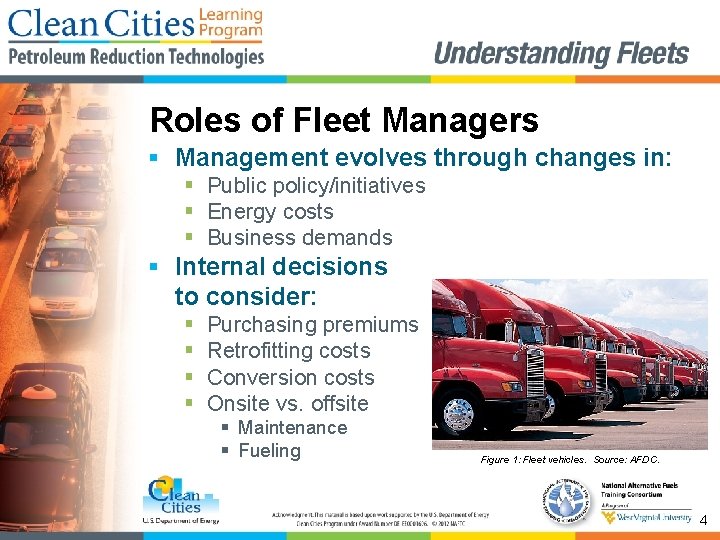
Roles of Fleet Managers § Management evolves through changes in: § Public policy/initiatives § Energy costs § Business demands § Internal decisions to consider: § § Purchasing premiums Retrofitting costs Conversion costs Onsite vs. offsite § Maintenance § Fueling Figure 1: Fleet vehicles. Source: AFDC. 4
Types of Fleets § Public – Fleets operated by federal, state, and local governments. These fleets are typically subject to mandates which include the use of alternative fueled and advanced technology vehicles. § Private – Fleets operated by private business and organizations. Currently most mandates are followed on a voluntary basis. 5
To Green or Not to Green? § What is a green fleet? § Uses alternative fuels and advanced technology vehicles to § § Reduce the carbon footprint of the company Lower emissions Improve fuel economy Sustainable and/or domestic fuels § Roles of fleet management are changing with alternative fuels and advanced technology vehicles. 6
What are Alternative Fuels? The Energy Policy Act (EPAct) considers the following to be alternative fuels: § Ethanol, methanol, alcohols § 85% or more alcohol with gasoline § Domestic natural gas/liquid fuels from natural gas § Liquefied petroleum gas § Hydrogen § Electricity § Pure biodiesel (B 100) * DOE may designate other alternative fuels if certain criteria are met 7
The EPA also has issued additional requirements for alternative and renewable fuels definitions. § Renewable fuels must meet greenhouse gas (GHG) emissions reductions when compared to 2005 baseline (gasoline/diesel) § Lifecycle GHG reductions § Additional Categories by Threshold § § Renewable fuel ~ 20% Advanced biofuel ~ 50% Biomass-based diesel ~ 50% Cellulosic biofuel ~ 60% 8
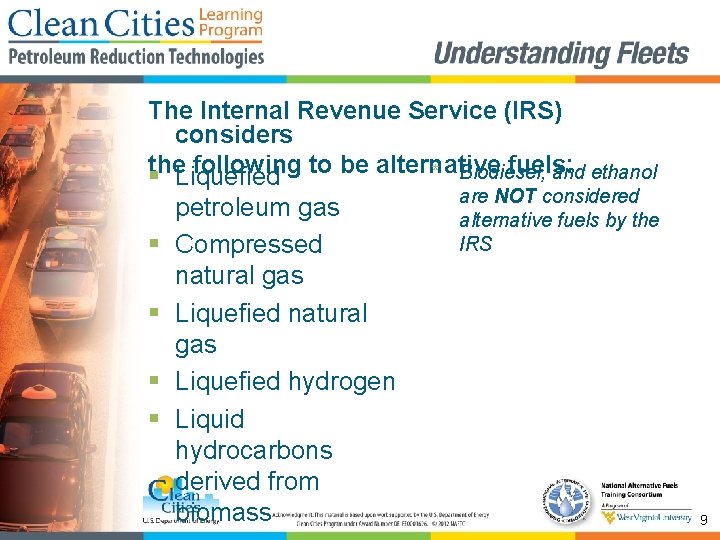
The Internal Revenue Service (IRS) considers following to be alternative fuels: * Biodiesel, and ethanol §the. Liquefied § § petroleum gas Compressed natural gas Liquefied hydrogen Liquid hydrocarbons derived from biomass are NOT considered alternative fuels by the IRS 9
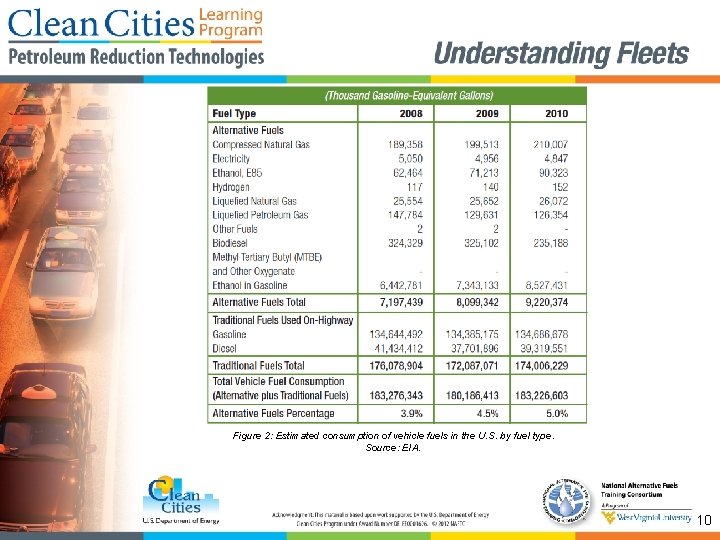
Figure 2: Estimated consumption of vehicle fuels in the U. S. by fuel type. Source: EIA. 10
‘Drivers’ of Change § Consumer awareness about petroleum consumption and its effects § Price increases and fluctuations of conventional fuels § Corporate image § Federal, state, and local mandates and incentives 11
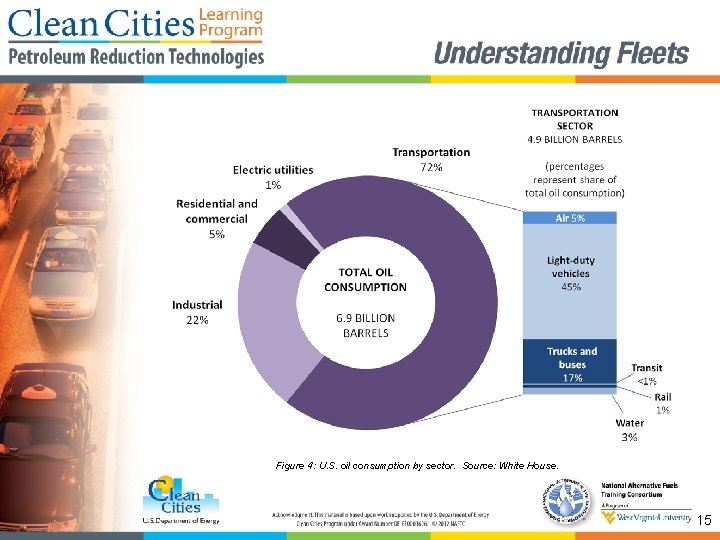
Transportation Fuel Consumption § More than 225 million vehicles § More than 70% of petroleum consumption § More than 11 million barrels per day 12
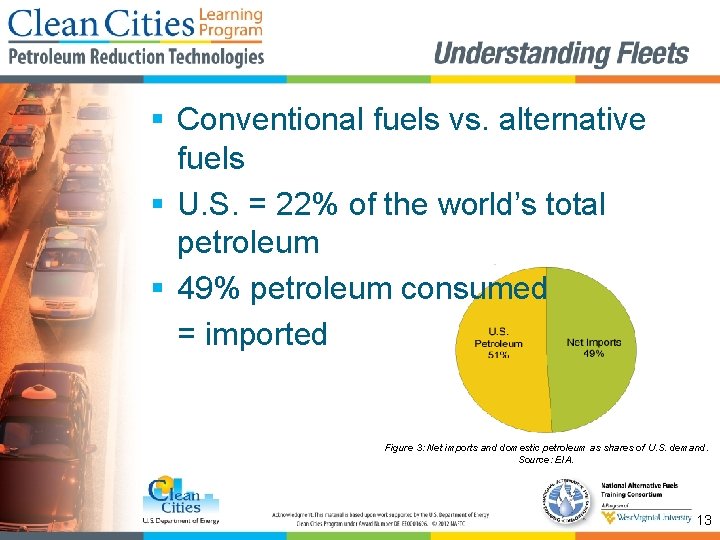
§ Conventional fuels vs. alternative fuels § U. S. = 22% of the world’s total petroleum § 49% petroleum consumed = imported Figure 3: Net imports and domestic petroleum as shares of U. S. demand. Source: EIA. 13
Transportation fuel accounts for over two-thirds of national petroleum consumption and remains the second largest expense in a fleet manager’s budget. 14
Figure 4: U. S. oil consumption by sector. Source: White House. 15
Federal Fleets Lead by Action § National Highway Traffic Safety Administration - CAFE § Energy Independence and Security Act of 2007 § 35 MPG by 2020; 54. 5 MPG by 2025 § 5% increase each year 16
§ Energy Policy Act of 2005 – § Dual-fuel AFVs must use alternative fuel unless unavailable; percent alternative fuels blended in transportation fuels increase to 36 billion gallons by 2022 § Energy Independence and Security Act of 2007 – § Federal agencies must set and meet petroleum consumption reduction milestones; agencies must install at least one renewable fuel pump § Presidential Memorandum Regarding Fuel Efficiency Standards of 2010 as amended in 2011 § Gave NHTSA and EPA joint rulemaking powers through 2025 17
New government standards for fuel economy and emissions will cause new vehicle purchase prices to increase by $8 billion, but will save $50 billion in fuel over the life of the equipment. Source: The White House. 18
Key Areas of Fleet Management § The National Association of Fleet Administrators (NAFA) has identified eight key areas in fleet management for any and all fleets. § § § § Asset management Business management Fleet information management Maintenance management Risk management Financial management Professional development Vehicle fuel management 19
Asset Management § Asset management is the task of managing and controlling all of a company’s tangible and intangible assets. § Vehicles § Facilities and equipment § Employees 20
Asset Management with Green Fleets § Purchase/lease/conversion of alternative fueled vehicles (AFVs) for a mixed fleet § Additional equipment such as special tools, additional safety equipment, analyzers, and sensors § Additional fueling system for onsite fuel storage and delivery for additional fuels or electricity § Employees that are both knowledgeable and comfortable with the conversion 21
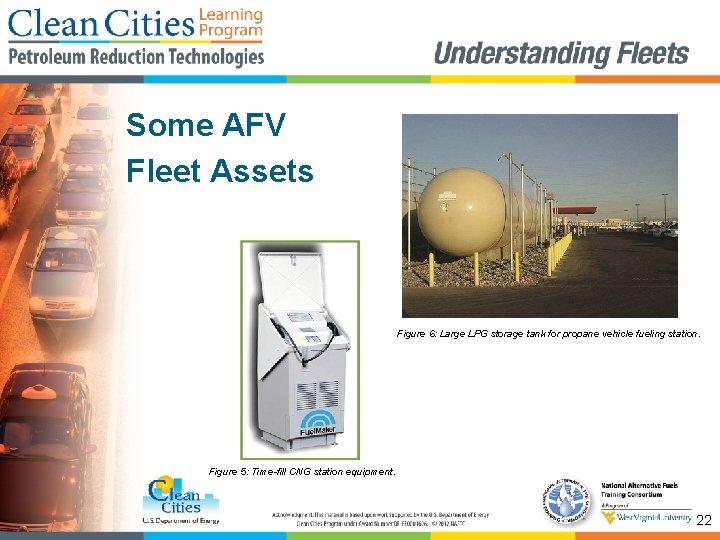
Some AFV Fleet Assets Figure 6: Large LPG storage tank for propane vehicle fueling station. Figure 5: Time-fill CNG station equipment. 22
Business Management § Business management encompasses the education, polices, and laws that affect the business in day to day operations. § § § Outside agencies Compliance Relationships Internal policies and procedures Streamlined operation 23
Business Management with Green Fleets § Maintenance and operator training for AFVs § Permits, placards, and compliance § Protecting new assets § Operating and marketing the ‘green’ fleet 24
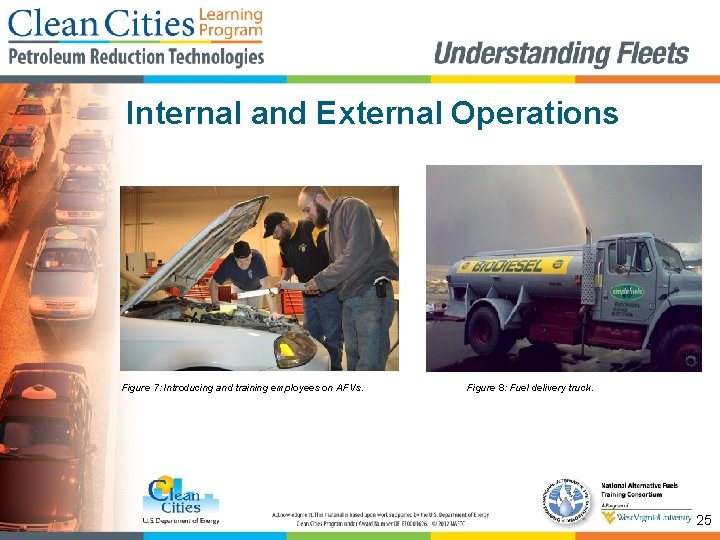
Internal and External Operations Figure 7: Introducing and training employees on AFVs. Figure 8: Fuel delivery truck. 25
Fleet Information Management § Fleet information management deals with tracking data and operating the business’s fleet in the most efficient way possible. § § Fleet data Logging and documentation Third party interaction Database of information 26
Fleet Information Management with Green Fleets § Fleet conversion will require additional vehicles and components § New ‘problem’ documentation § Additional record keeping for vehicles, operators, training, and equipment § Telematics 27
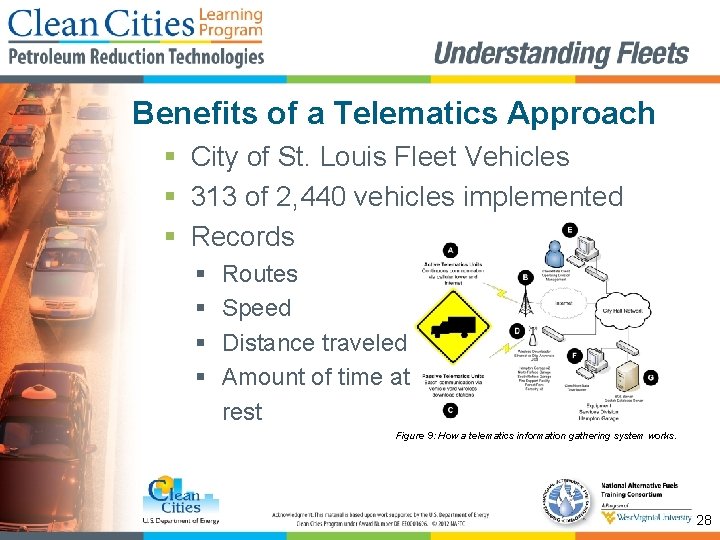
Benefits of a Telematics Approach § City of St. Louis Fleet Vehicles § 313 of 2, 440 vehicles implemented § Records § § Routes Speed Distance traveled Amount of time at rest Figure 9: How a telematics information gathering system works. 28
Maintenance Management § Maintenance management includes ensuring that all maintenance is completed for all equipment and vehicles as well as for employees’ training. § § Peak efficiency of vehicles Employee training Equipment and employee maintenance Reduction in downtime and increased efficiency § Environmental (fluid and waste disposal) 29
Maintenance Management with Green Fleets § AFV maintenance and safety training for in house § Outsourcing to specialized maintenance garages § Onsite fueling, recharging § Recording keeping of maintenance schedules 30
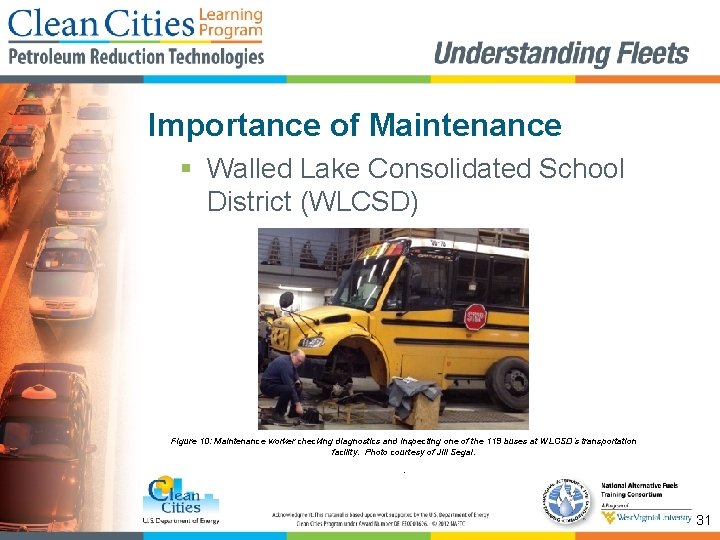
Importance of Maintenance § Walled Lake Consolidated School District (WLCSD) Figure 10: Maintenance worker checking diagnostics and inspecting one of the 119 buses at WLCSD’s transportation facility. Photo courtesy of Jill Segal. . 31
Risk Management § Risk management pertains to all the actions fleet managers take to avoid accidents and problems as well as the ability to plan ahead to appropriately deal with accidents when they do happen. § Prevention and preparedness § Control and mitigation § Insurance 32
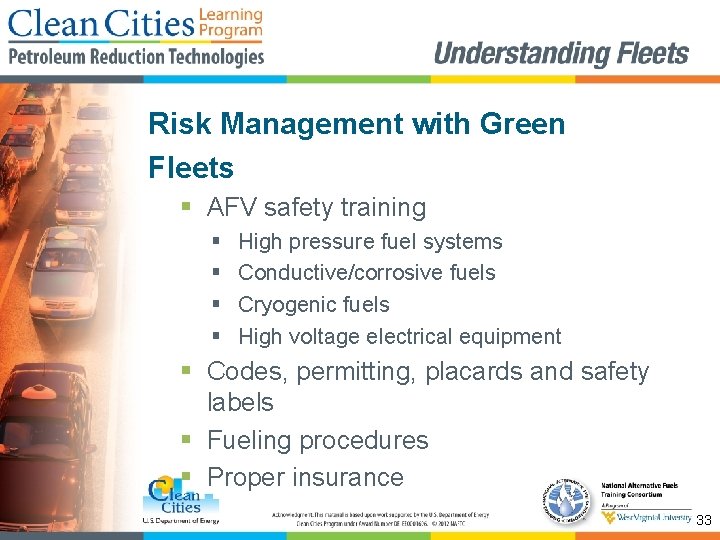
Risk Management with Green Fleets § AFV safety training § § High pressure fuel systems Conductive/corrosive fuels Cryogenic fuels High voltage electrical equipment § Codes, permitting, placards and safety labels § Fueling procedures § Proper insurance 33
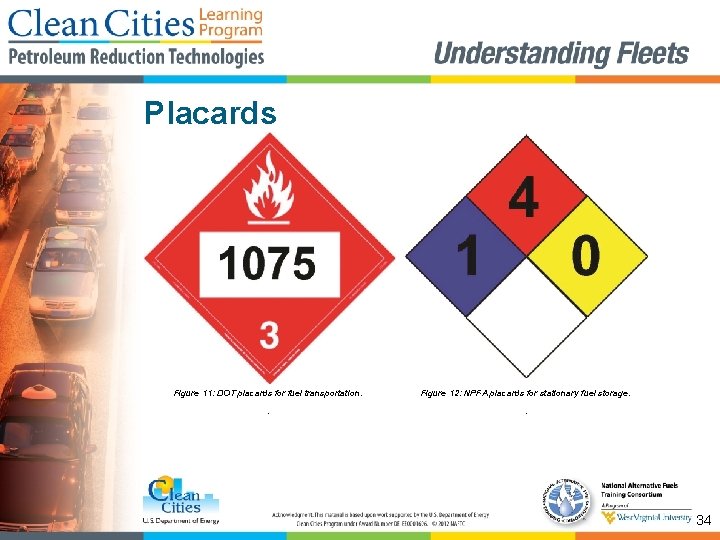
Placards Figure 11: DOT placards for fuel transportation. Figure 12: NPFA placards for stationary fuel storage. . . 34
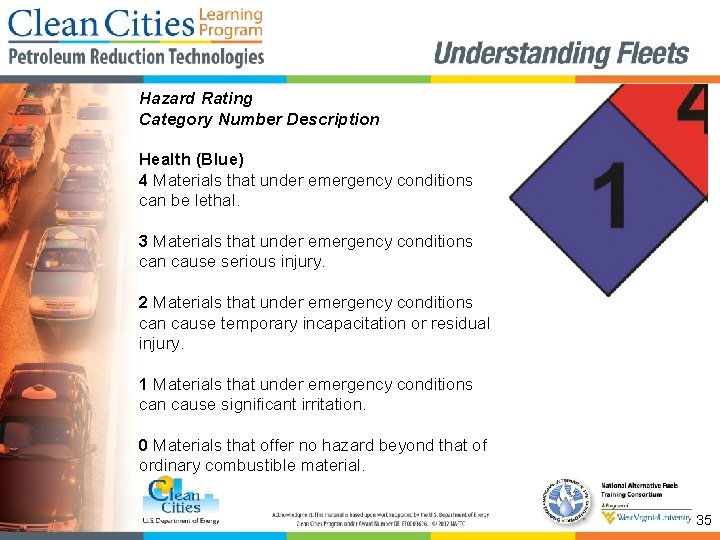
Hazard Rating Category Number Description Health (Blue) 4 Materials that under emergency conditions can be lethal. 3 Materials that under emergency conditions can cause serious injury. 2 Materials that under emergency conditions can cause temporary incapacitation or residual injury. 1 Materials that under emergency conditions can cause significant irritation. 0 Materials that offer no hazard beyond that of ordinary combustible material. 35
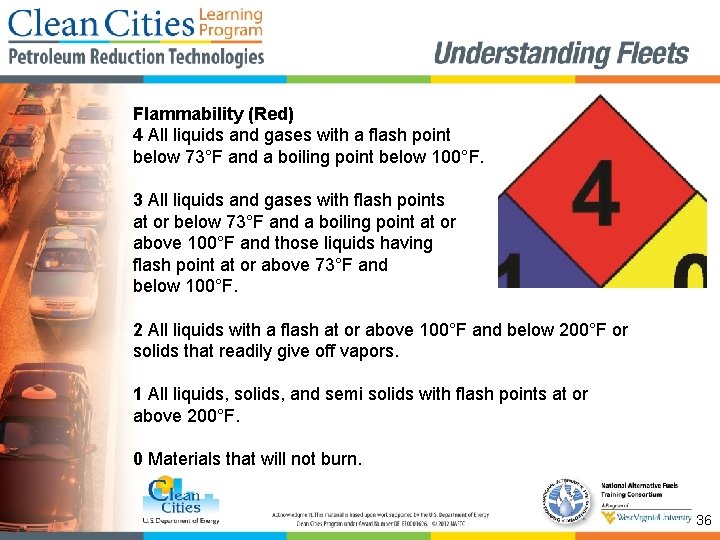
Flammability (Red) 4 All liquids and gases with a flash point below 73°F and a boiling point below 100°F. 3 All liquids and gases with flash points at or below 73°F and a boiling point at or above 100°F and those liquids having flash point at or above 73°F and below 100°F. 2 All liquids with a flash at or above 100°F and below 200°F or solids that readily give off vapors. 1 All liquids, solids, and semi solids with flash points at or above 200°F. 0 Materials that will not burn. 36
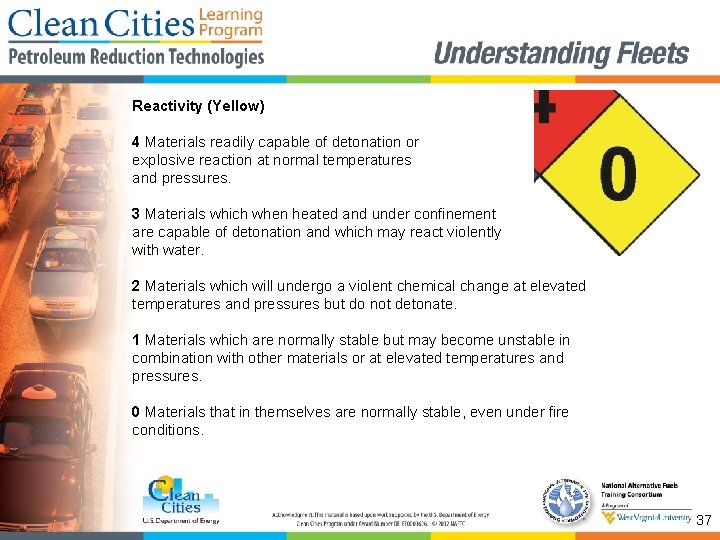
Reactivity (Yellow) 4 Materials readily capable of detonation or explosive reaction at normal temperatures and pressures. 3 Materials which when heated and under confinement are capable of detonation and which may react violently with water. 2 Materials which will undergo a violent chemical change at elevated temperatures and pressures but do not detonate. 1 Materials which are normally stable but may become unstable in combination with other materials or at elevated temperatures and pressures. 0 Materials that in themselves are normally stable, even under fire conditions. 37
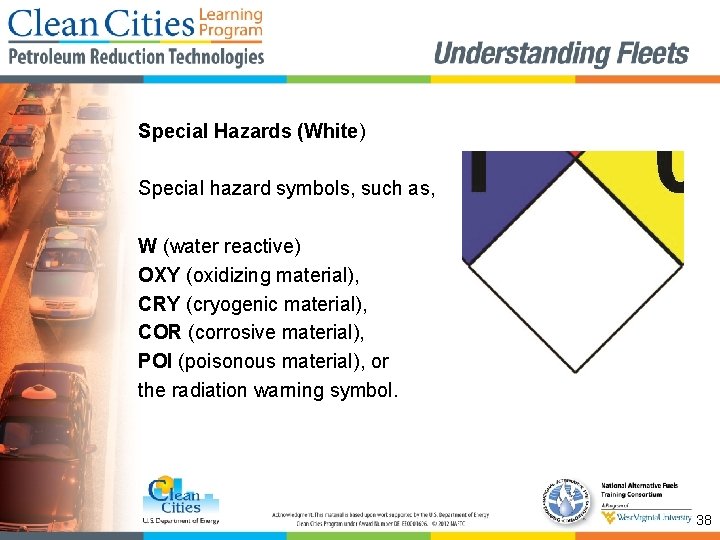
Special Hazards (White) Special hazard symbols, such as, W (water reactive) OXY (oxidizing material), CRY (cryogenic material), COR (corrosive material), POI (poisonous material), or the radiation warning symbol. 38
Financial Management § Financial management includes forming a budget for the business’ fleet, and making financially feasible purchases. § § § Leasing/purchasing Return on investment (ROI) Replacement/life cycle analysis Outsourcing Budgets 39
Financial Management with Green Fleets § Partial or complete fleet operation § Vehicle conversion vs. OEM § Used AFV, resale value, conventional vehicle values § Onsite or offsite fueling § In house or outsourced AFV maintenance § Volume costs for fuel or electricity § Laws, taxes, incentives § Fuel economy 40
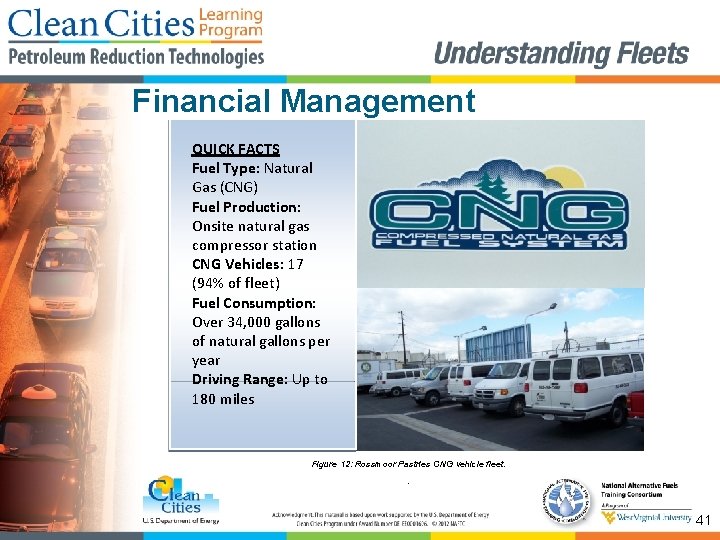
Financial Management QUICK FACTS Fuel Type: Natural Gas (CNG) Fuel Production: Onsite natural gas compressor station CNG Vehicles: 17 (94% of fleet) Fuel Consumption: Over 34, 000 gallons of natural gallons per year Driving Range: Up to 180 miles Figure 12: Rossmoor Pastries CNG vehicle fleet. . 41
Professional Development § Professional development covers continual education and corporate responsibility for all fleet employees. § § Top to bottom training Ethical standards Corporate responsibility and leadership Environmental concerns 42
Professional Development with Green Fleets § § § Training Knowledgeable staff Green branding Partnerships Sustainability program 43
Professional Development Figure 13: Sustainability program, green branding, outreach program at UNC. . 44
Vehicle Fuel Management § Vehicle fuel management deals with the manager’s fuel choice and the environmental and economic impact it has on the fleet operation. § § § Fuel choice Budget Onsite or offsite fueling Fuel consumption tracking Forecasting 45
Vehicle Fuel Management with Green Fleets § Onsite vs. offsite (centralized vs. decentralized) § Fueling policies § Fuel cards § Fuel economy monitory § Type of fueling § Requirements, incentives, and taxes § GGE and MPGe 46
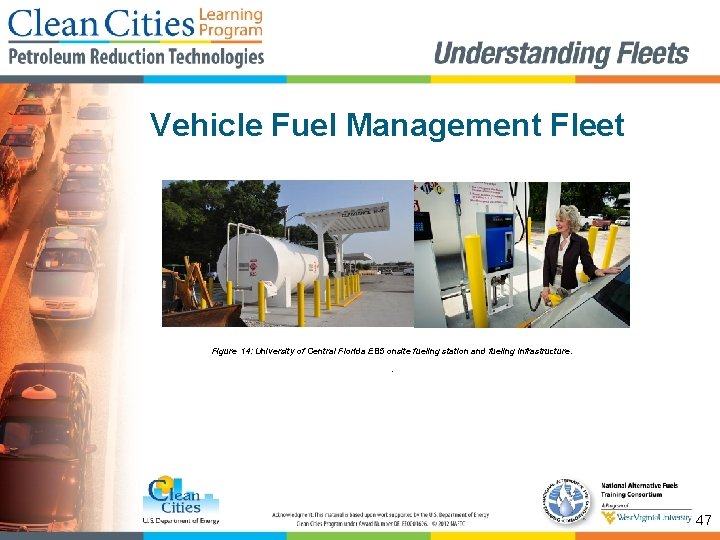
Vehicle Fuel Management Fleet Figure 14: University of Central Florida E 85 onsite fueling station and fueling infrastructure. . 47
Beyond Alternative Fuels § Fuel Economy and Idle Reduction benefits for all fleets § § Idle time Tire pressure Driving and operating habits Telematics 48
Summary § Fleet managers should be aware of all available fuels and technologies § Consumer acceptance of green fleets § Benefits of each option should be carefully weighed and implementation tailored to your fleet § Importance of 8 key areas in fleet management § Additional practices and technologies are available § Continuously changing fleet management landscape 49