
Dictatorship in the Workplace by What is Leadership
Dictatorship in the Workplace by:
What is Leadership? • Leadership addresses directing others in the pursuit of a goal • Yet different strategies for leadership exist • These different strategies are ways of approaching the process
Leadership in the Workplace • The workplace possesses its own unique challenges to leadership On the one hand, the workplace is a specific context with specific goals, on the other hand, there are many different kinds of workplaces
The success of various leadership strategies… …. are therefore often dependent upon context. What are the goals of this workplace? What kind of people make up the work force? What kind of leader do I want to be? What is my leadership strategy?

The Strategy of Dictatorship • One of the Strategies of Leadership in the Workplace is: Dictatorship

Who is a Dictator? • According to the classic definition from Merriam Webster, a dictator is “rule, control, or leadership by one person with total power”
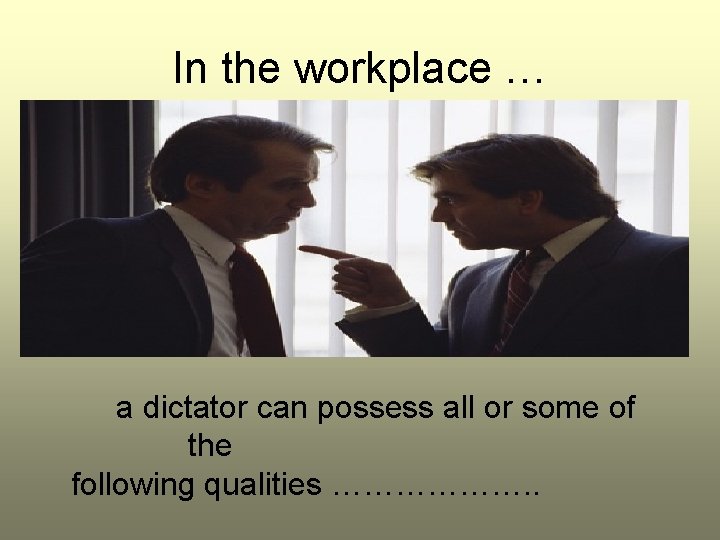
In the workplace … a dictator can possess all or some of the following qualities ………………. .
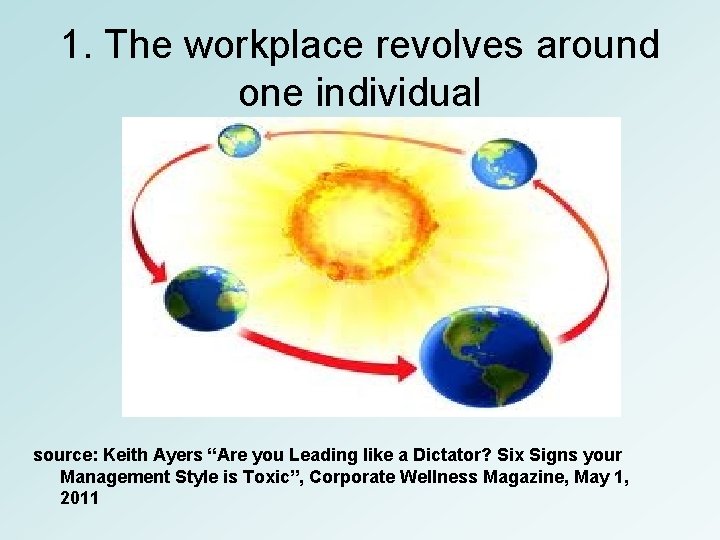
1. The workplace revolves around one individual source: Keith Ayers “Are you Leading like a Dictator? Six Signs your Management Style is Toxic”, Corporate Wellness Magazine, May 1, 2011
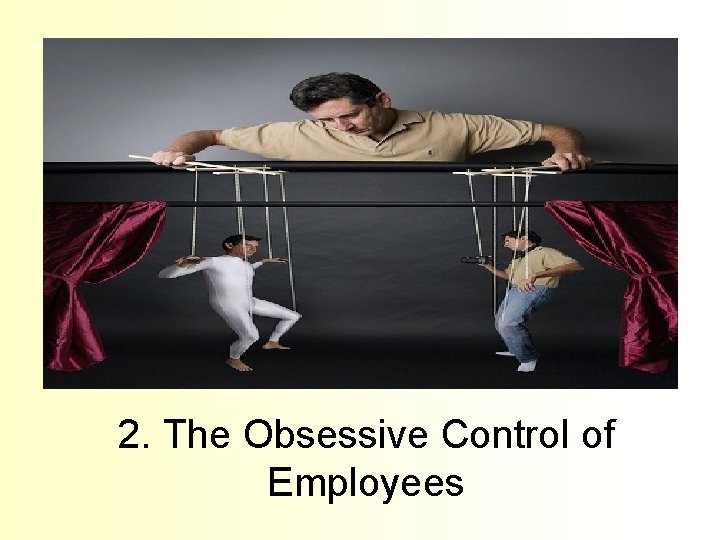
2. The Obsessive Control of Employees

3. Leading with Fear

4. Work is all that Matters
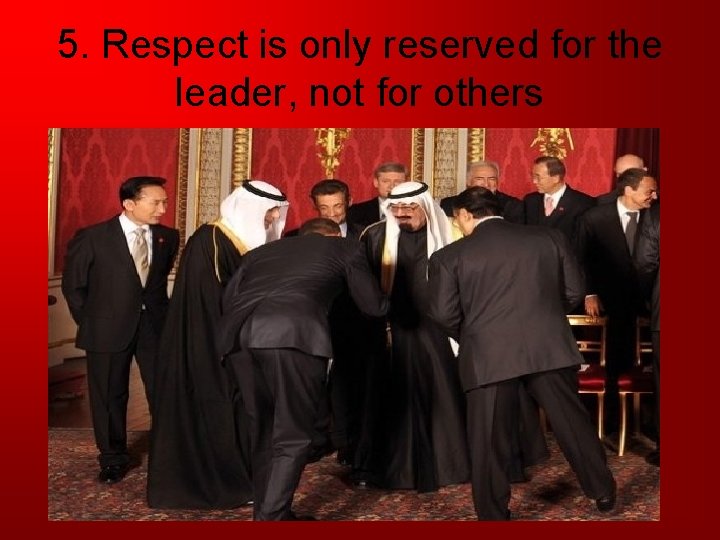
5. Respect is only reserved for the leader, not for others
In summary…. . Dictatorship in the workplace can be defined as an autocratic form of rule. The “dictator” is the center of the workplace. Autonomy of those under the leader is severely limited. The dictator, at once, is not a benvolent figure: workers know that he or she is in control. Furthermore, all that the dictator cares about is achieving the desired result.

Nevertheless, dictatorship in the workplace is not rare…. • In a poll conducted by the Workplace Democracy Association/Zogby Interactive 25% of Americans say that their workplace is a “dictatorship. ” • Those surveyed complained that such strategies do not “promote creative or inventive ideas” and they do not “feel motivated. ” • source: Meg White “One in Four Americans Compare Their Workplace to a Dictatorship”, Buzzflash, June 23, 2008
Dictatorship in the workplace sounds terrible…. . • Nevertheless…. are there any advantages to this type of leadership approach?
Possible advantages of this leadership strategy: • There is a clear decision-making structure in the workplace. Everyone knows who has the last word, therefore, no ambiguity exists regarding roles.
However…. . the disadvantages seem to outweigh the advantages. For example, having a dictator as a leader in the workplace does not guarantee that the leader is competent. This could lead to a work environment that is neither pleasant nor efficient.
Furthermore, • Such a leadership style restricts the autonomy of employees. Not only are employees working in a stifling environment, but the chances to exercise their creativity, for example, in regards to problem-solving is severely limited. The hierarchy of the organization creates a general sense of inequality, which can quickly lead to a “toxic” work environment. The “power relations” in the workplace are simply too unbalanced to contribute to healthy work environment.
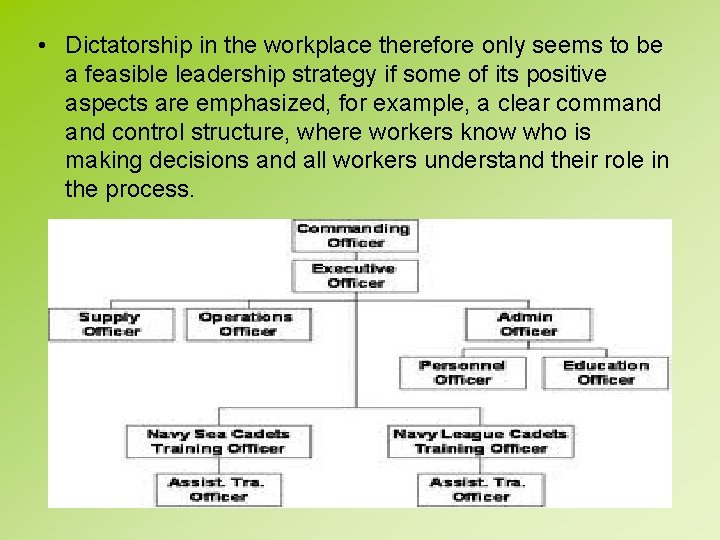
• Dictatorship in the workplace therefore only seems to be a feasible leadership strategy if some of its positive aspects are emphasized, for example, a clear command control structure, where workers know who is making decisions and all workers understand their role in the process.
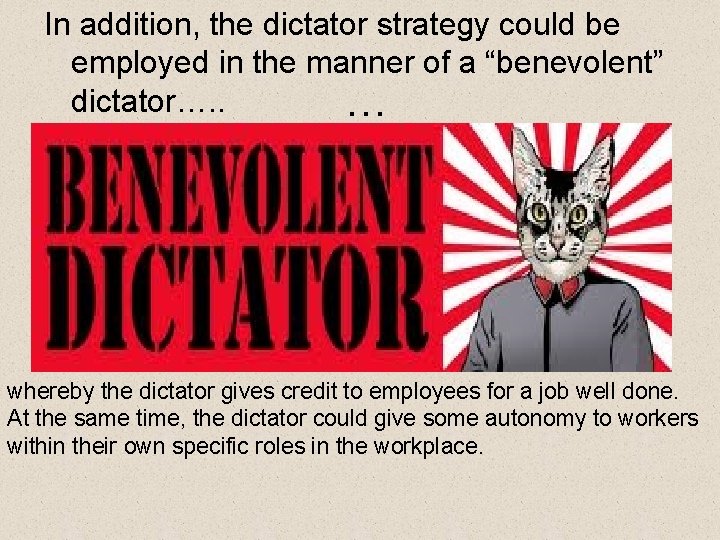
In addition, the dictator strategy could be employed in the manner of a “benevolent” dictator…. . … whereby the dictator gives credit to employees for a job well done. At the same time, the dictator could give some autonomy to workers within their own specific roles in the workplace.
Nevertheless… The disadvantages seem to outweigh the advantages. The absolute authority of the dictator limits employee freedom through this narcisstic strategy that emphasizes the leader above all else, even above the work that is to be accomplished. Dictatorship in the workplace always runs the risk of quickly turning into a “toxic” work environment.
Thank you for listening! (and try not to be a dictator )
- Slides: 22